

Introduction
Ultra-deep clastic reservoirs in the Kuqa piedmont zone are the major gas-bearing reservoirs in the Tarim Oilfield, in which major prospects for exploration and development include Kelasu, Qiulitag, and north structural belts. According to the 4th petroleum resources assessment, gas resources in the ultra-deep (deeper than 6000 m) reservoirs in the Tarim Basin are 5.98×10¹² m3; typically, the gas reserves in subsalt strata of the Kelasu structural belt are proved to be at the scale of trillion cubic meters [1]. The major pay zone in the Kelasu struc-tural belt is the Cretaceous Bashijiqike Formation, with the reservoirs buried at 5500-8200 m, indicative of deep to ultra-deep reservoirs. The reservoirs are universally tight as a result of intense compaction, with the matrix porosity of 3.5%-7.5%. Due to the drastic orogeny from the Yanshanian to the Late Himalayan, the highest reservoir pressure exceeds 150 MPa and the largest in-situ stress gradient is over 0.03 MPa/m in the block. The reservoirs are characterized by abundant natural fractures, complicated cementations and strong heterogeneity [2-3]. Moreover, the reservoirs are remarkably tight and ultra-deep, with ultra-high temperature and ultra-high pressure. Efficient stimulation is crucial to economically explore and develop such reservoirs [4-5].
Early deep-well stimulation treatments in the Tarim Oilfield mainly included layer or interval commingled acidification and acid fracturing in vertical wells, or small-scale sand fracturing. Fracturing stimulation of ultra-deep wells was initiated in 1995, when hydraulic sand fracturing was successfully performed in nearly 6000 m deep Donghetang and other blocks, revealing an efficient solution to the problem of tough sand injection into ultra-deep wells [6]. Following the idea of weighted fracturing fluids proposed in 2002, weighted acidification was first applied in Well Keshen 101 at the depth interval of 6354-6389 m in 2 layers, with the weighted acid density of 1.34 g/cm3, operating pressure of 90-98 MPa (up to 100.1 MPa) mainly and bottomhole pressure of 163.82 MPa, allowing the well to produce 94.78 t/d oil and 22.4×10⁴ m3/d gas after fracturing. This marked a new solution to ultra-deep well stimulation under abnormally high stress [5]. In 2005, weighted fracturing was first accomplished in Well Yeyun 2 at the depth interval of 5965.0-6087.5 m and temperature of 152 °C. During the operation, 1.15 g/cm3 KCl weighted fracturing fluid was injected at the displacement of 2.5-2.7 m3/min and pressure of 90-123 MPa, and 28.5 m3 proppant was added successfully, making the wellhead pressure reduce by 9 MPa from the pressure level (over 140 MPa, too high for existing equipment) when traditional fracturing techniques are used. This recorded the first success of fracturing at over 110 MPa, and contributed a new technique of ultra-deep well stimulation [7]. In 2010, sand fracturing at 136 MPa was achieved in Well Dabei 301 for the first time, which marked a new level of ultra-deep well fracturing [5]. After years of efforts on fracturing ultra-deep reservoirs with ultra-high pressure and ultra-high temperature, PetroChina Research Institute of Petroleum Exploration & Development (RIPED) has cooperated with PetroChina Tarim Oilfield Company to establish 6 key techniques, i.e. design optimization, weighted fracturing fluid, pipe string with large drift diameter, wellbore integrity evaluation, perforation in ultra-deep zones, and safety in operation, and 3 weighted fracturing fluid systems, i.e. NaBr weighted fracturing fluid, KCl weighted fracturing fluid, and NaNO3 weighted fracturing fluid, which offered technical support to the breakthrough in deep petroleum exploration below 8000 m in the Tarim Oilfield. Typically, the NaNO3 weighted fracturing fluid system, with the density of 1.35 g/cm3 and temperature resistance of 180 °C, costs only 25% of the NaBr weighted fracturing fluid system, that is, the former is RMB 7000/m3 less than the latter at the same density [5,8⇓ -10]. In view of deteriorated reservoir properties in more and more prospect areas, the limitation of traditional fracturing techniques is becoming increasingly prominent. Since 2010, fracture acidizing of ultra-deep tight reservoirs with ultra-high temperature and ultra-high pressure in the Tarim Basin has been done with reference to the approach of volume fracturing of unconventional oil and gas reservoirs [11-12]. With aim to create complex fracture network [13-14], various techniques have been tested with effective results [4-5,15].
With the progress of ultra-deep exploration in the Tarim Basin, varied reservoir geologies were encountered. The application of fracturing techniques was restricted by high pressure. Some stimulated wells (about 30%) failed to yield economic output. In this paper, the causes of low production and low efficiency of stimulated wells and the relations between natural fractures and in-situ stress field are analyzed to establish the opening conditions of natural fractures, the mechanism of coupling between hydraulic fractures and natural fractures, and the diverting conditions to form complex fracture network. Based on large-scale physical simulation experiments and the core theory of the volume fracturing [16] and guided by optimized design of fracture-controlled fracturing, the techniques for improving fracture-controlled stimulated reservoir volume (FSRV) are investigated to maximize the FSRV [17]. The study results offer useful information for efficient stimulation of ultra-deep tight fractured reservoirs.
1. Key controls on FSRV
Extensive foreland thrust structures in the Kuqa foreland thrust belt, which were caused by intense southward thrust-napping and compression from the Tianshan orogenic belt on the north, dominated the occurrence of natural fractures. Natural fractures are most developed at structural highs and in the hinge zone of anticline in the major axis direction, and less developed at structural flanks or anticlinal saddles. Natural fractures are observed in all three intervals of the Bashijiqike Formation[18-19]. Natural fractures are mainly oblique fractures and high-angle fractures (with the dip angle of 35°-70°), but less low-angle fractures and no horizontal fractures. By nature, natural fractures are composed of shear fractures (80.7%) and tensional-shear fractures (15.7%), as well as extensional fractures in the minority. Natural fractures exhibit the density of 0.5-3.0/m, apparent extension of 0.1-1.5 m, and width of 0.15-1.50 mm. They are completely or partially filled with calcite and mud, but only a few fractures are unfilled. More than 50% of natural fractures have large included angles (larger than 45°) between their orientation and the maximum horizontal principal stress direction. Natural fractures in the block feature strong heterogeneity. According to the analysis of fracture occurrence and distribution, natural fractures can be classified into four categories: large fractures (class I), small fractures (class II), micro-fractures (class III), and matrix fractures (class IV), as shown in Table 1 . According to relevant studies, natural fractures contribute to well productivity by improving the permeability by 2-4 orders of magnitude; only sufficiently opened natural fractures can allow the placement and support of proppant to raise the productivity; the combination of acidizing with fracturing to sufficiently open filled and closed fractures is crucial to enhance well productivity.
Table 1. Classification of natural fractures in ultra-deep clastic reservoirs in Kuqa piedmont zone |
| Class | Description | Opening/mm | Length/mm | State of filling | Dip angle | Origin |
|---|---|---|---|---|---|---|
| I | Large fractures | >1.0 | >20.0 | Completely filled to partially filled | High | Tectonic |
| II | Small fractures | (0.5, 1.0] | (2.0, 20.0] | Completely filled to partially filled | Medium to high | Structure associated |
| III | Micro-fractures | (0.1, 0.5] | (0.2, 2.0] | Completely filled | Complex | Diagenetic |
| IV | Matrix fractures | ≤0.1 | ≤0.2 | Completely filled | Complex | Protogenetic and diagenetic |
In spite of noticeable effects of fracture acidizing in ultra-deep reservoirs, about 30% of wells have revealed low production (less than 30×104 m3/d) and low efficiency after stimulation, of which more than 20% were interpreted to have non-dry layers with natural fractures. This is believed to attribute to three factors through analysis of geologic and logging data and operating pressure curves. First, some acidizing fluid systems were unconspicuous in alleviating natural fracture contamination caused by oil-based drilling fluids. Second, acid etched fractures at some wells produced by acid fracturing exhibited low flow conductivity at high closure stress, and there are some useless acid etched fractures generated. Third, at some wells, low-viscosity slick water was used to generate complex fractures in the preflush stage. However, due to low displacement, proppants were not successfully transported by gel in the narrow hydraulic fractures to support opened natural fractures or shear fractures. As a result, the fractures were not effectively supported, and the fracture network was useless for reservoir stimulation and production increase. The ultra-deep reservoirs in the Kuqa piedmont zone in the Tarim Basin cannot be developed by horizontal wells under the existing technical conditions, but contain abundant natural fractures. Accordingly, on the basis of vertical-well fracturing, volume fracturing technique is optimized and applied to form an effective fracture network consisting of major fractures and branch fractures connected with natural fractures, aiming to improve the utilization of natural fractures and the FSRV and treatment effect [20⇓-22].
There are some technical challenges in stimulation of ultra-deep tight reservoirs. (1) It is hard to open natural fractures with various interstitial materials by corroding these materials using a single type of acidizing fluids. (2) Simple acidizing or acid fracturing cannot generate sufficiently long effective acid etching distance [23], which means that it is challenging to technically obtain a double-win compromise between long major fractures at small filtration and connectivity with natural fractures at large filtration. As a result, hydraulic fractures are not long enough and natural fractures are not sufficiently connected. (3) It is hard to increase the size of operation and displacement at high operating pressure. Conventional gel fracturing creates major fractures while controlling the filtration, but cannot sufficiently open and connect natural fractures to form an effective fracture network. Volume fracturing with slick water is favorable for opening natural fractures, but limited displacement will lead to intra-fracture net pressure not high enough to carry sands effectively and place proppant with high efficiency. High closure stress will result in remarkably shortened period with effective flow conductivity of fractures and quick decline of post-frac production. Consequently, displacement and fluid type matching, effective combinations of techniques, and techniques/processes for complicating fractures are crucial to effective utilization of natural fractures in ultra-deep tight reservoirs.
Previous studies (Table 2 ) [21,24] show strong natural fracture heterogeneity in the Kuqa piedmont zone and complex relations between natural fracture orientation and the maximum horizontal principal stress direction. Analysis of natural fracture orientation, geometry, density and state of filling, as well as the included angle between natural fracture orientation and the maximum horizontal principal stress direction, is the key to selecting optimal reservoir stimulation technique. Through analysis of the G-function (for the analysis of drawdown curve, where G is a dimensionless time function) of pump-off pressure at stimulated wells and comprehensive log interpretation, the wells rich in natural fractures account for nearly 60% of total wells in the block. The interconnectivity of natural fractures dominates final results of stimulation. If natural fractures run parallel with the maximum horizontal principal stress, shearing slip may occur; one or more natural fractures may be opened as major fractures at the beginning of fracturing, which will lead to complex near-wellbore fractures with insufficient width to induce tough sand injection and even sand plug. In addition, it is hard to connect or open more lateral natural fractures during the extension of hydraulic fractures basically in the same direction as natural fractures. In this case, the measures such as multi-stage temporary plugging are often taken to improve fracture complexity. Meanwhile, gel fracturing is recommenced to avoid operating risks increased by near-wellbore fracture complexity. When natural fractures are nearly perpendicular to the maximum horizontal principal stress direction, hydraulic fractures often cross natural fractures. Hence, low-viscosity slick water fracturing can be performed to open the natural fractures at the flanks of hydraulic fractures to form a complex fracture network. In this case, temporary plugging can be excluded to reduce the cost of fracturing. High-angle natural fractures are in the majority in the Kuqa piedmont zone, so slick water fracturing is conducive to enlarging vertical FSRV through opening high- angle natural fractures during the extension of hydraulic fractures.
Table 2. Relations between natural fracture orientation and in-situ stress azimuth in Kuqa piedmont zone |
| Class | Number of crossed fractures | Maximum horizontal principal stress direction | Natural fracture orientation | Fracture dip/(°) |
|---|---|---|---|---|
| Complex fracture network | >100 | North by west 39° | 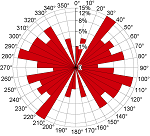 | 80 |
| Moderate network | 50-100 | North by west 42° | 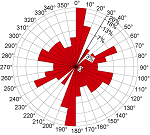 | 83 |
| Small-scale network | <50 | North by west 36° | 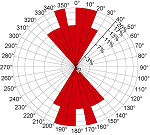 | 82 |
| Small included angle | North by east 49° | 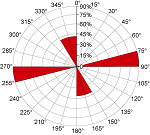 | 81 | |
| Large included angle | North by west 35° | 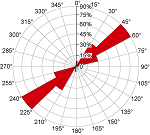 | 60 |
Note: Data with “°” represent the natural fracture orientation. Data with “%” represent the proportion of fractures with their orientation in an angle interval in total fractures. |
2. Key issues in improving FSRV
XU et al. [16] reported that volume fracturing technique is crucial to reservoir stimulation. As to the core theory of volume fracturing, reservoir rocks are "broken" to form fracture network, so as to maximize the area of contact between fracture surface and reservoir matrix and minimize the distance of fluid flow from matrix to fractures and the pressure difference necessary for fluid flow from matrix to fractures. In this way, the well productivity is increased significantly, the production of reserves is maximized, and the recovery of oil/gas is enhanced. The technical features mainly include large displacement, large fluid volume, low-viscosity slick water, and small cluster spacing. Low-viscosity slick water, which can easily infiltrate in formations, facilitates natural fracture opening to enlarge the swept volume [25]. As for reservoirs with large in-situ stress difference and strong plasticity which can hardly be "broken", the subdivided horizontal-well fracture-controlled fracturing technique was developed with reduced cluster spacing in the recent years [17]. This technique, essentially, reduces cluster spacing to maximize the area of contact and shorten the distance of fluid flow from matrix to fractures, instead of focusing on "breaking" reservoirs. This is the biggest difference from the idea of volume fracturing and can be considered as a progress of volume fracturing. The core theory of the volume fracturing technique still works as the guidance for optimizing fracturing design and process in vertical-well fracturing of ultra-deep reservoirs in the Kuqa piedmont zone. Horizontally, in view of the feature that natural fracture orientation is nearly perpendicular to the maximum horizontal principal stress direction, low-viscosity slick water fracturing is used to increase the lateral width of hydraulic fracture, and multi-stage temporary plugging and secondary sand fracturing are combined to create a fracture network composed of major hydraulic fractures and multi-scale natural fractures. Vertically, considering that natural fractures are mainly high angle, gel fracturing is employed to open natural fractures as much as possible, and multi-layer fracturing with softness-and-hardness-oriented subdivision is applied to establish a three-dimensional fracture network.
2.1. Mechanism and conditions of natural fracture opening
Before investigating natural fracture opening, the mechanism of hydraulic fracture initiation and extension in reservoir rocks is analyzed. Extensional fractures are generally considered to open and extend when the stress intensity at the surface of the fracture tip reaches its critical value (fracture toughness). As natural fractures become the major factor of fracture initiation and extension, it is necessary to consider and establish the criteria for discriminating whether or not hydraulic fractures penetrate natural fractures in the three-dimensional space [26-27], as well as the conditions of coupling between hydraulic fractures and natural fractures and the fracture network geometry. In addition to various complex intrinsic features, the opening of in-situ natural fractures is mainly dependent on stress state and the included angle (0°-90°) between natural fracture orientation and the maximum horizontal principal stress direction. The stress at the natural fracture surface can be decomposed into a normal stress, a shear stress, and an intra-fracture fluid pressure. Shearing or tensile activation of natural fractures depends on the interaction of these three forces[26⇓-28].
According to Jaeger's “single plane of weakness” theory[29], the effective normal stress and shear stress applying on a plane of weakness (e.g. fracture plane and surface of joint in rocks) are calculated by
$\sigma_{\mathrm{n}}=\frac{\sigma_{\mathrm{H}}+\sigma_{\mathrm{h}}}{2}+\frac{\sigma_{\mathrm{H}}-\sigma_{\mathrm{h}}}{2} \cos 2 \beta$
$\tau=\frac{\sigma_{\mathrm{H}}-\sigma_{\mathrm{h}}}{2} \sin 2 \beta$
According to Eq. (1) and Eq. (2), the effective normal stress and shear stress on the plane of weakness are related to the maximum horizontal principal stress and minimum horizontal principal stress, and vary with the dip angle of the plane of weakness. When the effective normal stress and shear stress on the plane of weakness of the natural fracture meet the critical failure strength condition, the plane of weakness is in the critical stress equilibrium state. In other words, the condition of mechanical fracture initiation is reached. According to the Mohr's strength theory, the critical strength condition for the plane of weakness of the natural fracture is expressed as
$\tau_{\mathrm{c}}=\tau_{0}+\mu\left(\sigma_{\mathrm{n}}-p_{\mathrm{p}}\right)$
Eq. (3) describes the critical condition of shear failure of natural fractures. In the process of fractured reservoir stimulation, high-pressure fluids in hydraulic fractures infiltrate into natural fractures after hydraulic fractures cross natural fractures, which boosts fluid pressure in natural fractures and diminish effective normal stress applying to natural fractures. The Mohr's circle moves left and intersects the critical line, when shear failure occurs (Fig. 1 ). As per the in-situ stress state (vertical stress of 154 MPa, maximum horizontal principal stress of 165 MPa, and minimum horizontal principal stress of 134 MPa) and typical rock mechanical parameters (frictional coefficient of 0.45 and cohesion of 4.0 MPa) at Well Keshen 134, Eq. (3) was used to calculate the critical shear stress for natural fracture, as shown in Fig. 1 . The Mohr's circle does not intersect the critical line at the initial formation pressure; in other words, natural fractures do not shear. Fluid pressure in natural fractures will at least reach the minimum horizontal principal stress during operation, when the Mohr's circle (red circle in Fig. 1 ) intersects the critical line. This means that natural fractures in target reservoirs are apt to shear during operation.
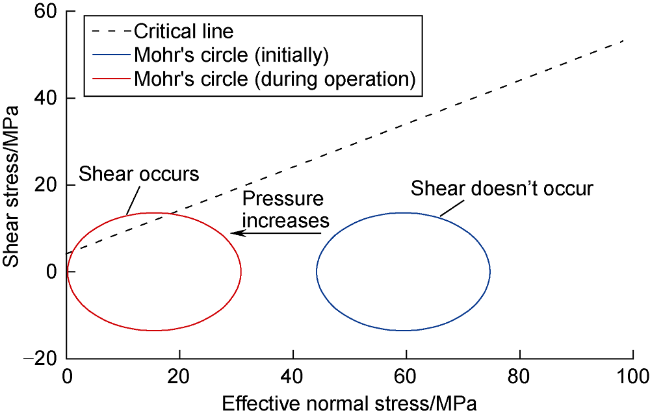
Fig. 1. Change of natural fracture stress state in the process of stimulation, Keshen area, Kuqa. |
The dynamic opening conditions of natural fractures in the Kuqa piedmont zone were obtained according to the Mohr-Coulomb criterion [30-31]. At well depth of 7700 m, for example, natural fractures begin to open at the bottomhole operating pressure of 151.7 MPa; natural fractures are 100% opened at the bottomhole operating pressure of 161.7 MPa. Considering the influence of hydraulic fracture extension on in-situ stress field, most natural fractures are sheared and activated when the intra-fracture net pressure reaches 8-12 MPa (at well depth of 6000-8000 m) during operation, and then hydraulic fractures and natural fractures jointly constitute a fracture network. Through simulation on coupling between hydraulic fractures and natural fractures, the theoretical discrimination charts (Fig. 2 ) were obtained for ultra-deep reservoir stimulation in the Kuqa piedmont zone to generate a complex fracture network. Key parameters involve the maximum horizontal principal stress of 135-150 MPa, stress difference of 25-35 MPa, natural fracture dip angle of 50°-80°, and the included angle between natural fracture orientation and the maximum horizontal principal stress direction of 25°-60°. The criterion of fracture opening was set to be the ratio of shear stress to effective normal stress applying to fractures. The ratio of this value to the internal friction coefficient of natural fractures larger than 0.45 indicates that fractures are susceptible to shear failure.
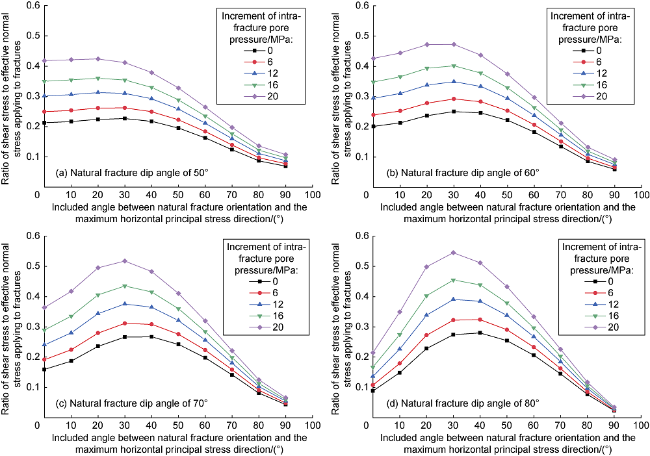
Fig. 2. Theoretical discrimination charts of complex fracture network in ultra-deep reservoirs in Kuqa piedmont zone. |
Some studies [16,32] indicate that a dimensionless horizontal stress difference coefficient (Kh), as indicated by Eq. (4), can be used to diagnose the degree of difficulty that major fractures are diverted and natural fractures are opened. At a same stress difference, a larger minimum horizontal principal stress corresponds to a smaller Kh, smaller natural fracture opening, more difficult fluid filtration into natural fractures, and more difficult natural fracture opening. When Kh is larger than 0.25, major fractures are usually generated, and natural fractures can hardly be opened. Based on the stress in the Kuqa piedmont zone, the horizontal stress difference coefficient in the block was calculated to be 0.21, which means that natural fractures are easy to open.
$K_{\mathrm{h}}=\frac{\sigma_{\mathrm{H}}-\sigma_{\mathrm{h}}}{\sigma_{\mathrm{h}}}$
2.2. Coupling extension of hydraulic fractures and natural fractures
According to the studies [27,33], there are 5 patterns (in 3 categories) of coupling between hydraulic fractures and natural fractures: (1) hydraulic fractures approach natural fractures, but terminate before reaching natural fractures; (2) hydraulic fractures get to natural fractures - hydraulic fractures immediately terminate after reaching natural fractures or open and extend along natural fractures; and (3) hydraulic fractures penetrate natural fractures and continue to extend without opening natural fractures, or hydraulic fractures penetrate and open natural fractures and continue to extend along natural fractures. The last pattern is most favorable for the generation of a complex fracture network. In the Kuqa piedmont zone, there may be various patterns of coupling between hydraulic fractures and natural fractures, in view of complex natural fracture geometries.
To examine the coupling patterns and extension of hydraulic fractures and natural fractures, large-scale physical simulation experiments were performed using the outcrop core samples acquired from the Cretaceous Bashijiqike Formation in the Kuqa piedmont zone. Similar to the reservoirs in Keshen 134 well field, the outcrop core samples are rich in natural fractures. Strike-slip state of three-stress is favorable for the occurrence of shear-slip fractures. An acoustic emission device was installed on sample B1 to monitor the whole process of experiment. The three stresses in the experiment were set to be the maximum horizontal principal stress of 25 MPa, vertical stress of 15 MPa, and minimum horizontal principal stress of 10 MPa, which are consistent with the three-stress relation that the vertical stress lies between the maximum and minimum horizontal principal stresses in the Cretaceous clastic reservoirs in the Kuqa piedmont zone. Experimental fluids were designed to be base fluid + gel (temporary plugging diverting) + base fluid of 9 000 mL at the displacement of 30-390 mL/min (Fig. 3 ). Four fracturing operations were conducted: (1) a fracturing was done using base fluid with gradually increased displacement, and pumping was stopped to measure the pressure drop; (2) a fracturing was done using base fluid with rapidly increased displacement, and pumping was stopped to measure the pressure drop; (3) a fracturing was performed with gel + temporary plugging diverting agent; and (4) a fracturing was performed by injecting base fluid. As shown in Fig. 3 , in the first fracturing when the displacement is increased gradually, pressure rises slowly, indicating the feature that natural fractures are opened; at the displacement of 150 mL/min, the feature of hydraulic fracture opening appears, which is reconciled with the conclusions of overseas experiments [33]. In the second fracturing when the displacement is increased rapidly to build bottomhole pressure, the second hydraulic fracture is induced at the displacement of 150 mL/min; as the displacement is increased further, the pressure does not rise, but only fluctuates slightly, which is attributed to hydraulic fracture extension and multi-scale natural fracture opening if the influences of experimental pipe lines and intra-fracture friction resistance are ignored. Later, gel fracturing fluid and temporary plugging agent are injected at low displacement. Pressure and displacement are basically matched, indicating that the temporary plugging agent enters into the wellbore and does not effectively block the wellbore. In the fourth fracturing with the displacement of 150 mL/min, the pressure increases greatly in huge fluctuations, which is attributed to the resistance of the temporary plugging agent compaction to fluid flow into fractures and multi-fracture opening. The pressure curve fully reflects the feature of natural fracture activation.
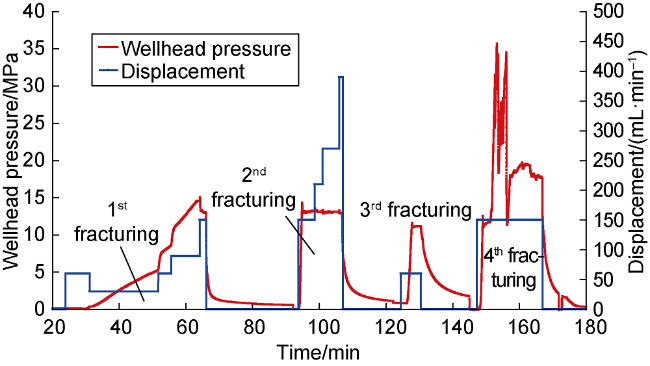
Fig. 3. Pressure curve from the experiment simulating fracture extension in sample B1. |
Core slice observation (Fig. 4 ) validates the analysis of pressure curve. Two hydraulic fractures are generated and many natural fractures are activated, forming an effective fracture network. The large infiltration zone indicates areal displacement with greatly increased FSRV due to the effect of the fracture network, and it also demonstrates that a large swept zone can be generated through vertical-well fracture-controlled fracturing. The G-function analysis of the pressure curve also reveals above features of natural-fracture infiltration zone. This will not be discussed in detail due to space constraints.
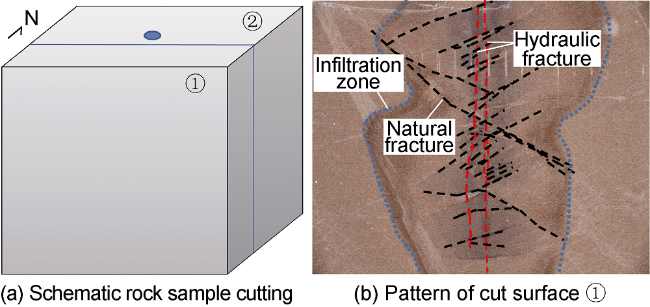
Fig. 4. Fracture section after the experiment simulating fracture extension in sample B1. |
2.3. Conductivity of natural fractures
An experimental study was conducted to evaluate the effects of different activation patterns of natural fractures and proppant concentration on the conductivity of natural fractures. A shear conductivity tester was used, and cores collected from a well in the Keshen block were processed into samples [34]. Depending upon stimulation processes, four experiments were designed (Table 3 ) to evaluate the conductivity of original natural fractures, the conductivity of shear-slip natural fractures, the conductivity of acid-etched natural fractures (in two groups), and the conductivity of extension-opened and proppant-supported natural fractures (in three groups, with different proppant concentrations), respectively. The shear-slip fractures were prepared artificially with 10% acid and 380/212 μm (40/70 mesh) high-strength ceramic pallets to simulate the field sand ratio of 10%. The four experiments cover the main types of stimulation processes in ultra-deep reservoirs in the Kuqa piedmont zone, so they are sufficient to simulate the site situations.
Table 3. Experiments on conductivity of natural fractures |
| Experiment No. | Experimental type | Proppant concentration/(kg•m-2) | Remarks |
|---|---|---|---|
| 1 | Conductivity of original natural fractures | Extensional fractures without proppant | |
| 2 | Conductivity of shear-slip fractures | Without proppant | |
| 3 | Conductivity of proppant-supported fractures | 2.5 | Shear fractures |
| 4 | Conductivity of proppant-supported fractures | 5.0 | Shear fractures |
| 5 | Conductivity of proppant-supported fractures | 7.5 | Shear fractures |
| 6 | Conductivity of acid-etched fractures | Shear fractures, without natural fractures | |
| 7 | Conductivity of acid-etched fractures | Shear fractures, with natural fractures |
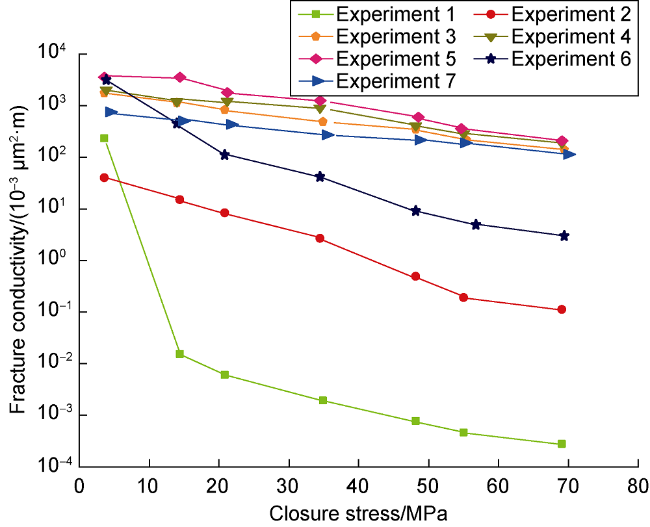
Fig. 5. Experiments on conductivity of natural fractures under different stimulation processes. |
At lower closure stress, open natural fractures or fracturing-activated natural fractures have a certain degree of seepage capacity. However, for the ultra-deep reservoirs in the Kuqa piedmont zone, high closure stress makes the unsupported extensional fractures have extremely low flow conductivity (Experiment 1 in Fig. 5 ), which thus can hardly provide effective seepage capacity. When natural fractures or hydraulic fractures are opened by shear-slip through fracturing, they can provide good conductivity (Experiment 2 in Fig. 5 ). Open natural fractures with proppant supported contribute the best conductivity (Experiments 3-5 in Fig. 5 ). Vertical-well fracturing is an inevitable choice in the Kuqa piedmont zone where the ultra-deep reservoirs limit the application of horizontal wells, and a complex fracture network is difficult to form due to the large difference between the maximum and minimum horizontal principal stresses. Considering the intersection between natural fractures and hydraulic fractures, and the feature that hydraulic fractures are mainly shear-slip fractures under the control of three- stress state, proper solutions are made. For example, filling materials in natural fractures are dissolved by acidification to reduce the net pressure required to open natural fractures; low-viscosity slick water, which is capable of lateral infiltration, is used to activate natural fractures; the product of displacement and viscosity is optimized [32] and the multi-stage temporary plugging with gel is adopted to achieve interconnection between major hydraulic fractures and natural fractures; small- size proppant is preferably used to enter more fractures to achieve effective placement of proppant, thus forming an effective FSRV with supported major fractures and branch fractures.
3. Techniques for improving FSRV
3.1. Intra-fracture temporary plugging and secondary fracturing
According to the occurrence of natural fractures in ultra-deep reservoirs in the Kuqa piedmont zone and the results of large-scale physical simulation experiments, it is believed that fracture acidizing to create a complex fracture network is applicable in this area, but the high stress difference brings a challenge to the process. For the study area, where vertical-well fracturing is prevailing, multi-stage temporary plugging is proposed to change the infiltration mode of fracturing fluid in the formations. The outcrop samples with natural fractures were taken from the Cretaceous strata in the Kuqa piedmont zone to carry out physical simulation experiments on temporary plugging of open natural fractures. Natural fractures are relatively developed in the study area, with a density of 0.5-3.0/m. These fractures, mainly partially- and completely-filled, have an included angle of 45°-60° with the maximum horizontal principal stress direction and the dip angle of 50°-70°. High-angle fractures are common. Natural fractures can be opened through fracturing to connect more layers longitudinally and enhance the production of ultra-deep very-thick reservoirs. Therefore, the outcrop core samples from this area are representative for the experiments.
The simulation experiments were completed using the large-scale physical simulator at the Key Laboratory of Oil and Gas Reservoir Stimulation of China National Petroleum Corporation (CNPC). The parameters of the sandstone sample (No. A12) from the Kuqa piedmont zone are as follows: elastic modulus of 10-22 GPa, Poisson's ratio of 0.22-0.23, rock volume compressibility of (2-5)×10-4/MPa, and compressive strength of 91-160 MPa. The outcrop sample contains multiple irregular natural fractures, with fracture opening of 0.1-0.2 mm and filled with mud or calcite. During the experiments, the maximum horizontal principal stress was 30 MPa, the minimum horizontal principal stress was 10 MPa, and the vertical stress was 20 MPa, which satisfied the three- stress conditions for generating shear fractures. According to the field conditions, two fracturing fluids were used, i.e. base fluid (0.3% guar gum, with red tracer) and temporary plugging gel fracturing fluid (0.3% guar gum + 1% fiber + crosslinker, with green tracer). Fluorescent tracer tracking and core sample cutting were used to diagnose the fractures in the sample. First, the base fluid was injected to generate one major fracture. Then, the temporary plugging fracturing fluid was injected, and the pump was stopped to measure the pressure drop. Finally, a secondary fracturing was conducted to verify whether the fracture is diverted.
As shown in Fig. 6 , when the base fluid is first injected, with the displacement increased from 10 mL/min to 30 mL/min and stabilized at 30 mL/min, the slope of the pressure rise curve is large, suggesting an obvious buildup of bottomhole pressure. At 16.89 MPa, the rock is fractured to generate the first major fracture. As the bottomhole pressure drops rapidly to 5.95 MPa, the fracture extension pressure ranges from 5.95 to 6.37 MPa, with a slight increase, suggesting a normal extension of fracture. At this time, the net bottomhole pressure is calculated to be 12.5 MPa. The pump is stopped to measure the pressure drop for the first time. When gel fracturing fluid is injected for 20 min, the pressure is basically kept stable. This mainly reflects the process that the fiber temporary plugging agent gradually settles and accumulates, but the plugging has not been achieved. Then, another base fluid is injected to push the gel fracturing fluid carrying temporary plugging agent into the fracture. A gradual pressure rise can be observed, reflecting the process that the fiber temporary plugging agent is gradually compacted and temporary plugging is gradually formed. When the pressure reaches 35.13 MPa, the rock is fractured, with the fracture pressure 18.24 MPa higher than that in the first fracturing, which indicates that the temporary plugging agent is effective in plugging the first fracture. As the pressure drops, the first diverting fracture is opened, followed by a rapid secondary pressure buildup. When the pressure rises to 38.57 MPa, the second diverting fracture is opened. The net pressure in the closed fracture is 14.31 MPa, about 7.8 MPa higher than that when the major fracture is opened. This increase in pressure is a characteristic of multiple fractures. After the pump is stopped to measure the pressure drop for the second time, the base fluid is injected. When the pressure rises to 43.55 MPa, the rock is fractured again, and the third diverting fracture is opened. In the subsequent injections, the pressure fluctuates frequently and decreases gradually. This is because more fractures are opened after the third diverting fracture is opened, resulting in increasing filtration loss. The gradual increase of the intra-fracture net pressure and pump-off pressure mainly reflect the effective plugging resistance increased by the fiber temporary plugging agent and the intra-fracture net pressure increased by the opening of multiple fractures. The pressure curve fully reflects the opening of multiple natural fractures by temporary plugging diverting. The post-experiment cut rock samples with fluorescent tracer distribution patterns shown in Fig. 7 confirm what Fig. 6 reflects. The red tracer in the major fracture shows a pattern of full opening on the section, and the temporary plugging gel (green) injected subsequently also enters the major fracture. Three diverting fractures are clearly visible. In particular, the green tracer in the near borehole zone shows the opening of multiple natural fractures, which confirms that the temporary plugging diverting technology can effectively realize fracture diverting and form a complex fracture network. The laboratory experiments have verified the possibility of forming small spaced, dense fractures, and also found that multiple fractures with small cluster spacing extend and converge into one fracture, verifying the idea that one cluster is one fracture in horizontal well multi-cluster fracturing. For the first diverting fracture, there are two subparallel fractures near the borehole, which then merge into one fracture. This is consistent with the phenomenon of "fracture swarms" observed in post-frac cores in North America [35-36]. The formation mechanism of "fracture swarms" needs to be further investigated.
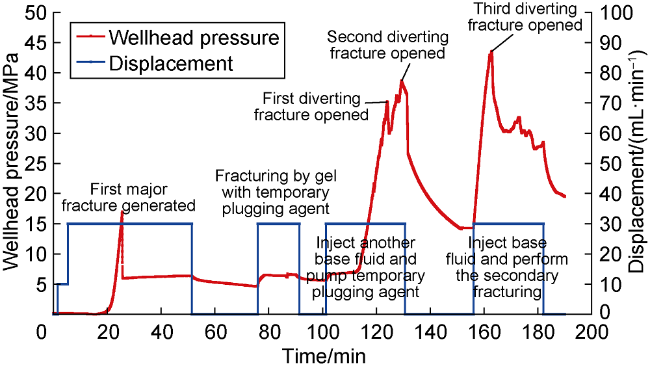
Fig. 6. Pressure curve of sample A12 with temporary plugging diverting. |
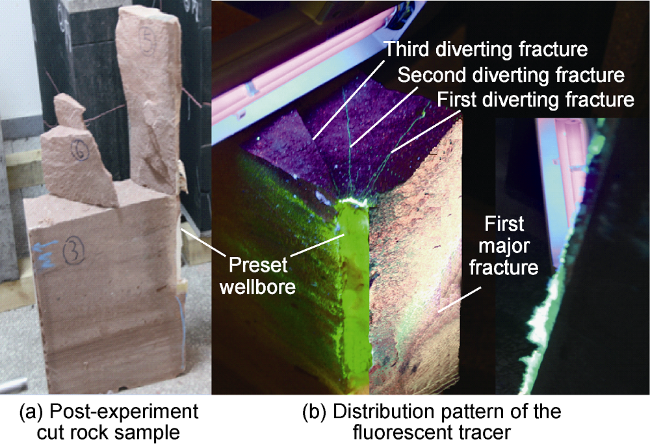
Fig. 7. Opening of multiple fractures in sample A12 with temporary plugging diverting. |
A large-scale physical simulation experiment of temporary plugging diverting in combination with microseismic monitoring was also conducted for sample B1. Due to great fluctuations in the pressure curve (Fig. 3 ), a good diverting effect is monitored microseismically (Fig. 8 ). The maximum horizontal principal stress direction designed in the experiment is north-south (i.e., the hydraulic fracture extension direction). The first fracturing was performed by gradually increasing the displacement. The operation stages are represented by different colored microseismic events in Fig. 8 a. The green point is the first displacement stage, the blue point is the stage of highest displacement, and the red point is the pressure drop stage after the pump is stopped. The microseismic events basically occur around the borehole and do not follow the mechanical behavior that the hydraulic fracture extends along the direction of the maximum horizontal principal stress. This verifies the understanding that the gradual increase of displacement opens only natural fractures in the near-wellbore zone and does not induce any fracture[32]. The second fracturing was conducted by rapidly increasing the displacement. Two colors are used to represent the microseismic events in Fig. 8 b, where the red points are the normal experimental stage and the green points are the pressure drop stage after the pump is stopped. The microseismic events are distributed in a north-south direction, and fracture extends dominantly in the south zone of the borehole, suggesting that the hydraulic fracture can more easily extend southward due to the natural fractures in the rock. It also indicates an obvious generation of hydraulic fracture, verifying the understanding that a rapid establishment of bottomhole pressure is favorable for inducing hydraulic fracture [33]. After adding temporary plugging agent for the third and fourth fracturing, the distribution area of microseismic events changes significantly. This process can be divided into 4 stages. In the first stage, the temporary plugging agent is injected at a lower displacement (60 mL/min) for the third fracturing. The microseismic events (the green points in Fig. 8 c) are still basically around the borehole, with a certain degree of expansion to the west, which is contributed by natural fractures. In the second stage, the base fluid is injected at 150 mL/min for the fourth fracturing. The pressure curve rises gradually and reaches the highest value. The microseismic events in this stage (the blue points in Fig. 8 c) extend to the west or divert to the north and northeast, reflecting that the fibers temporarily block the original fracture initiation direction and the fracture starts to divert. According to the microseismic events revealed by the blue points in Fig. 8 c, two distinct fracture zones are identified, and they are consistent with the two hydraulic fractures observed in Fig. 4 . In the third stage, the pressure drops from the highest value to 11.32 MPa after several fluctuations. The microseismic events (the pink points in Fig. 8 c) are distributed in multiple orientations, reflecting the opening of natural fractures or the generation of new fractures in multiple orientations. These fractures mainly extend in the area north (mainly north and northeast) of the second fracturing initiation (southward from the perforation), which indicates that the south-extending fractures generated by the second fracturing and this temporary plugging fracturing are effectively plugged. In the fourth stage, the pressure rises from 11.32 MPa to 19.48 MPa, followed by slight fluctuations. The distribution of microseismic events (the red points in Fig. 8 c) reflects that the diverting fractures extend in a near east-west direction in the northern part of the range in which the fractures extend in the third stage, and the swept volume in the northeast direction is improved.
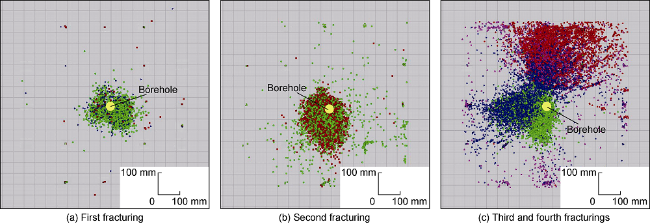
Fig. 8. Top view of acoustic emission monitoring event responses of sample B1. |
Comparing the feature that the major fracture extends in the south zone of the borehole and in north-south direction during the second fracturing, and the microseismic patterns of the third fracturing (temporary plugging fracturing) and the fourth fracturing (fracturing after temporary plugging), and combining with the analysis results in, for example, Fig. 4 , a few insights can be obtained. First, the natural fracture orientation influences the direction of hydraulic fracture extension (not necessarily forming symmetric fractures along the perforation holes), while the hydraulic fracture extends along the direction of the maximum horizontal principal stress. Second, the natural fractures increase the lateral sweep width of hydraulic fracture, and the effective coupling of hydraulic fractures and natural fractures can form a complex fracture network. Third, the large-scale physical simulation experiments combined with acoustic emission monitoring verify the effect of temporary plugging diverting + secondary fracturing technique on the formation of complex fracture network. It confirms the conclusions of relevant studies in North America, that is, the displacement can be increased gradually to open the natural fractures in the near-wellbore zone, and be increased rapidly to induce major fractures in the near-wellbore zone.
3.2. Fluid technology for improving FSRV and support efficiency
3.2.1. Weighted fracturing fluid technology
The weighted fracturing fluid technology was initially developed in the ultra-deep well fracture acidizing in the Tarim Basin. It solved the engineering problem of restricted wellhead pressure. For an ultra-deep well with vertical depth of 7000 m, the weighted fracturing fluid technology can reduce the wellhead pressure by 8-20 MPa and increase the net bottomhole pressure by 10-20 MPa, at the same displacement (less than 5 m3/min). This is conducive to increasing the probability that natural fractures are activated and opened to create a more complex fracture network.
RIPED and PetroChina Tarim Oilfield Company started in 2002 to jointly study the weighted fracturing fluid. So far, three weighted fracturing fluid systems have been developed, including KCl weighted fracturing fluid (max. density of 1.17 g/cm3), NaBr weighted fracturing fluid (max. density of 1.50 g/cm3), and NaNO3 weighted fracturing fluid (max. density of 1.35 g/cm3), with a temperature resistance of 180 °C. The NaNO3 weighted fracturing fluid has been widely used due to its high performance and low cost, but its application is restricted with the improvement of safety and environmental requirements in the Tarim Oilfield. Thus, a new green and environmentally friendly low-cost fracturing fluid weighted with calcium chloride (CaCl) was developed [37], with the maximum density of 1.42 g/cm3. Meanwhile, the supporting salt-resistant polymer thickener and a new salt-resistant cross-linking agent were developed to make the fluid system have good high-temperature rheological shear resistance with a maximum temperature resistance of 200 °C (Fig. 9 ), strong sand-carrying capacity, thorough gel-breaking, and low damage. In particular, the new fluid system has broken through technical bottlenecks in industrial calcium chloride weighted fracturing fluid system which is not well performed in temperature resistance and gel breaking. To solve the problem of stress corrosion of the completion string under high temperature of high salt solution, a salt-resistant corrosion inhibitor was also developed. The new weighted fracturing fluid has been successfully tested in ultra-deep wells in the Tarim Oilfield.
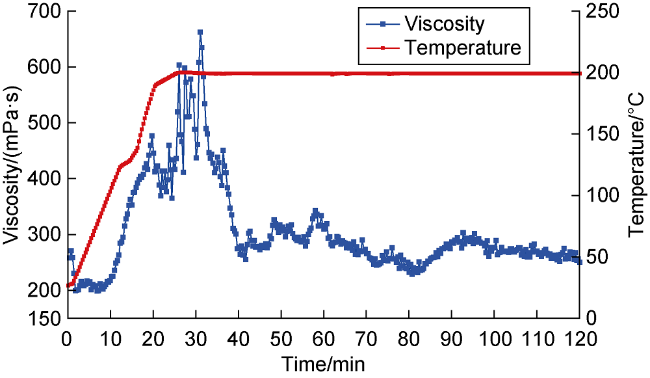


Fig. 9. Rheological curve of CaCl weighted fracturing fluid at 200 °C. |
3.2.2. Low-viscosity and high-elasticity fracturing fluid technology
Natural fracture activation theory, large-scale physical simulation experiments, and field practice have confirmed [8,31 -32] that low-viscosity fracturing fluid is more likely to enter the plane of weakness of natural fractures, increase fluid pressure inside natural fractures, open natural fractures, and form a complex fracture network. Gel fracturing is to control the filtration loss at the fracture plane with consideration to the high viscosity of the fluid, so that the fracturing fluid can extend along the major fracture and thus create long fractures. Therefore, volume fracturing at large displacement, which is commonly used in shale oil and gas well, is difficult to apply to the ultra-deep wells with ultra-high temperature and ultra-high pressure in the Tarim Basin. With the limited range of displacement, considering the feature that low-viscosity fluid is easy to infiltrate, a sufficient intra-fracture net pressure should be built to open natural fractures and enable the proppant to transport a long distance into the major fracture and branch fractures at all levels. It is difficult to increase displacement during ultra-deep well fracturing, and sand carrying by gel for improving the sand suspension of fracturing fluid may make the creation of complex fractures more difficult. For purpose of improving the swept volume and proppant-carrying efficiency, the best way is to develop a low-viscosity and high-elasticity fracturing fluid system. A high-temperature, low-viscosity, high-elasticity fracturing fluid was developed by RIPED. The system can resist a temperature up to 180 °C, and has a viscosity greater than 50 mPa·s after shearing at 170 s-1 for 120 min. The viscoelastic test data of this fluid are as follows: the storage modulus is 30.77 Pa and the energy dissipation modulus is 7.55 Pa for the formulation at 120°C; the storage modulus is 41.32 Pa and the energy dissipation modulus is 8.73 Pa for the formulation at 170°C. These data are significantly higher than some other fracturing fluid systems, reflecting a good sand-carrying performance. The 550/270 μm (30/50 mesh) ceramic pellets are added to the fracturing fluid (0.5% emulsion) with an initial viscosity of 75 mPa·s to make a sand ratio of 18%. The settling heights of the proppant are 0, 5, and 12 cm after 20, 60, and 120 min of resting at 140°C, respectively. This proves that the fluid is highly capable of carrying sand statically at high temperatures, which is conducive to transporting the proppant farther into the fracture. In the field application, the viscosity of the fluid can be further reduced. Moreover, the use of 212/109 μm (70/140 mesh) small-size proppant can improve the swept volume and also make the proppant enter the finer natural fractures, thereby improving the support of the fracture network and the FSRV.
4. Application of techniques for improving FSRV
4.1. Multi-stage fracture-network acid fracturing technology
For reservoirs with extremely abundant natural fractures, the multi-stage fracture-network acid fracturing technology is developed. The fluid system is composed of slick water, linear gum, earth acid, and high-temperature gelling acid, and multi-stage composite fracturing mode is applied. Multiple layers are perforated for one time, and the perforation thickness reaches 70% of the layer thickness. The ball-drop temporary plugging process is used for layering, and the layering materials are degradable, multi-scale (1, 3, 6 and 8 mm in diameter) combination of granular ball-sealers, filamentary and powdered degradable plugging agents, etc. The degradation rate is greater than 95% at 140 °C in 5 h. For a single well, the injected fluid volume is 800-1500 m3, and the displacement is 4.0-6.5 m3/min.
Well Keshen 907 is a typical well using this technology, where the perforation was conducted in an interval of 89.5 m from 7487.5 to 7577.0 m. The perforation thickness is 41.5 m/10 layers, which are divided into 2 stages for multi-stage temporary plugging acid fracturing. As to the three-stress state of the reservoir, the vertical stress is centered. The fractures are shear-slip fracture. After temporary plugging, the pressure increased by 16.26 MPa, suggesting an obvious diversion effect. The gas production reached 94.8×10⁴ m3/d (9 mm nozzle, tubing pressure 93.8 MPa) during test after acid fracturing.
4.2. Multi-stage temporary plugging fracture-network sand fracturing technology
For reservoirs with relatively developed natural fractures, the multi-stage temporary plugging fracture-network sand fracturing technology is developed. Slick water and high-temperature resistant weighted gel fracturing fluid is used for fracturing, and the displacement is maximized, in order to induce high-conductivity fractures in the near-wellbore zone to connect and open natural fractures in the far-wellbore zone, thereby creating a fracture network consisting of hydraulic fractures and natural fractures. The weighted fracturing fluids are NaNO3 weighted fracturing fluid (density of 1.35 g/cm3, temperature resistance of 180 °C) and KCl weighted fracturing fluid (25% KCl, density of 1.15 g/cm3, temperature resistance of 160 °C). Cluster perforation technique (8-12 clusters) is used, and the perforation thickness accounts for 30%-40% of the net reservoir thickness. The perforation thickness and number of perforation holes are optimized according to the multi-cluster flow-limiting model. The "degradable filamentary fiber + ceramic pellets" temporary plugging + secondary sand fracturing technique is used. For a single well, the injected fluid volume ranges from 800 to 3500 m3, the sand volume ranges from 28 to 160 m3, and the displacement ranges from 5.0 to 12.0 m3/min.
Well Bozi 104 is a typical well using this technology, where the perforation was conducted in an interval of 36 m from 7487.5 to 7577.0 m. Clustered perforation mode was used by dividing the perforation interval into 2 clusters and 8 layers. To improve the complexity of fractures, a “fiber + ceramic pellets” temporary plugging + secondary fracturing technology was used. The technology includes the use of gel to break the rock to form the major fracture to establish sufficient net pressure for opening the fracture, the use of slick water to activate the lateral natural fracture and expand the swept volume, and the use of linear gel to carry sand to improve the proppant transport distance and effective support capacity. A total of 1110.81 m3 fluid and 50.0 m3 sand were used in fracturing. The maximum operating pressure was 105.7 MPa, the maximum displacement was 5.7 m3/min, and the post-frac production was 58.5×10⁴ m3/d gas and 20.8 t/d oil (7 mm nozzle, tubing pressure 82.0 MPa) during test. Well Bozi 104 exhibits moderate reservoir properties in the study area, but its production after fracturing is significantly higher than the neighboring wells.
Another typical well, Bozi 9, was perforated in the interval of 7677.0-7760.5 m, with the perforation thickness of 68.5 m in 5 layers. Totally, 20 natural fractures were detected, and the included angle between the natural fracture orientation and the maximum horizontal principal stress direction was 85°, which is conducive to the intersection of hydraulic fractures and natural fractures to form a complex fracture network. The elastic modulus was 25 509-26 693 MPa, the Poisson's ratio was 0.25-0.28, and the three-stress state reflected the centering of the vertical stress, suggesting that shear-slip fractures are more likely to generate by fracturing, so the volume fracturing technology is feasible. According to the natural fractures and reservoir physical properties, the perforation interval was divided into 2 stages for temporary plugging fracturing. A combination of inter-layer ball- drop temporary plugging for layering and intra-fracture temporary plugging diverting was applied. The fluid system was slick water + weighted guar gum fracturing fluid. The optimized combination of small-size proppant (212/109 μm (70/140 mesh) + 380/212 μm (40/70 mesh) + 550/270 μm (30/50 mesh)) was used. The displacement was 4.5-5.3 m3/min, the operating pressure was 100-116 MPa, the fluid volume was 898 m3, and the sand volume was 53 m3. The post-frac production was 167 t/d oil and 70.5×10⁴ m3/d gas during test (8 mm nozzle, tubing pressure 94 MPa). This well records a success of volume fracturing of the reservoir at a burial depth of nearly 8000 m. It contributes to the estimation of more than 100 billion cubic meters of gas resources in the Bozi 9 block in the Kuqa piedmont zone.
4.3. Vertically multi-stage subdivision fracturing technology
For very thick reservoirs with underdeveloped natural fractures, the use of mechanical multi-stage layering will lead to too many layers and high operation risks. To solve this problem, the technology of multi-stage layered fracturing is developed, which uses a single tool to separate intervals and drops balls for temporary plugging to divide layers in each interval. This technology of fracturing of multiple layers by vertically softness-and-hardness- oriented subdivision can increase the vertical FSRV and achieve the full-section production of continuous very- thick reservoirs.
Well Bozi 1002 is a typical well using this technology. It was fractured by 215 m in the interval of 7487.5-7577.0 m, at the temperature of 154 °C and the pressure of 103 MPa. The interval was divided into 2 layers using ball-activated sliding sleeve, and steering balls combined with large particles were used to achieve vertical temporary plugging within a layer. Fracturing was carried out in 7 clusters, with the displacement of 3.0-6.5 m3/min, the operating pressure of 110-118 MPa, the fluid volume of 2560 m3, and the proppant of 159 m3 (150 m3 of 380/212 μm (40/70 mesh) high-strength ceramic pellets, and 9 m3 of 550/270 μm (30/50 mesh) precoated sand). The post-frac production was 74×104 m3/d gas (9 mm nozzle, tubing pressure 77 MPa). This technology has been applied to 26 wells, with the average open-flow rate of a single well increased by 4.92 times. The gas production profile test shows that the reservoir is fully recovered by fracturing, reflecting the effect of a "3D fracture network" in improving the vertical FSRV.
4.4. Weighted-fluid refracturing technology
Weighted fracturing fluid is used to reduce the wellhead pressure to make fracturing possible for wells where sand fracturing is difficult and to increase the effective fracture length and swept volume. For example, in Well Keshen 13 (7430 m), acid fracturing was implemented in the early stage, with a displacement of 1.2-4.3 m3/min and an operating pressure of 48.3-117.5 MPa. The tested production after acid fracturing was 6.45×10⁴ m3/d (4 mm nozzle, tubing pressure 43.91 MPa), lower than the expectation. Later, refracturing was conducted using the NaNO3 weighted fracturing fluid, with the displacement increased to 4.0-5.0 m3/min and the operating pressure of 99.0-115.0 MPa. The operating pressure decreased slightly while the displacement increased. The tested production after refracturing reached 34.38×10⁴m3/d (6 mm nozzle, tubing pressure 74.22 MPa), and the tubing pressure was 69% higher than that after acid fracturing. It can be determined that the gas supply capacity of the distal reservoir has increased significantly, indicating that the refracturing with weighted fracturing fluid has obtained a better fracture system with a larger swept volume, resulting in a significant increase in FSRV. This technology has helped realize the gas resources of over 200×108 m3 in the tectonic block controlled by Well Keshen 13. Accordingly, 12 wells were planned in this block in 2020, with an expected production capacity of 10×108 m3. The planned wells were completely drilled by the end of 2021, achieving a stable production of 460×104 m3/d, and the actual yearly production capacity reached 16.5×10⁸ m3. These achievements are significantly supported by the refracturing technology with weighted fracturing fluid.
4.5. Overall application effect
The reservoir fracturing of ultra-deep wells with ultra- high temperature and ultra-high pressure in the Tarim Oilfield has continuously challenged the engineering limits. For example, the depth of acid fracturing increased from 8023 m (Well Keshen 7) in 2011 to 8882 m (Well Luntan 1) in 2019; the depth of sand fracturing increased from 6930 m (Well Dabei 301) in 2010 to 7800 m (Well Bozhi 9) in 2019; the reservoir temperature increased from 150 °C to 190 °C. The Kuqa foreland thrust belt in the Tarim Basin has a wide burial depth (5500- 8500 m), where the reservoir matrix is tight due to compaction and natural fractures are developed. These characteristics make the traditional fracturing process infeasible for reservoir stimulation. Through years of joint efforts, RIPED and PetroChina Tarim Oilfield Company have developed a series of fracture-controlled stimulation technologies suitable for the Kuqa piedmont zone. The technologies include fracture-network acid fracturing, multi-stage temporary plugging + secondary fracturing, fracturing of multiple layers by vertically softness-and- hardness-oriented subdivision, and weighted-fluid refracturing. These technologies have been applied in about 150 wells, revealing the open-flow rate of a single well increased by 3-6 times. By the end of 2021, the annual gas production in the Kuqa piedmont zone was (270-280)×108 m3, with an average single-well production of 45×104 m3/d. In some blocks, these technologies have solved the problems of low production from exploratory wells, unconfirmed reserves, and uncommercial development. The fracture-controlled stimulation technologies have become an important means to confirm the reserve scale and enhance the development effect of the trillion-cubic-meter-scale gas field groups in the Kuqa foreland basin.
5. Conclusions
The reservoir conditions of the ultra-deep wells with ultra-high temperature and ultra-high pressure in the Kuqa piedmont zone are conducive to the extensive application of volume fracturing. The three-stress state in this area reflects the centering of vertical stress, and the hydraulic fractures are mainly shear-slip fractures, which provide good conditions for implementing volume fracturing to improve the fracture-controlled stimulated reservoir volume. Natural fractures are developed in the major layers, among which shear fractures account for 80% and high-angle (greater than 60°) fractures account for more than 50%. The high-angle natural fractures can be used to improve the vertical sweep efficiency. The natural fracture orientation is nearly perpendicular to the direction of the maximum horizontal principal stress. Thus, according to the technical concept that low-viscosity fluid is favorable for filtration in volume fracturing, low-viscosity fracturing fluid can be used to activate the natural fractures lateral to the major fracture and allow them to extend to increase the lateral sweep width and improve the swept volume.
Since some reservoirs are tight, without natural fractures, or not efficiently fractured, about 40% of the wells in the Kuqa piedmont zone are moderate- to low-production wells. Large-scale physical simulation experiments and field practices suggest that volume fracturing should be applied to such reservoirs. Moreover, technical solutions and design parameters should be optimized, and artificial interventions such as temporary plugging diverting and secondary fracturing should be taken to improve the FSRV, thereby enhancing the fracturing effect of reservoirs.
As to the three-stress state in the ultra-deep reservoirs in the Kuqa piedmont zone, the ratio of shear stress to effective normal stress is greater than the friction coefficient (0.45), so that the shear fracture becomes the main feature of fracture opening. Most natural fractures have a net pressure of 8-12 MPa during fracturing, suggesting the satisfactory mechanical conditions for forming a complex multi-scale fracture network. The stress difference coefficient is 0.21, much smaller than the value (greater than 0.25) necessary for forming only the major fracture, indicating that natural fractures have a good opening ability. All these conditions lay the theoretical foundation for the implementation of volume fracturing technology to increase the FSRV.
Large-scale physical simulations combined with microseismic monitoring show that temporary plugging diverting and secondary fracturing can achieve multiple fracture diversions, providing an experimental basis for the site application of relevant techniques. Lateral filtration width and effective filtration zone along the major fracture are observed in the rock samples, reflecting that hydraulic fractures and natural fractures are coupled effectively. This verifies the theoretical inference that low-viscosity fracturing fluid is conducive to increase the lateral width of fractures in vertical-well volume fracturing, thus providing an experimental basis for volume fracturing in vertical-wells.
By combining large-scale physical simulation experiments and field practices, four technologies that are suitable for improving FSRV in different types of reservoirs are developed. The technologies include fracture- network acid fracturing, multi-stage temporary plugging + secondary fracturing, fracturing of multiple layers by vertically softness-and-hardness-oriented subdivision, and weighted-fluid refracturing. The supporting processes and fluids have also been developed, including an optimized design method of multi-cluster perforation in vertical well, a combination of multi-stage temporary plugging and secondary fracturing, volume fracturing process with gel rock-breaking + slick water carrying sand + small-size proppant, low-viscosity and high-elasticity fracturing fluid, and new environmentally friendly weighted fracturing fluid.
It is recommended to research the ultra-low friction mechanism and ultra-low friction fracturing fluid system and deepen the research on the resistance reduction mechanism of weighted fracturing fluid. It is also recommended to research ultra-high temperature fracturing tools in ultra-deep layers, and develop more volume fracturing techniques for ultra-deep reservoirs. These efforts are expected to facilitate the efficient exploration and development of extremely deep (greater than 10 000 m) reservoirs.
Acknowledgment
This work was guided by Professor XU Yun from RIPED, and also supported by XU Minjie, WANG Liwei, XIU Nailing, HAN Xiuling, WANG Liao and GAO Ying from RIPED. The authors express thanks to them all.
Nomenclature
Kh—horizontal stress difference coefficient, dimensionless;
Pp—pore pressure, MPa;
β—dip angle of the plane of weakness, (°);
μ—friction coefficient, dimensionless;
σH, σh—maximum and minimum horizontal principal stresses, MPa;
σn—effective normal stress, MPa;
τ—shear stress, MPa;
τ0—strength of cohesive force, MPa;
τc—critical shear stress, MPa.