

Introduction
Water flooding is the main development method for oilfields in China, and the production of water flooding oilfields accounts for more than 60% of the total production of oilfields in China at present. The fine separated zone water injection technology plays a key role in the long-term stable production of Daqing Oilfield and the process of increasing reserves and production of Changqing Oilfield, NW China. It is expected that water flooding will still be the main technical method to improve oil recovery and stabilize oil production by controlling water cut in China's oilfields in the next 10 years. PetroChina Co Ltd. has 5.7×10⁴ wells on separated zone water injection. The main applied technology on those wells is the bridge eccentric together with cable efficient measure-ment and adjustment technology, which will need manual operations for more than 400 000 times annually, and costs huge resource consumption. With the continuous promotion and application of fine separated zone water injection technology in recent years, the development of water flooding is facing many new situations. Such as the well number of separated zone water injection wells is increasing year by year, the injection layers become refining, and the measurement and adjustment periodic is gradually shortening and so on. Those changes make the workload of measurement and adjustment increase sharply and the cost increase significantly. Furthermore, the data obtained by separated zone water injection still cannot meet the demands of the development plan optimization [1-2]. The digitalization for separated zone water injection is an inevitable choice to solve the current production contradiction, optimize the development plan, reduce costs and increase efficiency, and is an important aspect for smart oilfield construction in China.
Downhole monitoring and data transmission are the key and difficult points to realize the digitalization of separated zone water injection. Acquiring real-time wellbore and reservoir data is a challenge due to the complexity of long-distance downhole data transmission and connection, and higher requirements to the reliability of systems in harsh or extreme production environments. This paper focuses on the development process of downhole monitoring and data transmission technology for separated zone water injection in China. Combined with the current production situations of oilfields, production demand and the characteristics of existing downhole monitoring and data transmission technology, the development direction of downhole monitoring and data transmission technology for separated zone water injection is proposed.
1. The development process of downhole monitoring and data transmission technology for separated zone water injection
1.1. Traditional downhole data acquisition methods
1.1.1. Retrievable downhole storage sensor technology
From the 1980s to 1990s, downhole data was mainly obtained by using retrievable downhole storage sensors. The storage sensors are run downhole with the completion string, or when the downhole parameters need to be measured, storage sensors are run downhole by steel wire or hydraulic delivery. The sensor can measure downhole parameters and store them in the instrument. After measurement, the sensors are lifted to the ground by steel wire or hydraulic delivery, and then the downhole data stored in the sensor can be read [3⇓⇓⇓-7]. Steel wire fishing is mainly suitable for eccentric water injection string, and hydraulic fishing is mainly suitable for concentric water injection string.
The use of steel wire to fish double-channel pressure gauge for separated zone pressure test and packer sealing test are both belong to this method. Taking eccentric separated zone water injection string as an example, when the pressure test is conducted, the downhole plug is fished at first, and then the double-channel pressure gauge is run into the eccentric hole of the eccentric water distributor. This pressure gauge can measure the tubing pressure and the formation pressure at the same time. After measurement, the double-channel pressure gauge is fished by steel wire and then the former downhole plug is run into its former position again to reinstate normal water injection. The data playback can be done from the storage fished double-channel pressure gauge to obtain formation pressure or map the pressure build-up curve and so forth. When the packer-sealing test is conducted, the plug-in double-channel pressure gauge is run into the water distributor, as shown in Fig. 1 , and can collect the pressures of tubing and casing simultaneously. The ground injection valve performs "open, close and open" actions to change the water injection pressure as an excitation signal, resulting in changes in the annulus pressure of the excitation layer. After that, the pressure gauges are fished. Then the pressure curves are mapped through data playback from the gauges and analyzed to judge whether the packers are sealed.
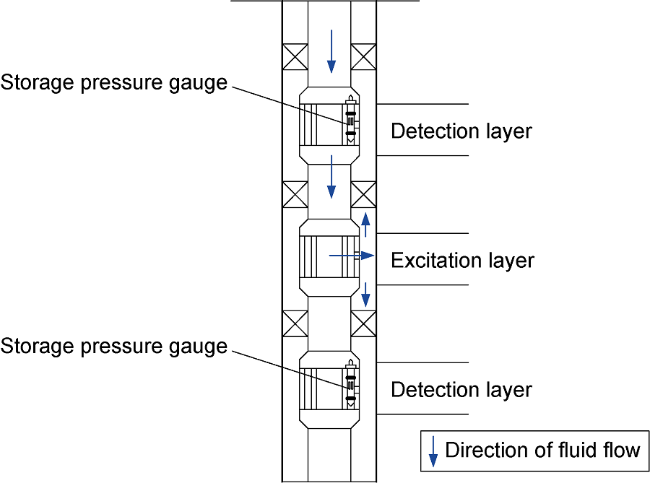
Fig. 1. Schematic diagram for packer-sealing test of storage pressure gauge. |
However, the fishing sensor will affect the downhole flow state and reduce the accuracy of the test data. That is, it cannot reflect the formation state accurately. In addition, the whole test process is cumbersome, the test efficiency is low, and the accident rate of dropping or instrument stuck is high.
1.1.2. Cable communications and testing technology
With the in-depth development of oilfields, the contradiction between layers increases, so it is necessary to increase the measurement & adjustment period to ensure the qualified rate of water injection. In order to shorten the field test time and reduce the workload effectively, the separated zone water injection process with "cable supporting bridge eccentric water injection string and bridge concentric water injection string" as the core was developed and applied by scale in the 1990s [1]. The core is to replace steel wire with cable, and carry downhole electric measuring and adjusting instrument for operation. The system composition is shown in Fig. 2 . The system consists of three parts: electric measuring & adjusting instrument, cable winch and ground control system. The downhole electric measuring & adjusting instrument is connected with the plug of the bridge eccentric water distributor to realize the automatic adjustment of the flow rate without fishing the plug by manual adjustment. At the same time, the online real-time acquisition of downhole flow, pressure, temperature and other signals greatly improves the measurement and adjustment efficiency of water injection wells. The downhole electric measuring and adjusting instrument is connected to the ground control system through the cable winch. The ground control system mainly completes the power supply control, communication, collection and processing of upload signal, which can realize the real-time monitoring of the water injection volume of each layer, the monitoring of the adjustment process, the drawing of the result curves and the water-absorption index curves and so on. In addition, it can realize the signal transmission between the ground control system and the downhole measuring & adjusting instruments by DC carrier wave modulating. That is, with the help of the capacitance and resistance characteristics of the cable itself, the capacitance charge and discharge, and the equivalent relationship with the resistance is used to achieve the effect of voltage modulation, to load the measurement and control signal in the power supply system for high-speed time-sharing transmission. At the same time, through program optimization, the loaded measurement and control signal is directly modulated onto the baseband to achieve the amplitude and frequency of the carrier wave. In addition, the principle of suppression function is used to make the measurement and control signal always near the baseband to overcome the signal attenuation and distortion caused by the cable length, improving the reliability and stability of measurement and control signal transmission. Therefore, the signal transmission distance can reach more than 4 km.
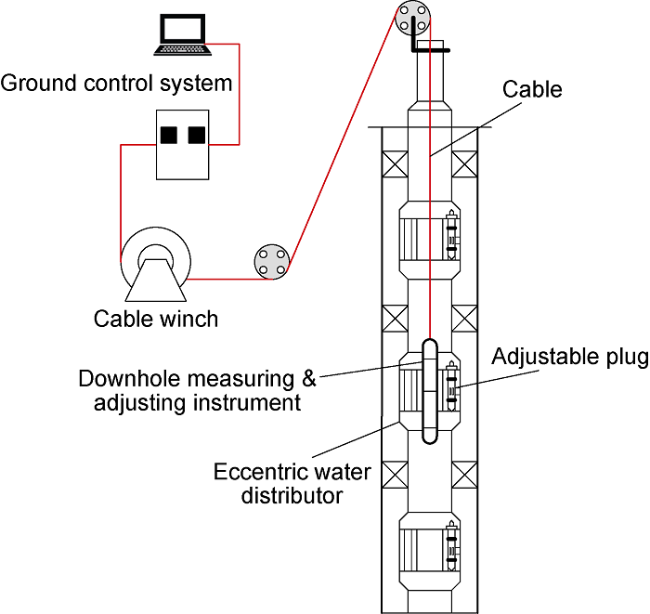
Fig. 2. Schematic diagram for cable communications and testing system. |
"Bridge eccentric water injection string + cable communication and testing" is still the main separated zone water injection technology in the oilfields of China because of its advantages in testing. However, this communication method can only measure downhole parameters during testing, which obtain only fragment data and cannot achieve long-term monitoring of downhole parameters. Moreover, each communication process requires the use of a test vehicle, resulting in increased workload.
1.1.3. Downhole relay communication technology
At the beginning of the 21st century, there were several problems in the process of separated zone injection, such as cable direct measuring and adjusting technology can only obtain fragment data, fishing operation requires high technical level of workers, and deep well operation is difficult. To solve these problems, downhole relay communication technology is developed based on cable direct measuring and adjusting technology.
The downhole relay communication technology is realized through the long distance wired communication relaying the short distance wireless communication. In separated zone injection system, the downhole relay communication is mainly composed of a relay communication system and downhole electric control water distributors. The wireless communication sub is connected to the ground control computer through cable. The power supply of the communication sub and the two-way communication with the ground computer are realized simultaneously through the cable carrier mode. At the same time, the communication sub communicates with the downhole water distributor in a wireless way, issues ground instructions and uploads the measurement data of the intelligent water distributor [8⇓-10]. The system composition is shown in Fig. 3 . In this technology, the downhole electric control water distributor has battery, wireless communication module and electric control nozzle, which can monitor and adjust the downhole parameters and store the monitoring data in the memory of the water distributor. When there is a need to adjust injection parameters or read downhole data, the communication sub is lowered to the target depth rapidly by the cable winch. The communication sub can continuously call the downhole water distributor. The water distributor can wake up automatically once every other period of time during standby. When the wireless communication sub is successfully connected with the downhole water distributor, the water distributor enters the working status and stops lowering the cable. A relay communication link through ground controller, cable, communication sub and downhole water distributor can be established, realizing long-distance contact-less communication. In this way, the control and adjustment of downhole electric control water distributor can be realized. The data stored in the instrument can also be read online. It can also write ground commands into downhole instruments to control downhole instruments in real time and monitor parameters. Due to the rapid attenuation of electromagnetic wave in water and the limitation of transmitting power of wireless communication instruments, the downhole wireless communication distance is generally only 30-50 cm. If the wireless power is increased, it can be expanded to 1 m.
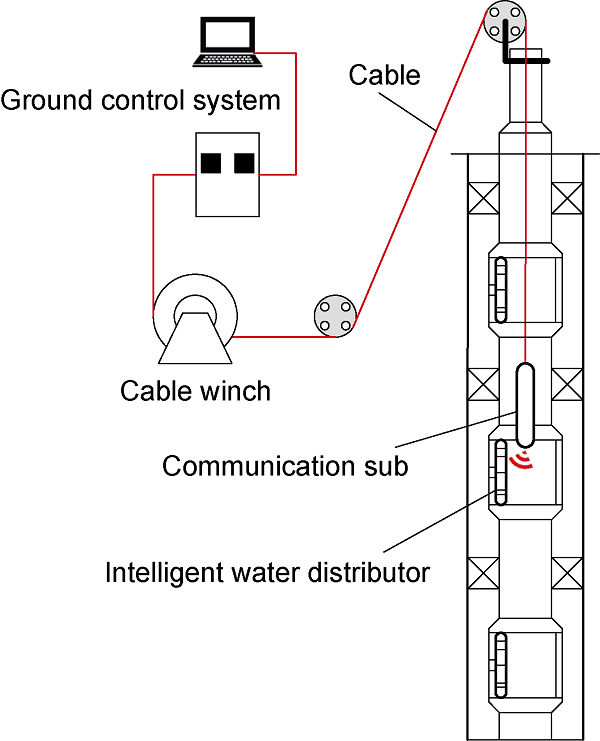
Fig. 3. Downhole relay communication system for separated zone water injection. |
The downhole relay communication technology can not only obtain the downhole real-time parameters during the test, but also read the historical data stored in the intelligent water distributor, which greatly increases the amount of data obtained. As the rigid connection between the testing instrument and the downhole water distributor is not required, the on-site operation is greatly simplified and the requirements for operators are reduced. However, this technology is still unable to obtain downhole parameters in real time, and has a large amount of testing work. Therefore, this technology has not been widely applied.
1.2. Real-time monitoring and communication technology through presetting cable downhole parameters
In order to obtain downhole parameters and continuous monitoring data in real time, researchers in the early 21st century developed real time monitoring and communication technology through preset cable downhole parameters. This technology is developed based on the single-core cable communication technology. The communication system is mainly composed of ground computer, cable and electric control downhole tools. During well completion, electric control downhole tools are connected in series by cables and connected to the ground computer through the cable, which is laid outside the tubing. The cable provides signal transmission channel and power supply for downhole tools. The operation depth of this technology can reach more than 3800 m, and the data transmission rate can reach 1 kb/s. With good real-time data, large amount of data, power supply and communication integration, this technology can better solve the problems of power supply for downhole instruments and downhole monitoring and data transmission. At present, this technology has entered the demonstration and application stage in separated zone injection.
The fourth generation of preset cable controlled separated zone injection system is shown in is shown in Fig. 4 . The pressure, temperature, flow sensors and flow control system are integrated in downhole tools. The cable is lowered along the tubing column. Using cable and carrier transmission technology to realize communication between downhole tools and ground control host, and the multi-stage downhole tools can be controlled simultaneously for data monitoring and flow allocation. The injection pressure, flow rate and temperature of each layer are monitored in real time, and the opening of the plug is automatically controlled. Fully automatic adjustment and parameter monitoring can be realized. The advantage of this technology is that the data volume, test cycle and communication are not limited by construction and environment. The downhole motors are powered by cables, which can also solve the problem of blocking. This process is more conducive to ensuring the qualified rate of water injection and assisting reservoir analysis. The preset cable-controlled separated zone water injection technology has realized the digital real-time monitoring on separated layer pressure and flow rate, network informationization of injection performance monitoring of blocks and reservoirs. This technology will promote the development of the separated zone water injection technology towards digitization, automation and integration [11-12].
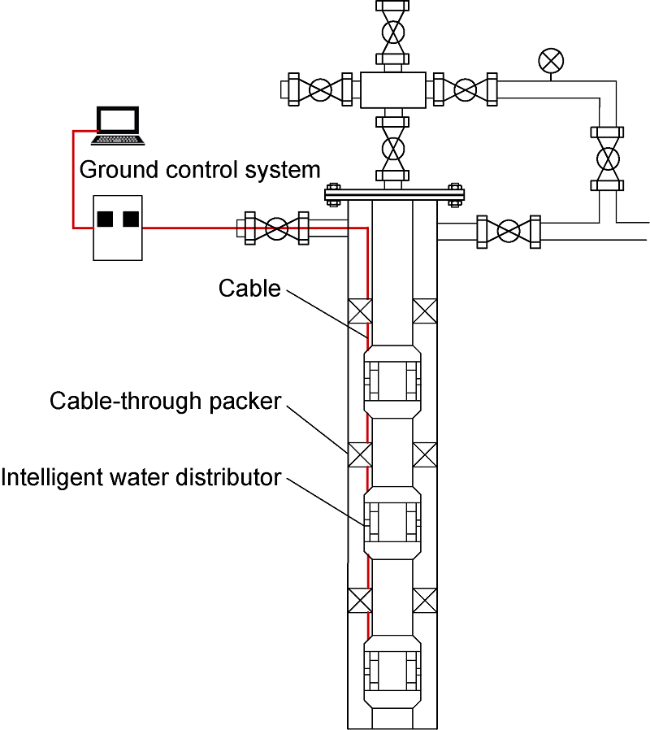
Fig. 4. Schematic diagram of cable-controlled separated zone water injection system. |
1.3. Downhole wireless communication technology for separated zone water injection
In order to realize downhole remote control and meet the technological requirements such as operation under pressure researchers have exploring downhole wireless communication technology continuously. However, it is difficult and costly to use electromagnetic wave technology on downhole remote communication. Other downhole wireless communication technologies suitable for separated zone water injection have been found. In recent years, great progress has been made in the downhole wireless communication technologies, including vibration wave downhole communication technology, pressure wave downhole communication technology, and flow wave communication technology. Downhole wireless communication technologies use the existing resources of the wellbore to achieve long-distance communication, with oil tubing/casing or water flow as the communication medium.
1.3.1. Vibration wave downhole monitoring and data transmission technology
The systematic study on vibration wave downhole monitoring and data transmission started in 2010 in China. This technology uses casing/tubing as transmission medium, vibration signal generator as communication control tool, and vibration wave as carrier wave to realize bidirectional data transmission between surface and downhole [13⇓⇓-16]. The core instruments are vibration signal generators and micro vibration acceleration sensors. The vibration wave signals generators uses magnetostrictive material as energy converter. The power supply system controls the drive coils wrapped outside the magnetostrictive material to produce alternating magnetic field, which drives the magnetostrictive material to vibrate. In this way, the electric energy is converted into the mechanical vibration energy. The coded communication information can be modulated onto vibration wave by control system. The vibration wave is transmitted downward or upward along the casing/tubing, and the micro vibration acceleration sensor receives the vibration signal and decodes it, so as to issue the ground command or upload the downhole data.
Due to the complexity of string structure, trapping wave, signal identification, electromagnetic compatibility and a series of technical problems, the vibration wave down transmission technology did not achieve a systematic breakthrough until 2015, and was successfully applied to layered oil production and water search and plugging operations. Because the power of the ground vibration signal generator is not limited by power supply, the data transmission distance from ground to downhole is theoretically unlimited. With the current instrument level, direct communication with a well depth of 2680 m has been realized, and the data transmission rate can reach 8 b/s at the fastest speed. It is especially suitable for remote control of downhole tools and has broad application prospects.
The development of vibration wave upload technology is relatively lagging behind. With the successful development of battery powered downhole vibration signal generator and the change of communication strategy, a breakthrough in downhole to surface vibration wave communication technology was achieved in 2019, and applied to separated zone water injection. At present, field tests have been successfully conducted in five wells. The test well depth is 800-1000 m. Under low noise environment, the two-way direct communication can be realized.
The separated zone water injection system controlled by vibration wave is shown in Fig. 5 . The ground instruments include vibration signal generator and control power supply system. The downhole instrument is a vibration wave controlled water distributor, including an acceleration sensor, a vibration signal generator, an electric control nozzle, pressure and temperature sensors, etc. When downhole monitoring data or downhole parameter adjustment is required, the ground control computer can control the ground vibration signal generator to send specific vibration wave signals, wake up the downhole vibration wave controlled water distributor, and establish one-to-one communication link. The vibration wave controlled water distributor can adjust the downhole injection volume according to the ground command, and can also upload historical data such as downhole flow, pressure, cumulative injection volume, valve opening and temperature.
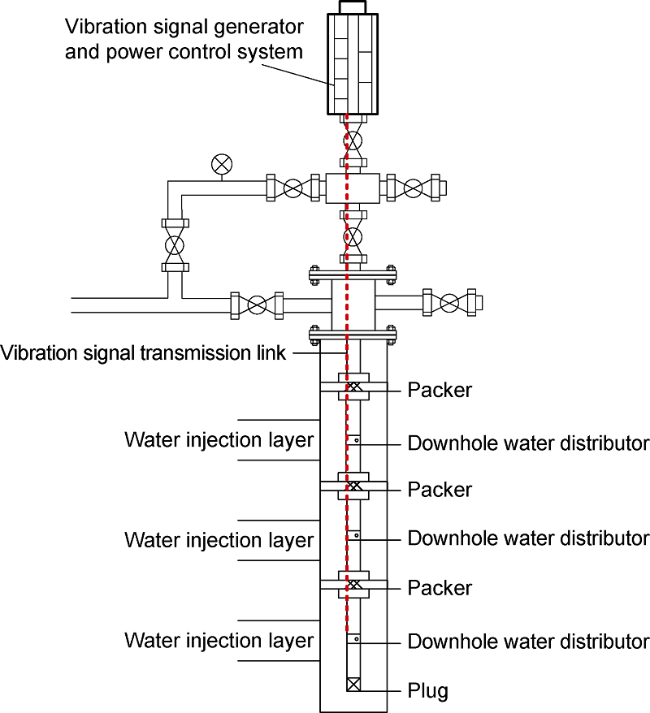
Fig. 5. Schematic diagram of separated zone water injection system controlled by vibration wave. |
The vibration wave downhole communication technology has unique advantages in separated zone water injection, using the existing casing/tubing resources, and does not occupy the central passage of the tubing. In addition, it has simple construction technology, small operation risk, low cost, short operation time, and is suitable for various well bore types. But the direct transmission distance of vibration wave is not long enough, which limits its application.
1.3.2. Pressure wave downhole monitoring and data transmission technology
Pressure wave downhole monitoring and data transmission technology takes liquid as transmission medium and pressure change as carrier wave to realize two-way communication between surface and downhole. The coded pressure wave instruction is transmitted to the downhole instrument equipped with pressure sensor through pressure charging or valve switching at the wellhead. The downhole instrument decodes the pressure wave signal and executes the corresponding actions to implement the ground instruction. Downhole pressure waves can also be generated in the water flow and transmitted to the ground through the on-off of the electric switch. The ground pressure sensor can receive the pressure pulse signal to decode the downhole information. The drilling fluid pulse in MWD is a typical pressure wave communication method. It was developed in the late 1960s, matured and began to be used commercially in the 1970s [17⇓⇓⇓⇓⇓⇓-24].
At the beginning, the pressure wave communication technology was applied to layered oil production and water detecting/plugging on a small scale. In the late 2010s, it was applied to separated zone water injection, forming a pressure wave controlled separated zone water injection technology [25⇓⇓-28]. The system composition is shown in Fig. 6 . The ground water injection valve group is designed with a pressure wave coding controller, which can automatically control the opening of the pressure wave coding controller according to the instructions sent by the remote software. It regularly changes the pressure in the tubing of the water injection well, establishing the pressure fluctuation in the wellbore, and generating the pressure wave signal in the downhole. The downhole intelligent water distributor integrates a pressure sensor and a controllable water nozzle. The pressure gauge can continuously detect and store the pressure value. The controller of the water distributor extracts the pressure value and encodes the pressure wave code, converts it into a control signal to control the opening of the water nozzle, and implements the ground instruction transmission and the water injection volume control of the formation. The controller of the downhole intelligent water distributor controls the nozzle opening according to the downhole instructions, and generates a pressure wave signal at the wellhead. The ground control system monitors the wellhead pressure value in real time, decodes the detected pressure wave signal, and realizes the transmission of downhole layered flow rate, pressure and temperature data to the ground.
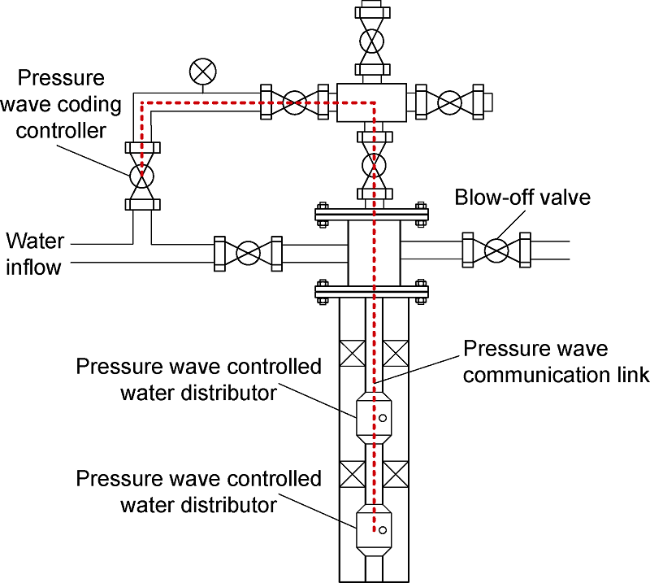
Fig. 6. Schematic diagram for separated zone water injection system controlled by pressure wave. |
The signal transmission of the pressure wave controlled separated zone water injection technology does not occupy the tubing channel. The pressure sensor is also used as the downhole monitoring and data transmission sensor. This technology is mature, and low in cost. The downhole instrument is easy to realize low- power consumption standby. This technology has been applied on a small scale in Changqing Oilfield. By the end of 2021, operation has been conducted in 1248 wells. The maximum transmission well depth is 2900 m. A single instruction or data transmission takes 40 min. It is the most widely used separated zone water injection technology with downhole wireless communication by far. The application results in Changqing Oilfield show that the signal transmission speed of separated zone water injection technology controlled by pressure wave is much lower than 1 b/s of LWD. This technology is selected to meet the requirements of pressure wave signal transmission in open downhole environment and ensure that two-way communication can be completed in most reservoir conditions.
1.3.3. Flow wave downhole monitoring and data transmission technology
In order to solve the problem of environmental adaptability of pressure wave signal in the application of separated zone water injection, according to the investigation results and production demand analysis of China's mainstream water injection well network structure, in 2015, it was proposed that a new method of flow wave should be used to realize downhole monitoring and data transmission. This technology is relying on the existing resources of water-injection well network, and can establish a wireless communication network from water distribution station to downhole water distributor. The theoretical basis of flow wave communication is the continuity principle of flowing liquid and the law of conservation of mass. That is, under the action of ground high-pressure pump, water is injected into the underground formation and the water flow in the water injection pipeline can flow continuously. The mass of water flowing through any section of the pipeline in unit time is equal. Therefore, signal transmission with flow wave has superior anti-interference capability and environmental adaptability.
The network structure of the flow wave communication system is shown in Fig. 7 . The system is mainly composed of the flow signal generator and the flow signal detector both installed on each distribution pipeline in the water distribution station, and downhole electric control water distributor settled in each layer. The downhole electric control water distributor is equipped with flow sensor, pressure sensor, electric control water nozzle and other auxiliary instruments. When the instruction needs to be transmitted, the surface flow signal generator sends out the flow wave signal containing the control information under the control of the computer, and transmits it to the downhole electric control water distributor through the water injection pipeline and tubing. When the downhole flow sensor receives the ground instruction, it decodes the ground control instruction and completes the corresponding action. When the downhole data is uploaded, the downhole electric control water distributor converts the downhole data into control information according to the control instructions from the ground. By controlling the opening change of the electric control nozzle, the information is modulated to the water injection flow and transmitted to the ground. The flow signal detector on the ground can detect the change of the injection flow, and realizes the downhole data reduction by decoding, thereby realizing the transmission of the downhole data.
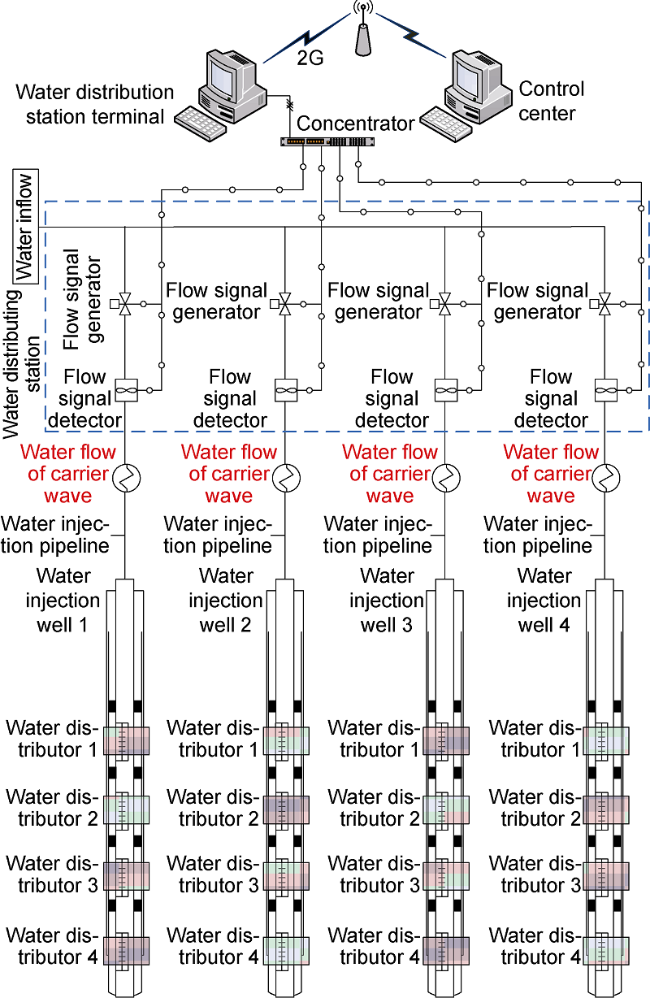
Fig. 7. Network structure of flow wave communication system. |
It can be seen from the above data transmission process of flow wave that the energy of two-way communication of flow wave comes from the water injection pressure on the ground. Therefore, as long as the formation can absorb water, signal transmission can be completed. In addition, the better the water absorption characteristics, the easier it is to complete signal transmission. There is no need for a large differential pressure fluctuation in the well, and the signal transmission has little impact on the setting tools and formation pressure. Therefore, it has good environmental adaptability.
The flow wave communication technology is still in development and improvement, and the simulation experiment of the whole process of separated zone water injection has been completed. The test results show that the flow wave can achieve 1400 m non-attenuation signal transmission by generating a flow pulse with a reasonable time interval. The typical downward transmission curve of flow wave is shown in Fig. 8 . In this simulation experiment, the downhole sensors are placed on the ground, and the real-time centralized data acquisition is completed by the multi-channel high-speed signal acquisition system. The red curve in Fig. 8 is the upstream flow change detected by the flow sensor at 0 m. This curve is formed by adjusting the opening and holding time of the upstream control valve. The blue curve is the downstream flow change received by the flow sensor at 1400 m, which is the response of the red curve at 1400 m down-stream. As shown in Fig. 8 , excluding the instantaneous fluctuation and short delay of flow caused by water compressibility and flow inertia, the two flow curves have almost non-attenuation fluctuation amplitude, and the change trend shows good consistency. It can be seen that the artificial regular flow fluctuation can be accurately reproduced after flowing through the 1400 m pipeline, which further proves that the flow wave can be used as an ideal carrier for downhole remote signal transmission.
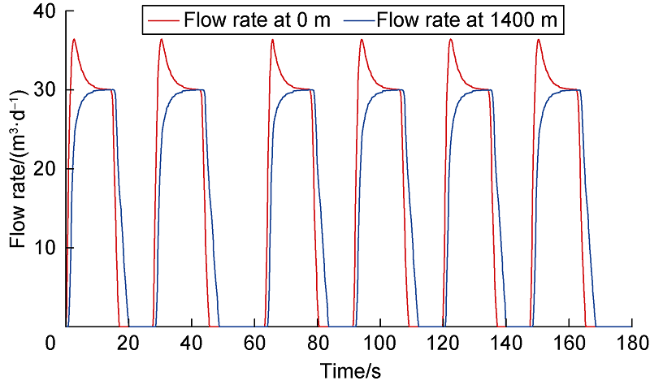


Fig. 8. Transmission curves of flow wave at 1400 m. |
Relying on the existing resources of water injection well network, and adopting the flow wave downhole monitoring and data transmission technology, the downhole wireless communication network can be built with the water distribution station as the node and the water flow as the information carrier. With the power supply system of the water distribution station and the existing mobile network, the digital wireless communication network covering the ground control center to the oil reservoir can be built to provide technical support for the realization of digitization of separated zone water injection. With this technology, we can realize a complete wireless control link for single well measurement and adjustment, provide basic conditions for realizing the linkage measurement and adjustment of water distribution station and reservoir tools, and also lay a solid foundation for the joint control of well group and the optimization of water injection parameters. It has the advantages of low layout cost and easy industrial application. The separated zone water injection technology controlled by flow wave will be tested in the field in the near future.
2. Problems and challenges
Due to the complex downhole environment, in order to achieve intelligent separated zone water injection and improve the water-drive development effect, more efficient, reliable and economical downhole data transmission technology is required.
2.1. Problems of downhole cable communication technology
It can be predicted that before the mature and application of the new low-cost downhole monitoring and data transmission technology, the cable direct measuring and adjusting technology will still be the main part of the separated zone water injection technology in the oilfield for a long time in the future. However, it is necessary to use the test vehicle to lay down the communication tools in downhole monitoring and data transmission test, which leads to increased manual workload. In addition, only short data fragments can be obtained. With the frequent changes in the injection & production relationship, the measurement and adjustment period is gradually shortened. The contradiction between the limited team service capability and the demand for accurate data and the development cost will become more serious.
The preset cable separated layer water injection technology is in demonstration application stage. As cables and downhole tools are in series structure, in multi-layer application, too many downhole connections will reduce the system reliability. The comprehensive service life needs to be further verified. Laying cable will lead to complex construction process, poor adaptability to casing deformation and well deviation. Therefore, it is difficult to meet the requirements for operation under pressure. The cable cannot be reused, and most water injection wells do not have power supply, so the large-scale application faces further capital construction investment. The application cost and complex construction process are unavoidable problems for preset cable control technology.
2.2. Problems of downhole wireless communication technology
2.2.1. Limitation of downhole battery capacity
The downhole wireless communication technology has made some progress in recent years, and has been applied to separated zone water injection in a certain range. However, the downhole wireless communication controlled separated zone water injection technologies faced a common problem. That is, the downhole separate injection tools based on wireless communication technology are powered by batteries. Due to the limitation of battery capacity, the amount of uploaded data and downhole service time restrict each other. The power consumption of downhole sensors and control program shall be strictly limited. At the same time, since all downhole instruments are equipped with shaft seals and multi-channel static seals, minor leakage is inevitable. Water vapor will form a discharge channel in the instrument, which is more serious in high-temperature wells. In addition, lithium battery also has a certain self-discharge rate. These factors will cause errors of the standby time between actual time and theoretical calculation time, thus shortening the service cycle of downhole instruments. In oilfields, it is expected that the downhole instruments to work stably for at least 3 years, which has been realized by increasing the number of batteries. However, the service life of downhole instruments is affected by manufacturing quality, working environment and other aspects, and the life span is different, lacking statistical significance.
2.2.2. Limitation of vibration wave communication direct transmission distance
In the vibration wave upload communication technology, limited by the capacity of downhole battery, the power of downhole vibration signal generator cannot be very large. The distance of direct upload is limited. At present, it can only achieve stable communication within 1000 m. At the same time, the communication is also affected by many factors, such as wellbore noise, ground noise, string tool structure, etc. The reliable direct communication distance needs to be further verified in more field applications, and the low-power data transmission protocol needs to be improved. Using relay communication technology can solve the distance limitation of underground upload communication, which has been verified in foreign engineering practice. The domestic related scientific research has not been carried out.
In the application of vibration wave controlled separated zone water injection, downhole tools in each layer need to be equipped with a vibration signal generator. However, magnetostrictive materials as transducers are expensive, and it is difficult to reduce the cost of instruments significantly. Using relay communication will further increase the cost and increase the complexity of the string. Because a great breakthrough has been made in flow wave communication technology due to its simple communication framework, the study on vibration wave controlled separated zone water injection technology has been stopped.
2.2.3. Environmental adaptability limitation of pressure wave communication technology
When the downhole pressure wave wireless communication technology is applied to separated zone water injection, its transmission channel is an open system composed of tubing and formation, and the communication speed and success rate are greatly affected by reservoir characteristics. If the reservoir has good water absorption characteristics, it will be difficult to establish effective differential pressure under the condition of limited surface water supply capacity. For low permeability reservoirs, special drainage pipelines and sewage tanks need to be established to reach the threshold value of pressure transmission, and the project implementation cost is high. In order to ensure the success rate of pressure wave communication, in practical application, full-open and full-close communication mode is adopted or temporarily use the ground pump truck to send pressure signals. This may cause large pressure shocks in the water injection string, which may aggravate the expansion and contraction displacement of the string, or even lead to the unsealing or failure of the packer.
2.2.4. Sensitivity and power consumption limitation of downhole flow sensor in flow wave communication technology
The downhole flow wave monitoring and data transmission technology has a simple communication structure, which is particularly suitable for separated zone water injection. The key to achieve the goal is the downhole flow measurement and signal monitoring technology. Accurate measurement of downhole flow, especially small flow measurement is an industry technical problem. The flow wave communication technology puts forward higher requirements for the downhole flow sensor. On the one hand, the downhole flowmeter must have higher sensitivity to meet the requirements of small signal detection of flow wave; on the other hand, it must have good environmental adaptability and stability. As a downhole monitoring sensor, the downhole flow sensor must have low power consumption characteristics; otherwise, it is difficult to meet the monitoring requirements under battery power supply.
As a new technical field, there are many problems need to be solved. For example, the transmission characteristics of flow signals in the water injection well network are still unclear. It is difficult to balance high-precision flow measurement, real-time communication and power consumption. There are no effective methods for high-precision data transmission with low power consumption. It is difficult for the ground flow sensor to have wide range and high sensitivity, etc. In view of the above technical problems, we are carrying out research on the relevant system.
2.3. Problems of separated zone injection technology based on single well
The primary goal of development of digital separated zone water injection technology is to systematically solve the problems of automatic control, formation water absorption characteristics testing, injection volume metering, and optimization of injection pressure parameters. Reduce the measuring and adjusting work, achieve the goal of cost reduction and efficiency increase, reduce the human interference factors, and provide the required data for the optimization of the development scheme. Cable communication technology and vibration wave communication technology can only solve the data transmission from the reservoir to the wellhead at present. The pressure wave communication technology has the problem of environmental adaptability. Nevertheless, separated zone water injection is a complex system that composed of water source, water distributing station, injection pipeline, wellbore and reservoir. In order to realize automatic control, the linkage between downhole instruments and water distributing station should be realized first. Therefore, the existing digital water injection technology is far from the digital water injection target and production demands. At the same time, during separated zone water injection, measurement and adjustment in individual well is a slowly changing system with mutual influence. It usually takes tens to hundreds of seconds to show the ground and downhole changes to affect each other. Due to the lack of real-time feedback of control parameters between ground and downhole, automatic measurement and adjustment cannot be realized with the traditional control methods.
3. Development direction of downhole monitoring and data transmission technology for separated zone water injection
Intelligent separated zone water injection is the only way to improve the degree of water drive and ensure stable production, and efficient transmission of downhole data is the key to achieve intelligent separated zone water injection. The development direction of the downhole monitoring and data transmission technology for separated zone water injection mainly includes the following aspects.
For the cable measurement and adjustment wells which have been applied in a large scale, the traditional water distributor should be digitalized by using micro batteries, sensors and memories. On the premise of not affecting the fishing performance, the pressure sensor, memory and microprocessor could be embedded to monitor the formation pressure. Using relay communication technology, historical data can also be read online for missing historical data of formation pressure parameters change.
For the key monitoring wells with real-time monitoring requirements for downhole parameters, the high-speed wire communication technology should be developed. On the one hand, we should improve the preset cable communication technology, optimize the cable connection mode, simplify and standardize the construction process, and improve the quality of pipe materials to improve the stability and reliability of the communication cable connection. On the other hand, we should use the composite coiled tubing with built-in cable to replace the traditional tubing for well completion to improve the convenience and reliability of construction. Of course, there is still a lot of work to be done in the environmental adaptability, extrusion resistance and connection reliability of composite coiled tubing.
For large-scale application of automatic measurement and adjustment with small amount of monitoring data, low cost wireless controlled communication technology should be developed. On the one hand, we should improve the pressure wave downhole monitoring and data transmission technology, optimize the data transmission coding method, and improve the communication speed. On the other hand, we should conduct research on the key technologies of flow wave downhole monitoring and data transmission. In addition, we should make great breakthrough in the key technologies such as low power consumption and high sensitivity downhole flow sensor as soon as possible. Furthermore, we should study on the control method of ground and downhole synchronous measurement and adjustment, and improve the efficiency of measurement and adjustment. At the same time, combined with mobile wireless communication network, we should build an integrated control communication network for separated zone water injection which can cover the control centers, water distributing stations, water distributing rooms and water injection wells. The electric control transformation should be implemented for the water distributing room to realize the coordinated control between downhole and ground, thereby realizing the goal of optimizing water injection parameters and reducing cost and increasing efficiency.
In the water drive development system, in addition to the development of separated zone water injection technology, it is also very important to improve the fine management of the effective production wells. It is necessary to research on the integration of reservoir and engineering. We should combine downhole monitoring and data transmission technology of separated zone water injection with separated layer oil production technology, deepen understanding of reservoir through data sharing and linkage control, and provide a more accurate data model for the formulation of development plans. Finally, a new generation of intelligent separated zone injection and production technology driven by reservoir data will be formed. Through these measures, we can realize the goal of effectively controlling water cut, reasonably producing reserves and reducing cost and increasing efficiency. In addition, it is necessary to study how to extend the mature and low-cost data transmission technology for separated zone water injection to the separated zone oil production, and improve the adaptability of the separate production string.
4. Conclusions
Downhole monitoring and data transmission technology is the key to realize the digitalization and automatic control of separated zone water injection. In order to meet the production requirements at different stages of oilfield development, the downhole monitoring and data transmission technologies for separated zone water injection have experienced the development processes of fishing downhole sensors, cable communications and testing, downhole relay communication, preset cable communication and downhole wireless communication. According to the production demands of the oilfield and the existing problems, the future development direction of the digitization of downhole monitoring and data transmission technology are proposed. For the cable measurement and adjustment wells which have been applied in a large scale, the key is to realize the digitalization of distributors. For the key monitoring wells, cable-controlled separated zone water injection technology and composite separated zone water injection with continuous coiled tubes need to be improved. For large-scale application of automation measurement and adjustment, wireless control separated zone injection technology should be developed. We should make full use of the digital separated zone water injection technology, and develop digital separate production technology. In addition, we should improve the digital level for reservoir development, and provide technical support for the integration of reservoir and engineering.