

Introduction
Foreland thrust belts are common in the superimposed basins in Midwest China [1-2]. Moreover, reservoir characteristics and deep oil and gas reserves distributed below 4500 m have been paid attention to by oil and gas exploration and theoretical research. For tectonically active deep layers in thrust belts, diagenesis and tectonic de-formation are key factors influencing the reservoir quality [3-4]. However, few studies focused on how diagenetic and structural heterogeneity of deep reservoirs can jointly control the differential accumulation of oil and gas in the thrust belts.
The foreland thrust belt at the southern margin of the Junggar Basin (hereinafter referred to as Southern Junggar) is tectonically complex with a great potential for oil and gas exploration [5-6]. In 2019, Well GT 1 in the western section of the foreland thrust belt found oil and gas flows of more than 1000 m3/d from the deep reservoir of the Lower Cretaceous Qingshuihe Formation [5], which is a critical breakthrough. However, industrial oil and gas flows were not found during well tests in surrounding wells, indicating extremely high heterogeneity and complicated oil and gas distribution in the deep reservoirs. Without clear understanding of the genesis of high-quality deep reservoirs or models of differential oil and gas accumulation, it is hard to discover high-yield oil and gas fields in the thrust belt in the Southern Junggar. In this study, drilling and logging data, core observations, experimental results, and oil and gas production data were collected to carefully investigate the heterogeneity and hydrocarbon accumulation models of the deep reservoirs in the foreland thrust belt of the Southern Junggar. The findings provide scientific evidences for comprehensive oil and gas exploration in the future.
1. Geological setting
The Southern Junggar is located at the foreland thrust belt in the North Tianshan Mountain. Since the Cenozoic, vigorous thrust napping has controlled the foreland tectonics and topography and resulted in a regional tectonic pattern characterized by “WE-striking sections and NS-striking belts”. Specifically, the Southern Junggar can be divided into three sections (namely western, central, and eastern) by the Hongche Fault in the west and the piedmont Bogda fault-fold in the east (Fig. 1 a, 1b). In the west section, high-yield reservoirs of the Qingshuihe Formation were found in Well GT 1 at 5490-6070 m in the Gaoquan Tectonic Belt. They are typical deep reservoirs located in a typical anticlinal trap, but only found in Well GT 1, and no high-yield oil and gas zones were found in other adjacent wells (Fig. 1 c).
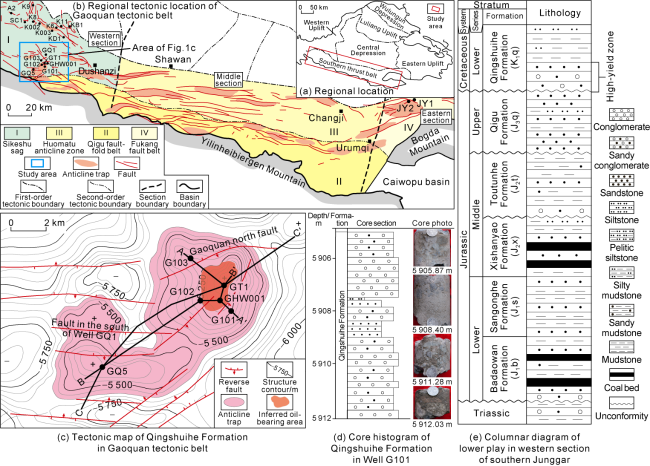
Fig. 1. Regional tectonic location of Gaoquan tectonic belt and stratigraphic column of Lower Cretaceous Qingshuihe Formation in southern margin of the Junggar Basin. |
The deep lower play in the Southern Junggar includes Jurassic and Lower Cretaceous Qingshuihe Formation, where four regional unconformities are identified [7] (Fig. 1 e). Particularly, the unconformity between the Qingshuihe Formation and the Jurassic extends from the southern margin to the hinterland of the basin [7]. In the western section of the Southern Junggar, the bottom of the Qingshuihe Formation is characterized by continuous braided-river-delta sandy conglomerate and sandstone, which are typical reservoirs. These reservoirs transition upward to regionally comparable dark lacustrine mudstone (Fig. 1 e), which acts as cap rock. The spatial distributions of the reservoir and the cap rock match well and are favorable for hydrocarbon accumulation [5,7 -8]. Controlled by strong near-source hydrodynamic conditions, mud interlayers are hardly developed within the reservoirs, and the reservoirs are characterized by thick, coarse-grained and fining-upward sequences formed by superposition of distributary channel deposits during different episodes (Fig. 1 d). As a result, the sedimentary facies of these reservoirs are relatively similar, without major differences, and their heterogeneity caused by sedimentation is insignificant.
2. Reservoir characteristics and heterogeneity
2.1. Petrophysical properties
The reservoirs of the Qingshuihe Formation are characterized by conglomerates, sandy conglomerates, and sandstones (Fig. 1 d). Specifically, feldspathic lithic sandstone is dominant sandstone (Fig. 2 a); lithic fragments account for 33% of the clastic particles, with an average content of up to 64%; and plastic tuff clasts dominate and account for 80% on average of the lithic fragments (Fig. 2 b). The clastic particles are poorly to moderately sortable, and sub-round to well-round, and show a typical grain-supported texture. In addition, there are relatively less intergranular fillings inside the reservoir, including matrix of only 1.4% on average, and cements varying from 0 to 26.0% (6.3% on average), among which calcite accounts for 64.0% by volume (Fig. 2 c). In general, the reservoir has coarse grains, low compositional maturity, high plastic debris content, and medium texture maturity.
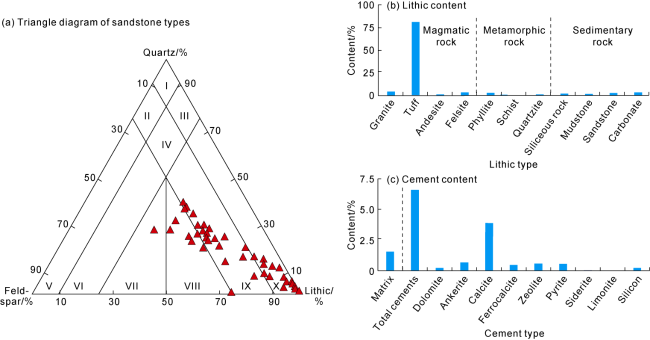
Fig. 2. Sandstone reservoir types and histograms of lithic and cement contents of Qingshuihe Formation. I—Quartz sandstone; II—Feldspathic quartz sandstone; III—Lithic quartz sandstone; IV—Feldspar lithic quartz sandstone; V—Arkose; VI—Lithic arkose; VII—Lithic feldspar sandstone; VIII—Feldspar lithic sandstone; IX—Feldspathic lithic sandstone; X—Lithic sandstone. |
2.2. Reservoir physical properties and heterogeneity
Typical primary and residual intergranular pores, intergranular and intragranular dissolution pores, and microfractures are developed in the Qingshuihe Formation reservoir (Fig. 3 a-3c). Among them, intergranular pores are dominant and account for up to 67.1% on average, followed by dissolution pores accounting for 17.6%, and 15.3% of microfractures. The core porosity is 2%-15% (5.75% on average), and permeability is (0.02-100.00) × 10−3 μm2 (6.14×10⁻³ μm2 on average), indicating the reservoir is tight (i.e., permeability smaller than 1×10⁻³ μm2 and porosity smaller than 10%), and of low porosity and permeability (Fig. 3 d). Although the reservoir physical properties seem contradict with the high-yield production in the Gaoquan Tectonic Belt, from another perspective, it indicates the effective modification to the reservoir by fractures, especially the macroscopic fractures. In addition, the porosity is positively correlated with the permeability (Fig. 3 d), but the correlation coefficient is small and the data are relatively scattered (Fig. 3 d), reflecting the significant influence of fractures on the physical properties of the reservoir. Moreover, the sandy conglomerates are typical high-quality deep reservoirs. As the gravel size increases and the sand size decreases, the physical properties decrease remarkably (Fig. 3 e-3f), revealing the high heterogeneity of the reservoir.
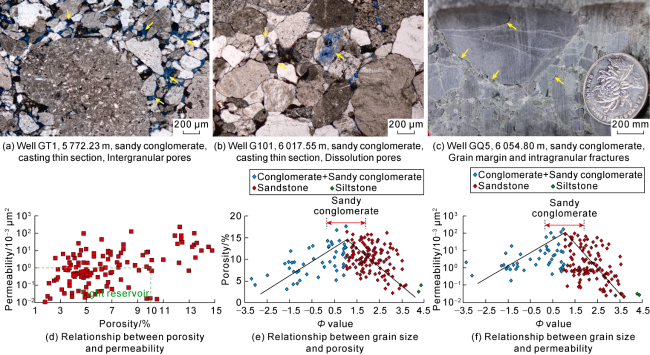
Fig. 3. Reservoir space types and physical properties of Qingshuihe Formation in southern Junggar Basin. |
2.3. Diagenesis and heterogeneity
The diagenesis of the Qingshuihe Formation reservoir mainly involves compaction (fracturing), cementation, and dissolution. Although the reservoir is dee, the illite/smectite mixed layers is 10.0%-65.0% (avg. 29.2%), the Ro value ranges from 0.5% to 1.0% (avg. 0.7%), and only a small proportion of iron-bearing carbonates and secondary enlarged siliceous cements is present (Fig. 2 c). All these phenomena indicate that the diagenetic stage of the reservoir is mainly mesodiagenesis A, or even still eodiagenesis B. The medium diagenetic strength can explain the occurrence of many intergranular pores in this deep reservoir (Fig. 3 a). The relatively low diagenetic strength of the reservoir is closely related to the burial history from early long-term shallow to late rapid deep, progressively decreasing paleo-geothermal gradient [9], and late overpressure after deeply buried [10-11] (Fig. 4 a). The short-term deep burial along with the low paleo- temperature and the high overpressure effectively reduced the intensities of different diagenetic processes [3,12].
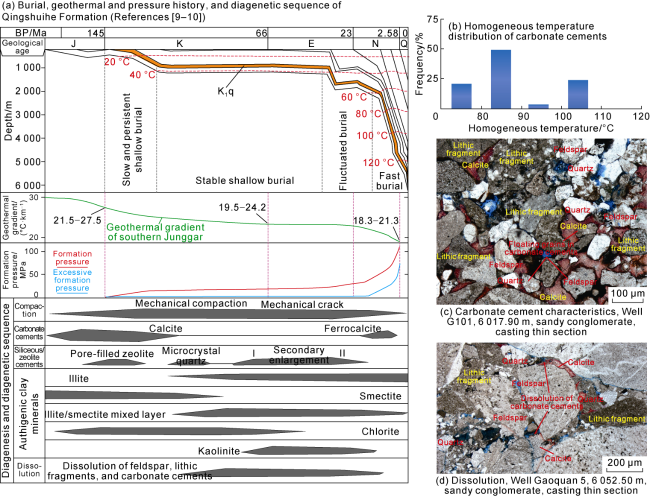
Fig. 4. Diagenetic sequence and characteristics of carbonate cementation and dissolution of Qingshuihe reservoir. |
Compaction is the most important factor reducing the porosity of the Qingshuihe Formation reservoir. The relative loss of primary pores is generally greater than 60% (Fig. 5 a-5b). In addition, carbonate cements can significantly control the physical properties of the reservoir. As the content of carbonate cements increases, both the porosity and the permeability decline considerably (Fig. 5 c). Other cements (e.g., siliceous cements, zeolites, and clay minerals) exist only in small amounts (Fig. 2 c); therefore, they do not obviously influence the physical properties of the reservoir. The homogenization temperatures of primary fluid inclusions in calcite cements (30 samples) range from 63.9 to 107.1 °C, and most are below 90 °C (Fig. 4 b). This demonstrates that early carbonate cements may occur in the eodiagenesis and early mesodiagenesis stages. Moreover, particles in the samples with high content of carbonate cements are in point contact or even floating (Fig. 4 c), which reveals that carbonate cementation may occur before effective compaction begins. Dissolution can be mainly identified inside feldspars, lithic fragments, and carbonate cements (Fig. 4 d), and is resulted from acidic dissolution in the mesodiagenesis stage.
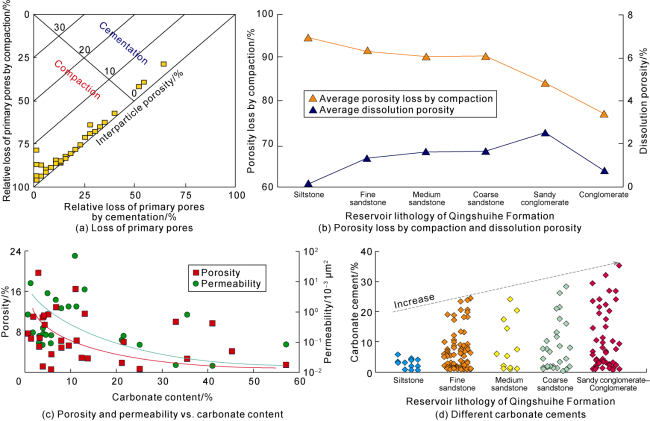
Fig. 5. Loss of primary pores and diagenetic differences of different reservoir types of Qingshuihe Formation. |
Notably, in the Qingshuihe Formation, reservoirs of different lithologies exhibit obvious diagenetic heterogeneities. This is supported by the typical differential characteristics of the reservoirs: as the grain size increases, porosity loss due to compaction decreases (Fig. 5 b), and the content of carbonate cements increases (Fig. 5 d), while the dissolution porosity initially increases and then decreases (Fig. 5 b). This is because of the influence of early differential carbonate cementation on subsequent diagenetic processes. Specifically, as the grain size increases, more carbonate cements formed in the eodiagenesis take place in the reservoir. Although these early carbonate cements lead to a certain loss of physical properties, the overall compaction intensity is lowered. Hence, sandy conglomerates and conglomerates having higher contents of carbonate cements experience comparatively less compaction-induced porosity loss than sandstones. However, a large amount of early carbonate cements occupy more pores and throats, and hinder cyclic dissolution and modification by acidic fluids in the late stage. Therefore, conglomerate reservoirs with higher contents of carbonate cements have significantly lower dissolution porosity.
2.4. Fracture characteristics and heterogeneity
In the Gaoquan Tectonic Belt, only Well GT 1 at the anticline structural high produced high-yield oil and gas flows. However, with tight to moderate porosity and permeability, the reservoirs (Fig. 3 d) can hardly provide such high oil and gas yields. Obviously, this indicates that large-scale macroscopic fractures play an important role in controlling the physical properties of the reservoirs, and the development of the macroscopic fractures has high spatial heterogeneities. Well GT 1 revealed that the reservoir permeability is 1351×10−3 μm2 [13], which is considerably higher than that measured on the core samples from neighbor wells (Table 1 ). Previous research indicated that the matrix permeability of fractured reservoirs is up to 2-3 orders of magnitude higher than that of unfractured reservoirs [14]. Thus, it can be deduced that the degree of modification of the Qingshuihe Formation by macroscopic fractures determines the differences of the reservoir properties. And fracture development is a necessary condition for high-yield hydrocarbon production from deep reservoirs.
Table 1. Physical properties, formation pressure and hydrocarbon interpretation of Qingshuihe Formation in Gaoquan tectonic belt |
| Well | Depth/m | Logging porosity/% | Core porosity/% | Core and well test permeability/10−3 μm2 | Pressure coefficient | Well test and logging interpretation |
|---|---|---|---|---|---|---|
| GT1 | 5768-5775 | 6.20-18.40 | 1 351.00 | 2.10-2.33 | Oil/gas layer | |
| GHW001 | 5832-5838 | 5.70-9.90 | 4.6-10.1 | 0.51-22.10 | 2.15-2.30 | Oil-water layer |
| G102 | 5855-5861 | 3.30-8.20 | 2.20-2.32 | Oil-bearing water layer | ||
| G101 | 5922-6027 | 2.60-5.70 | 2.1-8.7 | 0.09-7.66 | 2.23-2.28 | Dry layer |
| G103 | 5896-5910 | 4.40-5.60 | 4.0-5.4 | 5.74-26.20 | 2.08-2.25 | Dry layer |
| GQ5 | 6049-6059 | 1.00-7.78 | 2.6-9.4 | 0.31-96.10 | 2.12-2.16 | Dry layer |
At the structural high of the anticline, local tensile stress-strain is concentrated, and most fractures are developed [15-16]. While Well GT 1 was drilled at the structural high, unstable rocks collapsed, and stuck drilling tools occurred frequently. This is one of the indicators of fractured formations [17]. Although no cores of the Qingshuihe Formation were obtained from Well GT 1, mud logging analysis demonstrates that fractures are effective space for hydrocarbon accumulation and seepage (Fig. 6 a-6b). Sandy conglomerate cores of the Qingshuihe Formation obtained from Well GHW001, which is located 860 m away (straight-line distance) from Well GT 1, show relatively large dissolution pores, and some linear ones (Fig. 6 c) are visible dissolution pores enlarged from fractures after dissolution. This suggests that fractures have effectively promoted formation fluid circulation and dissolution. However, the fractures in thin sections and core samples are small, whereas the fractures in real formations are, theoretically, much larger. Therefore, the physical properties from core data may only represent the porosity and permeability of local reservoirs, instead of actual macroscopic physical properties. Furthermore, the ROP in fractured formations may be much quicker [17-18]. Shown in Fig. 7 , when the drill bit size is similar, the average ROP of Well GT 1 is significantly faster in the Gaoquan Tectonic Belt, indicating the presence of more fractures developed in the reservoirs drilled in by Well GT1. For the wells located at the anticline flanks, as farther and farther from Well GT 1 (at the anticline high), the average ROP reduces (Fig. 7 ), indicating that the degree of modification by fractures reduces, too. The heterogeneous development of fractures in drilled reservoirs is one of the main causes for only Well GT 1 producing high hydrocarbon yield.
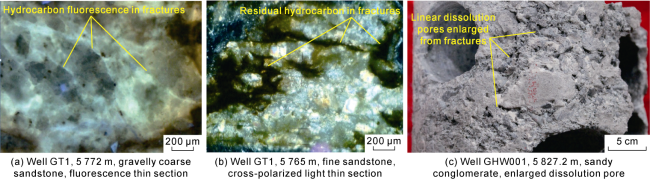
Fig. 6. Fracture and dissolution pore development in thin sections and cores of Qingshuihe Formation in Gaoquan tectonic belt. |
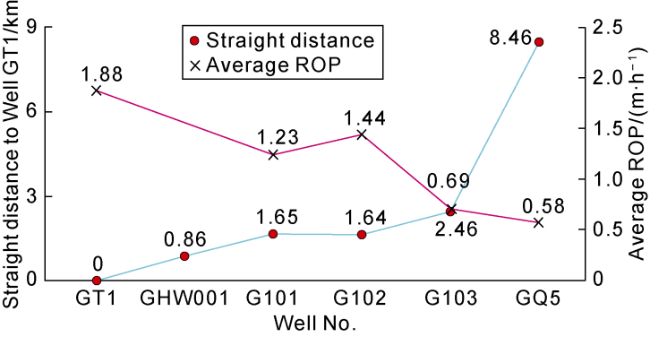
Fig. 7. Average ROP vs. straight distance to Well GT. |
According to the vertical variations in the physical properties of the Qingshuihe Formation reservoirs in the entire thrust belt (Fig. 8 a-8b), the porosity remarkably decreases from the shallow and middle to the deep layers, while the permeability does not evidently change. Because permeability can be more significantly enhanced by fractures than porosity [19], the above phenomenon, from another perspective, suggests the effective modification to the deep reservoirs by fractures. Additionally, the deep strata are typically overpressured. In any well that drilled into the Qingshuihe Formation, the formation pressure coefficient is high than 2 (Table 1 ), indicating strong overpressure which can effectively promote fracture development inside the reservoirs [15,19]. Previous studies have reported that when the formation pressure exceeds 60% of the lithostatic pressure, fractures inside the formation will not close [20]. In any well that drilled into the Qingshuihe Formation, the formation pressure always exceeds 60% of the lithostatic pressure (Fig. 8 c-8d). Hence, strong formation overpressure keeps fractures open at such deep depth, and enables effective storage and seepage of oil and gas within the fractures.
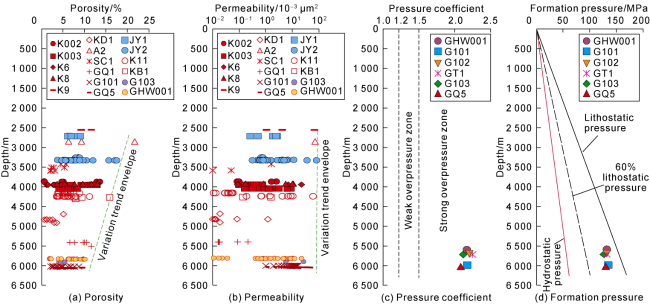
Fig. 8. Vertical variations in physical properties of Qingshuihe Formation and formation pressure in Gaoquan tectonic belt. |
3. Differential hydrocarbon accumulation and distribution
3.1. Differences in hydrocarbon accumulation
QGF-E (quantitative grain fluorescence on extract) analysis can reflect the content of hydrocarbon adsorbed on the surface of reservoir particles and oil saturation [21]. A higher QGF-E intensity indicates a higher degree of oil saturation [21]. The QGF-E analysis of different grain sizes of the Qingshuihe Formation revealed significant differences in oil contents (Fig. 9 ). Specifically, the QGF-E values of sandy conglomerate and coarse sandstone are the highest. The maximum QGF-E value of sandy conglomerate is up to 2246.4 pc (avg. 706.8 pc) (Fig. 9 ). The QGF-E of conglomerate is the second highest (less than 200 pc; avg. 126.5 pc). Comparatively, the QGF-E of medium- and fine-grained sandstone and siltstones are mostly similar and small, and the average value is only 97.3 pc, 83.3 pc, and 89.0 pc respectively (Fig. 9 ). Therefore, it is demonstrated that the sandy conglomerate reservoirs have the highest oil saturation and they are favourable reservoirs for oil and gas accumulation.
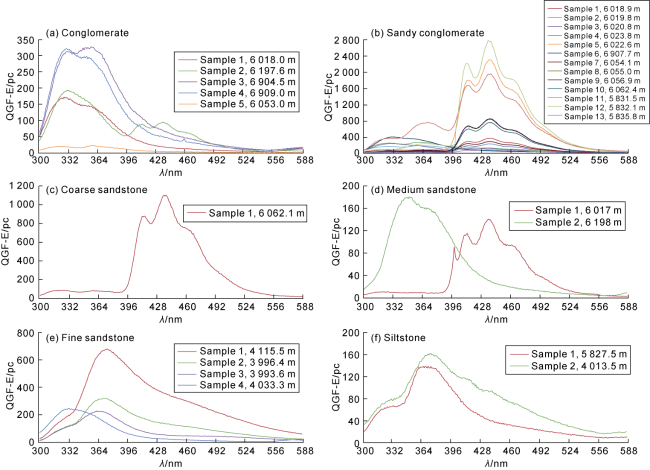
Fig. 9. Relationship between QGF-E and wavelength of different types of Qingshuihe Formation reservoir samples. |
Additionally, previous studies have indicated that the oil and gas in the Qingshuihe Formation in the western section of the Southern Junggar were generated from Jurassic source rocks, and the crude oil is light oil with high maturity [22]. Two parameters obtained from QGF-E analysis, namely λmax and R1, can reflect the composition and density of crude oil [21]. Normally, when λmax and R1 are larger, the crude oil is denser and thicker [21]. As for the reservoirs of the Qingshuihe Formation, sandy conglomerates have the highest λmax and R1 values, indicating that denser crude oil mostly accumulates in these reservoirs (Fig. 10 ). This feature suggests that the physical properties of the sandy conglomerate reservoirs are superior, which results in the smooth entry of dense and viscous crude oil into the reservoirs. Contrastingly, the physical properties of other types of reservoirs are less favorable (Fig. 3 d-3f); therefore, only less dense crude oil with higher mobility may fill these reservoirs.
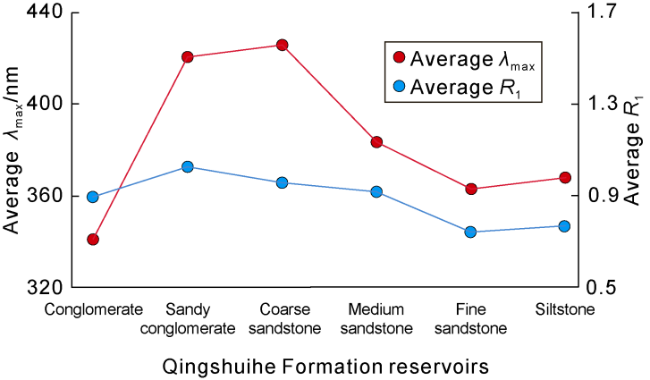
Fig. 10. λmax and R1 derived from QGF-E analysis for different types of Qingshuihe reservoirs. |
3.2. Differences in spatial hydrocarbon distribution
The deep Qingshuihe Formation in the Gaoquan Tectonic Belt shows a typical anticlinal trap (Fig. 11 ). Unfortunately, spatial distribution of oil and gas in the wells drilled into the trap exhibits abrupt variations, showing the characteristics of a big trap with small reservoirs. In the wells adjacent to Well GT1 (less than 3 km), the results of production test and well logging hydrocarbon interpretation (Table 1 ) shows oil and gas distribution like conventional anticline reservoirs (Fig. 11 ). In other words, Well GT1 drilled into the structural high with oil and gas cap (Fig. 11 ), while other wells drilling into the anticline flanks encountered oil-water, (oil-bearing water, and dry layers (Fig. 11 ).
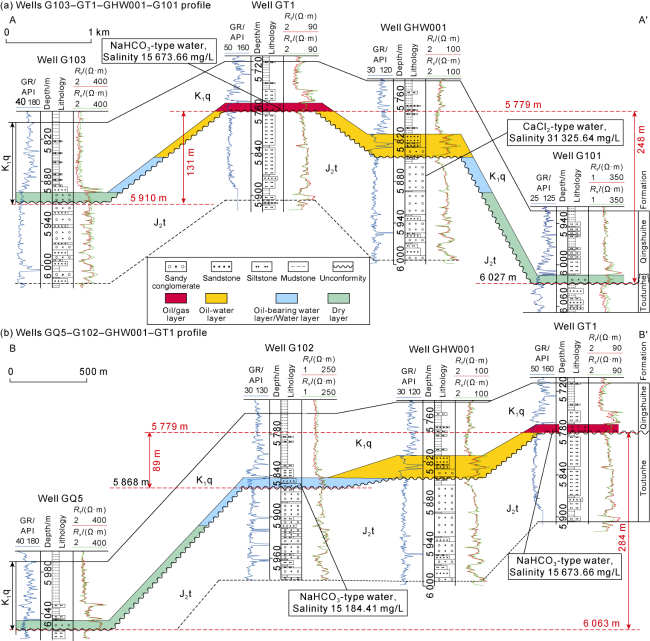
Fig. 11. Cross-well hydrocarbon distribution in deep Qingshuihe reservoirs in Gaoquan tectonic belt, Southern Junggar (see |
The overlying mudstone on the sandy conglomerate reservoir of the Qingshuihe Formation acts as the reservoir roof, and the underlying regional weathered clay bed along the unconformity between the Qingshuihe Formation and the underlying Jurassic is the reservoir floor [7] (Fig. 11 ). The formation water of the Qingshuihe Formation from Well GT1 and Well G102 is NaHCO3-type, with nearly identical salinity (15 673.66 mg/L and 15 184.41 mg/L, respectively). Reservoirs in the two wells belong to the same oil-water system. The formation water in the Toutunhe Formation from a neighbor well, GHW001, is CaCl2-type, and the salinity is 31 325.64 mg/L. This indicates that the water from the two formations differs completely. The Cretaceous Qingshuihe Formation and the underlying Jurassic are two independent oil-water systems and reservoir units. The scale of the hydrocarbon accumulation is controlled by the size of the reservoir units. In addition, the anticlinal trap surrounding Well GT1 is not symmetrical; instead, it is steep in the southeast direction but gentle in the northwest direction (Fig. 1 c, Fig. 11 ). Although the plane distances from Wells G101 and 102 to Well GT1 are similar (Fig. 7 ), Well G102 fell into the reservoir unit, but Well G101 is outside, because Well G101 is located at the steep flank where the vertical difference (248 m) of the reservoir is larger than that (89 m) in Well G102 which is located at the gentle flank (Fig. 11 ). Consequently, Well G102 drilled into oil-bearing water layers, but Well G101 encountered dry layers (Fig. 1 c, Fig. 11 ). This demonstrates that the oil-bearing area is smaller than the actual trap area.
4. Reservoir heterogeneity and causes of differential hydrocarbon accumulation
4.1. Causes of reservoir heterogeneities in different scales
As aforementioned, among different types of the Qingshuihe Formation reservoir, sandy conglomerates have the most optimal physical properties and the highest degree of oil saturation. This heterogeneity is controlled by the microscopic differences in the diagenetic evolution processes. The Qingshuihe Formation has undergone stable shallow burial at a depth of approximately 1000 m for a relatively long period. Rapid deep burial did not begin until the end of the Paleogene (Fig. 4 a). This burial mode allows carbonate cements occurred completely in the reservoirs under early weak compaction. Because of shallow burial and weak compaction in the eodiagenesis stage, particles in the cements may be in point contact or floating (Fig. 4 c).
The reservoirs of the Qingshuihe Formation have a little argillaceous matrix and a particle-supported texture (Fig. 2 c, Fig. 3 a), resulting in the fact that the coarser the grains in the eodiagenesis stage, the larger the pores are. Thus, conglomerate reservoirs have higher initial porosity and permeability. Consequently, alkaline diagenetic fluids developed during the eodiagenesis period are more likely to flow and accumulate inside these conglomerates, leading to higher occurrence and saturation. Moreover, larger pores in these conglomerate reservoirs are also more conductive to authigenic carbonate crystallisation. Ultimately, compared with other reservoir types, early carbonate cements in the conglomerates can be much more (Fig. 5 d), leading to a stronger compaction resistance and a lower compaction rate (Fig. 5 b). In the mesodiagenesis stage, diagenetic fluids become acidic. Early carbonate cements in the conglomerates block most of the reservoir space, so that the acidic diagenetic fluids are prone to flow in the sandy conglomerates with better physical properties and cause dissolution (Fig. 6 c). Therefore, the dissolution porosity of the sandy conglomerates is the highest (Fig. 5 b). Comparatively, fine sandstones and siltstones show poor initial physical properties, which result in much smaller saturation of eodiagenesis alkaline and mesodiagenesis acidic diagenetic fluid. Therefore, the degree of carbonate cementation and that of dissolution are much lower while the losses of physical properties due to compaction are much greater (Fig. 5 b, 5d). Eventually, in the hydrocarbon accumulation stage, oil and gas migrate and accumulate along the sandy conglomerates with the best physical properties, thereby increasing the oil saturation in these reservoirs.
As for the development of fractures in the Qingshuihe Formation, fractures in Well GT1 at the anticline structural high are clearly better developed than those in the wells at the flanks. This indicates that the modification to reservoirs by fractures reduced from the structural high to the flanks, resulting in large-scale macroscopic reservoir heterogeneity. Significantly, the heterogeneity of fracture development is closely related to the unique stress-strain mechanism of the anticline. More specifically, there exists a large stress-strain increment at the structural high above the central line inside the anticline, and thus, dense tensional fractures typically developed at the structural high [23]. However, below the increment central line, the reservoirs become to transitional and compressive zones where fractures are short and remarkably less developed [23]. Furthermore, the tectonic curvature and the curvature rate at the structural high are much higher than those at the flanks, leading to better developed fractures. Notably, as the distance from the axial plane increases, the fracture line density decreases in a negative exponential way towards the two flanks [15,23]. In summary, the sandy conglomerates of the deep Qingshuihe Formation at the anticline high are high-quality reservoirs, while the quality of the reservoirs at the flanks decline exponentially.
4.2. Deep hydrocarbon accumulation and differential distribution model
As previously mentioned, although the scale of the anticlinal trap is large, oil and gas accumulate only in the sandy conglomerate reservoirs at the structural high where fractures are well-developed and the physical properties are more favorable. The major tectonic belts in the Southern Junggar were formed in the Late Paleogene to the Late Neogene [5,24]. Although the Jurassic source rocks started to release large amounts of hydrocarbon since the early Neogene, deep hydrocarbon accumulation occurred in the late Neogene [5,24]. The Gaoquan Tectonic Belt is an inherited positive structure. Due to continuous tectonic compression, fractures at the anticline high were formed earlier than or simultaneously to oil and gas migration and accumulation, making them effective channels. During the accumulation period, oil and gas migrated vertically along deep source faults or laterally along regional unconformity, and ultimately accumulated in the reservoirs at the anticline high (Fig. 12 a).
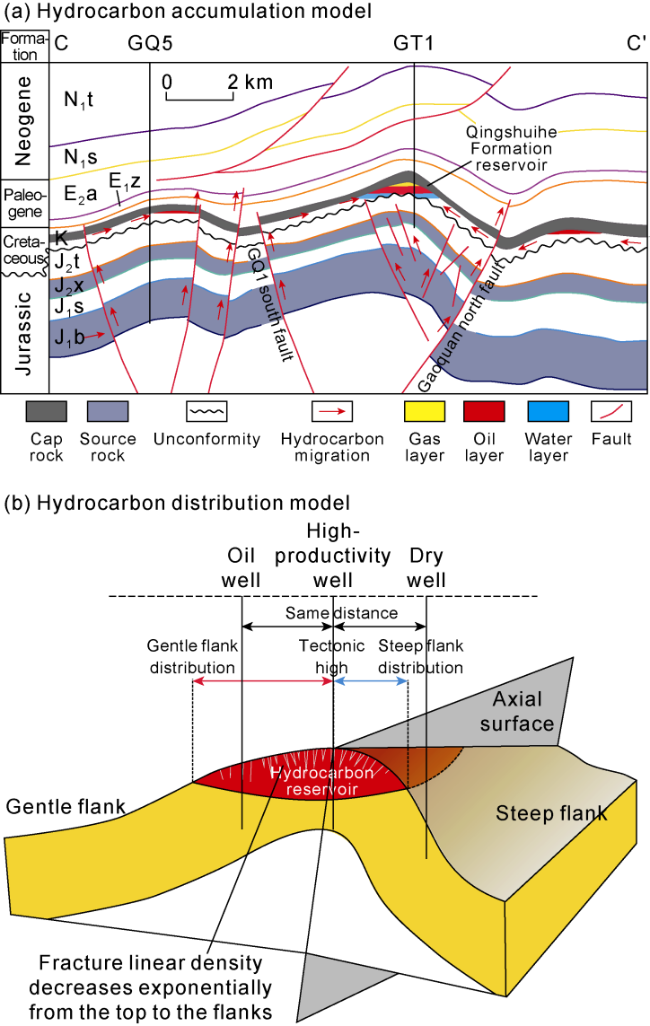


Fig. 12. Hydrocarbon accumulation and distribution models of Qingshuihe Formation in Gaoquan tectonic belt (see |
The overpressure at the Qingshuihe Formation occurred during the late rapid deep burial stage of Neogene[10-11] when hydrocarbon generation and expulsion and tectonic deformation took place. Overpressure can not only reduce the loss of reservoir physical properties, but also strictly control the vertical hydrocarbon distribution through overpressure sealing by mudstone cap [11]. Under overpressure, hydrocarbon initially and preferentially migrates into the reservoir with more favourable physical properties [25]. Into the anticline, it initially accumulates at the top with well-developed fractures. In addition, overpressure is an extra energy to promote hydrocarbon accumulation [11,15], so that deep reservoir can be charged efficiently. In the deep compression zone of the thrust belt, apart from buoyancy, tectonic stress can drive oil and gas into the low-stress zones, such as the anticline top and faults [26]. This is crucial for continuous migration of oil and gas in tight reservoirs with high buoyancy resistance. In summary, compared to the flanks, the top of the anticline has great advantages in high- quality storage and facilitating oil and gas charging and accumulation within the deep thrust belt. This fundamentally explains why only Well GT1 could achieve high hydrocarbon yields. Notably, the anticline flanks have different slopes. When the OWC/GWC in the hydrocarbon reservoirs is approximately horizontal, the plane distribution of oil and gas on the gentler flank, which is divided by the hinge or axis, covers a larger area. Consequently, given the same horizontal distance from the high-yield well at the top of the anticline, wells on the steep flank are far away from the hydrocarbon reservoir, while those on the gentle flank can be inside the hydrocarbon reservoir (Fig. 12 b), and oil and gas shows are differed considerably. This is an important cause why the Qingshuihe Formation reservoirs in Well G101 at the steep flank encountered dry layers, but Well G102 at the gentle flank reached the OWC, although their distances to Well GT1 are the same (Figs. 11 and 12 ).
To summarize, controlled by the heterogeneity of the reservoirs, the deep anticline in the western section of the thrust belt in Southern Junggar exhibits differential oil and gas accumulation. This is ultimately reflected by the characteristic of "a big trap with small reservoir" (Fig. 12 ). Normally, the greater the deformation at the anticline top, the better the development of fractures [15,23]. Therefore, future oil and gas explorations in the deep Qingshuihe Formation should focus on the sandy conglomerate reservoirs at the top of the closed anticline where fractures are well-developed. Moreover, the gentle flank of the anticline has a large area for oil and gas exploration. However, attention should be paid to the spatial relationships between other accumulation conditions. For example, Well GQ5 is also located at the top of the anticline, but the reservoir and the cap layer were cut through by faults (Fig. 12 a), resulting in lost and unaccumulated oil and gas. Furthermore, the evolution processes and hydrocarbon accumulation conditions of the reservoirs differ significantly at different locations of the tectonic belt [1-2,6]. For example, in the central section of the Southern Junggar, the deep fine sandstone reservoirs are composed of sediments far from sources [8], so the heterogeneity caused by lithology is little, and the fracture development laws may be different. Additionally, the deep reservoirs of the Qingshuihe Formation in the middle section of the Southern Junggar have undergone a continuous slow burial process [6], resulting in diagenetic heterogeneity of the reservoirs that are considerably different from the western section. Although anticlinal traps are developed in the middle section, the hydrocarbon accumulation model may differ significantly from that in the western section. Further comprehensive comparison is required to understand the differences and similarities and to make a precise exploration target.
5. Conclusions
The deep reservoirs of the Qingshuihe Formation in the foreland thrust belt of the Southern Junggar are coarse, with a high content of plastic clasts and tight physical properties. The reservoirs are dominated by intergranular pores. The overall diagenetic strength is relatively weak, and as the grain size increases, porosity reduction due to compaction decreases. The content of early carbonate cements is higher, so the dissolution porosity initially increases and then decreases as the grain size increases.
At the top of the anticline, extensive macroscopic fractures play a key role in the accumulation and high-yield production of hydrocarbon in the deep reservoirs of the Qingshuihe Formation. Additionally, under overpressure, the fractures are open, which makes the deep reservoirs possess better accumulation and seepage conditions. However, fracture development declines rapidly from the top to the flanks.
The sandy conglomerate reservoirs of the Qingshuihe Formation have the most optimal physical properties and the highest oil saturation. They are high-quality deep reservoirs. In the deep thrust belt, typical anticline oil reservoirs are present at the top of the anticline, but toward the flanks, the reservoirs change from oil-water quickly to dry layers. Hydrocarbon is only present in a small area, and the anticline is characterized by "a big trap with small reservoirs".
At the top of the anticline, due to little porosity reduction by compaction, weak early carbonate cementation, strong dissolution, extensive development of macroscopic fractures, smaller stress and higher tectonic location, sandy conglomerate reservoirs are favorable for hydrocarbon accumulation and high production. However, on the flanks, weak modification by fractures barely allows abundant hydrocarbon accumulation or effective reservoirs. Given the same distance to the top, the hydrocarbon distribution on the gentle flank covers a larger area.
Nomenclature
GR—natural gamma, API;
R1—a parameter obtained from QGF-E analysis, dimensionless;
Ro—vitrinite reflectance, %;
Rt—formation resistivity, Ω•m;
Rx—formation resistivity of a flushed zone, Ω•m;
λ—wavelength, nm;
λmax—wavelength corresponding to the maximum fluorescence intensity, nm.