

Introduction
With the advancement and large-scale application of horizontal well multi-stage fracturing technology since 2000, the global shale oil and gas industry has got in the “fast lane”. In the United States, the technologies represented by three-dimensional development trigger the country's shale oil and gas production to rise continuously, making it become a net exporter of natural gas and crude oil in 2017 and 2020, respectively and thus enjoy an energy independence. The shale oil and gas revolution has profoundly changed the world energy pattern. Three-dimensional development is a technology that expands the effective induced fractures from a local scale (single well) to a global scale (multiple wells and even the whole gas field) by deploying three-dimensional adjustment well pattern, thus forming an efficient and economic development system. This technology can effectively enhance the employed shale gas reserves, accelerate the recovery of shale gas resources, and improve the investment efficiency and shale gas development efficiency [1-2].
Based on the distribution of fracturing tracers, researchers in the North America have found that proppants migrate by about 20-30 m laterally and mostly by 10-20 m vertically along artificial fractures in shales. Apparently, thick shales have a great potential for three-dimensional development [3-4], and thus become the pioneer in shale oil and gas three-dimensional development. The three-dimensional development of shale gas in North America is mainly performed in two cases: (1) for shale plays like Haynesville and Bossier where sweet spots are vertically dispersed and spaced more than 80 m, wells are deployed separately in the sweet spots; (2) for shale plays like Wolfcamp where sweet spots are very thick in total and there are multiple limestone and sandstone barriers, wells are deployed three-dimensionally in a staggered pattern, all expected production wells are drilled in the same area on the surface, and multi-lateral horizontal wells are adopted to encounter multiple production layers for commingled production, which can reduce the drilling and completion periods and costs [5-6]. Shale oil and gas plays with multiple sweet spots stacked vertically mainly include Bakken, Eagle Ford, Wolfcamp, Spraberry, Niobrara and Woodford. The three-dimensional development technology has been applied maturely in Bakken, Eagle Ford and Wolfcamp, where the joint development mode is adopted, and one pad has 16-65 wells targeting 2-5 layers. For the 350-m-thick shales in Wolfcamp, the three-layer three-dimensional development is adopted with a well spacing of 200 m in the same layer and 100 m in the staggered layers [7].
In China, three-dimensional development of shale gas is still in its infancy. Different from the three-dimensional development of “multiple sets and multiple layers” of shales in North America, marine shales containing gas in China are characterized by older geological ages, larger burial depths and more complex structures. The development layer system of shale gas is a set of shale without obvious barriers. Its three-dimensional development often focuses on “multiple layers in a single set”, adding difficulty to layered development. Fuling shale gas field, the first large-scale marine thick monolithic shale gas field commercially developed in China, has taken the lead to carry out two-layer development and progressive production and three-layer development evaluation test, and realized the three-dimensional development of shale gas, with the employed reserves, recovery factor and yield rate significantly improved [8]. The successful practice of three-dimensional development technology in the Fuling shale gas field has accumulated valuable experience for exploring how to efficiently produce shale gas reserves, and has suggested the promising application prospects of the technology, providing a beneficial reference for shale gas three-dimensional development in similar areas. The China National Petroleum Corporation (CNPC) carried out target selection and well group tests for shale gas three-dimensional development in the deep zones of Luzhou Block, southern Sichuan Basin. The tests demonstrated that three-dimensional development can realize considerable employed reserves and it is of great significance for expanding the production capacity and improving the oil recovery continuously [9]. CNPC also attempted to implement three-dimensional development in the W202 area of Weiyuan block by infilling three horizontal wells on the basis of the original well pattern, which were tested with greatly improved production and single-well estimated ultimate recovery (EUR) as compared with existing wells [10]. Taking the Fuling shale gas field as an example, this paper presents the theory, technology and practice of shale gas three-dimensional development.
1. Overview of geological setting and exploration and development
1.1. Geological setting
The Fuling shale gas field is located at the junction of several structural units such as Shizhu synclinorium, Fangdoushan anticlinorium and Wanxian synclinorium in the southern section of the ejective fold belt in eastern Sichuan Basin. Compared with shale gas fields in North America, the Fuling shale gas field has more complex surface conditions, structures and pressure system and larger burial depth [11⇓⇓-14]. The major development layer series, the shales from the Silurian Wufeng Formation to the first member of Ordovician Longmaxi Formation (Long 1 Member), are deep-water continental shelf deposits with a thickness of 85-102 m. According to lithology, physical properties, geochemistry, gas content and electrical property, the Wufeng Formation-Long 1 Member shales can be divided into 9 layers (①-⑨) vertically with distinct reservoir characteristics. In Well JY-A (Fig. 1 ), for example, the layers ①-③ mainly consist of grayish-black clay-bearing siliceous shale, intercalated with thin layers, bands or stripes of pyrite locally. The rock samples contain graptolites, siliceous radiolarians and siliceous sponge spicules, and show high gamma ray (GR), high U, medium-high resistivity (Rt), low density (DEN) and low Th/U values, as well as high total organic carbon content (TOC), high porosity, high content of brittle minerals and high gas content. The layers ④-⑤ are composed of grayish-black clay-bearing silty shale, with generally underdeveloped fossils, and relatively developed pyrite in lumps and scattered state. The rock samples show medium-high GR, medium-high Rt, medium DEN and low Th/U values, as well as high TOC, low porosity, high content of brittle minerals, and high gas content. The layers ⑥-⑨ are dominated by grayish-black silty shale, with pyrite strips and less fossils. The rock samples show relatively low GR, low U, relatively low Rt, high DEN and high Th/U values, as well as low TOC, high porosity, low content of brittle minerals, and low gas content. In general, from bottom to top, the silica and silt contents, and TOC of 9 layers decreased, while their clay content increased. Specifically, the layers ①-③ are major horizons for primary well pattern development, and ④-⑨ are favorable horizons for layered development.
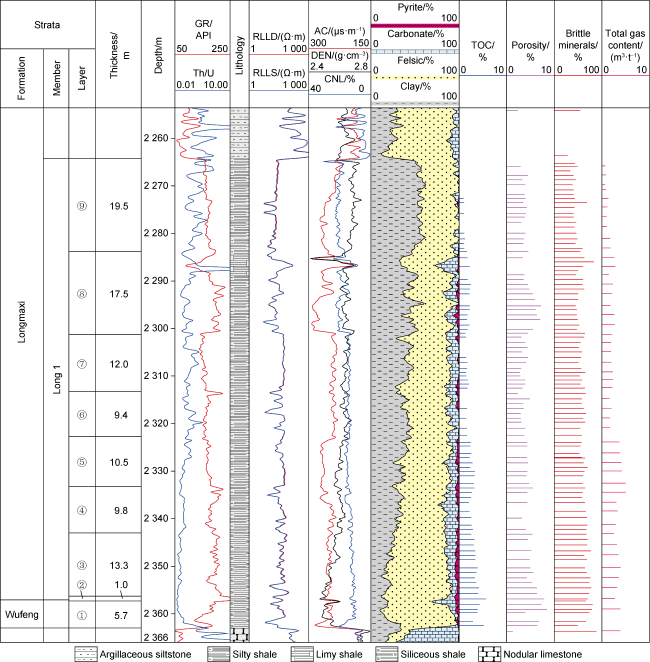
Fig. 1. Composite stratigraphic column of Wufeng Formation-Long 1 Member of Well JY-A in the Fuling shale gas field. |
1.2. Exploration and development
In 2009, the China Petroleum and Chemical Corporation (Sinopec) carried out the evaluation of marine shale gas areas in South China, by deploying wells XY-1 and HY-1 consecutively. Since 2011, Sinopec has turned the focus of marine shale gas exploration to the Sichuan Basin and its periphery, and selected the Wufeng Formation-Longmaxi Formation in the Jiaoshiba area of Fuling as the most favorable exploration target, with Well JY-1 drilled. In November 2012, Well JY-1HF was tested with a daily gas production of 20.3×10⁴ m3, uncovering the Fuling shale gas field [15⇓-17].
Since 2013, the Fuling shale gas field has mainly experienced 3 stages: Phase I production capacity construction, Phase II production capacity construction, and three-dimensional development adjustment. The Phase I production capacity construction was mainly carried out in the Jiaoshiba block, where wells with 1500 m horizontal sections were drilled at the spacing of 600 m in clusters and through the layers ①-③ to develop the Wufeng Formation-Long1 Member as a whole. In 2015, an annual production capacity of 50×108 m3 was built. The Phase II production capacity construction began with the Jiangdong and Pingqiao blocks from 2016. In 2016-2017, the Fuling shale gas field kept a stable annual production above 50×108 m3, forming the first national shale gas demonstration area. Since 2017, despite the monopoly of foreign technologies and no referential experience in China, through independent researches and tests, Sinopec has developed a series of key technologies for marine shale gas three-dimensional development, established the first shale gas three-dimensional development mode in China, and efficiently carried out the three-dimensional development adjustment. At present, three-dimensional development contributes to 49.1% of the total daily gas production of the Fuling shale gas field, and enables the recovery factor in the Jiaoshiba block to be doubled from 12.6% to 23.3% (up to 44.6% in the well groups under three-dimensional development), ensuring the sustained and stable production of the Fuling shale gas field.
2. Theory and technology of shale gas three-dimensional development
Three-dimensional development refers to the application of optimal and fast drilling and volume fracturing technologies, depending upon the sedimentary characteristics, reservoir characteristics and sweet spot distribution of shale gas, to form “artificial gas reservoir” in a multidimensional space, so as to maximize the employed reserves, recovery factor and yield rate of shale gas development. In this process, the geological + engineering sweet spot description is fundamental, the collaborative optimization of natural fractures and artificial fractures is critical, and the improvement of speed and efficiency in drilling and fracturing engineering is the guarantee.
2.1. Main controlling factors on shale gas enrichment and high production
2.1.1. Gas-bearing property of shale - the prerequisite for high production of gas well
Parameters characterizing the gas-bearing property of shale mainly include pressure coefficient, TOC, and free gas content. The higher the pressure coefficient and the higher the gas content of a shale reservoir, the higher the initial production of a well in the reservoir. Compared with adsorbed gas, free gas is produced preferentially in a well, so it has a great impact on the initial production of the well [18]. Shale reservoirs in the north part of the Jiaoshiba block exhibit high pressure coefficients (Fig. 2 ), TOC and gas contents, and small burial depths, so wells there reveal high initial production.
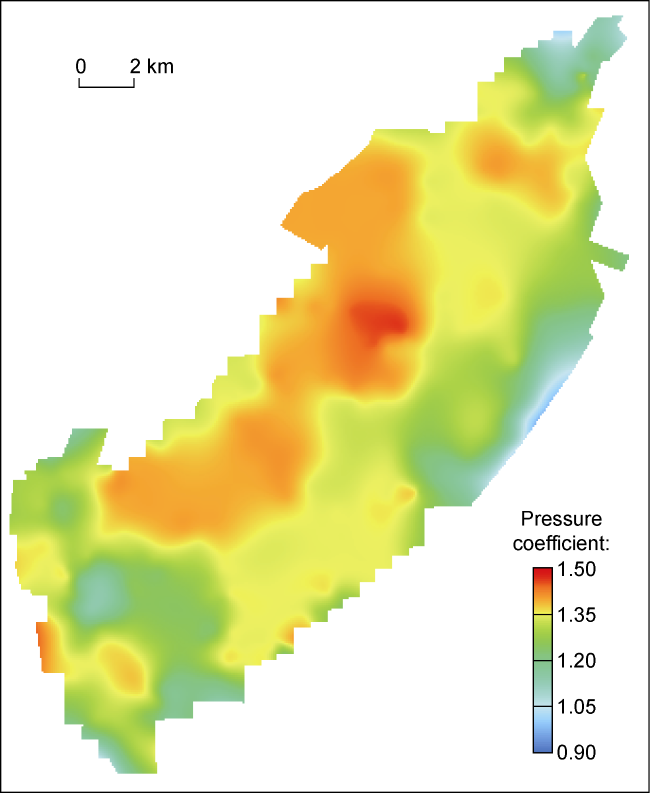
Fig. 2. Planar distribution of pressure coefficients of layers ①-⑤ in Jiaoshiba block. |
2.1.2. High-efficiency volume fracturing - the key technique for high production of gas well
Shale gas reservoirs, tight in lithology, can be recovered commercially only by large-scale fracturing, once they are confirmed with high gas content. An optimal performance of volume fracturing is crucial for high shale gas production [19]. The development practice of the Fuling shale gas field shows that the depth of reservoir, difference in structural shape, distribution of early fractures and direction of present-day in-situ stress all affect the effect of horizontal well staged fracturing [20-21]. According to the results of big data statistical analysis, the total sand volume, sanding intensity and total liquid volume are the most important engineering factors affecting the post-frac productivity.
2.1.3. High-quality completion - the guarantee for high production of gas well
Favorable horizons penetrated by a wellbore should be selected considering both geological and engineering sweet spots. The higher the proportion of optimal horizons penetrated, the higher the well production. The upper gas layers in the Jiaoshiba block include layers ⑥-⑨. Through comprehensive evaluation of quality and gas-bearing property of the shale reservoirs, it was concluded that the lower part of the layer ⑧ is the preferred geological sweet spot for layered development of the upper gas layers. However, the engineering evaluation revealed that the layer ⑦ has the best fracturability. By comparing the fracture pressures and pump-off pressures of appraisal wells in the upper gas layers during fracturing, it was found that fracturing of the layer ⑧ was much more challenging than that of the layer ⑦. The microseismic monitoring results showed that the upward and downward fractures created when the wellbore penetrated the layer ⑦ were larger in heights than those when the wellbore penetrated the layer ⑧, and the stimulated reservoir volume (SRV) was 1.3 times of that when the wellbore penetrated the layer ⑧ (Fig. 3 ). After analyzing the test production and production profiles, the upper third bed of the layer ⑦ was finally determined as the optimal horizon penetrated by a wellbore in the upper gas layers. In the well group B of the Jiaoshiba block, by selecting the optimal horizons, the wells demonstrated a remarkable increase in test production and pressure, with the average test production increasing from 9.7×10⁴ m3/d to 14.5×10⁴ m3/d.
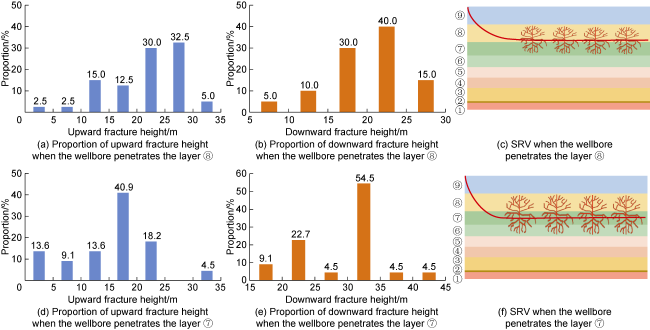
Fig. 3. Fracturing effects comparison of layers ⑦ and ⑧ penetrated by horizontal wellbore in the Jiaoshiba block. |
2.2. Fine description and modeling of shale gas reservoir
Shale gas reservoirs are very low in permeability, where complex fractures induced by fracturing and natural fractures can act as main channels for gas migration. The geological-engineering sweet spot description is fundamental to efficient three-dimensional development of shale gas.
2.2.1. Description of heterogeneous geological features
Practices of shale gas development in China show that shales are very heterogeneous vertically. Thus, description of heterogeneous geological features is fundamental to accurately identifying the distribution of resources for three-dimensional development. The description of heterogeneous geological features of shales mainly involves lithology, sedimentary structures, laminae, authigenic minerals, geochemical features, physical properties, pore structure, and microfractures [22]. Through fine description of vertical heterogeneous geological features, the upper layers ⑦-⑧ and the lower layers ①-③ are determined as the geological sweet spots.
2.2.2. Description of heterogeneous engineering features
In-situ stress, natural fractures and present-day stress field control the propagation and morphology of induced fractures [23-24]. Thus, description of heterogeneous engineering features is fundamental to volume + precision fracturing in three-dimensional development. In-situ stress and natural fractures are the cores of the description. As demonstrated by the simulation of artificial fracture propagation in the Fuling shale gas field, when the longitudinal stress difference is greater than 5 MPa, a stress barrier can be formed to block the growth of fractures. In addition, the artificial fracture networks are different in morphology under different distribution patterns of natural fractures; thus, in-situ stress and natural fractures in the target area should be considered in the layer-combination for three-dimensional development.
2.2.3. High-precision geological modeling
The control over extension morphology of hydraulic fractures in shale reservoirs with strong heterogeneity is an important challenge. To accurately depict the extension characteristics of artificial fractures in different layers, an efficient geological modeling is very necessary [25⇓-27]. On the basis of horizontal well logging interpretation, a 3D attribute modeling technology represented by strata-controlled selection and with facies and seismic constraints is formed. Using this technology, the models of six attributes (i.e. lithofacies, TOC, mineral content, porosity, saturation and gas content) of the Wufeng Formation-Long 1 Member shales in the Fuling shale gas field are established. With plane grid size of 20 m×20 m and vertical grid size of 0.5-3.0 m, the models reflect the vertical and plane heterogeneities of the layers more clearly and intuitively, thus supporting the selection of sweet spots for three-dimensional development.
Considering the vertical strong heterogeneity and plane great variation of local stress of shale reservoirs, three-dimensional in-situ stress field models at different scales (well, block and near-wellbore zone) are established by finite element simulation and inter-well interpolation. With plane grid size of 20 m×20 m and vertical grid size of 0.5-3.0 m for the near-wellbore zone, these models can quantitatively characterize the magnitude and direction of in-situ stress in 3D space, thus laying a foundation for the fine characterization of fracture network in three-dimensional development. Based on core, drilling, logging and seismic data, a multi-scale natural fracture modeling method with discrete fracture network as the core is developed, and accordingly models of large-, medium- and small-scale natural fractures are established, so that the spatial distribution of various fractures is effectively characterized, laying a foundation for accurately simulating the distribution of artificial fractures.
2.2.4. Fine characterization of remaining shale gas based on modeling + numerical simulation
In the Fuling shale gas field, an independent “geological modeling + numerical simulation” remaining gas fine characterization technology represented by pre-frac multi-scale natural fracture modeling, log-seismic in-situ stress modeling based on finite element simulation and post-frac fracture network secondary iterated fitting is developed. It can fully support the enhancement of recovery in old areas and the production capacity construction in new areas of the Fuling shale gas field.
On the basis of the comprehensive zone evaluation system for marine shale development and the recognitions on vertically and horizontally employed reserves and main controlling factors of productivity, the classification standard of shale gas reservoirs for three-dimensional development is established, and an evaluation index system for three-dimensional development covering 9 parameters in 4 categories (i.e. shale quality, formation pressure, fractures and economics) is formed (Table 1 ). Inter-well, inter-layer and inter-section/cluster distributions of remaining shale gas are finely depicted, laying a foundation for design optimization of three-dimensional well pattern and precision fracturing.
Table 1. Classification and evaluation of marine shale gas reservoirs for three-dimensional development in Fuling shale gas field |
| Class | Shale quality | Formation pressure | Fractures | Economics | |||||
|---|---|---|---|---|---|---|---|---|---|
| Lithofacies | Silica content/% | TOC/ % | Porosity/ % | Pressure coefficient | Pressure change rate/% | Development of natural fractures | Ratio of artificial fracture half-length to primary well spacing/% | Abundance of remaining gas reserves/ (108 m3·km-2) | |
| I | Siliceous shale | >40 | >4 | >4 | >1.3 | <30 | Underdeveloped | <25 | >2.4 |
| II | Mixed shale | 20-40 | 2-4 | 2-4 | 0.9-1.3 | 30-70 | Homogeneous and developed | 25-50 | 1.8-2.4 |
| III | Clayey shale | <20 | <2 | <2 | <0.9 | >70 | Well developed | >50 | <1.8 |
2.3. Optimization of three-dimensional development strategy
Three-dimensional development stresses on the collaborative optimization of artificial fractures and well pattern, that is, the effective fracture network is expanded from a local scale (single well) to a global scale (multiple wells) for purpose of maximizing the employed reserves, recovery factor and yield rate.
2.3.1. Layer-combination standard for three-dimensional development
Material base, stress barrier and vertical fractures are the key information for layering in shale oil and gas three-dimensional development. On the basis of fine characterization of remaining shale gas, the control mechanisms of vertical stress difference and natural fracture development on the quantity of employed reserves are clarified. Then, for the purpose of beneficial development, a benefit-based layer-combination standard system with resource, stress and natural fracture as the main indexes is established, and the benefit-based layer-combinations are customized for three-dimensional development in the Jiaoshiba block.
A series of experiments were performed on the control of vertical stress difference on artificial fracture propagation in shales, which revealed the breakthrough limit of artificial fractures under different vertical stress differences (Fig. 4 ) and determined vertical stress difference as the main controlling factor of artificial fracture propagation. In the experiments, the vertical stress difference was the difference between the average minimum horizontal principal stress of the layer ⑥ and the average minimum horizontal principal stress of the layer ⑤. When the vertical stress difference was greater than 5 MPa, 3-5 MPa, and less than 3 MPa, the half-fracture heights from simulation were 10-15 m, 15-20 m, and greater than 25 m, respectively. Obviously, when the vertical stress difference is greater than 5 MPa, a stress barrier is formed, blocking the upward extension of the fractures. Therefore, the layer-combinations should be determined according to the vertical stress difference. When the vertical stress difference is greater than 5 MPa, three layer-combinations are adopted: the layers ①-③ as the lower combination, the layers ④-⑤ as the middle combination, and the layers ⑥-⑨ as the upper combination. When the vertical stress difference is less than 5 MPa, two layer-combinations are adopted: the layers ①-⑤ as the upper combination and the layers ⑥-⑨ as the lower combination.
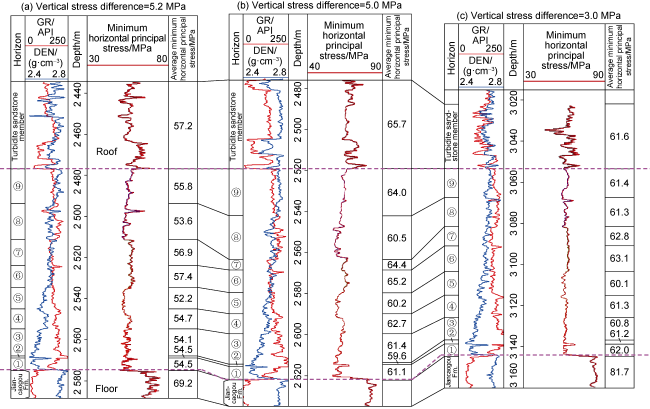
Fig. 4. Different vertical stress conditions. |
The sensitivity of artificial fracture network morphology to the conditions with/without natural fractures was numerically simulated. The results show that, in the zones without vertical natural fractures, the reservoir volume stimulated by the artificial fracture network is in a gyrostat-like shape, while in the zones with dense vertical natural fractures in flake-like distribution, the reservoir volume stimulated by the artificial fracture network is in a spindle-like shape, which contribute a large quantity of employed reserves, approximately 2 to 3 times that in the zones without natural fractures (Fig. 5 ), implying a unqualification for three-dimensional development with three layer-combinations.
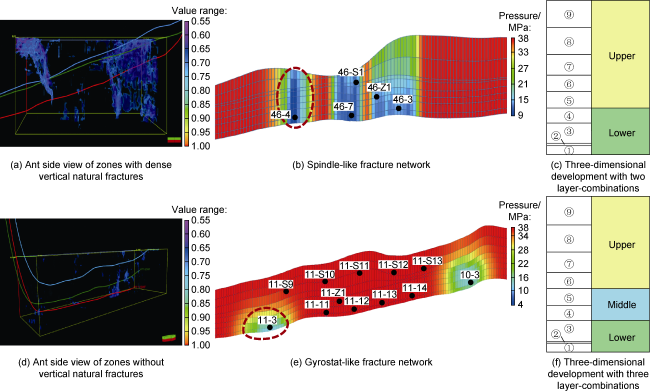
Fig. 5. Layer-combinations for shale gas three-dimensional development in zones with/without natural fractures. |
Correlation between single-well investment and recoverable reserves was analyzed. Assuming the single-well investment is RMB40 million, the estimated ultimate recoverable reserves (or estimated ultimate recovery or EUR) of a single well are 0.6×10⁸ m3. The economic thresholds of reserves abundance under different well drainage areas and recovery factors and the existing stimulation technologies are determined (Fig. 6 ). A layer-combination scheme based on vertical resource abundance is made (Fig. 7 ).
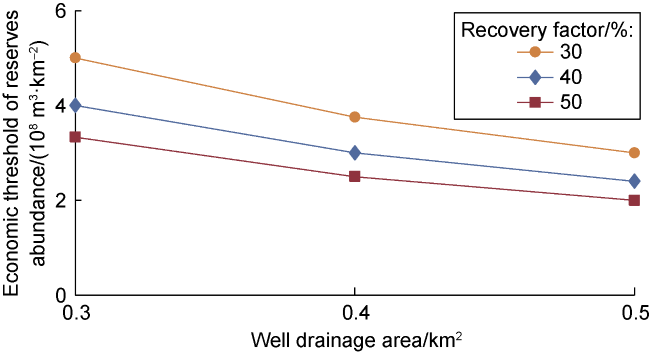
Fig. 6. Economic thresholds of reserves abundance under different well drainage areas and recovery factors at the single-well investment of 40 million RMB. |
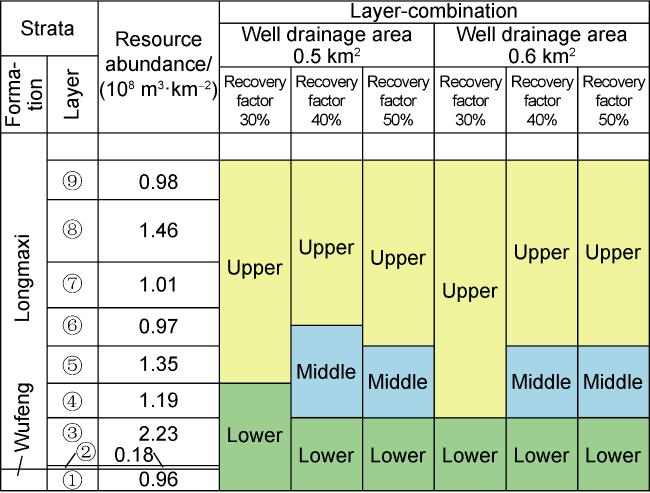
Fig. 7. Layer-combination scheme based on resource abundance for three-dimensional development in the Jiaoshiba block. |
Combining the material base, in-situ stress and natural fractures, a layer-combination standard system for three- dimensional development is established, the technical limits of beneficial layered development of different types of shale units in Jiaoshiba block are defined, and the benefit-based layer-combinations for three-dimensional development are established (Table 2 ).
Table 2. Layer-combination standard for three-dimensional development under different geological conditions |
| Layer-combination scheme | Schematic illustration | Evaluation parameters | |||
|---|---|---|---|---|---|
| Reservoir thickness | Resource abundance | Stress | Vertical fractures | ||
| Three layer- combinations | 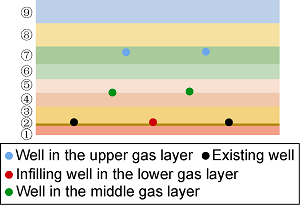 | The ratio of reservoir thickness to artificial fracture height is greater than 3 | The estimated resource abundance satisfies the economic evaluation requirements for three- dimensional development with three layer-combinations | Vertical stress difference greater than 5 MPa | Underdeveloped |
| Two layer- combinations | 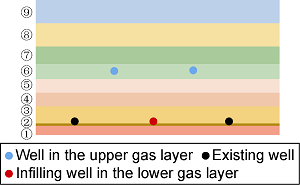 | The ratio of reservoir thickness to artificial fracture height is 2-3 | The estimated resource abundance satisfies the economic evaluation requirements for three- dimensional development with two layer-combinations | Vertical stress difference less than 5 MPa | Developed |
2.3.2. Design of well pattern/spacing for three-dimensional development
Artificial fracture length and height are the basis of well pattern/spacing optimization. For three-dimensional development, the collaborative optimization of well pattern and artificial fractures in the design stage and the real-time perception and precise adjustment in the operation stage are very important. Especially, the pressure response of adjacent wells should be monitored carefully to minimize inter-well and inter-layer negative interferences. These measures are expected to maximize the employed reserves. It is thus clear that well pattern/spacing is crucial to enhanced recovery in three-dimensional development of shale gas [28⇓-30]. Based on the employed reserves, and in order to realize beneficial development, the inter-well communication is confirmed by development performance analysis and using the microseismic monitoring, tracer monitoring, interference test and pressure build-up test data. Furthermore, based on the numerical simulation of well pattern/spacing sensitivity, the single-well cumulative gas production for each well group is evaluated under different layer-combinations, so as to figure out the optimal spatial configuration for three-dimensional development.
Geological and engineering sweet spots are the best targets that horizontal wellbore penetrate in three-dimensional development. In the selection of sweet spots, both shale gas content and reservoir fracturability should be considered. Engineering sweet spots are picked out from geological sweet spots to maximize the stimulated reservoir volume (SRV). In the Jiaoshiba block of Fuling shale gas field, when three-dimensional development with two layer-combinations is applied, wells in the same upper gas layer are spaced about 300 m and have projection distances of 125-175 m from wells in the lower gas layers. When the three-dimensional development with three layer-combinations is applied, wells in the same middle gas layer are 250-300 m apart from each other and have a projection distance of 100 m from wells in the lower gas layer and 75 m from wells the upper gas layer; wells are arranged in M pattern (Fig. 8 ).
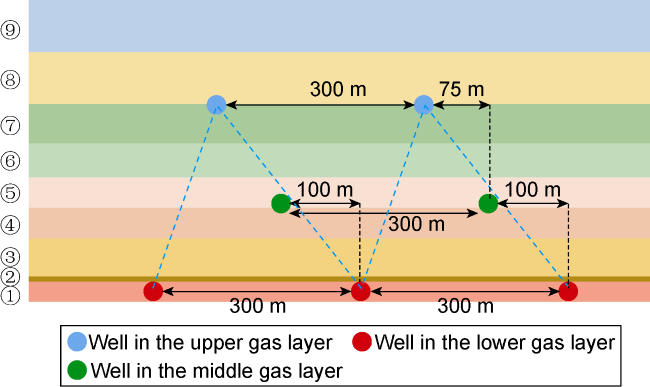
Fig. 8. Schematic illustration of three-dimensional development with three layer combinations in Fuling shale gas field. |
2.3.3. Evaluation of pressure maintenance level
Shale gas reservoirs, with low porosity and low permeability, can only rely on hydraulic fracturing to create artificial fractures which act as main flow pathways. As a result, the pressure drop funnel generated after the well is put into production often sweeps in a limited scope, and the fractured zone and unfractured zone differ greatly in pressure maintenance level. Through numerical simulations of productivity by zones, it is found that the pressures in the artificial fractures and matrix drop and the pressure drop funnel gradually expands outward in the fractured zone, while the pressures in the unfractured zone remain basically unchanged. Specifically, in the fractured zone, the maintenance level of pressure in artificial fractures is as low as 10%-20%, and the maintenance level of pressure outward from the center of the wellbore increases gradually; in the unfractured zone, the pressure maintenance level generally keeps above 90%. The pressure field can be determined through numerical simulation. Three-dimensional development wells can be deployed between layers/wells with high pressure maintenance level to further increase the employed reserves in the block.
2.3.4. Changes and main controlling factors of EUR
Geological conditions are essential for single-well EUR and recovery factor. In the Jiaoshiba block, the single-well EUR is higher in the north and west than in the south and east, which is consistent with the geological zoning. A rational production system is helpful to maximize the single-well EUR. Experiments have revealed that the artificial fractures in shale are highly sensitive to stress, so the rationally designed production rate can effectively improve the single-well EUR, while the production at a larger differential pressure can reduce the single-well EUR. According to the results of numerical simulation for the Baima block of the Fuling shale gas field, when the production rate is designed at (6-10)×104 m3/d, the single-well EUR will decrease by 10% for every increment of 2×10⁴ m3/d in the production rate. After optimization of three-dimensional development, the actual average single-well EUR in the Fuling shale gas field reaches 0.96×10⁸ m3, registering a satisfactory performance.
2.3.5. Analysis of recovery factor
An evaluation system for shale gas three-dimensional development is established by implementing the modeling + numerical simulation integration, the geology + engineering integration, and technology + management integration. In the Jiaoshiba block, the geological reserves of layers ①-⑨ are 2703.2×108 m3, corresponding to the predicted average recovery factor of 12.6% by original primary well pattern (at the well spacing of 600 m); after well infilling, the recovery factor increases to 23.3%. The implementation of three-dimensional development enables the recovery factor to climb to 39.2% (up to 44.6% for the well groups).
2.4. Highly efficient drilling with dense well pattern
Three-dimensional development is characterized by more wells on a pad, longer horizontal sections, denser well pattern and higher requirements for precise targeting as compared with conventional development modes. When implementing this technology, it is more challenging to drill wells faster, more accurate and more cost-effective while satisfying the requirements of safety and environmental protection, EUR constraints and economic benefits.
2.4.1. Integrated trajectory design of well group
In three-dimensional development, it is very necessary to achieve integrated design and precise control of wellbore trajectory under the constraints of surface conditions, underground conditions, well placement (one-time well placement, batch well placement, horizontal section length, and horizontal section orientation) and other factors in case of dense well pattern [31]. Compared with the primary well pattern, three-dimensional development of shale gas is challenging for more wells on the pad in a mature area, much denser well pattern, much smaller well spacing, higher safety risk of secondary well placement due to inter-well interference and wellbore collision in fractured zones, and more difficult trajectory control and penetration under a complex well pattern.
In the Fuling shale gas field, overall well pattern is considered, and integrated production profile design is adopted. The idea of barrier bypassing of well groups in shale gas three-dimensional development, while ensuring footage minimization and wellbore collision prevention, is proposed. By optimizing the wellhead-bottomhole correspondence, the spatial configuration in horizontal sections is designed. Moreover, a three-dimensional visual platform is built to monitor and predict drilling trajectory. With these measures, three-dimensional development wells can be drilled efficiently and safely in the areas where the primary well pattern is adopted. In the Fuling shale gas field, even though both the number of wells in a pad and the length of horizontal section were doubled, 269 new wells were drilled with zero collision with 480 old wells, and realized a high-quality reservoir drilling rate of over 98%. For example, in the well group JY-B which covers an area of 11.2 km2, 4 development wells were deployed in the primary well pattern, and there were 16 wells after the three-dimensional development with three layer-combinations was implemented.
To realize an optimal and fast drilling in horizontal section, for example, the strategy of “overall management and node control” is adopted. The control nodes of horizontal well trajectory are designed by considering geological and engineering factors. According to the principle of “one tailored drilling plan for each well”, the structural nodes to be penetrated are prudently positioned to avoid frequent adjustment of trajectory in horizontal section. These practices have worked well in the Fuling shale gas field. About 40% of wells achieved horizontal section drilling in one trip, the average drilling period reduced from 71.0 d to 46.6 d, and the target window of horizontal well was narrowed from 10 m to 6 m.
2.4.2. Design optimization of casing program
To explore a new way of reducing the drilling cost, the slim casing program of shale gas horizontal well is proposed through analysis of drilling cost structure. However, in the targeting and horizontal sections of the slim wellbore, the small-size drilling assembly is easy to buckle, the rate of penetration (ROP) is low, the circulating pressure loss is high, the equivalent circulating density (ECD) is high, and the cementing quality in narrow annulus is uncertain. Based on reversal design and numerical simulation, and considering the factors including safe drilling, casing running, cementing quality and fracturing operation, two slim casing programs are prepared for different burial depths (Fig. 9 ). For horizontal wells shallower than 3500 m, #I casing program (Φ171.5 mm wellbore + Φ114.3 mm casing) is designed; for horizontal wells deeper than 3500 m, #II casing program (Φ190.5 mm wellbore + Φ139.7 mm casing) is designed.
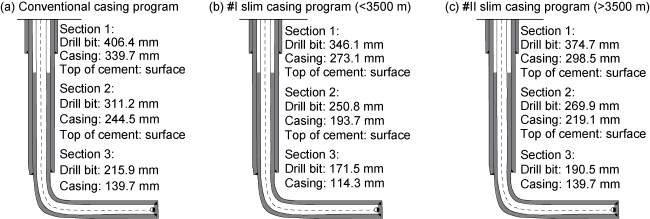
Fig. 9. Conventional and slim casing programs of shale gas well. |
Through technical feasibility demonstration, the application conditions and well selection principles of the two slim casing programs are defined. According to the characteristics of slim wellbore, high-efficiency bit, high-torque and equal-wall-thickness screw, low pressure loss hydraulic oscillator and small-size directional instrument are developed/selected, and key technologies for increasing drilling speed and efficiency of slim wellbore are worked out. A cement slurry system with low friction and high elasticity and toughness is developed to meet the cementing requirement of slim wellbore with narrow annulus, high circulating pressure loss and thin cement sheath, and practices for improving cementing quality are recommended.
The slim casing programs have been widely used in the Jiaoshiba block of the Fuling shale gas field. Compared with wells adopting conventional casing program on the same pad, the wells with the slim casing programs realize an increase of ROP by more than 20%, a reduction of drilling cost by more than 12%, a reduction of energy consumption by 37.5%, and a reduction of cuttings by more than 19%, and good cementing quality. These results fully verify the feasibility of slim casing program for reducing the drilling cost.
2.5. Precision fracturing and real-time control
After development with primary well pattern, the stress and pressure fields of shale gas reservoirs become complex and variable, and remaining gas between wells/layers distribute in diverse patterns. The artificial fracture length/height and SRV distribution should match the spatial distribution of remaining gas, vertical heterogeneity of the reservoir and differences in geological conditions at structural burial depth. To reach this goal, fine design, real-time perception and precise adjustment of fracturing parameters are very essential. Ultimately, the fracturing process transits to volume fracturing + precisely fracture-controlled fracturing from volume fracturing.
2.5.1. Precision fracturing technology for different remaining gas distribution patterns
Three-dimensional development of shale gas has set higher requirements on fracturing operation. In the design stage, well pattern and artificial fractures should be optimized collaboratively. In the operation stage, real-time perception and precise adjustment should be implemented. Especially, the pressure response of adjacent wells should be monitored carefully to minimize inter-well and inter-layer negative interferences. These measures are expected to maximize the employed reserves. According to the research of remaining gas in the Fuling shale gas field, after development with primary well pattern, remaining gas distributes mainly in three patterns: inter-well, inter-layer and inter-cluster.
For the inter-well remaining gas, a fracturing process featured with pre-energy replenishment, moderate cluster division, distal diversion, and drainage and pressurization is formed, aiming to address the influence of voidage in old wellbores, increase the net pressure in fractures and improve the complexity of fractures. This process has been applied to 142 wells, demonstrating an increase of test well production by 10.8%.
For the inter-layer remaining gas, a fracturing process featured with multiple clusters in a long section, multi-stage temporary plugging, and enhanced placement is formed, aiming to effectively address the increased vertical/horizontal stress difference and reservoir plasticity of the middle and upper layers. This process has been applied to 113 wells, demonstrating a doubled test well production.
For the inter-cluster remaining gas, the re-fracturing in reconstructed wellbore with long horizontal section and the parameter optimization method with efficient filtration reduction and fracturing stimulation by further mobilizing the existing clusters and tapping the potential reserves between clusters are formed, aiming to facilitate the precise production of remaining gas between clusters. The technique/method has been successfully applied in Well JY-4HF, demonstrating additional technically recoverable reserves of 0.27×10⁸ m3.
2.5.2. Real-time fracturing adjustment technology
After three-dimensional development is implemented, the stress field balance between the new and old well areas is broken, and the stress difference increases, which lead to the deflection and communication of the fractures in new wells to/with the fractures in old wells. By inventing an anti-impact discrimination method centering on real-time pressure analysis and curve dynamic variations, a fracturing sequence optimization method based on pressure barrier and low-pressure zone protection is established, and a precisely fracture-controlled fracturing process based on pressure protection and impact response is developed. This method/process can effectively deal with uneven distribution of reserves in unproduced zones, increase of vertical/horizontal stress difference and induced impact of old well pressure depletion.
With the concept of “pressure wall” in mind, for the three-dimensional development well groups, the fracturing is performed by shutting in old wells for energy replenishment to create pressure barriers between new and old wellbores, and replenishing the fracturing energy in filling wells in the lower layers before treating the upper layers to control the vertical sweep of fractures.
During fracturing of a new well, based on the analysis of the fracturing pressure of the new well, pressure response characteristics of old wells and extension of artificial fractures, the quantitative evaluation criteria for fracturing impact of new and old wells are established according to three indicators (rising pressure, main slope and pressure decline time), and the fracturing parameters are adjusted in real time to minimize negative interference.
Large-scale application of the precision fracturing technology in horizontal wells has resulted in remarkable increase of production and reduction of costs. Of 269 wells treated with this technology, 84% of the old wells were affected positively, with the test production increased by more than 30% from the level at the initial stage and the comprehensive cost of fracturing decreased by 20%. This technology has solved the problems of synergistic effect of new and old wells and low fracturing efficiency of new wells.
3. Application of three-dimensional development in Fuling shale gas field
The production capacity construction in the Jiaoshiba block of the Fuling shale gas field started in 2013. The development with primary well pattern was conducted on a set of 89 m thick shales by deploying wells with 1500 m horizontal sections at the spacing of 600 m in clusters and staggered manner to penetrate the layers ①-③. From 2016 to 2017, the block kept at the stable production above 50×108 m3. Limited by early geological knowledge and technical competence, the development with primary well pattern only enabled a percentage of employed reserves of 30.2% and an overall recovery factor of 12.6% in the Jiaoshiba block, leaving large amounts of reserves between wells/layers. Therefore, three-dimensional development is considered to enhance the recovery.
3.1. Realization of three-dimensional development
3.1.1. Pilot test
Since 2017, three-dimensional development has been carried out in the Jiaoshiba block in an orderly manner by procedures of well evaluation, well group test and progressive capacity construction.
(1) Well evaluation
In 2017, pilot tests were conducted at 12 wells to evaluate the development adjustment potential depending upon geological conditions, well spacing and horizontal section length. The tests of 4 wells in stacked upper and lower gas layers showed that the development of the upper gas layer had little effect on the wells in the lower gas layer. The tests of 5 wells spaced differently in the upper gas layers showed that 300 m well spacing was suitable for the development of the upper gas layers. The test of 1 infill well showed that the infill well spacing should be controlled at about 300 m. The tests of 2 infill wells with different horizontal sections showed that the optimal horizontal section length in the Jiaoshiba block is 2000 m.
(2) Well group test
In 2018, pilot tests were conducted at 5 well groups to further evaluate the effects of three-dimensional development. A shale gas three-dimensional development mode was established, and an overall three-dimensional development plan was prepared for the Jiaoshiba block.
(3) Progressive capacity construction
In 2019-2020, the three-dimensional development with two layer combinations was efficiently implemented. In 2021, the three-dimensional development with three layer combinations were tested in 6 wells, and the shale gas three-dimensional development mode was established. Currently, three-dimensional development is applied at industrial scale.
3.1.2. Production laws of three-dimensional development
The production of shale gas wells in the Fuling shale gas field can be divided into three stages: constant rate at decreasing pressure, production decline at constant pressure, and production at increasing pressure (Fig. 10 ). Compared with old wells in the development with primary well pattern, the wells in three-dimensional development are characterized by high elastic production rate in the constant rate stage, low decline rate in the production decline stage, and low water-gas ratio (WGR) in the life cycle. In the stage of constant rate at decreasing pressure, the adjustment wells in three-dimensional development have an average elastic production rate 1.5 times that of the old wells. In the stage of production decline at constant pressure, the adjustment wells have an initial annual decline rate of 56%, which is 60% lower than that of the old wells. In addition, both adjustment wells and old wells exhibit low WGR (less than 1 m3/104 m3 on average).
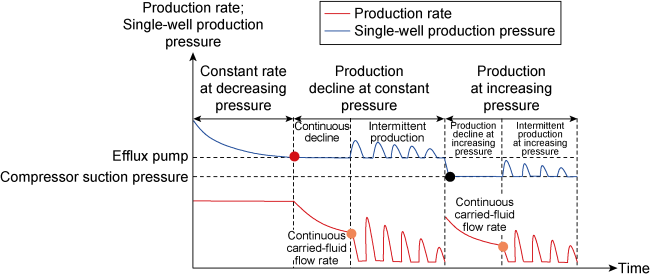
Fig. 10. Production stages of wells in Fuling shale gas field. |
According to the quantitative evaluation indexes for fracturing interference on old wells, the fracturing parameters are adjusted in real time. Based on three indexes, i.e. rising pressure, slope change (single slope/multiple slopes), and pressure change after pump shutdown (rise, fall or unchanged), as shown in Fig. 11 , the adjustment wells are recognized with three types of responses: elastic medium response, mixed response and direct impact. Based on adjacent well responses, the affected range of fractures is verified, and key parameters such as fracturing scale and intensity are adjusted in real time. Among wells in the development with primary well pattern in the Jiaoshiba block, 84% are affected positively, 2% affected negatively, and 14% not affected by fracturing of wells in three-dimensional development. Among the wells positively affected, 50% have production recovered to the level before fracturing, effective period of fracturing of nearly one year, and an average EUR increase of 2600×104 m3. Moreover, the adjustment wells in production test have no obvious interference to the old wells.
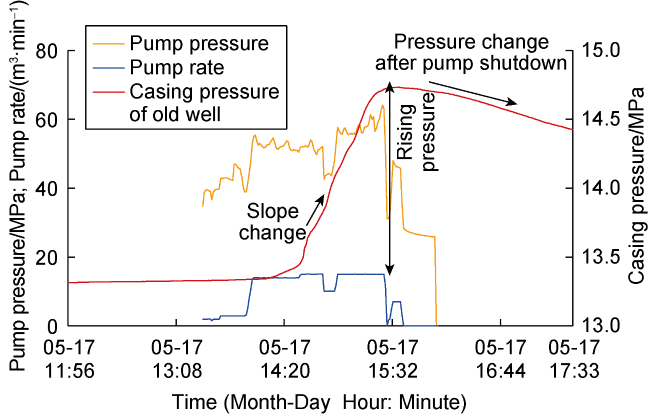
Fig. 11. Pressure excitation reaction of old wells during fracturing of typical adjustment wells in Fuling shale gas field. |
By analyzing the geological conditions and fracturing operation of adjustment wells which had negative interference to adjacent old wells, it is found that the degree of natural fracture development and amplitude of pressure decline are the main controlling factors of the negative interference. For the wells in the upper gas layers causing negative interference, the adjacent old wells had two extremes of wellhead pressure fluctuations, mainly greater than and equal to 2.0 MPa and less than and and equal to 0.5 MPa. The adjustment wells that have a negative excitation impact on old wells are mostly deployed in zones with abundant natural fractures, while wells in zones with few natural fractures all had positive fracturing excitation reaction.
3.2. Large-scale application of three-dimensional development
By virtue of three-dimensional development, the Fuling shale gas field has realized an overall recovery factor increasing from 12.6% to 23.3% across all blocks and even reaching 44.6% in some well groups. The three-dimensional development wells contribute about 49.1% of the daily gas production of the gas field (Fig. 12 ), supporting the production stability and increase of the Fuling shale gas field. Moreover, the three-dimensional development mode has been fully applied in complex structure areas, as well as normal pressure and deep zones of the Fuling shale gas field and also promoted in the shale gas development in southeastern Sichuan Basin.
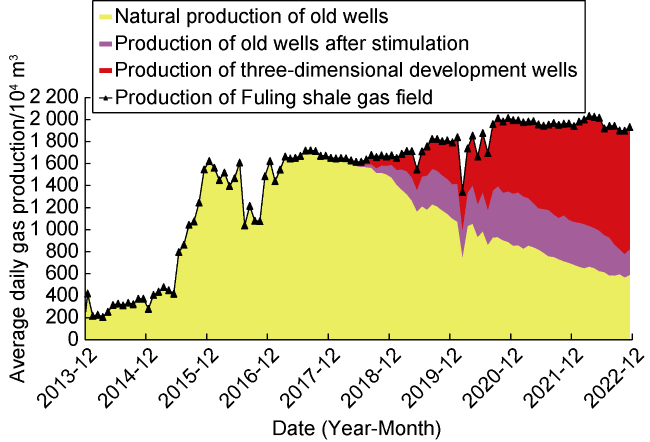


Fig. 12. Production profile of Fuling shale gas field in 2013-2022. |
4. Conclusions
The exploration and development practice of the Fuling shale gas field shows that three-dimensional development is an important way to improve the employed reserves, recovery factor and yield rate of shale gas. By virtue of three-dimensional development, the Fuling shale gas field has realized an overall recovery factor increasing from 12.6% to 23.3% across all blocks and even reaching 44.6% in some well groups. The three-dimensional development wells contribute about 49.1% of the daily gas production of the gas field, supporting the production stability and increase of the Fuling shale gas field.
Three-dimensional development refers to the application of optimal and fast drilling and volume fracturing technologies, depending upon the sedimentary characteristics, reservoir characteristics and sweet spot distribution of shale gas, to form “artificial gas reservoir” in a multidimensional space, so as to maximize the employed reserves, recovery factor and yield rate of shale gas development. In this process, the geological + engineering sweet spot description is fundamental, the collaborative optimization of natural fractures and artificial fractures is critical, and the improvement of speed and efficiency in drilling and fracturing engineering is the guarantee.
To efficiently develop shale gas, three-dimensional development can be considered as an out-of-box idea. In this regard, basic researches should be enhanced. Drilling/completion and intelligent fracturing technologies will be innovated to push engineering innovations in three-dimensional development. Big data and artificial intelligence will be integrated into three-dimensional development of shale gas to upgrade the technologies for three-dimensional development of shale gas. Finally, a path of high-quality development will be worked out for the characteristics of shale gas in China.