

Introduction
The Songliao Basin is rich in petroleum resources, with the cumulative yields of conventional petroleum surpassing 2.5 billion tons, and the exploration of shale oil has achieved profound breakthroughs. Shale oil refers to the oil and gas that occurs in shale formations (i.e. source rocks), and is an important unconventional oil and gas resource. It is also a hot field of current research and exploration. Based on factors encompassing reservoir capacity, sedimentary lithology, organic material maturity and abundance, both domestic and international scholars have broadly categorized the definition of "shale oil" into two main classes [1⇓⇓⇓⇓-6]. In its narrower connotation, it pertains to autochthonous petroleum accumulation thriving within organic-rich shale (endogenic) layers. In a broad sense, it generally refers to the oil resources (near source, within source) in oil bearing layers such as shale, tight sandstone, and carbonate rock contained in shale formations, including self-generated and self-stored oil accumulations and short distance migration oil accumulations. Currently, the primary focus of shale oil development, both domestically and internationally, lies upon the intercalations of sandstones and carbonate rocks within the strata of shale formations - thus encompassing the broader realm of shale oil. "Gulong shale oil" alludes to petroleum that dwells within the terrestrial layers of the Songliao Basin, containing ample organic matter, bearing a certain degree of maturation and diagenetic evolution. It pertains to economically exploitable oil found within deepwater fine-grained laminar rock sequences, post-enhancement through human intervention. Given its early industrial oil yield within the Gulong Sag of the Songliao Basin, it earns the designation "Gulong shale oil" [7], exemplifying a paradigmatic instance of shale oil in its narrower sense. Currently, the exploration endeavors for the venerable Gulong shale oil predominantly converge upon the lower horizons of the Cretaceous Qingshankou Formation, specifically its first and second members (K2qn1 and K2qn2). Nine units were vertically delineated in an ascending order from Q1 to Q9, each unit has yielded industrially viable oil flows. In the year 2021, Daqing Oilfield unveiled a projection of 1.268 billion tons for shale oil reserves [8-9], while the comprehensive geological resource potential of shale oil may extend to a range of 10-15 billion tons. By the end of year 2022, the Gulong shale series have yielded over 100 thousand tons of crude oil and more than 40 million cubic meters of natural gas[10].
High-quality hydrocarbon source rocks constitute the fundamental substrate for the accumulation of both conventional and unconventional oil and gas. Within the Songliao Basin, the Qingshankou Formation stands as the most important hydrocarbon source rock. Predominantly characterized by laminar shale formations, it sporadically intercalates with thin layers of dolomite and argillaceous limestone. The main body of its organic matter abundance ranges from 1% to 5%. In terms of mineral composition, it is primarily comprised of quartz and feldspar, albeit with an elevated presence of clay minerals. Such assemblage of hydrocarbon source rocks has not only contributed 85% of the conventional oil in the Daqing Placanticline oilfield, but has also yielded interbedded tight oils in members 2 and 3 (K2qn2 and K2qn3) of the Qingshankou Formation in the slope regions, as well as tight oil in the Quantou Formation beneath the source rock. Furthermore, it has engendered a vast reservoir of shale oil resources [11]. High abundance of organic matter is the basis of shale oil accumulation. However, the total organic carbon (TOC) content within the Qingshankou Formation shale is not exceedingly high. In light of this, how is it plausible that, beyond contributing over 11 billion tons of conventional oil resources, this stratum has managed to foster an extensive assembly of shale oil? What interplay exists between the accumulations of conventional and unconventional oil and gas?
This paper, using the black shales of the Qingshankou Formation in the Gulong Sag of the Songliao Basin as a case, embarks upon a journey through the sedimentary context of hydrocarbon source rocks, the accumulation process of organic matter, and the conducive enrichment conditions of shale oil. By delving into the enrichment mechanisms of organic matter within shale, the successive stages of hydrocarbon generation and expulsion, and their efficacies, it endeavors to evaluate the abundance and compositional diversity of retained hydrocarbons within shale. In doing so, it unveils the potential of shale oil exploration and development, as well as the systematically arranged distribution patterns of conventional and unconventional oil and gas. The ultimate aspiration is to offer a theoretical compass for a comprehensive comprehension of the reservoir's hydrocarbon resource types, potential, and favorably endowed regions within the oil and gas system of the Qingshankou Formation in the Gulong Sag.
1. Geological setting of the organic matter enriched in the Qingshankou shale in the Songliao Basin
The Qingshankou Formation is the most important hydrocarbon source rocks of the Songliao Basin. The basin formation and organic matter enrichment are from the interactions among paleo-tectonic, paleo-climate, paleo- biological organisms, and paleo-lacustrine environment.
1.1. Major geological events control the formation of the Songliao Basin and the enrichment of organic matter
The genesis of the Songliao Basin was profoundly shaped by the overlapping influences of three major tectonic domains, namely the Paleo-Asian Ocean, the Mongol-Okhotsk Ocean, and the Paleo-Pacific Ocean. The collision and amalgamation of the Siberian Craton and the North China Craton during the middle and late Permian periods led to a complete closure of the eastern segment of the Paleo-Asian Ocean. The residual Mongol-Okhotsk Ocean eventually became an integral part of the Paleo-Pacific tectonic domain. After the subduction-collision orogenesis from the Early Jurassic to Early Cretaceous, a suture zone emerged, giving rise to an array of north-east and northeast-east ward rifts, depressions, basins (such as the Songliao, Erlian, and Hailar basins), and volcanic ranges (such as the Zhangguangcai and the Great Xing’an ranges) (Fig. 1a ) [12]. From the Early Jurassic, the westward-moving Pacific Plate, which had been steadily subducting beneath the East Asian continent, initiated a retreat approximately 145 Ma. This retreat became the first-order driving force for the destruction of the North China Craton and reached its peak in the Early Cretaceous. Thus, the Great Xing’an Range is considered as the product of the Paleo-Pacific tectonic domain [13], and further emerges as a primary provenance of peripheral basins (Fig. 1a ).
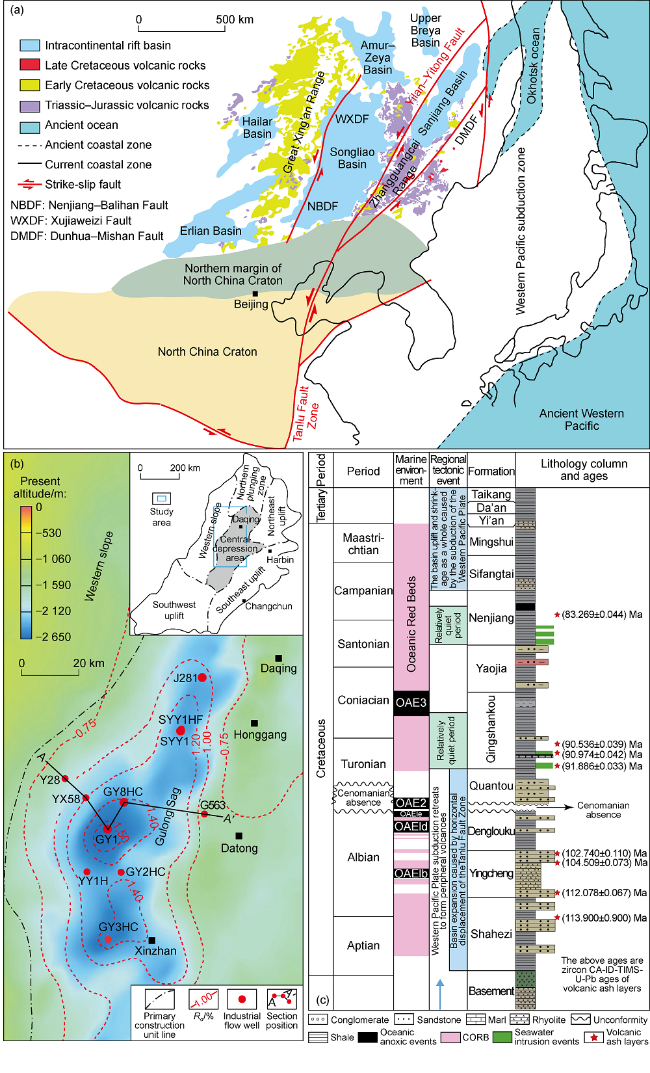
Fig. 1. Paleotectonic evolution and comprehensive stratigraphic histogram of the Songliao Basin. (a) Structural framework of the Middle Cretaceous in the Songliao Basin, modified from reference [12]; (b) The location of the Gulong Sag in the Songliao Basin and the strata distribution in the Qingshankou Formation, modified from reference [10]; (c) Cretaceous marine environment, tectonic background in Northeast of China, and sedimentary filling sequences in the Songliao Basin (taking the Songke 1s well as an example), with stratigraphic age data cited from references [15-16]. |
For the subduction and retreat of the western Pacific Plate, the Tan-Lu Fault Zone has a large-scale horizontal displacement at 100-125 Ma (Fig. 1a ), with a strike-slip distance of 740 km [14], forming a huge lacustrine basin and a central depression (Fig. 1b ). During 83-100 Ma, the Paleo-Pacific Ocean extends to the Wusuli Bay in the Heilongjiang Province, resulting in occasional intrusions of seawater to the eastern of the ancient lake basin. During the Cretaceous hothouse climate, the Songliao Basin was subject to the westerly planetary wind system and the East Asian monsoon wind system, and had a vigorous terrestrial hydrological cycle[17]. The Great Xing’an Range located at the western of the Songliao Basin was exposed to the windward side of the humid monsoon winds, and experienced substantial rainfall. High wind-driven erosion rates propelled the sedimentary rate of the Songliao Basin to exceed 8 cm per thousand years [18-19]. The Turonian (89.8-93.9 Ma) and Santonian (83.6-86.3 Ma) epoches are relatively quiet period of tectonic activities within the Pacific Plate and the North China Craton [13]. The Songliao Basin has experienced large-area depression subsidence and extensive lake level rise, and formed two sets of high-quality hydrocarbon source rocks, namely the Qingshankou and Nenjiang formations (Fig. 1c ). The formation of the Qingshankou and Nenjiang orgainc-rich sediments alternated with the oceanic anoxic events (OAE2: 93.3-94.2 Ma; OAE3: 86.8-87.7 Ma), as illustrated in Fig. 1c , but was consistent with the Cretaceous Oceanic Red Beds (CORBs) formed during the oceanic oxygenation events. OAE2 and OAE3 corresponded to the deposition of red layers or organic-poor rocks of the Quantou Formation and the upper part of the Qingshankou Formation (Fig. 1c ). The lake level rise expanded the lake area to 10×104 km2 during the deposition of K2qn1, forming dark mudstone with an average thickness of about 61.5 m. Then the lake area was contracted to 6×10⁴ km2 during the deposition of K2qn2 and K2qn3, forming dark mudstone with an average thickness of about 249 m [20]. The huge amount of organic carbon burial reflects an important contribution of large lacustrine basin to the global carbon sequestration.
1.2. Planktonic bacteria and algae modified by microorganisms are beneficial to the formation of high-quality hydrocarbon-generating parent material
The hydrocarbon generating constituents of the source rocks of the Qingshankou Formation is predominately lamalginite [10], which is primarily originated from photosynthetic planktonic microorganisms, such as cyanobacteria, acritarchs and dinoflagellate. Such lacustrine lamalginite has extremely high hydrocarbon generation potential [21]. The microfossils in the Qingshankou shale are overwhelmingly dominated by the spherical acritarchs with an average proportion of 85%, followed by eukaryotic algae with an average proportion of 15% [22]. This characteristic indicates significant contribution of acritarchs to the hydrocarbon-generating parent material. The sterane/hopane ratios of the extraction from the Qingshankou shales are universally lower than 1.0 [20], indicating that prokaryotic bacteria (such as cyanobacteria) that can generate hopanes had provided more sedimentary organic matters than the eukaryotic algae that can generate steranes. High contents of aromatic alkylated isoprenoids in the immature and low-mature Qingshankou shales also provide evidence for the contribution of green sulfur bacteria to sedimentary organic matter [20].
The δ13Corg values of shale can serve as an indicator of parent source of organic matter. Organic matter deposited in the shallow lake-deltaic environment of the Quantou Formation, the upper part of the Qingshankou Formation, and the Yaojia Formation, exhibits heavier δ13Corg values (greater than -27‰) [23]. It may be due to the higher proportions of eukaryotic algae and even higher plants in the sedimentary organic matter in shallow water environment.
However, the occurrences of twice negative δ13Corg shifts in the units Q1-Q9 of the Qingshankou Formation were consistent with the deepening trends of lake, possibly linked to the alteration of the parent source of organic matter (Fig. 2 ). This might be attributed to an increased contribution of organisms thriving in deeper waters to the sedimentary organic matter, including the chemoautotrophic organisms (e.g., methanogens) and benthic microbial mats (e.g., cyanobacteria). According to the oscillations of organic nitrogen isotopic composition (δ15Norg) of K2qn1, Cao et al. believed that there is an outbreak of nitrogen-fixing cyanobacteria [24]. Methanogens is one kind of the most prevalent chemoautotrophic organisms. 3β-methyl hopane is the biomarker of Type I methanotrophic bacteria, and has an extensive carbon isotope fractionation over ‒30‰ [25]. The significant negative excursion in δ13Corg values of the K2qn1 shales (with a nadir value lower than -30‰) and the extremely light δ13C values of C31-32 3β-methyl hopanes (approximately -60‰) [26], gave robust evidence for the significant contribution of methanotrophic bacteria to the sedimentary organic matter of Gulong shale.
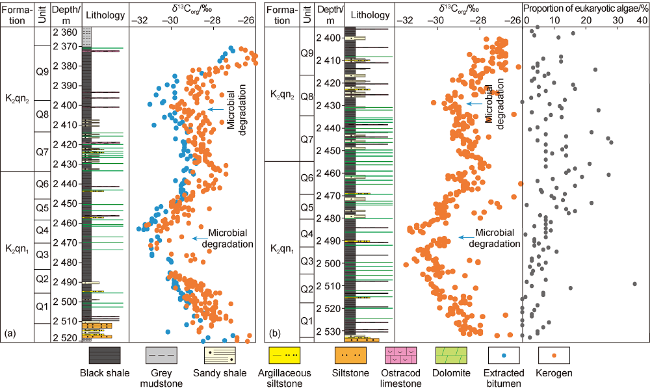
Fig. 2. Organic carbon isotopic compositions and proportion of eukaryotic algae fossils in units Q1-Q9 in the GY3HC (a) and GY8HC wells (b). |
The frequently appeared nodular and laminated dolomites in the shale are featured by heavy δ13Ccarb values (ranging from 4.0‰ to 15.2‰, with an average of 8.0‰) (Fig. 3 ), indicating the mineralization of organic matter might be mediated by methanogenic microorganisms. This microbial modification is not merely characterized by negative δ13Ccarb excursions and a decrease in the abundance of eukaryotic algae fossils, but also accompanied by the occurrence of abundant dolomite minerals. The identification of diverse iron-enriched authigenic minerals (such as siderite, pyrite, and rhodochrosite) signifies the profound influence of dissimilatory iron reduction process [27]. The methanogens, dissimilatory iron reducing bacteria, and other heterotrophic micro-organisms not only decompose the initial organic matter, but also produce organic matter as secondary productivity, and finally realize the substitution and transformation of the primary organic matter.
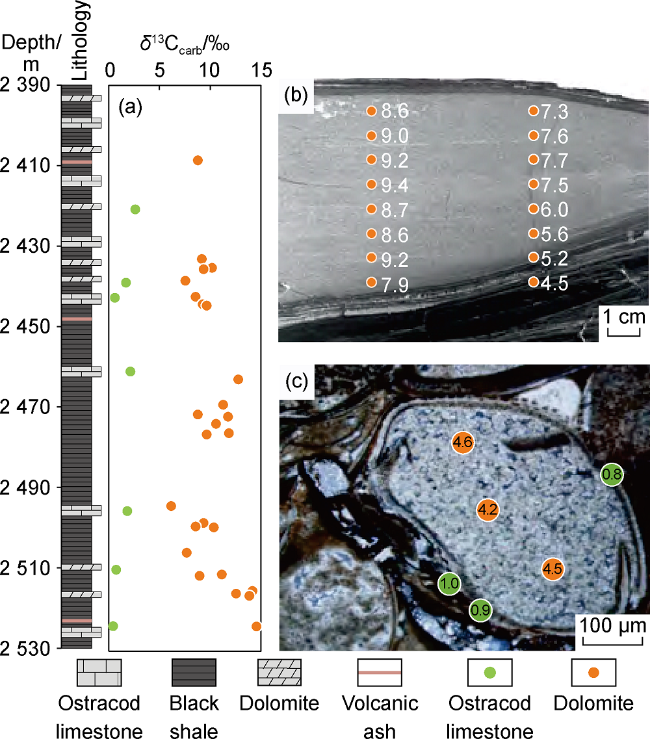
Fig. 3. Characteristics of inorganic carbon isotopic compositions of ostracod limestone and dolomite of Qingshankou Formation. (a) Units Q1-Q9 of the GY8HC well; (b) In-situ δ13Ccarb values of dolomite nodule, showing significantly decreasing δ13Ccarb values close to shale; (c) δ13Ccarb values of ostracod shell and inner dolomite. |
1.3. Salinized and stratified lake water and formation of anoxic bottom water benefit the accumulation of organic matter
Proper salinity plays a pivotal role in inducing stratification and enhancing the efficacy of organic matter preservation in the bottom water [28]. Based on the paleontological community composition, scientists have probed into the link between salinization stratification of lake water and the seawater intrusion events. The fossils of Manchurichthys sp., dinoflagellate, foraminifera, calcareous microfossils, and biomakers like diatoms, dinoflagellates, as well as the biomarkers of dinoflagellates, marine chrysophytes and sponges in the Qingshankou shales, jointly proved the appearance of marine life in the paleo-lake. Yet, the branchiopods, ostracods, and algae with much higher abundance are predominantly organisms living in freshwater-brackish water, suggesting that the paleo-lake was still mainly filled with freshwater-brackish water [22]. Lyu Dan et al. [22] have proposed that the consistently increased biological diversity and dinoflagellates abundance was unequivocal evidence for the seawater intrusion events, but might be just transient or sporadic connections of lake and marine, rather than substantially alternation of the water condition and ecosystem in the paleo-Songliao lake. Actually, the most important significance of seawater incursion events to the enrichment of organic matter in the Songliao Basin was not the abundance of parent organisms, but the input of saline water, which enabled the formation of salinization and stratification water at the bottom of lake with high lake-levels (Fig. 4 ). When the westerly wind is prevailing, the wind blows from the land to the ocean, small rainfall and strong evaporation on the land leads to a hydrological cycle to remove water from the land to the sea. The lake is restricted and has salinized and stratified water. High salinity and hypoxia of the bottom water benefited the enrichments of organic matter in the epicenter of lacustrine basin (Fig. 4a ). Conversely, if the monsoon is prevailing, the wind blows from the ocean to the land and was hindered by the Great Xing’an Mountains. In such a temporal circumstance, the Songliao Basin witnessed copious precipitation and terrestrial input. The rise of lake level is beneficial to the connection between lakes and seas via surface channels, thus giving rise to seawater intrusion events (Fig. 4b ). The salinized and stratified water body reduced the aerobic degradation of organic matter caused by biological disturbance of benthos, and formed an anoxic water environment by promoting the anaerobic degradation of organic matter by microorganisms, and thereby fostering the preservation of organic matter.
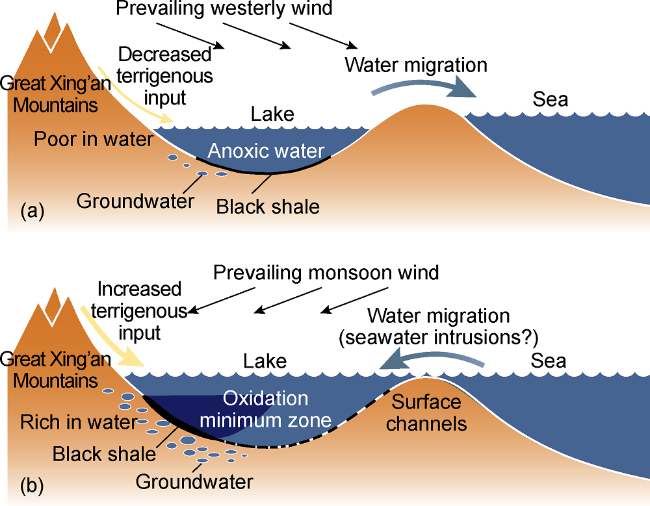
Fig. 4. Differences in salinity, stratification and organic matter enrichment in the Songliao Basin caused by prevailing westerly (a) and monsoon (b). |
Based on the appearance of large amounts of strawberry-like pyrites and cubic crystalline pyrites in the K2qn1, Wang et al. [29] have hypothesized the formation of sulfidic water. The significant negative excursion of sulfur isotopic composition of pyrite (δ34Spy, greater than 10‰) [24] and the detection of biomarkers of green sulfur bacteria [20], have also been considered to be associated with sulfidic water. However, judged from the current evidence, the likelihood of the formation of long-term and basin-scale sulfidic water is rather small, yet the possibility of a short-term sulfidic water within the depressions cannot be ruled out. The evidence of crystalline form and particle size of pyrite was not consistent with the significant negative excursion in δ34Spy values, possibly due to the dynamic fluctuations of sulfidic water bodies. Methanogenesis should be strongly inhibited in the sulfidic waters[30]. However, methanogenic dolomite minerals widespreadly distributed in the Qingshankou sediments. The relatively low V contents and (V+Ni) ratios [23] of the Gulong shale, as well as several other redox sensitive elemental indicators, all indicate an anoxic rather than sulfidic water condition during the deposition of the Qingshankou Formation (Fig. 5 ). Hence, to a certain extent, the reduced sulfate reduction might be beneficial to the preservation of organic matter within freshwater and slightly brackish water.
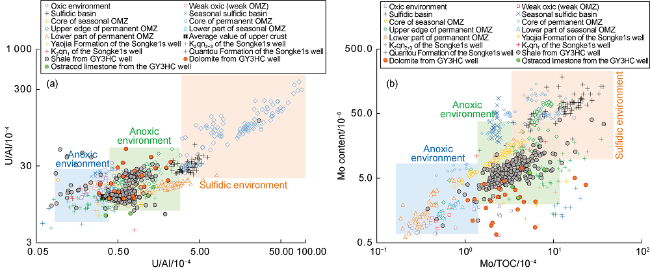
Fig. 5. Water environment during the sedimentation of Qingshankou Formation indicated by redox sensitive elemental index (OMZ—minimum oxidation zone; base map and data are referred from reference [31]). |
2. The favorable conditions for the enrichment of the Qinshankou light shale oil in the Gulong Sag of the Songliao Basin
Essentially, the Gulong shale have considerable oil contents with various production abilities in different oil layers, implying the difference in vertical oil and gas accumulation for shale strata with thickness greater than 100 m [32]. Investigating the favorable factors for shale oil enrichment and the controlling mechanisms of intralayer oil accumulation can provide scientific insights for the favorable enrichment intervals predication and the high-quality target layers selection.
2.1. Source rocks with high hydrocarbon potential providing material basis for shale oil enrichment
The abundance and type of organic matter (OM) of shale govern its hydrocarbon generation potential. TOC of the lacustrine shale in China is distributed in a broad range (0.5%-30.0%) with OM of mainly Type I and Type II [5,33]. Considering the geochemical features of the lacustrine shale in typical basins, scholars in China have proposed several thresholds in terms of TOC for the selection of shale oil prospective area. Zhao et al. [5] have proposed that the lowest TOC threshold for lacustrine shale oil prospective areas should be 2%-3% with the best OM type of Type I and Type II1. The thickness of the Qingshankou Q1 to Q9 (Gulong Shale) in the Gulong Sag is 100-150 m. The lithology is mainly composed of organic-rich black shale with high content of clay minerals, mixed with thin layers of shell limestone, siltstone, and dolomite at the millimeter to centimeter scale. TOC values of the shale are 1%-6%, with an average value of about 2%, indicating a moderate OM abundance (Fig. 6a ). Though TOC of the Qingshankou shale is lower than that of the 7th member of the Triassic Yanchang Formation in the Ordos Basin (named as the Chang7 Member), its original hydrocarbon generation potential is much higher and reaches 600-900 mg/g. The correlation between the hydrogen index (HI) and the maximum pyrolysis temperature (Tmax) reveals that OM of the QingShankou shale is mainly Type I and Type II (Fig. 6b ). Pyrolysis experiments indicated that the low-mature OM in the Qingshankou Formation has a maximum oil yield of 600-800 mg/g, showing strong oil-generation ability [34-35]. The residual HI of the extracted samples in the Gulong Sag is only 20-100 mg/g, evidently lower than the low-middle mature shale in the Chaoyanggou region and the Sanzhao sag. This fact demonstrates the intensive hydrocarbon conversion of the Gulong shale. Therefore, the moderate TOC content, high original HI and high maturity collectively lead to the generation of large amounts of oil and gas, which provide enough material foundation for shale oil accumulation.
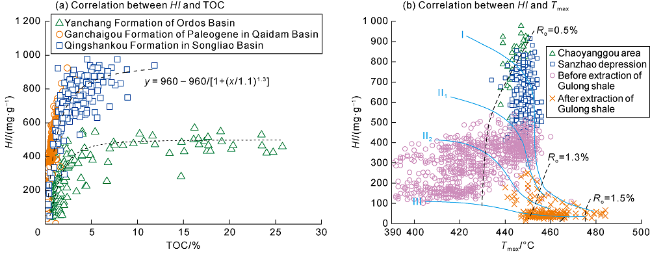
Fig. 6. Hydrogen index characteristics of Qingshankou Formation shale in Songliao Basin. |
2.2. The high thermal maturity as the critical factor for light shale oil formation
Essentially, Type I/II OM prefer to generate oil products with oil generation stage at geological temperature and Ro of 50-160 °C and 0.5%-1.3%, respectively [36]. The generation kinetics of individual components govern the oil and gas compositions at different thermal maturation stages. There is a descending order for the generation activation energies of different components: gaseous hydrocarbons (C1-5), light liquid hydrocarbons (C6-14 HC), heavy liquid hydrocarbons (C14+ HC), and non-hydrocarbons (NSOs) [34,37⇓ -39]. The compositions of pyrolysis products from marine Type I/II OM in closed systems indicate that heavy components (C15+) are the dominant products at the early oil generation stage (Ro<1.0%) with the relative content of gaseous (C1-5) and light HC (C6-14) generally less than 30% (Fig. 7a ). As a result, the gas to oil ratio (GOR) at this stage is relatively low (Fig. 7b ). With maturity increasing, C15+ in closed systems would be further cracked generating light component and gaseous HC, leading to the gradual increase of the content of latter products and GOR. In open pyrolysis systems, GOR becomes apparently lower due to the early expulsion of considerable amounts of heavy hydrocarbons.
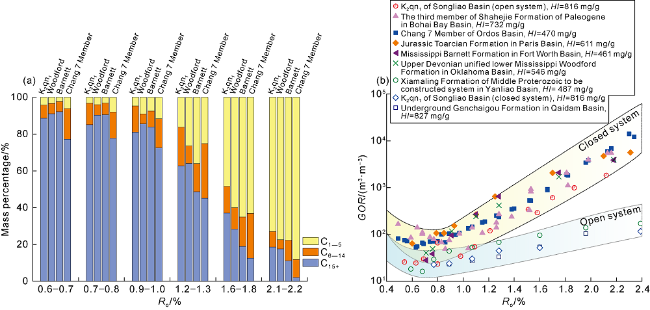
Fig. 7. The compositions of oil and gas products (closed system) (a) and GOR evolution with maturity (b) in the pyrolysis of organic matter from continental and marine shales. Simulation experiment data of Mississippi Barnett shale in Fort Worth basin, Upper Devonian-Lower Mississippi Woodford shale in Oklahoma basin, and Jurassic Toarcian shale in Paris basin are collected from references [43-44]. |
The simulation experiments reveal that the hydrocarbon generation features of the Qingshankou Type I OM of the Songliao Basin essentially agree with those of typical marine OM. In the low-middle maturation stage, the mass fraction of C15+ component in pyrolysis products from the Qingshankou OM is higher than that from the the Chang 7 shale of Ordos Basin. In high maturation stage (Ro>1.5%), the cracking of heavy component (C15+) and even some C6-14 component occurs, resulting in the evident increase of light HC content and C6-14/C15+ higher than 0.4. In strata with closed conditions and low hydrocarbon expulsion efficiency, the cracking of residual oil in oil-generation peak to wet-gas stages leads to quick increase of GOR for oil and gas in shale. At Ro>1.2%, GOR for oil and gas products in pyrolysis are generally higher than 100 m3/m3. At Ro of about 1.6%, GOR can reach 300-600 m3/m3.
Currently, the development of shale oil in both China and North America is mainly focused on the interlayer type and hybrid type, and the main oil producing layer is the sandstone section adjacent to the shale or the shale section containing sandstone/carbonate interlayer. For instance, the main shale oil production layers for the Bakken and Niobrara shale with low-middle maturity (Ro<1.0%) in North America are the middle interbedded carbonate or sandstone intervals. The compositional fractionation during the primary migration from organic-rich shale to the adjacent intervals leads to the production of light oil [40⇓-42]. Despite the Gulong shale has features of fine grain size and high clay content, making it different with shale in both North America and other lacustrine shale, its high maturity (i.e., Ro is about 1.2%-1.7% in the current development region) provides significantly favorable conditions for the in-situ accumulation of light shale oil with high GOR.
2.3. The low expulsion efficiency of the Gulong shale leading to its high content of residual hydrocarbons
The distribution of Rock-Eval S1 with TOC shows there is a positive correlation between shale oil content and TOC (Fig. 8a ). Wherein, S1/TOC of the Gulong shale in the region with Ro>1.0% is 50-300 mg/g with most higher than 100 mg/g. This value is evidently higher than those of the low-middle mature shale (Ro<1.0%) in the Sanzhao sag and the Chaoyanggou region. Noticeably, the unextracted Gulong shale has abnormal low Tmax (less than 430 °C), inconsistent with its commonly high maturity (Ro>1.0%). However, the Tmax values of the extracted shale samples are 440-490 °C and agree with their measured maturity. The phenomenon is because that the decompositions of some soluble OM and kerogen during Rock-Eval pyrolysis collectively contribute to S2 generation (pyrolysis hydrocarbons) and lead to the low Tmax corresponding to the peak of S2 generation [45-46]. Considering parts of residual hydrocarbons presented as S2 during Rock-Eval pyrolysis, Jarvie has proposed the difference in S1 and S2 between the unextracted and extracted shale could better characterize the total oil content [46]. Based on this method, oil content of the Gulong shale was calculated as 200-400 mg/g, which are comparable with bitumen “A” content and about two times S1 value (Fig. 8b ). The oil content analysis using sealed and pressurized core samples indicates that considerable amounts of volatile light components are presented in the Gulong shale and are usually loss in conventional Rock-Eval analysis [7]. The pyrolysis analysis at well sites reveals that the movable hydrocarbon content of the Gulong shale can reach 10-20 mg/g [47], proving its considerable oil content and movable oil amounts.
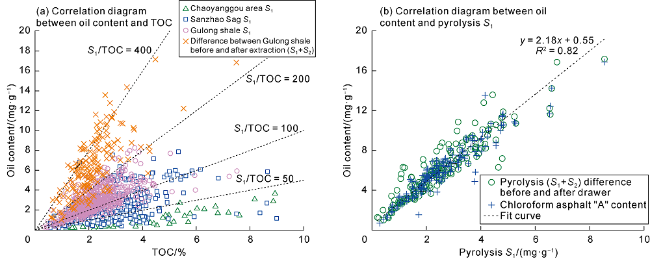
Fig. 8. Oil contents of the Qingshankou shale in the Songliao Basin. The oil content of shale is calculated by chloroform bitumen "A" and the difference of S1+S2 for shale before and after extraction. |
2.4. The interlayer sealing at high maturity leading to the efficient accumulation of the Gulong light shale oil
Microscopic observation shows that the interlayers of siltstone and carbonate have undergone strong diagenesis in current burial conditions. These rocks have suffered evidently secondary calcite cementation with dense and good sealing features (Fig. 9a , 9b ). The horizontal permeability of the shale reaches 10 times the vertical permeability, indicating the difficulty of large-scale vertical migration of oil and gas [32]. It is noteworthy that there are a large number of beddings and a small number of vertical microfractures developed in the shale, including foliation fractures, diagenetic fractures, and tectonic stress fractures. They provided favorable channels for the early primary migration and spaces for enrichment of oil and gas within the source rock [47-48]. These microfractures have undergone secondary cementation, forming fibrous calcite veins with widths from micrometers to millimeters (Fig. 9c ). Besides, large amounts of bitumen and hydrocarbon inclusions are filled in these veins, the latter are arranged vertically or distributed in a bead like manner with blue fluorescence (Fig. 9f ). This result demonstrates the bedding microfractures should be the important channels for early lateral migration of oil and gas.
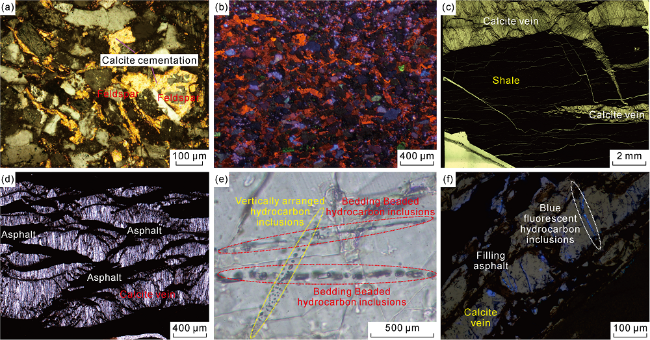
Fig. 9. Microscopic photos of calcite cements and veins in Gulong shale. (a) Orthogonal polarized photo of 2443.6 m sandstone with secondary calcite cementation in Well GY8HC; (b) Cathodoluminescence photos of 2443.6m sandstone in well GY8HC; (c) Scanning photo of 2426.9 m fibrous calcite vein thin section of Well GY3HC; (d) Polarized photo of 2426.9 m calcite vein filled with asphalt in Well GY3HC; (e) Polarized photos of calcite veins filled with inclusions at 2499.0 m in Well GY3HC; (f) Fluorescence photos of calcite veins filled with hydrocarbon inclusions showing blue fluorescence at 2499.0 m in Well GY3HC. |
By integrating the dynamic coupling of hydrocarbon generation and diagenetic evolution, we established a intralayer accumulation model with three stages for the Gulong shale oil: (1) In the early-peak oil generation stage (R0<1.0%), microfractures were formed in the shale due to the increased pressure derived from hydrocarbon generation and the regional tectonic stress. The primary migration of early generated oil and gas would occur with oil and gas charging into microfractures or uncemented sandstone interlayers. (2) Under the impetus of pressure, oil and gas in the microfractures undergo lateral migration, and enter the adjacent faults, causing the vertical migration and accumulation of conventional/tight oil. In this stage, the expulsion efficiency of the shale should be lower than 50%. (3) In the peak-late oil generation stage with R0>1.0%, microfractures and sandstone interlayers were cemented by calcite forming micro-layer seals for oil and gas migration. As a result, the light oil derived from the late-stage decomposition of heavy components is retained within the shale and accumulated in place (Fig. 10 ). The sealing effect led by calcite cementation should also account for the vertical variations of the content, chemical and isotopic composition of shale oils in meter or even centimeter scale [32].
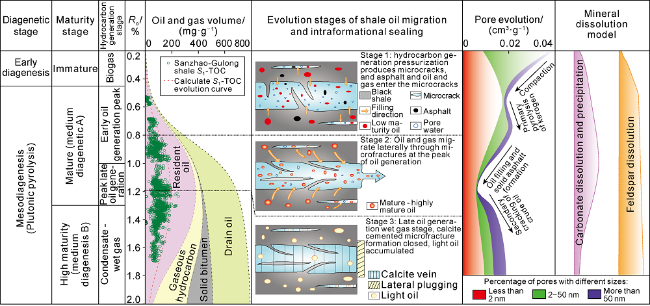
Fig. 10. Coupling evolution model of hydrocarbon generation, expulsion and sealed preservation in the Gulong shale (the pore evolution model was modified by Mastalerz et al. [49]). |
3. Orderly distribution of multiple types of oil and gas resources in the Songliao Basin
Although the Qingshankou shale has undergone intensive hydrocarbon expulsion to form huge conventional/tight oil resources, they still have high oil content with the pressure coefficiency of their production target layers high than 1.2 [25,47]. The orderly accumulation of conventional and unconventional oil governs the distribution of different types of petroleum resources.
3.1. The systematic variation in properties of conventional oil, tight oil, and shale oil
The properties of oils reveal that conventional oil in the Gulong sag to Daqing placanticline area mainly belongs to intermediate to heavy oils, with a density of 0.87- 0.95 g/cm³ and a crude oil viscosity at 50 °C of 20-100 mPa·s. Similarly, the properties of tight oil are comparable with those of conventional oil. Shale oil produced in the Gulong Sag is mainly light oil with low viscosity [7], its original density is 0.75-0.85 g/cm³ and predominantly below 0.82 g/cm³ with a crude oil viscosity at 50 °C less than 20 mPa·s. The contents of saturates and NSOs of conventional oil are 45%-75% and 5%-30%, comparable with those of tight oil. The saturates content of shale oil is 75%-100% with most higher than 80%, the NSOs content is less than 5% and apparently lower than that of conventional oil. The carbon number compositions of the conventional and tight oil are similar, however, shale oil has lower carbon number with its C21-/C22+ of 2-14.
3.2. The coupled evolution of faults and hydrocarbon generation/expulsion dominating the orderly accumulation of conventional, tight and shale oils
Based on the spatial relationship between faults and roof-floor, the faults in the Gulong Sag can be identified into three types, including through floor, through roof, and through both floor and roof [50]. The sedimentary facies and lithological features indicate that the roof of the K2qn2-K2qn3 shale is deposited in semi-deep lacustrine to deep lacustrine facies and mainly composed of thick fine-grained rocks with high mud content; the floor of the Cretaceous K2q4 Formation has a high burial depth and is composed of channel sand body with longitudinal non concentration and poor horizontal continuity [51]. It is hard for large-scale oil migration directly through the floor and roof, faults in the Gulong Sag should significantly govern the vertical migration of oil and gas from the Qingshankou Formation. Therefore, the coupled evolution of hydrocarbon generation and fault activities should determine the orderly accumulation of conventional, tight and shale oils. Combined with the hydrocarbon generation and burial histories, the accumulation model for conventional, tight and shale oils in the Gulong-placanticline region was established (Fig. 11 ).
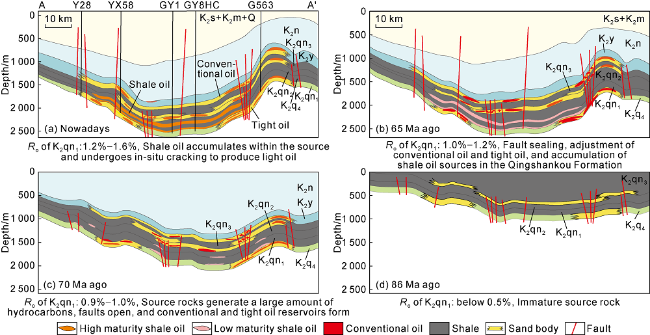
Fig. 11. Accumulation and evolution process of Placanticline Gulong conventional unconventional oil reservoirs (The position of the section is shown in |
From the beginning of the deposition of the Qingshankou shale in the Gulong Sag to the end of the Cretaceous Mingshui period (approximately 65 Ma), the Gulong shale was in the long-term burial stage, the geological temperature gradually increased to 150-180 °C, the evolution of OM entered peak oil generation stage with Ro reaching about 1.0%. Since 65 Ma, the strata burial has become essentially constant or experienced a slight elevation. The continuous decrease of terrestrial heat flow resulted in the decrease of geological temperature to 100-130 °C. In the end of the Mingshui deposition period within 20-30 Ma, due to the remained high geological temperature, the cracking of residual hydrocarbons especially their heavy components in the Gulong shale occurred to generate light oil.
Although there are certain differences in the faults activities and connections, the activation of faults mainly occurred before the end of Mingshui period. Since the Early Cretaceous (65 Ma), the regional principal stress is perpendicular to the strike of the fault, and the fault sealing became generally good [50]. The properties and maturity of conventional oil and the Gaotaizi tight oil also demonstrate that the extensive hydrocarbon expulsion of the Qingshankou shale predominantly occurs in the early-peak oil generation stage.
The contemporary distribution of formation pressure coefficients reveals that tight oil reservoirs mostly correspond to normal pressure systems, with pressure coefficient mainly of 0.9-1.0. On the contrary, the pressure coefficients of the Gulong shale usually exceed 1.2, suggesting tight oil and shale oil as two independent petroleum systems. At present, faults in the Gulong Sag are predominantly sealed and stable, playing a well sealing effect for the Qingshankou shale oil accumulaiton. The average breakthrough pressure of the roof of the Gulong shale is 12.55 MPa, while the corresponding value for the floor is 9.36 MPa, which are available to seal shale oil with pressure coefficients exceeding 1.4. Therefore, the activation and sealing of regional faults, hydrocarbon generation of shale, and the sealing effects of roof/floor collectively govern the orderly accumulation of conventional, tight and shale oils in the Placanticline-Gulong regions. Oil and gas generated in low-middle maturation stages have migrated into favorable settings or layers in the Gulong Sag and placanticline region via faults, leading to the accumulation of conventional oil (i.e., Putaohua, Saertu oil layers) and tight oil (i.e., Gaotaizi and Fuyu oil layers). Since the end of Mingshui period, faults through the Qingshankou Formation and the roof/floor of the shale have become well sealed. Large amounts of liquid hydrocarbons were retained and cracked in the shale in high maturation stage, leading to the accumulation of light shale oil generally with high pressure coefficients. Several conventional and tight oils show maturities higher than 1.0% of Ro. This result implies the possible migration of slight amounts of high mature oil and gas in partial regions of the Gulong Sag (i.e., the edge of the sag and the regions with faults opened in the late stage) into conventional and tight reservoirs.
3.3. The ordered distribution patterns and p On the contrary spects of conventional and unconventional oil and gas resources
The Qingshankou Formation is the most significant source rock in the Songliao Basin, generating both conventional oil in the uplifted areas and unconventional oil in the slopes and depressions. According to the latest oil and gas resource assessment results released by the China Geological Survey, the conventional oil resources in the Songliao Basin amount to 110×108 t, with an accumulated proven geological oil reserves of 77.84×10⁸ t [10]. Simultaneously, the Gulong shale oil resources in the depression areas are abundant, mainly distributed in the Qijia-Gulong Sag, the southern part of Daqing placanticline, and the Sanzhao Depression. The favorable oil-bearing area covers an area of 1.2×10⁴ km2, with a total resource volume of (100-150)×108 t [10].
Due to the continuous evolution of source rock continuity and the episodic opening and sealing of migration pathways, the Songliao Basin exhibits an overall "continuous hydrocarbon supply, zonal accumulation" pattern. The macroscopic characteristics of the oil and gas reservoirs are characterized by lateral continuity, vertical stacking, and the sequential distribution of conventional and unconventional oil and gas. This has formed a complete "full oil and gas system" pattern of orderly accumulation, including conventional oil, tight oil, and shale oil (Figs. 11 and 12 ). On a planar scale, Daqing placanticline primarily accumulates conventional oil with relatively high density and viscosity. The physical properties of the sandstone reservoirs are excellent, with porosities reaching up to 28%. Oil and gas from the depression areas continuously converge towards placanticline. However, due to later vertical fault sealing and obstruction of oil and gas charging pathways, these sand bodies were unable to capture the lighter hydrocarbons generated at a later stage of maturity. In the slope area, there is primarily tight oil found in the thin-layered fluvial sand bodies of the K2qn2 and K2qn3 members. The original oil exhibits moderate density and viscosity. Additionally, the Quantou Formation, located below the lower part of the Qingshankou Formation, has also received oil and gas charging from the Qingshankou Formation within its fluvial sand bodies. Through the communication facilitated by vertical faults and lateral connectivity of sand bodies, an "upward generation, downward storage" oil and gas reservoir has formed. However, the reservoir is relatively tight, classified as tight oil, and its extent and scale are limited. Vertically, conventional oil is primarily distributed in the upper Yaojia Formation's high-porosity and high-permeability sandstones. Tight oil, on the other hand, is mainly found in the Q2 and Q3 members and in the lower part of the Quantou Formation's fluvial siltstones and fine sandstones. Shale oil, with the deepest burial depth, is predominantly enriched in the bottom-layered shales of the K2qn1 and K2qn2.
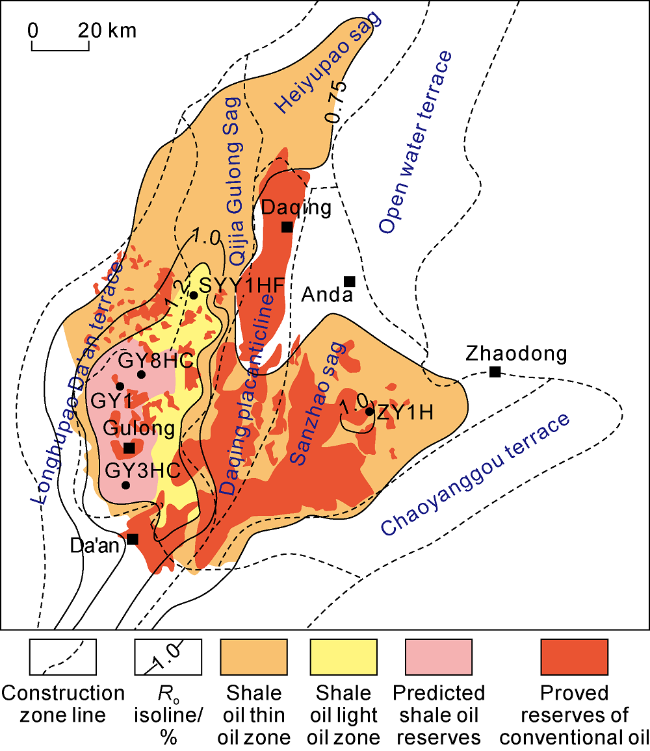


Fig. 12. Orderly distribution of conventional and unconventional oil and gas in Songliao Basin (modified according to Reference [11]). |
Although conventional oil and unconventional oil resources are of comparable scale, there exists a significant difference in resource quality and development complexity. The broad and gentle anticlinal structure in Daqing placanticline provides an ideal location for oil and gas accumulation. Oil and gas originating from the Qingshankou Formation efficiently gather in the uplifted areas after experiencing a relatively long-distance secondary migration. Coupled with the excellent physical properties of sandstone reservoirs, this ensures the continuous high and stable production of the Daqing Oilfield. In the slope area, the tight sandstones, overlying (K2qn2 and K2qn3) or underlying (Quantou Formation), are situated above the source rocks of the Qingshankou Formation. Under the influence of fault communication, oil and gas vertically and laterally migrate and accumulate. However, due to the thin thickness of the sand layers, small distribution area, and relative tightness, along with poor lateral connectivity, the injection of oil and gas presents significant challenges. Although some relatively enriched areas may form locally, there are also sand bodies that receive limited oil and gas, with low oil saturation, and in some cases, they might be "white sands". The resource scale in these areas is far lower than that of conventional oil and gas in placanticline. In contrast, shale oil in the depression areas has a widespread distribution, significant thickness, high oil saturation, and enormous resource potential, comparable to conventional oil. It provides the resource foundation for the concept of "finding another Daqing beneath Daqing." Additionally, it is controlled by relatively high organic matter maturity, which results in light oil, a high gas-to-oil ratio, and ease of flow. This makes it highly prospective for exploration. However, it also faces a series of challenges, including poor reservoir rock properties and the "layer cake" structure of the shale, which makes fracturing and fissure creation difficult. To realize the economic development of shale oil, further collaborative geological-engineering research is required.
4. Conclusions
The formation and organic matter enrichment in the Songliao Basin are jointly controlled by paleo-tectonics, paleo-climate, paleobiology organisms, and paleo-lacustrine environment. The substantial organic carbon burial in the Songliao Basin reflects the significant contribution of organic carbon fixation in large terrestrial lakes during the Late Cretaceous cooling period. The primary sources of organic matter are lower-grade cyanobacteria, cryptophytes, and desmids, among other planktonic microalgae. Methanotrophic bacteria and other chemotrophic autotrophic bacteria also make notable contributions. Organic matter mineralization is likely dominated by dissimilatory iron-reducing bacteria and methanogenic bacteria. They selectively degrade the initial organic matter and enrich lipid-like compounds, leading to the formation of laminated algal structures and abundant secondary iron-rich carbonate minerals. This significantly enhances the hydrocarbon generation potential of the sedimentary organic matter.
In the Gulong Sag, the moderate organic matter abundance and high original hydrocarbon generation potential in the Qingshankou Formation provide a crucial material basis for the enrichment of thick, high clay content shale oil. The high thermal maturity level is a key factor in the formation of light shale oil. Thin interbedded sandstones and the microfractures generated by hydrocarbon generation overpressure in the Gulong shale act as important pathways for early-stage oil and gas expulsion and lateral migration. During the peak oil generation phase, these interbeds and microfractures undergo calcite cementation, creating internal seals within the layers. This is conducive to the in-situ enrichment of shale oil and results in shale having generally higher hydrocarbon retention and lower hydrocarbon expulsion efficiency. The coupled evolution of hydrocarbon generation in the Qingshankou Formation shale and fault movements controls the orderly accumulation of conventional oil, tight oil, and shale oil.
The Songliao Basin exhibits an overall "continuous hydrocarbon supply, zonal accumulation" characteristic in its reservoir formation. The liquid hydrocarbons early generated by the source rocks of the Qingshankou Formation, after experiencing secondary migration, amassed to create high-quality conventional oil reservoirs within the Daqing placanticline area. In the slope regions, they gave rise to the accumulation of tight oil. Subsequently generated light oils assemble in-situ to form shale oil reservoirs within the depression area, thus depicting a distribution characterized by lateral continuity, vertical superposition, and a sequence of conventional and unconventional hydrocarbons. This configuration showcases a complete "comprehensive oil and gas system" pattern of orderly accumulation spanning conventional oil, tight oil, and shale oil.
Nomenclature
GOR—gas-oil ratio, m3/m3;
HI—hydrogen index, mg/g;
S1—free hydrocarbon content, mg/g;
S2—pyrolysis hydrocarbon content, mg/g;
Tmax—maximum pyrolysis peak temperature, °C.