

Introduction
The Sichuan Basin is classified as a super basin with the ordered coexistence of conventional and unconventional oil and gas resources [1⇓⇓-4]. At present, significant progress has been achieved in the exploration of deep to ultra-deep marine carbonate gas, marine shale gas, and continental tight clastic gas reservoirs [5⇓-7]. In recent years, industrial gas flows have been obtained from a new type of unconventional oil and gas reservoirs characterized by source-reservoir integration in the Permian and Triassic marine marls in Fuling-Jiaoshiba and Hechuan-Tongnan areas of the Sichuan Basin [8⇓⇓⇓-12], showing bright prospects for the gas exploration in organic-rich marls in the deep ramp of an open platform [8].
The Triassic Leikoupo Formation in the Sichuan Basin is composed of the sediments of restricted platform, and comprises favorable reservoir-caprock assemblages with dolomite acting as reservoir rock [13⇓⇓-16] and gypsum-salt rock as caprock. Through the petroleum exploration for over 50 years in the past that focused on structural traps, only small- to medium-sized gas fields, such as Zhongba, Pengzhou, Moxi, and Wolonghe, have been discovered [17⇓⇓⇓-21]. Recently, the risk exploration well Chongtan1 (CT1) revealed commercial oil and gas flows during test in the Triassic Leikoupo Formation marine marls in central Sichuan Basin, demonstrating a great exploration potential of marl. However, the characteristics of source rock, reservoir rock, and hydrocarbon accumulation/enrichment of marl remain unclear, which hinders further exploration.
In this paper, with the Leikoupo Formation marl of Well CT1 as example, geochemical analysis is conducted on hydrocarbons and source rock to determine the source of hydrocarbons. Then, the source rock characteristics of marl are investigated by using the data of organic geochemical analysis and well logging. The reservoir characteristics of marl are determined by unconventional reservoir analysis approaches such as scanning electron microscopy (SEM), high-pressure mercury intrusion, and nuclear magnetic resonance (NMR). Finally, the accumulation characteristics and distribution patterns of unconventional oil and gas in marine marl are discussed.
1. Geological setting
The Triassic Leikoupo Formation in the Sichuan Basin is predominantly composed of the deposits of restricted platform in the arid paleoclimate, with interbedded carbonates and evaporites. It includes four members from bottom to top: Lei-1, Lei-2, Lei-3 and Lei-4, and has a cumulative thickness of 0-1200 m. The structural folding and uplifting in early Indosinian Movement at the end of Middle Triassic formed the Luzhou and Kaijiang paleouplifts in eastern Sichuan Basin, where the Leikoupo Formation was completely eroded and the Lower Triassic Jialingjiang Formation was exposed at the cores, with the Leikoupo Formation relatively well-preserved in the western part of the basin [22⇓⇓-25]. This recorded the end of the evolution history of the Sichuan Basin as a marine cratonic basin. During the Late Triassic-Cretaceous, the basin entered a foreland basin evolution stage when continental clastic rocks were mainly deposited. During the Yanshanian-Himalayan, the uplifting and basin-ward compression of the mountains along the basin margin formed the present-day tectonic framework.
During the deposition of the Middle Triassic Leikoupo Formation, the Sichuan Basin was surrounded by ancient lands (Fig. 1a ) under the arid paleoclimate, with gypsum-carbonate rocks widely developed. During the deposition of Lei-2, the Luzhou and Kaijiang areas in the east began to uplift, and appeared as subaqueous uplifts. As a result, the basin formed a paleogeographic pattern deep in the west and shallow in the east, and multiple centers of the salt lake were gradually unified into one in the west of the uplifts. This period underwent frequent sea level fluctuations, and four transgressions and four regressions are identified. In the deposition periods of the Lei-1 Member and the Lei-31, Lei-33 and Lei-43 submembers, transgressions took place, developing limestone and dolomite of beach facies. In the deposition periods of Lei-2 Member and Lei-32, Lei-41 and Lei-42 submembers, regressions occurred slowly, depositing argillaceous dolomite, argillaceous limestone and gypsum-salt rocks of lagoonal facies. In the deposition period of Lei-32 submember, lagoonal sediments were mainly deposited in the Yilong and Jianyang areas and gypsum-salt lagoon was developed in the Suining area in central Sichuan Basin. Outwards, gypsiferous marl lagoon and marl lagoon deposits were developed successively. Thus, Lei-32 in central Sichuan Basin is characterized by argillaceous limestone and gypsum-salt rocks of lagoonal facies (Fig. 1b , 1c ).
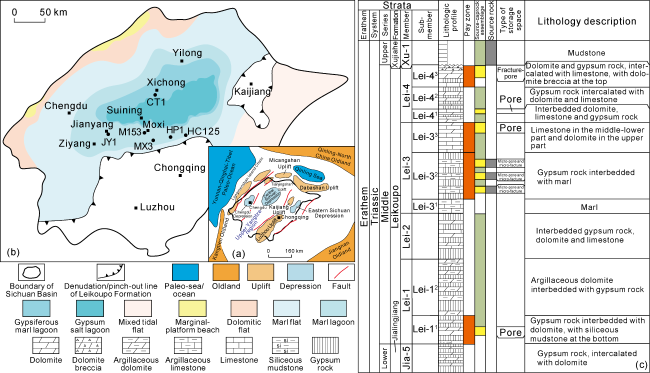
Fig. 1. Sedimentary environment and composite stratigraphic column of Leikoupo Formation, Sichuan Basin. |
2. Oil and gas discovery from Lei-32 marl in Well CT1
The marl in Lei-32, which mainly consists of gypsiferous argillaceous limestone, argillaceous limestone, and limy mudstone, exhibits active oil and gas shows (Fig. 2 ). Among the 300 wells in central Sichuan Basin investigated in this study, oil and gas shows were obtained in 151 wells, drill-stem testing was conducted for 9 wells, commercial output ((1.0-2.3)×104 m3/d) was achieved in 4 wells, and the remaining wells were classified as low-yield wells, with an output of (0-1)×104 m3/d. New prospects have been discovered in exploration of the Leikoupo Formation in the Sichuan Basin.

Fig. 2. Composite stratigraphic column of Lei-32 in Well CT1, central Sichuan Basin. GR—Gamma ray; dh—borehole diameter; ρ—density; ϕCNL—neutron porosity; Rt—resistivity; RXO—flushed zone formation resistivity; Δt—interval transit time. |
2.1. Overview of oil and gas discovery
In 2019, the 220 m thick Lei-32 submember (3408-3628 m) was encountered in Well CT1. The gypsum-salt rocks at its top and bottom are in conformable contact with the micrite of Lei-33 and the argillaceous limestone of Lei-31, respectively. The Lei-32 submember mainly consists of carbonate rocks and evaporates of lagoonal facies. Its upper part (3408-3490 m) is dominantly composed of evaporites (gypsum rock, gypsum-salt rock and salt rock) intercalated with gypsiferous argillaceous limestone and limy mudstone. Its middle-lower part (3490-3620 m) is mainly composed of gypsiferous argillaceous limestone, argillaceous limestone and limy mudstone intercalated with marl. Favorable oil and gas shows were revealed by Well CT1 from the gypsiferous argillaceous limestone, argillaceous limestone and limy mudstone in the middle-lower part of Lei-32, together with 4 times of gas invasions, 2 times of lost circulations and 1 time of gas logging abnormality. Eight accumulation layers (55.25 m thick in total) were identified in gypsiferous argillaceous limestone, argillaceous limestone and limy mudstone, through fine interpretation of logging data. These layers include 3 gas layers with a cumulative thickness of 25.38 m and 5 poor gas layers with a cumulative thickness of 29.86 m (Fig. 2 ). A new geological understanding that the marl of lagoonal facies acts as both reservoir and source rocks and evaporate acts as cap rock was proposed after an accelerated geological and geophysical study on the Lei-32 marl. It is believed that the Lei-32 submember in Well CT1 has superior hydrocarbon accumulation conditions, and will probably contribute high yield. Oil testing was recommended and implemented timely. In 2022, the testing was performed in the 3489-3604 m marl section of Well CT1 after perforation and acidizing, revealing a gas flow rate of 10.87×10⁴ m3/d and a condensate oil flow rate of 47.04 m3/d, recording a significant exploration discovery.
2.2. Oil characteristics
The crude oil produced from Lei-32 of Well CT1 is classified as light oil, with the density of 0.73-0.75 g/cm3 (avg. 0.74 g/cm3), and as condensate oil, with the viscosity of 0.67-0.91 mPa•s (avg. 0.757 5 mPa•s), which was distillated initially at 26-29 °C and by 72.5-87.0 mL at 300 °C. It is very different from the oils produced from the Upper Triassic Xujiahe Formation and the Jurassic Shaximiao Formation (Table 1 ).
Table 1. Characteristics of condensate oil in different payzones, central Sichuan Basin |
| Pay zone | Density/ (g•cm-3) | Viscosity/ (mPa•s) | Initial boiling point/°C |
|---|---|---|---|
| Lei-32 | 0.741 1 | 0.76 | 27.5 |
| Sha-2 | 0.710 4-0.826 3 | 0.40-1.46 | 31-133 |
| Sha-1 | 0.733 1-0.846 8 | 0.41-17.63 | 34-80 |
| Xu-2 | 0.718 2-0.796 0 | 0.33-1.00 | 26-110 |
| Xu-6 | 0.699 9-0.828 2 | 0.34-7.87 | 25-100 |
| Xu-4 | 0.726 3-0.792 6 | 0.41-0.77 | 28-72 |
Comprehensive analyses of oil maturity suggest the condensate oil from the Leikoupo Formation in Well CT1 is in high maturity stage. The maturity (Ro) determined by adamantanes is 1.65%, and the maturity (Ro) identified by methylphenanthrene index ranges from 1.76% to 1.86%, indicating the crude oil as the product of high maturity stage. The thermal cracking degree of crude oil identified by the contents of diadamantanes and stigmastanes reaches 85%. The maturity determined by paraffin wax index and heptane value of light hydrocarbons indicates high maturity stage.
2.3. Gas composition
The natural gas produced from Well CT1, with the contents of methane, ethane and propane of 88.15%, 5.51% and 1.79%, respectively, shows a dry coefficient of 0.924. A regional comparison indicates the natural gas from the Lei-32 submember in central Sichuan Basin is wet gas, with the contents of methane, ethane and propane of 85.83%-88.15%, 5.51%-7.76% and 1.79%-3.20%, and a dry coefficient ranging from 0.871 to 0.924, without hydrogen sulfide (Table 2 ).
Table 2. Gas composition of Leikoupo Formation, central Sichuan Basin |
| Area/ Well | Submember | Well depth/m | Contents of major components /% | Dry coefficient | |||||||||
|---|---|---|---|---|---|---|---|---|---|---|---|---|---|
| Methane | Ethane | Propane | Iso- butane | n- butane | CO2 | N2 | H2 | He | H2S | ||||
| MX | Lei-11 | 95.22 | 0.19 | 1.30 | 0.13 | 1.53 | 0.003 | 0.003 | 1.610 00 | 0.985 | |||
| CT1 | Lei-32 | 3489-3604 | 88.15 | 5.51 | 1.79 | 2.73 | 0.32 | 0 | 0.009 | 0 | 0.924 | ||
| M153 | Lei-32 | 2402-2403 | 85.83 | 7.76 | 3.20 | 0.898 | 0.892 | 0.06 | 0.31 | 0 | 0.017 | 0 | 0.871 |
| MX3 | Lei-32 | 2360-2388 | 87.60 | 5.85 | 2.17 | 0.820 | 0.710 | 1.12 | 0.98 | 0 | 0.030 | 0 | 0.902 |
| XT1 | Lei-43 | 4302-4470 | 89.80 | 0.33 | 0.02 | 0 | 0 | 7.57 | 1.17 | 0 | 0.040 | 1.070 00 | 0.996 |
| GK003-5 | Lei-43 | 5870-6021 | 95.02 | 0.37 | 0.02 | 2.97 | 0.77 | 0 | 0.030 | 0.810 00 | 0.996 | ||
| PZ1 | Lei-43 | 5814-5866 | 94.12 | 0.13 | 1.20 | 0.85 | 0.020 | 3.500 00 | 0.999 | ||||
| CK1 | Lei-43 | 5263-5635 | 94.47 | 0.36 | 0.02 | 4.46 | 0.39 | 0 | 0 | 0.260 00 | 0.996 | ||
| 93.94 | 0.36 | 0.02 | 4.47 | 0.43 | 0 | 0 | 0.720 00 | 0.996 | |||||
| 94.53 | 0.36 | 0.02 | 4.62 | 0.41 | 0 | 0 | 0.000 60 | 0.996 | |||||
| 94.57 | 0.33 | 0 | 4.78 | 0.30 | 0 | 0 | 0.020 00 | 0.997 | |||||
| 5680-5686 | 97.98 | 0.28 | 0.01 | 0 | 1.64 | 0.020 | 0 | 0.000 03 | 0.997 | ||||
In the central Sichuan Basin, the Lei-32 submember exhibits different gas composition from the underlying Lei-11 submember and the overlying Lei-43 submember. In the Moxi Gasfield, the Lei-11 gas is dry gas, with the contents of methane, ethane and propane of 95.22%, 0.19% and 1.3%, the dry coefficient of 0.985, and the H2S content of 1.61%, indicating the characteristics of high methane content, low heavy hydrocarbons content, and presence of H2S. In the western Sichuan Basin, the Lei-43 gas has the contents of methane, ethane and propane of 89.80%-97.98%, 0.13%-0.36% and 0-0.02%, and the dry coefficient of 0.996-0.999, and contains H2S.
The differences in gas composition indicate that the source of gas in Lei-32 is different from that in Lei-11 and Lei-43 in the central Sichuan Basin. The Lei-11 gas in the Moxi Gasfield was mainly originated from the underlying Permian source rocks [17,26], while the Lei-43 gas in the western and central Sichuan Basin is mainly mixed- source gas from the Xujiahe Formation and Permian source rocks [27-28]. The Lei-32 gas in the central Sichuan Basin was probably originated from organic-rich marl source rocks in the Lei-32 submember.
3. Source of oil and gas in Lei-32 marl of Well CT1
Systematic testing and hydrocarbon source correlation were conducted on the samples of condensate oil and gas from Lei-32 of Well CT1 to clarify their origin and source. The results show that the Lei-32 oil and gas in Well CT1 were sourced from the humic-sapropelic organic matters in the Lei-32 marl, and they are products of high maturity stage.
3.1. Isotope compositions of oil and gas show the characteristics of marine source
The gas samples from Well CT1 have smaller values of δ13C1 and δ13C2 than the gas samples from the Xujiagou Formation. However, some samples exhibit similar values, which may be related to the gas accumulation in primary gas reservoirs. They are considered to originate from mixed organic matters. The value of hydrogen isotope in methane (δ2HCH4) of the gas samples form Well CT1 ranges between those from the Xujiagou Formation and those from the Permian, indicating different sources.
The origin of gas can be determined by δ2HCH4 value. On the δ2HCH4-δ13C2 cross-plot, marine gas and continental gas in the Sichuan Basin are roughly distinguished by the δ2HCH4 value of −150‰: the gas with δ2HCH4 greater than −150‰ is of marine origin, and the gas with δ2HCH4 less than −150‰ is of continental origin (Fig. 3a ). The hydrogen isotope values of the two samples from Well CT1 range from −140.83‰ to −140.11‰, which are significantly heavier than those of the gases of continental origin from the Xujiagou Formation, but lighter than those of the gases of marine origin from the Permian. The gas samples from Lei-32 of Well CT1 have the values of δ13C1, δ13C2 and δ13C3 in the ranges of −41.2‰ to −40.6‰, −27.8‰ to −27.6‰, and −23.0‰ to −22.7‰, respectively, and the values of δ2HCH4 and δ2HC2H6 of −147‰ and −108‰ to −101‰, displaying the characteristics of hydrogen and carbon isotopes of mixed gas, which is probably derived from the mixed source rocks of the Leikoupo Formation with carbon isotope values of kerogen ranging from −28.6‰ to −27.8‰. The δ13C1 and δ13C2 values of gas samples from Well CT1 are lighter than those from the Xujiagou Formation in Guang'an, Yingshan, Bajiaochang and other areas in central Sichuan Basin. This is possibly resulted from the continuous accumulation of gas in the reservoirs, which captured the gas generated throughout the hydrocarbon generation process of source rocks, including gases originated from kerogen cracking and secondary cracking of liquid hydrocarbons that were generated in high maturity stage. Suggested by the fact that the condensate oil from Well CT1 is in high maturity stage, liquid hydrocarbons have not yet entered the stage of massive thermal cracking to generate gas. Therefore, the gases that have accumulated in the reservoirs so far mainly exhibit the characteristics of wet gas and kerogen-cracking gas. As shown by the δ2HCH4-δ13C2 cross-plot (Fig. 3a ), the gas samples from Well CT1 differ significantly from those generated by the Xujiagou Formation source rocks in the central Sichuan Basin, and they have heavier δ2HCH4 values than the latter. They are also distinct from the gas samples of the Leikoupo Formation that were primarily generated by the Permian source rocks in the Moxi Gasfield, and they have lighter δ2HCH4 values than the latter, exhibiting the characteristics of mixed source.
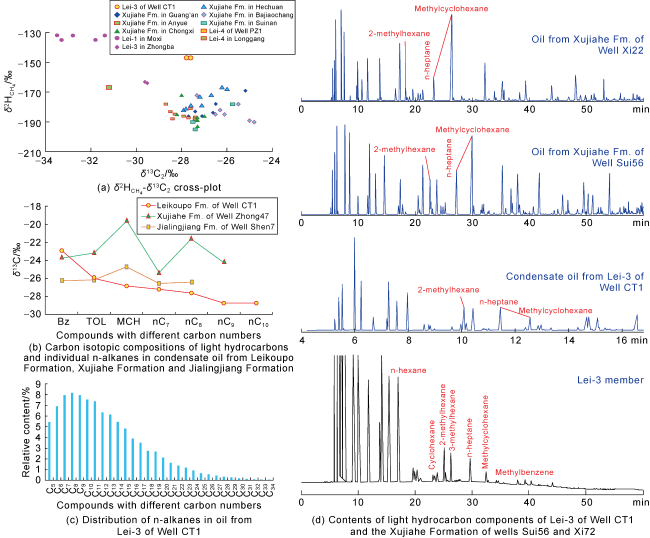
Fig. 3. Carbon isotopic composition and light hydrocarbon components of oil and gas from Well CT1, central Sichuan Basin. |
Carbon isotope values of light hydrocarbons and individual n-alkanes of oil from Lei-32 of Well CT1 are relatively light, showing the characteristics of marine oil. The isotope values of light hydrocarbons of oil samples from the Xujiahe Formation of wells Zhong53 and Zhong63 in the Zhongba Gasfield, western Sichuan Basin, are relatively heavy, mainly ranging from −26‰ to −21‰. The carbon isotope values of light hydrocarbons and individual n-alkanes of oil samples from Well CT1 are relatively light, which main range from −32‰ to −23‰, exhibiting the characteristics of marine source. Comparative analysis also reveals that carbon isotope compositions of the light hydrocarbons and individual n-alkanes of condensate oil from the Leikoupo Formation are different from those of condensate oils from the overlying Xujiagou Formation and the underlying Jialingjiang Formation (Fig. 3b ). Light hydrocarbons of condensate oil from Well CT1 are dominated by normal and branched alkanes. Specifically, C5-C7 light hydrocarbons are composed of linear alkanes (79.25%), cycloalkanes (13.67%) and aromatic hydrocarbons (7.08%), and C7 light hydrocarbons include n-heptane (55.99%), methylcyclohexane (32.01%) and dimethylcyclopentane (12.00%) (Fig. 4 ). This indicates that the condensate oil is mainly derived from the organic matter of sapropelic type, significantly different from the typical condensate oil and natural gas sourced from the Xujiagou Formation. Additionally, the saturated hydrocarbons, aromatic hydrocarbons, non-hydrocarbons, and asphaltene in condensate oil from Well CT1 have similar carbon isotope values, which is mainly the result of an influence of the source material and the nonoccurrence of a long-distance migration.

Fig. 4. Triangle of the relative contents of C7 light hydrocarbon components in condensate oil and natural gas from the Triassic strata, Sichuan Basin. |
3.2. Crude oil is originated from the humic-sapropelic marl source rock
The crude oil from Lei-32 of Well CT1 is primarily composed of low carbon-number n-alkanes, suggesting a high maturity of organic matter. The ratio of Pr to Ph is 1.45, indicating a reducing environment, and the ratios of Pr to nC17 and Ph to nC18 indicate Type II organic matter of dominantly humic-sapropelic type (Fig. 3c ). The kerogens in the marl of Lei-32 are also mainly Type II, indicating a source relation between them.
The crude oil from Lei-3 of Well CT1 exhibits apparently different light hydrocarbons and n-alkanes from the Xujiagou Formation of wells Sui56 and Xi72, reflecting different oil sources. The light hydrocarbons of the Xujiagou Formation crude oil from wells Sui56 and Xi72 have a high content of methylcyclohexanes than n-heptanes and a high content of 2-methylhexane, while those of the Lei-3 crude oil from Well CT1 have a lower content of methylcyclohexanes than n-heptanes and a low content of 2-methylhexane (Fig. 3d ).
4. Geological conditions for hydrocarbon accumulation in the Lei-32 marl
4.1. Features of the Lei-32 marl as source rock
TOC analysis was conducted on 240 cutting samples from Lei-32 at the depth of 3400-3640 m in Well CT1. The TOC values of gypsum-salt rock cuttings range between 0 and 0.2%. The TOC values of marl cuttings range from 0.30% to 1.47%, with an average of 0.71%. The marl source rock cuttings with a TOC value higher than 0.5% have an accumulative thickness of approximately 100 m. Cuttings of limy mudstone have the highest TOC values, ranging from 0.70% to 1.47%, followed by gypsiferous argillaceous limestone and argillaceous limestone (Fig. 2 ). In the cored interval at depth of 3565.54-3568.65 m, the TOC values of marl range from 0.59% to 1.15%, and black limy mudstone has the highest TOC value (0.80%-1.15%), followed by greyish black argillaceous limestone (Fig. 5 ). Microscopic observation results reveal that the predominant macerals are sapropel and vitrinite. Most algae in the sapropelite have underwent degradation to micrinites, while a small amount retained their original occurrence. A small amount of vitrinite and inertinite were also detected, with the vitrinite dominantly composed of vitrodetrinite (Fig. 6 ). Carbon isotope values of the kerogen range from −28.6‰ to −27.8‰, indicating that the organic matter of the marl source rocks in Lei-32 of Well CT1 is of humic-sapropelic type. The measured Ro values range from 1.59% to 1.63%, indicative of high maturity stage and the condensate oil-wet gas window. According to the geochemical pyrolysis analysis, S1 has an average value of 0.19 mg/g, with a maximum of 0.28 mg/g, S2 has an average value of 0.21 mg/g, with a maximum of 0.30 mg/g, (S1+S2) ranges from 0.25 mg/g to 0.58 mg/g, with an average of 0.40 mg/g, and the content of chloroform bitumen "A" ranges from 0.0045% to 0.0150%.

Fig. 5. Organic geochemical column of cores from Lei-32 of Well CT1, central Sichuan Basin. |
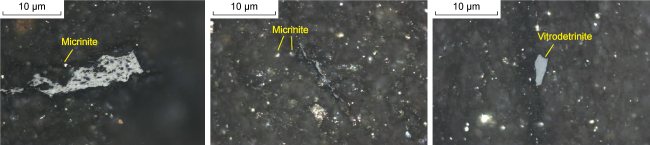
Fig. 6. Organic macerals shown on polished rock slices of the limy mudstone from Well CT1, central Sichuan Basin. |
TOC testing was conducted on 18 samples from wells JY1, CT1 and HP1 in the central Sichuan Basin. The results show that the TOC of the Lei-32 marl source rocks has an average value of 0.77%, with a maximum of 1.98%, suggesting organic matter of Type II and high maturity stage. They are classified as a set of favorable carbonate source rocks. Among them, the highest TOC values were detected in limy mudstone, ranging from 0.86% to 1.98%, with an average of 1.21%, and the second highest values were found in gypsiferous argillaceous limestone, ranging from 0.81% to 0.91%, with an average of 0.86%. Argillaceous limestone has TOC values ranging from 0.34% to 0.96%, with an average of 0.69%, and limestone and mud-bearing limestone have TOC values less than 0.30%, ranging from 0.07% to 0.23%.
The study shows that there is a positive correlation between clay mineral content and TOC value in the Lei-32 marl, where a higher clay mineral content corresponds to a higher organic matter content (Fig. 7 ).
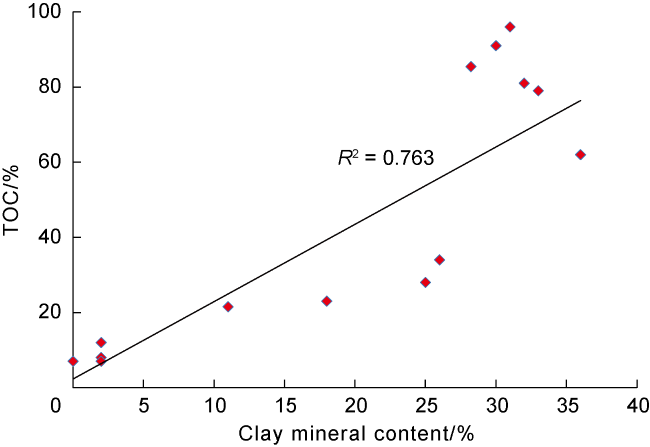
Fig. 7. Relationship between TOC and clay mineral content in the core samples from Lei-32, central Sichuan Basin. |
4.2. Features of the Lei-32 marl as reservoir rock
The reservoirs of Lei-32 in Well CT1 are composed of argillaceous limestone, gypsiferous argillaceous limestone and limy mudstone, and mainly include fractured and microfracture-pore reservoirs. The pores include micro-pores and nano-micron-sized pores (Fig. 8 ). The micro-pores mainly include structural fractures, expanded dissolution pores, bedding fractures, and gypsum dissolution pores. The nano-micron-sized pores include organic matter pores, intergranular/intercrystalline pores, dissolution micro-pores, and microfractures, where intergranular/intercrystalline pores are in dominance. The measured porosity and permeability of the marl cores are up to 6.96% and 1.68×10⁻³ μm2, respectively, showing low porosity and low permeability.
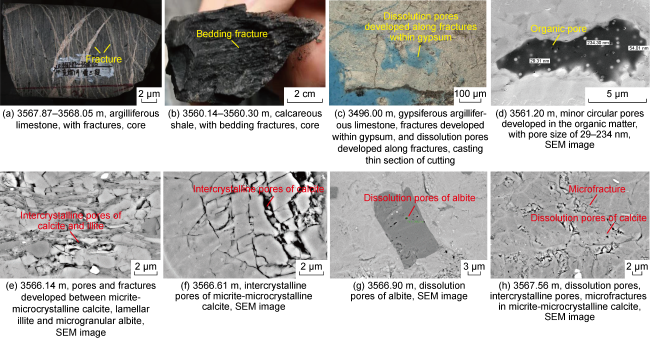
Fig. 8. Storage spaces in the Lei-32 marl of Well CT1, central Sichuan Basin. |
The physical properties of 166 marl core samples from Lei-32 of wells HC125, HP1, CT1, and JY1 in the central Sichuan Basin were analyzed. The results show the porosity ranging from 0.1% to 8.51% (avg. 2.74%), and the permeability ranging from 0.007 6×10⁻³ μm2 to 1.68×10⁻³ μm2 (avg. 0.04×10⁻³ μm2). Overall, the reservoirs are classified as low-porosity and low-permeability reservoirs. A positive correlation is identified between permeability and porosity (Fig. 9 ). The samples with microfractures have relatively high permeability (above 1×10⁻³ μm2). A good correlation is detected between clay mineral content and porosity: a higher clay mineral content corresponds to a higher porosity. For example, in the Lei-32 submember of Well HP1, the limy mudstone with a high clay content develops mineral intergranular and intragranular pores, organic matter pores and microfractures, and has a porosity up to 6.93%; the argillaceous limestone with a moderate clay content develops mineral intergranular and intragranular pores, organic matter pores and microfractures, and has a porosity of 4.05%; and the mud-bearing limestone with a low clay content develops no pores, and has a porosity as small as 0.05%.
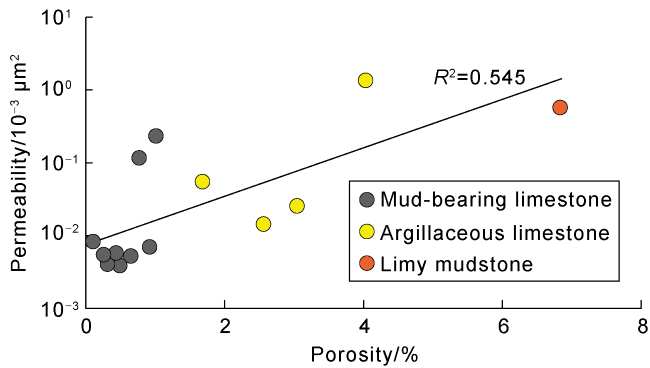
Fig. 9. Porosity-permeability relationship of the Lei-32 marl reservoir in Well CT1, central Sichuan Basin. |
According to the mercury intrusion test, the marl reservoirs of Lei-32 in the central Sichuan Basin exhibit a significant variation in mercury injection saturation (5%-92%), a low efficiency of mercury ejection, and a high displacement pressure (0.5-10.0 MPa). These features reveal that the reservoirs have the matrix pores dominated by nano-sized pores, and poor pore connectivity. A small number of samples show well-developed micron-sized pores and relatively good pore throat structure (Fig. 10a , 10b ).
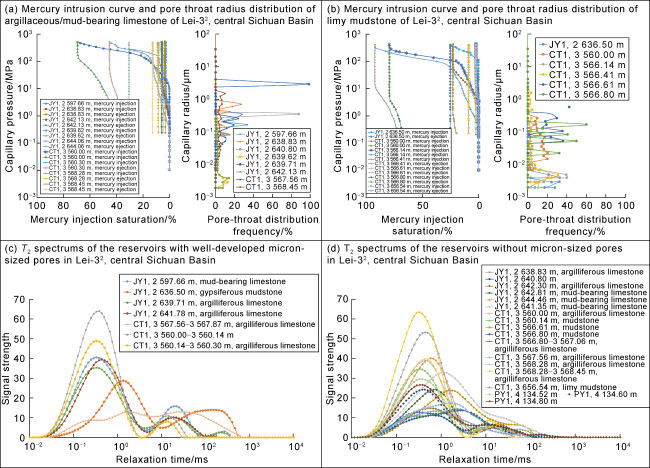
Fig. 10. Two types of pore-throat structures in the Lei-32 marl reservoirs, central Sichuan Basin. |
The nuclear magnetic resonance (NMR) images reveal two types of pore-throat structures in the marl reservoirs. One is micron-nano-sized pore dominant type, exhibiting distinct bimodal feature in the NMR T2 spectrum, with well-developed micron-sized pores. This is classified as good pore-throat structure (Fig. 10c ). The other is nano- sized pore dominant type, showing distinct monomodal feature in the NMR T2 spectrum, without micron-sized pores. It is classified as poor pore-throat structure (Fig. 10d ).
4.3. Hydrocarbon accumulation of marl reservoir
Geological characteristics of the Leikoupo Formation gas reservoir prior to the drilling of Well CT1 in the Sichuan Basin are as follows. (1) Hydrocarbon source rocks mainly include the underlying Permian source rocks and the overlying Xujiahe Formation source rocks [26⇓-28]. (2) The reservoirs are primarily composed of dolomite, including dolomites of grain shoal facies (such as arenite, algalclastic and oolitic dolomites), algal dolomite and silty-fine dolomite. The main storage spaces are intragranular, intergranular, inter-algal and intercrystalline dissolution pores. The reservoirs are developed in the Lei-11, Lei-33, and Lei-43 submembers. (3) Two types of hydrocarbon accumulation combinations, "lower-source and upper-reservoir" and "upper-source and lower-reservoir", are identified. The shale of the Xujiahe Formation and the gypsum-salt rocks of the Leikoupo Formation serve as favorable cap rocks. (4) Faults (Zhongba and Moxi gas reservoirs) and unconformities (Longgang gas reservoir) are the major channels of hydrocarbon migration. (5) The oil and gas reservoirs mainly include structural and structural-lithological types, where natural gas is accumulated predominantly and oil locally.
The newly discovered Lei-32 marl gas reservoir in the central Sichuan Basin, different from other gas reservoirs discovered in the basin, contain the condensate oil and natural gas originated from the Lei-32 marl source rocks, exhibiting the characteristics of unconventional hydrocarbon accumulation with "source-reservoir integration". According to the maturity of organic matter and condensate oil, they are considered as the products of high thermal evolution. The alternated deposition of gypsum rock, salt rock and organic-rich marl formed an abnormally high-pressure enclosed environment for the organic-rich marl, effectively inhibiting hydrocarbon generation and allowing the condensate oil to be preserved. The formation pressure in the middle of the Lei-32 reservoir is 42.2 MPa in Well MX3, with a pressure coefficient of 1.81, while it is 69.6 MPa in Well CT, with a pressure coefficient of 1.96. The regional sealing of thick gypsum-salt rocks led to high pressure coefficients of the pay zones in the Lei-32 marl, and an accumulation system characterized by "source-reservoir integration", evaporate serving as cap rock and abnormally high formation pressure was formed (Fig. 11 ).
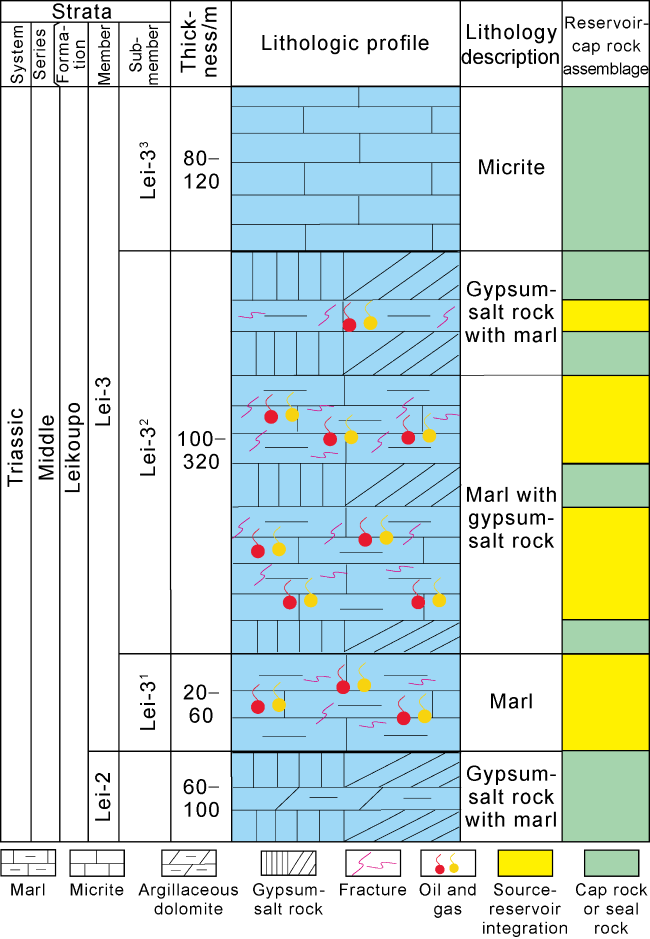
Fig. 11. Unconventional hydrocarbon accumulation combinations and models of the Lei-3 marl, central Sichuan Basin. |
The discovery of the Lei-32 marl gas reservoir by Well CT1 in the central Sichuan Basin reveals that the widely developed marl of lagoonal facies possesses favorable conditions for hydrocarbon accumulation with "source- reservoir integration", representing a new type of unconventional oil and gas reservoir [29-30]. The hydrocarbon enrichment areas have the potential for high production, which is of great significance for expanding exploration into new fields and new types. By comparison, the oil and gas in the Leikoupo Formation marl and the gas in the Ordovician-Silurian and Cambrian shale have similarities and differences. They are similar in: (1) Source-reservoir-cap rock assemblage, with the same self-generating and self-preserving model characterized by integration of source, reservoir and cap rocks; (2) Physical properties, i.e. low-porosity and low-permeability; (3) Hydrocarbon migration pattern, where hydrocarbons accumulated in source rocks. They are different in: (1) Lithology, that is, the former is hosted in marl, which was formed in a deep lagoonal environment with high salinity, while the latter exists in siliceous shale, which is a product in a low-salinity deep-water shelf environment; (2) Hydrocarbon generation capacity, that is, shale generally has a higher TOC than marl, thus it has stronger hydrocarbon generation capacity; (3) Storage space, that is, the marl storage space is primarily composed of inorganic pores and fractures, while the shale storage space mainly consist of organic pores; (4) Fluid properties, that is, the oil and gas of marl are mainly condensate oil and wet gas, while the shale gas is predominantly dry gas; (5) Preservation conditions, that is, the oil and gas of marl are encased by multiple layers of gypsum-salt rocks with strong sealing ability, allowing them to escape more difficulty and be preserved better than shale gas.
5. Exploration potential of oil and gas in the Lei-32 marl
The marl of lagoonal facies in Lei-32, widely developed in the central Sichuan Basin, is characterized by "source- reservoir integration", with gypsum rock seal at the roof and floor. It is classified as a new type of unconventional petroleum system in marine marl, and considered as a new exploration target with large potential. Based on analysis and evaluation of core samples from 4 wells, cuttings from 10 wells, and well logging data of 120 wells in the central Sichuan Basin, as well as seismic data, the distribution of the Lei-32 marl in the study area was delineated, the hydrocarbon generation amount of the marl was estimated, and the distribution of reservoirs was predicted. Moreover, depending upon fracture zones, two sweet spots were determined.
Using a TOC value of 0.3% as the lower limit for effective source rocks, the marl source rocks in Lei-32 in the lagoon area of the central Sichuan Basin are defined with the thickness of 40-130 m, the area of 40 000 km2 approximately, and the total amount of generated gas of 25×1012 m3. According to the model of self-generating and self-preserving after efficient migration and accumulation, the gas resources are estimated to be (0.75-1.08)× 1012 m3, with the accumulation to discharge coefficient as 3.0%-4.3%.
In the central Sichuan region, the Lei-32 marl reservoirs cover an area of 40 000 km2 approximately, and are relatively thick mainly in Suining-Xichong-Yilong, Ziyang-Jianyang and Moxi South. In Suining-Xichong- Yilong, the most favorable area, the reservoirs have a thickness of 20-60 m and an area of 5000 km2 approximately. In Ziyang-Jianyang and Moxi South, relatively favorable areas, the reservoirs have a thickness in the range of 20-30 m and a total area of 2500 km2 approximately.
The fault/fracture zones in Lei-32 in the central Sichuan Basin are mainly resulted by detachment of the underlying gypsum-salt rocks of Jialingjiang Formation. Fracture zones were predicted depending on the detachment zones of the Jialingjiang Formation gypsum-salt rocks identified by 2D seismic data, combined with the results of fault interpretation, attribute analysis, and coherent data analysis of 3D seismic data. In this study, favorable areas were evaluated according to the hydrocarbon generation intensity greater than 8×10⁸ m3/km2, the reservoir thickness larger than 20 m, the gypsum-salt cap rock thickness larger than 20 m and the development of fractures. Two favorable areas, Xichong and Suining, were defined, with a total area of 3100 km2 approximately and an estimated resources of (2000- 3000)×108 m3. They are worthy of exploration in the near future (Fig. 12 ).
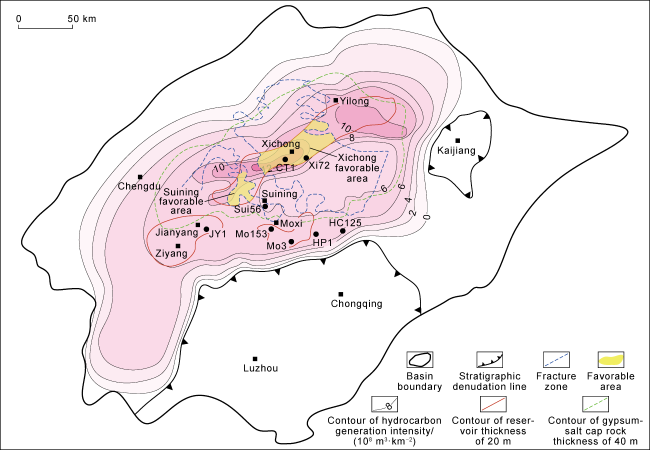


Fig. 12. Favorable areas of the Lei-32 marl, Sichuan Basin. |
6. Conclusions
High-yield flows of condensate oil and natural gas were tested in the Lei-32 marl of Well CT1 in the central Sichuan Basin, recording a significant discovery. Geochemical analysis of hydrocarbons and source rocks indicates that the condensate oil and natural gas in Lei-32 are sourced from the argillaceous limestone, gypsiferous argillaceous limestone and limy mudstone within the gypsum-salt rocks of lagoonal facies in Lei-32. They accumulated in an overpressure system, with "source-reservoir integration", and gypsum-salt rocks serving as cap rocks. They represent a new type of unconventional hydrocarbons worthy of exploration.
The marl of lagoonal facies in Lei-32 in the central Sichuan Basin acts as both source rock and reservoir rock. It has an average TOC of 0.77%, and the storage space predominantly consisting of nano- to micro-sized pores and fractures. The TOC content shows a positive correlation with clay mineral content. The marl source rocks of lagoonal facies show a thickness of 40-130 m, an area of 40 000 km2 approximately, a hydrocarbon generation intensity of (8-12)×108 m3/km2, and an estimated amount of generated gas of 25×1012 m3. The marl reservoirs are of low-porosity and low-permeability, where the matrix porosity is positively correlated with the clay mineral content, and fractures effectively improve the porosity and permeability. The marl reservoirs are mainly 20-60 m thick, with a total area of 7500 km2. Three high reservoir thickness areas are recognized, that is, Xichong-Yilong, Ziyang-Jianyang and Moxi South.
The marl of lagoonal facies in Lei-32 in the central Sichuan Basin has hydrocarbon accumulation characteristics in six aspects. (1) It exhibits an integration of source rock, reservoir rock and cap rock, being self-generating and self-preserving. (2) With a relatively high TOC content, it is high-quality carbonate source rock. (3) The marl reservoirs have low porosity and low permeability, where the storage space is mainly composed of inorganic pores and fractures. (4) Hydrocarbons mainly migrated and accumulated inside the source rocks. (5) The generated fluids are condensate oil and wet gas. (6) Encased by multiple layers of gypsum-salt rocks as strong seals, the oil and gas of marl are difficult to escape, and commonly under an overpressure system.
The marl of lagoonal facies in Lei-32 in the central Sichuan Basin is moderately buried (2000-4500 m) and distributes stably and continuously, covering an area of 40 000 km2 approximately. Hydrocarbons are primarily enriched in hydrocarbon generation centers, reservoir development zones, and fracture zones. Xichong and Suining are identified as favorable areas worth of exploration.