

Introduction
With the gradual depletion of shallow and medium-depth oil and gas resources, deep and ultra-deep oil and gas drilling has become an important approach and direction for acquiring oil and gas resources [1]. However, deep drilling requires high-performance drilling fluids owing to high bottomhole temperature and pressure, as well as complex geological conditions (including the presence of salt and salt-gypsum rocks). Unsatisfactory drilling fluid performance may lead to wellbore collapse, stuck pipe, lost circulation, blowouts, and other complexities or incidents, which will impede the drilling safety and efficiency.
The technical challenges of deep drilling fluid include: (1) High-temperature (150-200 °C) and even ultrahigh- temperature (≥200 °C) environment at the bottomhole, which necessitate drilling fluids with high-temperature resistance; (2) complex formation and high formation stress, which may lead to wellbore instability during drilling; and (3) the “three highs” (high temperature, high salinity and high density), which make it challenging for drilling fluid systems to achieve good lubricating performance. With the increasing number of deep and ultra-deep wells, more and more ultra-deep wells (such as those in the Kuqa piedmont of the Tarim Basin and the western Sichuan Basin) encounter large intervals of salt or salt-gypsum rocks [2]. Oil-based or saturated brine- based drilling fluids are commonly used to prevent salt dissolution [3]. Currently, high-temperature resistant saturated brine-based drilling fluids are added with sulphonated materials to control high-temperature and high-pressure (HTHP) fluid loss and plug formation microfractures [4-5]. In high-temperature water-based drilling fluids, sulphonated materials are often added at high concentrations of 6%-15% to control fluid loss [4,6]. In recent years, for environmental concerns, the use of sulphonated materials has been restricted in some regions [7]. Therefore, the development of high-temperature resistant saturated brine-based drilling fluids without sulphonated materials becomes a key and challenging task in the drilling engineering sector. This is particularly true under high-density conditions, as a high density increases the difficulty in controlling the rheological and fluid loss properties of the drilling fluid system.
Polymeric drilling fluids that utilize synthetic polymers as key additives are worthy of prospective research. High-temperature resistant and anti-salt polymeric additives (incl. fluid loss reducers and plugging agents) are popular in the research of drilling fluids. With regard to polymeric fluid loss reducers, Dristemp and Driscal D, which were developed by Chevron Phillips Chemical, are excellent commercial products [8-9]. Regarding the synthesis of high-temperature resistant polymeric fluid loss reducers, in most studies, 2-acrylamido-2-methylpropane sulfonic acid (AMPS) was considered as a crucial monomer [10⇓-12]. In terms of molecular structure design, existing studies mainly introduce cationic monomers, cyclic structure monomers, or hydrophobic monomers into polymeric molecular structures to improve the high-temperature and salt resistances of the polymer. Su et al. [13] added the cationic monomer, dimethyl diallyl ammonium chloride (DMDAAC), into the molecular structure of a ternary copolymer (acrylamide/2-acrylamido-2-methylpropane sulfonic acid/N-vinylpyrrolidone, AM/AMPS/NVP), and the resulting quaternary copolymer exhibited lower fluid loss under high-temperature and high-salinity conditions than the ternary copolymer. The use of controlled cross-linking techniques [14-15] and the introduction of nanomaterials [16] to enhance the high-temperature and salt resistances of polymers have also received considerable research attention. Li et al. [15] used N,N-dimethylacrylamide (DAM), DMDAAC, AMPS and maleic anhydride (MA) as monomers and triallylamine as a cross- linker to synthesize a micro-cross-linked polymer with satisfactory high-temperature and salt resistances. In terms of polymeric plugging agents, the use of cross- linked polymer microspheres as high-temperature resistant plugging agents has become another research focus. The authors [17-18] developed hydrophilic modified polystyrene microspheres, which can effectively plug the pores and fractures of different scales and reduce fluid loss. Drilling lubricants can be broadly classified into solid lubricants and liquid lubricants, with liquid lubricants being the primary category. Liquid lubricants mainly include mineral oil, polyols, surfactants, modified vegetable oils, and fatty acid esters. The addition of extreme- pressure and anti-wear additives in liquid lubricants can enhance the lubricating performance [19]. Currently, it is a major challenge to develop a high-temperature resistant polymeric saturated brine-based drilling fluid system with good wellbore stability and low frictional resistance without the use of sulphonated materials.
This paper introduces the development of three key additives for the drilling fluid system, then elaborates on the strategy for formulating the high-temperature resistant and high-density polymeric saturated brine-based drilling fluid system, and finally discusses the comprehensive performance of the formulated drilling fluid system.
1. Development of key additives for the drilling fluid system
1.1. Weakly cross-linked zwitterionic polymeric fluid loss reducer
Conventional polymeric fluid loss reducers, such as carboxymethyl cellulose (CMC), polyanionic cellulose (PAC), and modified starch, have insufficient temperature resistance and fail under high-temperature conditions, making them unsuitable as fluid loss reducers for high- temperature drilling fluids. In this study, a weakly cross- linked zwitterionic polymeric fluid loss reducer with excellent high-temperature and salt resistances was developed.
1.1.1. Molecular structure design
To improve the high-temperature and salt resistances of the polymeric fluid loss reducer, several techniques were employed in the synthesis process. First, a weakly cross-linked structure was introduced into the molecular structure to restrict molecular chain movement and enhance the high-temperature resistance of the polymer while maintaining a relatively low cross-linking density for water solubility. Second, both anionic groups (sulfonic acid groups) and cationic groups (quaternary ammonium salt groups) were introduced into the molecular structure to enhance the salt resistance of the polymer by using the anti-polyelectrolyte effect of the zwitterionic polymers [20].
According to the above design principles, a weakly cross-linked zwitterionic polymeric fluid loss reducer (DADN) was synthesized by copolymerizing DAM, AMPS, DMDAAC and NVP in an aqueous solution, using divinylbenzene as a cross-linking agent. The weakly cross-linked structure is illustrated in Fig. 1 .
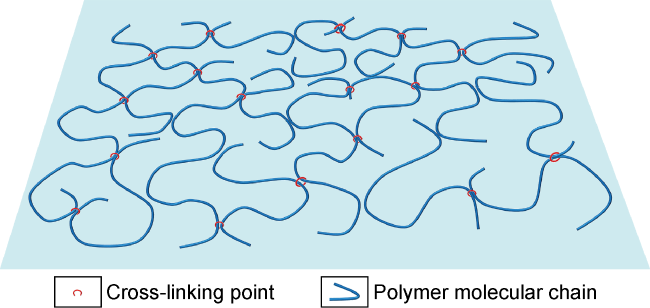
Fig. 1. Schematic illustration of the weakly cross-linked structure of the polymeric fluid loss reducer. |
1.1.2. Evaluation of high-temperature resistance and salt resistance performance
The effect of the salt content on the performance of the fluid loss reducer DADN under high-temperature conditions was evaluated, and the results are presented in Table 1 . As the salt content increased, the API fluid loss of the bentonite suspension with 2% DADN remained below 5 mL, even after aging at 200 °C. The maximum API fluid loss was observed when the salt content was 4%. As the salt content increased further to saturation, the API fluid loss after aging gradually decreased. Therefore, from the perspective of fluid loss, DADN exhibits good high-temperature and salt resistances.
Table 1. Viscosity-improving and fluid loss-reducing performance of DADN in base fluids with different salt contents before and after aging at a high temperature |
| Sample | Condition | Apparent viscosity/ (mPa·s) | Plastic viscosity/ (mPa·s) | API fluid loss/mL |
|---|---|---|---|---|
| 4% Bentonite suspension | Before aging | 9.5 | 7 | 24.8 |
| After aging | 7.0 | 3 | 32.6 | |
| 4% Bentonite suspension + 2% DADN | Before aging | 88.0 | 56 | 4.8 |
| After aging | 17.5 | 14 | 6.0 | |
| 4% Bentonite suspension + 4% NaCl + 2% DADN | Before aging | 44.0 | 32 | 4.0 |
| After aging | 13.0 | 10 | 11.8 | |
| 4% Bentonite suspension + 15% NaCl + 2% DADN | Before aging | 34.0 | 28 | 3.2 |
| After aging | 16.0 | 12 | 8.6 | |
| 4% Bentonite suspension + 36% NaCl + 2% DADN | Before aging | 33.0 | 26 | 3.6 |
| After aging | 19.0 | 15 | 7.4 |
Note: Aging occurred at 200°C for 16 h. |
1.1.3. Salt resistance mechanism
The influence of the salt content on the viscosity of a 2% DADN aqueous solution was measured using a rheometer. As shown in Fig. 2 , when the salt content did not exceed 2%, the viscosity of the solution gradually decreased with an increase in the salt content. However, when the salt content exceeded 2%, the viscosity of the solution gradually increased with an increase in the salt content. This is mainly because that, at low salt contents, the addition of salt caused polymer precipitation, reducing the viscosity. Owing to the electrostatic attraction between anionic and cationic groups within zwitterionic polymer molecules, which allows the molecules to curl, the addition of salt weakens the attraction between the anionic and cationic groups [21]. As a result, the polymer chains extend gradually with the increasing salt content, increasing the solution viscosity.
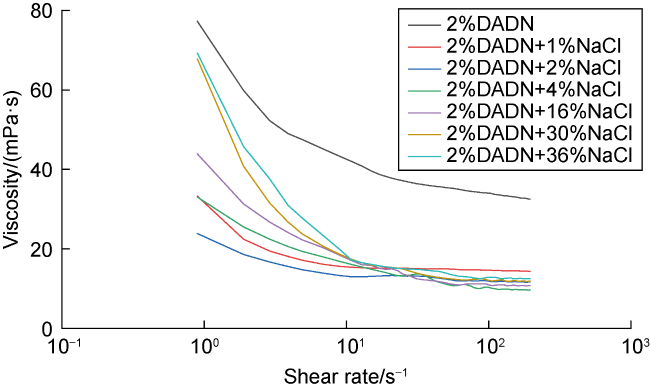
Fig. 2. Effect of the salt content on the viscosity of the DADN aqueous solution. |
1.2. Flexible polymer microsphere nano-plugging agent
Under high-temperature, high-salinity, and high-density conditions, the fluid loss reducer alone cannot reduce the fluid loss of drilling fluid systems to a low level. Typically, the addition of plugging materials is required to synergistically reduce the fluid loss and enhance the plugging performance of the drilling fluid in micro- pores and fractures. In this study, a resin-based flexible nano-plugging agent called NF-1 was developed. It exhibits strong adsorption on rock surfaces and can self-adhere at high temperatures, improving the mud cake quality to reduce the fluid loss. Moreover, it is effective for plugging nano- pores and fractures in formation.
1.2.1. Molecular structure design
With N,N'-methylenebisacrylamide (MBA) as the cross- linking agent, the monomers including styrene (ST), AMPS and DMDAAC were synthesized to a cross-linked structure of modified polystyrene nanomicrospheres (NF-1) by way of emulsion polymerization. In the molecular structure design, AMPS was primarily used to adjust the surface wettability of NF-1, allowing the nano-plugging agent to be suspended and dispersed in the water-based system and preventing it from agglomeration after high-temperature aging. DMDAAC could enhance the adsorption between the product and rocks or mud cakes. MBA was responsible for forming a cross-linked structure of molecular chains, improving the high-temperature resistance of the plugging agent.
1.2.2. Characterization

Fig. 3. SEM image and particle-size distribution of the flexible polymer microsphere nano-plugging agent. |
1.2.3. Plugging performance evaluation
The influence of the flexible polymer microsphere nano-plugging agent on the HTHP fluid loss (200 °C, 3.5 MPa) of the 4% bentonite suspension was tested. As shown in Fig. 4a , the addition of the plugging agent reduced the HTHP fluid loss of the base fluid. At a dosage of 3%, the HTHP fluid loss was reduced from 143 mL to 83 mL. SEM was used to examine the microstructure of the HTHP mud cake before and after the addition of 2% plugging agent. As shown in Fig. 5 , numerous nanoparticles were adsorbed on the mud cake surface after the addition of the plugging agent, and there was a certain degree of cohesion between the nanoparticles.
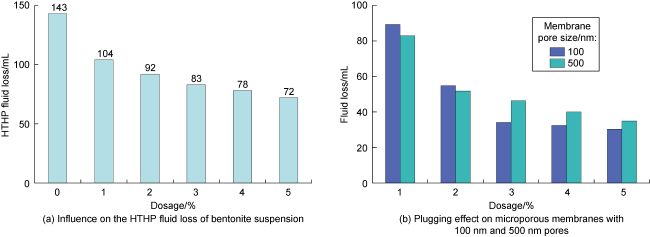
Fig. 4. Performance evaluation of the flexible polymer microsphere nano-plugging agent. |
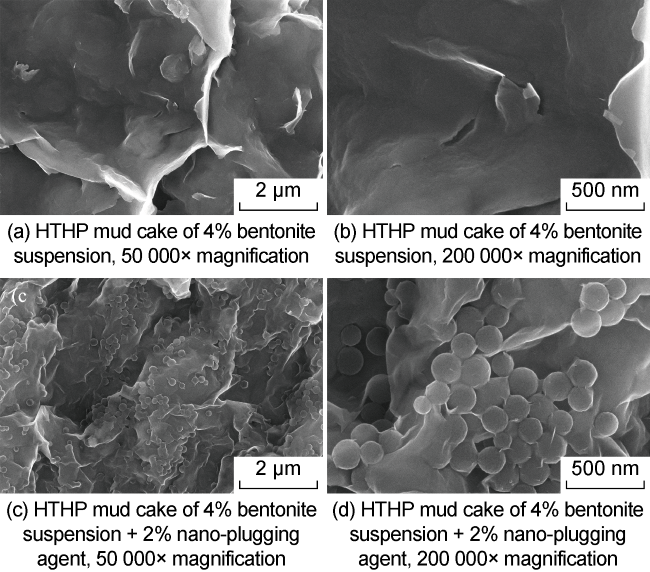
Fig. 5. Influence of the flexible polymer microsphere nano-plugging agent on the microstructure of the HTHP mud cake of the base drilling fluid. |
The flexible polymer microsphere nano-plugging agent alone did not exhibit significant fluid loss reduction, mainly because of the large difference between the particle size of the plugging agent and the pore size of the filter paper (2-5 μm), which prevented it from plugging the filter paper pores. The advantage of the flexible polymer microsphere nano-plugging agent lies mainly in its ability to plug nanopores. Therefore, the plugging effect of the flexible polymer microsphere nano-plugging agent on microporous membrane with 100 nm and 500 nm pores was evaluated using an API filtration tester and a polytetrafluoroethylene microporous membrane under medium pressure (0.7 MPa) and room temperature conditions. Water could not plug the membranes and was quickly filtered out. With an increase in the dosage of the plugging agent, the fluid loss gradually decreased. When the dosage of the plugging agent was 5%, the fluid loss was reduced to lower than 40 mL for both types of membranes (Fig. 4b ).
1.3. Comb-structure polymeric lubricant
In the process of deep well drilling, the drill string is subjected to helical bucklig. Friction exists between the drill string and the upper casing as well as the rock in the open hole section. Excessive friction can lead to issues such as stuck pipe and backing pressure effect, which affect the rate of penetration and cause downhole complexities [22]. Currently, lubricants used in drilling fluids mainly include ester-based lubricants, polyol lubricants, extreme-pressure lubricants and solid lubricants. However, the lubricating performance of these lubricants is degraded under high-temperature, high-density and high-salinity conditions. In this study, a comb-structure polymeric lubricant with a low molecular weight was developed, which can maintain an excellent lubricating performance under high-temperature and high-salinity conditions.
1.3.1. Molecular structure design
Comb-structure polymers have been extensively studied in fields such as nanomedicine and biomimetic structures [23], but rarely reported regarding lubricants for drilling fluids. Conventional ester-based lubricants demonstrate unsatisfactory lubricating performance under high-temperature and high-salinity conditions, due to the lack of molecular adsorption sites. In this study, a low molecular weight comb-structure polymeric lubricant was synthesized through copolymerization of acrylate-based hard monomers, acrylate-based soft monomers, and vinyl monomers with polar adsorption groups, by controlling the molecular mass. This comb-structure polymeric lubricant has multiple adsorption sites, and its molecular structure is shown in Fig. 6a . Gel permeation chromatography was used to measure the molecular weight of the comb-structure polymeric lubricant. The weight-average molecular weight is 4804 and the number-average molecular weight is 3450. The ratio of the two values, which is known as the molecular weight distribution index, is 1.39, indicating that the polymer is a low-molecular weight polymer with a narrow molecular-weight distribution.

Fig. 6. (a) Molecular structure and (b) lubrication mechanism of the comb-structure polymeric lubricant (x, y, z represent the number of monomer units in the polymeric lubricant in |
The comb-structure polymer contains multiple polar groups and hydrophobic groups. The polar groups can be adsorbed on the rock matrix or the surface of the drill string, forming a film, as shown in Fig. 6b . The rubbings between the drill string and the casing and between the drilling string and the rocks transform into sliding of the lubricating film, significantly reducing the friction coefficient.
1.3.2. Lubricating performance evaluation
The lubrication coefficient was determined by using an extreme-pressure lubricity tester on a 5% bentonite suspension. The effects of temperature, salinity, and their combination on the lubrication coefficient were investigated, as shown in Table 2 . With 1% lubricant added, the reduction rate of the lubrication coefficient of the base fluid at room temperature (the difference between the lubrication coefficients before and after the addition of the lubricant divided by the initial lubrication coefficient) was found to be 91.03%. After high-temperature aging at 200 °C, the reduction rate of the lubrication coefficient was 88.53%. With 2% lubricant added, the reduction rate of the lubrication coefficient in the saturated brine base fluid was 76.22%. Under the conditions of high temperature and saturated brine, the reduction rate of the lubrication coefficient corresponding to the 2% lubricant was 77.10%. These results indicate that the comb-structure polymeric lubricant has good lubricating performance even under high-temperature and high-salinity conditions.
Table 2. Lubricating performance of the comb-structure polymer lubricant in bentonite suspension |
| Sample | Condition | Lubrication coefficient | Reduction rate of lubrication coefficient/% |
|---|---|---|---|
| 5% bentonite suspension | Unaged | 0.715 5 | |
| 5% bentonite suspension + 1% lubricant | Unaged | 0.064 2 | 91.03 |
| 5% bentonite suspension +35% NaCl | Unaged | 0.389 7 | |
| 5% bentonite suspension +35% NaCl+2% lubricant | Unaged | 0.092 7 | 76.22 |
| 5% bentonite suspension | Aged at 200 °C for 16 h | 0.735 8 | |
| 5% bentonite suspension + 1% lubricant | Aged at 200 °C for 16 h | 0.084 4 | 88.53 |
| 5% bentonite suspension +35% NaCl | Aged at 200 °C for 16 h | 0.564 1 | |
| 5% bentonite suspension +35% NaCl+2% lubricant | Aged at 200 °C for 16 h | 0.129 2 | 77.10 |
2. Construction and performance evaluation of drilling fluid system
2.1. Construction of drilling fluid system
The following strategy is designed to construct an ultrahigh-temperature resistant high-density polymeric saturated brine drilling fluid system.
(1) Use formate to enhance the temperature resistance of polymetric additives. The temperature resistance of polymeric additives is crucial for the construction of high- temperature saturated brine-based drilling fluid system. Numerous studies have indicated that organic salts can improve the high-temperature stability of polymers [24], mainly because the organic acid anions can remove dissolved oxygen from water and prevent polymer degradation. In this study, potassium formate was used to enhance the high-temperature stability of polymers.
(2) Combine bentonite with high-temperature resistant and high-salinity resistant clay. When the clay content in drilling fluid exceeds a threshold, the fluid loses its flowability at high temperatures, resulting in high-temperature gelation. Thus, reducing the clay content and using dispersants or diluents can suppress high-temperature gelation. In this study, the clay content in the drilling fluid was controlled within a low range to prevent high-temperature gelation. Attapulgite [25] has strong inertness, does not flocculate in brine, and exhibits high-temperature resistance. Because attapulgite has a low slurry yield and minimal influence on rheological properties, it was combined with bentonite as the clay component in the drilling fluid system to provide both temperature and salinity resistances while maintaining a certain slurry yield.
(3) Enhance the plugging performance using “multicomponent synergy” to regulate HTHP fluid loss. Regulating fluid loss at high temperature and high pressure is the most challenging aspect of constructing a high-temperature resistant and high-density polymeric saturated brine-based drilling fluid system. It is difficult to obtain a small fluid loss while ensuring good rheological properties of the drilling fluid. In this study, three approaches were employed to improve the plugging performance and reduce the fluid loss: (1) Differently sized ultrafine calcium carbonate composites are used to plug different sized micro- pores and fractures [26]; (2) flexible nano-plugging agents are used to improve the mud cake quality and reduce the HTHP fluid loss; and (3) the cloud point effect of polyols is followed. When the temperature exceeds the cloud point of the polyol, the polyol precipitates from the drilling fluid, adheres to the drill string and wellbore wall, and functions as a film-forming plugging agent [27], reducing the fluid loss.
2.2. Experimental methods
2.2.1. Drilling fluid formulation
The experimental materials presented in Table 3 were used to formulate the drilling fluid according to Formulation A in Table 4 . First, bentonite and attapulgite were added into water and mixed for 24 h with stirring at 300 r/min to prepare the base fluid. Sodium hydroxide, potassium formate, fluid loss reducer DADN, anhydrous polyol, flexible polymer microsphere nano-plugging agent, ultrafine calcium carbonate, sodium chloride, comb-structure polymeric lubricant and barite were sequentially added to the base fluid. After the addition of each additive, high-speed (5000 r/min) mixing was performed for 20 min. To compare the effects of the attapulgite, nano-plugging agent, ultrafine calcium carbonate and lubricant on the drilling fluid system, formulations B-E were prepared as controls based on Formulation A. Formulation B did not contain attapulgite, Formulation C did not contain the flexible polymer microsphere nano-plugging agent, Formulation D did not contain ultrafine calcium carbonate, and Formulation E did not contain the lubricant, as shown in Table 4 .
Table 3. Specifications and effects of drilling fluid additives |
| SN | Additive | Manufacturer | Purity | Function |
|---|---|---|---|---|
| 1 | Bentonite | Huai’an Tengfei Bentonite Development Co., Ltd. | Industrial grade | Adjust rheological properties and reduce fluid loss |
| 2 | Attapulgite | Shandong Deshunyuan Petroleum Sci & Tech. Co., Ltd. | Industrial grade | Reduce fluid loss |
| 3 | Sodium hydroxide | Shandong Deshunyuan Petroleum Sci & Tech. Co., Ltd. | Chemically pure | Adjust pH value |
| 4 | DADN | Laboratory synthesis | 99% | Increase viscosity and reduce fluid loss |
| 5 | Anhydrous polyol | Shandong Deshunyuan Petroleum Sci & Tech. Co., Ltd. | Industrial grade | Reduce fluid loss, inhibit clay hydration, and improve lubricity |
| 6 | Flexible polymer microsphere nano-plugging agent | Laboratory synthesis | Solid content of 30% | Reduce fluid loss and plug micro- pores and fractures |
| 7 | Ultrafine calcium carbonate | Shandong Deshunyuan Petroleum Sci & Tech. Co., Ltd. | Industrial grade | Reduce fluid loss and plugs micro- pores and fractures |
| 8 | Comb-structure polymeric lubricant | Laboratory synthesis | 99% | Improve lubricity |
| 9 | Sodium chloride | Shandong Deshunyuan Petroleum Sci & Tech. Co., Ltd. | Chemically pure | Adjust salinity |
| 10 | Potassium formate | Shandong Deshunyuan Petroleum Sci & Tech. Co., Ltd. | Chemically pure | Improve polymer's temperature resistance |
| 11 | Barite | Sichuan Zhengrong Industrial Co., Ltd. | Industrial grade | Acting as weighting material |
Table 4. Formulations of the drilling fluid system for experimental use |
| Formulation | Dosage | |||||||||||
|---|---|---|---|---|---|---|---|---|---|---|---|---|
| Water/ mL | Bentonite/ g | Attapulgite/ g | Sodium hydroxide/g | Potassium formate/g | DADN/ g | Anhydrous polyol/g | Flexible polymer microsphere nano-plugging agent/g | Ultrafine calcium carbonate/ g | Sodium chloride/ g | Comb- structure polymeric lubricant/g | Barite/ g | |
| A | 400 | 8 | 8 | 0.8 | 20 | 12 | 20 | 20 | 20 | 144 | 12 | 773 |
| B | 400 | 8 | 0 | 0.8 | 20 | 12 | 20 | 20 | 20 | 144 | 12 | 773 |
| C | 400 | 8 | 8 | 0.8 | 20 | 12 | 20 | 0 | 20 | 144 | 12 | 773 |
| D | 400 | 8 | 8 | 0.8 | 20 | 12 | 20 | 20 | 0 | 144 | 12 | 773 |
| E | 400 | 8 | 8 | 0.8 | 20 | 12 | 20 | 20 | 20 | 144 | 0 | 773 |
2.2.2. Evaluation of rheological and filtration properties
The apparent viscosity, plastic viscosity, yield point, and gel strength of the drilling fluid system, as well as the API fluid loss of the drilling fluid, were evaluated according to the Petroleum and Natural gas Industries: Field Testing of Drilling Fluids: Part 1: Water-based Fluids (GB/T 16783.1-2014) [28]. After aging at 200 °C for 16 h, the above rheological parameters, API fluid loss and HTHP fluid loss at 200 °C were measured again.
2.2.3. Evaluation of sedimentation stability
The drilling fluid was placed in an aging tank. After static aging at 200 °C for different periods of time, a small amount of translucent liquid was removed from the upper layer. Using a large-scale syringe, the upper and lower portions of the aged drilling fluid were separately transferred to two high-speed stirring cups. After thorough mixing of the upper and lower portions, the densities of the upper and lower drilling fluids were measured using a density meter. The static sedimentation factor (SF) of the drilling fluid was calculated using the following formula [29]:
$S\text{=}\frac{{{\rho }_{\text{b}}}}{{{\rho }_{\text{t}}}+{{\rho }_{\text{b}}}}$
where S represents the SF, ρt represents the density of the upper drilling fluid (g/cm3), and ρb represents the density of the lower drilling fluid (g/cm3).
2.2.4. Evaluation of inhibition performance
First, 10 g dried bentonite was placed in a mold and compacted at 10 MPa for 5 min using a hydraulic device, resulting in a cylindrical bentonite specimen. Then, the relationship between the expansion height of the bentonite specimen and time was measured using a shale linear expansion meter after the addition of drilling fluid filtrate. Finally, the rolling recovery rate of the drilling fluid system on easily hydratable shale was evaluated, with a hot-rolling temperature of 200 °C.
A comparative experiment was conducted under the same conditions using deionized water and oil-based drilling fluid. The formulation of the oil-based drilling fluid was as follows: 240 mL 5# white oil + 60 mL 30% (mass fraction) CaCl2 solution + 3 g organic clay Geltone II + 4.5 g emulsifier FACTANT + 9 g emulsifier EZ-MUL + 3 g phospholipid wetting agent + 9 g calcium oxide + barite (adjusted to a density of 2.0 g/cm³). The oil-based drilling fluid additives were obtained from Halliburton.
2.2.5. Evaluation of plugging performance
Quartz sand within a certain particle-size range was put into an organic glass tube (inner diameter of 5 cm) of a visual sand pack plugging device and compacted to a height of 14 cm. The intrusion depths of the drilling fluid system into the sand packs with particle-size ranges of 178-250 μm (60-80 mesh), 150-178 μm (80-100 mesh), and 124-150 μm (100-120 mesh) were measured using the visual sand pack plugging device at 0.7 MPa for 30 min.
The fluid loss of ceramic sand disks with different pore sizes was measured using a Fann PPA HTHP permeability plugging tester. The pore sizes of the ceramic sand disks were 10, 12, 20 μm (measured via mercury intrusion method). The test was performed at 200 °C for 30 min. The fluid loss of the sand disks within 30 min was equal to twice the volume of the filtrate.
2.2.6. Evaluation of lubricating performance
The lubrication coefficient of the drilling fluid system after aging at 200 °C was measured using an extreme- pressure lubricity meter, and a comparative experiment was conducted using an oil-based drilling fluid with the same density. The test was performed at 60 r/min with a torque of 16.95 N·m.
2.3. Results and discussion
2.3.1. Rheological and filtration properties
The formulation of the drilling fluid system developed in this study (referred to as Formulation A) consists of 2% bentonite, 2% attapulgite, 0.2% sodium hydroxide, 3% fluid loss reducer (DADN), 5% anhydrous polyol, 4% flexible polymer microsphere nano-plugging agent, 5% composite ultrafine calcium carbonate, 3% comb-structure polymeric lubricant, 36% sodium chloride, 5% potassium formate, and barite (adjusted to a density of 2.0 g/cm³). The experimental results are presented in Table 5 . Formulation A exhibits good rheological properties before and after aging, with the API fluid loss lower than 2.0 mL after aging at 200 °C for 16 h and 72 h, the HTHP fluid loss lower than 15 mL after aging for 16 h, presenting thin mud cake, and the HTHP fluid loss lower than 20 mL after aging for 72 h, still presenting thin mud cake. Formulation B, which does not contain attapulgite, exhibits a slightly lower viscosity than Formulation A, but a HTHP fluid loss higher than 50 mL. Formulation C, without the flexible polymer microsphere nano-plugging agent, has a lower viscosity but a HTHP fluid loss of 32 mL. Formulation D, without ultrafine calcium carbonate, has a HTHP fluid loss of 36 mL, larger than Formulation A. It thus can be inferred that attapulgite, flexible polymer microsphere nano-plugging agent, and ultrafine calcium carbonate are all beneficial for reducing the HTHP fluid loss. Formulation E, without the lubricant, has a lower viscosity than Formulation A, and exhibits the HTHP fluid loss slightly larger than that of Formulation A, possibly because the lubricant is an oil-based component that can be dispersed in the drilling fluid to favor the formation of oil-in-water emulsion, thereby increasing the viscosity. Clearly, the drilling fluid system of Formulation A exhibits the best comprehensive performance. Unless otherwise specified, the formulated drilling fluid in this paper refers to the Formulation A drilling fluid.
Table 5. Results of rheological and filtration properties tests of formulations drilling fluids A-E |
| Formulation | Condition | Density/ (g·cm-3) | pH | Apparent viscosity/ (mPa·s) | Plastic viscosity/ (mPa·s) | Yield point/ Pa | YP/PV (Pa·(mPa·s)-1) | Gel strength at 10 s (10 min)/Pa | API fluid loss/mL | HTHP fluid loss/mL | HTHP mud cake thickness/mm |
|---|---|---|---|---|---|---|---|---|---|---|---|
| A | Before aging | 2.0 | 11 | 116.0 | 92 | 24.0 | 0.26 | 8.0 (11.0) | 0 | ||
| After aging for 16 h | 2.0 | 11 | 114.0 | 96 | 18.0 | 0.19 | 1.5 (3.0) | 1.6 | 14.2 | 3.5 | |
| After aging for 72 h | 2.0 | 11 | 102.0 | 87 | 15.0 | 0.17 | 1.5 (2.5) | 1.8 | 19.6 | 4.5 | |
| B | Before aging | 2.0 | 11 | 113.0 | 75 | 38.0 | 0.51 | 15.0 (16.0) | 0 | ||
| After aging for 16 h | 2.0 | 11 | 104.0 | 93 | 11.0 | 0.12 | 1.0 (2.5) | 2.4 | 52.8 | 7.5 | |
| C | Before aging | 2.0 | 11 | 94.5 | 68 | 26.5 | 0.39 | 3.5 (12.0) | 1.0 | ||
| After aging for 16 h | 2.0 | 11 | 80.5 | 68 | 12.5 | 0.18 | 2.0 (2.5) | 2.0 | 32.0 | 4.5 | |
| D | Before aging | 2.0 | 11 | 89.5 | 62 | 27.5 | 0.44 | 6.5 (14.0) | 0 | ||
| After aging for 16 h | 2.0 | 11 | 100.5 | 83 | 17.5 | 0.21 | 2.5 (5.0) | 1.0 | 36.4 | 5.0 | |
| E | Before aging | 2.0 | 11 | 105.0 | 82 | 23.0 | 0.28 | 6.5 (11.0) | 0 | ||
| After aging for 16 h | 2.0 | 11 | 98.0 | 84 | 14.0 | 0.17 | 1.5 (3.0) | 1.6 | 28.2 | 4.5 |
Note: Aging was completed at 200 °C, and the test of HTHP fluid loss was performed at 200 °C and 3.5 MPa. |
2.3.2. Sedimentation stability
Sedimentation stability is a critical property of drilling fluids. Poor sedimentation stability can lead to settling of weighting materials, which can result in stuck pipe, well kick, or more severe accidents. The sedimentation stability of the drilling fluid system was evaluated at 200 °C for different aging times using the static SF, as shown in Fig. 7 . With the increasing aging time, the upper density of the drilling fluid decreased, while the lower density increased, resulting in an increase in the SF. However, the changes were insignificant, and the SF of the drilling fluid aged for 5 d remained below 0.52, indicating good sedimentation stability of the drilling fluid under high-temperature conditions.
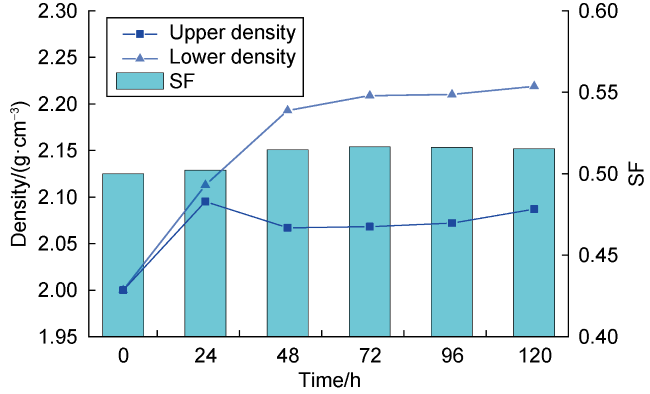
Fig. 7. SF of the drilling fluid system after aging at 200 °C for different time. |
2.3.3. Inhibition performance
The hydration inhibition performance of drilling fluids is crucial for inhibiting the hydration and swelling of clay minerals and maintaining the stability of shale formations. In this study, the inhibition performance of the formulated drilling fluid system was evaluated through shale linear swelling tests and hot rolling recovery experiments. The formulated drilling fluid was compared with a typical oil-based drilling fluid. As shown in Fig. 8 , in the linear swelling test, the expansion height of the bentonite core after 16 h in deionized water is 5.76 mm, whereas in the formulated drilling fluid system, it was 0.47 mm. In the oil-based drilling fluid, the bentonite core hardly expanded, with an expansion height of 0.02 mm. In the rolling recovery experiment, the drill cuttings used were easily hydratable. After rolling for 16 h at 200 °C in deionized water, the recovery rate is 17.6%. The recovery rate in the formulated drilling fluid system was 96.3%, whereas in the oil-based drilling fluid, it was 97.6%. Oil-based drilling fluids exhibit excellent inhibition performance for shale. Clay minerals are essentially non-swelling in oil because the external phase of oil based-drilling fluid is oil. The inhibition performance of the formulated drilling fluid system in this study is comparable to that of oil-based drilling fluid.
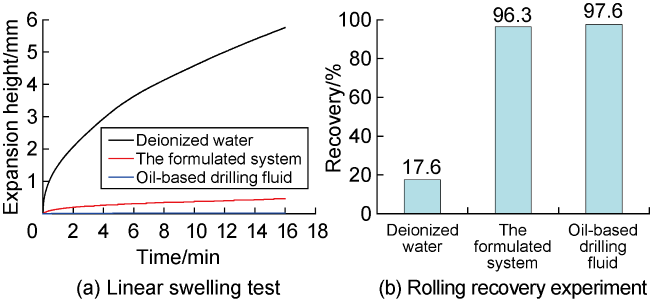
Fig. 8. Evaluation results for the inhibition performance of drilling fluid systems. |
2.3.4. Plugging performance
The plugging performance of the formulated drilling fluid system on pores and fractures of different scales was evaluated. In the medium-pressure visualization plugging experiment, the drilling fluid system exhibited good plugging performance on sand packs with particle sizes ranging from 178 to 250 μm (60 to 80 mesh), 150 to 178 μm (80 to 100 mesh), and 124 to 150 μm (100 to 120 mesh). Under the condition of 0.7 MPa, the drilling fluid did not penetrate the sand packs within 30 min, and the invasion depths were only 3, 3, 2 mm, respectively (Fig. 9a ). Under HTHP conditions, the drilling fluid system had fluid losses of 28, 23, 22 mL on ceramic sand disks with pore sizes of 10, 12, 20 μm, respectively (Fig. 9b ). Because the pore sizes of the sand disks were larger than those of the HTHP filter paper, the fluid losses on the sand disks were larger. Overall, the drilling fluid system exhibited good plugging performance on pores and fractures of different scales.


Fig. 9. Evaluation results for the plugging performance of the drilling fluid system. |
2.3.5. Lubricating performance
Formulation A exhibits a lubrication coefficient of 0.122, 32.7% lower than that (0.182) of Formulation E without the comb-structure polymeric lubricant. Given the same density, the lubrication coefficient of the oil-based drilling fluid is 0.091, indicating that the drilling fluid system with the comb-structure polymeric lubricant has good lubricating performance.
3. Conclusions
The weakly cross-linked zwitterionic polymeric fluid loss reducer developed in this study exhibits a good anti-polyelectrolyte effect and excellent fluid loss reduction performance under high-temperature and high-Salinity conditions. The flexible polymer microsphere nano- plugging agent exhibits an excellent temperature resistance, and it can reduce the fluid loss by improving the mud cake quality and effectively plug microporous membranes with pore sizes of 100 nm and 500 nm. The comb-structure polymeric lubricant has a low molecular weight and multiple polar adsorption sites, so it exhibits good lubricating performance even under high-temperature and high-salinity conditions.
In the formulation of the high-temperature resistant polymeric saturated brine-based drilling fluid system, formate was used to enhance the temperature resistance of the polymetric additives, bentonite and high-temperature resistant and high-salinity resistant clay were blended to adjust the rheological properties, and a multi-component synergistic method was employed to regulate the plugging performance and control the HTHP fluid loss. Specifically, the ultrafine calcium carbonate of different particle sizes is used to enhance the plugging performance, the flexible nano-plugging agents are used to improve the mud cake quality, and the cloud point effect of polyol is used to further reduce the fluid loss.
The formulated high-temperature resistant polymeric saturated brine-based drilling fluid system exhibits a resistance to temperatures up to 200 °C, a HTHP fluid loss of lower than 15 mL, good sedimentation stability after static aging at high temperature for 5 d, and a rolling recovery rate for easily hydratable drill cuttings comparable to that of oil-based drilling fluids. It has excellent plugging and lubricating performance and good comprehensive properties.