

Introduction
Inspired by the success of the shale revolution in the United States, China started shale oil exploration and development around the year 2010 [1-2]. In 2017, the exploration of the Lower Permian Fengcheng Formation in the Mahu Sag of the Junggar Basin moved from the stage of "conventional oil and gas exploration" to that of "comprehensive exploration of the whole petroleum system" [3]. The shale of the Fengcheng Formation in Mahu Sag was deposited in the continental alkaline lacustrine environment [4⇓-6], which may be the oldest high-quality alkaline lacustrine source rock discovered in the world so far [6⇓-8], and it is the main oil source for the Mahu conglomerate giant oilfield with reserves of 1 billion tons [9-10]. Compared with the marine shale in North America, the shale of the Fengcheng Formation is characterized by diverse lithology, strong heterogeneity and poor sedimentary structural evolution stability [8,11⇓⇓ -14], which makes it difficult to determine the main controlling factors of shale oil enrichment and restricts the exploration and development of shale oil.
The enrichment law of continental shale oil has always been a hot and difficult topic in the field of shale oil research. Previous studies proposed nearly a dozen main controlling factors controlling shale oil enrichment, such as lithofacies, oil generation conditions, reservoir conditions, mobility and migrated hydrocarbon amount [15⇓⇓⇓⇓⇓-21]. However, the relevant understanding has been controversial since the formation and enrichment of shale oil are affected by many factors, the basic geological conditions in different basins or sags are different, and the lithofacies and lithology of different shale formations are also different. In this study, the alkaline lacustrine shale oil of Fengcheng Formation in Mahu Sag is selected to study the formation geological conditions of alkaline lacustrine shale oil of Fengcheng Formation. Based on the core data and analytical laboratory data of wells drilled in the Fengcheng Formation, such as wells MY1 and FN7, and experiments including whole-rock XRD (X-ray diffraction), high-pressure mercury injection, low-temperature gas adsorption and scanning electron microscopy, we summarize the controlling factors on shale oil enrichment, with the intent to improve the understanding of alkaline lacustrine shale oil enrichment and accumulation theory and provide references to shale oil development in the Mahu Sag, Junggar Basin.
1. Regional geological setting
The Mahu Sag is located in the northwest of the Junggar Basin, with the Wuxia-Kebai fault belt on its west, the Zhongguai uplift on its southwest, the Dabasong uplift on its south, the Xiayan uplift and the Sangequan uplift on its east, and the Yingxi Sag and the Shiyingtan uplift on its northeast (Fig. 1 ) [5,22]. With an area of about 5000 km2, the Mahu Sag is the most hydrocarbon-rich sag in the Junggar Basin [23].
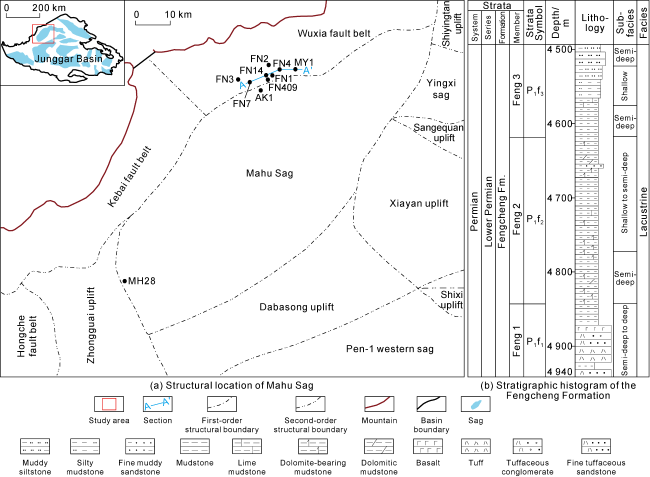
Fig. 1. Structural location and stratigraphic histogram of the Mahu Sag, Junggar Basin (modified from Reference [5]). |
The Carboniferous, Permian, Triassic, Jurassic and Cretaceous strata are developed successively from bottom to top in the Mahu sag. The target layer of this study is the Lower Permian Fengcheng Formation buried below 4000 m, with a thickness ranging from 800 m to 1800 m. The formation is thick in the west and thin in the east, forming a gentle monocline dipping toward southeast [24]. The Fengcheng Formation is mainly deposited with dark fine particles with complex lithology, including terrigenous clasts, volcanic materials, and carbonate components mixing at different patterns and proportions [6,10].
2. Geological characteristics of the Fengcheng Formation
2.1. Rock-mineralogical characteristics
2.1.1. Mineral composition
The XRD results show that the shale of the Fengcheng Formation in the Mahu Sag is mainly composed of felsic minerals and carbonate minerals. The felsic minerals content ranges from 6.6% to 89.1%, with an average of 45.6%. The content of carbonate minerals ranges from 1.8% to 93.3%, with an average of 35.6%. The clay minerals content is relatively low, ranging from 0 to 55.4%, with an average of 11.0%. Pyrite and other minerals are developed in small quantities, with an average of 4.7% and 3.3% respectively. In addition, alkaline minerals such as saltite and reedmergnerite can also be observed.
2.1.2. Lithofacies division
According to mineral composition characteristics, the shale of the Fengcheng Formation can be divided into 4 types: felsic shale, lime-dolomitic shale, clay shale and mixed shale with the contents of felsic minerals, carbonate minerals and clay minerals as three end members and 50% as the limit [25] (Fig. 2 ). The contents of felsic minerals and lime-dolomitic minerals are continuously changing in the longitudinal direction, which is controlled by sediment source and sedimentation. Core observation results show that the shale of the Fengcheng Formation is stratified and the main minerals are different. According to the stratification thickness, the sedimentary structure can be divided into 3 categories: laminated (smaller than 5 mm), thin-layered (5-20 mm) and thick-layered (larger than 20 mm) [26-27] (Fig. 2 ).
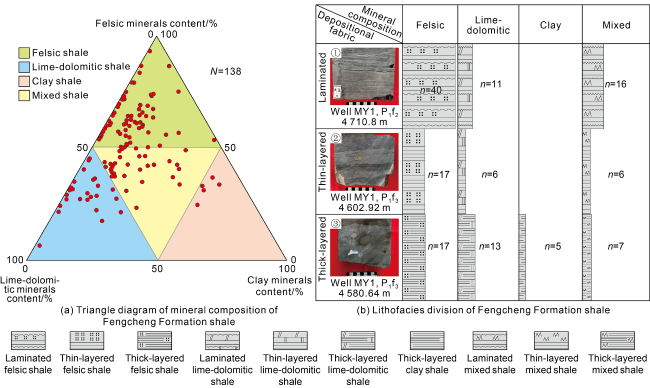
Fig. 2. Shale lithofacies division of the Fengcheng Formation in Well MY1 (the width of lithofacies composition represents the proportion of lithofacies samples n of total samples N). |
The lithology and sedimentary structure of the Fengcheng Formation shale in Mahu Sag change rapidly, so the dichotomy scheme of “mineral composition and sedimentary structure” is adopted in the lithofacies division. Based on 4 types of lithology and 3 depositional fabrics, 12 lithofacies can be divided theoretically. In fact, according to XRD data, core observation and comprehensive analysis of Well MY1, there are six main lithofacies types (i.e., n>10) developed in the Fengcheng Formation, which are laminated felsic shale, thin-layered felsic shale, thick-layered felsic shale, laminated lime- dolomitic shale, thick-layered lime-dolomitic shale and laminated mixed shale (Fig. 2 ).
2.2. Geochemical characteristics
2.2.1. Abundance of organic matter
The value of TOC (total organic carbon) of the Fengcheng Formation shale ranges from 0.08% to 2.33%, with an average of 0.77%. Chloroform asphalt “A” content ranges from 0.03% to 0.50%, with an average of 0.26%. Hydrogen index (HI) ranges from 5.08 mg/g to 1279.58 mg/g. Hydrocarbon generation potential (S1+S2) ranges from 0.12 mg/g to 13.97 mg/g, with an average of 3.47 mg/g (Fig. 3 ). The above results show that the Fengcheng Formation shale in the study area is a good oil source rock, of which the TOC and hydrocarbon generation potential of the laminated shale are higher, showing a better abundance of organic matter.
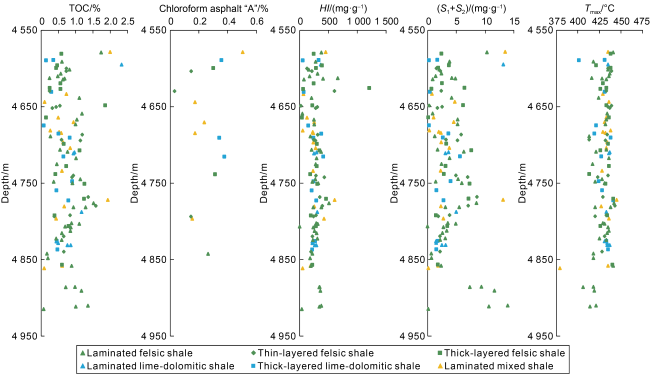
Fig. 3. Geochemical features of Fengcheng Formation shale in Well MY1 in Mahu Sag. |
2.2.2. Types of organic matter
The main organic matters of the Fengcheng Formation shale in Mahu Sag are types II1 and II2, while types I and III are rare. The organic components are mainly algae and locally vitrinite. Biomarker parameters show that the organic matters are from mixed sources (Fig. 4 ). They are complex, but similar for different lithofacies, mainly plankton and terrestrial plants.
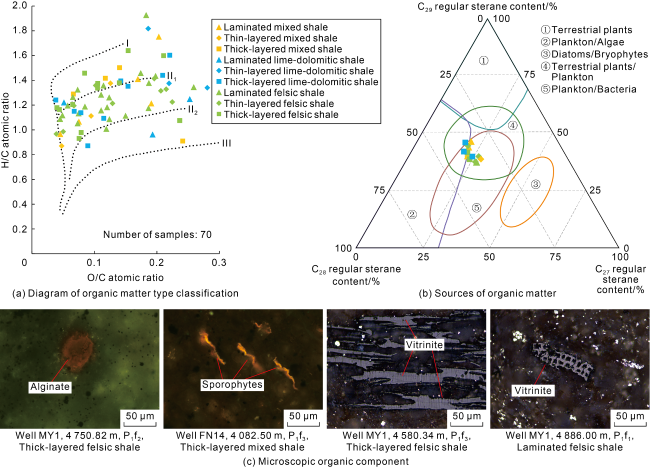
Fig. 4. Types and components of organic matters in Fengcheng Formation shale in Mahu Sag. |
2.2.3. Maturity of organic matter
The maximum pyrolysis temperature (Tmax) of the Fengcheng shale is 430-450 °C (Fig. 3 ), indicating that the shale is in the stage of low-mature to mature thermal evolution. However, large amount of residual hydrocarbons and an overall low TOC may cause the estimated Tmax lower than the actual value [28-29], so the evolution degree reflected by the estimated Tmax is lower than the actual one. The analysis of sterane biomarkers shows that the shale is in a mature stage, and the equivalent vitrinite reflectance (Rc) calculated by the arene methyl phenanthrene index ranges from 0.88% to 1.74%. In summary, the organic matters in the Fengcheng Formation shale are in the stage of mature to highly mature thermal evolution.
2.3. Pore characteristics
2.3.1. Pore type
There are mainly intergranular pores, intra-granular pores, intercrystalline pores and organic pores developed in the shale of the Fengcheng Formation, as well as structural fractures, mineral shrinkage fractures and interlayer fractures. Intragranular pores and intra-granular pores are common reservoir space in the Fengcheng Formation of Mahu Sag, which contribute the most to the porosity. Intergranular pores include primary intergranular pores and intergranular dissolved pores. The Fengcheng Formation shale in the Mahu Sag has a large overall burial depth, and the primary intergranular pores are affected by compaction and cementation, which are relatively poorly preserved [30-31]. The shale of the Fengcheng Formation was deposited in an alkaline lacustrine environment, where carbonate minerals and alkaline minerals are developed. Under the charge of organic acids in the process of hydrocarbon generation, the above minerals were easily dissolved, forming irregularly shaped intergranular pores [30⇓-32]. The intra-granular pores are also mainly formed by dissolution with elliptical and irregular shapes.
2.3.2. Pore size
The porosity of the Fengcheng Formation shale ranges from 2.0% to 4.0%, and the permeability is much less than 0.1×10⁻³ μm2, showing the characteristics of low porosity and low permeability. CO2 adsorption, low-temperature N2 adsorption and high-pressure mercury injection experiments were conducted. The results show that the pore size of Fengcheng Formation shale is widely distributed (Fig. 5 ), mainly ranging from 10 nm to 100 nm. Pores less than 2 nm are also relatively developed, but do not contribute much to free oil. The low-temperature N2 adsorption-desorption isotherm curves show a reverse “S” shape, but the adsorption curves and desorption curves do not coincide completely at high pressure. The adsorption curves and desorption curves of most samples decrease rapidly in parallel (Fig. 6 ), indicating that the internal morphology of pores is dominated by parallel plates. In addition, the desorption curves of a few samples decline slowly at first, then an inflection point appears and the curve drops rapidly when the partial pressure is close to 0.5, indicating the development of a small number of slit pores. The mesopore and macropore volume and pore connectivity of thick-layered shale are better than those of laminated shale, and thick-layered felsic shale shows the best pore structure.
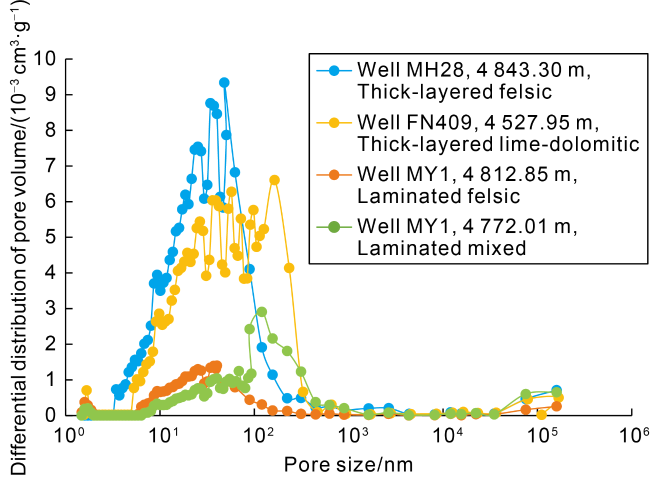
Fig. 5. Pore size distribution of shale in the Fengcheng Formation, Mahu Sag. |
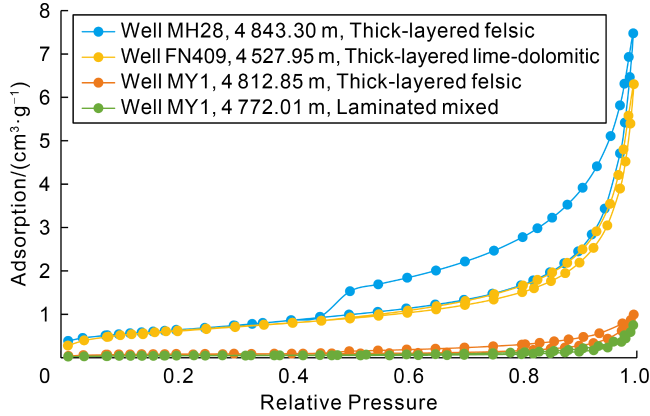
Fig. 6. Low-temperature N2 adsorption-desorption curves of shale in the Fengcheng Formation, Mahu Sag. |
2.4. Oil-bearing characteristics
The shale of the Fengcheng Formation is highly heterogeneous, and hydrocarbons have been detected in all lithofacies (Table 1 ). The chloroform asphalt “A” content ranges from 0.03% to 0.50%, with an average of 0.26%, and S1 ranges from 0.06 mg/g to 8.39 mg/g, with an average of 1.23 mg/g (Fig. 3 ). The traditional rock-eval pyrolysis experimental parameter S1 represents that the free hydrocarbon content in shale is lower than the actual value. In order to more accurately represent the oil content of shale, multi-temperature pyrolysis experiments were performed on shale samples of the Fengcheng Formation [33]. The results show that the maximum movable oil content (S1-2+S1-2) ranges from 0.03 mg/g to 13.30 mg/g, with an average of 1.86 mg/g (Fig. 7a ), the total oil content (S1-1+S1-2+S2-1) ranges from 0.04 mg/g to 17.04 mg/g, with an average of 3.35 mg/g (Fig. 7a ). The test results of Well MY1 (a vertical exploration well) at 4579-4852 m show that the highest oil production through a 2.5 mm nozzle is 30.5 t/d, the cumulative oil production is 1948.5 t, the crude oil density is 0.84-0.90 g/cm3, and the viscosity at 50 °C is 8.86-52.73 mPa•s. In conclusion, the shale of the Fengcheng Formation in the Mahu Sag has a higher oil content and a higher movable oil content, which meet the industrial standard of oil production. The oil-bearing property of the laminated felsic shale, laminated lime-dolomitic shale and thick-layered felsic shale is the best (Table 1 ).
Table 1. Oil-bearing property parameters of primary lithofacies in Well MY1 of Fengcheng Formation, Mahu Sag |
| Lithofacies | Movable oil content/(mg·g-1) | Total oil content/(mg·g-1) | Proportion of movable oil/% |
|---|---|---|---|
| Thick-layered lime-dolomitic shale | 0.06-1.75 (0.42) | 0.07-3.09 (0.91) | 26.51-88.89 (50.17) |
| Thick-layered felsic shale | 0.04-3.74 (0.78) | 0.13-7.41 (1.81) | 26.89-65.66 (45.38) |
| Thin-layered felsic shale | 0.05-2.96 (0.58) | 0.06-5.08 (1.33) | 27.97-92.73 (44.34) |
| Laminated lime-dolomitic shale | 0.03-2.67 (0.71) | 0.03-9.71 (2.42) | 12.38-81.82 (38.04) |
| Laminated mixed shale | 0.03-1.51 (0.43) | 0.09-2.76 (0.97) | 15.63-82.51 (42.94) |
| Laminated felsic shale | 0.04-4.83 (0.84) | 0.06-9.33 (1.97) | 7.48-80.00 (41.67) |
Note: The value in brackets is the average. |
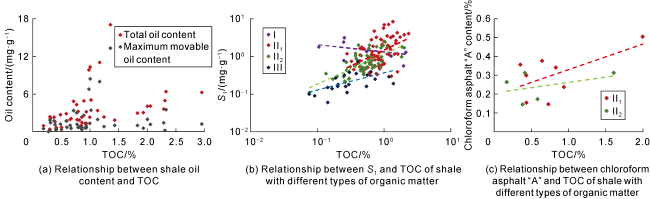
Fig. 7. Relationship between oil content and organic matter abundance in Fengcheng Formation shale. |
3. Key controlling factors of shale oil enrichment
The optimal evaluation of “sweet spot” is the basis for the efficient development of oil and gas. The “sweet spot” of shale oil is usually determined by both geological and engineering conditions. Geological sweet spots depend on source rocks, reservoirs and natural fractures, etc. [34]. By establishing the relationship between geological parameters and oil content, analyzing the influence of different geological factors on shale oil enrichment in the Fengcheng Formation, and identifying the main controlling factors, and the geological sweet spots of shale oil can be preliminarily predicted.
3.1. The quality of source rock is the material basis of shale oil enrichment
Shale oil is a self-source and self-reservoir resource, and the hydrocarbon generation potential of organic matters is one of the important factors determining the enrichment of shale oil [35]. The shale with a high hydrocarbon generation potential is usually characterized by high abundance, good quality and moderate maturity of organic matters. Organic matter is the material basis of shale oil enrichment, and high abundance of organic matter is conducive to the massive generation of shale oil. The oil content of the Fengcheng Formation shale with similar organic matter types increases with the increase of organic matter abundance (Fig. 7 ). There is a good positive correlation between oil content and abundance of organic matter in different lithofacies (Fig. 8 ). The S1 value of the felsic shale is high, indicating a higher oil content. The TOC value of the laminated shale is the highest, and S1 changes rapidly with TOC, indicating that the oil content is greatly affected by the abundance of organic matter. In summary, the laminated felsic shale has the highest organic matter abundance and oil content.
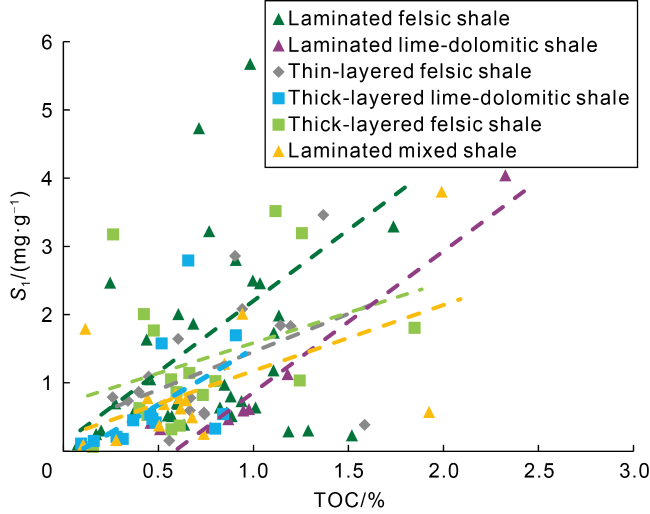
Fig. 8. Relationship between S1 and TOC of different lithofacies of shale in the Fengcheng Formation, Mahu Sag. |
The type of organic matter affects the range and amount of shale oil generation. Types I and II organic matters are mainly derived from algae, and have more straight chains such as fat than Type III organic matter, which have stronger oil-generating capacity and are more conducive to shale oil enrichment. The S1 and OSI (oil saturation index) of types I and II1 organic matter samples in Fengcheng Formation shale show high values (Fig. 9 ), indicating that they have good oil-bearing property, which is conducive to shale oil enrichment. The S1 value of Type I kerogen decreased slightly with the increase of organic matter abundance (Fig. 7b ), and S1 value was slightly lower than that of Type II kerogen (Fig. 9a ). This may be due to the fact that Type I kerogen has the greatest oil generation potential, and generated oil increases with the increase of TOC and is expelled in large quantities after meeting the demand of self-generating and self-storage, so S1 presents a relatively stable or slightly decreasing trend [36].
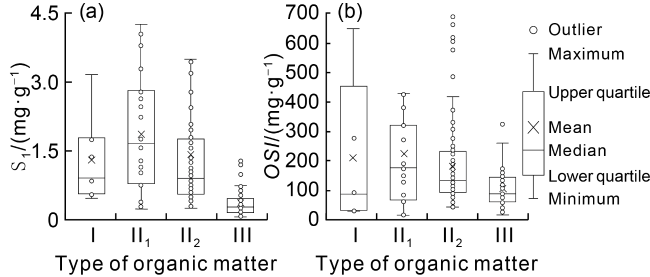
Fig. 9. Oil-bearing properties of shale with different types of organic matter in the Fengcheng Formation, Mahu Sag. |
The abundance of organic matter in the Fengcheng shale is not significantly higher than that of traditional lacustrine source rocks. The saline lacustrine shale developed in the Shahejie Formation of Dongpu Sag has higher content of organic matter 1-2 times than that of the Fengcheng Formation shale, but the content of chloroform asphalt “A” is lower [18]. It is inferred that the hydrocarbon conversion rate of the alkaline lacustrine source rock is higher than that of the saline lacustrine source rock. Alkaline environment is more selective to organisms, and the biomass preserved is mainly algae and bacteria, but less higher plants. In addition, with the increase of alkalinity, the competitiveness of saline-alkali tolerant green algae increases, and the ratio of algae to bacteria shows an increasing trend [24,37⇓ -39]. Algae parent materials are rich in fat chains, and abundant algae parent materials in the Fengcheng Formation shale make it have a wide oil-generating window and continuous hydrocarbon generation feature [5-6,8]. The core observation shows that the interval at 4700-4750 m in Well MY1 has concentrated reedmergnerite, corresponding to the period of the most alkaline lake basin [4]. In this interval, TOC is relatively low, but the hydrocarbon generation potential is high and the hydrocarbon expulsion amount is large (Fig. 3 ), indicating that alkaline minerals such as reedmergnerite can promote effective hydrocarbon generation of organic matter to a certain extent. The shale of Fengcheng Formation in Mahu Sag has a strong resource potential due to its relatively good parent material which promotes hydrocarbon generation even with low organic matter abundance.
3.2. Pore size and fracture scale are key factors of shale oil enrichment
According to the International Union of Pure and Applied Chemistry (IUPAC), the pores are divided into micropores (less than 2 nm), mesopores (2-50 nm) and macropores (larger than 50 nm). The relationship between pores at different scales and oil content of shale in the Fengcheng Formation shows that S1 is negatively correlated with the mesopore size and positively correlated with the macropore size, and the oil content increases significantly with the increase of macropore volume (Fig. 10 ). The above results show that the macropores are the main space for shale oil enrichment, and the larger the pore size and the higher the porosity, the better the shale oil-bearing property. It should be noted that, limited by the number of sampling points, the above relationship between oil content and reservoir space only reflects a general trend that may become exact as more data are collected.
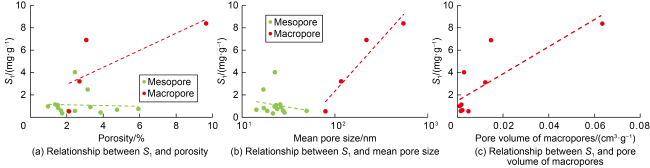
Fig. 10. Relationship between oil content and pore of shale in Fengcheng Formation, Mahu Sag. |
Fractures are widely developed in the shale of the Fengcheng Formation. High angle structural fractures communicate different thin layers, and oil show and asphalt residue are common in fractures (Fig. 11a ) which is an important channel for vertical migration of shale oil. Fluorescence display in the microfracture (Fig. 11c , 11d) indicates the presence of hydrocarbon residues. The fractures connect the pores and improve the reservoir physical properties. They are good reservoir space and channels for shale oil migration.
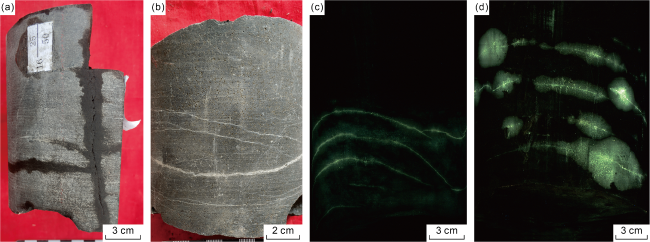
Fig. 11. Oil in fractures of Fengcheng Formation shale samples taken in Well MY1, Mahu Sag. |
In summary, the type and scale of reservoir space determine whether shale oil can accumulate effectively and achieve good productivity. Macropores and fractures play the most important role in accumulation and migration of shale oil in the Fengcheng Formation, and the development degree and configuration of pores and fractures affect the effectiveness of pores [30], thus controlling the enrichment of shale oil.
3.3. Movable hydrocarbon has obvious influences on the oil content
Exploration and development show that, in addition to the organic-rich zones, the organic-poor zones also contain oil, and some organic-poor zones with more developed pores and fractures are even more oil-rich than the organic-rich zones. Therefore, the concept of short-distance in-source oil migration has been constantly proposed [11,21,40 -41]. Hu et al. proposed a method for quantitative evaluation of hydrocarbon migration within shale strata based on the principle of material balance [19,42], which was adopted in this study to evaluate the characteristics of hydrocarbon migration in Fengcheng Formation shale.
The hydrocarbon generation kinetics of kerogen can be characterized by the reaction path of thermal evolution process, so the original hydrogen index of shale can be recovered by using the experimental data of rock pyrolysis and TOC [17,43 -44]. The relationship between hydrogen index (HI) and maximum pyrolysis temperature (Tmax) is established as follows:
$HI=H{{I}_{o}}\left\{ 1-\exp \left[ -{{\left( \frac{{{T}_{max}}}{\beta } \right)}^{\theta }} \right] \right\}$
${{T}_{\text{R}}}=\frac{H{{I}_{\text{o}}}-H{{I}_{\text{x}}}}{H{{I}_{\text{o}}}}$
In Eq. (1), HI and Tmax are measured from rock pyrolysis experiment. HIo, β and θ are derived from the pyrolysis data by nonlinear fitting (Table 2 ).
Table 2. Fitted parameters of hydrocarbon generation kinetics of different kerogen types [42] |
| Kerogen type | β | θ |
|---|---|---|
| Type I | 448 | -30 |
| Type II1 | 433 | -30 |
| Type II2 | 435 | -42 |
| Type III | 433 | -47 |
On this basis, the original hydrogen index HIs of core samples can be calculated according to HI and the kerogen conversion rate TR at Tmax.
$H{{I}_{s}}=\frac{HI}{1-{{T}_{R}}}$
Based on the principle of material balance, ΔQ can be calculated, indicating the amount of hydrocarbon migration in shale cores.
$\Delta Q=H{{I}_{s}}-{{I}_{HGP}}$
${{I}_{HGP}}=\frac{{{S}_{1}}+{{S}_{2}}}{TOC}\times 100$
More than 75% of Fengcheng Formation shale samples have ΔQ less than 0, indicating that the shale has been charged with external hydrocarbon migration. ΔQ of the remaining shale samples is greater than 0, indicating that hydrocarbon expulsion occurred in these shales. The above results show that there was significant migration of shale oil in the Fengcheng Formation. ΔQ shows a significantly negative correlation with oil content indexes S1 and OSI (Fig. 12 ), indicating that the amount of migrated hydrocarbon significantly affects the oil content of shale. The greater the amount of hydrocarbon migrates into shale, the higher degree of the oil enrichment. On the contrary, the higher the amount of hydrocarbon expels from shale, the lower the oil content.
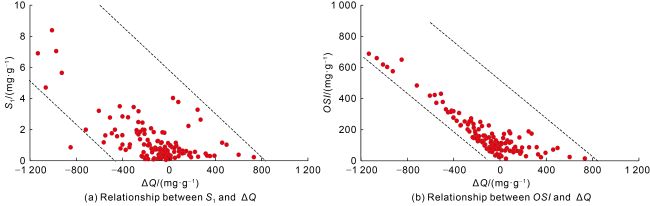
Fig. 12. Oil-bearing property varies with the amount of migration hydrocarbon in shale of Fengcheng Formation, Mahu Sag. |
TOC shows a positive correlation with ΔQ (Fig. 13 ), and there are differences in the variation trend for different organic matter types: The ΔQ of shale with Type I organic matter has the largest change with TOC, followed by Type II1, and the changes of types II2 and III are not obvious. The porosity is inversely proportional to ΔQ, that is, ΔQ decreases with the increase of porosity.
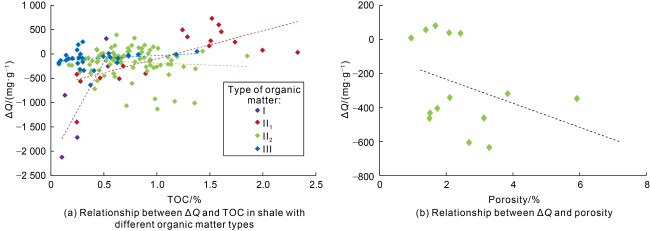
Fig. 13. Relationships between ΔQ and TOC and porosity of Fengcheng Formation shale, Mahu Sag. |
In summary, the amount of migrated hydrocarbon of shale oil is controlled by hydrocarbon generation potential and reservoir physical properties. Organic matter is the basis of shale oil enrichment. With the increase of TOC, oil content shows an increasing trend. However, the reservoir space limits the occurrence of shale oil. When the generated shale oil exceeds the upper limit of enrichment, it will be expelled. External hydrocarbon will migrate into the shale strata with in-situ hydrocarbon under the upper limit.
3.4. Three types of shale lithofacies have the best oil-bearing properties
There are differences in sedimentary environment and mineral composition among different lithofacies, so their hydrocarbon generation potential, reservoir capacity and migrated hydrocarbon amount are also different. Among the shales with different mineral compositions, the felsic shale has the highest oil content. Pores in the felsic shale are mainly intergranular pores with relatively large sizes and better connectivity. The obvious advantages in porosity, permeability and pore size show the characteristics of large amount of external hydrocarbon (ΔQ<0 mg/g) (Table 3 ). There are also differences among shales of different sedimentary fabrics. Under the same tectonic stress, it is easier to form interlayer fractures between laminae and connect pores and high-angle fractures, and becoming effective reservoir space and migration channels for oil and gas, which is conducive to oil enrichment[1]. Controlled by the above factors, there are differences in oil-bearing properties of different lithofacies. After comparing the oil-bearing properties of the shale samples of lithofacies in the Fengcheng Formation, laminated felsic shale, laminated lime-dolomitic shale and thick-layered felsic shale were selected as favorable lithofacies.
Table 3. Experimental parameters of major shale lithofacies in the Fengcheng Formation of Well MY1, Mahu Sag |
| Lithofacies | TOC/% | S1/(mg·g-1) | ΔQ/(mg·g-1) | Permeability/ 10-3 μm2 | Porosity/ % | Pore size/ μm | |
|---|---|---|---|---|---|---|---|
| Mineral composition | Sedimentary fabric | ||||||
| Felsic | Laminated | 0.08-1.74 (0.80) | 0.10-8.39 (1.84) | -1408.83-732.05 (-246.85) | 0.011-0.047 (0.070) | 0.10-9.65 (3.72) | 0.019-0.547 (0.111) |
| Thin-layered | 0.25-1.58 (0.78) | 0.16-3.45 (1.26) | -418.19-600.52 (-121.81) | ||||
| Thick-layered | 0.14-1.85 (0.71) | 0.06-3.50 (1.37) | -1726.73-497.89 (-205.66) | ||||
| Lime- dolomitic | Laminated | 0.44-2.33 (0.99) | 0.33-4.03 (0.99) | -72.99-176.67 (62.34) | 0.012-0.019 (0.014) | 1.37-4.76 (2.46) | 0.014-0.079 (0.030) |
| Thick-layered | 0.08-0.90 (0.47) | 0.11-2.78 (0.73) | -505.54-329.21 (-116.48) | ||||
| Mixed | Laminated | 0.09-2.00 (0.72) | 0.09-3.78 (0.95) | -2138.22-224.79 (-182.46) | 0.011-0.015 (0.013) | 1.75-3.15 (2.45) | 0.017-0.050 (0.029) |
Note: The value in brackets is the average. |
The laminated felsic shale mainly develops intergranular pores and intragranular dissolved pores. The pore size is large, mainly ranging from 10 nm to 100 nm, and some can reach the micron scale. The pores are mainly in slit and ink bottle shapes, which provide a good space for shale oil enrichment (Fig. 14 ). The results of multi-temperature rock-eval pyrolysis show that the laminated felsic shale has high oil content and high proportion of movable oil (Table 1 ), which is the most favorable lithofacies for shale oil enrichment in the Fengcheng Formation of Mahu Sag. The laminated lime-dolomitic shale is mainly composed of carbonate minerals, with medium abundance and good type of organic matter, and has good hydrocarbon generation conditions. The pores are mainly intragranular dissolved pores, but the macropores are less than those in laminated felsic shale, and the connectivity is poor (Fig. 14 ). The oil content of the laminated lime-dolomitic shale is high, but the proportion of movable oil is low, and the maximum movable oil content is lower than that of the laminated felsic shale (Table 1 ). The thick-layered felsic shale has relatively low abundance of organic matter and low hydrocarbon generation potential, but the pores are well developed and connected, so the amount of migrated hydrocarbon is high (Table 3 ). The oil content of the thick-layered felsic shale is the lowest among the three favorable lithofacies, but it has large amount of movable oil (Table 1 ).
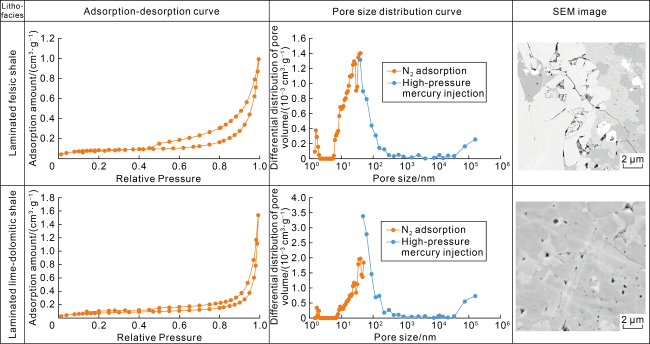
Fig. 14. Pore development characteristics of favorable shale lithofacies in the Fengcheng Formation, Mahu Sag. |
In summary, hydrocarbon generation potential and reservoir capacity are the basis for shale oil enrichment. The amount of migrated hydrocarbon is controlled by the hydrocarbon generation and storage capacities of shale, which is reflected by shale lithofacies. Therefore, the selection of shale oil sweet spots are suggested to first focus on the dominant lithofacies development intervals.
4. Enrichment model of shale oil
4.1. Enrichment model of shale oil
Shale oil enrichment conditions of the Fengcheng Formation in Mahu Sag are comprehensively analyzed to establish the shale oil enrichment model (Fig. 15 ). Shale oil has the characteristics of self-source and self-reservoir, and short-distance migration within shale strata. In particular, the crude oil generated in the shale strata with high abundance of organic matter and strong hydrocarbon generation potential first accumulates in situ to satisfy its own adsorption and reservoir effect. Then, with the increase of hydrocarbon generation, the excessive oil is driven by overpressure and expelled through advantageous migration channels such as micro-fractures and bedding fractures, into nearby shale with a good reservoir capacity after short distance migration, retained as free oil. The model of source-reservoir enrichment in shale is formed (Fig. 15 ), which can be divided into two types according to the accumulation process: in-situ enrichment (M1) and migration enrichment (M2).
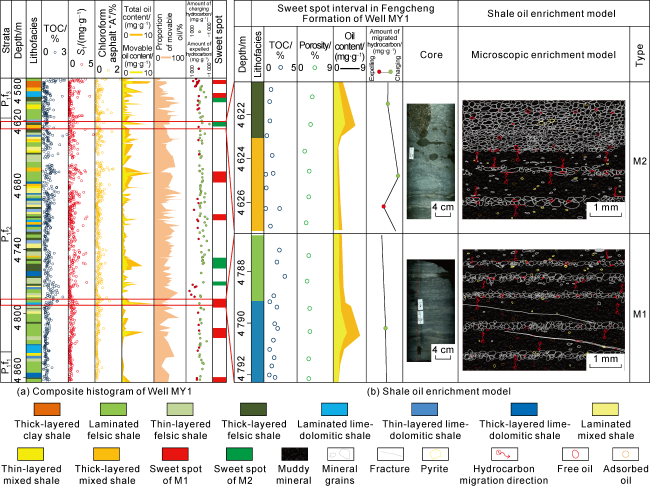
Fig. 15. Shale oil enrichment models in the Fengcheng Formation. |
The shale of in-situ enrichment (M1) is not only a good source rock, but also has good storage capacity for shale oil. It is characterized by high abundance of organic matter and good reservoir pore space (Fig. 15 ), such as laminated felsic shale and laminated lime-dolomitic shale. In this kind of shale, the organic-rich argillaceous laminae have high hydrocarbon generation potential, while the felsic and lime-dolomitic laminae have relatively large mineral granularity where many intergranular pores and intragranular pores are developed, providing a place for shale oil enrichment. The shale of in-situ enrichment is good in oil-bearing property, and is the primary target of shale oil development at present.
The shale of migration enrichment (M2) has relatively weak hydrocarbon generation capacity and strong reservoir capacity, characterized by low abundance of organic matter and high porosity (Fig. 15 ), and is mainly thick- layered felsic shale. This kind of shale has insufficient hydrocarbon generation and low oil content, but accepts hydrocarbon expelled from surrounding source rocks with high organic matter abundance. As a result, it becomes a good shale oil enrichment interval, which is the main development target for interbedded shale oil.
4.2. Favorable enrichment zones for shale oil
Based on the comprehensive development characteristics and enrichment controlling factors of shale and well logging data in the study area, favorable lithofacies were selected from wells FN4, FN14 and FN7 in vertical direction. The geological sweet spot sections of each well are selected based on the oil and gas shows and the geological parameters controlling shale oil enrichment, such as abundance of organic matter, porosity, and permeability. On the shale oil sweet spot section of the Fengcheng Formation established based on four wells (FN4, FN14, FN7 and MY1) (Fig. 16 ), 6 geological sweet spot sections are throughout the entire section transversely, which are at the bottom of P1f3, P1f2 and the top of P1f1, among which P1f2 is the primary shale oil enrichment interval.
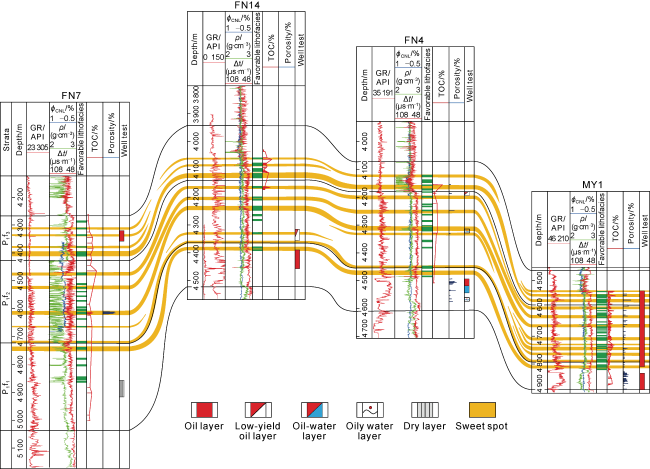


Fig. 16. Sweet spots predicted in the Fengcheng Formation, Mahu Sag (see the section location in |
5. Conclusions
The shale of the Fengcheng Formation in the Mahu Sag is mainly composed of felsic minerals and carbonate minerals, with low clay minerals content. It is a set of mixed continental lacustrine shale with good hydrocarbon generation conditions, excellent porosity and permeability conditions and developed micro-fractures, which has rich shale oil resource potential.
The key controlling factors of shale oil enrichment in the Fengcheng Formation include the organic abundance and type, reservoir physical property, the amount of migrated hydrocarbon and lithofacies. Organic matter is the material basis for shale oil enrichment. Macropores provide the main space for shale oil enrichment, and fractures are good channels and reservoir space. Hydrocarbon generation potential and storage capacity control the amount of migrated hydrocarbon and affect the enrichment of shale oil. The shale with external hydrocarbon charging has higher oil content. Lithofacies is a comprehensive reflection of hydrocarbon generation capacity and reservoir capacity. Different lithofacies exhibit different oil contents. The favorable lithofacies for shale oil enrichment in the Fengcheng Formation of Mahu Sag are laminated felsic shale, laminated lime-dolomitic shale and thick-layered felsic shale.
Relative migration of shale oil occurs within the shale of the Fengcheng Formation, forming the model of source-reservoir enrichment in shale. According to the process, the enrichment can be divided into: in-situ enrichment and migration enrichment. After identifying favorable lithofacies and integrating other key controlling factors of shale oil enrichment, the sweet spot intervals of shale oil in the Fengcheng Formation can be selected, which are mainly concentrated in the P1f2.
Nomenclature
GR—gamma ray, API;
HI—hydrogen index, mg/g;
HIo—original hydrogen index of shale, mg/g;
HIs—original hydrogen index of shale samples, mg/g;
HIx—simulated hydrogen index at different pyrolysis temperatures, mg/g;
IHGP—current hydrocarbon generation potential, mg/g;
OSI—oil saturation index, mg/g;
Rc—equivalent vitrinite reflectance, %;
S1—free hydrocarbon content, mg/g;
S2—pyrolysis hydrocarbon content, mg/g;
S1-1—light hydrocarbon content, mg/g;
S1-2—light and medium hydrocarbon content, mg/g;
S2-1—heavy hydrocarbon content, mg/g;
Tmax—maximum pyrolysis temperature, ℃;
TOC—total organic carbon, %;
TR—conversion rate of kerogen, %;
β, θ—kinetic parameters, dimensionless;
ϕCNL—compensated neutron porosity, %;
ρ—density, g/cm3;
ΔQ—amount of migrated hydrocarbon, mg/g;
Δt—interval transit time, µs/m.