

Introduction
Multiple sets of lacustrine shale have been developed in continental basins in China, and they provide the significant material foundation for shale oil resources. Compared with North American shales, the continental shales of China face several challenges. (1) Rapid changes of sedimentary facies result in increasing reservoir heterogeneity and prediction difficulty. (2) Relatively recent sedimentary age and high clay content means a low degree of clay mineral transformation, high sensitivity, and poor fracturing effect. (3) Low of organic matter thermal maturity results in high viscosity and density of hydro-carbon fluid and low flowability [1-2]. Recent exploration breakthroughs have been made to continental shale oil in the Permian Lucaogou Formation in the Jimusaer Depression of the Junggar Basin [3], the Paleogene Kongdian Formation in the Cangdong Sag of the Bohai Bay Basin [4-5], the Cretaceous Qingshankou Formation in the Songliao Basin [6], the Paleogene Shahejie Formation in the Jiyang Depression of the Bohai Bay Basin [7], the Permian Fengcheng Formation in the Mahu Depression of the Junggar Basin[8], and the Triassic Yanchang Formation in the Ordos Basin [9]. These breakthroughs demonstrate that continental shales in China have favorable geological conditions for the enrichment of movable oil and promising exploration prospects.
Continental shales in China exhibit different types, including felsic-rich shale, carbonate-rich shale, and mixed shale. The Paleogene Shahejie Formation shale in the Jiyang Depression of Bohai Bay Basin is typical carbonate-rich shale. Over a decade of efforts, Shengli Oilfield Company has made a series of theoretical and exploratory achievements in shale lithofacies and combination, micro-scale reservoir properties, oil-bearing properties, and the mobility of shale oil [7,10⇓⇓ -13]. These achievements have effectively guided shale oil exploration in the Jiyang Depression. Notably, a significant breakthrough has been made to the shale with Ro ranging from 0.6% to 1.1%. Therefore, Deeper understanding of this type of shale is crucial for enriching the theoretical framework of continental shale oil exploration in China. Most previous researches on this type of shale focused on the macroscopic and microscopic characteristics of different lithofacies and their combinations, and their impact on mobility, but less on the diverse characteristics related to hydrocarbon generation, storage, and permeability of thin laminae that make up the shale, and how these characteristics affect the mobility of shale oil. This study begins by examining the micro-structural characteristics of the basic thin laminae of the Paleogene Shahejie Formation shales in the Jiyang Depression. Aiming to understand how the laminae structure impacts the mobility of shale oil, we compare the organic abundance, oil content, and storage differences among various foundational laminae and hope this study can offer insights for the exploration of similar continental carbonate-rich shales.
1. Geological background
Located at the southeast of the Bohai Bay Basin (Fig. 1 ), the Jiyang Depression has developed multiple cycles and overlaps during the Mesozoic-Cenozoic. The Paleogene includes the Kongdian Formation, the Shahejie Formation, and the Dongying Formation from old to new. The Shahejie Formation, from the bottom to the top, is divided into four members: Sha4, Sha3, Sha2, and Sha1. In the Paleogene, there are three main shale sections: the upper submember of Sha4 (Sha41), the lower submember of Sha3 (or Sha33), and Sha1. The source rocks of Sha41 and Sha33 are the primary sources of the conventional oil and gas discovered, and they are also the most favorable targets for shale oil and gas exploration [14⇓-16].
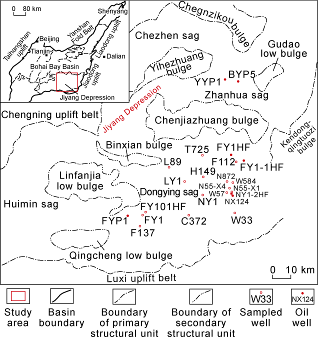
Fig. 1. Structural units and typical well locations in the study area. |
In the Jiyang Depression, the carbonate-rich shales of Sha4 and Sha3 can be classified into laminated shale, bedded shale, and block mudstone based on the structures. Both laminated and bedded shales consist of thin laminae of varying lithologies repeatedly stacked upon one another. The main types of these laminae are mud-rich laminae and carbonate laminae, and the carbonate laminae are mainly composed of calcite laminae.
2. Shale mineral composition and its relationship with organic carbon content and porosity
2.1. Shale mineral composition
The primary minerals in the shales of the Sha33 and the Sha41 include carbonate minerals, terrigenous detrital minerals (such as quartz and feldspar), clay minerals, and minor amounts of other minerals (pyrite, gypsum etc.). Among the carbonate minerals, calcite dominates, the content of dolomite is relatively low, and minimal presence of siderite. In terrigenous detrital minerals, quartz is predominant, and feldspar is relatively less (Table 1 ). The primary minerals, ranked in descending order of average content, are: carbonate minerals, terrigenous detrital minerals, and clay minerals. The average contents of carbonate minerals, terrigenous detrital minerals, and clay minerals in Sha33 are 45.5%, 26.0%, and 24.9%, respectively. In the shale of Sha41, they are 47.6%, 28.6%, and 20.8%, respectively. There are notable variations in the content of major minerals (e.g., calcite, quartz, clay) across the shale samples, highlighting the pronounced heterogeneity of continental shales. In the shale samples from Sha41, the content of calcites is 1%-89%, 1%-59% for clay minerals, and 1%-55% for quartz minerals.
Table 1. Minerals in the Paleogene shale in Jiyang Depression |
| Strata | Carbonate minerals/% | Clay minerals/% | Terrigenous detrital minerals/% | Others/% | |||||
|---|---|---|---|---|---|---|---|---|---|
| Calcite | Dolomite | Siderite | Quartz | Feldspar | Pyrite | Gypsum | |||
| Sha33 | 1-88/38.6 | 1-72/6.3 | 0-11/0.6 | 3-62/24.9 | 5-61/22.6 | 0-35/3.4 | 1-17/3.0 | 0-12/0.1 | |
| Sha41 | 1-89/34.7 | 0-93/12.6 | 0-4/0.3 | 1-59/20.8 | 1-55/23.3 | 0-39/5.3 | 0-23/2.5 | 0-41/0.3 | |
Notes: After "/" is the average value. The statistical results are from 749 samples in the Sha33 and 606 samples in the Sha 41. |
2.2. Organic matter abundance and its correlation with mineral composition
The shales of Sha33 and Sha41 in the Jiyang Depression generally possess a high abundance of organic matter and demonstrate pronounced heterogeneity. Specifically, the Total Organic Carbon (TOC) of Sha33 ranges from 0.66% to 13.60%, with an average of 3.15%; the pyrolysis S1 ranges from 0.03 mg/g to 14.17 mg/g, averaged 3.48 mg/g; the pyrolysis S2 spans from 0.04 mg/g to 78.59 mg/g, with an average of 14.69 mg/g; and the potential hydrocarbon generation (S1+S2) is between 0.08 and 87.68 mg/g, with an average of 18.17 mg/g (Table 2 ).
Table 2. Organic abundance in the Paleogene shale in Jiyang Depression |
| Strata | Range | TOC/% | S1/(mg·g−1) | S2/(mg·g−1) | (S1+S2)/(mg·g−1) |
|---|---|---|---|---|---|
| Sha33 | Min. | 0.66 | 0.03 | 0.04 | 0.08 |
| Max. | 13.60 | 14.17 | 78.59 | 87.68 | |
| Avg. | 3.15 | 3.48 | 14.69 | 18.17 | |
| Sha41 | Min. | 0.08 | 0.02 | 0.01 | 0.03 |
| Max. | 11.40 | 13.78 | 71.01 | 81.81 | |
| Avg. | 2.49 | 3.25 | 10.26 | 13.51 |
Note: The statistical results are from 736 sample in the Sha33 and 609 sample in the Sha41. |
The TOC of Sha33 and Sha41 generally display a negative correlation with the content of carbonate minerals (Fig. 2a ) and a positive correlation with both clay minerals and terrestrial detrital minerals (Fig. 2b , 2c ). Additionally, the content of terrestrial detrital minerals shows a positive correlation with the content of clay minerals (Fig. 2d ). Excluding the thin sand layers, the quartz and feldspar minerals in the shale are predominantly fine-grained sediments that co-deposit with clay minerals, forming mud-rich laminae. The relationship between TOC and mineral composition indicates that shales with rich clay and terrestrial clastics have higher TOC. In the same lithofacies, the organic abundance of the mud-rich laminae exceeds that of the carbonate laminae.
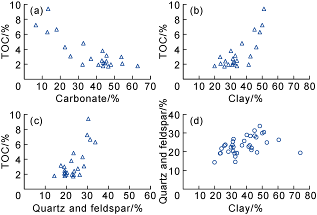
Fig. 2. The main mineral contents and their relationship with TOC of shale in well FY1 in Jiyang depression. |
2.3. Shale porosity and relationship with mineral composition
Utilizing the porosity measurement method from the Gas Research Institute of the United States (GRI method)[17⇓-19], the shale porosity in the Jiying Depression was determined. The GRI porosity of the shales in Sha33 and Sha41 ranges from 2% to 18%, with an average of 9.21%. The predominant distribution frequency is between 5% and 10%. The porosity shows a declining trend with an increase in the carbonate mineral content (Fig. 3a ) and an upward trend with the increasing contents of clay minerals and terrestrial detrital minerals, and TOC (Fig. 3b-3d ). Since clay minerals have a co-source and co-deposit relationship with terrestrial clastics, shales with rich clay and terrestrial detrital minerals exhibit relatively higher porosity than those with rich carbonate minerals. In the same shale, the mud-rich laminae porosity surpasses that of the carbonate laminae.
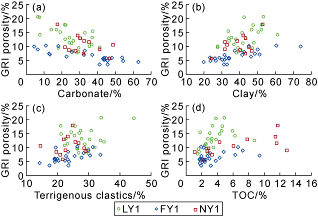
Fig. 3. Relationship between GRI porosity and mineral content, TOC. |
3. Types and characteristics of shale laminae
The Paleogene shales in the Jiyang Depression include block mudstone, bedded shale, and laminated shale[7⇓⇓-10,12,20⇓ -22]. Both bedded and laminated shales are repetitive superimposition of two or more types of basic laminae which are mud-rich laminae and carbonate mineral laminae. Felsic shale laminae are not common.
3.1. Mud-rich laminae
Mud-rich laminae are predominantly composed of clay minerals or clay minerals and terrigenous clastics. They also contain some carbonate minerals and minor constituents like pyrite. Particles of terrigenous clastics and carbonate are dispersed in the clay matrix. Mud-rich laminae exhibit relatively high TOC (Fig. 4a-4c ), even up to 15%, indicating a highest hydrocarbon generation potential among all types of laminae.
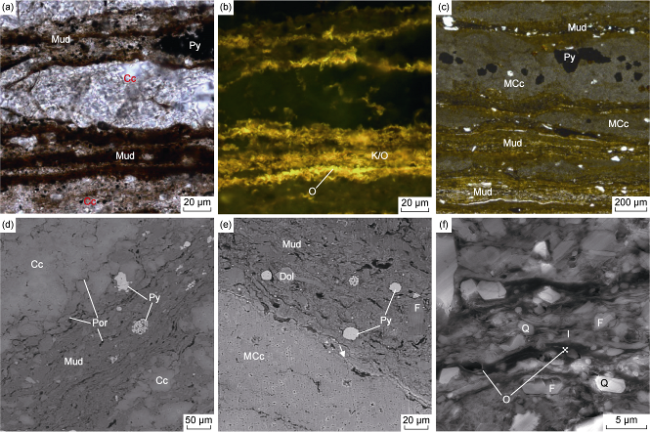
Fig. 4. Occurrence, porosity and oil content of mud-rich laminae. (a) Mud-rich and calcite laminae; Sha41; Well F137; 3154.1 m; thin section; plane-polarized light; (b) Mud-rich laminae with rich organic matter and high oil content; Sha41; Well F137; 3154.1 m; fluorescence image of thin section (the same view field of as |
The reservoir space in mud-rich laminae is composed of interlayer pores in clay minerals, shrinkage pores caused by hydrocarbon generation, dissolution pores associated with dispersed carbonate minerals, dissolution pores in feldspar particles, and intercrystalline pores in pyrite. In the shale samples in oil window, the pores in the mud-rich laminae demonstrate favorable oil-bearing properties (Fig. 4b , 4c , 4f ).
Images from optical microscopy reveal that the pores in the mud-rich laminae are more developed than the adjacent carbonate laminae (Fig. 4d , 4e ). Comparison on the mud-rich laminae, micritic calcite laminae, sparry calcite laminae, and fibrous calcite laminae in the same shale sample was conducted to assess their organic abundance, NMR porosity, and pore size distribution (Fig. 5 ). The data consistently indicate that the mud-rich laminae exhibit the highest organic abundance and porosity (Fig. 5a ), but the space in the mud-rich laminae is predominantly composed of tiny pores. Oil retained in the mud-rich laminae is also higher, positioning them as the primary oil reservoirs in carbonate-rich shales.
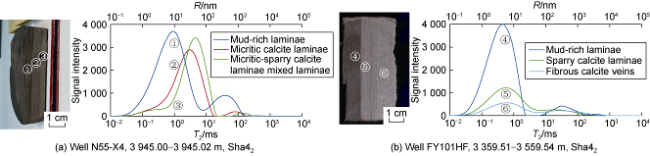
Fig. 5. TOC, NMR porosity, NMR T2 spectra, and pore size distribution of Sha41 shale in the Jiyang Depression. ① Mud-rich laminae: porosity = 14.6%, TOC = 2.63%, S1 = 2.45 mg/g, and S2 = 1.6 mg/g. ② Micritic calcite laminae: porosity of 8.45%, TOC = 1.05%, S1 = 1.22 mg/g, and S2 = 0.88 mg/g. ③ Mixed laminae of micritic and sparry calcite: porosity of 8.57%, TOC = 0.92%, S1 = 0.78 mg/g, and S2 = 0.68 mg/g. ④ Mud-rich laminae: porosity = 8.21%, TOC = 1.77%, S1 = 0.94 mg/g, and S2 = 5.36 mg/g. ⑤ Sparry calcite laminae: porosity of 3.9%, TOC = 0.82%, S1 = 1.27 mg/g, and S2 = 2.41 mg/g. ⑥ Fibrous calcite vein: porosity of 2.26%, TOC = 0.46%, S1 = 0.64 mg/g, and S2 = 1.32 mg/g. |
3.2. Carbonate laminae
In shale, carbonate laminae encompass calcite and dolomite laminae. Based on their genesis, calcite laminae can be primarily categorized into three types: primary micritic calcite laminae, recrystallized sparry calcite laminae, and recrystallized fibrous calcite veins.
3.2.1. Micritic calcite laminae
Micritic calcite laminae exhibit a micritic or microcrystalline structure [23] and often interlay with mud-rich laminae (Fig. 6a , 6b ). They can also appear in lens-like distribution within mud-rich laminae. Predominantly, these are sedimentary products during the periods of semi-arid to arid climate and concentrated salinity in water. In addition, some biogenically originated micritic calcite laminae were identified, such as those in the accumulation of coccolithophore remnants (Fig. 6c ). Micritic calcite laminae contain sedimentary organic matter and a certain amount of clay minerals. Wang Yong et al. pointed out that laminated micritic calcite is a product of combined biological and chemical sedimentation processes [10]. Test results on micritic calcite laminae indicate that in organic-rich shales, micritic calcite laminae possess relative high TOC. Under microscopic fluorescence, they display prominent fluorescence features (Fig. 6a , 6b ), with TOC reaching up to 2%. Thus, micritic calcite laminae exhibit a certain hydrocarbon generation potential. Within these laminae, primary pores are tiny interparticle pores (Fig. 6c-6e ) and dissolution pores (Fig. 6f ). Their porosity is lower than that of mud-rich laminae (Fig. 5a ) but higher than that of sparry calcite laminae. In coccolithophore calcite laminae, microscopic observation reveals relatively high plane porosity (Fig. 6c ). However, compared to sparry calcite laminae, micritic calcite laminae predominantly consist of smaller pores, and lower ratio of larger pores (Fig. 5a ).
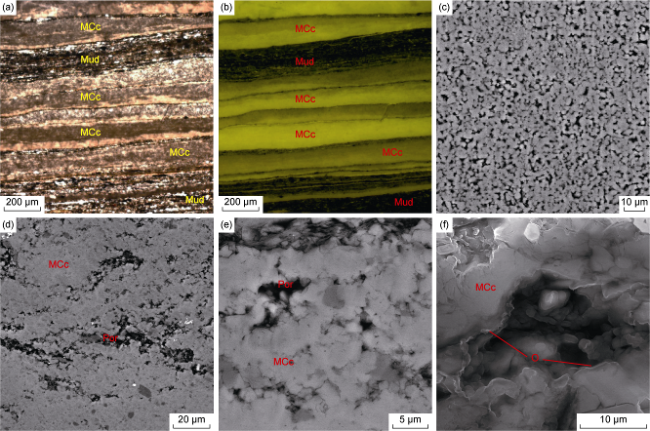
Fig. 6. Occurrence, pores and oil content of micritic calcite laminae. (a) Micritic calcite laminae; Sha41; Well C372; 2607.3 m; thin section; plane-polarized light; (b) Micritic calcite laminae with organic matter and fluorescence display; Sha41; Well C372; 2607.3 m; thin section; fluorescence image (the same view field as in |
3.2.2. Sparry calcite laminae
Sparry calcite results from the recrystallization of calcite, and often presents as fine spar. The growth process of sparry calcite crystals is characterized by exclusivity, leading to relatively low organic matter abundance. As such, it generally lacks the potential of hydrocarbon generation.
The grains of sparry calcite primarily consist of xenomorphic and subhedral crystals, with well-developed intercrystalline pores (Fig. 7a-7d ). Microscopic observations of sparry calcite laminae in organic-rich shales within oil window reveal a prevalent good pore connectivity (Fig. 7a , 7c , 7d ) and notable oil content [24] (Fig. 7e , 7f ). Compared to adjacent mud-rich laminae, the proportion of larger pores in sparry calcite laminae is relatively high (Fig. 5b ). Sparry calcite laminae not only possess a commendable reservoir capacity but also effectively bridge overlying and underlying mud-rich laminae with good oil content. They exhibit both excellent reservoir properties and permeation capacities, serving as effective micro-channels for shale oil flow and production.
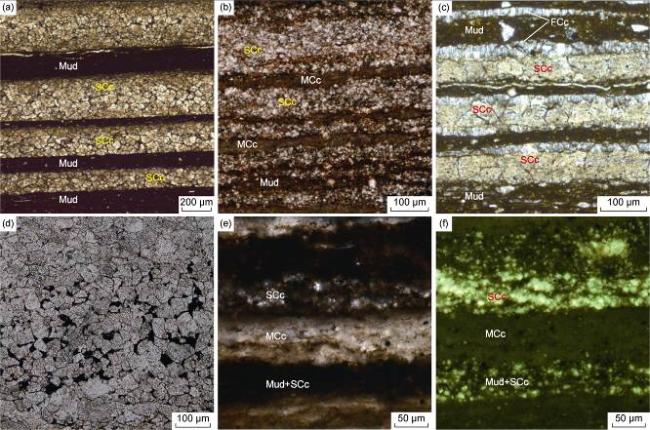
Fig. 7. Occurrence, pores, and oil content of sparry calcite laminae. (a) Interbedded sparry calcite laminae and mud-rich laminae with subhedral crystals and intercrystalline pores; Sha41; Well NY1; 3490.12 m; thin section; plane-polarized light; (b) Interbedded sparry calcite laminae, micritic calcite laminae and mud-rich laminae and intercrystalline pores in the sparry calcite laminae; Sha41; Well NY1; 3375.3 m; thin section; plane-polarized light; (c) Interbedded sparry calcite laminae, fibrous calcite veins and mud-rich laminae, and intercrystalline pores in sparry calcite laminae and fibrous calcite veins between sparry calcite laminae and mud-rich laminae; Sha41; Well FY1-1HF; 3664.1 m; thin section; plane-polarized light; (d) Intercrystalline pores in sparry calcite laminae; Sha41; Well NY1; 3457.6 m; thin section; plane-polarized light; (e) Sparry calcite laminae developed between micritic calcite laminae and mud-rich laminae; thin section; Sha41; Well FYP1; 3471.0 m; plane-polarized light; (f) Sparry calcite laminae with high fluorescence which indicate good oil content developed between micritic calcite laminae; Sha41; Well FYP1; 3471.0 m; thin section; fluorescence image (the same view field as in |
3.2.3. Fibrous calcite veins
Fibrous or columnar (referred to as "fibrous") calcite veins are developed within dark gray to black shales with rich organic matter, and surrounded by rocks with high TOC. Individual calcite laminae often exhibit lens-like or elongated shapes and are typically bright white, not through bedding planes. Within calcite veins, there is a series of vertically aligned and closely packed fibrous crystals (Fig. 8 ). The direction of the crystals elongation represents their growth direction [25-26]. These formations occur within open intralaminar or interlaminar fissures. The size of the vein body correlates with the extent of the fissure opening. The larger the opening or the more frequent the opening events, the larger the scale of the crystalline vein [27].
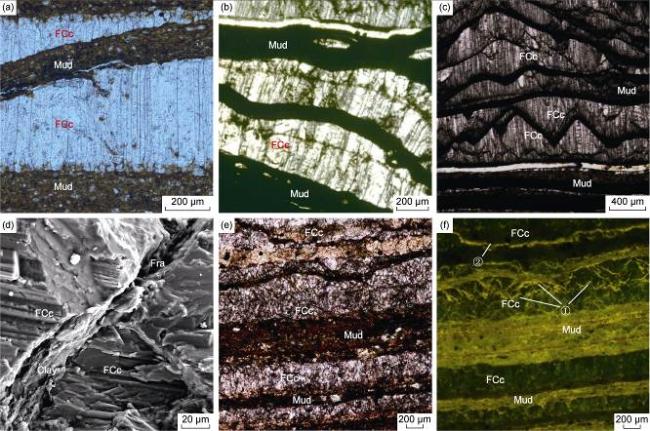
Fig. 8. Occurrence, pores and fractures, and oil content of fibrous calcite veins. (a) Unitaxial calcite veins in mud-rich laminae; Sha41; Well FY1-1HF; 3362.9 m; thin section; plane-polarized light; (b) Antitaxial calcite veins in mud-rich laminae; Sha41; Well W57; 3416.2 m; thin section; plane-polarized light; (c) Staggered contact zones in syntaxial calcite veins, and pores and fractures among multiple stages calcite veins; Sha41; Well N55-X1; 3589.6 m; thin section; plane-polarized light; (d) Micro-fractures partially filled with clay minerals in calcite veins; Sha33; Well N55-X1; 3334.6 m; SEM; (e) Pores in and among antitaxial calcite veins; Sha41; Well F112; 3341.0 m; thin section; plane-polarized light; (f) Oil in the pores and fractures in and among antitaxial calcite veins; Sha41; Well F112; 3341 m; thin section; fluorescence image (the same view field as in |
Previous research suggests that there are three growth mechanisms during the crystallization process of fibrous calcite veins, resulting in three distinct morphologies: unitaxial calcite veins, antitaxial calcite veins, and syntaxial calcite veins [27⇓⇓⇓⇓⇓⇓-34]. All three types of calcite veins are developed in the shales in the Jiyang Depression. Unitaxial calcite veins are characterized by fibrous crystals growing continuously from one side of the host rock to the other, with no evident discontinuity of the fibrous crystals in the center of the vein (Fig. 8a ). Antitaxial calcite veins feature fibrous crystals growing from the center of the vein body towards both sides of the host rock, exhibiting a relatively straight central ridge (Fig. 8b ). This central ridge typically consists of host rock components or represents a void. Syntaxial calcite veins are formed by the growth from both sides of the opened fissure towards the center, resulting in an interlocking contact zone in the middle or an incompletely filled pore system (bottom at Fig. 8c , 8e , 8f ).
Recrystallized fibrous calcite veins do not contain hydrocarbon-generating organic matter. Early fragments of organic-rich host rock mixed with crystal during crystallization might endow the veins with a certain amount of organic matter. For well-crystallized fibrous calcite veins, the crystals are closely intergrown, resulting in inherently low porosity (Fig. 5b ). The porosity of some fibrous calcite veins may be lower than 2%.
For incompletely crystallized calcite veins, there are some pores or fissures between the crystals and the host rock. In syntaxial calcite veins, "dog-tooth spar" or "cone in cone" calcite veins tend to form (Fig. 8c , 8e , 8f ), and the space among the stacked cones may be effective reservoir space. Additionally, inter-vein pores and fissures are developed among the calcite veins growing in multiple stages (Fig. 8d , 8f ). Under fluorescence microscopy, the space among the stacked cones in the stacked cone-shaped calcite veins in oil window, the space among multi-stage calcite veins, and the space between calcite veins and clay layers all display strong fluorescence (Fig. 8e , 8f ). This suggests they have good oil-bearing properties, and may act as permeable pathways effectively connecting overlying and underlying mud-rich laminae.
3.2.4. Dolomite laminae
Within Sha41 and Sha33, sparse micritic dolomite or microcrystalline muddy dolomite laminae can be observed (Fig. 9a ), and ferron dolomite laminae (Fig. 9b ). The thickness of these dolomite laminae is relatively minor, typically less than 10 cm, and most ranging from 20 µm to 2 cm. The abundance of organic matter is low, TOC generally below 0.5%. Despite small crystal grains, intercrystalline pores are well developed (Fig. 9c ). The dolomite layer can serve as effective reservoir space and a permeable pathway for oil from overlying and underlying mud-rich laminae.
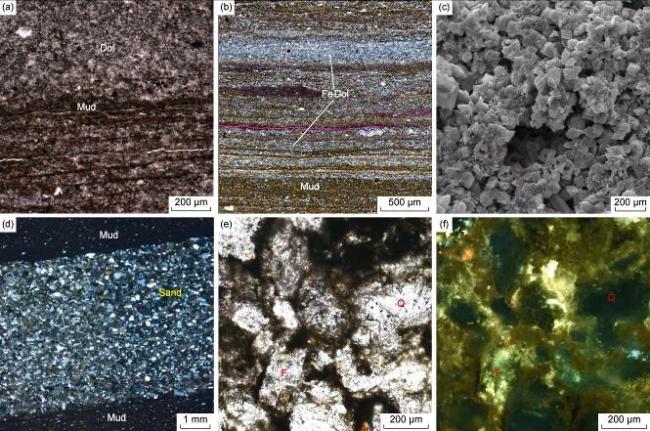
Fig. 9. Occurrence, pores and fractures, and oil content of dolomite laminae and felsic laminae. (a) Dolomite laminae; Sha33; Well H149; 3138.4 m; thin section; plane-polarized light; (b) Laminated ankerite dispersed in mud-rich laminae; Sha33; Well NY1; 3303.5 m; thin section; plane-polarized light; (c) Intercrystalline pores and dissolution pores; Sha41; Well NY1; 3446.3 m; SEM; (d) Felsic laminae in mud-rich laminae; Sha41; Well T725; 3668.2 m; thin section; cross-polarized light; (e) Felsic interparticle pores and feldspar dissolution pores; Sha41; Well FYP1; 3456.2 m; thin section; plane-polarized light; (f) Oil in felsic interparticle pores and feldspar dissolution pores; Sha41; Well FYP1; 3456.2 m; thin section; fluorescence image (the same view field as in |
3.3. Felsic laminae
Felsic laminae are thin beds in shale matrix (Fig. 9d ). They are composed of mineral grains such as feldspar and quartz, and minor inclusions of rock fragments. The interstitial space among grains is primarily filled with either clay, carbonate, or their combination. Felsic laminae with clay minerals as dominant interstitial material exhibit well-developed pores and tend to have higher porosity. In contrast, those predominantly filled with carbonate generally possess lower porosity. The pores in the felsic laminae include residual interparticle pores, feldspar dissolution pores, intraparticle pores, and dissolution pores in the carbonate cements. Observations under fluorescence microscopy indicate that the majority of the interparticle pores and feldspar dissolution pores in the felsic laminae of organic-rich shale are oil-saturated (Fig. 9e -9f ). In the shale where the felsic laminae are prevalent and rich in organic matter, these laminae can provide efficient reservoir space and transport pathways for shale oil.
4. Types and characteristics of shale storage-seepage structures
Previous research has explored the effective reservoir space for shale oil, the occurrence and distribution of shale oil, and the lowest limit of pore size in which oil can flow [19-20,35]. However, the mobility of oil in shale is not solely contingent upon the size of the pore housing oil. It also hinges on the overall internal structural development of the shale. Good storage-seepage structure is more conducive to oil flow and production from shale matrix [7,36].
The Jiyang Depression shale has four primary storage-seepage structures, and composite structures. These primary architectures include: micritic calcite laminae enriched shale storage-seepage structure, sparry calcite laminae enriched shale storage-seepage structure, fibrous calcite vein enriched shale storage-seepage structure, and felsic laminae enriched shale storage-seepage structure (Fig. 10 ). Notably, the mixed calcite laminae enriched shale storage-seepage structure stands as a prominent structural type in carbonate-rich shale.
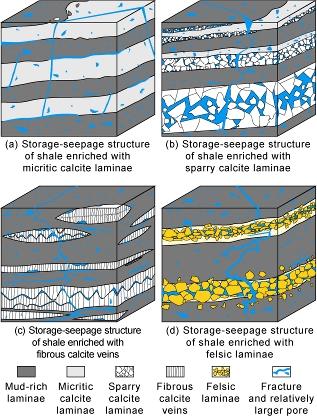


Fig. 10. Schematic representation of the typical storage- seepage structure of the Paleogene shale in the Jiyang Depression. |
4.1. Types of reservoir space and permeable systems
4.1.1. Micritic calcite laminae enriched shale storage-seepage structure
In the micritic calcite laminae enriched shale, the highly permeable and conductive system is composed of interparticle pores, dissolution pores, and partially developed inter-laminar and cross-laminar fractures (Fig. 10a ). The inter-laminar fractures effectively connect the matrix pores in the overlying and underlying mud-rich or calcite laminae. The thinner the mud-rich or calcite laminae, the more effective their connectivity is. The cross-laminar fractures can efficiently bridge the inter-laminar fractures, some matrix pores in the micritic calcite laminae and mud-rich laminae.
In the Jiyang Depression, micritic calcite laminae en-riched shale has achieved exploration breakthroughs. Representative wells include BYP5 and FYP1. These shales exhibit relatively high Ro of 1.10% and 0.83%, respectively. Correspondingly, the crude oil densities are comparatively low, measuring 0.832 g/cm³ and 0.851 g/cm³, respectively (Table 3 ).
Table 3. Oil production of shales with different storage-seepage structure in Jiyang Depression |
| Oil well | Pay zone | Producing interval/m | Type | Lithology | Ro/% | Crude oil density/ (g·cm-3) | Peak oil production/ (t·d-1) | GOR/ (m3·t-1) | Cumulative oil production/ 104 t |
|---|---|---|---|---|---|---|---|---|---|
| FYP1 | Sha41 | 3648-5364 | Micritic calcite laminae enriched shale | Laminated shaly limestone | 0.83 | 0.851 | 171.0 | 85 | 1.87 |
| BYP5 | Sha33 | 4075-4309 | Micritic calcite laminae enriched shale | Laminated and layered shaly limestone | 1.10 | 0.832 | 86.0 | 1 100 | 3.13 |
| NY1- 2HF | Sha41 | 3890-5793 | Sparry calcite laminae enriched shale | Interbeds of laminated shaly limestone and limy shale | 0.80 | 0.885 | 242.7 | 64 | 1.56 |
| NX124 | Sha41 | 3148-3323 | Sparry calcite laminae enriched shale | Interbeds of laminated shaly limestone and limy shale | 0.62 | 0.894 | 43.2 | 0.43 | |
| YYP1 | Sha33 | 3538-4861 | Sparry calcite laminae enriched shale | Laminated shaly limestone | 0.73 | 0.876 | 105.0 | 0.34 | |
| FY1- 1HF | Sha41 | 3760-5802 | Mixed calcite laminae enriched shale | Laminated mixed shale | 0.66 | 0.886 | 262.8 | 85 | 2.29 |
| FY1HF | Sha41 | 3983-5794 | Mixed calcite laminae enriched shale | Laminated mixed shale | 0.80 | 0.852 | 229.5 | 180 | 1.22 |
Note: (1) the cumulative production data is by the end of January 10, 2023; (2) the cumulative production data for Well BYP5 is oil and gas equivalent, and the other wells is cumulative oil production; (3) Well NX124 is a deviated well with a shorter production interval; and (4) Well YYP1 was shut in due to high H2S content. |
4.1.2. Sparry calcite laminae enriched shale storage-seepage structure
In the sparry calcite laminae enriched shale, the highly permeable and conductive system includes inter-crystalline pores, inter-laminar fractures, and cross-laminar fractures (Fig. 10b ). The sparry calcite laminae are continuous, and contact the mud-rich laminae in an abrupt mode. Consequently, under the influence of stress and fluid pressure, the sparry calcite laminae enriched shale is more prone to have inter-laminar fractures than the micritic calcite laminae enriched shale.
The wells with sparry calcite laminae enriched shale as the main shale oil production section include YYP1, NX124, and NY1-2HF. The peak oil production from Well NY1-2HF is 242.7 t/d, and the cumulative oil production has reached 1.56×10⁴ t. Even in Well NX124, the sparry calcite laminae enriched shale has low thermal maturity (Ro=0.62%), and the fractured interval is shorter, oil production is not low (Table 3 ). This underscores the exceptional exploration and development potential of the sparry calcite laminae enriched shale.
4.1.3. Fibrous calcite vein enriched shale storage-seepage structure
In the fibrous calcite vein enriched shale, the highly permeable and conductive system includes pores and fractures inside the calcite veins, inter-laminar and cross-laminar fractures (Fig. 10c ). The pores and fractures within the veins include those between stacked cones in vein and those between multi-stage growing veins. The inter-laminar fractures refer to the cracks between the calcite veins and the mud-rich laminae. Due to the abrupt contact between the fibrous calcite veins and the mud-rich laminae, combined with significant differences in their mechanical properties, deformation discrepancies arise under local stress and fluid pressure, leading to the prevalent development of inter-laminar fractures.
In the cored shale section, the development scale of the fibrous calcite vein enriched shale is small. No production data are specifically available for the pure fibrous calcite vein enriched shale. However, considering the oil content and reservoir space and conductive system (Figs. 8e , 8f , and 10c ), the fibrous calcite vein enriched shale should possess a considerable production potential.
4.1.4. Mixed calcite laminae enriched shale storage-seepage structure
In the mixed calcite laminae enriched shale, the highly permeable and conductive system includes mixed calcite laminae, and partially developed inter-laminae fractures, cross-laminae fractures. The composite calcite laminae include two or more types, such as micritic calcite laminae + sparry calcite laminae, micritic calcite laminae + fibrous calcite veins, and sparry calcite laminae + fibrous calcite veins (Fig. 6c ).
The mixed calcite laminae enriched shale demonstrate promising productivity in Sha41 in the Jiyang Depression. For instance, in Wells FY1-1HF and FY1HF, the Ro values of the shale are 0.66% and 0.80%, the initial peak production is 262.8 t/d and 229.5 t/d, and the cumulative production is 2.29 ×10⁴ t and 1.22×10⁴ t, respectively, indicating a high exploration and development potential (Table 3 ).
4.1.5. Felsic laminae enriched shale storage-seepage structure
In the felsic laminae enriched shale, the highly permeable and conductive system comprises felsic laminae, inter-laminae fractures, and cross-laminae fractures. The felsic laminae with high permeability effectively bridge overlying and underlying mud-rich laminae, and serve as viable conduits for shale oil flow and production (Fig. 10d ). The permeability of the felsic laminae filled with clay minerals is better than those filled with carbonate minerals. In the felsic laminae highly diagenetic and tight, and with extremely low porosity and permeability, inter-laminae fractures may appear and serve as flow pathways under the influence of stress and fluid pressure, when the mechanical properties of the felsic laminae are very different from the mud-rich laminae.
Felsic laminae enriched shale exhibit promising oil and gas shows in both mud-rich and felsic laminae (Fig. 9e , 9f ). No exploration breakthrough has been made to the shale, but it represents a favorable exploration target for shale oil in the area that is rich in terrigenous clastics in the Jiyang Depression, such as the delta front or steep slope zones.
4.2. Analysis of the oil mobility
Microscopic observations reveal that intercrystalline pores in sparry calcite laminae are well developed and continuous (Fig. 6 ). They provide favorable channels for oil in the overlying and underlying mud-rich laminae to flow out. In the shale with fibrous calcite veins, the pores developed among the overlapped cone-shaped and multi-stage calcite veins offer good conduits for oil to flow out of the mud-rich laminae. However, most of the calcite veins are like lens with variable sizes and very discontinuous (Fig. 8 ). Their capability to facilitate oil migration is generally inferior to sparry calcite laminae. The pore connectivity in micritic calcite laminae surpasses mud-rich laminae, but the fluid conductivity is lower than sparry calcite laminae and fibrous calcite veins.
All types of shale were sampled to assess their horizontal permeability, and then the oil mobility (Table 4 ). No data are available for felsic-rich shale because of few samples. The horizontal permeability is the result from low-permeability and high-permeability laminae, and mostly from high-permeability laminae. The sparry calcite laminae enriched shale has the highest permeability ranging between 0.061×10⁻³ μm2 and 1.090×10⁻³ μm2, with a median value of 0.596×10⁻³ μm2; the micritic calcite laminae enriched shale has the lowest permeability, 0.000 48×10-3 μm2 to 0.205 00×10-3 μm2, with a median of 0.024×10⁻³ μm2; the permeability of the mixed calcite laminae enriched shale is slightly lower than the sparry calcite laminae enriched shale, but higher than the fibrous calcite vein enriched shale.
Table 4. Permeability of different types of shales in Jiyang Depression |
| Shale type | Permeability/10-3 μm2 | Number of samples | |||
|---|---|---|---|---|---|
| Min. | Max. | Median | Avg. | ||
| Micritic calcite laminae enriched shale | 0.004 8 | 0.205 | 0.024 | 0.102 | 13 |
| Sparry calcite laminae enriched shale | 0.061 0 | 1.090 | 0.596 | 0.709 | 24 |
| Fibrous calcite vein enriched shale | 0.002 7 | 0.981 | 0.314 | 0.350 | 14 |
| Mixed calcite laminae enriched shale | 0.007 0 | 1.910 | 0.396 | 0.700 | 17 |
Based on pore development and permeability data, and without considering the variations in formation energy, oil content, crude oil properties, and fracture development, the order of oil mobility from strong to weak is in the sparry calcite laminae enriched shale, the mixed calcite laminae enriched shale, the fibrous calcite vein enriched shale, and the micritic calcite laminae enriched shale.
5. Favorable exploration potential of shales with different thermal evolution degrees
Based on the characteristics of shale storage-seepage structures, oil content [36], the evolutionary rules of crude oil properties [14], and production data of shale oil wells, the exploration potential of the carbonate-rich shales in the Jiyang Depression were determined for various thermal evolution stages. When Ro is greater than 0.7%, all types of organic-rich shale are favorable exploration targets. Calcites in shale are evidently recrystallized, and have multiple storage-seepage structures, and effective fractures and micro-fractures [37]. The oil mobility in any type of shale is good, particularly light oil or condensate (Ro>1.0%). For example, Well BYP5 has produced cumulative 3.13×10⁴ t of oil equivalent.
When Ro is between 0.5% and 0.7%, the oil mobility in different types of shales is very different, and the density and viscosity of the crude oil are higher. High-permeability laminae significantly impact the mobility of shale oil, so sparry calcite laminae enriched shale, mixed calcite laminae enriched shale and fibrous calcite vein enriched shale are favorable targets. Micritic calcite laminae enriched shale, apart from coccolithophore laminae, their permeability is low, so only those with well-developed fractures or inter-laminae fractures have good oil mobility.
Ro is lower than 0.5% means the crude oil is immature to low mature, particularly in the shale of Sha41 where most oil is immature to low mature. The calcite in shale is less recrystallized, and rich in micritic calcite laminae. The crude oil has higher density and viscosity. Fracture development is restricted to areas near fault zones and those at high lateral stress. Only the micritic calcite laminae enriched shale with well-developed fractures near the fault zone, or well opened interlayer fractures, and the sparry calcite laminae enriched shale locally developed may present some exploration potentials.
6. Conclusions
The Paleogene shales of Sha41 and Sha33 in the Jiyang Depression are characterized by rich carbonate minerals, primarily calcite. The alternative calcite laminae and mud-rich laminae consist of the fundamental structure of the Paleogene shale in the Jiyang Depression. The calcite laminae can be further classified into micritic calcite laminae, sparry calcite laminae, and fibrous calcite veins. Notably, mud-rich laminae exhibit the highest potential for hydrocarbon generation and reservoir quality. Micritic calcite laminae also show promise in terms of hydrocarbon generation potential and storage capacity. Both sparry calcite laminae and fibrous calcite veins demonstrate impressive fluid channel properties.
Mud-rich laminae combined with different types of calcite laminae give rise to various storage-seepage structures. Carbonate-rich shales in the Jiyang Depression predominantly exhibit four distinct types of shale storage-seepage structures: micritic calcite laminae enriched shale storage-seepage structure, sparry calcite laminae enriched shale storage-seepage structure, fibrous calcite vein enriched shale storage-seepage structure, and mixed calcite laminae enriched shale storage-seepage structure. Under equivalent conditions, the mobility of oil in different structures from strong to weak is in the sparry calcite laminae enriched shale storage-seepage structure, the mixed calcite laminae enriched shale storage-seepage structure, the fibrous calcite vein enriched shale storage-seepage structure, the micritic calcite laminae enriched shale storage-seepage structure.
Under different thermal maturation, the exploration potential is different. When Ro is greater than 0.5%, sparry calcite laminae enriched shales, mixed calcite laminae enriched shales and fibrous calcite vein enriched shales are potential targets; and within oil window, as the degree of thermal maturation increases, the exploration potential for shale oil will be better. micritic calcite laminae enriched shales have an exploration potential when Ro is greater than 0.7%. However, it is not ruled out that micritic calcite laminae enriched shales with Ro less than 0.7%, as well as other types of shale with Ro less than 0.5%, may also have certain exploration potential under conditions of well-developed fractures or good opening of inter-laminae fractures.
Nomenclature
R—pore radius, nm;
Ro—vitrinite reflectance, %;
S1—free hydrocarbons from rock pyrolysis, mg/g;
S2—hydrocarbon content from rock pyrolysis, mg/g;
TOC—total organic carbon, %;
T2—transverse relaxation time, ms.