

1. Geological setting
Located in the eastern part of the North China Craton, the Bohai Bay Basin is a Cenozoic sedimentary basin covering an area of more than 20×104 km2, and it is one of the seven major oil- and gas-bearing basins in China [1]. The basin basement consists of the North China Craton, including the Precambrian crystalline basement and several sets of stable marine-continental interbedded facies and marine sedimentary strata of Lower and Upper Paleozoic [2⇓-4] (Fig. 1 ). From the Indosinian Period to the Yanshan Period, the stable North China Craton was dis-rupted by tectonic processes such as the collision between the North China Plate and the Siberian Plate, the collision between the North China Plate and the South China Plate, and the subduction of the Paleo-Pacific Plate, and entered the stage of intense uplifting and intraplate tectonic deformation, resulting in numerous continental rift basins and volcanism, and consequently a Mesozoic igneous sequence widely distributed throughout the basin [5⇓⇓⇓-9]. During the Himalayan Period, the Bohai Bay Basin was controlled by strong tensile environment and evolved into a large sedimentary basin where massive source rocks were deposited in the Paleogene Shahejie Formation and Dongying Formation, and providing abundant oil and gas sources for the basement reservoirs [10]. Controlled by multiple stages of tectonic activities from the Indosinian Period to the Himalayan period, uplifts appeared in sags, with good source-reservoir-cap configuration and trap conditions, resulting in huge oil and gas exploration potential in the buried hills of Bohai Bay Basin [11-12].
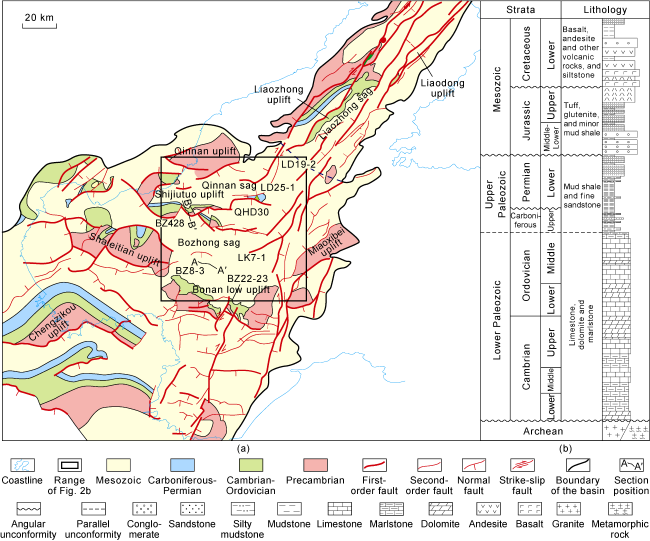
Fig. 1. Stratigraphic distribution and lithologic composition of the Pre-Cenozoic basement of the Bohai Bay Basin (modified according to Ref. [4]). (a) Structural division and stratigraphic distribution of basement in offshore Bohai Bay Basin; (b) Comprehensive histogram of basement formations in offshore Bohai Bay Basin. |
Located in the offshore Bohai Bay Basin, the exploitation of oil and gas in the Bohai Oilfield began in the 1950s [1]. After more than 60 years of exploration, in addition to Cenozoic clastic rocks, a large number of exploration breakthroughs have been made in the Archean metamorphic buried hills, Paleozoic carbonate buried hills, Mesozoic clastic buried hills and Mesozoic granite buried hills in the basement of the Bohai Bay Basin [10⇓⇓-13], and condensate gas fields at a level of 100 billion cubic meters and oil fields at a level of 100 million tons were discovered, such as BZ19-6 and BZ13-2 in the Archean buried hills in 2019 and 2021, respectively [14]. A series of exploration has also been carried out for Mesozoic volcanic rocks, more than 30 exploration wells were drilled, and oil and gas discoveries were made occasionally, but no commercial breakthrough has been made. It has been proved that volcanic rocks are important oil and gas reservoirs in deep sedimentary basins in China [15]. Several large- and medium-sized volcanic oil and gas fields (reservoirs) have been successively discovered in Songliao, Sichuan and Junggar basins, such as Qingshen gasfield in the Xujiaweizi faulted depression, Songnan gasfield in the Changling faulted depression, and Shixi oilfield in the Junggar Basin [16⇓-18]. The largest hydrocarbon-rich sag in the offshore Bohai Bay Basin, the Bozhong Sag, has good hydrocarbon source rocks. In recent years, with continuous exploration and related research, a number of large Mesozoic trap groups have been confirmed around the Bozhong Sag [1]. A series of progress has also been made in the temporal and spatial distribution of volcanic rocks, volcanic edifices and facies, controlling factors of reservoirs and reservoir forming conditions [19⇓⇓⇓⇓⇓⇓-26]. Guided by these findings, many high-yield volcanic oil and gas fields, such as BZ6-A, LD25-A and BZ8-A, have been successively discovered, demonstrating a huge potential of large-scale volcanic oil and gas reservoirs. Based on the Mesozoic volcanic exploration data of the Bohai Oilfield, especially several high-yield volcanic wells, this paper systematically analyzes the necessary conditions for the formation of large- and medium-sized volcanic reservoirs in the Mesozoic strata in the offshore Bohai Bay Basin, and points out the direction of future exploration of volcanic reservoirs.
2. Distribution of Cretaceous Yixian Formation volcanic rocks
Drilling data and contiguous seismic data were used to interpret the seismic profile of the volcanic rocks of the Mesozoic Cretaceous Yixian Formation in the offshore Bohai Bay Basin, reaching a grid accuracy of 2 km×2 km, and identified the spatial distribution of the Yixian Formation volcanic rocks in the offshore Bohai Bay Basin (Fig. 2 ). The volcanic rocks of the Yixian Formation are widely distributed, with a total of 225 volcanic eruption centers in the whole area, which are mainly concentrated in several uplifts surrounding the Bozhong Sag, such as LD25-A, LK7-1 regions, and have a good spatial coupling with several large strike-slip faults developed in the Yanshan Period. The volcanic rock of the Yixian Formation can be divided into three eruption cycles (Fig. 2a ). Cycle 1 is dominated by basic basalt, mainly distributed in the northern and eastern parts around the Bozhong Sag. It was formed by mantle magma erupted along the large-scale strike-slip fault of the Yanshan period (Fig. 2b ). Cycle 2 volcanic rock is widely distributed throughout the area. It is predominantly intermediate rock, including andesite and trachyandesite. During the Yanshan period, eruption centers were concentrated near the Yanshan large-scale strike-slip faults and the pre-existing Indosinian NWW striking faults (Fig. 2c ), and volcanic activities were the most intense. The lithospheric mantle was severely delaminated and thinned, resulting in intense melting of the lower crust rock and massive intermediate volcanic eruptions in the Yixian Formation [27]. Cycle 3 volcanic rock is mainly intermediate-felsic volcanic rock, when the eruption area significantly reduced to the Yanshan strike-slip faults (Fig. 2c ).
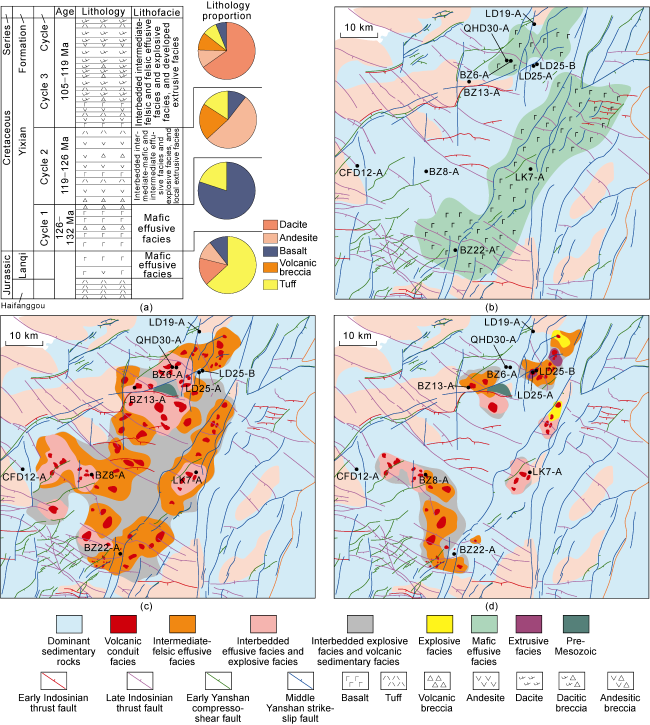
Fig. 2. Spatial distribution of the Mesozoic Yixian Formation volcanic rocks in the offshore Bohai Bay Basin. (a) Vertical cycles of the Yixian Formation; (b) Distribution of Cycle 1 volcanic rock; (c) Distribution of Cycle 2 volcanic rock; (d) Distribution of Cycle 3 volcanic rock. |
3. Formation conditions of large- and medium-sized volcanic oil and gas reservoirs
3.1. Lithology, lithofacies and volcanic edifices
Volcanic eruptions are commonly classified into three different types of volcanic facies, namely eruptive, effusive and extrusive, forming different types of volcanic rocks such as volcanic agglomerate, volcanic breccia, volcanic tuff, volcanic lava and cryptoexplosive breccia, and post-volcanic modification can result in the formation of sedimentary pyroclastic rock [28-29]. The lithology and lithofacies of different types of volcanic rocks provide a basis for the formation of volcanic reservoir space, which in turn controls the reservoir properties of volcanic rocks [30]. In addition, the spatial assemblage of volcanic eruptions creates different types of volcanic accumulations, known as volcanic edifices [28], which control the size of volcanic reservoirs. Thus, volcanic lithology, volcanic facies and volcanic edifice are three basic controlling factors for the formation of sizeable volcanic reservoirs.
3.1.1. Lithology and lithofacies
The physical properties of volcanic rocks determine their ability to store oil and gas [30]. In this study, the physical properties of volcanic rocks with different lithology and lithofacies found in 30 wells drilled in the Mesozoic Yixian Formation were statistically analyzed (Fig. 3 ). The results indicate that the cryptoexplosive breccia subfacies of volcanic conduit facies and the upper subfacies of effusive facies have the best reservoir properties. The porosity of the cryptoexplosive breccia subfacies ranges from 2.2% to 30.3%, with an average of 12.5%, and the average permeability is 1.1×10⁻³ μm2. The porosity of the upper subfacies of effusive facies is 1.7% to 15.8%, with an average of 8.8%, and the average permeability is 0.6×10⁻³ μm2 (Fig. 3a ). Apart from these two subfacies, the physical properties of the extrusive facies are also relatively favorable. The porosity ranges from 1.5% to 11.9%, with an average porosity of 6.2%, and the average permeability is 0.5×10⁻³ μm2 (Fig. 3a ). Compared with the above three lithofacies, the physical properties of the middle and lower subfacies of the effusive facies, the air-fall deposits of explosive facies, and the extraclastics-bearing pyroclastics subfacies of the volcanic sedimentary facies are relatively poor. The porosity of the middle and lower subfacies of the effusive facies ranges from 0.4% to 13.7%, and averaged 4.8%, and the permeability is averaged 0.2×10⁻³ μm2. The porosity of the air- fall deposits of explosive facies is between 3.1% and 6.0%, with an average of 4.5%, and its average permeability is 0.2×10⁻³ μm2. The extraclastics-bearing pyroclastics subfacies has porosity of 1.5% to 7.4%, with an average of 4.0% and average permeability of 0.1×10⁻³ μm2 (Fig. 3a ).
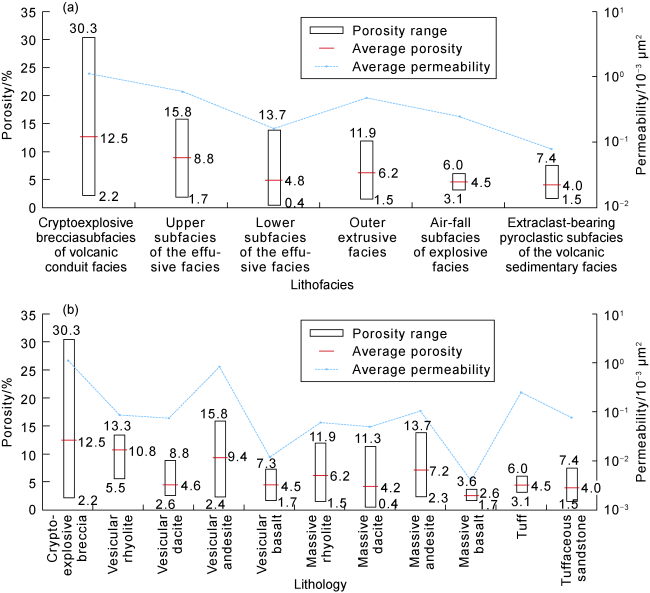
Fig. 3. Porosity and permeability of volcanic rocks in different lithology and lithofacies of the Cretaceous Yixian Formation in the offshore Bohai Bay Basin. |
In terms of lithology, the physical properties of the intermediate-felsic volcanic rocks are significantly better than those of the mafic volcanic rocks (Fig. 3b ). In the same upper subfacies of the effusive facies, the physical properties of vesicular rhyolite, vesicular dacite and vesicular andesite are noticeably better than those of vesicular basalt (Fig. 3b ). In the lower subfacies of the effusive facies, the physical properties of the massive rhyolite, massive dacite and massive andesite are noticeably better than those of the massive basalt (Fig. 3b ). The above analysis shows that the most favorable lithofacies for the formation of large reservoirs in the study area are the upper subfacies of effusive facies and the cryptoexplosive breccia subfacies, and the most favorable rock type to form large reservoirs is the intermediate-felsic volcanic rocks.
3.1.2. Volcanic edifices
The volcanic edifices control the spatial distribution of volcanic lithology and lithofacies, and their scale and type are crucial to the formation of large volcanic reservoirs. Four types of volcanic edifices were developed in the Bohai Bay Basin, including mafic lava volcanic edifices, intermediate-felsic lava volcanic edifices, intermediate-felsic composite volcanic edifices, and intermediate-felsic pyroclastic edifices (Fig. 4 , Table 1 ). The mafic lava volcanic edifice is generally shield-shaped, with large lateral extension and a little variation in lithology and lithofacies from proximal to distal facies belts (Fig. 4a , Table 1 ). The intermediate-felsic pyroclastic edifices consist of sheet-like pyroclastics that transition from volcanic breccia to tuff and then to sedimentary tuff from volcanic vent to distal facies (Fig. 4b , Table 1 ). With poor reservoir properties, the total thickness of the reservoirs interpreted from mafic volcanic rocks, pyroclastics and sedimentary pyroclastics is relatively thin, so it is hard to develop effective reservoirs (Table 1 ). The volcanic edifices that form large reservoirs in the study area are mainly intermediate-felsic lava volcanic edifices (Fig. 4c ) and intermediate-felsic composite volcanic edifices (Fig. 4d ). These two volcanic edifices are composed of multiple lava flow units. The upper subfacies of effusive facies and the cryptoexplosive breccia subfacies of volcanic conduit facies are well developed, with good physical properties and thicker interpreted reservoirs (Table 1 ). In addition, the volcanic edifices develop favorable lithology and lithofacies in the volcanic vent to proximal facies, with a variety of reservoir space types and better average porosity and permeability than those in the middle-source and distal zones, making it favorable for effective reservoir development (Fig. 5 ).
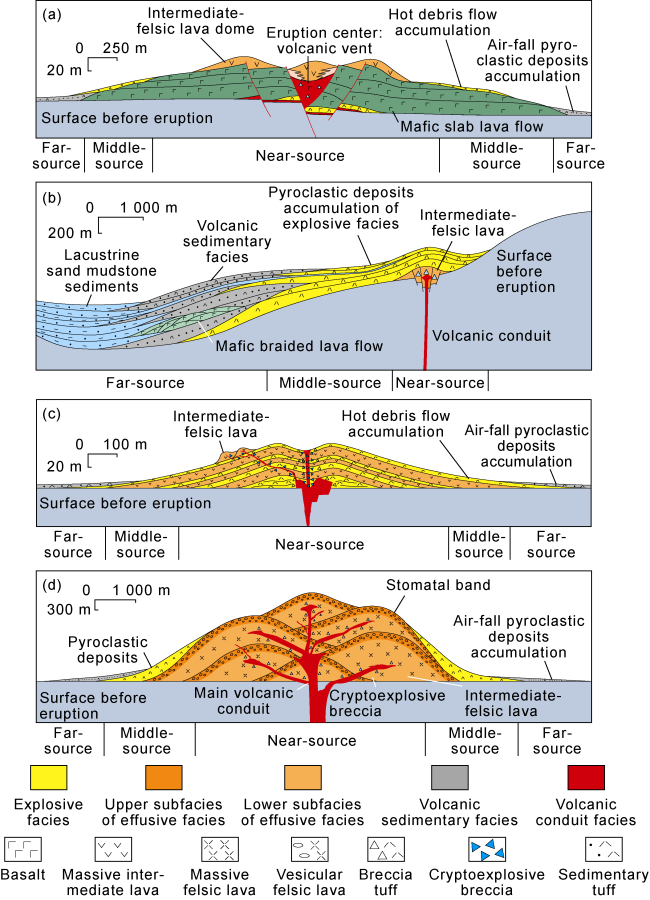
Fig. 4. Geological models of volcanic edifices of the Cretaceous Yixian Formation in the offshore Bohai Bay Basin. (a) Mafic lava volcanic edifice; (b) Intermediate-felsic pyroclastic edifice; (c) Intermediate-felsic lava volcanic edifice; (d) Intermediate-felsic composite volcanic edifice. |
Table 1. Geological characteristics of the volcanic edifices of the Cretaceous Yixian Formation in the offshore Bohai Bay Basin |
| Type | Shape | Lithology | Thickness range/m | Extension range/km | Aspect ratio | Thickness of effective reservoir/m | Typical well |
|---|---|---|---|---|---|---|---|
| Mafic lava volcanic edifice | Sheet, shield | Basalt | 132-832 | 8.5- 9.9 | 0.010-0.085 | 0 | BZ13-A |
| Intermediate-felsic lava volcanic edifice | Lenticular, stacking | Intermediate-felsic lava and minor pyroclastics | 193-1 139 | 3.0- 5.6 | 0.210-0.320 | 125.4 | BZ8-A |
| Intermediate-felsic composite volcanic edifice | Dome | Intermediate-felsic lava and pyroclastic rocks in equal proportions | 2 656 | 6.2-8.9 | 0.290 | 69.1 | BZ6-A |
| Intermediate-felsic pyroclastic edifice | Slope, filled | Pyroclastics | 50-393 | 4.2-6.0 | 0-0.065 | 33.7 | CFD12-A |
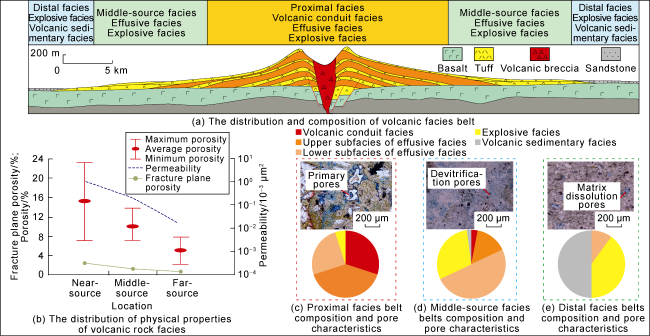
Fig. 5. Facies belts of volcanic edifices in the Yixian Formation in the offshore Bohai Bay Basin. |
3.2. Characteristics and formation mechanisms of effective volcanic reservoirs
3.2.1. Effective reservoir types
Physical property analysis shows that the highest porosity of the volcanic reservoir of the Yixian Formation in the offshore Bohai Bay Basin is up to 30%, and the highest permeability is 5×10⁻³ μm2. In terms of porosity and permeability, the volcanic reservoirs in the study area can be divided into three types: high porosity with medium-to-low permeability, medium porosity with medium-to-low permeability and low porosity with low permeability (Fig. 6 ). The high porosity and medium-to-low permeability reservoir accounts for the largest proportion of interpreted hydrocarbon layers, followed by the medium porosity and medium-to-low permeability reservoir, and the low porosity and low-permeability reservoir is poor and tight (Fig. 7 ). Among several high-yielding wells drilled in volcanic rocks, the volcanic reservoirs found in wells BZ6-A and BZ8-A are of high porosity with medium-to-low permeability, and those in LD25-A are of medium porosity with medium-to-low permeability (Fig. 2b ). These findings indicate that these two types of reservoirs in the study area may be effective reservoirs for forming medium-to-large oil and gas fields, and especially the high porosity and medium-to-low permeability reservoir has the highest potential.
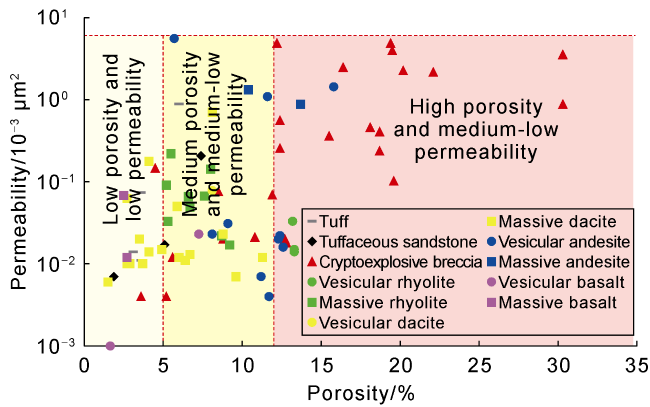
Fig. 6. Porosity and permeability of the volcanic rocks in the Yixian Formation in the Bozhong Sag, Bohai Bay Basin. |
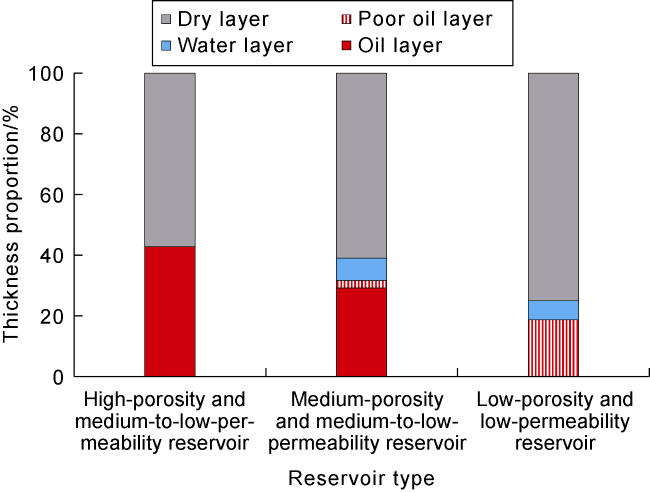
Fig. 7. Thickness proportion of different types of volcanic reservoirs. |
3.2.2. Characteristics of effective reservoirs
The high porosity and medium-to-low permeability volcanic reservoirs in the study area are mainly developed in intermediate-felsic vesicular lava and cryptoexplosive breccia (Fig. 6a ), and were formed due to dissolution superimposed with primary pores and fractures. In the intermediate-felsic vesicular lava, primary pores and secondary pore-fractures are developed (Fig. 8a-8d ), and primary pores, amygdaloidal pores, devitrification pores and matrix shrinkage cracks are the dominant reservoir spaces (Fig. 8a ). Primary pores and matrix shrinkage fractures not only provide large reservoir space, but also increase the contact between fluids and volcanic rocks, causing extensive dissolution and the formation of matrix dissolution pores and intracrystalline dissolution pores (Fig. 8b ), and further improving the physical properties of the reservoirs. In cryptoexplosive breccia, the major primary reservoir space is the large number of devitrification pores developed in the later magma, and the secondary reservoir space is the later magma dissolution pores formed by later fluids dissolving along fractures (Fig. 8c ). In the strongly dissolved area, most magma between cryptoexplosive breccias was dissolved by fluids, forming cryptoexplosive fractures with large openings, which not only provides a larger space, but also increases the flow capacity of the volcanic rock.
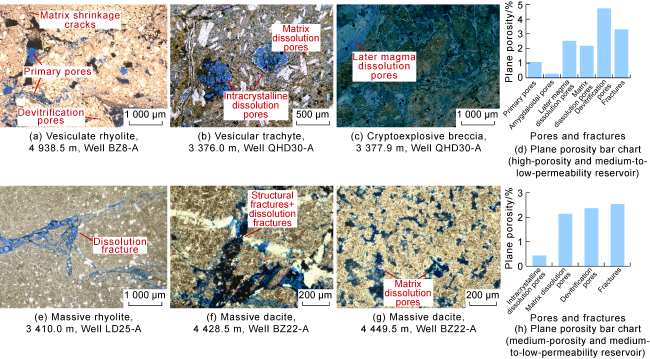
Fig. 8. Space types and characteristics of reservoir space of different volcanic rocks in the Yixian Formation, Bozhong Sag, Boyhai Bay Basin. |
The medium porosity and medium-to-low permeability reservoirs in the study area are developed in various lithology, which indicates that their formation is not controlled by volcanic lithology, and the reservoirs are mainly formed by structural fractures superimposed late dissolution (Fig. 8e-8g ). According to plane porosity analysis, the primary pores in the medium porosity and medium-to-low permeability reservoirs are poorly developed, and the reservoir space is dominated by secondary pores, which are mainly matrix dissolution pores, intracrystalline dissolution pores and devitrification pores formed by fluid dissolving along fractures (Fig. 8h ).
3.2.3. Mechanisms of the large-scale reservoirs formation
The formation of volcanic reservoirs is attributed to primary pores by volatile dissolution, fractures by volcanic rock condensation and contraction, devitrification micropores by devitrification after volcanic eruption, dissolution pores and fractures by weathering, and structural fractures and associated dissolution pores by tectonic activities. Large-scale volcanic reservoirs are usually the result from the combination of these mechanisms, especially weathering and tectonic activities.
3.2.3.1. Weathering
The Mesozoic volcanic rocks in the Bohai Bay Basin were formed during the Middle Jurassic to Early Cretaceous, and regional compression during the Late Yanshan Period resulted in the absence of the Upper Cretaceous stratum in the area, with 20-30 Ma sedimentary hiatus [26]. Compared with the Songliao Basin, volcanic reservoirs in the Bohai Bay Basin were obviously controlled by weath-ering and alteration. The analysis of major elements shows that the top of the volcanic rocks in the Bohai Bay Basin is rich in non-migratory elements, such as Fe and Al, and poor in migratory elements, such as Ca, Mg, and Na (Fig. 9 ), indicating that the top of the volcanic rocks has been significantly altered by weathering, and soluble elements have migrated. Chemical weathering index (CWI) decreases gradually from the top to the bottom of the volcanic rocks, and an inflection point appears at 300 m, suggesting that the thickness of the weathered volcanic rocks reaches 300 m. In the 300-m-thick interval, secondary dissolution pores are developed (Fig. 9 ). Large-scale reservoirs can occur within weathered crust when favorable lithologies and lithofacies that are easily altered by weathering are developed, such as the upper subfacies of the effusive facies and the cryptoexplosive breccia subfacies of the volcanic conduit facies [31]. The typical well BZ8-A, which was drilled into a felsic lava volcanic edifice with upper subfacies of the effusive facies and the cryptoexplosive breccia subfacies developed. Acoustic logging data shows that there is an approximately 100-m-thick spotted acoustic anomaly zone in the upper section of the well. The casting thin section shows that this section has abundant feldspar dissolution pores and matrix dissolution pores, indicating it undergoing intense dissolution, indicating nearly 100 m thick weathered crust. Correspondingly, an effective reservoir with high porosity and medium-to-high permeability is developed there (Fig. 10 ).
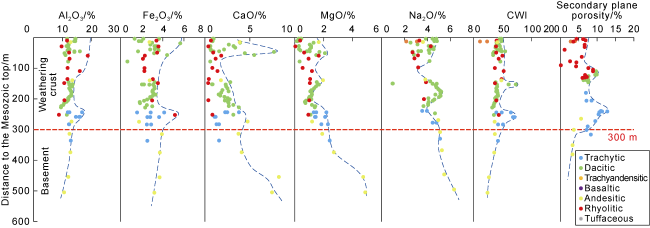
Fig. 9. Variations of major elements, weathering index and secondary plane porosity of volcanic rock in the Yixian Formation in the offshore Bohai Bay basin. |
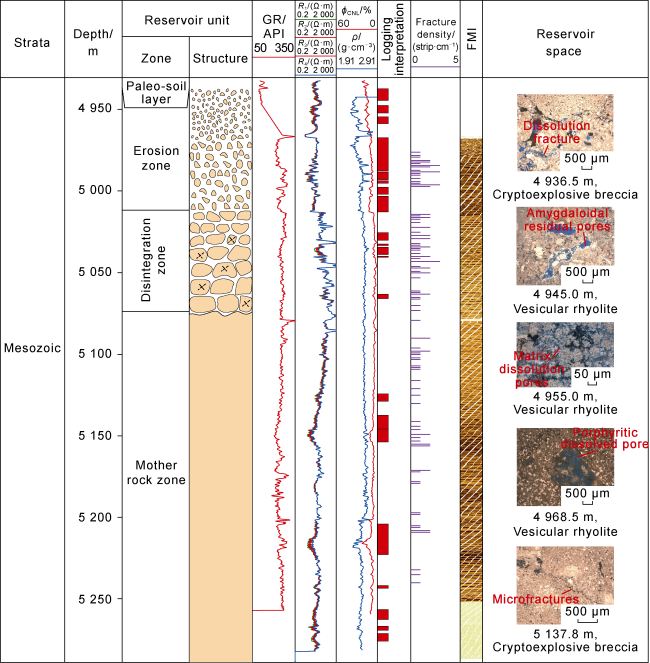
Fig. 10. Structures of the weathering crust in Well BZ8-A. GR—gamma ray; R1-R4—array resistivity; ϕCNL—neutron porosity; ρ—density. |
3.2.3.2. Tectonics
After the formation of the volcanic rocks of the Yixian Formation in the Bohai Bay Basin, the region was affected by strong NWW-striking compression that caused by the subduction of the Paleo-Pacific Plate during the Late Yanshan Period, forming an NNE-striking strike-slip fault. A large number of structural fractures and fractures zones occur in the vicinity of the strike-slip fault and associated faults, creating favorable conditions for weathering fluids during the exposure stage and organic acids during the burial stage to enter the volcanic rocks. As a result, reservoirs with medium porosity and medium-to-low permeability were developed, which are vertically thick with lateral extension controlled by faults, and less affected by lithology and lithofacies, making them ideal for the formation of large-scale volcanic oil and gas reservoirs. In the LD25-1 structural zone where multiple NNE-striking late Yanshan strike-slip faults and associated nearly EW-striking faults have been developed (Fig. 11f ), typical structure-controlled volcanic reservoirs were found (Fig. 11 ). The lithology in Well LD25-A near the major fault is massive rhyolite (Fig. 11a ), and fractures and extensive dissolution pores were observed on the wall cores and casting thin sections throughout the wellbore (Fig. 11b-11e ), revealing a large volcanic reservoir with oil layers nearly 100 m thick (Fig. 11a ).
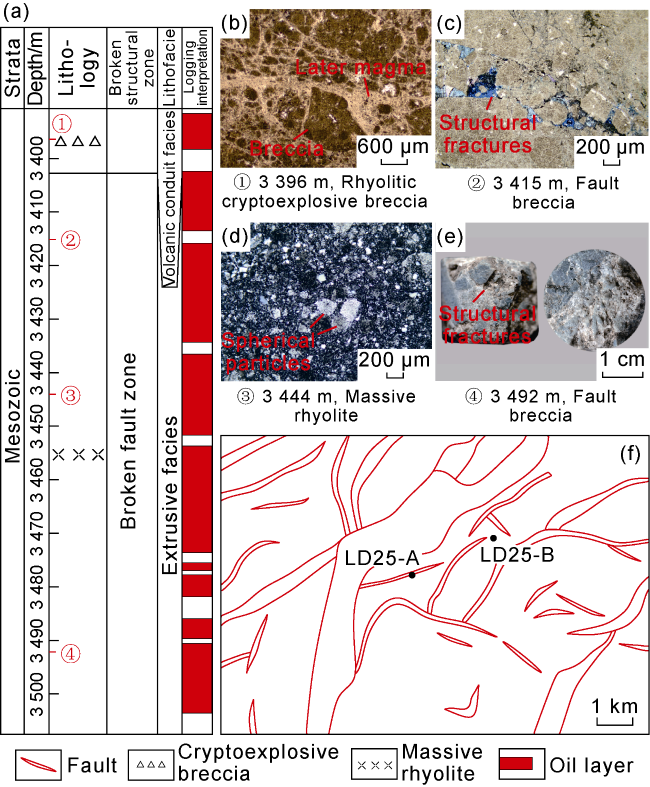
Fig. 11. Reservoir characteristics in Well LD25-A. |
3.3. Source-reservoir configuration in volcanic buried hills
The Bozhong Sag is the largest hydrocarbon-rich sag in the Bohai Bay Basin, with superior hydrocarbon sources from the Paleogene Shahejie Formation surrounding the Mesozoic volcanic rocks. The source rocks of the Shahejie Formation show strong hydrocarbon generation and expulsion intensity, providing a good basis for hydrocarbon accumulation [10]. However, because the Mesozoic volcanic rocks are featured by near-source accumulation and a combination of late source rocks and early reservoir rocks, the source-reservoir configuration is the key to the formation of medium to large volcanic oil and gas reservoirs. The Mesozoic volcanic buried hills in the Bohai Sea contain two types of advantageous source-reservoir configuration models: one is low-source “source-reservoir draping type”, the other is out-source mid-position “source-reservoir lateral contacting type” (Fig. 12 ).
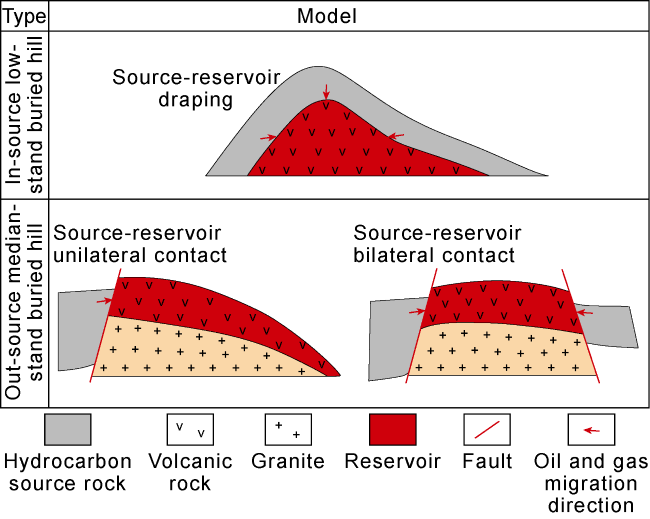
Fig. 12. Source-reservoir configuration models of Mesozoic volcanic rocks in the Bohai Sea. |
3.3.1. Low-source “source-reservoir draping type”
The volcanic buried hills of low-source “source-reservoir draping type” is usually found inside sags, and represented by the BZ8-3S Mesozoic volcanic buried hill. The source rocks of the Paleogene Shahejie Formation in BZ8-3S are directly draped over the buried hill, which means that the source rocks can not only supply hydrocarbons to the weathering zone and the inside of the buried hill, but also serve as cap rocks to prevent hydrocarbons from escaping from the top of the buried hill. Under the background of high-quality and thick regional cover, relatively-weak late deep tectonic activities and continuous hydrocarbon supply, the Mesozoic volcanic rocks in BZ8-3S have excellent conditions for hydrocarbon accumulation (Fig. 13 ). The source rocks are extensively in contact with the buried hill, and can also act as a regional cover with good preserve condition. Once the reservoirs are developed in the volcanic buried hill, it will have excellent conditions for the formation of large- and medium-sized oil and gas fields.
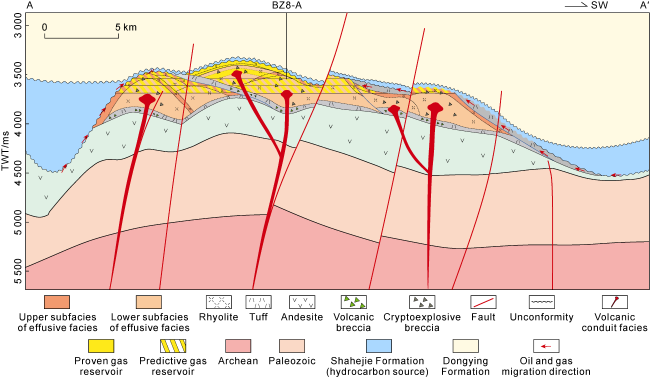
Fig. 13. Reservoir models of Mesozoic volcanic buried hills in the BZ8-3 zone (see |
3.3.2. Out-source mid-position “source-reservoir lateral contacting type”
The volcanic buried hill of out-source mid-position “source-reservoir lateral contacting type” is often developed on one side of a sag or between sags, corresponding to unilateral and bilateral contact types, respectively. The BZ428 Mesozoic volcanic buried hill, located between the Bozhong Sag and the Qinnan Sag, is a typical example of the bilateral contact model. It is in direct contact with the source rocks of both sags, so it has a large oil supply window with good charging conditions. Additionally, the BZ428 Mesozoic volcanic buried hill is covered with Shahejie Formation mudstone, forming favorable source-reservoir-caprock configuration, represents a high potential for large-scale reservoirs (Fig. 14 ). The volcanic buried hill of out-source mid-position source-reservoir lateral contact model tends to have superior hydrocarbon charging conditions, but compared with the low-source source-reservoir draping model, the former’s preserve conditions are uncertain.
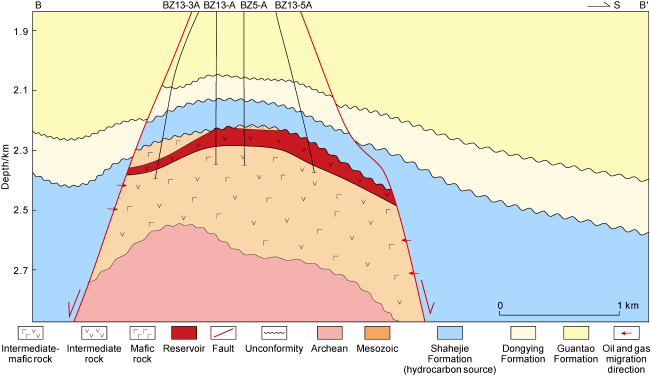
Fig. 14. Reservoir models of Mesozoic volcanic buried hills in the BZ428 zone (see |
4. Favorable exploration targets
The widely distributed Mesozoic volcanic rocks in the Bohai Sea provide a good foundation for large- and medium-sized volcanic oil and gas fields. Since the 1970s, many volcanic reservoirs have been discovered, such as 428w, Jinzhou 20-2, Bozhong 22-2, Qinhuangdao 30-1, but no large-scale volcanic reservoirs have been found. Former exploration of Mesozoic volcanic rocks mainly drew on the exploration experience of Archean granite, with weathered crust as the controlling factor for the formation of high-quality reservoirs, and failing to conduct in-depth research on the complexity of volcanic edifices, the multi-phase tectonic activities, and the lateral instability of reservoirs. This has led to a lack of understanding of reservoir development rules, and limited the exploration of volcanic oil and gas reservoirs. In recent years, based on the successful experience of onshore volcanic reservoir exploration, the research on Mesozoic volcanic reservoirs in the Bohai Sea has been carried out to systematically analyze the distribution of the Mesozoic volcanic rocks, volcanic edifices and lithofacies. Combined with the study of source-reservoir-caprock configurations, the large-scale high-quality reservoirs and sufficient charging are the essential conditions for the formation of large- and medium-sized volcanic oil and gas fields, and the in-source Mesozoic volcanic buried hills in the Bozhong Sag, the out-source volcanic buried hills in the Bodong low uplift are favorable exploration targets. These buried hills are in the structural fault zones, and are located in or closely adjacent to hydrocarbon-rich sags with good hydrocarbon charging conditions. Meanwhile, these buried hills are covered by hydrocarbon source rocks or thick mudstones of the Paleogene Dongying Formation, which provide good preservation conditions. For example, BZ8-3S and LK7-1 are favorable exploration breakthrough targets (Fig. 15 ).
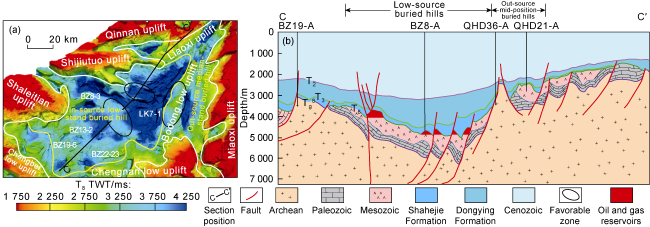


Fig. 15. Favorable exploration zones in the Bozhong Sag of the Bohai Bay Basin. |
5. Conclusions
Volcanic rocks of the Mesozoic Yixian Formation are widely distributed in the Bohai Bay Basin, 225 volcanic eruption centers were identified, and three eruption cycles were found. Cycle 1 is dominated by mafic basalt, mainly distributed in the northern and eastern parts of the Bozhong Sag, and developed along the large strike-slip fault of Yanshan Period. Cycle 2 is predominantly intermediate rock that’s widely distributed, and whose eruption centers are concentrated near the Yanshan strike-slip faults and the pre-existing Indosinian NWW striking faults. Cycle 3 is mainly intermediate-felsic rock whose eruption area significantly reduced to the Yanshan strike-slip faults.
Large Mesozoic intermediate-felsic lava volcanic edifices and intermediate-felsic composite volcanic edifices are the material basis for large- and medium-sized volcanic reservoirs in the study area. The upper subfacies of the effusive facies and the cryptoexplosive breccia subfacies of volcanic conduit facies in volcanic vent-proximal zones are the most favorable sites. High porosity and medium-to-low permeability reservoirs and medium porosity and medium-to-low permeability reservoirs are the core of large- and medium-sized reservoir formation. Meanwhile, weathering and tectonics are important mechanisms, and the configuration relationship of low-source “source-reservoir draping type” is the key to the formation of large- and medium-sized volcanic reservoirs. The in-source Mesozoic volcanic buried hills represented by BZ8-3 and LK7-1 in the Bozhong Sag, and the out-source volcanic buried hills in the Bodong low uplift, the Liaodong uplift and the Laizhou Bay uplift are the targets for exploration.