

Introduction
Over the past decade, strike-slip faults have been identified in several intracratonic basins, including the Tarim Basin, Sichuan Basin, Ordos Basin in China, and the West Siberian Basin in Russia [1⇓⇓⇓⇓⇓-7]. In the West Siberian Basin, strike-slip fault zones dominated the development of stratified and banded hydrocarbon reservoirs [6-7]. In the central Tarim Basin, strike-slip fault zones played an important role in the formation of fault-controlled karst fracture-cavity hydrocarbon reservoirs and giant industrial hydrocarbon accumulations along them [8⇓-10]. The unique structural deformation characteristics, deformation mechanisms, and hydrocarbon significances of strike-slip faults in intracratonic basins have garnered substantial attention from both the petroleum industry and the structural geology community [9,11⇓⇓⇓⇓ -16].
The strike-slip faults in the central Sichuan Basin are developed from the basement to the Lower Triassic mainly, exhibiting distinctive characteristics of both extensional and strike-slip deformation [17]. They are also referred to as transtensional (strike-slip) faults in some studies [3,17⇓ -19]. Ma et al. firstly elucidated the planar distribution, structural pattern, and evolution of the fault system in the Gaoshiti-Moxi area, initially suggesting their control over reservoir formation and hydrocarbon accumulation in formations such as the Cambrian Longwangmiao Formation and Permian Qixia-Maokou Formations [3]. In recent years, significant advances have been reported in the study of transtensional (strike-slip) faults in the central Sichuan Basin. Tian et al. found reliable evidence of strike-slip deformation of the transtensional fault system in the Zhongjiang-Penglai area [17]; Lu et al. conducted a detailed analysis of the FI9 fault zone in the Gaoshiti-Moxi area[20]; Liang et al. and Ma et al. determined the distribution, forming time, and structural geneses of these strike-slip faults with contiguous 3D seismic data and calcite U-Pb dating [4,21]; while based on structural analysis and integrated petroleum geological studies, Jiao et al. and He et al. highlighted the role of this strike-slip fault system in controlling reservoir-source connectivity, and hydrocarbon accumulations in formations like the Sinian Dengying, Cambrian Longwangmiao and Permian Qixia-Maokou Formations [22-23].
Previous investigations into the transtensional fault system of the central Sichuan Basin (TFSCS) mainly focused on macroscopic deformation and its implications for hydrocarbons. There remains a dearth of research exploring the intrinsic differences of structural deformation of the fault system, as well as the specific deformation of typical areas or fault zones. Additionally, former researches on the fault distribution were limited to the contiguous 3D seismic survey, with an incomplete fault distribution, which significantly impedes our understanding of its distribution patterns, structural deformation, genetic mechanisms, and role in hydrocarbon accumulations. The Ziyang 3D seismic survey of Sinopec is located to the west of the Central Sichuan contiguous 3D seismic survey of CNPC. It holds significant value in revealing the distribution of NE-trending fault zones to the west of the Gaoshiti-Moxi area, such as the FI19 and FI20 (“F” represents “fault”, Roman letter represents fault grade, and number represents fault serial number). This 3D survey area lies within the Deyang-Anyue Rift Trough (also known as the extension and erosion trough) in the Tongwan period, the core of the Central Sichuan Paleouplift in the Caledonian-Hercynian period, and the northeastern slope of the current Weiyuan Anticline. It has undergone multiple tectonic uplifts and adjustments, resulting in doubtful petroleum geological conditions. The discovery of the TFSCS offers novel insights into petroleum exploration and development in this region. However, structural research on the TFSCS lags behind the demands of petroleum exploration and development, necessitating urgent further investigation.
This research takes drilling and seismic data in the Ziyang 3D seismic survey to determine the structural styles, 3D fault frameworks, formation and evolution of the TFSCS, through a combination of planar-sectional structural analysis, 3D fault modeling, vertical fault throw analysis, and balanced section restoration. Moreover, the time-space matching relationship between the transtensional fault zone and hydrocarbon accumulation factors and its geological significance are further discussed. Relevant researches are pivotal in improving our knowledge of the TFSCS and its role in controlling hydrocarbon accumulation in Ziyang and central Sichuan Basin. They are also crucial in advancing petroleum exploration and development in critical strata, including the Longwangmiao, Qixia and Maokou Formations in the Ziyang area.
1. Geological setting
The Sichuan Basin is a large petroliferous basin nowadays with multi-cycle tectonic superimposition, characterized by complex geological structure and immense petroleum resource potential [24⇓-26]. The Anyue Gasfield, situated in the central Sichuan Basin, east to the Ziyang 3D seismic survey, presents a unique tectonic-sedimentary differentiation pattern and exceptional source-reservoir configuration [27-28]. These conditions have facilitated the development of the super-giant gas field with proven reserves exceeding one trillion cubic meters (11 709×108 m3) and an annual output exceeding 10 billion cubic meters from ancient carbonate rocks such as those in the Sinian and Cambrian [25]. In comparison to core production areas of natural gas fields like Anyue and Penglai, the Ziyang area is located in the Anyue Rift Trough (Fig. 1 ), which provides favorable source rocks of the Lower Cambrian. However, compared to the favorable structural trap conditions in the Gaoshiti, Moxi, and Longnüsi areas, the Ziyang area resides on the northeastern slope of the Weiyuan Anticline, presenting more stringent conditions for the formation of oil and gas traps in various reservoirs. The representative well in this area, Well ZY1, reveals relatively poor hydrocarbon-bearing properties in strata. Specifically, the Dengying Formation only develops hydrocarbon-bearing intervals in its first and second members (hereinafter referred to as Z2dn1 and Z2dn2), totaling a thickness of 63.5 m. Fracturing tests indicate a dense lithology that has not been fractured. Meanwhile, the Longwangmiao, Qixia and Maokou Formations contain water or exhibit poor gas-bearing properties.
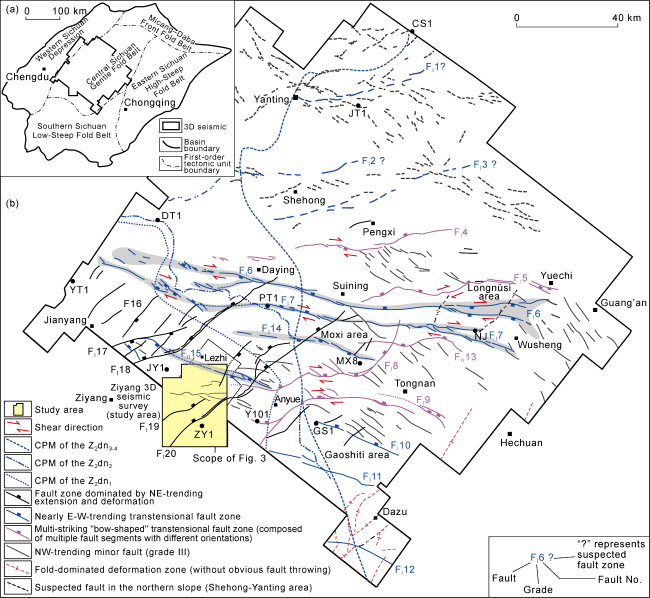
Well ZY1 further reveals that the remnant strata in the area comprise the Sinian-Cambrian and Permian-Jurassic (Fig. 2 ). Three critical tectonic and sedimentary events have profoundly influenced the tectonic position, morphology, and stratigraphic structure of the Ziyang area. Firstly, the Tongwan Event, occurring after the deposition of the Dengying Formation and before the Cambrian, led to the denudation of the 3rd and 4th members of the Dengying Formation (hereinafter referred to as Z2dn3 and Z2dn4) and the formation of the Deyang-Anyue-Changning Rift Trough. Secondly, the activity of the Central Sichuan Paleouplift, spanning from the end of the Cambrian to the pre-Permian period, resulted in massive denudation of the Ordovician, Silurian, Devonian, and Carboniferous (Fig. 2 ). Finally, the uplift of the Weiyuan Anticline, occurring after the deposition of the Jurassic (presumably during the Yanshanian-Himalayan Period), repositioned the Ziyang area onto the northeastern slope of the Weiyuan Anticline (Fig. 1a ).
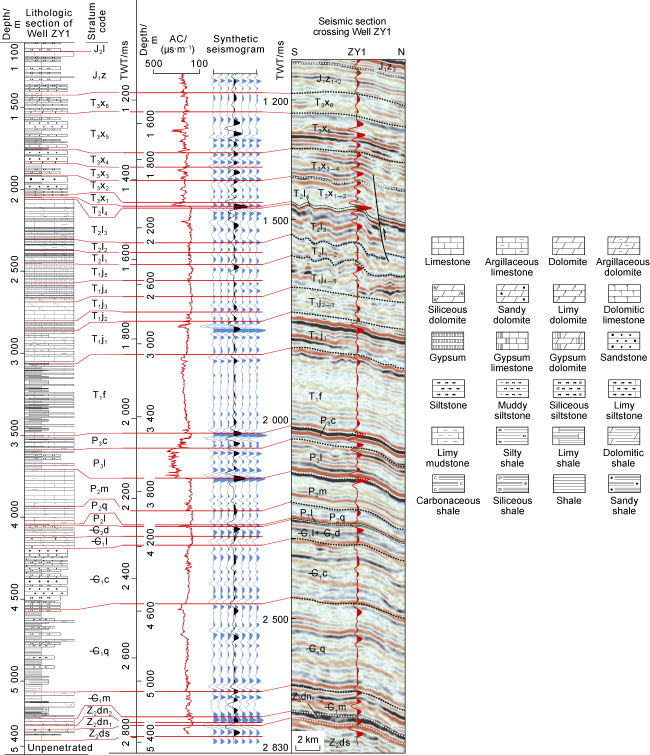
Fig. 2. Synthetic seismogram and well-seismic calibration of Well ZY1 in central Sichuan Basin. Z2ds—Doushantuo Fm.; Z2dn—Dengying Fm.; —C1m—Maidiping Fm.; —C1q—Qiongzhusi Fm.; —C1c—Canglangpu Fm.; —C1l—Longwangmiao Fm.; —C2d—Douposi Fm.; P2l—Liangshan Fm.; P2q—Qixia Fm.; P2m—Maokou Fm.; P3l—Longtan Fm.; P3c—Changxing Fm.; T1f—Feixianguan Fm.; T1j—Jialingjiang Fm.; T2l—Leikoupo Fm.; T3x—Xüjiahe Fm.; J1z—Ziliujing Fm.; J2l—Lianggaoshan Fm.; Fm.—Formation; AC—Acoustic interval transit time; TWT—Two-way travel time. |
The present-day TFSCS is comprised of four sets of faults, including nearly EW- and NE-trending mid-large (grade-I and grade-II) fault systems, multi-striking "bow-shaped" mid-large (grade-I and grade-II) fault system, and NW-trending small faults. In which, the nearly EW-trending fault system consists of 7 grades I and II fault zones, including FI6, FI7, FI10-FI12, FI14, and FII15. The multi-striking "bow-shaped" fault system, composed of FI4, FI5, FI8, FI9, and FII13 fault zones, exhibits variable strike orientations and a “bow-shaped” fault distribution, thus referred to as the "bow-shaped fault system". The NE-trending fault zone comprises 6 grade-I or ungraded fault zones, such as FI17-FI20, F16, and F21, with the FI20 fault zone cutting through the Anyue Gasfield and the Ziyang 3D seismic survey from east to west, extending a total known length of 90 km. The NW-trending small faults consist of a series of short and weakly deformed grade-III tensile faults (Fig. 1b ).
2. Data and method
The pivotal data employed in this study comprise drilling data and high-precision pre-stack time migration 3D seismic data. The drilling data served as the basis for stratigraphic column construction and well-seismic synthetic seismogram calibration, facilitating the identification of critical seismic stratigraphic interfaces (Fig. 2 ). The 3D seismic data, with a bin size of 20 m×20 m, covers an area of 780 km². Seismic stratigraphic reflection interfaces or horizons including the bottom of Dengying Formation (bottom Z2dn), the bottom of Cambrian Canglangpu Formation (bottom —C1c), the bottom of Permian (bottom P), the bottom of Permian Longtan Formation (bottom P3l), the bottom of Lower Triassic Feixianguan Formation (bottom T1f), and the bottom of the second sub-member of the second member of Middle-Lower Triassic Jialingjiang Formation (bottom T1j22) were picked utilizing the automatic tracking method. Subsequently, a high-precision 3D surface model in time domain was constructed, featuring a mapping grid size of 50 m×50 m. Based on the fault traces revealed by the high-precision surface model and the fault interpretation results of seismic sections, further 3D fault interpretation and assemblage were conducted to establish a comprehensive 3D fault model. Several sections were also extracted perpendicular to the fault zone strike, providing crucial data for structural style analysis, vertical fault throw measurement, and balanced section restoration.
3. Structural deformation and 3D fault framework models of transtensional fault system in Ziyang 3D seismic survey
3.1. Planar fault distribution
In six high-precision surface models, encompassing surfaces of the bottoms of Z2dn, —C1c, P, P3l, T1f and T1j22, fault scarps, and fault traces formed by the dislocation of the faults along the FI19 and FI20 fault zones are observable. In shallower surfaces of the bottoms of T1f and T1j22, the FI19 and FI20 fault zones exhibit weaker deformation, with discontinuous faults (Fig. 3a , 3b ). In deeper horizons, like the bottoms of Z2dn, —C1c, P and P3l, these two fault zones extend continuously with intense deformation. And the strike, length, and inclination of faults remain consistent in these horizons. Specifically, the FI19 fault zone extends for approximately 20 km, terminating within the Ziyang 3D seismic survey to the east and extending beyond its western boundary with an indeterminate endpoint. The FI20 fault zone spans up to 30 km in the Ziyang 3D seismic survey, and extends eastward to the Anyue and Suining regions and westward outside of the Ziyang 3D seismic survey, also with an unknown western endpoint (Fig. 3c-3f ). Overall, the main faults of both fault zones incline northward, strike in NE direction, and exhibit characteristics of normal faults (Fig. 3 ). From east to west, the strike of these two fault zones varies gradually, deflecting from NE 50° to NE 65°-80° and subsequently to NE 40°-45° (Figs. 3 and 4a ). Additionally, on the surfaces of bottoms of P and —C1c, associated secondary faults parallel to these major fault zones are observed in the foot-wall strata, and dipping southeast (Fig. 3d , 3e ). Furthermore, several small-scale normal faults trending northeast were identified in the bottoms of —C1c and Z2dn, sequentially designated as FIII01 to FIII04 (Fig. 3e , 3f ).
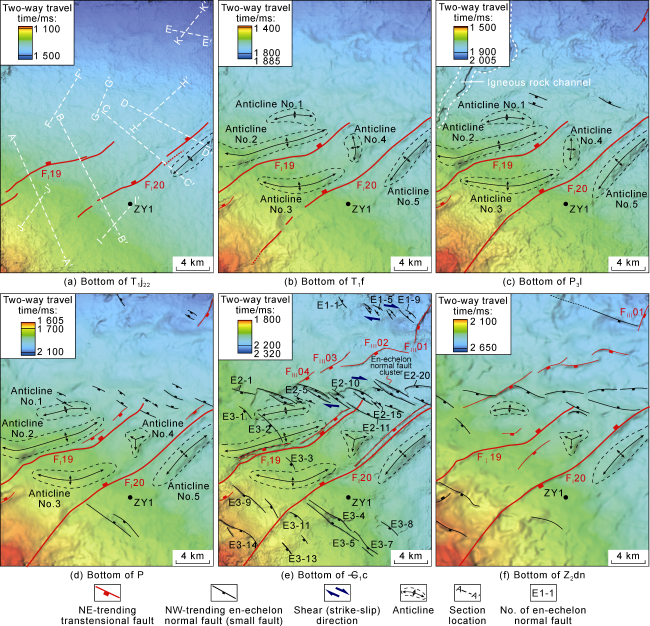
Fig. 3. Overlapping maps of T0 contour maps of key seismic reflection interfaces and fault distribution in Ziyang 3D seismic survey (see the location of study area in |
Besides the primary NE-trending FI19 and FI20 fault zones, several sets of small-scale normal faults with NW-SE strikes and en-echelon arrangements are also developed within the Ziyang 3D seismic survey. These en-echelon normal faults are primarily developed within the Cambrian, exhibiting very weak deformation at the bottoms of P and Z2dn (Fig. 3d , 3f ). However, the deformation is intense at the bottom —C1c, which clearly reveals planar fault distribution. According to statistics, these faults trend from SE 110° to SE 140°, with two sets of inclinations (NE and SW)(Fig. 4b ). Most of the faults are less than 5 km in length, with the longest reaching 7.7 km (Fig. 4c ). The fault distribution map of the bottom —C1c reveals that there are three subsets of en-echelon normal faults. Firstly, the E1-1-E1-9 en-echelon normal fault cluster is distributed along the northern margin of the Ziyang 3D seismic survey, with fault lengths generally less than 3 km (Fig. 3e ). These en-echelon normal faults belong to the FII15 fault zone, which extends further northwestwards to the Jianyang area (zone of well JY1) and potentially extend eastwards to the Anyue area as a single fault plane (Fig. 1b ). Secondly, the E2-1-E2-21 en-echelon normal fault cluster located in the central of the Ziyang 3D seismic survey, also strikes in NW-SE direction. These faults are generally paired, with opposite inclinations (SW and NE). The longest fault in lateral, E2-11, is 5.8 km in length, while the shortest is approximately 1 km. And, the eastern terminus of the FI19 fault zone terminates at the location where this set of en-echelon normal faults are developed (Fig. 3e ). Thirdly, the E3-1-E3-15 normal fault cluster is sporadically distributed to the south and west of Well ZY1 and on both sides of the FI19 fault zone. Most of these faults incline southwestwards, with the longest (E3-5) extending 7.7 km, and the shortest around 1 km (Fig. 3e ).
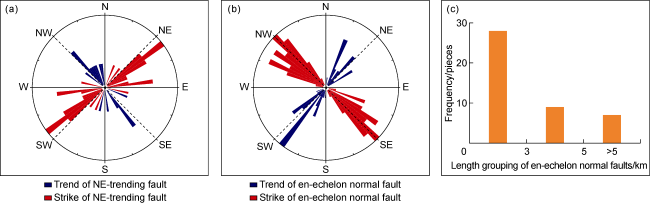
Fig. 4. Rose diagrams of fault strikes and inclinations, as well as statistic histogram of fault length of en-echelon normal faults at the bottom —C1c in Ziyang 3D seismic survey. |
3.2. Structural deformation of faults on sections
Sections AA’, BB’, CC’, and DD’ were perpendicular to the FI19 and FI20 fault zones (Figs. 3 and 5 ). Seismic section interpretation indicates that the two fault zones are primarily developed from the Neoproterozoic to the Jialingjiang Formation, exhibiting deformation characteristics of normal fault with steep dips, generally ranging from 70° to 80°, and inclining northwestwards (Fig. 5 ). In addition to the “single-fault deformation pattern” that is dominated by a single main fault (Fig. 5b , 5d ), there are also cases where the main fault combines with secondary associated normal faults in the downthrown wall to form a "Y"-shaped negative flower structure (Fig. 5a , 5c , 5d ). An initial analysis of vertical fault throws reveals that the maximum throw occurs in the center section of the Cambrian, decreasing towards the shallower Permian and Triassic or the deeper Maidiping Formation, Dengying, and Neoproterozoic. This phenomenon is evident in the FI19 fault zone in Fig. 5b , the FI19 and FI20 fault zones in Fig. 5c , and the FI20 fault zone in Fig. 5d . Furthermore, section DD’ cuts across the eastern terminus of the FI19 fault zone (Fig. 3 ), revealing weaker deformation, smaller fault throw, and fewer truncated strata compared to sections AA’, BB’, and CC’, indicating the gradual termination of the fault near this section (Fig. 5d ). For the FI20 fault zone, sections AA’ and BB’ exhibit smaller vertical fault throw, while sections CC’ and DD’ exhibit larger vertical fault throw, indicating differences in deformation intensity along different segments of the fault zone.
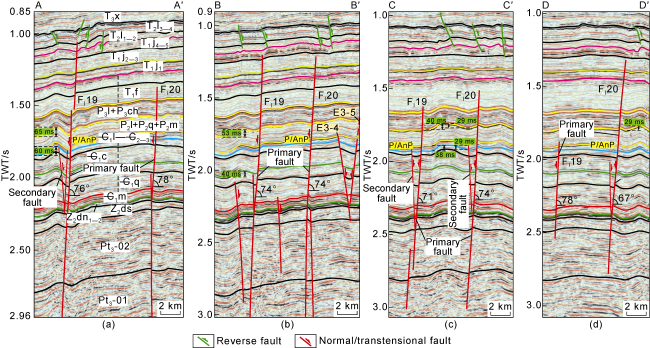
Fig. 5. Structural deformation of sections AA’, BB’, CC’ and DD’ perpendicular to FI19 and FI20 fault zones in Ziyang 3D seismic survey (Section locations refer to |
In addition to the FI19 and FI20 fault zones, sections AA’, BB’, CC’, and DD’ also reveal the deformation of folds. Small-scale anticlines are developed in the hanging wall of the FI19 fault zone on sections AA’ and BB’ and the hanging wall or foot wall of the FI20 fault zone on sections CC’ and DD’. These anticlines exhibit similar structural geometrics in different strata, have no common curvature centers, and display no significant differences in thickness for the same stratum in different parts of the anticlines (Fig. 5 ). Five anticlines like this could be identified in the bottoms of —C1c, P, P3l and T1f, with strikes broadly consistent with those of the FI19 and FI20 fault zones and exhibit elongated geometric morphologies (Fig. 3 ). Among them, Anticline No.2 extends the longest (13 km) and approximately 1.5 km in width, with fold amplitudes ranging from 40 ms to 65 ms (120 m to 180 m) at the bottom of Longwangmiao Formation and the top of Maokou Formation (Fig. 5a , 5b ). Anticline No.4 exhibits amplitudes of 29-40 ms (80 m to 120 m) (Fig. 5c ), while Anticline No.5 reaches an amplitude of 29 ms (approximately 80 m) (Fig. 5d ).
Seven short sections (EE’ to KK’) intersect the NW-SE trending en-echelon normal faults and the NE-trending FIII01 fault (Figs. 3 and 6 ), revealing structural deformation patterns distinct from those of the FI19 and FI20 primary fault zones. Section EE’ reveals that the FIII01 fault is a single plate-like normal fault with a steep dip of 77° and an inclination of SEE. This fault presents intense displacement in Qiongzhusi and Canglangpu Formations, but terminates abruptly below the P/AnP unconformity (Permian/pre-Permian unconformity) (Fig. 6a ), indicating that its upper fault plane had been truncated and stabilized prior to the formation of the P/AnP unconformity. The E3-9 fault on section JJ’ also exhibits similar deformation characteristics, cutting through the Cambrian and Dengying Formations with neat fault points in hanging wall and foot wall and terminating below the P/AnP unconformity (Fig. 6f ). In contrast to the fault deformation characteristics observed on sections EE’ and JJ’, the en-echelon normal faults on sections FF’ to II’ and KK’, such as E2-2 and E2-3, E2-7 and E2-8, E2-18 and E2-19, E3-4 and E3-5, and E1-8 and E1-9, are developed in pairs with opposite inclinations and converged into a single fault in the deep Neoproterozoic, resulting in significantly reduced vertical fault throw and exhibiting a "Y"-shaped structural pattern (Fig. 6b-6e and 6g ). These en-echelon normal faults exhibit larger vertical fault throw below the P/AnP unconformity, with their upper endpoints generally terminating below this unconformity (Fig. 6b-6e and 6g ). Even if the faults breach the unconformity, the fault displacements are insignificant, with minimal vertical fault throw. These features indicate that the en-echelon normal faults were actively deformed and almost fixed before the formation of the P/AnP unconformity, with very weak fault activity following its formation.
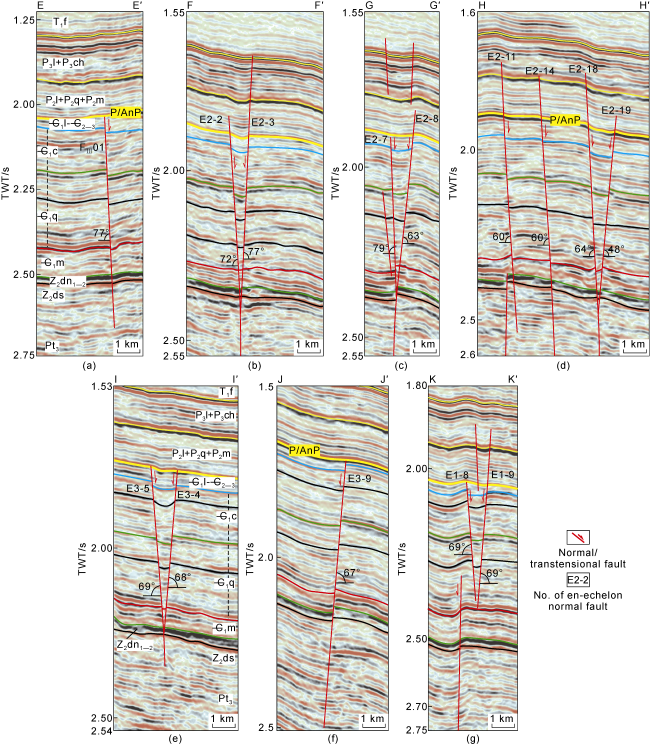
Fig. 6. Structural deformation on sections EE’-KK’ (see section location in |
3.3. 3D framework model
Seismic sections were extracted perpendicular to the fault strike at intervals of 5-20 traces (100-400 m) to interpret and combine faults in 3D space, ultimately construct the 3D fault-horizon structural model of the Ziyang 3D seismic survey. The 3D model reveals the NE-trending "S"-shaped and ribbon-like fault geometries of FI19 and FI20 fault zones and their secondary associated normal faults, as well as the fault plane structures of the small-scale NE-trending normal faults. Furthermore, the model also depicts the 3D geometrics and distribution patterns of two en-echelon normal fault clusters (E1-1-E1-9, E2-1-E2-21), and the approximately en-echelon normal fault cluster (E3-1-E3-15). Overall, the fault planes of these en-echelon normal faults are relatively small, exhibiting significant differences compared to the large fault planes of the FI19 and FI20 fault zones (Fig. 7a , 7b ).
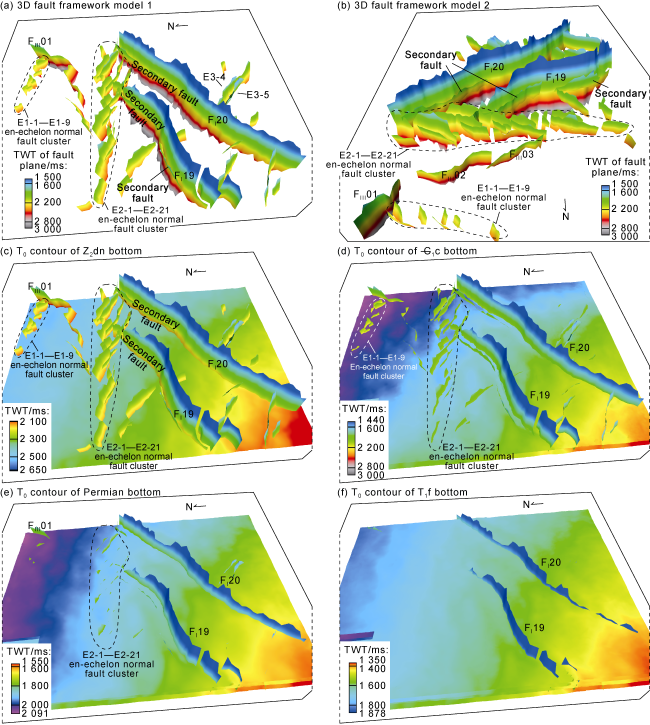
Fig. 7. 3D fault-horizon framework model in Ziyang 3D seismic survey. |
The fusion display of the 3D fault model and T0 contour surfaces of the bottoms of Z2dn, —C1c, P and T1f reveals intricate fault patterns. Specifically, the primary fault planes of the E1-1-E1-9, E2-1-E2-21, and E3-1-E3-15 en-echelon normal faults are situated beneath the Permian bottom. Only a minor portion of these en-echelon faults break the P/AnP unconformity, terminating shortly in the Permian. In contrast, the fault planes of FI19 and FI20 break multiple strata, spanning from the Sinian to the Lower Triassic, maintaining their continuity and significant scale above the bottoms of P and T1f (Fig. 7c-7f ).
A more detailed analysis of the 3D fault plane geometries of the E2-1-E2-21 and the FI19 presents an intriguing intersection. Specifically, the eastern terminus of the FI19 fault plane intersects the fault planes of E2-11 and E2-12, terminating within the zone where the E2-1-E2-21 en- echelon normal faults are developed (Figs. 3e, 7a, 7b). This suggests that the eastward growth and propagation of the FI19 fault zone may be influenced and constrained by the presence of the E2-1-E2-21 en-echelon normal faults.
4. Spatial variation of vertical fault throw and section structural evolution in Ziyang 3D seismic survey
Vertical fault throw and its spatial distribution are pivotal parameters for quantitatively assessing fault activity patterns. By comprehensive analysis of vertical fault throw-depth relationships (vertical fault throw and depth herein are in time domain) and unconformities, the distribution modes of vertical fault throw with depth could provide insights into the confirmation of fault activities. Furthermore, along strikes of faults, the 2D distribution of vertical fault throws in various stratigraphic interfaces elucidates the segmented differential deformation within fault zones and the transfer mechanisms of fault slip displacement between adjacent faults.
4.1. Vertical fault throw-depth relationships and fault activity periods
Vertical fault throws were measured along 11 sections that cross major faults within the study area, yielding vertical fault throw-depth curves ultimately (Fig. 8 ). The results indicate a notable discontinuity in the vertical fault throw-depth curves of certain faults, particularly evident in the fault FI19 on sections AA', BB' and CC', and the FI20 fault on sections CC' and DD' (Fig. 8a-8d ).
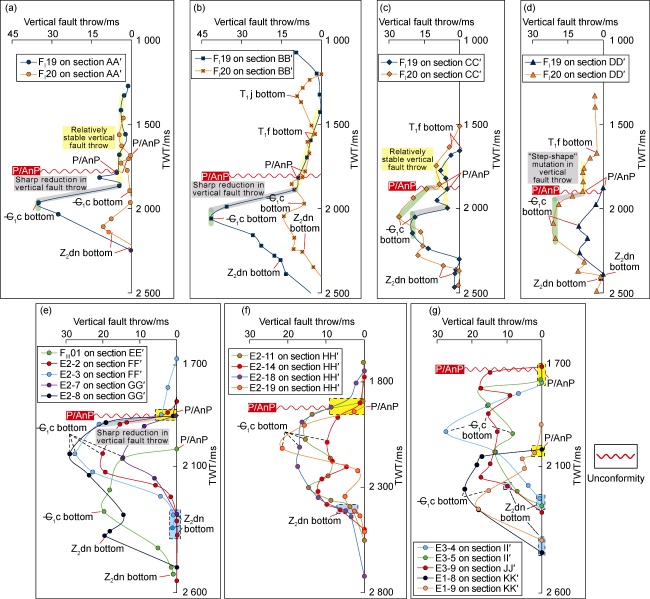
Fig. 8. Vertical fault throw-depth curves in time domain of primary faults on representative sections (see the section location in |
Specifically, on sections AA' and BB', the vertical fault throw of the FI19 fault ranges from 30 ms to 45 ms at the bottom of Canglangpu Formation and its adjacent strata. However, in the Permian bottom and its overlying strata, the vertical fault throw abruptly decreases below 10 ms, remaining relatively constant, indicating a significant discontinuity across the P/AnP unconformity. Similarly, the vertical fault throw-depth curves of the FI19 and FI20 faults on section CC' and the FI20 fault on section DD' exhibit a step-like pattern, with vertical fault throw at the bottom —C1c ranging from 20 ms to 25 ms, whereas in the Permian above the P/AnP unconformity, it suddenly decreases and stabilizes around 10 ms, further corroborating the discontinuity of vertical fault throw across the unconformity (Fig. 8c , 8d ).
For the FIII01 fault and the NW-trending en-echelon normal faults, their vertical fault throw-depth curves generally terminate below the P/AnP unconformity, exhibiting a marked discontinuity from the Cambrian to the unconformity. Specifically, the vertical fault throw sharply decreases from 10-30 ms at the bottom —C1c to approximately 0 ms. Even when faults break the unconformity, the vertical fault throw remains within a narrow range, significantly different from the values within the Cambrian (Fig. 8e-8g ).
The distribution features of vertical fault throws above and below the P/AnP unconformity in major faults on the above sections have profound structural implications. Prior to the formation of the P/AnP unconformity, these faults were already active, and subsequently eroded together with strata due to the uplift of the Central Sichuan Paleouplift. Then during the deposition of the overlying Permian and Triassic, the faults reactivated. Consequently, strata below the P/AnP unconformity accumulated the vertical fault throws resulting from fault activities both before and after the formation of the unconformity, whereas strata above the unconformity only record vertical fault throws after the formation of unconformity, leading to a larger vertical fault throw below the unconformity and a smaller one above it, demarcated by a distinct discontinuity. Additionally, faults such as the NW-trending en-echelon normal faults and NE-trending small faults like FIII01 were nearly stabilized before the formation of the P/AnP unconformity, with fault tops truncated by the unconformity (Fig. 6a , 6f , 6g ), and only fewer faults break the overlying strata (Fig. 6b-6d , 6g ).
4.2. Planar variation features of vertical fault throws
To elucidate the distribution of vertical fault throws of major faults on the bottoms of P and —C1c in the Ziyang 3D seismic survey, and thereby characterize the differential deformation of segments with various structural deformations and lateral transfer patterns of displacements in adjacent fault zones, vertical fault throws were measured at high-density intervals within these two stratigraphic interfaces. The results indicate that the vertical fault throw at bottom —C1c (0-40 ms) is generally 2-3 times of that at the bottom P (0-20 ms).
Despite the disparity in multiples between the vertical fault throws at the two bottoms, the FI19 and FI20 faults exhibit similar planar variation pattern of vertical fault throws. Specifically, the larger vertical fault throws in the FI19 fault zone occur in the A1-A0 segment, gradually decreasing eastward to 0 ms in the easternmost of A0-A2 segment, with fault terminating within the development area of the E2-1-E2-21 en echelon normal fault cluster (Fig. 9 ). Similarly, the vertical fault throw of the FI20 fault exhibits notable east-west differences, with values ranging from 20 ms to 30 ms (at the bottom —C1c) and 10 ms to 15 ms (at the bottom P) in the eastern B0-B1 segment, while the western B0-B2 segment generally exhibits vertical fault throw values less than 10 ms (at the bottom —C1c) and less than 5 ms (at the bottom P) (Fig. 9 ). The above phenomena are also evident in vertical fault throw-depth relationship curves of the FI19 and FI20 fault zones (Fig. 8a-8d ), indicating that structural deformation of the FI19 fault zone is generally more intense, whereas the FI20 fault zone exhibits a stronger deformation in the east segment and a weaker deformation in the west segment.
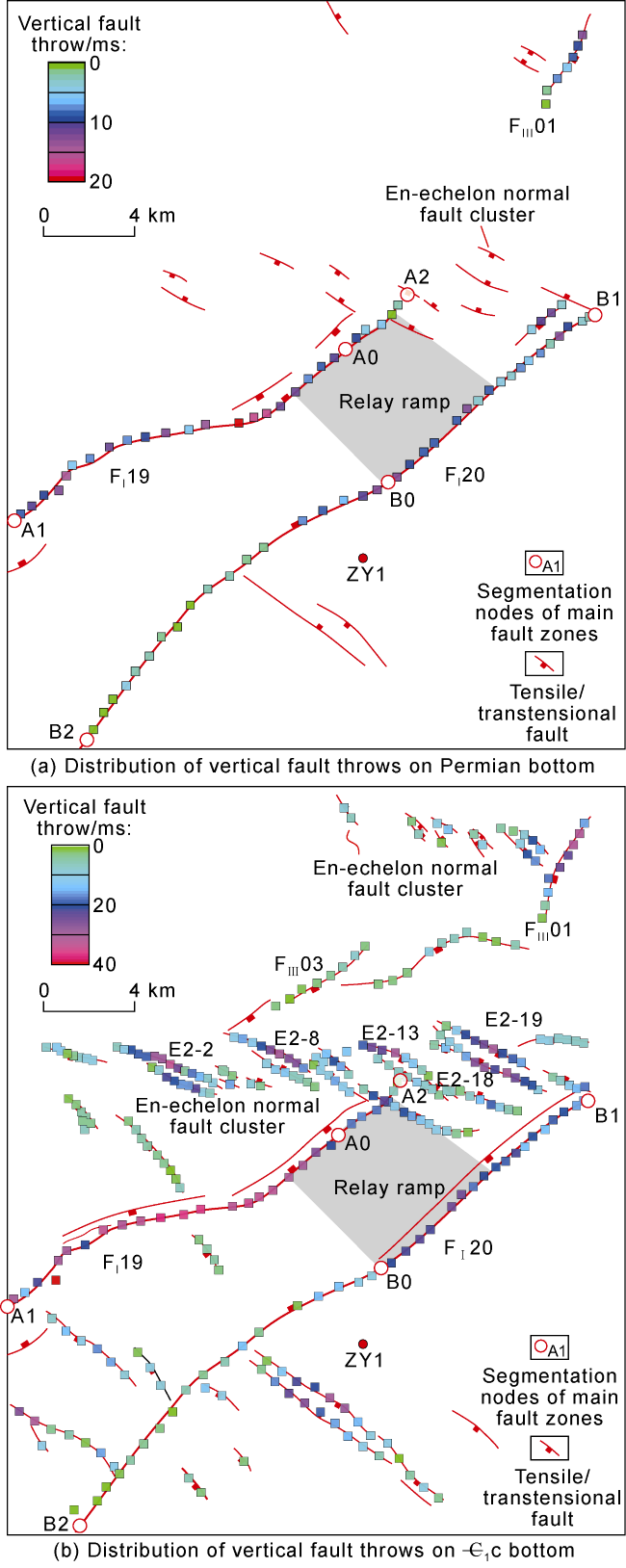
Fig. 9. Planar distribution of vertical fault throws in Ziyang 3D seismic survey. |
Furthermore, the strongly deformed segments of the FI19 (A0-A1) and FI20 (B0-B1) fault zones exhibit a lateral overlapping in the center of the 3D seismic survey, suggesting the development of a relay ramp between these two fault zones. This indicates the presence of lateral transfer of fault slip displacement and lateral transition of active fault segments during structural activities, whereby the strongly deformed A0-A1 segment of the FI19 fault zone accommodated a significant amount of fault slip displacement, while the parallel B0-B2 segment of the FI20 fault zone underwent relatively weak deformation and accommodated a smaller fault slip displacement. And, upon the eastward cessation of the A0-A2 segment of the FI19 fault zone, the regional structural extension deformation and displacement were subsequently accommodated by the B0-B1 segment of the FI20 fault zone.
Additionally, the NW-trending en-echelon normal faults, primarily below the Permian, exhibit vertical throws up to 40 ms at the bottom —C1c in certain faults (e.g., faults E2-2, E2-8, E2-13, E2-18, and E2-19), and displays larger vertical throws in their central segments, and with diminishing vertical throws towards both ends (Fig. 9 ). This suggests that despite the limited lengths of the en-echelon normal faults, the localized structural deformations are also remarkably significant.
4.3. Balanced section restoration and structural evolution
Section CC' provides a detailed view of the FI19 and FI20 fault zones, encompassing their primary faults, secondary faults within their foot walls, and the low-amplitude anticlines between them (Fig. 10a ). Accurately dating fault activity solely based on the termination stratigraphy of upper endpoints of faults poses challenges, particularly with the absence of discernible growth strata in foot walls of the FI19 and FI20 fault zones. This hinders precise constraints on the active periods of these NE-trending primary fault zones in the Ziyang area.
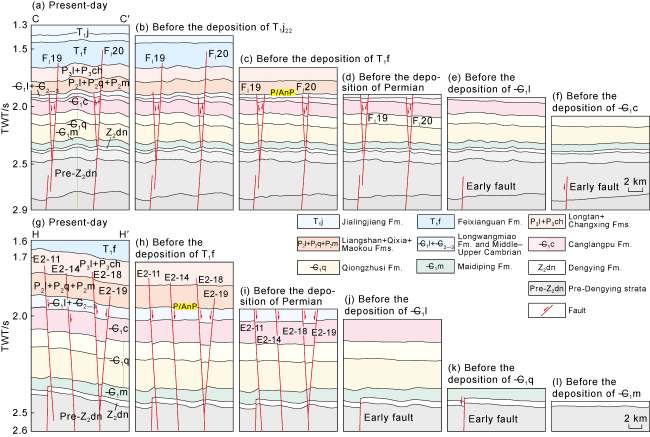
Fig. 10. Structural evolution of sections CC' and HH' in the study area. |
The history of region and basin tectonic evolution shows that since the Late Triassic, the orogenic belts surrounding the Sichuan Basin have progressively advanced into the basin, which resulted in the transition of regional tectonic regimes from extension-dominated to compression-dominated. Consequently, owing to the absence of transtensional dynamics, the central Sichuan Basin had been less conducive to the development of large-scale transtensional fault systems since the Late Triassic. This suggests that the termination of the TFSCS occurred during the Early to Middle Triassic, corresponding to the deposition periods of the Feixianguan and Jialingjiang Formations. This enables the reconstruction of the structural evolution of the primary faults in the study area.
The balanced section restoration of section CC' commenced by flattening the bottom of the T1j22, which significantly diminishes the fold amplitudes of the low- gentle anticlines between the FI19 and FI20 fault zones (Fig. 10a , 10b ). Subsequently, the section was restored to the state prior to the deposition of the Feixianguan Formation, at which point fault throws of FI19 and FI20 fault zones within the Permian were extinguished, indicating limited fault activity during the Permian (Fig. 10c ). Further, the section was restored to the pre-Permian state which reveals the vertical throws of the FI19 and FI20 primary faults and their associated secondary faults remain larger, indicating more intense fault activity before the formation of the P/AnP unconformity (Fig. 10d ). Ultimately, vertical fault throws of FI19 and FI20 within the Cambrian were eliminated when the section was restored to the state prior to the deposition of the Longwangmiao and Canglangpu Formations. Meanwhile, this reveals that earlier faults may persist within the Neoproterozoic underlying the Dengying Formation (Fig. 10e , 10f ).
Section CC' restoration highlights two distinct stages of fault activity for the NE-trending FI19 and FI20 fault zones. Stage 1 was characterized by strong tensional (or transtensional) faulting prior to the formation of the P/AnP unconformity. And subsequently, stage 2 occurred after the formation of P/AnP unconformity, likely during the Early Triassic, wherein faults initiated during stage 1 propagated into shallower Permian and Lower Triassic, significantly breaking these strata.
Section HH' reveals four NW-trending en-echelon normal faults (E2-11, E2-14, E2-18, E2-19), which is accompanied by an overall northeastward tilting of strata, as a consequence of Mesozoic-Cenozoic folding, uplifting and tilting associated with the Weiyuan Anticline. The structural backstripping evolution of this section commenced by flattening the bottom of the Feixianguan Formation, mitigating Mesozoic-Cenozoic tilting and the drag syncline deformation caused by the E2-18 fault within the Permian and Triassic (Fig. 10g , 10h ). At this stage, vertical throws of faults E2-11, E2-14, E2-18 and E2-19 within the Permian were minimal, indicating limited fault activity of these NW-trending en-echelon normal faults during the Permian-Triassic (Fig. 10g , 10h ). Further backstripping the section to the pre-Permian deposition state reveals that vertical fault throws beneath the P/AnP unconformity are comparable to those on the present-day section, suggesting that the primary activity period of these NW-trending en-echelon normal faults occurred prior to the formation of the P/AnP unconformity (Fig. 10i ). By flattening the bottoms of the Longwangmiao and Qiongzhusi Formations, the faults and their vertical throws were extinguished, limiting the onset of fault activity to the post-Longwangmiao deposition period (Fig.10j , 10k ). Analogous to section CC', older syndepositional normal faults might also develop prior to the deposition of the Qiongzhusi Formation within the Maidiping Formation and the underlying strata (Fig. 10j , 10k ).
The HH' section restoration suggests that the primary active period of the NW-trending en-echelon normal faults occurred after the deposition of the Longwangmiao Formation and before the deposition of the Permian. Following the formation of the P/AnP unconformity, the activity of these en-echelon normal faults nearly ceased.
5. Multiphase structural superimposition and evolution of fault system
Comprehensive analyses encompassing sectional-planar structural dissection, vertical fault throw assessment, and balanced section restoration indicate that the Ziyang 3D seismic survey underwent three distinct stages of tensional or transtensional fault activities. The first faulting period was during the Late Neoproterozoic to Early Cambrian, when the Maidiping Formation and underlying strata were broken by faults (Figs. 10e, 10f, 10j, 10k, 11a). The second stage of fault activity was prior to the formation of the P/AnP unconformity, spanning from the post-Longwangmiao Formation deposition period to pre-Permian, encompassing NW-trending en-echelon normal faults and NE-trending main faults (FI19, FI20), with the NW-trending en-echelon normal fault cluster largely attaining their present-day configuration during this phase. The third fault activity was after the formation of the P/AnP unconformity, maybe during the deposition of the Feixianguan and Jialingjiang Formations in the Early Triassic, wherein the NE-trending main faults (FI19, FI20) exhibited inherited activity, propagating early faults beneath the P/AnP unconformity into the Permian and Lower Triassic. While the structural response and fault activity during the third stage are less controversial, questions lie in the first and second stages of fault activities.
Concerning the early fault activity in the first stage, it is currently postulated that the central Sichuan Basin underwent a tectonic extension during the Late Neoproterozoic to Early Cambrian, fostering conditions conducive to the development of the Anyue Rift Trough. Under this context, the localized occurrence of normal faults influencing the deposition of the Maidiping Formation of the Lower Cambrian is reasonable.
Concerning the fault activity in the second stage, the primary debate centers on whether the NW-trending en-echelon normal faults and NE-trending main faults (FI19, FI20) underwent simultaneous deformation under a unified tectonic stress field or asynchronous deformation under distinct local tectonic stress fields over the extended period of 2×10⁸ years. An analysis of fault strikes and deformation characteristics of the FI19 and FI20 fault zones, and the NW-trending en-echelon normal faults reveals three noteworthy phenomena that offer potential explanations for this debate.
Firstly, the FI19 fault zone, as one of the fault zones with the most intense deformation within the region, abruptly terminates in the eastern segment at the development locus of the E2-1-E2-21 en-echelon normal faults. This suggests that the en-echelon normal fault cluster was likely formed prior to the NE-trending FI19 fault zone. Consequently, during the eastward propagation of the FI19 fault zone, the preexisting E2-1-E2-21 en-echelon normal faults modulated the structural stress field, ultimately terminating the FI19 fault zone at the area.
Secondly, the NW-trending en-echelon normal faults predominantly exhibit a left-stepped en-echelon pattern, indicating a past dextral shear deformation episode. Consequently, the oblique tectonic extension that governed their development was likely NE-trending (Fig. 11b ). Conversely, the absence of strike-slip-related secondary structures in the NE-trending FI19 and FI20 fault zones suggests that their formation was mainly associated with a NW-trending regional tectonic extension (Fig. 11c , 11d ). The concurrence of intense NW- and NE-trending tectonic extensions is unlikely for the following reasons: if both extensions were synchronous, the tensile stresses would have acted concurrently on both fault systems, leading to the development of dextral shear-related secondary structures in the FI19 and FI20 fault zones. However, such secondary structures are absent. Furthermore, the development of the E2-1-E2-21 en-echelon normal faults, unfavorable for dextral shear, would have instead favored the formation of sinistral shear en-echelon normal faults under the combined shear effect. Therefore, it is the evident that the NW-trending tectonic extension and NE-trending oblique tectonic extension occurred independently and asynchronously.
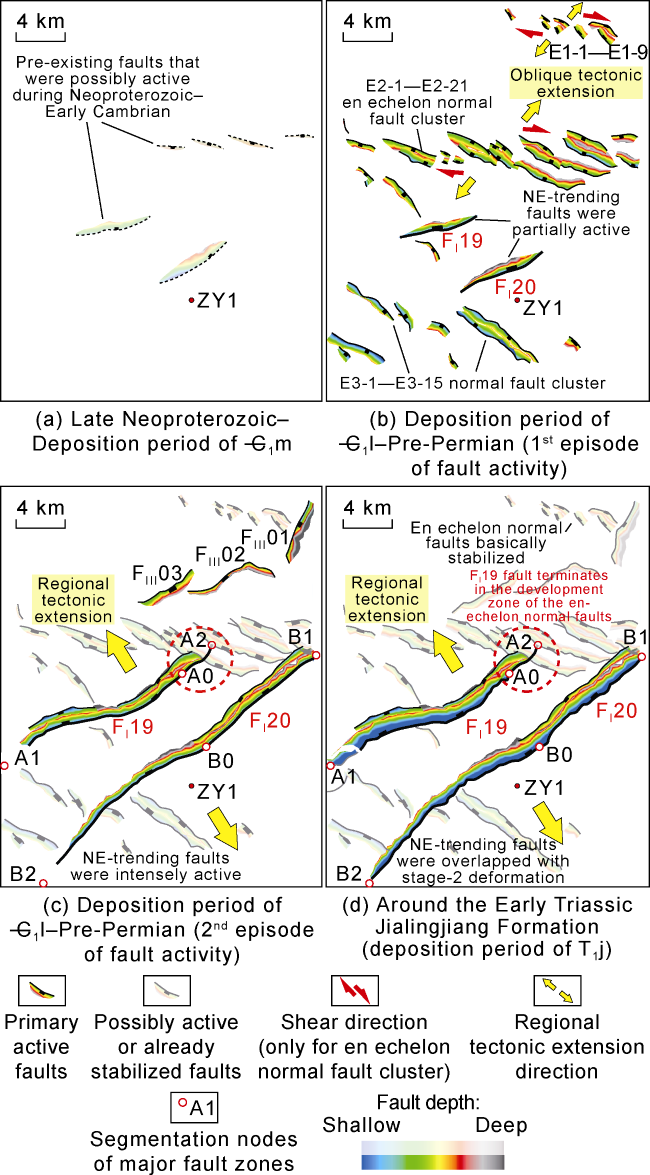


Fig. 11. Structural evolution of the transtensional fault system in the Ziyang 3D seismic survey (3D top view). |
Thirdly, based on the above analysis, it becomes apparent that following the formation of the P/AnP unconformity, only the NE-trending primary faults underwent intense activity, whereas the structural activities of the NW-trending en-echelon normal faults essentially ceased. This cessation likely stemmed from the termination of the NE-trending oblique tectonic extension that controlled their development, leaving the NW-trending tectonic extension to dominate the deformation of the NE-trending fault zones.
Based on the above analysis, the structural evolution of the transtensional fault system in the Ziyang 3D seismic survey can be reconstructed as follows: Initial normal faulting activities were recorded within the Neoproterozoic to Maidiping Formation during the late Neoproterozoic to the Lower Cambrian (Fig. 11a ). Subsequently, after the deposition of the Longwangmiao Formation to pre-Permian, spanning approximately 2×10⁸ years, two distinct tectonic events occurred. The first tectonic event entailed the dextral shear deformation of the NW-trending en-echelon normal faults under the control of NE-trending oblique tectonic extension, which also facilitated the reactivation of near-EW-trending fault segments within the NE-trending main fault zones (Fig. 11b ). The second event, occurring after the formation of the en-echelon normal faults, marked a transition to NW-trending regional tectonic extension, governing the intense deformation of the NE-trending FI19 and FI20 fault zones (Fig. 11c ). The final episode of fault deformation occurred after the formation of the P/AnP unconformity, likely during the deposition of the Feixianguan and Jialingjiang Formations. During this period, the NE-trending FI19 and FI20 fault zones grew again under the NW-trending regional tectonic extension, and broke the P/AnP unconformity and propagated upwards into the Permian and Lower Triassic (Fig. 11d ).
6. Petroleum geological significance of transtensional faults in the Ziyang area
In the Ziyang area, Well ZY1 represents the sole exploration well that has penetrated the Sinian Doushantuo Formation. It has exhibited hydrocarbon indications across multiple formations, including the Xüjiahe, Leikoupo (third member), Changxing, Maokou, Qixia, Longwangmiao, Qiongzhusi, and Dengying Formations, revealing the favorable petroleum exploration potential in this area. However, the Ziyang 3D seismic survey is situated on the northeastern slope of the Weiyuan Anticline, characterized by a monocline that is higher in southwest and lower in northeast. Consequently, the conditions for forming effective traps are comparatively stringent. Therefore, elucidating the source-reservoir configuration, identifying favorable trap locations, and determining the role of NE- and NW-trending faults in hydrocarbon migration and accumulation are crucial for pinpointing favorable exploration targets in this area.
(1) Source-reservoir configuration, and fault communication conditions. The Ziyang 3D seismic survey mainly develops dark shales and mudstones in the Maidiping and Qiongzhusi Formations, carbonaceous shales in the Liangshan Formation, coal-bearing strata in the Longtan Formation, shales in the Feixianguan Formation, and dark shales and coal-bearing strata in the Xüjiahe Formation, serving as the primary source rocks (Fig. 2 ). Meanwhile, the reservoir rocks are predominantly developed in the Xüjiahe, Leikoupo (third member), Changxing, Maokou, Qixia, Longwangmiao, Qiongzhusi, and Dengying Formations, exhibiting a vertically alternating and stacking relationship with the source rocks. Faults, particularly the NE-trending FI19 and FI20 main faults, have broken multiple layers of source and reservoir rocks spanning from the Neoproterozoic to the Jialingjiang Formation. This geological configuration facilitates hydrocarbon migration from major source rocks (such as the Maidiping, Qiongzhusi, and Longtan Formations) along these faults into shallower reservoirs (the Longwangmiao, Qixia-Maokou, Changxing, and Jialingjiang Formations), thereby establishing a multi-layered gas-bearing pattern. In contrast, the NW-trending en- echelon normal fault cluster is predominantly developed below the Permian, and primarily affects hydrocarbon accumulation within the Longwangmiao Formation.
(2) Matching of fault activities and hydrocarbon charging processes. The hydrocarbon migration and adjustment processes in this region are deeply linked to faults, particularly the NE-trending FI19 and FI20 main fault zones. However, this is contingent upon a favorable temporal-spatial alignment between the active fault period and the peak period of hydrocarbon generation. In the absence of such alignment, long-term precipitation, cementation, and sealing processes within the fault zone would significantly deteriorate its permeability, leading to obviously reduced hydrocarbon migration efficiency. Previous investigations into the hydrocarbon charging timings of fluid inclusions in representative wells in the Anyue Gas Field have revealed that the primary oil charging event occurred approximately between the Late Permian and Early Triassic, while thermally cracked gas charging occurred primarily during the Late Triassic-Early Jurassic and Late Cretaceous [26]. Therefore, the structural activities of the FI19 and FI20 fault zones during the Early Triassic coincided with the contemporaneous oil charging process, exhibited a favorable match, thus facilitated crude oil migration into shallower Permian and Triassic reservoirs. Furthermore, the open fractures and caves within the fault zone likely persisted until the Late Triassic to even Early Jurassic, also coincided with the thermally cracked gas charging period, thereby favored the migration of deep cracked gas into shallower Qixia, Maokou, and Changxing reservoirs.
(3) Trap conditions in low-amplitude anticline belts near faults. A preliminary analysis of the 3D surface models of key seismic reflection interfaces in this area has identified No.1-No.5 low-amplitude anticline belts (Fig. 3 ) in bottoms of Longwangmiao, Qixia, Maokou, and Changxing Formations, exhibiting anticline amplitudes ranging from 30-60 ms (75-150 m, Fig. 5 ). The coupling of these low-amplitude anticline belts with favorable dolomite and limestone reservoirs in the corresponding formations would significantly enhance the prospects for the formation of effective traps in these anticlines. Furthermore, the superimposition of favorable source-reservoir communicating conditions in the FI19 and FI20 fault zones would further augment the likelihood of hydrocarbon accumulation within these low-amplitude anticlines.
The NE-trending grade-I faults, such as FI19 and FI20, could play a significant role in controlling the formation of multi-layer oil and gas reservoirs within the Ziyang 3D seismic survey. In the whole central Sichuan Basin, fault zones sharing comparable deformation patterns with FI19 and FI20 are situated in the Jianyang-Penglai vicinity, such as the FI17 and FI18 fault zones and a segment of the FI20 fault zone that extends into the Anyue-Suining area (Fig. 1b ). Consequently, to heighten the significance of these NE-trending grade-I fault zones on oil and gas accumulation in the future will greatly expand the scope of multi-layer oil and gas exploration and development in the central Sichuan Basin.
7. Conclusions
The transtensional faults prevalent in the Ziyang 3D seismic survey, as an extension and crucial part of the TFSCS, encompasses NE-trending extension-dominant FI19 and FI20 fault zones, along with three sets of NW- trending dextral shear en-echelon normal faults. Notably, the FI19 and FI20 fault zones break through the Neoproterozoic to the Jialingjiang Formation, displaying an "S"-shaped and ribbon-like 3D structure. These faults underwent a minimum of two structural superimposition and alteration periods preceding the deposition of the Permian and the Early Triassic. The three sets of NW-trending en-echelon normal faults are paired, and composed of partially left-stepped small normal faults with opposite inclinations, which had nearly ceased activity prior to the deposition of the Permian. The NW-trending en-echelon normal faults preceded the activation of the NE-trending FI19 and FI20 fault zones, thereby impeding and terminating the eastward propagation and growth of the FI19 fault zone due to the structural stress adjustment by the earlier formed en-echelon normal faults. The FI19 and FI20 fault zones bridge multiple layers of source rocks and reservoirs from deeper to shallower strata, with fault activity timing aligning closely with the peak period of oil and gas generation. Within the local low-amplitude anticlines on both sides of the FI19 and FI20 fault zones, the coexistence of favorable sedimentary facies and reservoirs is prospective to foster substantial oil and gas accumulation in primary reservoir intervals, such as the Longwangmiao, Qixia, Maokou, and Jialingjiang formations.