

Introduction
Fine-grained sedimentary rocks, which are composed of clay and silt particles smaller than 62.5 μm in diameter [1], are important source and reservoir rocks of unconventional hydrocarbon resources [2]. A spatially coupling relationship between major source rocks and volcanic de-bris layers were recently discovered in some continental petroliferous basins in China [3-4]. For example, there are high-quality source rocks intercalated with a lot of thin layered tuffs in the fine-grained sedimentary rocks in the 7th member of the Triassic Yanchang Formation, Ordos Basin [5]. Synsedimentary eruptive tuffs were also found in the lacustrine dark mudstones in the Permian Lucaogou Formation, the Santanghu Basin [6]. Volcanic activity is also relatively developed in the rift basin, which has a positive impact on the formation and enrichment of organic matter in source rocks [3-4,6].
The Songliao Basin witnessed a prosperity of evolution as a lake basin at the depositional stage of the Lower Cretaceous Shahezi Formation, when black shales were deposited extensively with large thickness, high TOC content, and large potential of hydrocarbon generation [7]. Since 2018, resources assessment had been performed by Oil and Gas Resource Investigation Center of the China Geological Survey for continental shale oil and gas in the Lishu Rift in the southeast uplifted area, the Songliao Basin. Well JLYY1 drilled in 2019, the first shale gas parameter well targeting the Shahezi Formation, was tested to yield shale gas flow of 7.6×10⁴ m3 per day after fracturing. It is so far the only well with tested commercial gas flow from the Shahezi Formation in the Songliao Basin [8], and its success witnessed the breakthrough in continental shale gas exploration in the basin. The studies of Shahezi shales in the Lishu rift depression mostly dealt with reservoir characteristics, gas-containing property, and enrichment conditions [9⇓-11]. According to Shahezi mud shale origin in the Lishu rift depression inferred from the interpretation results of Well JLYY1 [7,10], organic-rich shales in the lacustrine transgressive system tract in the lower submember of the second member of the Shahezi Formation (K1sh2L for short) were considered to be high-quality source rocks in this area settling in the period with active volcanisms. K1sh2L was taken as an integer in above studies. In view of remarkably different potentials of hydrocarbon generation in different lithofacies, it is necessary to perform detailed assessment of fine-grained sedimentary rocks in the K1sh2L to understand the major controls on the sedimentary environments, material sources, and organic matter types and enrichment in different lithofacies.
Our study uses dense K1sh2L mud shale samples from two continuously cored wells, JLYY1 and SN167-9, in the study area. Based on organic petrologic, element geochemical, and molecular geochemical analyses, we investigate the lithofacies types, material sources, and sedimentary environments of K1sh2L source rocks. Mud shale distribution is mapped using these two wells and additional 56 wells in the area to establish the enrichment characteristics of organic matter and its major control factors. Our research findings may also be referred in the study of organic matter enrichment in Lower Cretaceous fine-grained sedimentary rocks in Songliao Basin and peripheral basins such as Chaoyang Basin.
1. Regional geologic setting
The Songliao Basin, the largest continental petroliferous basin in northeast China, is mainly deposited during the Mesozoic and Cenozoic periods, has a double-layer geological structure of lower fault and upper depression [12]. The Lishu rift depression is located in the southeast uplift area of the Songliao Basin (Fig. 1a ) and exhibits a typical half-graben structure, covering an area of approximately 2 300 km2 (Fig. 1b ). It has undergone various tectonic evolutionary phases, including the rifting, subsidence, and inversion stages [13]. The sedimentary strata during rifting stage primarily developed the Huoshiling Formation (K1h), Shahezi Formation (K1sh), Yingcheng Formation (K1yc) and Denglouku Formation (K1d) (Fig. 1c ). The Shahezi Formation includes three sedimentation units from bottom to top: the first member of K1sh (K1sh1), the lower submember of the second member of K1sh (K1sh2L) and the upper submember of the second member of K1sh (K1sh2U). The maximum water invasion occurred at the depositional stage of K1sh2L, when the whole basin was in a semi-deep to deep lake environment settled with thick organic-rich mud shales that are the dominant source rocks in the deep basin [7].

Fig. 1. Tectonic location map of the Lishu rift depression in Songliao Basin (a), drilling sites in the Lishu rift depression (b) and composite stratigraphic column (c). |
2. Methodology
All the samples from wells SN167-9 and JLYY1 in the study area were investigated using thin section observation, bulk-rock X-ray diffraction (XRD), and total organic carbon (TOC), major and trace elements, and molecular organic geochemical tests.
XRD analysis for 130 samples was conducted using a D8 Advance X-ray diffractometer. The samples were dried at 60 °C, ground to below 0.075 mm (200 meshes), and then scanned using Cu-Ka ray at 40 kV and 40 mA. Diffraction peak intensity was measured to determine mineral types and relative contents.
TOC content was tested for 144 samples using a LECO CS230 carbon-sulfur analyzer. The samples were ground to below 0.2 mm in grain size and then dried at low temperatures. A sample of 100 mg was put into a crucible and mixed with dilute HCl of 5% to remove inorganic carbon. Using the combustion method, remaining organic carbon was completely converted into CO2, the content of which was checked using an infrared detector for the estimation of TOC content.
The quantitative analysis of major and trace elements was fulfilled using a portable X-ray fluorescence spectrometer (XRF) at the mode of General, detection voltage of 10 kV, and current of 0.15 mA within a time interval of 60 s. There was a checkpoint every 4-15 cm, and altogether 585 data points were acquired.
The gas chromatograph-mass spectrum (GC-MS) biomarker analysis was accomplished for 14 samples using an Agilent GC (6890N) gas chromatograph and an Agilent MS (5975B) mass spectrograph at the State Key Laboratory of Petroleum Resources and Prospecting, China University of Petroleum-Beijing.
3. Sedimentary characteristics of K1sh2L
3.1. Lithofacies types and origin
The types of fine-grained sedimentary rocks in K1sh2L in the Lishu rift depression were classified using core observation, thin section identification, and XRD analysis. Based on three end members of clay, felsic, and carbonate minerals [2] as well as sedimentary structure characteristics of each lithology, the fine-grained sedimentary rocks of K1sh2L in the Lishu rift depression were classified into four main lithofacies: massive siliceous mudstone, massive bioclast-bearing siliceous mudstone, laminated siliceous shale, and laminated fine-grained mixed shale (Fig. 2 ). According to the petrologic features of each lithofacies and geochemical parameters for sedimentary environment analysis, the fine-grained sedimentary rocks of K1sh2L were considered to go through two-section evolution from the bottom up (Table 1 , Figs. 3 and 4 ), either of which shows distinct genetic mechanism of lithofacies assemblage, provenance input intensity, climatic conditions, and water properties (Table 1 ).

Fig. 2. Core and thin section feature of major lithofacies in K1sh2L of Lishu rift depression. (a) Well SN167-9, 3 143.30 m, massive siliceous mudstone, microscopically a lot of chaotic accumulations of terrigenous quartzes, poor quartz roundness, plane-polarized light; (b) Well SN167-9, 3 168.62 m, massive bioclast-bearing siliceous mudstone, sheet-like bioclast with scouring action on underlying sediments, plane-polarized light; (c) Well SN167-9, 3 115.70 m, laminated siliceous shale with a binary structure vertically, laminae composed of felsic and clay minerals alternating with micritic calcite laminae, plane-polarized light; (d) Well JLYY1, 3 131.45 m, laminated fine-grained mixed shale with increased micritic calcite laminae vertically, plane-polarized light; (e) Well JLYY1, 3 120.05 m, volcanic breccia with a lot of quartz and feldspar crystal fragments, cracks and corrosion rim observed frequently on quartz crystal fragments, plane-polarized light on the left and cross-polarized light on the right; (f) Well SN167-9, 3 097.75 m, grayish black medium- to coarse-grained tuff with a massive structure; (g) Well SN167-9, 3 097.75 m, medium- to coarse-grained tuff, angular to subangular quartz crystal fragments with harbor-like corrosion rim, matrix cemented by volcanic ash and hydrochemical substances, plane-polarized light on the left and cross-polarized light on the right; (h) Well SN167-9, 3 076.76 m, cm-scale tuff layers with scouring action on underlying mudstone; (i) Well SN167-9, 3 076.76 m, fine-grained tuff with the matrix mostly composed of aphanitic fine-grained volcanic ash, plane-polarized light on the left in zone A of Fig. (h) and cross-polarized light on the right. |
Table 1. Characteristics of paleopaleoenvironment in the upper and lower sections of the K1sh2L in the Lishu rift depression |
| Lithofacies association | Paleo- water depth index | Palaeoclimate index | Paleo- salinity index | Redox condition index | Paleoproductivity index | Kerogen δ13C/‰ | Sedimentary structure | Sedimentation mechanism | ||||||
|---|---|---|---|---|---|---|---|---|---|---|---|---|---|---|
| (Al+Fe)/ (Ca+Mg) | Fe/Mn | Rb/Sr | Sr/Ba | Mo/TOC | Fe/S | P/Ti | ||||||||
| The upper section is dominated by laminated siliceous shales and laminated fine-grained mixed shales | 0.08-12.03 (1.82) | 1.52- 193.64 (68.51) | 0.02- 0.62 (0.15) | 0.25- 1.98 (1.18) | 0.98-8.46 (4.46) | 1.38- 49.65 (19.01) | 0.09- 5.82 (2.06) | -28.7- -27.2 | Lamellar | Varve-like laminae deposition dominated by climatic periodic variation | ||||
| The lower section is dominated by massive siliceous mudstones and massive bioclast-bearing siliceous mudstones | 0.10-18.40 (5.38) | 8.04- 224.18 (100.24) | 0.18- 1.20 (0.58) | 0.08- 1.75 (0.52) | 1.28-5.82 (2.21) | 1.87- 38.55 (13.52) | 0.14- 5.26 (0.91) | -26.5- -23.5 | Homogeneous and massive | Event-type fast muddy mass flow deposition | ||||
Note: Mean values are posted in parentheses. A paleo-water depth index (Al+Fe)/(Ca+Mg) below 2 indicates deep lacustrine sedimentation; an index of 2-5 indicates semi-deep lacustrine sedimentation; an index above 5 indicates shallow lacustrine sedimentation [14]. High paleoclimate indexes Fe/Mn and Rb/Sr indicate a warm humid climate; low indexes indicate a hot arid climate [15]. A paleosalinity index Sr/Ba below 0.6 indicates fresh water; an index of 0.6-1.0 indicates brackish water; an index above 1.0 indicates saline water [16]. A high redox condition index Mo/TOC indicates a reducing environment; a low index indicates an oxidizing environment [17]. High paleoproductivity indexes Fe/S and P/Ti indicate high productivity [18]. |

Fig. 3. Comprehensive column showing lithofacies and geochemical parameters of K1sh2L in Well JLYY1 in the Lishu rift depression. |

Fig. 4. Comprehensive column showing lithofacies and geochemical parameters of K1sh2L in Well SN167-9 in the Lishu rift depression. |
The lower section is most composed of massive siliceous mudstones and massive bioclast-bearing siliceous mudstones, which are the product of a shallow to semi-deep lake environment in a warm humid climate as per geochemical indexes (relatively high Fe/Mn, Rb/Sr, and (Al+Fe)/(Ca+Mg) values). Lower water salinity (average Sr/Ba smaller than 0.6), low paleoproductivity (smaller Fe/S and P/Ti values), and an oxidizing-inclined water environment (average value of Mo content to TOC (Mo/TOC) of 2.21) indicate poor preservation conditions. The massive siliceous mudstones and bioclast-bearing siliceous mudstones deposited in the lower section show a dark gray to grayish black massive structure macroscopically with carbon debris frequently observed on core sections. The XRD analysis showed clay mineral content above 55% and felsic mineral content of 30%-50% with fewer bioclast. The homogeneous texture observed under a microscope (Fig. 2a , 2b ) and chaotic packing of clastic particles indicate a sedimentation mechanism of fast subsidence within a short period and the stronger impact of terrestrial input; such a high-energy water environment was unfavorable for organic matter preservation [19]. As a result, the average TOC contents of these two lithofacies range 1.48%-2.18% (Fig. 5 ). Heavier carbon isotopic values of kerogen (δ13C from -26.5‰ to -23.5‰) as well as exinite and vitrinite as dominant maceral (Fig. 6a , 6b ) with the organic matter type indexes (TI) between -13 and 1 (Table 2 ) demonstrate organic matter of Type-II2 and Type-III. According to comprehensive analysis, the lower lithofacies assemblage was formed in a humid climate, when plentiful rainfalls decreased water salinity and increased oxygen content. Dominated by event-type sedimentary processes, various terrigenous sediments were transported into the relatively turbulent freshwater environment in the deep lake.

Fig. 5. TOC values distribution in major lithofacies in K1sh2L in the Lishu rift depression. |

Fig. 6. Microphotographs of kerogen maceral in Well JLYY1. (a)-(b): The lower section of K1sh2L, mainly comprising vitrinite, humic amorphous solid, and fusinite, with TI of −13; (c)-(d): The upper section of K1sh2L, comprising planktonic alginite and irregular flocculent sapropelic amorphous solid, with TI of 73.25. |
Table 2. Maceral composition of kerogen in K1sh2L fine-grained sedimentary rocks of Well JLYY1 |
| Strata | Maceral/% | Organic matter type index | Organic matter type | ||||
|---|---|---|---|---|---|---|---|
| Sapropelinite | Exinite | Vitrinite | Inertinite | Solid asphalt | |||
| Upper section | 82 | 10 | 8 | 0 | 0 | 81.00 | Sapropelic |
| 79 | 8 | 13 | 0 | 0 | 73.25 | Mixed Sapropel-inclined | |
| Lower section | 0 | 60 | 32 | 5 | 3 | 1.00 | Mixed humic-inclined |
| 0 | 48 | 44 | 4 | 4 | -13.00 | Humic | |
The upper section is most composed of laminated siliceous shales and laminated fine-grained mixed shale. Grayish black to black cores show distinct bright laminae alternating with dark laminae. The upper section exhibits obviously higher carbonate mineral content (averaging 10%-25%) than the lower section. Microscopically, bright laminae consist of micritic calcites; and dark laminae consist of terrigenous detrital minerals, which are mainly clay minerals and some scattered quartz particles and organic matter (Fig. 2c , 2d ). Laminae stacked vertically indicate a sedimentary process in a stratified standing water environment, which is further demonstrated to be a deep brackish environment forming in a semiarid climate according to the average (Al+Fe)/(Ca+Mg) below 2, lower average Fe/Mn and Rb/Sr, and higher average Sr/Ba. In the stratified water environment, water circulation at the bottom became stagnant, leading to a reducing environment (higher average Mo/TOC) favorable for organic matter preservation. As a result, the average TOC contents of these two lithofacies reach 2.36%-2.78% (Fig. 5 ). Organic constituents with alginite texture and flocculent sapropelic amorphous solids observed under a microscope (Fig. 6c , 6d ), TI of 73.25-81.00 (Table 2 ), and lighter carbon isotope values of kerogens (δ13C from -28.7‰ to -27.2‰) indicate sapropelic and mixed sapropel-inclined organic matter (Type-I to Type-II1) (Fig. 7 ). In general, the upper lithofacies assemblage witnessed deeper stratified lake water, in which the sedimentary process was affected by periodic variation of climatic [20]. Algae bloomed in spring and summer seasons, leading to bright carbonate-rich laminae. Weathering intensified in autumn and winter seasons, leading to dark laminae with terrigenous detrital minerals. These two types of laminae are vertically stacked in an anoxic standing brackish environment.
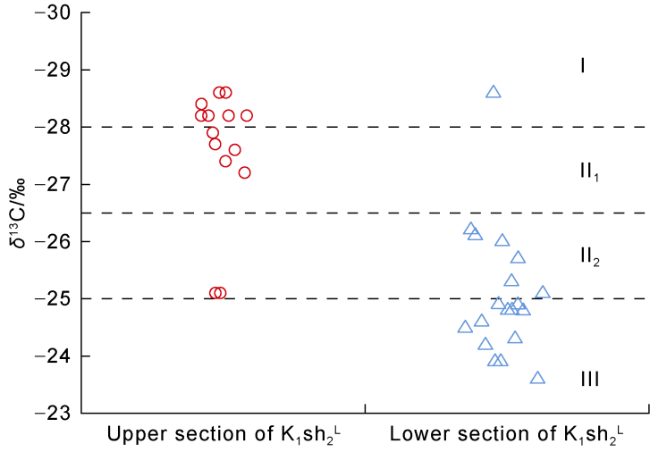
Fig. 7. Kerogen carbon isotopic compositions in K1sh2L in Well JLYY1 of Lishu rift depression. |
Multi-package interbedded volcanoclastic rocks identified in the semi-deep to deep lacustrine intrafacies in K1sh2L could be attributed to early and late stage of volcanic activities, which differed remarkably in intensity. Volcanic breccia and medium- to coarse-grained tuffs mostly occur in the upper section (Fig. 2e -2g ), where many angular to subangular quartz and feldspar crystal fragments could be observed microscopically. There are irregular cracks and harbor-like high-temperature corrosion rim frequently on quartz crystal fragments (Fig. 2e ). Matrix is mainly composed of fine-grained volcanic dust (Fig. 2g ), and most volcanic debris particles are cemented by volcanic ash and hydrochemical substances. Fine-grained tuffs, turning up as mm- to cm-scale intercalated beds in fine-grained sedimentary rocks across whole K1sh2L (Fig. 2h ), microscopically consist of volcanic dust with the grain size smaller than 0.01 mm (Fig. 2i ). Volcanic dust layer thickness is an indicator of volcanism intensity. Tuff thickness and occurrence frequency in the upper section with shale sedimentation are greater than those in the lower section (Fig. 3 and Fig. 4 ), and the same goes for Fe/S and P/Ti (Table 1 ). This denotes an increase in paleoproductivity. Volcanics transported plentiful nutritive elements, e.g. Fe, P, N, and Mn, which is a positive factor for plankton growth and also the major contributor to increased primary productivity. In conclusion, synsedimentary volcanisms were more active in the late stage than in the early stage.
3.2. Sedimentary facies distribution
The Shahezi Formation in the Lishu rift depression was ascribed to a complete third-order sequence by previous studies [21-22], in which K1sh2L was classified as a lacustrine transgressive system tract with the accommodation space expanding more quickly than the transportation of sediments. Consequently, the area of the lake basin reached its peak at the stage of K1sh2L, which is the best time for the occurrence of high-quality source rocks. To further investigate mud shale distribution and sedimentary evolution, K1sh2L was classified into two evolution phases in accordance with lithofacies assemblages, based on which the data of 58 wells penetrating K1sh2L in the Lishu rift depression were used to estimate the ratio of (sandstone+conglomerate) thickness to formation thickness and TOC content and map sedimentary facies and mud shale distribution in this period.
After paleogeomorphologic reconstruction (Fig. 8 ), a paleogeomorphologic high formed before the deposition of the Shahezi Formation was detected in the middle part of Xiaokuan fault zone, where K1sh2L is in unconformable contact with Huoshiling volcanic rocks and even the ancient metamorphic basement (for example, at wells SN52 and SN156). This means that K1sh1 is lost or thin at the paleogeomorphologic high with ancient craters, i.e. SN52 well block, generated by large-scale volcanic eruption at the stage of the Huoshiling Formation, whereas K1sh1 deposition thickness is larger in the areas away from ancient craters. Intermittent activities of Xiaokuan fault zone at the depositional stage from the Huoshiling Formation to the Shahezi Formation created conduits for magmatic upwelling and exhalation, which carried a mass of volcanic debris into K1sh2L, leading to local low TOC values in the central lake basin (Fig. 9 ), particularly in the upper section of K1sh2L. This also indicates that the upper section went through more violent synsedimentary volcanic activities than the lower section; this trend is consistent with vertical lithologic variation (Figs. 3 and 4 ).
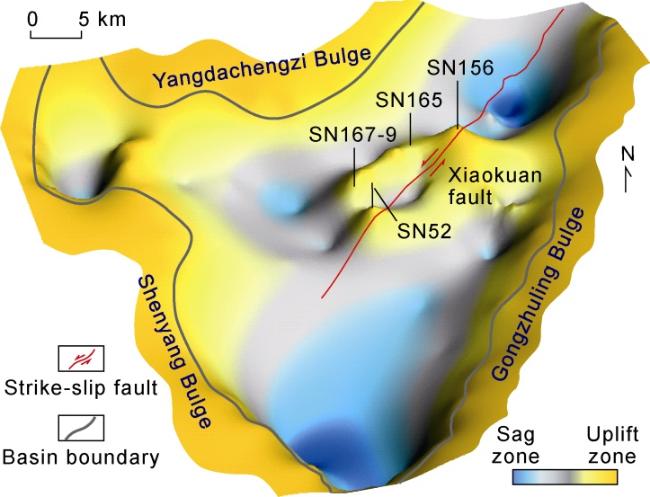
Fig. 8. Ancient landform before the deposition of the Shahezi Formation in the Lishu rift depression. |
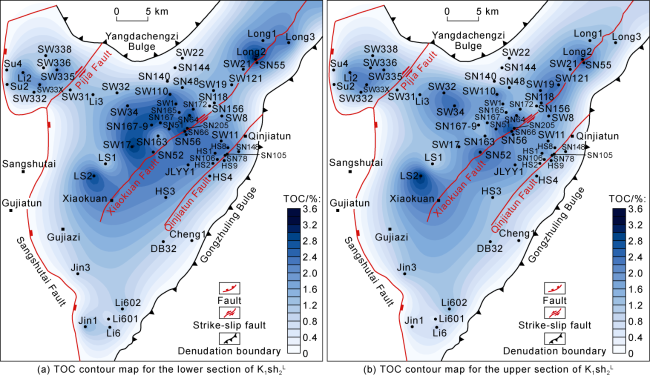
Fig. 9. TOC contour maps of the K1sh2L of Lishu rift depression. TOC was contoured in accordance with the measured values at two cored wells and the average values estimated using the ΔLogR method at additional wells without core data, R represents resistivity. |
The sag-controlling Sangshutai fault on the west side of Lishu rift depression had a great impact on basin configuration. Dominated by the major fault in the western basin, subaqueous fans accumulated quickly in the steep slope zone; fan deltas from the north and southeast uplifted zones transported coarse-grained clastic sediments into the lake basin (Fig. 10 ). Compared with the lower section of the lacustrine transgressive systems tract, the upper section shows more depocenters as well as more lake area and semi-deep to deep lake area, and widely developed lake- basin center and pyroclastic deposits. The retrogradation of the delta system in the north uplifted zone (Fig. 10 ) implies more extensive lake basin, deeper sedimentary water, stronger volcanic activity, and less terrestrial input in the upper section of K1sh1 than in the lower section.
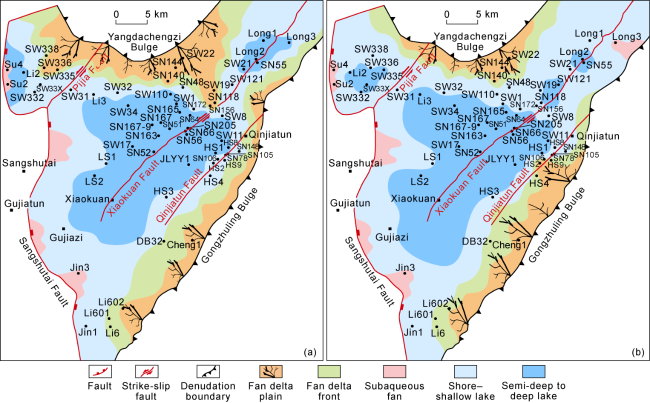
Fig. 10. Sedimentary facies in K1sh2L in the Lishu rift depression. (a) Lower section of K1sh2L; (b) Upper section of K1sh2L. |
4. Major controls on organic matter enrichment
4.1. Paleotectonic conditions
4.1.1. Rifting and volcanic eruption increasing accommodation space and paleo-water depth
The Lishu rift depression experienced intensive rifting during the depositional stage of the Shahezi Formation, when sustained pull-apart tectonic activities gave rise to the half-graben fault depression dominated by the Sangshutai fault and large-scale strike-slip faults extending in a northeast direction, e.g. Xiaokuan and Qinjiatun [23]. The strike-slip activities in Yilan-Yitong fault zone of the southeastern Songliao Basin had an impact on the left-lateral strike-slip structures in Xiaokuan fault zone [13]. The northeastward movement of the southeast side led to compressional uplift of the front, and the southwestward movement of the northwest side led to extensional subsidence of the back. As a result, K1sh2L thickness at Well SN167-9 in the northwest side doubles that at Well JLYY1 in the southeast side (Figs. 3 and 4 ).
A larger lake basin in the upper section of K1sh2L than in the lower section, as indicated by the distribution of sedimentary facies (Fig. 10 ), could be ascribed to persistently enhanced rifting and consequent base level rise at this stage. Therefore, tectonic subsidence in the upper section was far more quickly than sediments supply, leading to expanded accommodation space and deeper water for more extensive deposition of mud shales. The lithologic assemblage and the geochemical parameters indicating paleo-water depth also demonstrate larger water depth in the upper section.
As indicated by many intercalated tuff layers and coarse-grained volcanoclastic deposits observed in core samples (from wells JLYY1 and SN167-9), K1sh2L particularly the upper section, witnessed frequent volcanic activities (Figs. 3 and 4 ). Regional rifting is a major contributor to volcanic eruption. Enhanced rifting led to crustal extension and attenuation and the occurrence of synsedimentary faults, along which hydrothermal fluids (such as magma) upwelled and broke through the crust to cause volcanic eruption [24].
The upper section is generally supposed to feature a decrease in atmospheric precipitation and sedimentary water depth arising from arid climate, which is exactly opposite of the scenario in the study area. As per geochemical data (Table 1 ), the upper section witnessed more arid paleoclimate and higher paleosalinity than the lower section, which further implies the great impact of synsedimentary rifting and volcanic activities on sedimentary environment and paleo-water depth.
4.1.2. Subaquatic volcanic eruption favorable for productivity enhancement and organic matter preservation
According to preceding studies [25⇓-27], subaquatic volcanic eruption differs from subaerial eruption in the following aspects: (1) volcanic debris, which are smaller in particle size because of intense dilatation and disintegration of magma erupting in water, would generally be buried in an enclosed reducing environment in the sedimentary and diagenetic process, where the effect of weathering is weaker. Consequently, mineral crystals are unlikely to form clay sediments; (2) subaquatic eruptive material may be transported and deposited in a way of flowing or suspension. As more and more water comes in, pyroclastic flow will become less dense; (3) subaquatic eruption is mostly pulsatory, leading to rhythmic bedding composed of volcanic debris alternating with normal lacustrine sediments in the vertical direction.
The way of volcanic eruption could be diagnosed according to macroscopic and microscopic features of core samples. Microscopically, volcanic debris was classified into 3 types in terms of sedimentary texture. Type-1, with the smallest distance to the sedimentary source, exhibits a grayish green massive structure and sparsely stratified minerals with no clay minerals in the matrix (Fig. 2e ). These features indicate quick melange accumulation in an anoxic environment. Type-2, which is closer to the sedimentary source, turns up as intercalated layers in mudstones with bedded and massive structures in the majority. Scour structures frequently occur on the surface of contact (Fig. 2f , 2g ). Minerals mainly include quartz and feldspar crystal fragments, with higher component maturity than Type-1, formed in high-density aqueous turbidite deposits. Type-3, far away from the sedimentary source, presents as suspended sediments with normal graded bedding in partial laminae and bone-like structure locally. Mineral particles are poorly rounded, and the single layer thickness is small. Type-3 sediments alternate with normal lacustrine mudstones (Fig. 2h , 2i ). Macroscopically, as per paleogeomorphologic reconstruction, the paleogeomorphologic high in the central lake basin (wells SN52 and SN156, for example) formed before the deposition of K1sh2L was supposed to be the conduit for sustained volcanic activities and magmatic upwelling and exhalation (Fig. 8 ). Above features suffice to illustrate the way of subaquatic volcanic eruption in the study area.
Subaquatic volcanic eruption may transport plentiful fragmentary material into the lake basin and also influence organic matter enrichment in the basin. Eruptive volcanic ash input nutrients to nourish plankton and algae, which supplied organic matter after death. On the other hand, plenty of greenhouse gases, e.g. CO2 and CH4, emitted during volcanic activities decreased oxygen solubility in water to create an anoxic environment favorable for organic matter preservation [25]. Some recent studies [26] showed that a volcanic layer of 1 mm thick could increase the concentrations of Fe and P in water by several nanomoles (10−9 mole), which is enough to nourish plentiful plant plankton. After volcanic ash deposition, Fe and P could be preserved in organic-rich mud shales through organic geochemical cycle. According to statistical data, both Fe contents of 1.32%-9.80% and P2O5 contents of 0.18%-3.65% correlate positively with TOC values of K1sh2L organic-rich mud shales (Fig. 11a , 11b ), which means that volcanic ash deposits originating in volcanic activities at the depositional stage of K1sh2L dominated Fe and P2O5 contents and consequent occurrence of organic-rich mud shales.
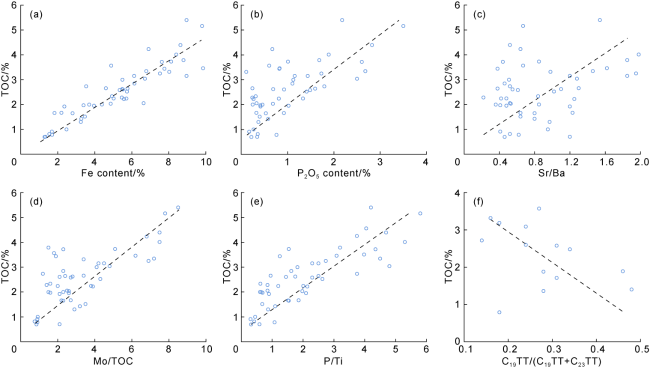
Fig. 11. Correlations between geochemical parameters and TOC value of K1sh2L fine-grained sedimentary rocks in Well JLYY1 of Lishu rift depression. C19TT and C23TT stand for C19 and C23 tricyclic terpanes, respectively. |
4.2. Ancient lake environment
4.2.1. Strong reducing environment favorable for organic matter enrichment and preservation
The water environment in the lake basin at the deposi-tional stage of K1sh2L was analyzed using element geochemical and molecular geochemical methods (Fig. 12 ).
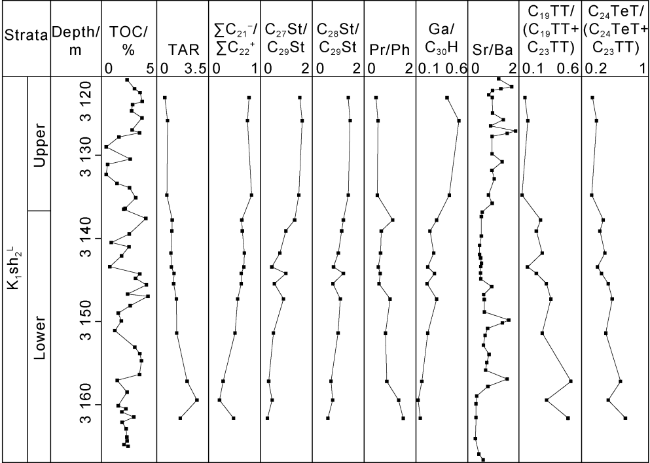
Fig. 12. Vertical variations of organic geochemical parameters in Well JLYY1. TAR is the ratio of normal alkanes from terrestrial to aquatic sources; ΣC21-/ΣC22+ represents the ratio of light to heavy hydrocarbons; C27St, C28St and C29St stand for C27, C28 and C29 regular steranes, respectively; Ga stands for gammacerane; C30H stands for C3017α(H),21β(H) hopane; C19TT and C23TT represent C19 and C23 tricyclic terpanes, respectively; C24TeT stands for C24 tetracyclic terpane. |
The ratio of pristane to phytane (Pr/Ph) in isoprenoid alkanes is the most commonly used indicator to diagnose a sedimentary environment. Pristane is generally the product of an oxidizing environment, while phytane is the product of a reducing environment. A Pr/Ph value of 0.2-0.8 usually indicates a strong reducing environment; a ratio of 0.8-2.8 indicates a weak reducing-weak oxidizing environment; a ratio larger than 2.8 indicates a strong oxidizing environment [28]. As for K1sh2L, low Pr/Ph values (0.69-0.75) at the upper section indicate an anoxic and strong reducing environment, and high Pr/Ph values (0.76-1.52) at the lower section indicate an oxic and weak reducing environment. These conclusions are consistent with the previous analysis results using Mo/TOC. The gammacerane index (GI) is usually used to characterize water stratification [29]. High salinity leads to high GI. As shown in Fig. 12 , there is a positive correlation between GI and Sr/Ba (paleosalinity index). The GI and Sr/Ba peaks at the upper section imply that water stratification is attributed to salinity. The laminated structure in upper lithofacies denotes a standing water environment with salinity stratification and seasonal stratification during deposition. Organic matter enrichment in K1sh2L fine- grained sedimentary rocks is dependent on sedimentary water salinity, redox conditions, and productivity. TOC value increases with Sr/Ba (Fig. 11c ). Organic matter, with algae in the majority, could be well preserved without being diluted in the stratified water body by increasing salinity. When the oxidation-reduction parameter Mo/TOC is greater than 2.0, the TOC values of K1sh2L core samples are mostly higher than 1% (Fig. 11d ), which means that an anoxic sedimentary environment is favorable for organic matter preservation. The paleoproductivity parameter, P/Ti, correlates positively with TOC value (Fig. 11e ), indicating the contribution of productivity to organic matter enrichment.
In summary, the upper section of K1sh2L had higher salinity of sedimentary water, more reducing properties of bottom material, and higher primary productivity of organic matter, with algae in the majority, than the lower section from the perspectives of major/trace elements (Table 1 ; Figs. 3 and 4 ) and organic geochemical properties (Fig. 12 ).
4.2.2. Authigenic algae more favorable for high-abundance organic matter generation
Organic matter in lacustrine sedimentary rocks mainly originates from terrigenous higher plants and authigenic aquatic organisms. According to identification results of carbon isotopic composition and maceral of kerogen mentioned above, there are terrigenous and authigenic organic matter in K1sh2L lacustrine sedimentary rocks of the Lishu rift depression.
N-alkanes with medium to low relative molecular masses mainly come from bacteria and algae, while high-abundance N-alkanes with high relative molecular masses, particularly with distinct odd-even predominance, mostly indicate the origin in terrigenous higher plants [29]. Therefore, we used ΣC21-/ΣC22+ and TAR to characterize N-alkanes distribution and organic matter origin. High ΣC21-/ΣC22+ values, implying N-alkanes with medium to low carbon numbers in the ascendant, disclose the organic origin in aquatic organisms, e.g. algae; high TAR values suggest more terrestrial input [30]. The negative correlation between ΣC21-/ΣC22+ and TAR together with high TAR values and low ΣC21-/ΣC22+ values at the lower section (Fig. 12 ) denote the major origin of organic matter in terrestrial input. In addition, considerable resinite was observed in maceral. On the other hand, organic matter in the upper section mainly originated from authigenic algae.
The relative abundances of tricyclic terpanes and tetracyclic terpanes could also be used to diagnose the source of organic matter. C19-, C20-, and C21-tricyclic terpanes mainly originate from terrigenous higher plants, and high-abundance C23-tricyclic terpane from algae [31]. This means that C19TT/(C19TT+C23TT) and C24TeT/(C24TeT+ C23TT) are two indicators of the intensity of terrestrial organic input, and high ratios indicate more terrestrial input [32]. Therefore, generally low values of these two parameters at the upper section reflect a small amount of organic matter from higher plants (Fig. 12 ).
C27-steranes are generally supposed to originate from lower aquatic organisms and algae, C28-steranes from algae including diatom, green algae and chrysophyta, and C29-steranes from terrigenous higher plants [33]. Therefore, C27/C29 and C28/C29 could be used as effective indicators to determine the proportions of terrestrial and authigenic organic matter. The good positive correlation between C27/C29 and C28/C29 (Fig. 12 ) suggests the origin of C27- and C28-steranes in similar algae in the study area. For K1sh2L samples from Well JLYY1, the relative abundance of C27- steranes is 16.92%-48.25% (avg. 33.66%); the relative abundance of C28-steranes is 19.27%-24.87% (avg. 21.83%); the relative abundance of C29-steranes is 29.91%-63.81% (avg. 44.51%). As per the triangular plot of C27-C28-C29 regular steranes (Fig. 13 ), upper organic matter mainly originated from lower aquatic organisms and lower organic matter from terrigenous higher plants.

Fig. 13. Triangular plot of C27-C28-C29 ααα-20R regular steranes. C27R, C28R and C29R stand for C27-29 5α(H), 14α(H) and 17α(H)-20R steranes, respectively. |
The negative correlation between C19TT/(C19TT+C23TT), the indicator showing terrestrial input intensity, and TOC content (Fig. 11f ) denotes some diluting effect of terrestrial input during deposition on organic matter abundance. In light of this relationship together with the above discussion of water environment, organic matter in lamellar fine-grained sedimentary rocks mainly originated in aquatic algae, with preponderant authigenic organisms contributing to the high organic matter abundance and primary productivity in the upper section.
According to above discussion, the discrepancies in organic matter type and origin between the upper and lower sections in K1sh2L may be ascribed to the differences in the intensity of paleoclimate-controlled terrestrial input by rivers and synsedimentary volcanism and rifting. In other words, the arid paleoclimate at the depositional stage of the upper section led to decreasing atmospheric precipitation, less input of terrigenous higher plants by rivers, and consequent less Type-III kerogens. Meanwhile, ample nutrients resulting from intense synsedimentary volcanic eruption bloomed authigenic algae (with Type-I kerogen), and intense synsedimentary rifting created a deeper bottom-material environment favorable for organic matter preservation to yield high TOC content.
4.3. Organic matter enrichment
As per the comprehensive analysis, the sedimentary environment of the lake basin and the volcanism affected by the tectonic process had a combined impact on high-graded source rocks in the study area.
The lower section of K1sh2L witnessed weaker rifting and volcanic activities, smaller accommodation space, and shallower water in the lake basin. High biomarker TAR and C19TT/(C19TT+C23TT) values and many carbonaceous fragments of higher plants observed in core samples indicate a large amount of terrestrial input and small yield of organic matter from endogenic organisms, e.g. algae. As per the comprehensive analysis, enhanced river input in a warm humid climate, characterized by delta progradation at the lake margin, led to event-type sedimentation (e.g. argillaceous turbidite deposition) in the basin, in addition to more organic matter from terrestrial input of higher plants. Owing to the large sedimentation rate of turbidity current, bioclasts (such as Ostracode) and various minerals may be entangled in the current to eventually form massive fine-grained sedimentary rocks/ mudstones in the lake basin. These sedimentary events could take oxygen to the bottom of sedimentary water; meanwhile, fresh water brought by many rivers decreased water salinity, which made the water body less stratified. Consequently, the sedimentary environment was unfavorable for organic matter preservation, leading to low organic matter abundance and Type-II2 and Type-III kerogens in the majority in this phase (Fig. 14a ).
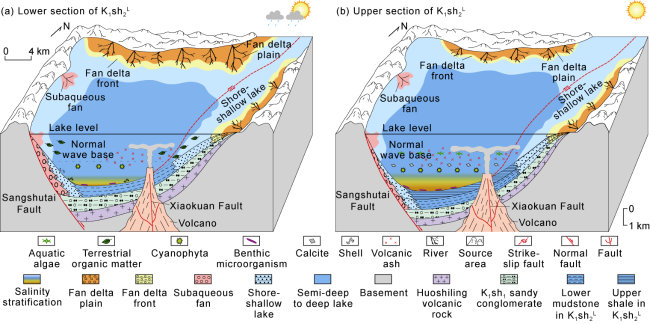


Fig. 14. Enrichment model of organic matter in K1sh2L fine-grained sedimentary rocks in rifted lake basin of Lishu rift depression. |
At the depositional stage of the upper section with intensified rifting and volcanic activities, base level rise resulted in expanded accommodation space and deepened water. Ample nutrients from volcanic material nourished endogenic organisms (e.g. planktonic algae) in the photic zone, and therefore improved the yield of endogenic organisms. An arid paleoclimate led to a decrease of fresh water input by rivers and consequent less organic matter from terrigenous higher plants. The analysis of geochemical indicators also showed an increase in water salinity. Seasonal stratification and water stratification, demonstrated by the laminated sedimentary structure derived from core observation, as well as the strong reducibility of bottom material offered good conditions for organic matter preservation. Due to less input of terrigenous higher plants and more yields of endogenic algae, the kerogens in organic matter are mainly of Type-I and Type-II1. Good organic matter types and high organic matter abundance may give birth to high-quality source rocks in this section (Fig. 14b ).
In the Early Cretaceous, the Songliao Basin in northeastern China went through regionally extensive faulted rifting and depressing subsidence owing to the double effects of thermal subsidence caused by rifting and magmatic activities and the subduction of the Pacific Plate, giving rise to 56 rifted basins of different sizes and high-graded semi-deep to deep lacustrine source rocks with larger deposition thickness. For example, the Early Cretaceous organic-rich mud shales in the Chaoyang Basin in western Liaoning Province and the Xujiaweizi Rift in the Songliao Basin all occurred intercalated volcaniclastic sediments of different scales [28,34].
5. Conclusions
The lower submember of the second member of the Shahezi Formation (K1sh2L) in the Lishu rift depression, the Songliao Basin was divided into two sections. The upper section mainly consists of laminated siliceous shales and laminated fine-grained mixed shale, with high TOC content and Type-I and Type-II1 organic matters. The lower section mainly consists of massive siliceous mudstones sandwiched with bioclast-bearing siliceous mudstones, with low TOC content and Type-II2 and Type-III organic matters.
Two evolution phases are different in the genetic mechanism and distribution of lithofacies assemblage, organic matter sources, climatic conditions, and water properties. The lower section was deposited in a shallow fresh-water environment owing to weak rifting and volcanic activities, in which organic matter mainly originated from terrigenous higher plants. Less reducing properties of bottom material were unfavorable for organic matter preservation and enrichment. The upper section was deposited in a deep water environment with salinity stratification owing to intensified volcanic and rifting activities. Strong reducibility of bottom material and organic matter mainly originating from such aquatic organisms as algae, which were nourished by volcanic material, provided favorable conditions for the extensive deposition and preservation of high-quality source rocks.
Volcanism, rifting, and the sedimentary environment of the ancient lake jointly dominated the generation of high-quality source rocks in the study area. K1sh2L in the Lishu rift depression was deposited in a typical continental rifted lake basin, with multi-phase subaquatic volcanic effusive events. As a consequence, the deposition and preservation of high-quality source rocks were dominated by a number of factors, e.g. the supply of terrigenous detrital material, volcanism-related input of nutritive substance, and authigenic biochemical process in the lake. Our model of organic matter enrichment in fine-grained sedimentary rocks in the volcanic rift lacustrine basin could be referred in the study of contemporaneous lacustrine source rock enrichment mechanism and the exploration and development of shale oil and gas with similar tectonic setting in northeast China.