

Introduction
The medium-to-high maturity lacustrine shale oils (typically Ro≥0.9%, Ro≥0.8% in saline lacustrine basins) in China have great resource potential [1]. Since 2010, a series of important discoveries have been made in multiple series of strata, including the Permian Lucaogou Formation in Jimusar Sag of the Junggar Basin, the Second Member of the Paleogene Kongdian Formation in Cangdong Sag of the Bohai Bay Basin, and the Cretaceous Qingshankou Formation in the Songliao Basin [2⇓⇓⇓⇓-7]. In the Ordos Basin, a large oil field with tight shale oil reserves exceeding 10×108 t has been discovered in the Chang 71-2 sub-member of the Triassic Yanchang Formation. As of 2023, China has achieved an annual production of lacustrine shale oil of 469×104 t. Numerous studies have been conducted on the main controlling factors for the enrichment of medium-to-high maturity lacustrine shale oil [2⇓⇓-5,7⇓⇓ -10]. The known factors include organic matter abundance and types, Ro, reservoir physical properties, clay mineral type and content, and shale lithologic combination. The essential conditions for forming shale oil-rich segments include organic matter of types I-II1, TOC>2%, Ro≥0.9% (greater than 0.8% in saline lacustrine basins), shale reservoir porosity greater than 4%, and clay mineral content lower than 20% (lower than 40% in pure shale) [1-2]. However, an increasing number of trial-production wells have revealed that the estimated ultimate recovery (EUR) of shale oil from a single well often fails to reach the economic threshold even in the layers that possess the organic matter abundance, source rock type, Ro, reservoir physical properties, and clay mineral content that meet the selection criteria for a shale oil-rich segment. In many of these layers, the total amount of retained hydrocarbons is greatly high. This indicates that the shale oil-rich segments identified relying solely on the aforementioned indicators for the formation and maintenance of a high abundance of retained hydrocarbons are not always mobile hydrocarbon enriched segments. It is possible to identify economically viable shale oil-rich segments by incorporating the evaluation factors of enrichment and retention of mobile hydrocarbons into the evaluation criteria. Among these factors, preservation conditions play a crucial role in mobile hydrocarbon enrichment and also serve as a key to maintaining high formation energy, facilitating the maximum outflow of shale oil.
Preservation conditions refer to the closure conditions constituted by the breakthrough pressure, continuity, and integrity of the roof and floor of the organic-rich shale section. They not only determine the quantity of retained hydrocarbons but also the quality of retained hydrocarbons and the sufficiency of formation energy field [1]. However, insufficient attention has been paid to shale oil preservation conditions in China, and further studies need to be conducted urgently to establish their evaluation focuses and standards. Taking the major trial-production areas of lacustrine shale oil in China as examples, this paper discussed the role of preservation conditions in the enrichment and flow of medium-to-high maturity shale oil, to provide useful guidance for the selection of favorable exploration targets of medium-to-high maturity shale oil in China.
1. Main controlling factors of enrichment and flow of medium-to-high maturity lacustrine shale oil
Medium-to-high maturity lacustrine shale oil is formed by the retention of preexisting oil and gas within the source rocks. Its enrichment and flow are influenced by multiple factors. These factors are categorized into the ones supporting the shale oil enrichment and the ones determining the shale oil quality and fluidity according to their roles in shale oil enrichment and movement. (1) The fundamental factors that support shale oil enrichment, including organic matter abundance and type, and physical properties of shale reservoir, determine hydrocarbon generation potential and retained hydrocarbon abundance in shale. The better the organic matter type and the higher the organic matter abundance, the greater the probability that hydrocarbons generated during the medium-to-high maturity stage will remain in the source rocks. Additionally, a higher shale porosity means more space for retained hydrocarbons, resulting in a larger quantity of retained hydrocarbons. (2) The factors determining shale oil quality and fluidity include Ro, hydrocarbon composition, gas-to-oil ratio (GOR), formation pressure, and closure conditions of the roof and floor of the shale oil-rich segment [1]. These factors influence the flow difficulty and quantity of shale oil underground, thus significantly impacting the economic recoverability of shale oil. Both of these factors are essential to allow shale oils to possess good economic recoverability, support large-scale productivity construction, and maintain long-term stable yield. Previous research has extensively examined the organic matter abundance and type, shale reservoir characteristics, thermal maturity, and retained hydrocarbon quantity, and obtained a series of new insights. However, the research on the preservation conditions of shale oil is still in its early stages. This section emphatically discusses the role of preservation conditions in the enrichment and flow of lacustrine shale oil based on an overview of the research progress.
1.1. Main factors controlling the enrichment of retained hydrocarbons in lacustrine shales
Organic-rich shale is the material foundation for the formation and enrichment of shale oil. The abundance and type of organic matter represent the total amounts of the materials convertible and converted to hydrocarbons. Under similar geological conditions, such as thermal maturity and lithologic combination, higher abundance and better type of organic matter result in a greater total quantity of retained hydrocarbons. This, in turn, increases the probability of achieving higher single-well production and cumulative output per well [1]. The statistical data from major oil trail-production areas of lacustrine shale oil suggest that a total organic carbon (TOC) content greater than 2% is an essential condition for the enrichment of retained hydrocarbons, with 3%-4% being the most favorable range [1]. The type of organic matter determines the conversion difficulty of organic matter to hydrocarbons and its potential for hydrocarbon generation. For example, the organic matters are types I-II1 in the 2nd Member of the Cretaceous Nenjiang Formation in the Songliao Basin and the Chang 73 sub-member of the Triassic Yanchang Formation in the Ordos Basin, both of which are freshwater lake basin deposits (with slightly saline lake basin deposits in the Songliao Basin). The former is a super organic-rich segment with a TOC value ranging from 3% to 8%, and the latter is also a super organic-rich segment, with a TOC value of 10%-25%, approximately three times that in the former. However, their hydrocarbon generation potential differs significantly. In the former, the effective carbon (defined as the carbon that can be pyrolytically converted into oil and gas at sufficiently high temperatures over a long enough period of time to be expelled out of the source rocks [11], which is 0.083×(S0+S1+S2) [12]) accounts for over 65%, and the hydrogen index (HI) ranges from 700 mg/g to 800 mg/g. While in the latter, ineffective carbon (also known as “dead carbon”, referring to the organic carbon that remained after a rock pyrolysis process, without hydrocarbon generation capability [12]) accounts for over 65%, and the HI value is as low as 350-480 mg/g. The Nenjiang Formation in the Songliao Basin has nearly twice the content of effective carbon in the Chang 73 sub-member in the Ordos Basin, and shows 1.7 to 2.0 times the hydrocarbon generation potential. To establish statistical relationships of TOC, hydrocarbon generation potential (S1+S2), HI with oil content (refers to the mass fraction of shale oil in oil shale, and 5% is considered as the boundary between low-grade and high-grade oil shales [13]), thus obtaining the direct evaluation parameters of the oil content of shale using TOC, (S1+S2) and HI, the authors conducted statistical analysis on relevant data of the shale from the Nenjiang Formation in the Songliao Basin and the Chang 73 sub-member in the Ordos Basin (Fig. 1 ). If an oil content of shale greater than 5% is considered as the minimum threshold for forming retained hydrocarbon-rich segments of medium-to-high maturity shale oil and for selecting the high-quality targets that medium-to-low maturity shale oil could form through in-situ conversion process, the corresponding TOC values are determined to be 5%-6% for the Nenjiang Formation in the Songliao Basin and 8%-10% for the Chang 73 sub-member in the Ordos Basin. This indicates that the abundance and type of organic matter are crucial factors determining the quantity of retained hydrocarbons in shale.
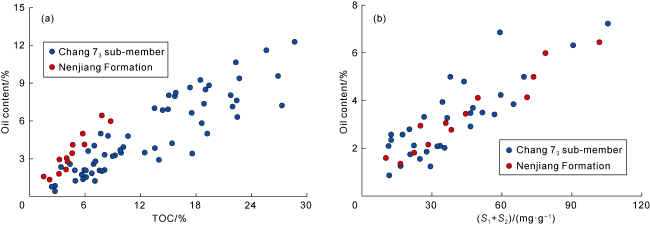
Fig. 1. Relationship of organic matter content and hydrocarbon potential with oil content in the Nenjiang Formation, Ordos Basin, and in the Chang 73 sub-member, Songliao Basin. |
Lacustrine oil shale characteristically acts as both the source rock and the reservoir, and its reservoir properties are the key factors controlling hydrocarbon enrichment. The availability of sufficient storage space and the content of brittle minerals in shale reservoirs are important factors affecting the quantity of retained hydrocarbons, and to some extent, they also influence the quantity of mobile hydrocarbons in retained hydrocarbons. To clarify the factors affecting the enrichment and fluidity of retained hydrocarbons, the authors categorized the lacustrine shale oils in China into tight, pure, and transition types [2]. Among these, tight shale oil refers to the shale oil that accumulates in sandstones or carbonate rocks alternating with organic-rich shales. It is evident that the reservoirs of this type of oil shale have a relatively high porosity, and most of the shale oils have undergone micro-migration processes, leading to both good fluidity and a high proportion of mobile oils. Transition shale oil is an intermediate between tight and pure shale oils. This type of shale oil partially accumulates in the micron-to-nanometer-sized pores dominated by micron sized pores in tight reservoirs, and partially in the micron-to-nanometer-sized pores dominated by nanometer-sized pores formed by clay minerals. It is mainly developed in diamictic shale layers. Its enrichment and fluidity depend on the proportion of tight reservoirs and the development degree of fractures in the brittle layers. In the case of well-developed fractures and a larger proportion of tight reservoirs, the shale oil yield and cumulative production per well tend to be high. Pure shale oil refers to the shale oil accumulating in nanometer-sized pores formed by pure clay minerals and in shale bedding fractures. Due to the complex pore-throat structure within the reservoir, clay minerals have strong adsorption to shale oil, and coupled with lower brittle mineral contents, shale is of poor fracability. Thus, the evaluation criteria for this pure shale oil reservoir are more stringent, with a porosity larger than 4%, preferably than 6% required. The diagenetic stage of shale should be no earlier than the late mesogenetic stage. Lower clay mineral content is more favorable. When the shale reservoir experiences a high degree of diagenesis and evolution, the clay mineral content should ideally be less than 40% [2].
1.2. Control factors of the quality and flow of retained hydrocarbons in lacustrine shale oils
In general, shale oils occur in micro-to-nanometer-sized pores of the shale layers in both free and adsorbed states. The composition of hydrocarbons, proportions of non-hydrocarbons and asphaltenes, and formation energy field determine the fluidity and output capacity of shale oil. The factors that determine the quality and fluidity of shale oil include thermal maturity, hydrocarbon composition, pressure coefficient, and preservation conditions of shale oil-rich segments [1]. Evidently, a higher thermal evolution degree of organic-rich shale leads to larger proportions of gaseous, light, and medium hydrocarbons a larger number of non-polar components [14], and significantly decreased contents of heavy hydrocarbons, non-hydrocarbons, and asphaltenes in its hydrocarbon products. This significantly reduces the density and viscosity of crude oil, improving the fluidity. In addition, under good preservation conditions at the roof and floor, abnormally high formation pressure often develops. This pressure is a crucial driving force for initiating the flow and maximizing the outflow of multi-component hydrocarbons, non-hydrocarbons, and even some semi-solid organic matter that are distributed in a retained state.
When discussing the role of thermal maturity on the fluidity of retained hydrocarbons, attention should be paid to the influence of the original sedimentary environment of the lake basin on the occurrence time of “liquid window”. Based on the authors’ research, the organic matter-rich shales deposited in the saline lake basin are lipid-rich oil-prone source rocks. They produce more liquid hydrocarbons at low temperatures, thus, the “liquid window” appears earlier. The Ro values mainly range from 0.6% to 0.9%, and the conversion rate is high [15]. In fact, they generate medium-to-low maturity shale oils. Although the quantity of liquid hydrocarbons generated at this stage is large, their composition is relatively poor, with high contents of heavy hydrocarbons, non-hydrocarbons, and asphaltenes. For instance, in the shale oils of the lower 3rd Member to the upper 4th Member of Shahejie Formation in Jiyang Depression of the Bohai Bay Basin, the contents of saturated hydrocarbons, waxes, aromatic hydrocarbons, non-hydrocarbons and asphaltenes are 55%, 20%-30%, 15%, 15% and 5%, respectively. It can be seen that the content of high carbon number waxes in alkanes is high, the proportion of non-hydrocarbons + asphaltenes is relatively large, and the density of crude oil is heavy, mainly in the range of 0.85-0.94 g/cm3. The viscosity is 14-78 mPa·s at 50 °C. The GOR values are low, mainly in the range of 60-80 m3/m3. The fluidity of the shale oil in saline lake basin is not ideal. If it were not for the fact that the shales have (1) a high content of main brittle minerals (more than 75%, in this case, the formation probability of artificially induced network fractures is relatively high, as is the formation probability of structural fractures and diagenetic fractures), and (2) sufficiently high organic matter abundance (TOC > 2%), the single-well production and EUR of saline lake basin shale oil would face great challenges to achieve economic thresholds. The parent materials of freshwater lake basin shale are also dominated by types I-II1, but their activation energy of conversion to liquid hydrocarbon is high. The major peak of “liquid window” appears late, which corresponds to the Ro values of 0.9%-1.2%. The quality of the generated hydrocarbons gets improved and their gas-oil ratio increases. For example, in the Qingshankou Formation shale in the Songliao Basin, the contents of saturated hydrocarbons, aromatic hydrocarbons, non-hydrocarbons, and asphaltenes are 73.2%, 16.7%, 8%, and 2%-3%, respectively in the products at the “liquid window” stage. The density of crude oil is 0.85-0.86 g/cm3, the viscosity is 19-20 mPa·s at 50 °C, and the GOR values are not high, mainly in the range of 50-70 m3/m3. The composition of the hydrocarbons formed at “liquid window” stage from the freshwater lake basin shale is significantly better, with lower contents of non-hydrocarbons and asphaltenes. Although the gas-oil ratio is not high, the fluidity is significantly improved. In the major generation stage of Gulong shale oil, when the Ro values range from 1.2% to 1.6%, the quality of the generated liquid hydrocarbons was significantly improved, and the volume of the generated gaseous hydrocarbons was also significantly increased. The data obtained from Wells Guye 5HC, Guyeyouping 1 and Guye 2HC (Ro of 1.3%-1.6%) reveal that the contents of saturated hydrocarbons, aromatic hydrocarbons, non-hydrocarbons, and asphaltenes are over 85%, over 7%, over 5.3%, and lower than 1.5%, respectively. The density, viscosity, and GOR of crude oil are lower than 0.80 g/cm3, lower than 4 mPa·s at 50 °C, and higher than 300 m3/m3. With such fluid properties, if the reservoir structure is reasonable, the fluidity and economy of shale oil will be greatly improved.
1.3. Role of preservation conditions on shale oil enrichment and fluidity maintenance
As mentioned above, the quantity and quality of retained hydrocarbons in shale layers determine the economic viability of shale oil. In addition to the factors such as organic matter abundance, type, and thermal maturity, preservation conditions play a key role. Good preservation conditions can ensure that mobile hydrocarbons are retained in the shale layers in maximum quantities, and can allow the energy accumulated from formation compaction and hydrocarbon generation processes to be kept in the shale layers, thus maintaining an abnormally high pressure, which plays a significant role in driving the maximum outflow of retained hydrocarbons, especially the heavy hydrocarbons and certain non-hydrocarbons and asphaltenes. This undoubtedly enhances the economic viability of shale oil.
From bottom to top, there are 9 sweet spots of shale oil, Q1-Q9, in the 1st and 2nd members of Qingshankou Formation, Gulong Sag, Songliao Basin. Q1 at the bottom is in contact with the underlying tight sandstones and forms large-scale reserves of tight oil in them. This represents a loss of mobile hydrocarbons from the Qing 1 Member shale oil. Q9 is covered by a set of semi-deep to deep lake shales. The average measured breakthrough pressure of 23 samples from it is 15.6 MPa, suggesting favorable closure conditions. However, at the end of the Qingshankou shale sedimentation period, the intensive tectonic inversion generated a large number of small faults. Some faults were active continuously in the late stage and formed the channels for oil and gas migration [16], which is unfavorable for the retention of mobile hydrocarbons in the shale.
To demonstrate the influence of preservation conditions on shale oil enrichment, two well groups (wells G851 and Y47 and wells YX58 and SYY2) near and far from the faults respectively in the southwest corner of Gulong Sag were selected for analyzing the effect of faults on retained hydrocarbon enrichment and mobile hydrocarbon loss from the aspects of retained hydrocarbon content and hydrocarbon composition. To highlight the importance and role of preservation conditions in the enrichment and fluidity maintenance of shale oil, the similarity of formation conditions of the shale oil-rich segment and the difference of preservation conditions were taken into consideration for the selection of these well groups. After evaluation, it is concluded that the organic matters in both the 1st and 2nd Members of Qingshankou Formation in wells G851 and Y47 are types I and II1, and show similar abundances. Their sedimentary environments and lithofacies are basically the same, and their Ro values are 1.3%. Their difference lies in their locations. Specifically, Well G851 is close to the fault, about 1 km away, while Well Y47 is more than 3 km away (Fig. 2 ). The data from the other group, Wells YX58, and SYY2, show similar cases, except the Ro values, which are 1.15%, slightly lower than that in Wells G851 and Y47. Well YX58 is close to the fault, while Well SYY2 is far away.
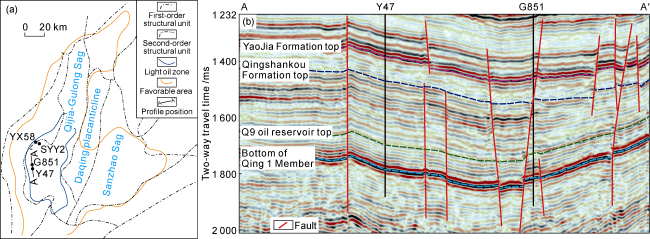
Fig. 2. Location map of wells G851 and Y47 (a) and seismic profile (b) in Gulong Sag. |
1.3.1. Influence of preservation conditions on the quantity of retained hydrocarbons
In the conventional pyrolysis analysis, 300 °C is used as the boundary between free hydrocarbon (S1) and kerogen-cracked hydrocarbon (S2). S1 refers to the total quantity of hydrocarbons volatilized after being heated to 300°C and kept at a constant temperature for 3 min, representing the quantity of hydrocarbons generated from and residual in the shale layers. These hydrocarbons are dominated by C7 to C33 [17]. However, after the cores are taken out, a part of the light hydrocarbons (C6-C13) will be lost [18] in the preservation and sample preparation processes, resulting in S1 being underestimated. In addition, there are heavy oils and asphaltenes, which cannot be included in S1 due to their high boiling points and great difficulty in volatilizing at temperatures lower than 300°C, leading to overestimated S2 values [19]. Therefore, the use of pyrolytic data to assess oil content requires the correction of light and heavy hydrocarbon loss for ensuring accuracy.
After correction of the pyrolytic data, the oil saturation index (OSI) could be used to indicate both the oil bearing property of shale and the connotation of quantity evaluation of mobile hydrocarbons. The data indicate that the average OSI value of Well G851, located near the fault, is 290 mg/g, which is significantly lower than the 493 mg/g measured in Well Y47, situated far from the fault. In the other well group, the average OSI value of Well SYY2, located far from the fault, is 551 mg/g, which is higher than the 444 mg/g measured in Well YX58. In the 1st and 2nd Members of Qingshankou Formation, Q1 to Q9 oil reservoir groups are over 100 m thick and exhibit strong heterogeneity in vertical. Lithology has a great influence on OSI. Inevitably, it is not precise enough to use the averages to manifest its vertical and lateral variations. Therefore, we calculated the OSI values of these 9 oil reservoir groups separately (only Q1-Q6 were cored in Well Y47), and made the comparison window focused on the same oil reservoir group (Fig. 3 ). As seen in Figure 3 , the OSI values of oil reservoir groups in Well Y47, situated far from the fault, are higher than those in Well G851, located near the fault. It is concluded that the fault plays a destructive role in the closure of shale and causes the loss of some mobile hydrocarbons.
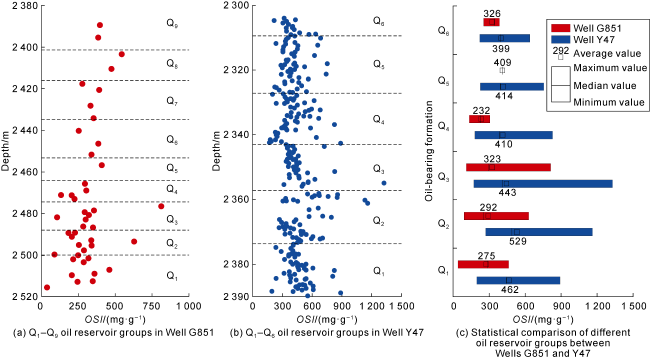
Fig. 3. Comparison of oil-bearing properties of different oil reservoir groups in Qingshankou Formation between Well G851 and Well Y47. |
1.3.2. Influence of preservation conditions on the composition of retained hydrocarbons
Differences in the physical properties of various components in crude oil lead to the “chromatography effect” in the processes of their migration [20-21]. Specifically, in the same medium and energy field, the hydrocarbons and non-hydrocarbons composed of different components show varied migration difficulty, quantity, and distance. Thus, the composition of retained hydrocarbons has an important influence on their fluidity and flow. Previous studies have shown that saturated hydrocarbons are more likely to migrate than aromatic hydrocarbons, and resins are more likely to migrate than asphaltenes [22]. In addition, the small-molecule n-alkanes have higher expulsion efficiency than the large-molecule homologues [23-24]. Therefore, when the closure of organic-rich shale is destroyed, the low-polar compounds in crude oil, especially small-molecule compounds, will preferentially escape outward. As a result, the proportions of heavy hydrocarbons and non-hydrocarbons in the retained hydrocarbons increase, and the ratio of saturated hydrocarbon to aromatic hydrocarbon decreases correspondingly.
When investigating the differences in hydrocarbon composition of shale oil from comparable formations at varying distances from faults using gas chromatography and confocal laser scanning microscopy techniques, the focus is to use the differences in the ratios of light to heavy components to reflect the role of preservation conditions in maintenance and fluidity of the mobile components in retained hydrocarbons. As crude oils of different degrees of maturity generate fluorescence signals of different wavelengths, the content and distribution of light components (saturated and aromatic hydrocarbons) and heavy components (non-hydrocarbons, asphaltenes, and kerogens) are determined by selective reception of fluorescence signals of different wavelengths with confocal laser technique [25]. The recorded light components refer to those lighter than C19, while the recorded heavy components refer to those heavier than C16. Although they have an overlap in the C16-C19 range, their ratio can reflect the changing trend of the abundance of light and heavy components. The precision of data measured by the confocal laser scanning microscopy method is lower than that of chromatographic data, but the range of components detected by it corresponds better with the actual composition of retained hydrocarbons. A combination of the gas chromatography and confocal laser scanning microscopy methods allows their analysis results to be confirmed mutually. In this study, two samples were selected from the same horizon (the middle part of Q1) in Wells G851 and Y47 for mineral composition analysis. The results show similar mineral compositions. In Well G851, the contents of quartz, feldspar, and clay minerals are 30.7%, 14.2% and 50.4%, respectively, while in Well Y47, they are 27.0%, 20.0% and 45.3%, respectively. The TOC values are similar, 2.56% and 2.35%, respectively. The analysis results show that in the sample from Well G851, which is closer to the fault, the ratios of light to heavy components and saturated to aromatic hydrocarbons measured by confocal laser scanning microscopy are 1.75 and 10.78. The ∑C21-/∑C22+ ratio of n-alkanes in Q1-Q3 obtained by the gas chromatography method is 1.14. As measured by the confocal laser scanning microscopy method, the sample from Well Y47, located far from the fault, has a ratio of light to heavy components of 3.52 and a ratio of saturated to aromatic hydrocarbons of 29.4. The ∑C21-/∑C22+ ratio of n-alkanes in Q1-Q3 obtained by the gas chromatography method is 1.35. After analysis, it is indicated that the quantity of mobile hydrocarbons is significantly higher at the locations far from the fault compared with that near the fault (Fig. 4 ).
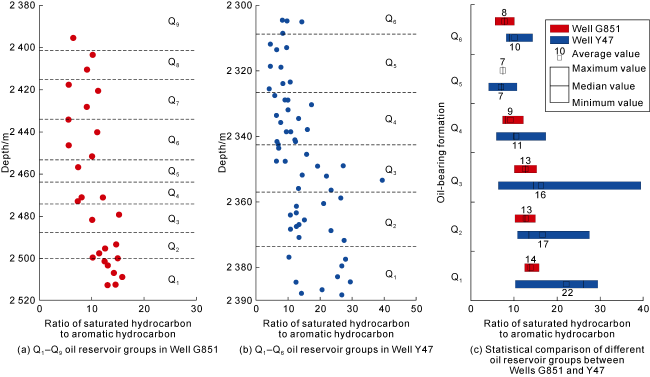
Fig. 4. Ratios of saturated/aromatic hydrocarbons in different oil reservoir groups of Qingshankou Formation in Wells G851 and Y47. |
The loss process of oil and gas can also be regarded as the migration process, where the biomarkers experience different degrees of differentiation [20,26]. Thus, they can be used to evaluate the loss intensity of mobile hydrocarbons. Influenced by the differences in molecular structure and configuration, tricyclic terpenes and pentacyclic terpenes show different fluidity, and tricyclic terpenes with smaller molecular weights are more likely to migrate. The average ratios of tricyclic to pentacyclic terpenes in the same formation in Wells YX 58 and SYY2 are 0.73 and 1.31, respectively, indicating a greater loss of tricyclic terpenes in Well YX58, located near the fault.
In conclusion, preservation conditions play an important role in the quantity and composition of retained hydrocarbons in shale in the case of similar sedimentary environments, organic matter types, and thermal maturity. Under favorable closure conditions, low polar, light hydrocarbons and small-molecular components tend to be retained in the shale layers, thus increasing the quantity of mobile hydrocarbons. Otherwise, the quantity of mobile hydrocarbons will be greatly reduced, resulting in increased contents of heavy hydrocarbons, non-hydrocarbons, and asphaltenes, and eventually affect the production and economy of shale oil.
1.3.3. Influence of preservation conditions on the fluidity of retained hydrocarbons
Good preservation conditions facilitate the retention of sufficient mobile hydrocarbons in shale, and also maintain a high formation energy, allowing the formation to have the power to drive the maximum outflow of retained hydrocarbons.
The pressure coefficient is an important physical quantity reflecting the formation energy field and represents the degree to which the formation pressure exceeds the conventional trend. As the burial depth increases, the formation will be compacted, and the fluids contained in the formation will be discharged due to the formation compression. If this process is not smooth, abnormally high pressure will appear. In addition, the hydrocarbon generation process is a phase transformation process of organic matter, which will cause the volume expansion of hydrocarbon products. If these products cannot be discharged smoothly, an abnormally high pressure will form. Furthermore, if the shale buried at a certain depth under normal pressure is uplifted to shallower parts, the fluids originally located at relatively high pressures will undergo volume expansion due to the reduced pressure, and if it is closed in the formation, an abnormally high pressure will form. The above three cases can only occur due to good formation preservation conditions.
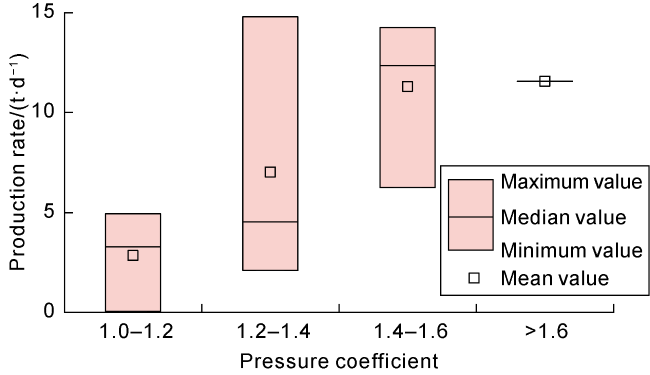
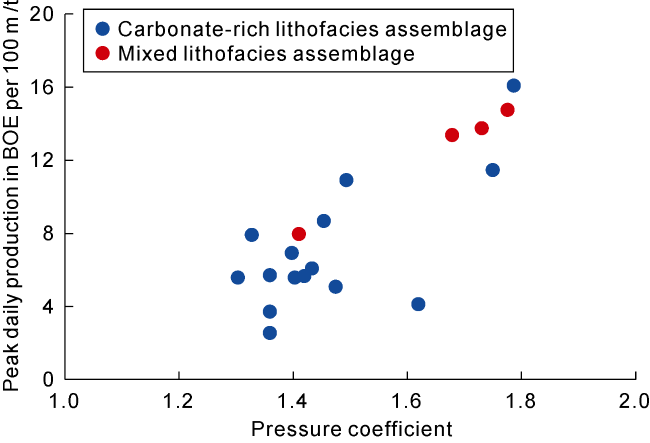
He et al. performed statistical study on the relationships between the well testing data and the pressure coefficient from 26 wells in the Gulong Sag of the Songliao Basin, indicating that the production intensity of the Qingshankou Formation shale oil increases with the pressure coefficient [10]. The shale reservoirs in the lower 3rd Member and upper 4th Member of Shahejie Formation in the Jiyang Depression of the Bohai Bay Basin show abnormally high pressure, with pressure coefficients exceeding 1.2 and up to 2.0 [27]. The statistics show that the pressure coefficients of the production layers in 29 commercial shale oil flow wells in Dongying Sag of the Jiyang Depression, Biyang Sag of the Nanxiang Basin, Qianjiang and Gaoyou Sags of the Jianghan Basin mainly range from 1.3 to 1.8 [28]. The production data of 24 vertical wells in the Songliao and Bohai Bay Basins indicate a positive correlation between formation pressure and shale oil production (Fig. 5 ). The data reported by Shengli Oilfield also show a good positive correlation between the peak daily production in BOE per 100 m from shale oil horizontal wells and the formation pressure coefficient in the Jiyang Depression (Fig. 6 ).
As mentioned above, shale oil is the retained petroleum hydrocarbons that are formed earlier in the formation, showing as a mixture of multi-component petroleum hydrocarbons and non-hydrocarbons. Heavy hydrocarbons and non-hydrocarbons show the best fluidity and maximum outflow only when light, medium, heavy hydrocarbons are miscible with non-hydrocarbons. The authors identify the flow of heavy hydrocarbons, non-hydrocarbons, and asphaltenes retained in the micro-to-nanometer-sized pores in the forms of clustered fragments of different scales suspended in light and medium hydrocarbons as the “component flow” of petroleum hydrocarbons [1].
To explore the influence of the components of shale oil on its fluidity, shale oil samples from the 2nd Member of Kongdian Formation of the Cangdong Sag (with saturated hydrocarbon content of 57.08%, aromatic hydrocarbon content of 11.80%, resin content of 16.09%, and asphaltene content of 7.30%) were selected for simulation experiment on the aggregation behavior of asphaltenes and different fractions of crude oil. The results show that the size of the formed asphaltene aggregates increases from 40 nm to 0.5-1.0 μm with the increased content of medium-to-heavy hydrocarbons. On the contrary, if the content of medium and light hydrocarbons increases, the size of the formed asphaltene aggregates and the force between them significantly decline, thus effectively reducing the viscosity of shale oil and improving its fluidity [15].
The evaluation of preservation conditions should focus on breakthrough pressure, cap rock thickness, and integrity. As for the Qingshankou Formation in the Songliao Basin, in addition to the continuously active faulting during the hydrocarbon expulsion period, the breakthrough pressure at the roof and the cap rock thickness should also be taken into consideration. In the Qingshankou Formation shale (Ro=1.3%, TOC=3%), the overpressure caused by hydrocarbon generation is about 10 MPa. The roof of the shale oil is mainly composed of clay and mixed shales, with an average breakthrough pressure exceeding 16 MPa, and the shales have better closure conditions [30], thus, it is considered that a 2-5 m thick shale layer can form an effective closure.
2. Practical cases demonstrating the role of preservation conditions in shale oil enrichment and fluidity maintenance
To verify the role of preservation conditions in the enrichment and fluidity maintenance of shale oil, thereby enhancing the production and economic viability of shale oil, shale oil samples from the Lucaogou Formation in Jimusar Sag of the Junggar Basin, the 2nd Member of Kongdian Formation in Cangdong Sag of the Bohai Bay Basin, and the Chang 73 sub-member in the Ordos Basin were selected to further illustrate the role and significance of preservation conditions in shale oil enrichment and fluidity.
2.1. Permian Lucaogou Formation (P2l) in Jimusar Sag
Two “sweet spots” are developed in the 1st (P2l1) and 2nd Members (P2l2) of Lucaogou Formation in Jimusar Sag of the Junggar Basin [31-32]. The upper sweet spot is characterized by a high abundance of organic matter in the source rock, with TOC values generally greater than 1%, up to around 10%, and organic matter of types I-II1. The reservoir quality varies little in different well areas, with porosity ranging from 5% to 20% and permeability predominantly lower than 0.1×10⁻³ μm2. The thermal maturity is moderate, with Ro values ranging between 0.8% and 1.1%. However, the density of crude oil is relatively high, ranging from 0.88 g/cm3 to 0.91 g/cm3, the solidifying point is also high, between 4 °C and 44 °C, and the viscosity is high, with an average of 73.45 mPa·s at 50 °C. Additionally, the viscosity is higher in the lower sweet spot (avg. 166 mPa·s) than in the upper one (avg. 53 mPa·s). The gas-to-oil ratio is low, with an average of 17.2 m3/m3, and is higher in the upper sweet spot (avg. 20.7 m3/m3) than in the lower one (avg. 13.7 m3/m3). Among the extracted components of crude oil, saturated hydrocarbons and aromatic hydrocarbons exhibit a higher content in the upper sweet spot, while resins and asphaltenes show a higher content in the lower one (Fig. 7 ).
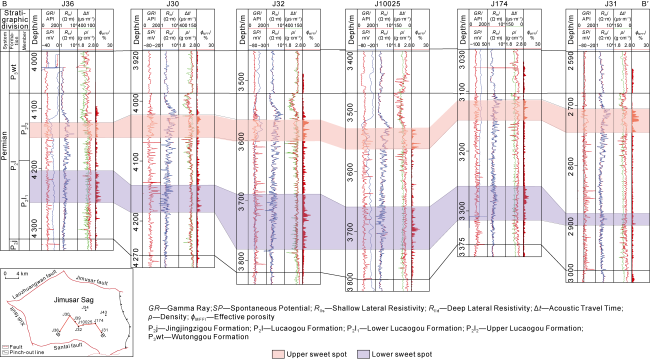
Fig. 7. Differences in physical properties of crude oil between the upper and lower sweet spots of the Lucaogou Formation, Jimusar Sag. |
The Lucaogou Formation shale in the Jimusar Sag is located at depths greater than 3 000-3 200 m, and its thermal evolution degree is generally in the range of “liquid window”. The “sweet spots” above and below it have large thicknesses and show relatively good reservoir physical properties. However, the Lucaogou Formation shale oil is relatively dense with high viscosity and low gas-to-oil ratio. Additionally, an anomaly that the crude oil quality in the upper sweet spot is better than that in the lower sweet spot is observed. This is considered to be induced by problems with the preservation conditions of the shale oil-rich segment, which are manifested in two aspects. (1) The uplift during the Late Cretaceous period caused a maximum erosion thickness of 2 000 m [33-34]. This uplift-induced unloading effect led to the expansion and loss of light and medium-component hydrocarbons in shale. As a result, the density and viscosity of the retained hydrocarbons increase and the gas-to-oil ratio decreases. This is likely the reason for the thicker crude oil and lower gas-oil ratio in the lower sweet spot of Lucaogou Formation shale oil. (2) The preservation conditions at the roof of the Lucaogou Formation shale also serve as a factor. There is an angular unconformity between the Lucaogou Formation and its overlying glutenites of the Upper Permian Wutonggou Formation. Thus, no closure condition and oil storage capacity are formed in the Lucaogou Formation. If the residual formation thickness above the sweet spot is not sufficiently large and there are faults connecting the Wutonggou Formation, oil and gas will migrate upward and accumulate in the Wutonggou Formation, which means the reduction of the mobile hydrocarbons in the sweet spot, severely affecting the economic viability of the Lucaogou Formation shale oil. This research shows that the areas where oil and gas accumulation occurs in the Wutonggou Formation tend to have low shale oil yields and small EURs. For example, the crude oils produced from Wells J37, J305, J174, and J171 exhibit roughly similar densities and viscosities, ranging from 0.88 g/cm3 to 0.89 g/cm3 and from 50 mPa·s to 58 mPa·s, but their daily production rates differ greatly, which are 6.25, 9.73, 2.15 and 2.16 t/d, respectively. In the areas where these wells are located, the residual formation (referred to as the “roof”) between the upper sweet spot and its overlying Wutonggou Formation varies greatly in thicknesses and develops faults with different development degrees, directly influencing the EURs of different well areas. For instance, in the J37 and J305 well areas, the upper sweet sport has a residual roof thickness of 25-30 m and relatively undeveloped faults (Fig. 8 ), and no industrial flow has been obtained from its overlying Wutonggou Formation. The EUR of the horizontal wells drilling the upper sweet spot reaches (1.5-3.0)×104 t. In the J174 well area, the residual roof thickness is 15-20 m, and faults develop near it. Oil flows have been produced from wells J174 and J171, with daily oil production rates of 10.85 t and 1.77 t, respectively. Therefore, the production from the horizontal wells drilling the upper sweet spot is not high, with the EUR lower than 1×10⁴ t, indicating poor development results.
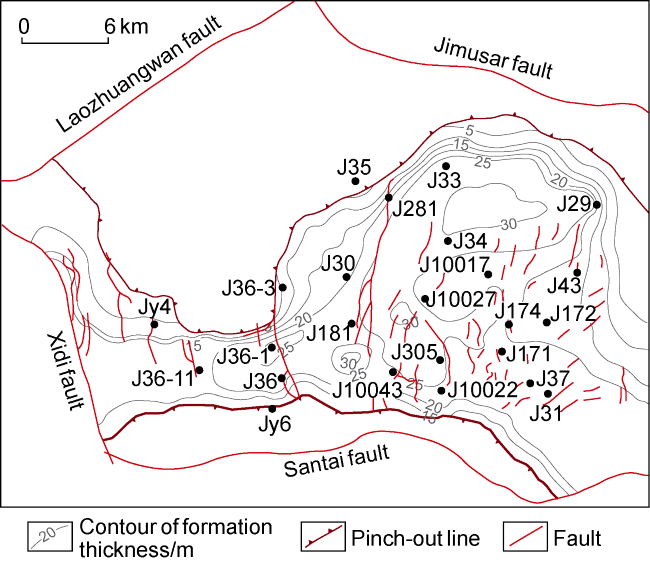
Fig. 8. Thickness variation of the bottom of Wutonggou Formation to the top of the upper sweet spot, and faults distribution at the bottom of Wutonggou Formation in Jimusar Sag. |
In addition, as shown in the total-hydrocarbon gas chromatogram of crude oil, the crude oil produced from the Wutonggou Formation has a significantly larger content of light components than that from the Lucaogou Formation in Well J171 (Fig. 9a, 9b ). The mean values of (∑C13-/∑C14+) in the upper sweet sport of the Lucaogou Formation in the J37 and J305 well areas are 0.69 and 0.76, also significantly higher than 0.36, calculated for Well J174, indicating that there are more mobile hydrocarbons retained in the “sweet spot” in the areas with favorable preservation conditions.
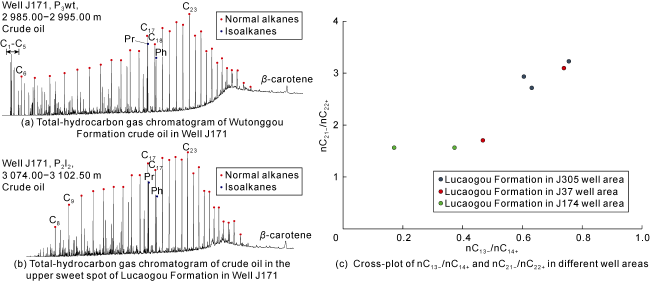
Fig. 9. Differences in crude oil composition in different areas/formations, Jimusar Sag. |
2.2. Second Member of Paleogene Kongdian Formation in Cangdong Sag (Ek2)
The shale oil-rich segment in the 2nd Member of Kongdian Formation, Cangdong Sag, is mainly formed in the semi-deep to deep lake facies. The target layer, at a depth of 2 900-4 500 m, is divided into four types of lithofacies, i.e., laminated felsic shale, laminated mixed shale, thin-bedded limy-dolomitic shale and thick-bedded limy-dolomitic shale. The organic matters are dominated by types I and II1, and the TOC values mainly range from 2% to 6%, with an average value of 4.87%.
Faults are developed in the Cangdong Sag, and were primarily formed during the deposition period of the upper Kong 1 Member to the Shahejie Formation. It has been confirmed by multiple trial-production wells that under similar closure conditions of cap rock, fault activity significantly reduces the mobile hydrocarbons in shale oil, leading to decreased single-well production and EUR. For example, in the No. 1 pilot production platform in the Guandong area of Cangdong Sag, horizontal wells were drilled to its east and west sides, and the target layers have similar buried depths, with Ro of about 1.0%. The horizontal wells on the east side drilled two large groups of normal faults, while those on the west side drilled smaller faults (Fig. 10 ).
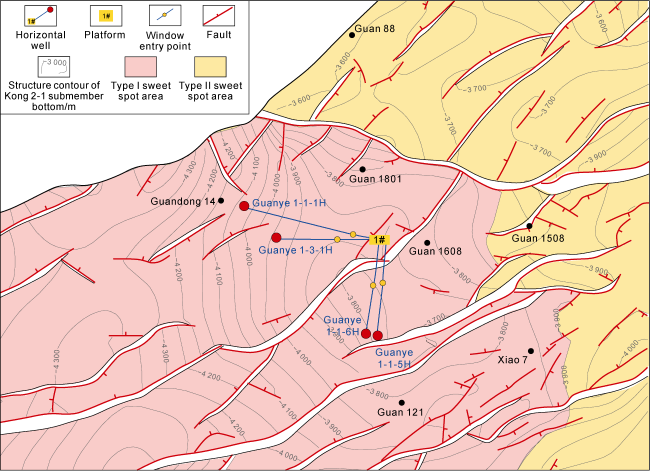
Fig. 10. Location map of horizontal wells in No.1 Platform, Guandong area of Cangdong Sag. |
The drilling data reveal that the formation pressure in the east is generally normal, while in the west, it is higher, with pressure coefficients ranging from 1.2 to 1.5. From the wells in the east, the average daily oil production during the main producing stage is 5-18 m3, and the cumulative production per kilometer of horizontal section achieves approximately 4 000 t in the first two years. The EUR is (0.7-1.5)×104 t, with an average of 1.1×10⁴ t. Additionally, the crude oil density in this area is relatively high, primarily ranging from 0.87 to 0.89 g/cm3, and the ratio of ∑C13-/∑C14+ ranges between 0.48 and 0.58. From the wells in the west, the average daily oil production during the main producing stage is 10-30 m3, and the cumulative production per kilometer of horizontal section is higher than 6 000 t in the first two years. The EUR is (0.8-2.5)×104 t, with an average of 1.7×10⁴ t. Additionally, the crude oil density in this area is relatively low, primarily ranging from 0.62 g/cm3 to 0.68 g/cm3 (Fig. 11 ). These findings indicate that on the eastern side of the No. 1 platform, where develop larger faults, greater loss of light hydrocarbons and a reduction in mobile hydrocarbons directly result in lower single-well production and EUR of shale oil. While the shale oil from the wells on the western side shows better fluidity due to fewer and smaller faults drilled, leading to relatively higher single-well production and EUR.
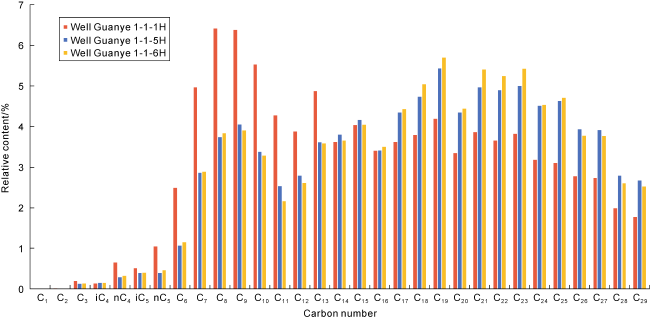
Fig. 11. Chromatogram characteristics of crude oil from different wells in No.1 production platform, Guandong area of Cangdong Sag. |
2.3. Chang 73 sub-member of Triassic Yanchang Formation in the Ordos Basin
The Chang 73 sub-member in the Ordos Basin is a set of shales highly rich in organic matter deposited during the maximum expansion stage of the lake basin in the Triassic period. The TOC values primarily range from 8% to 16%, with a maximum of 38.4% and an average of 10.8%. Its shale, whose maturity (Ro) typically ranges from 0.6% to 1.0%, provides substantial oil accumulations in the Chang 8 and Chang 6 Members, which are tight reservoirs in sheet-like distribution. Currently, their proven reserves have reached 40×108 t. Some studies suggest that the hydrocarbon generation process in the Chang 7 Member leads to an increase of pore pressure by 4.5-312.4 MPa, which serves as a key driver of the oil accumulation in ultra-low permeability tight reservoirs [35]. At present, both the main oil layers and the Chang 73 sub-member shale in this basin are under negative pressure conditions, with pressure coefficients ranging from 0.83 to 0.85.
The organic-rich segment in the Chang 73 sub-member is only 20-30 m thick. It is underlain by the tight sandstone of the Chang 8 Member, and overlain by the shale with interbedded thin sandstone of the Chang 71+2 sub-member and the thick sandstone of the Chang 6 Member. This lithological combination facilitates the accumulation of oil and gas generated from the Chang 73 sub-member in its upper and lower sandstones. There have been identified two primary reasons for the negative pressure anomaly in the Chang 73 sub-member. Firstly, the organic-rich shale is surrounded by sandstones both above and below, and the preservation conditions of the roof and floor are poor, leading to massive gas and oil expulsion. Secondly, large basement faults, mainly trending northeast and northwest, develop in the Ordos Basin. These faults have been active since the Yanchang period and have undergone multiperiodic activity, which released the energy produced by the hydrocarbon generation process. This indicates the full release of formation pressure and substantial loss of light hydrocarbons [36]. Besides, the uplift that occurred at the end of the Cretaceous led to extensive strata erosion [37-38]. The uplift-caused unloading effect resulted in volume expansion of some free light hydrocarbons, and due to poor preservation conditions, the overpressure it generated failed to be maintained, further increasing the loss of mobile hydrocarbons.
To further investigate the preservation conditions of the Chang 73 sub-member, a study on the composition of retained hydrocarbons in the Chang 73 sub-member shale was carried out. Well Chengye 1 is an exploration well aiming to reveal the oil content and production capacity of the pure shale in the Chang 73 sub-member. It drilled 1800 m of the Chang 73 sub-member shale, generating 1.67 t oil per day at the initial stage of the testing, and 1219 t oil cumulatively for 1 352 d. It has been shut in because its production couldn’t reach the economic threshold. As shown in the total-hydrocarbon gas chromatogram of crude oil, the shale oil from the Chang 73 sub-member in Well Chengye 1 has a relatively high content of heavy hydrocarbons, with the main peak carbon of n-alkanes being C14 and a relatively low content of hydrocarbons lighter than C8. The value of ∑C13−/∑C14+ is 0.74. Furthermore, the crude oil from the Chang 72 sub-member has a higher content of light components compared with the Chang 73 sub-member. The n-alkanes have a bimodal distribution, with the main peak carbons being C6 and C14. The value of ∑C13−/∑C14+ is 0.86. The crude oil from the Chang 71 sub-member has a higher content of light components. The n-alkanes are predominantly lighter than C14, with the main peak carbon being C5, and have an increased value of ∑C13−/∑C14+ to 1.12 (Fig. 12 ). This indicates an upward migration process of mobile hydrocarbons from the underlying source rocks. The upper Chang 71+2 sub-members develop more siltstone and fine sandstones. The petroleum hydrocarbons accumulated within them have undergone micro-migration, leading to a higher proportion of mobile hydrocarbons.
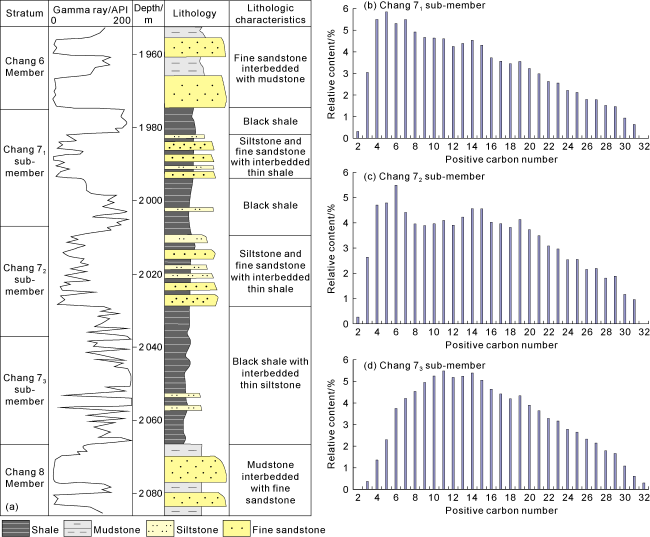


Fig. 12. Gas chromatogram of n-alkanes of shale oil from different sub-layers of the Chang 7 Member in Chengye 1 well area, Ordos Basin. |
As indicated above, in the Chang 73 sub-member, which has a high organic matter content, a large thickness of organic-rich shale, a relatively high proportion of light and medium-component hydrocarbons in the retained hydrocarbons, normally favorable shale oil-rich segments should form. However, the poor preservation conditions at its roof and floor, combined with the developed faults, led to further release of the energy within the organic-rich shale. As a result, despite a considerable total quantity of retained hydrocarbons in the shale (the pressure core analysis shows that S1 value reaches up to 25 mg/g), the analysis results of frozen samples by two-dimensional nuclear magnetic resonance spectroscopy indicate that most of these hydrocarbons exist in an adsorbed state (the mobile hydrocarbon rate and adsorbed hydrocarbon rate are about 2-4 mg/g and 3-16 mg/g, respectively). Therefore, it is difficult to achieve a high EUR. Only in the areas where faults are not developed and the Chang 73 sub-member is under overpressure conditions, it is possible to obtain a high single-well production and EUR.
3. Conclusions
For medium to high maturity lacustrine shale oil, it is generally difficult to achieve high single well production and EUR if the retained hydrocarbons are only abundant and of poor quality. In addition to abundance evaluation, quality evaluation of retained hydrocarbons should be enhanced in sweet spot evaluation. This includes evaluating the quantity of mobile hydrocarbons, formation energy, and preservation conditions at both the roof and floor of the shale oil-rich segment. Only when the abundance of retained hydrocarbons, abundance of mobile hydrocarbons, energy field and closure conditions at both the roof and floor are favorable and spatially compatible, shale oil reservoirs are economically viable, and achieve considerable production. In addition to the high TOC, S1, and Ro values and favorable reservoir properties and brittleness, good preservation conditions are essential for the enrichment and fluidity maintenance of shale oil, especially for the quantity of mobile hydrocarbons and the maintenance of high GOR and formation pressure. Preservation conditions should be incorporated into the evaluation criteria of the sweet spot of medium-to-high lacustrine maturity shale oil. It is of great significance for selecting favorable exploration targets and achieving relatively high single-well production and EUR.
The role of preservation conditions in the enrichment and fluidity maintenance of shale oil can be reflected in the following three aspects: (1) optimal preservation conditions ensure the retention of sufficient light hydrocarbons in shale, which enhances the fluidity and flow of shale oil; (2) good preservation conditions maintain an abnormally high formation pressure, so that the strata have high energy for the maximum outflow of shale oil; (3) good preservation conditions ensure that the retained hydrocarbons have the miscible flow condition of multi-component hydrocarbons (light hydrocarbons, medium hydrocarbons, and heavy hydrocarbons), non-hydrocarbons and asphaltenes so that the heavy hydrocarbons (∑C25+) and heavy components (non-hydrocarbons and asphaltenes) are suspended in the solvents consisting of gaseous, light and medium hydrocarbons as molecular aggregates at different scales, leading to the best fluidity and maximum flow capacity. The preservation conditions should be evaluated from the aspects of breakthrough pressure, cap rock thickness, and integrity.
Nomenclature
EUR—estimated ultimate recovery, t;
GOR—gas-oil ratio, m3/m3;
OSI—oil saturation index, mg/g;
Ro—vitrinite reflectance, %;
S0—residual gaseous hydrocarbon, mg/g;
S1—residual liquid hydrocarbon, mg/g;
S2—Kerogen-cracked hydrocarbon, mg/g.