

Introduction
In the process of oil and gas exploration and development, changes of temperature and pressure may bring frequent and drastic evolution of rock mechanical behaviors. Previous studies found that deep rock exists in a high-temperature and high-pressure environment where changes of temperature and pressure can readily induce phase changes in both minerals and fluids. Specifically, variations in these conditions within the lithosphere near the plate-mantle boundary can trigger phase changes in the rock, leading to mineral transform and potentially initiating earthquakes [1-2]. A decrease in lithospheric pressure alters the physical and chemical properties of the rock, induces phase change in the rock, and influences hydrothermal mineralization as well as the accu-mulation of oil and gas [3]. When rock is heated from 100°C to 800 °C, the absorbed, bound and structural water in the rock would be vaporized, and the physical and mechanical properties of the rock, such as strength, permeability and wave velocity, would change significantly above 400 °C due to the change of mineral phase [4]. The above studies primarily focused on the rock at depths around 15 km, where temperature exceeds 400 °C and pressure from overlying rock exceeds 300 MPa, which emphasized phase change in rock matrix but showed limited relevance to reservoirs shallower than 10 km.
Regarding the exploitation of oil and gas resources, this paper focuses on the rock phase change within the scope of oil and gas reservoirs. Specifically, we study the phenomenon that the flow properties of pore fillings in porous media evolve under certain temperature and pressure conditions, consequently altering the skeleton of the rock and resulting in significant changes to the rock mechanical behavior. In oil and gas reservoirs, the phase change of pore fillings leads to the reconstruction of the rock skeleton. The mechanism of the thermal-chemical-fluid-solid coupling during this reconstruction process is referred to as phase-change rock mechanics. Comprehensive research on theoretical methods and practical applications of phase-change rock mechanics, including the investigation to the relationship between phase change and deformation and the kinetic process driving rock structure evolution, offers essential guidance for solving engineering challenges related to phase-change rock mechanics in oil and gas reservoir exploitation.
Porous media such as ultra-heavy oil reservoirs, natural gas hydrate reservoirs, frozen soils, and over-pressured sand bodies undergo phase changes under certain temperature and pressure conditions, so they are called phase-change porous media [5]. Obvious phase changes happen to oil, gas and water during drilling and production, such as decomposition of natural gas hydrates, ice melting, and asphaltene melting, which would cause drastic changes in the structure of the reservoir skeleton. Take the following three examples: (1) The viscosity of oil sands in extra-heavy oil reservoirs is (1.92-1 150)×103 mPa·s at 50 °C, and the heavy oil hardly flows at 160-700 m deep [6]. However, thermal recovery measures can significantly reduce the viscosity as temperature increases, causing the solid asphaltene to melt and transform into flowable oil [7-8]. (2) In the shallow zone under deep water (i.e., the water is deeper than 400 m, and the formation is 250 m to 1 000 m below the seabed/mudline), over-pressured formations are common [9-10]. The formation pressure exceeds the hydrostatic pressure at that depth, and the pressure coefficient is higher than 1.0 [11]. Over-pressured formations are typically induced by mechanical disequilibrium compaction, and can be categorized into those resulting from disequilibrium compaction and those caused by differential compaction, depending on the origin of pore water [12-13]. When drilling deepwater wells, abnormally high pressure in over-pressured formations often causes imbalance in bottom hole pressure. Solid rocks eroded by pore water become unstable and transform into a sand flow mixed by sand and water, which can eventually intrude into the wellbore or even surge up to the wellhead, severely affecting the wellbore integrity and drilling operation. This phenomenon, in which the over-pressured sand bodies are destabilized by transient instability, leading to the formation of sand-water flow, is commonly referred to as a shallow water flow disaster [14⇓-16]. (3) Natural gas hydrates are primarily stored in terrestrial permafrost layers and submarine sediments [17]. When using depressurization or thermal injection to produce, a decrease in reservoir pressure or an increase in temperature induces phase changes in weakly cemented sediments and natural gas hydrates, resulting in the transformation of hydrates from a solid state into natural gas and water. This transformation, in turn, causes reservoir deformation, structural failure and strata subsidence [18-19].
The special rock mechanics phenomena during the development of the aforementioned three types of hydrocarbon reservoirs can be distilled into three key scientific questions: (1) solid alkane-related mixtures upon heating; (2) sand liquefaction in over-pressured formations induced by sudden pressure release; (3) skeleton collapse caused by gasification of pore fillings induced by depressurization. Taking the phenomena and scenarios corresponding to the three scientific problems as examples, the multi-field mechanical evolution process is analyzed, and the mechanism and engineering applications are reviewed. On this basis, the challenges and development trends of phase-change rock mechanics are analyzed.
1. Theories and methods of phase-change rock mechanics of hydrocarbon reservoirs
1.1. Solid alkane-related mixtures upon heating
1.1.1. Theoretical understanding
Due to the diversity and particularity of crude oil and its associated organisms, some crude oil (e.g. heavy oil, extra-heavy oil and oil shale) are solid at room temperature. These solid alkane-related mixtures in reservoir pores and fractures transform from solid to liquid as temperature rises, causing significant changes in the structure and mechanical properties of the reservoir rock. The key scientific issue is mechanical deformation induced by phase changes of solid alkane-related mixtures. The viscosity of asphaltene in oil sands is typically very high, and the strong influence of viscous force significantly impedes its flow. It can therefore be considered as an immobile solid and a component of the rock skeleton. During steam injection recovery, as temperature rises, solid asphaltene gradually melts, and transitions to flowable liquid. Different from conventional rock and soil mass, asphaltene has compressive and shear strength at low temperature, so it cements and fills within rock skeleton, and affects rock deformation, seepage and heat transfer behavior. It is important to determine the critical temperature for asphaltene flow. Li et al. [20] divided extra-heavy oil reservoirs in Alberta, Canada into three zones in the steam-assisted gravity drainage (SAGD) process: (1) An oil drainage zone, where the viscosity of asphaltene is less than 1 000 mPa·s; (2) A semi-oil drainage zone, where the viscosity of asphaltene is 1 000-20 000 mPa·s; (3) A non-oil drainage zone, where the viscosity of asphaltene is greater than 20 000 mPa·s. Drawing on this method, the reservoir outside the steam chamber in SAGD can be divided into a liquid asphaltene zone, a solid-liquid asphaltene zone, and a solid asphaltene zone, corresponding to the oil drainage zone, the semi-oil drainage zone and the non-oil drainage zone, respectively. If the critical viscosities of asphaltene phase change are μc1 and μc2, respectively, the temperatures corresponding to the critical viscosities are called critical temperatures. When the viscosity is below μc1, the asphaltene is in a completely flowable liquid asphaltene zone. Conversely, when the viscosity exceeds μc2, the asphaltene is in a completely non-flowable solid asphaltene zone. The solid-liquid asphaltene zone lies between the two zones, where the asphaltene has been partially melted and exhibits certain flowability.
The deformation mechanisms of rock skeleton in different zones are distinct. In the solid asphaltene zone where asphaltene acts as a cement filling within the pores between sand particles, elastic-plastic deformation is dominant [21]. In the liquid asphaltene zone where crude oil has strong flowability, elastic deformation is dominant [22⇓-24]. In the solid-liquid two-phase zone where crude oil can flow at certain pressure, but oil-water mixture is difficult to discharge, the deformation of skeleton is viscoelastic [8]. The phase change of asphaltene also affects the seepage behavior of the reservoir. Specifically, the solid zone is featured by narrow throats caused by asphaltene cementation, which restricts water flow. In the two-phase zone, throats become large, allowing oil-water mixture to be partially flowable. In contrast, the liquid zone is featured by mixed oil-water fluid with high flowability. The two-phase flow behaviors of oil and water in different zones can be quantitatively described by relative permeability curves. The phase change of asphaltene also affects the heat transfer of the reservoir, with the thermal conductivity and diffusivity in the liquid asphaltene zone being only half that of the solid asphaltene zone [25-26]. The increase in asphaltene content results in higher viscosity of heavy oil. Due to the high viscosity of heavy oil and the characteristics of the interfacial tension between oil and gas, extra-heavy oil tends to generate foam which reduces reservoir permeability and productivity [27-28].
1.1.2. Experimental method
Oil sands are composed of asphaltene, skeleton sand, clay and water. In the heating process, phase changes of extra-heavy oil will affect the skeleton structure, seepage and mechanical properties of oil sands. According to the deformation characteristics of oil sands, laboratory experiments focus on the evolution of the structure and mechanical behaviors, mesoscopic deformation, and particle migration laws at different scales and phase-change conditions. In terms of the evolution of mechanical behavior, temperature control is applied in applicable rock mechanics experimental methods to explore the evolution of the porosity, permeability [29] and mechanical deformation [7] of oil sands at different temperatures. Concerning mesoscopic deformation, high-precision micro/mesoscopic observation methods are used to observe the particle displacement during oil sand dilatancy [21] and structural changes before and after phase changes [30]. As for particle migration, optical and acoustic monitoring methods are proposed to monitor the time-dependent characteristics of skeleton sand morphology [29] and particle migration induced by phase changes of asphaltene[31].
The deformation process of oil sand skeleton induced by phase changes of asphaltene can be divided into two parts: deformation of oil sand skeleton with phase changes, and sand production induced by deterioration of skeleton structure. The study on the physical properties of oil sands with phase changes includes visualization of structural evolution, evaluation of seepage capacity and calculation of rock mechanics parameters. In structural evolution experiment, phase changes of asphaltene, contact between sand particle and asphaltene and changes of pore structure are observed at different temperature and pressure conditions [32] to obtain important parameters such as thermal dilation coefficient, phase-change temperature and critical transform temperature [31,33]. Seepage capacity evaluation experiment measures the porosity and permeability of oil sands at different stresses, loading paths and fluids injected [34] to assess the seepage capacity of oil sands [29,35]. Moreover, the stress-strain response of oil sands at different temperatures/stresses is measured via rock mechanics experiment, and mechanical parameters such as elastic modulus, Poisson's ratio and strength are calculated [7,24,36]. In terms of sand production during liquid/steam injection development, fluid injection experiments at controlled temperature and pressure are conducted, in which high-temperature/ high-pressure fluid is injected into the sample to evaluate the state of sand carried by fluid [37⇓-39]. The deterioration degree of oil sand skeleton structure is assessed by sand production characteristics, and the migration mode of sand carried by fluid is analyzed [40]. The above laboratory experiments can explore the laws of deformation, seepage and heat transfer induced by phase-changes of the asphaltene in oil sand matrix under different temperature and pressure conditions. They are basic data for establishing constitutive model and acquiring parameters for numerical simulation using finite element or discrete element method.
1.1.3. Mathematical characterization
Based on mechanism model and laboratory experiment, the influence of phase changes of asphaltene on the pore structure and seepage law of oil sands is analyzed through finite element simulation. Oil sands show heterogeneity and anisotropy at the macro scale, and the phase state of asphaltene (as a part of the skeleton or pore fluid) significantly affects the porosity, pore tortuosity and permeability of the oil sands. Compared with the skeleton model without asphaltene, the permeability of the skeleton model containing asphaltene is approximately two orders of magnitude lower [41]. With the phase change of pore fillings, the pore structure keeps changing, and the thermodynamic control equation can be expressed as [42]:
$T\left( \frac{\partial S}{\partial t}+\sum\limits_{\alpha }{{{s}_{\alpha }}\nabla \cdot {{w}_{\alpha }}} \right)=\kappa {{\nabla }^{2}}\theta $
Considering that the filling material is converted from solid (s) to liquid (l), the thermodynamic control equation can be expressed as:
$T\left[ \frac{\partial {{S}_{\text{sk}}}}{\partial t}+\sum\limits_{\alpha =\text{s,l}}{{{m}_{\alpha }}\frac{\partial {{s}_{\alpha }}}{\partial t}+\left( {{s}_{\text{l}}}-{{s}_{\text{s}}} \right){{{\dot{m}}}_{\text{s}\to \text{l}}}} \right]=\kappa {{\nabla }^{2}}\theta $
In Eq. (2), the first item in the left square brackets indicates the internal energy change that does not participate in the phase change of rock skeleton per unit volume and unit time; the second item represents the internal energy changes in the solid and the fluid involved in phase change; the third item represents the internal heat source due to the solid-liquid phase change; and the right side of the equation represents the total heat difference flowing into and out of per unit volume and unit time.
1.2. Sand liquefaction of over-pressured formation triggered by instant pressure relief
1.2.1. Theoretical understanding
The development of a shallow-water flow disaster typically requires three conditions: loose and unconsolidated sand/silt sediments, low-permeability mud seal and abnormally high pressure in the formation [43]. An over-pressured formation has high porosity, high permeability, high Poisson’s ratio and poor sorting. The sand particles nearly suspend in the formation fluid under high pore pressure and low effective stress, and exhibit mechanical properties similar to those of fluid, which are resistant to compression but not to shear action, and provide a prerequisite for phase change and destruction of the over-pressured formation [44-45]. In deepwater drilling operation, when encountering an over-pressured formation, the abnormally high pressure will induce a pressure imbalance at the bottom of the well. The pore fluid carries sand into the wellbore at high speed, and eventually invades the wellbore or even surges up to the wellhead, seriously affecting the integrity of the wellbore as well as the drilling operation. In this process, the sand skeleton structure is unstable and eroded by pore fluid, so that the static solid skeleton transforms to a dynamic sand-water flow. The mechanical mechanism, the law of formation destruction and the sand particle migration process are difficult to describe.
1.2.2. Experimental method
In the laboratory experimental study on pressure relief and destruction of over-pressured formations, Shi et al. [46] constructed a layered sand body by stacking fine sands of different colors, sealed them with a cement shell, and over pressured the sand body through pre-installed pipelines. After placing the sample into a true triaxial experimental device, the pressure was released to simulate the flow and deformation of the over-pressured sand body at real formation pressure. Using the true triaxial stress loading device [47], the in-situ stress can be restored, and it is helpful to obtaining the damage mechanism of sand bodies at real stress. However, during the experiment, the sand body was sealed in a cement shell and placed in a pressure loading device, making it difficult to visualize the destruction process of the sand body by external means.
Shentu et al. [48] proposed a visualized experiment of phase change and destruction of over-pressured sand bodies, aiming to visually show the flow-failure characteristics of over-pressured sand bodies when shallow-water flow disasters take place. In the process of the experiment, they injected water into a sample to pressure it, then used a control valve to simulate pressure relief from the over-pressured sample and observed the following damage process. The experiment process was accurately and visually recorded. Unfortunately, the experiment device only supports to increase pore pressure rather than external stress, so it cannot accurately reflect the real failure characteristics of over-pressure sand bodies at underground stresses.
1.2.3. Mathematical characterization
When shallow-water flow disasters happen, sands will be carried by formation fluid to move, so hydromechanical coupling should be considered for mathematical characterization. The hydromechanical coupling scheme based on the discrete element method is ideal for studying the phase change of a discontinuous medium. This scheme is composed of the discrete element method and computational fluid dynamics (DEM-CFD) coupling. It is a coupling scheme of continuous-discontinuous phases. The discontinuous phase is represented by DEM as a collection of discrete particles, while the continuous phase is modeled using CFD and as a continuous orthogonal fluid grid [49]. The discrete particles are subjected to the fluid drag force in the fluid grid, and the fluid pressure, velocity, and drag force in a single fluid cell are linearly distributed. The motion equations of a single particle can be expressed as [50]:
$\frac{\partial u}{\partial t}=\frac{{{f}_{\text{m}}}+{{f}_{\text{f}}}}{m}+g$
$\frac{\partial \omega }{\partial t}=\frac{M}{I}$
In Eq. (3):
${{f}_{\text{f}}}=\frac{1}{2}{{C}_{\text{d}}}{{\rho }_{\text{f}}}\pi {{r}_{\text{b}}}^{2}\left| u-{{v}_{\text{f}}} \right|\left( u-{{v}_{\text{f}}} \right){{\varphi }^{-\chi }}+\frac{4}{3}\pi {{r}_{\text{b}}}^{3}\left( \nabla p-{{\rho }_{\text{f}}}g \right)$
The empirical exponential χ is given by the following equation:
$\chi =3.7-0.65\exp \left[ -\frac{{{\left( 1.5-\lg {{R}_{\text{ep}}} \right)}^{2}}}{2} \right]$
In addition, Sun et al. [51] established a wellbore stability model for shallow-water flow formations based on the hydromechanical coupling theory, and analyzed the influence of various factors on the maximum damage radius around a well. Ren et al. [52] simplified the shallow-water flow problem to a two-phase flow model to quantitatively analyze the ejection amount of sand-water mixture under different conditions, so as to evaluate the severity of a shallow-water flow disaster. Ji et al. [53] evaluated the erosive wear caused by high-speed sand flow on the inner wall of the casing based on a fluid-solid two-phase flow model. Gao et al. [54] established a heat conduction model between wellbore and formation, and evaluated the risk of a shallow-water flow disaster resulting from hydrate decomposition induced by heat conduction during deepwater drilling operation. Based on the DEM-CFD fluid-solid coupling numerical model, Shentu et al. [48] simulated and analyzed the phase change and failure when encountering a shallow-water flow disaster, and analyzed the influence of various factors on sand migration and production.
1.3. Skeleton collapse caused by gasification of pore fillings
1.3.1. Theoretical understanding
Pore fillings represented by methane hydrates are huge resources in land permafrost and shallow sea areas, which are potential succession resources. Engineering disturbance in the mining process may induce phase changes of pore fillings by affecting the temperature, pressure and stress of the reservoir, and potentially results in skeleton damage and formation collapse. Gas hydrate exploitation involves a multi-field coupling phase-change process (Fig. 1 ), and several engineering problems should be solved, such as reservoir mechanical characterization, well stability, sand production and control, seabed subsidence, and production-induced collapse. The scientific problems behind are the mechanism and mechanical characterization of reservoir deformation, fluid-solid-thermal-chemical coupling mechanical response, and the evolution of complex geological disasters induced by drilling and production. Related studies offer significant guidance for revealing the spatiotemporal evolution law of reservoir mechanical properties, establishing nonlinear mechanical constitutive laws, and analyzing wellbore instability, sand production, formation subsidence and collapse.
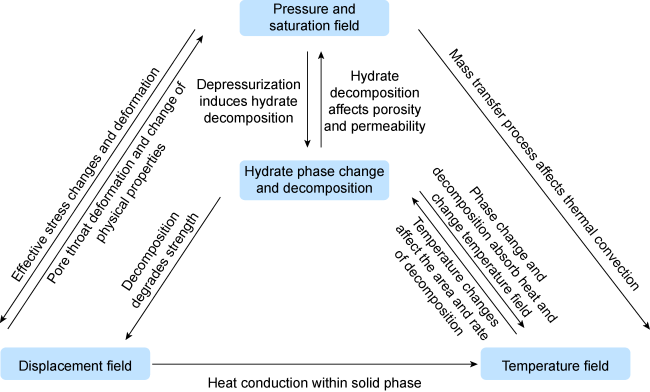


Fig. 1. Natural gas hydrate exploitation and multi-field coupling mechanism (modified from Reference [58]). |
1.3.2. Experimental method
In order to characterize phase changes and mechanical response induced, laboratory experiments are conducted. In the experiments, rock samples containing methane hydrates are prepared at low temperature and high pressure for conducting mechanical tests such as uniaxial and triaxial compression tests and creep experiments. By analyzing the stress-strain curves and deformation damages to methane hydrate samples, the mechanical response and strength degradation with phase changes can be determined [55]. At different saturations of methane hydrate, the deformation and destruction rules can be clarified through rock mechanics experiments. For instance, strain increase can easily induce damage and destruction to hydrate crystals, and affect the cementation of muddy silt. By testing the mechanical parameters of methane hydrates in a low-temperature and high-pressure environment, the mechanical responses at elastic and yield stages, peak strength and hardening characteristics after peak strain can be observed [56]. In addition, the experiment results indicate that methane hydrates present strong creep characteristics, and the degree of methane hydrate saturation is inversely proportional to the degree of creep deformation. The accelerating creep characteristics can be described by a viscoelastoplastic constitutive model.
Using the methane hydrate samples under in-situ conditions can effectively improve the guidance of experimental results to actual engineering field. If it is challenging to get underground cores, methane hydrate samples can be artificially prepared in laboratory under low-temperature and high-pressure conditions after typical properties such as mineral composition and particle size are calibrated by petrophysical experiment and logging data from test wells. Triaxial compression and rock creep mechanics tests are then conducted to investigate the characteristics of methane hydrate sediments under in-situ conditions. Based on these data, artificial methane hydrates are improved to better replicate the in-situ conditions, and enhance the reliability and accuracy of rock mechanics experiments based on artificial methane hydrate samples. Because of high requirements on methane hydrate samples, experiment environment and equipment, muddy silt samples prepared by tetrahydrofuran can be considered, whose temperature and pressure are easier to realize than methane hydrate. Using tetrahydrofuran hydrate samples, key deformation and failure parameters can be obtained at different hydrate saturations. Experimental studies show that tetrahydrofuran hydrates present strain hardening at low abundance and obvious brittle failure at pure hydrate. This is highly similar to the qualitative knowledge obtained from methane hydrate experiment [57].
1.3.3. Mathematical characterization
For mathematical characterization, the governing equations are established and solved by the multi-field coupling method. The phase change and decomposition of pore fillings in weakly cemented formations differ significantly from the rock mechanics encountered when drilling and producing deep oil and gas reservoirs. Addressing these processes requires the application of mass, energy, momentum and continuity conservation equations. During drilling and producing operations, changes of temperature, pressure and stress result in hydrate decomposition and phase changes. The reservoir mechanical parameters deteriorate and strong multi-field coupling takes action. The basic mass transfer equations for natural gas hydrate reservoirs are [58]:
$\frac{\partial }{\partial t}\left( \phi {{S}_{\text{w}}}{{\rho }_{\text{w}}} \right)+\nabla \cdot \left( {{\rho }_{\text{w}}}{{v}_{\text{w}}} \right)={{s}_{\text{w}}}$
$\frac{\partial }{\partial t}\left( \phi {{S}_{\text{g}}}{{\rho }_{\text{g}}} \right)+\nabla \cdot \left( {{\rho }_{\text{g}}}{{v}_{\text{g}}} \right)={{s}_{\text{g}}}$
The kinetic model of hydrate decomposition is expressed as:
${{R}_{\text{MH}}}=-{{k}_{\text{d}}}{{M}_{\text{MH}}}\left( {{p}_{\text{e}}}-{{p}_{\text{g}}} \right){{A}_{\text{s}}}$
The hydrostatic equilibrium equation is given as below:
$\nabla \cdot \sigma =0$
The constitutive equation is:
$\delta \sigma =C:\delta \left( \varepsilon -{{\varepsilon }_{\text{p}}} \right)-{{\alpha }_{\text{B}}}\delta p{{I}_{\text{u}}}$
Finally, the spatiotemporal evolution model of multi-physical field is developed using numerical methods such as the finite element method. Incorporating heterogeneous formation parameters, including anisotropy, discontinuity and creep, theoretical and engineering studies can be conducted on skeleton collapse caused by gasification of pore fillings [59-60].
Guo et al. [58] established a numerical model based on heat transfer, mass transfer, hydrate decomposition and elastoplastic deformation equations, and conducted pressure-drop production simulation for 8 d. The simulation results revealed that the phase change of hydrates not only affected the pore pressure and temperature in the rock surrounding the wellbore, but also had a significant impact on the decomposition, deformation and destruction of hydrates. Upon production, the near-wellbore pressure dropped and even a pressure funnel appeared in a certain range. Then the hydrates began to decompose in a wide distribution, especially in the near-wellbore region. Heat absorption caused by hydrate decomposition resulted in the decrease of reservoir temperature, and the temperature drop near the wellbore was the most drastic in a wide range. This suggests similar trends of change in pressure and in temperature with hydrate decomposition, and the pressure and temperature fields were tightly coupled. Hydrate decomposition also resulted in the increases of the porosity and permeability of the reservoir. Considering the influence of gravity, the multi-field coupling parameters and the deterioration of mechanical strength above and below the wellbore are different, indirectly indicating that the multi-field evolution caused by hydrate decompression tends to be more rapid in shallower positions. Compared to homogeneous formations, in heterogeneous reservoirs, the near-wellbore pressure drop is larger and the formation deformation is more severe, but the hydrate decomposition front moves slower, and the sealing effect is better. Because the decomposition area is confined within single layers, the temperature drop is inhibited. Cui et al. [60] revealed that the creep effect in the process of depressurized production would lead to the reduction of hydrate decomposition radius and degree, consequently the reduction of reservoir seepage and the decrease of production and recovery.
2. Application scenarios of phase-change rock mechanics
2.1. Phase control and effective production of heavy oil sands
The extra-heavy oil reservoirs in Fengcheng Oilfield in the Junggar Basin are terrestrial sediments that are weakly cemented and strongly heterogeneous, with developed mudstone or mud shale interlayers, and low permeability. In the original reservoir environment, the extra-heavy oil has viscosity up to 1×10⁶-1×10⁷ mPa·s, and it is immobile in a solid or semi-solid state. SAGD, with two horizontal wells that spaced 4-5 m, 300 m to 1 000 m long each, oriented the same and completed with sieves, is the primary development approach. Dry steam at 220-250 °C is injected into one horizontal well to reduce the viscosity of the asphaltene in reservoir pores through heat conduction and convection, and oil is produced from the other well by a pump. However, the preheating cycle of SAGD is long, which takes half to one year to establish the connection between the two wells. The energy consumption is high, and it is difficult to process the produced liquid. Furthermore, the reservoirs are less consolidated, so that sand production and migration often block the formation near the wellbore, and obstructs the injection channels. Injecting produced liquid into the blocked reservoir can effectively remove the near-wellbore blockage, establish the dual well communication and reduce the obstruction from the interlayers. Since 2012, a five-stage cycle characterized by “circulated well washing, low pressure injection, pressure lifting and dilation, connection judgment, deepened transformation” has been performed, with the intent to create a highly permeable zone, induce microcracks around the wells, connect two wells and enlarge the steam chamber necessary for subsequent thermal production by controlling pressure and flow rate [62].
Phase control and efficient exploitation of extra-heavy oil sands include three stages, which are reservoir stimulation (high-pressure water injection to remove blockage), preheating and production. (1) Water injection stage. Inject water to backwash the wells, and remove the blockages from the reservoirs near the wells by controlling pressure and injection rate. Pore elasticity (pore elastic dilation and increase of unit fluid volume), plastic deformation (shear dilation and plastic tensile dilation) and fractures (inducing microcracks) are considered to enhance the pore volume around the wells, accelerate the hydraulic connection between the two wells and improve thermal convection [6,62]. (2) Preheating stage. A triple-zone double-interface heat transfer model is established using semi-analytical method and finite element method, including a liquid asphaltene zone, a transition zone and a solid asphaltene zone. This allows for real-time prediction on the movement speed of the phase-change interfaces of asphaltene and the temperature distribution within the reservoir. By accurately determining the intermediate temperature, the timing for formal production is optimized. Additionally, an early increase in the “heating ring” around the wellbore helps shorten the preheating cycle and improve the preheating effect. (3) Production stage. Concerning the breakthrough, rising, and horizontal dilation stages of the steam chamber, a zonal geomechanical model featured by dilation, permeability increase, and enhanced heat transfer based on asphaltene phases is established to accurately predict heavy oil production and analyze the spatiotemporal evolution of deformation, damage, seepage, heat transfer and phase change induced by different reservoir properties and steam injection parameters. By screening layers and optimizing construction parameters, the reservoir porosity, permeability, comprehensive heat transfer coefficient, and heavy oil production can be improved [63-64]. Based on the phase-change mechanics theory for heavy oil sands, a thermal-fluid-solid coupled numerical calculation model is established. It is capable of describing and visualizing the complex mechanical behaviors induced by phase change of underground heavy oil, including reservoir skeleton deformation, fluid seepage and heat transfer. An integrated design for dilation, preheating and production throughout the SAGD life cycle is developed to enhance heavy oil production and final recovery.
2.2. Shallow-water flow disaster induced by drilling into over-pressured deepwater formation
Shallow-water flow disaster is one of the major problems to be addressed in deepwater drilling operation in the Gulf of Mexico. A survey showed that 106 wells in the Gulf of Mexico costed 175 million US dollars, and 1.6 million US dollars per well on average [43,65 -66]. The Ursa block located in the continental shelf of the Mississippi River is a high-risk area of shallow-water flow disaster when drilling in deep water. The sediments are thick and fine-grained sands with low permeability. The sand layer is 182 m to 274 m thick, and overlaid by mud approximately 305 m thick. The Ursa block has been depositing rapidly in recent 100 000 years, but insufficient water drainage has increased the pore pressure to overpressure by about 60% to 75%, which increases the risk of shallow-water flow disaster and narrows the drilling window. The safe drilling margin 915 m below the mudline is only 24.0-59.9 kg/m3, which is lower than 59.9 kg/m3, the conventionally minimum safe margin [67]. In order to prevent shallow-water flow disaster, several strategies are applied in the operating area: (1) overbalanced drilling with separation pipe and aggravated drilling fluid; (2) underbalanced drilling paired with seawater drilling fluid and kill fluid without separation pipe; (3) aggravated drilling fluid without separation pipe [68].
According to the visualized experiment on shallow-water flow disaster, the over-pressured sand body presented different forms and degrees of destruction [69]. Ren et al. [52] pointed out that the destruction of shallow-water flow disaster caused by phase changes of over-pressured sand bodies was related to flow rate. Alberty et al. [58] reported differences in the impact of shallow-water flow in 74 wells in the deepwater area of the Gulf of Mexico. During production, appropriate measures should be taken to reduce the severity of shallow-water flow disasters. Accurate and reliable risk prediction is essential to minimize drilling risks and economic losses. Since the destruction to over-pressured sand bodies involves a complex phase-change process, phase changes should be considered in risk prediction. Shentu et al. [48] established a hydromechanical numerical model based on DEM-CFD considering the influence of phase change, which simulates the destructed process of over-pressured sand bodies and the formation of sand-water flow, and calculates the amount of intruding sand into the wellbore to evaluate the risk of shallow-water flow disaster. Considering the integrated influence of multiple factors such as overpressure, porosity and sand particle size on the risk of shallow-flow disaster, a prediction chart has been obtained by building a machine learning model (e.g., support vector machine [70]). Based on the risk-forecasting chart, engineers can predict the risk of potential shallow-water flow disaster, and select an appropriate drilling scheme to reduce the impact of shallow-water flow and save operating cost.
2.3. Submarine hydrate production
Hydrate reservoirs in marine areas hold vast resources and exist in phase equilibrium within the hydrate-stable zone. Hydrate exploitation is often carried out by depressurization method, heat shock method, inhibitor method and replacement method. At present, many countries have carried out production tests on marine hydrates, and verified the potential of marine hydrate exploitation. China has carried out two production tests on the gas hydrates in the Shenhu Sea of the South China Sea, using vertical and horizontal wells respectively via depressurize production [18]. The water depth is 1 000-1 500 m, and the dominant lithology is argillaceous siltstone in the test area. The average permeability of the hydrate reservoir is (2.4-6.8)×10−3 μm2, the average effective porosity is 34.7-37.3%, and the reservoir thickness is 19.0-45.6 m [18].
The hydrate reservoir in the Shenhu Sea is weakly cemented argillaceous siltstone which is non-diagenetic. To describe the development process, it is necessary to analyze the multi-field coupling mechanism of surrounding rock and the instability mechanism of wellbore in the process of drilling and production from the perspective of phase-change rock mechanics, and to clarify the relationship between wellbore stability and the degree of hydrate decomposition and saturation. With hydrate decomposition, the surrounding rock gradually transforms from relatively complete rock to a soft-to-loose transitional state, and finally to loose soil under certain conditions. The corresponding reservoir state is in the hydrate stabilization zone, transition zone and decomposition zone, respectively. The instability parameters should be established for each zone to estimate the risk of instability [71]. Therefore, it is necessary to combine numerical simulation and field data to study the influence of reservoir skeleton deformation and mechanical strength deterioration caused by phase changes on formation subsidence and potential geological disaster, so as to improve the understanding of the law of rock mechanics. A comparison of the multi-field coupling effects of fluid, solid, heat and chemistry during the production process reveals that the zone experiencing changes in reservoir pressure and temperature is significantly larger than the hydrate decomposition zone. Furthermore, the front of pressure and temperature drop advances much faster than the hydrate decomposition front, resulting in different stress change trends in different directions. Moreover, the deterioration of strength parameters such as cohesion and the evolution of the plastic zone are highly positively correlated with the advancement front location of hydrate decomposition [72-73].
3. Challenges and trends of phase-change rock mechanics
As a new research field, the development of phase-change rock mechanics faces many challenges. Early application of phase-change rock mechanics focused on engineering geology. In the study of permafrost and paving problems, water and asphaltene are often deemed phase-change media whose phases change with temperature. In the energy industry, early application of phase-change rock mechanics focused on gas hydrates produced through depressurization or heating. In comparison, the phase change of gas hydrates is more complex than those in engineering geology. With oil and gas exploration endeavoring to the deep-sea, deep-earth and unconventional resources, changes of rock mechanical properties induced by phase changes become increasingly frequent during drilling and production. It is urgent to investigate the specific behaviors of phase-change rock mechanics and establish corresponding mechanical control equations tailored to specific scenarios [74]. When drilling ultra-deep wells, for example Well TK drilled below 10 000 m, the high temperature and great pressure not only cause the pore fillings to change in phase, but also transform the rock skeleton from solid to liquid. The latter cannot be ignored because the stress field and the deformation field must be considered with the phase change of the pore-fillings. However, the theory and understanding of the phase-change rock mechanics almost stay at the phases of experimental phenomenon observation and empirical formula description, such that no unified and systematic theoretical system has been developed. The first difficulty in developing the theory of rock mechanics lies in how to describe the dynamic evolution law of rock mechanics, seepage and heat transfer in the process of phase change from the perspectives of experiment and modeling.
In terms of experimental methods, it is urgent to carry out in-depth experimental research on phase-change rock mechanics, and develop special mechanical experiment equipment that can provide a phase-change environment. Currently, conventional triaxial testers are available for studying hydrate formation, but they have great limitations in creating the necessary experimental conditions, testing and evaluation. As for conventional triaxial tests, one disadvantage lies in that the maximum working temperature is only 180 °C when applying confining pressure and pore pressure at the same time. Another one is that the precision and range of the stress-strain sensor cannot meet the requirement of investigating the stress-strain behavior of loose porous media such as Ultra-heavy oil sands when changing phase. To deeply investigate the phase change behavior and mechanism of ultra-heavy oil sands, it is imperative to develop new experimental equipment that is able to simulate the underground producing environment.
In terms of mathematical characterization, the theory of rock phase change remains underdeveloped. This theoretical framework must capture the distinction between phase-change rock mechanics and conventional rock mechanics, particularly in terms of elastic and plastic constitutive relationship, pore fluid flow behavior, and heat transfer mechanism. Additionally, it should describe the spatiotemporal evolution of rock physics, rock mechanics, seepage dynamics, and heat transfer during the phase-change process.
In engineering applications, the theory of phase-change rock mechanics plays a vital role in risk assessment and prediction during drilling and production. However, the control mechanism and construction process involved in oil and gas production and injection are still not well understood.
In the future development of phase-change rock mechanics, first a unified theoretical framework should be constructed, and based on which the methods appliable for drilling, production and engineering geology will be developed, especially those for reservoir stimulation and production enhancement should be given priority. Secondly, it is necessary to develop large scientific research instruments and equipment that can simulate the complex mechanical behaviors caused by rock phase changes in underground geological and engineering environments including temperature, pressure and ground stress, for risk assessment and program design. Finally, with the help of artificial intelligence, the known mechanical behaviors within the ranges of existing experimental environmental parameters can be adopted to predict the mechanical evolution principles difficult to be obtained under existing experimental conditions [75]. For example, by collecting the data of stress and pore pressure distribution at specific confining pressures in conventional triaxial compression experiment, a physics-constrained deep neural network is trained, and then applied to quickly predict the in-situ stress and pore pressure in certain reservoir under engineering conditions. By applying sensors to test phase change and mechanical deformation, and integrating artificial neural network and computer vision technology under physical constraints, a 3D dynamic visualization method reflecting real-time phase change and mechanical deformation can be established to implement the digital twin of rock mechanics.
4. Conclusions
A defining characteristic of phase-change rock mechanics is the reconstruction of the solid skeleton structure caused by phase changes of pore fillings, accompanied by coupled mechanical responses from thermal, chemical, fluid and solid interactions. To address these complex phenomena, specific experimental methods and tailored mechanical control equations must be developed for every scenario. Ultra-heavy oil sand, over-pressured sand body and hydrate reservoir are three typical types of formation with featured phase-change rock mechanics. The key to describing the thermal phase-change mechanism of solid alkane-related mixtures in heavy oil sands lies in formulating the governing equations for the solid-fluid state throughout the entire process of reservoir transform, preheating and production. These equations must be calibrated through experiments to ensure accuracy. To explore the mechanism of shallow-water flow disaster induced by the instability of over-pressured sand body in deep water, it is necessary to carry out visualized drilling experiments under different confining pressures, especially in-situ stresses, to clarify the failure behavior and deformation modes of over-pressured sand bodies on the macro level, and construct the dynamic equation of sand particles dragged by fluid after transient pressure relief on the micro level, finally to establish a multi-scale shallow-water flow disaster model. By improving the equation of hydrate dynamics under multi-field coupling and characterizing the dynamic changes of gas and liquid phases during decomposition, the influences of temperature, pressure and stress on the process of hydrate production can be revealed.
Current research on phase-change rock mechanics faces several challenges, including application cases, specialized experimental equipment and utilization of artificial intelligence. In the future, more challenges need to be overcome as related to phase-change rock mechanics in oil and gas resource exploitation. Specialized experimental equipment, artificial intelligence and digital twin technologies are important for facilitating real-time simulation and dynamic visualization of the phase-change related mechanical processes.
Nomenclature
αB—Biot coefficient, dimensionless;
Aw—specific surface area of liquid phase, m−1;
Ag—specific surface area of gas phase, m−1;
As—specific surface area of hydrate decomposition, m−1;
C—stiffness tensor, Pa;
Cd—drag coefficient, dimensionless;
ff—fluid force acting on particles, N;
fm—external mechanical force acting on particles, N;
g—acceleration of gravity, m/s2;
I—the moment of inertia of particles, kg∙m2;
Iu—unit tensor, dimensionless;
kd—the kinetic rate constant of hydrate decomposition, mol/(m2·Pa·s);
m—particle quality, kg;
mα—the mass of pore fillings in phase α, kg/m3;
${{\dot{m}}_{\text{s}\to \text{l}}}$—phase change rate, kg/(m3∙s);
M—moment acting on particles, N∙m;
MMH—molar mass of hydrate, kg/mol;
p—phase balance pressure, Pa;
pe—external pressure, Pa;
pg—gas pressure, Pa;
rb—particle radius, m;
Re—Reynolds number, dimensionless;
RMH—hydrate decomposition rate, kg/(m3·s);
sl—specific entropy of liquid phase, J/(K·kg);
ss—specific entropy of solid phase, J/(K·kg);
sα—specific entropy of pore fillings in phase α, J/(K·kg);
S—total entropy density per unit volume, J/(K·m3);
Sw—saturation of liquid phase, dimensionless;
Sg—saturation of gas phase, dimensionless;
Ssk—entropy density of rock skeleton, J/(K·m3);
t—time, s;
T—temperature, K;
u—movement velocity of particles, m/s;
νw—seepage velocity of liquid phase, m/s;
νg—seepage velocity of gas phase, m/s;
νf—fluid velocity, m/s;
wα—relative Euler flow rate of phase α, kg/(m2·s);
α—phase, α=s represents solid phase, α=l represents liquid phase;
θ—temperature change on T0, K;
κ—thermal conductivity coefficient, W/(m·K);
μc1, μc2—critical viscosity between liquid phase and solid-liquid two-phase, solid-liquid two-phase and solid phase, respectively, mPa·s;
δ—scalar describing plastic deformation, dimensionless;
ε—total strain, dimensionless;
εp—plastic strain, dimensionless;
ρf—fluid density, kg/m3;
ρw—density of liquid phase, kg/m3;
ρg—density of gas phase, kg/m3;
σ—stress tensor, Pa;
ϕ—reservoir porosity, %;
φ—local porosity, %;
χ—empirical index, dimensionless;
ω—angular velocity of the particle, rad/s.