

Introduction
Shale gas, a clean and efficient form of unconventional natural gas, has emerged as a critical natural gas resource. The success of the shale revolution since 2000 has substantially boosted oil and gas production in the United States and profoundly altered the global energy landscape [1⇓⇓⇓⇓⇓-7]. By 2023, U.S. shale gas production had surpassed 8 300×108 m3, accounting for more than 75% of its total natural gas output. Canada, China, and Argentina have likewise achieved economic shale gas development, with outputs steadily increasing each year.
China possesses abundant shale gas resources, characterized by the extensive development of organic-rich shales in marine, transitional, and lacustrine settings. These shales exhibit multi-layered distributions, multiple genetic types, and complex post-depositional modifications, resulting in many unique geological attributes and enrichment patterns. According to the 2016 China Mineral Resources Report released by the Ministry of Natural Resources (formerly the Ministry of Land and Resources)[8], the shallow shale gas resources (depth less than 4 500 m) amount to 122×1012 m3 in China, with 21.8×10¹² m3 assessed as technically recoverable. Through more than a decade of exploration and development, large-scale commercial production has been achieved in the Upper Ordovician Wufeng Formation-Lower Silurian Longmaxi Formation (Wufeng-Longmaxi) in the Sichuan Basin and surrounding areas. By the end of 2023, cumulative proven geological reserves of shale gas had reached 2.96×10¹² m3, while annual production rose to 250×108 m3[5], representing 10.9% of the country’s total natural gas output. Consequently, shale gas has become an important field for the reserve and production increase of natural gas in China. However, despite this sizable potential, both proven reserves and production remain relatively limited, with a proven ratio below 3%. Exploration practices indicate that simply replicating North American shale gas theories and experiences does not ensure cost-effective exploration and profitable development in China. Therefore, understanding the geological features, resource potential, and future development of shale gas under the complex geologic conditions is pivotal for unlocking new exploration domains and strengthening the role of shale gas in safeguarding national energy security.
This paper systematically reviews the geology theoretical investigations and exploration and development practices of shale gas in China. It compares the geological characteristics, enrichment patterns, and resource potential of various shale types, while discussing principal challenges and development directions for shale gas exploration and development, thereby offering insights to foster the growth of the shale gas industry in China.
1. Shale gas exploration and development history and new progress
1.1. Exploration and development history
1.1.1. Play selection and evaluation stage
Since 2004, multiple Chinese oil companies, universities, and research institutions have conducted in-depth surveys of North American shale gas geology and technologies, as well as investigations and assessments of the shale gas resources of China. By comparing the conditions for shale gas formation in both regions and adopting play selection and evaluation concepts from North America, the play evaluation and selection method and standard tailored for the geological characteristics of China were developed. This process identified Cambrian, Silurian, and Permian marine strata in southern China as highly prospective and led to breakthroughs in the Sichuan Basin. In 2008, the first shale gas parameter well (Changxin 1) in the Sichuan Basin confirmed the considerable shale gas potential in the Wufeng-Longmaxi [9]. In 2010, the first shale gas well (Wei 201) in China recorded a peak production of 1.7×10⁴ m3/d in the Wufeng-Longmaxi[10], marking the onset of shale gas exploration and development in the country.
1.1.2. Exploration breakthrough stage
In 2011, shale gas was officially recognized as an independent mineral commodity in China, triggering a surge in exploration activities. The shale gas exploration practices in China demonstrated that superior reservoir quality and effective preservation conditions are crucial factors governing shale gas accumulation. In July 2012, Well Ning 201-H1 in the Changning area of the Sichuan Basin achieved a commercial flow rate of 15×104 m3/d from the Wufeng-Longmaxi, marking the first commercially valuable shale gas well in China. In response to the highly mature marine shales in southern China and their extensive tectonic reworking in the later stage, researchers proposed the “dual-factor enrichment” theory for marine shale gas [11-12]. Subsequently, in November 2012, Well Jiaoye 1 in the Sichuan Basin produced commercial gas flow at the rate of 20.3×10⁴ m3/d on test in the Wufeng-Longmaxi, leading to the discovery of the Fuling shale gas field. From that point, the shale gas exploration and development efforts converged on the Wufeng-Longmaxi marine strata in the Sichuan Basin.
1.1.3. Large-scale production increase stage
Starting in 2013, the inception of three national shale gas demonstration projects (Fuling, Changning-Weiyuan and Zhaotong) prompted a rapid, stepwise increase in shale gas production (Fig. 1 ). Annual production climbed from merely 2×10⁸ m3 in 2013 to over 100×108 m3 in 2018, surpassed 200×108 m3 in 2020, and reached 250×108 m3 in 2023, bringing cumulative production to more than 1 400× 108 m3. As a result, shale gas has become a pivotal sector in the expansion of China’s natural gas reserves and output.
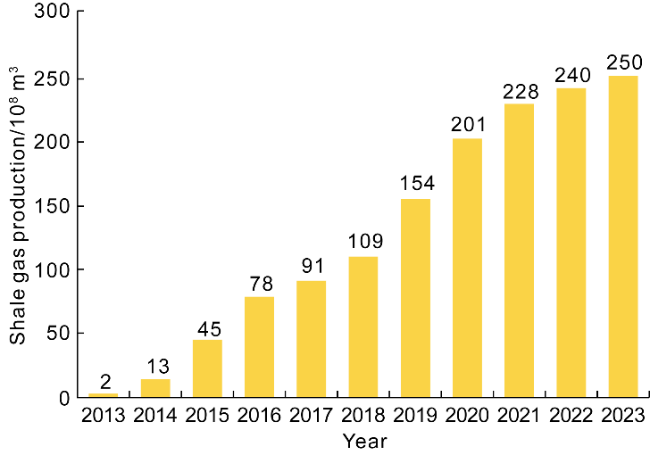
Fig. 1. Bar chart illustrating the growth of shale gas production from 2013 to 2023 in China. |
1.2. New progress in shale gas exploration
1.2.1. Marine shale gas
Following more than a decade of targeted exploration and development, marine shale formations in the Wufeng-Longmaxi interval within the Sichuan Basin have demonstrated notable progress. Large-scale beneficial development has been achieved in shallow-medium intervals (less than 3 500 m), while important exploration breakthroughs have been achieved in deep strata (3 500-4 500 m), accompanied by promising advances in ultra-deep targets (greater than 4 500 m). In 2019, Well Dongyeshen 1 produced gas at the rate of 31.2×10⁴ m3/d during testing, marking a significant milestone in deep shale gas exploration at the burial depth of 4 200 m. That same year, Well Lu 203 (vertical depth: 3 866.7 m) set a national record with a tested flow rate of 137.9×10⁴ m3/d. Furthermore, Well Pushun 1 (vertical depth: 5 917-5 971 m) flowed continuously for many days after successful fracturing, revealing “high pressure, high porosity, and high gas content” in ultra-deep shales, highlighting vast resource potential [13]. In 2022, the Qijiang deep shale gas field in the structurally complex southeastern Sichuan Basin reported initial proven geological reserves of 1 459.68×10⁸ m3.
Beyond the Wufeng-Longmaxi interval, the Cambrian Qiongzhusi Formation and the Permian Wujiaping and Dalong Formations in the Sichuan Basin have all achieved breakthroughs in shale gas exploration successively, underscoring the broad exploration prospects for new marine horizons. For instance, in 2020, Well Hongye 1HF tested a production rate of 8.9×10⁴ m3/d from the Wujiaping Formation in the southeastern Sichuan Basin. In 2022, Well Jinshi 103HF tested at 25.9×10⁴/d from the Qiongzhusi Formation. In 2023, Well Leiye 1 in Dazhou area tested a production rate of 42.7×10⁴ m3 from the Dalong Formation at the depth of over 4 200 m, and Well Zi 201 (vertical depth: 4 500-4 800 m) in Ziyang area tested a production rate of 73.9×10⁴ m3 from the Qiongzhusi Formation. In 2024, Well Ziyang 2 (vertical depth: 4 500-5 000 m) obtained a high-yield industrial gas flow of 125.7×10⁴ m3 from the Qiongzhusi Formation, marking a breakthrough shale gas exploration in ultradeep strata and new strata.
Additionally, the continuous exploration breakthroughs in the Ordovician Wulalike Formation along the western margin of the Ordos Basin have opened new frontiers for marine shale gas exploration beyond southern China, with an estimated favorable exploration area of 5 500-6 500 km2, exhibiting promising exploration prospects [14-15].
1.2.2. Transitional shale gas
Transitional shale gas exploration in China remains largely at the stage of exploration evaluation. To date, more than 100 wells have been drilled in transitional shale. These wells have discovered shale gas shows in the Permian Shanxi and Taiyuan Formations of the Ordos Basin, the southern North China and the Qinshui Basin, and in the Permian Longtan Formation of southern China, and several wells have tested industrial gas flow, marking the preliminary exploration breakthrough [6]. In 2016, Well Zhenjia 1 (vertical) in the Ordos Basin tested at 5.7×10⁴ m3/d from the Permian Taiyuan Formation (2 339-2 390 m) after fracturing. Subsequently, in 2017, Well Yunyeping 3 (horizontal well) in the Shanxi Formation reached 5.3×10⁴ m3/d during testing, and in 2020, Well Jiping 1H similarly produced up to 8.0×10⁴ m3/d, with an estimated ultimate reserve (EUR) of 4 600×104 m3. Good shale gas shows observed in the Sichuan Basin, the Xiangzhong Basin (depression) and other areas further indicate the potential and favorable exploration prospects for transitional shale gas.
1.2.3. Lacustrine shale gas
Although efforts to explore lacustrine (terrestrial) shale gas in China began relatively early, progress has remained slow due to significant reservoir heterogeneity, complex spatial distribution, and high clay mineral content of lacustrine shale. Nonetheless, encouraging breakthroughs have been made in recent years. In 2011, Well Liuping 177 (vertical), the first lacustrine shale gas exploration well in China, produced an industrial gas flow of 2 350 m3/d from the 7th Member of Triassic Yanchang Formation in the Ordos Basin [16]. Well Liye 1HF and Well Jiliyeyou 1 (vertical) in the Lishu fault depression of the Songliao Basin achieved shale gas production rates of 3.0×10⁴ m3/d and 7.6×10⁴ m3/d, respectively, from the Cretaceous Yingcheng Formation and Shahezi Formation. Additionally, between 2020 to 2022, exploration breakthroughs were made successively for the Jurassic lacustrine shale oil and gas in the Sichuan Basin. For example, Well Fuye 10HF reached daily gas production of 5.6×10⁴ m3 and daily oil production of 17.6 m3 in the Dongyuemiao Member of Ziliujing Formation, Well Taiye 1 reached the daily gas production of 7.5×10⁴ m3 and daily oil production of 9.8 m3 in the Lianggaoshan Formation, and Well Puluye 1 tested daily gas production of 10.4×10⁴ m3 in the Qianfoya Formation, all of which demonstrate the promising exploration and development prospects.
2. Geological characteristics of shale gas
Substantial differences in geological settings and formation conditions distinguish Chinese shale gas from their North American counterparts. While North American shale gas primarily accumulates in the Upper Paleozoic and Mesozoic marine deposits, Chinese shales occur across marine, transitional, and lacustrine settings [17⇓⇓⇓⇓-22] (Fig. 2 , Table 1 ). Marine shales in China were mainly developed in the Lower Paleozoic, transitional shales in the Carboniferous-Permian, and lacustrine shales in the Mesozoic-Cenozoic.
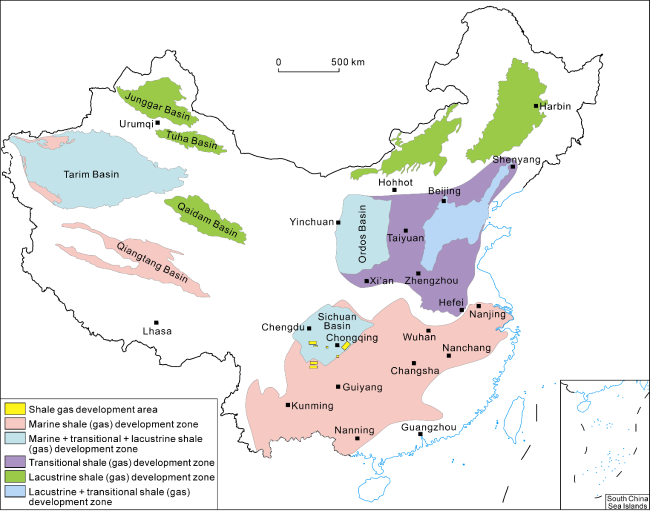
Fig. 2. Distribution of organic-rich shales and shale gas fields in major basins in China (modified according to Reference [5]). |
Table 1. Geological parameters of organic-rich shales in major basins in China (modified from references [15,17⇓⇓⇓⇓-22]) |
| Type | Basin/ Region | Interval | Depth/ m | Effective shale thickness/m | Dominant lithofacies | TOC/ % | Kerogen type | Ro/ % | Brittle minerals content/ % | Poro- sity/% | Gas content/ (m3·t−1) | Formation pressure coefficient |
|---|---|---|---|---|---|---|---|---|---|---|---|---|
| Marine | Sichuan Basin & surrounding areas | Wufeng- Longmaxi. | 1 000- 6 000 | 18-40 | Siliceous shale, Mixed shale | 1.5- 6.0 | I—II1 | 2.1- 3.1 | 50.0-80.0 | 1.20- 12.00 | 1.30- 6.30 | 1.0-2.2 |
| Cambrian Qiongzhusi Fm. | 1 000- 10 000 | 20-160 | Siliceous shale, Mixed shale | 0.5- 10.0 | I | 2.3- 5.2 | 44.0-71.1 | 1.80- 3.40 | 1.50- 3.80 | 1.0-1.6 | ||
| Permian | 2 000- 7 000 | 6-40 | Siliceous shale, Calcareous shale | 1.2- 28.9 | I—II1 | 1.9- 3.1 | 69.0-96.1 | 2.30- 3.70 | 7.40- 14.20 | 1.0-2.0 | ||
| Central Yangtze region | Wufeng- Longmaxi. | 1 000- 4 300 | 10-30 | Siliceous shale, Mixed shale | 1.3- 5.5 | I—II1 | 2.0- 3.0 | 34.0-94.0 | 0.20- 8.40 | 0.20- 4.30 | 1.0-1.5 | |
| Cambrian Niutitang Fm. | 20-120 | Siliceous shale | 0.9- 9.6 | I | 2.5- 3.2 | 41.0-95.0 | 0.10- 4.10 | 0.01- 5.60 | 0.9-1.1 | |||
| Sinian Doushantuo Fm. | 40-109 | Siliceous shale | 0.5- 5.2 | I | 2.9- 3.5 | 47.0-95.0 | 0.20- 3.90 | 0.10- 4.80 | 1.0 | |||
| Lower Yangtze region | Permian | 1 000- 5 000 | 10-25 | Siliceous shale, Calcareous shale | 0.5- 17.2 | I—II | 1.2- 3.0 | 45.8-62.9 | 1.50- 3.10 | 1.00- 1.20 | ||
| Tarim Basin | Ordovician | 3 500- 13 000 | 10-55 | Siliceous shale, Calcareous shale | 0.7- 7.6 | I—II | 1.3- 2.8 | 0.10- 21.70 | ||||
| Cambrian | 4 500- 14 000 | 20-100 | Siliceous shale | 1.0- 22.4 | I | 1.6- 3.0 | 27.0-90.0 | 0.07- 1.30 | 2.60- 4.90 | |||
| Ordos Basin | Ordovician Wulalike Fm. | 1 500- 4 700 | 20-140 | Siliceous shale | 0.3- 1.7 | I—II1 | 1.6- 2.0 | 59.4-92.5 | 0.20- 7.90 | 1.10- 2.70 | 0.7-0.8 | |
| Dian- Qian-Gui Basin | Carboniferous | 1 000- 4 500 | 20-150 | Siliceous shale | 0.5- 7.1 | I—II1 | 2.0- 3.0 | 11.0-94.0 | 1.10- 11.20 | 0.20- 5.00 | 1.0-1.1 | |
| Devonian | 1 000- 5 000 | 50-250 | Siliceous shale | 0.2- 10.6 | I—II1 | 1.9- 3.8 | 22.0-89.0 | 0.06- 6.88 | 0.03- 2.20 | |||
| Transitional | Sichuan Basin & surrounding areas | Permian | 2 000- 7 000 | 7-50 | Clayey shale, Mixed shale | 0.6- 11.7 | II2—III | 1.6- 3.0 | 9.4-93.8 | 1.13- 9.00 | 0.60- 8.80 | |
| Ordos Basin | Permian & Carboniferous | 1 500- 3 500 | 10-70 | Clayey, Mixed, Felsic shale | 0.5- 17.0 | II2—III | 1.6- 2.7 | 28.0-80.0 | 1.25- 5.80 | 1.40- 5.70 | 0.9-1.1 | |
| Lacustrine/Terrestrial | Sichuan Basin & surrounding areas | Jurassic Ziliujing Fm. | 1 400- 4 300 | 20-80 | Clayey shale, Mixed shale | 0.5- 3.0 | II | 0.9- 1.8 | 30.0-75.0 | 0.60- 15.90 | 1.40- 1.70 | 1.0-1.8 |
| Triassic Xujiahe Fm. | 1 500- 4 500 | 30-80 | Clayey shale | 0.5- 9.7 | II2—III | 1.1- 2.4 | 36.0-55.0 | 1.00- 3.00 | 1.00- 2.00 | |||
| Ordos Basin | Triassic Yanchang Fm. | 1 000- 3 500 | 15-110 | Clayey shale, Mixed shale | 0.5- 38.0 | I—II | 0.5- 1.3 | 33.0-54.0 | 0.16- 14.00 | 1.00- 2.00 | 0.8-1.1 | |
| Songliao Basin | Cretaceous | 1 000- 6 000 | 30-100 | Clayey shale, Felsic shale | 0.4-- 5.5 | II1—III | 0.8- 3.0 | 36.0-56.0 | 2.00- 11.80 | 1.00- 2.00 | 0.9-1.6 | |
| Tarim Basin | Jurassic | 2 000- 8 000 | 10-55 | Clayey shale, Mixed shale | 0.5- 17.8 | III | 0.5- 3.0 | 40.0-70.0 | 0.50- 10.00 | 1.00- 2.00 |
In contrast to the generally stable geological evolution observed in North America, Chinese shale sedimentary basins are diverse and have often undergone multiple tectonic episodes and complex thermal evolution, resulting in diverse lithofacies assemblages, strong heterogeneity and great variability in shale quality and depth and shale gas preservation conditions (Table 1 and Table 2 , Figs. 3 -5 ). Overall, marine shales are typically deposited in relatively stable environments and are generally characterized by siliceous, mixed, and calcareous lithofacies. Transitional and lacustrine shales, on the other hand, form under more dynamic conditions and dominated by clayey, mixed and felsic shale, with frequent intercalations.
Table 2. Comparative geological characteristics of different shale gas types in China |
| Type | Key intervals | Sedimentary environment | Hydrocarbon generation potential | Tectonic reworking | Brittle mineral content | Reservoir space | Source-reservoir configuration |
|---|---|---|---|---|---|---|---|
| Marine shale | Ordovician Wufeng- Silurian Longmaxi, Cambrian Qiongzhusi, Permian Dalong in the Sichuan Basin | Shelf, slope, and platform- basin | Mainly Type I-II kerogen, high hydrocarbon potential, well-developed organic pores | Multiple episodes of tectonic movement, subsidence, and uplift; complex burial history | Moderate- high | Primarily organic pores; secondarily clay-mineral intergranular pores and microfractures | Mostly source-reservoir integrated, occasionally with source-reservoir separation |
| Transitional shale | Permian Longtan in the Sichuan Basin; Permian Shanxi & Taiyuan in the Ordos Basin | Delta, estuarine, barrier island, lagoon, tidal flat | Mainly Type II2-III kerogen; moderate hydrocarbon potential; lower organic pore development | Fewer phases of tectonic movement, subsidence, and uplift and simpler burial history | Low- moderate | Mainly clay-mineral intergranular pores; microfractures and organic pores as secondary | Mostly source-reservoir integrated and symbiotic |
| Lacustrine shale | Jurassic Ziliujing in the Sichuan Basin, Triassic Yanchang in the Ordos Basin, Cretaceous Yingcheng/Shahezi in the Songliao Basin | Shallow-to- deep lacustrine | Types I-III kerogen present; fast and wide variation in hydrocarbon potential; generally lower organic pore development | Low- moderate | Primarily clay mineral intergranular pores, with organic pores and microfractures as secondary | Mostly source-reservoir integrated, with symbiotic or separated types as secondary |
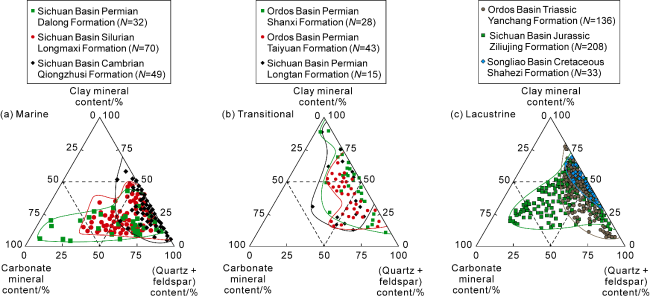
Fig. 3. Mineral compositional characteristics of different types of shales in China (N represents the number of sample). |
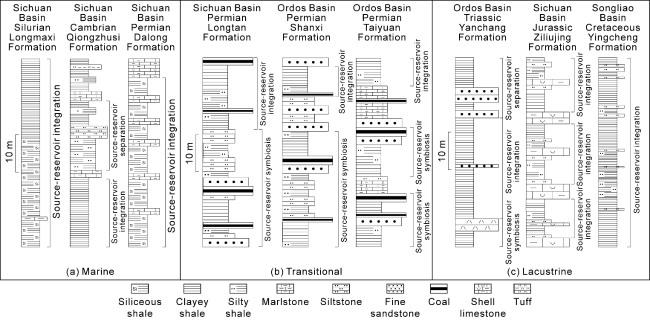
Fig. 4. Lithofacies assemblages and source-reservoir configuration of different shale types in China. |
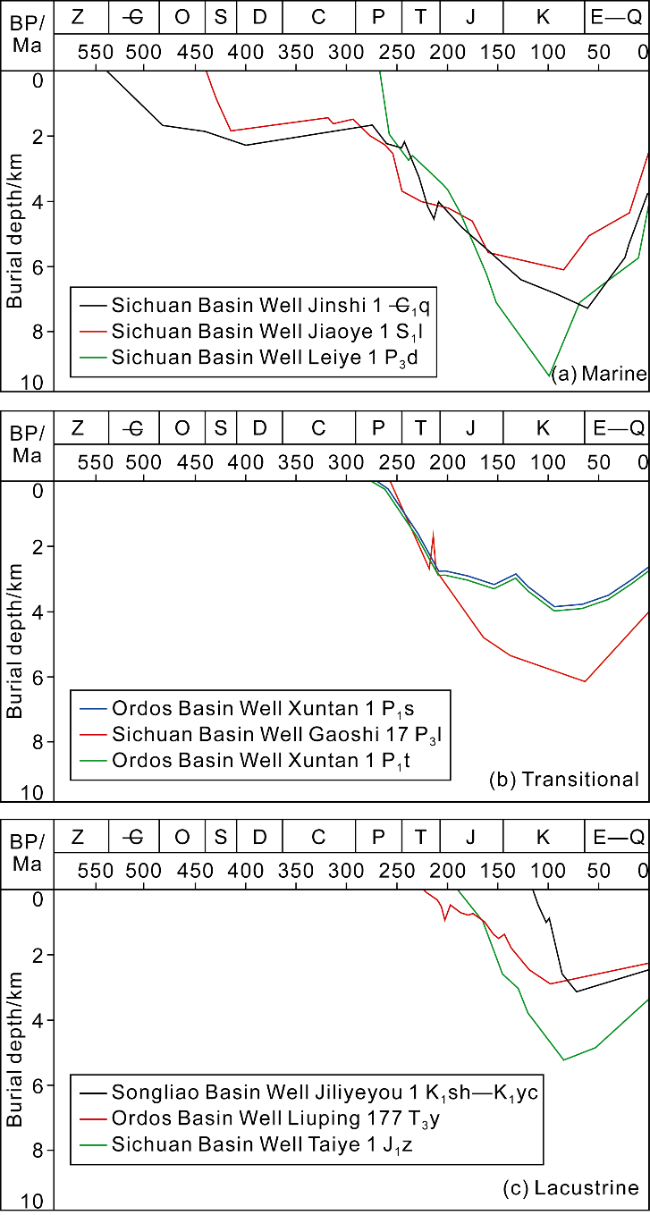
Fig. 5. Burial history for different types of shale in China. Z—Sinian; —C—Cambrian; O—Ordovician; S—Silurian; D— Devonian; C—Carboniferous; P—Permian; T—Triassic; J— Jurassic; K—Cretaceous; E—Paleogene; Q—Quaternary; —C1q—Qiongzhusi Formation; S1l—Longmaxi Formation; P3d—Dalong Formation; P1t—Taiyuan Formation; P1s—Shanxi Formation; P3l—Longtan Formation; K1sh—Shahezi Formation; K1yc—Yingcheng Formations; T3y—Yanchang Formation; J1z—Ziliujing Formation. |
According to the degree and distance of hydrocarbon migration within a shale interval, source-reservoir configurations can be categorized into source-reservoir separation (hydrocarbon migration distance is over one meter), source-reservoir symbiosis (hydrocarbon migrates to the nearest predominant reservoir), and source-reservoir integration (hydrocarbon rarely migrates to another interval). Sedimentary settings control lithofacies diversity, which in turn governs these source-reservoir configurations. Meanwhile the organic-inorganic collaborative evolution controls hydrocarbon generation, migration and accumulation, while tectonic reworking governs shale gas preservation. The coupling of these three factors jointly controls shale gas enrichment.
2.1. Marine shale gas
In China, marine shales are mainly distributed in the Paleozoic of the Yangtze-South China region (Sinian-Permian), the Tarim Basin (Cambrian and Ordovician) and the Ordos Basin (Ordovician), with the Ordovician Wufeng-Silurian Longmaxi, Cambrian Qiongzhusi, Permian Dalong Formation and their equivalents as the key layers (Table 1 , Fig. 2 ). Recent studies also point to the presence of Mesozoic marine shale in the Upper Triassic Bagong Formation and the Lower Jurassic Quse Formation in the Qiangtang Basin [23].
Marine shales are characterized by stable depositional environments and large, continuous distributions (Table 1 and Table 2 ) [3-4]. High-quality marine shales in China are primarily deposited in deep-water shelf settings, featuring widespread distribution, considerable thickness, favorable organic matter types (predominantly Type I-II), high hydrocarbon generation potential, and good reservoir and fracability properties (Table 1 and Table 2 , Figs. 3 -4 ). Compared with North American shales, Chinese marine shales are generally older, with equivalent vitrinite reflectance (Ro) commonly exceeding 2%, indicating an overall overmature state. Moreover, these shales have undergone multiple episodes of tectonic reworking, including frequent folding, faulting, and uplift-erosion processes (Table 2 , Fig. 5 ), resulting in complex in-situ stress and surface conditions, significant variability in gas content and preservation, and a main burial depth exceeding 3 500 m, making large-scale economic development more challenging.
Marine shale lithofacies and lithofacies assemblages are relatively simple, with self-sourced and self-stored configurations (i.e., source-reservoir integration) being predominant overall. The dominant lithofacies types are siliceous, mixed, and calcareous shales, and the development of sandstone and carbonate interlayers is relatively limited. In certain local shallow-water settings (e.g., the Early Cambrian Changning-Mianyang intracratonic sag in the Sichuan Basin), a lithofacies assemblage of silty shale and clayey shale interbedded with siltstone can be found (Table 2 , Figs. 3 and 4 ).
Marine shales exhibit a high degree of organic pore development (Table 2 , Fig. 6 ), which serves as the primary reservoir space for shale gas. The degree of organic pore development usually correlates positively with TOC content and quartz content. The high biogenic siliceous and calcareous content of these shales, coupled with the early formation of a rigid, compression-resistant framework, provides a crucial foundation for the development and preservation of organic pores in marine shales [4,12,24] (Fig. 6 ). Meanwhile, reservoir overpressure plays a key role in maintaining shale pore structures; under comparable conditions, higher formation pressure leads to greater organic pore development, better reservoir properties, and higher gas content -“overpressure gas enrichment” is thus an important safeguard for the enrichment and high productivity of marine shale gas [25⇓-27]. In addition, during exploration practices in southern China’s marine shales, phenomena of low resistivity and low gas content have been observed. Under good preservation conditions, the graphitization of organic matter in overmature shales is the principal cause of low resistivity[28-29]. When maturity becomes too high (Ro>3.5%), the hydrocarbon-generation capacity of the shale declines, organic matter shifts toward graphitization, and organic pores are significantly reduced (Fig. 6 ), thereby exerting a considerable impact on shale reservoir quality.
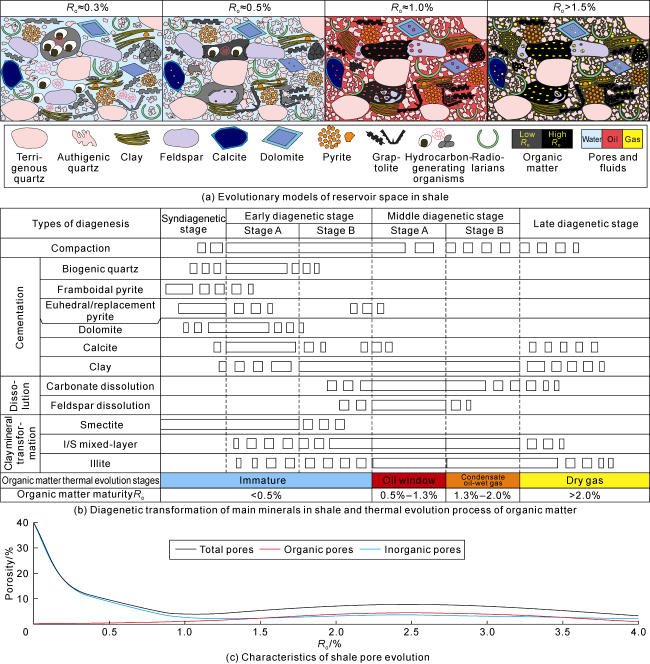
Drawing on the unique shale gas geological conditions and exploration of China, several theories such as the orderly accumulation of conventional-unconventional hydrocarbons [26], dual-factor enrichment [11], and overpressure pore preservation [25] have provided critical guidance for exploration breakthroughs in Chinese marine shale gas, and facilitated the establishment and development of three national shale gas demonstration areas (Fuling, Changning-Weiyuan and Zhaotong). Earlier studies, however, paid insufficient attention to the reservoir properties, source-reservoir configurations, and coupling characteristics of non-organic-rich shale intervals, which resulted in a lack of breakthroughs in source-reservoir separated shale gas. Recently, by shifting exploration strategies and reinforcing evaluations of source-reservoir configurations and coupling, Well Jinshi 103HF in the Jingyan area of southwestern Sichuan achieved a new type of shale gas discovery in the Cambrian Qiongzhusi Formation, representing a source-reservoir-separated system. This breakthrough challenged the conventional notion of seeking shale gas only in organically rich intervals, thereby expanding both the scope and domain of shale gas exploration [30].
2.2. Transitional shale gas
The transitional shales in China are mainly distributed in the Ordos, Qinshui, southern North China, and Bohai Bay Basins (Carboniferous-Permian), as well as the Yangtze region (Permian) [31] (Fig. 2 , Table 1 ). Their depositional environments are dynamic, with frequent changes in water energy, and they tend to be concentrated in a relatively narrow geologic time interval. Organic-rich shales primarily develop in lagoonal facies and deltaic facies (delta plain and prodelta), with lagoonal facies represent the most favorable setting for organic-rich shale deposition [19]. In China, high-quality transitional shales are relatively thin, with low stability and continuity in both the vertical and horizontal directions, and are commonly interbedded with sandstone, coal seams, and carbonate rocks. Their kerogen is predominantly humic (Type II₂-III), showing large variations in TOC content and Ro values, generally placing them in the high-maturity to overmature range (Table 1 , Table 2 ). Compared with marine shales, transitional shales exhibit wider variations in lithofacies assemblages and key geological parameters (Table 1 , Table 2 ), with relatively poor hydrocarbon generation and reservoir conditions, lower gas content, and greater variability in gas content.
Three principal lithofacies (clayey, felsic, and mixed) are found in transitional shales, with clayey and mixed shales being dominant. They display complex lithofacies assemblages and relatively high clay mineral contents (Table 1 , Table 2 , Fig. 3 ). In terms of source-reservoir configuration, transitional shale gas is mostly characterized by source-reservoir integration and source-reservoir symbiosis (Table 2 , Fig. 4 ). Source-reservoir integrated facies typically manifest as thick shale interbedded with thin sandstone and/or thin coal, whereas source-reservoir symbiotic facies commonly consist of shale interbedded with fine to silt-sized sandstone.
Due to the influence of organic macerals, transitional shales generally exhibit lower organic pore development[31-32]. Their reservoir space is mainly composed of clay-mineral-associated pores, dissolution pores, and microfractures (Table 2 , Fig. 7 ). Moreover, the short duration of the peak hydrocarbon generation of humic organic matter hinders the retention of good reservoir properties and gas content, resulting in overall lower properties compared to those of marine shales [33-34] (Table 1 , Fig. 6 , Fig. 8 ). Due to the varied and rapidly shifting depositional environments and lithofacies assemblages, top and bottom sealing layers tend to be less stable and less effective, facilitating short-distance gas migration. Consequently, these strata exhibit low formation energy, pressure coefficients, reservoir quality and gas content, as well as relatively poor gas preservation (Table 1 ). Thus, favorable sedimentary environments and effective preservation conditions remain critical factors for generation, accumulation, enrichment and high-yield production of transitional shale gas.
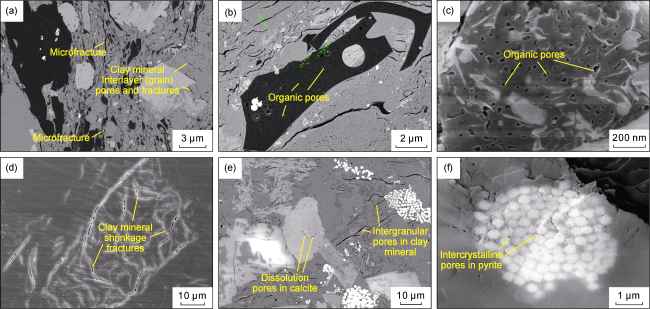
Fig. 7. Microscopic features of major reservoir space types in organic-rich transitional shales in China under SEM. (a) Well DYS1, 2 976.7 m, Permian Longtan Formation: microfractures and interlayer pores and fractures between clay minerals are developed; (b) Well DYS1, 2 992.7 m, Permian Longtan Formation: a small number of organic pores formed within higher plant remains; (c) Well MY1, 2 950.1 m, Permian Taiyuan Formation: organic pores developed inside solid bitumen; (d) Well ZXY1, 3 274.4 m, Permian Shanxi Formation: clay mineral shrinkage fractures are present; (e) Well DYS1, 3 000.7 m, Permian Longtan Formation: pores between clay minerals are observed, with dissolution pores found in calcite grains; (f) Well MY-1, 2 840.2 m, Permian Shanxi Formation: intercrystalline pores in pyrite are developed. |
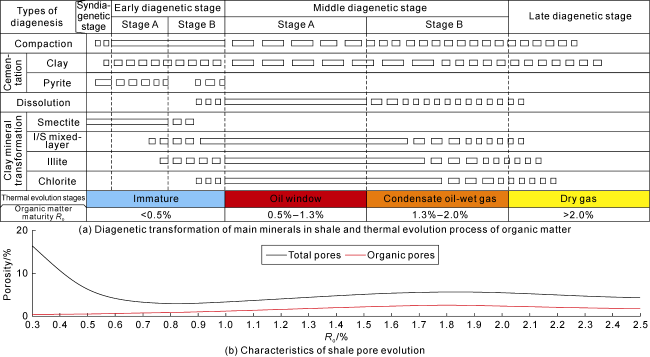
In recent years, China has made multiple discoveries of transitional shale gas in various basins, and a pilot test area has already been established in the Daji Block along the eastern margin of the Ordos Basin. Focusing on the Permian Shanxi Formation in the Ordos Basin, exploration efforts have led to the formation of a theoretical and technical system for transitional shale gas exploration, encompassing shale development models, hydrocarbon generation and resource assessment, as well as geophysical evaluation and prediction [35]. These advancements have markedly accelerated the exploration progress of transitional shale gas in China.
2.3. Lacustrine shale gas
The lacustrine sedimentary basins in China display diverse prototype types, with lacustrine shales primarily developed from the Permian through the Paleogene [36-37], and mainly distributed in the Songliao Basin (Cretaceous), the Bohai Bay Basin (Paleogene), the Ordos Basin (Triassic), and the Junggar Basin (Permian) in the north of China, as well as in the Sichuan Basin (Triassic and Jurassic) in the south (Fig. 2 , Table 1 ).
Lacustrine shales develop and are distributed under the control of factors such as sedimentary (micro) facies, paleoclimate, paleosalinity, paleo-productivity, organic matter preservation, and provenance conditions. Organic-rich shales in these settings are predominantly deposited in saline to brackish lakes, though some basins feature freshwater conditions. The thickness of lacustrine shale intervals varies greatly; they are generally of more recent geologic age, occur in relatively small basins, and possess multiple sediment sources and complex lithofacies or lithofacies assemblages, with wide ranges in TOC content and a diverse hydrocarbon-generating biota (Type I-III organic matter). They typically exhibit lower thermal maturity (mostly oil-prone or oil-gas coexisting), lower brittle mineral content and lower gas content, and are thus more difficult to stimulate (Table 1 and Table 2 , Figs. 3 -4 ). Compared with marine and transitional shales, lacustrine shales undergo minimal tectonic reworking (Fig. 5 ), which provides preservation conditions more conducive to overpressure formation and retention (Table 2 ).
Driven by high-frequency depositional cycles, lacustrine shales undergo rapid lithofacies changes. Their lithofacies types and assemblages are collectively controlled by terrigenous clastic input, hydrothermal activity at the lake bottom, volcanic ash deposition, and endogenous sedimentation processes. Consequently, three principal shale lithofacies (clayey, felsic and mixed) are recognized, with clayey and mixed shales predominating (Table 1 and Table 2 ). In terms of source-reservoir configuration, lacustrine shale gas is primarily characterized by source-reservoir integration (Fig. 4 ). Although all three types of source-reservoir configurations occur in the Triassic Yanchang Formation in the Ordos Basin, the integrated type remains dominant.
Overall, the development of organic pores in lacustrine shales is limited; inorganic pores dominate, with more pronounced intergranular pores and fractures formed in rigid and clay minerals (Fig. 9 ). Compared with transitional shales, lacustrine depositional environments generally have lower water energy, less-developed interlayers, finer grain sizes, and lower reservoir quality, posing additional challenges for forming effective reservoirs. The pore evolution in lacustrine shales and interlayers is jointly controlled by diagenesis and hydrocarbon generation. Higher clay mineral content weakens the rock’s resistance to compaction, resulting in rapid reduction of inorganic pores prior to the hydrocarbon-generation stage. Once the shale enters the peak oil generation window, increased Ro gradually improves reservoir properties, gas content, and organic pore development (Fig. 10 ) [37]. Interlayer evolution in lacustrine shales is relatively straightforward; under compaction and cementation, these layers become denser over time, reducing reservoir quality and storage capacity (Fig. 10c ). Nevertheless, the presence of calcareous, dolomitic, and sandy laminae and interlayers contributes to higher brittleness, providing a foundation for reservoir stimulation.
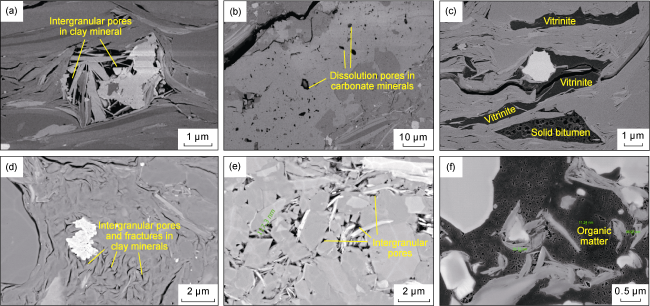
Fig. 9. Microscopic features of major reservoir space types in organic-rich lacustrine shales in China under SEM. (a) Well YL4, 4 004.7 m, Lower Jurassic Ziliujing Formation (Da’anzhai Member) in the Sichuan Basin: developed intergranular pores in clay mineral; (b) Well YL4, 3 785.4 m, Lower Jurassic Ziliujing Formation (Da’anzhai Member) in the Sichuan Basin: developed dissolution pores in carbonate minerals; (c) Well FY1, 2 600.5 m, Lower Jurassic Ziliujing Formation (Da’anzhai Member) in the Sichuan Basin: varying degrees of organic pore development within organic matter; organic pores are well-developed in solid bitumen; (d) Well JH9, 988.7 m, Triassic Yanchang Formation (Member 7) in the Ordos Basin: well-developed inorganic pores and fractures; (e) Well LH2, 963.93 m, Triassic Yanchang Formation (Member 7) in the Ordos Basin: well-developed intergranular pores; (f) Well LY1, 3 212.3 m, Cretaceous Yingcheng Formation in the Songliao Basin: relatively developed organic pores. |
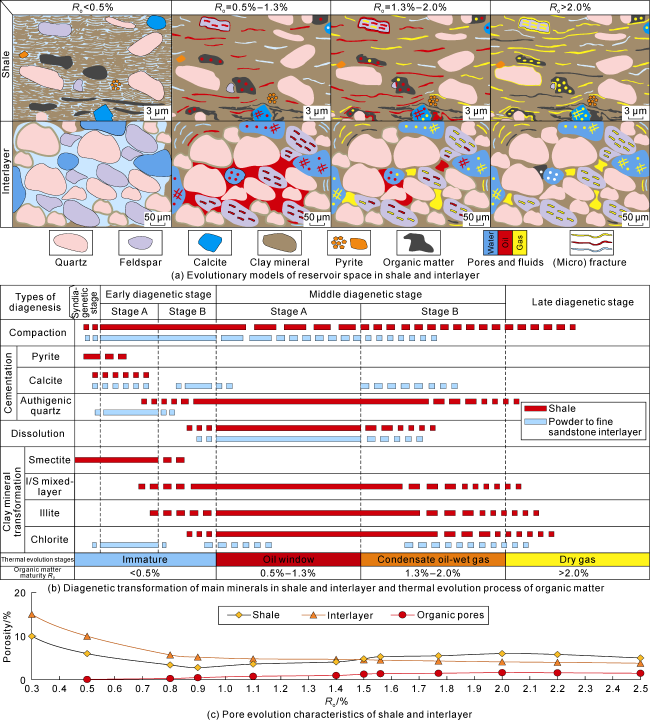


Fig. 10. Differential evolution model of lacustrine shale and interlayers under diagenesis-hydrocarbon generation control (modified from Reference [37]). |
Since 2011, extensive exploratory research and technological endeavors have been carried out on lacustrine shale gas in China, yielding numerous insights and achievements. For key regions and targeted lacustrine shale intervals, a hydrocarbon generation-expulsion-retention model for organic-rich lacustrine shales has been proposed, the coupling mechanisms between source and reservoir of lacustrine shale gas have been revealed, and the source-reservoir coupling sweet spot evaluation technique for lacustrine shale gas has been formed [36]. In the Yan’an area of the Ordos Basin, researchers have introduced a “source-reservoir-preservation” three-factor accumulation model, along with critical exploration and development technologies for drilling, well completion, logging evaluation, reservoir stimulation, and production assessment [16]. These theories and techniques have effectively guided exploration breakthroughs in the Triassic shales of the Ordos Basin, the Cretaceous shales of the Songliao Basin, and the Jurassic shales of the Sichuan Basin.
3. Shale gas resource potential and development direction
3.1. Shale gas resource potential
The shale gas resources of China are vast, offering broad prospects for exploration and development, however, the proven ratio remains relatively low. Resource estimates, proven reserves, and production data indicate that marine shales hold a significant advantage and dominate China’s shale gas industry (Table 3 ). Currently, transitional and lacustrine shales are still in the exploration and assessment stages but are expected to become significant supplements to the rapid expansion of China’s overall shale gas sector. Given that Chinese shales are generally deeply buried, deep to ultra-deep shale gas (3 500-6 000 m) exhibits widespread distribution and substantial resource potential. Its technically recoverable resources are estimated at 11.0×10¹² m3 (accounting for 56.6% of China’s total technically recoverable shale gas [13]) and may serve as an important replacement area for future reserve and production growth.
Table 3. Shale gas resource potential in major Chinese basins (modified from references [3,14,17,20⇓-22]) |
| Shale Type | Basin/Region | Interval | Distribution area/104 km2 | Geological resource/1012 m3 | Proven reserves/1012 m3 | Key breakthrough wells |
|---|---|---|---|---|---|---|
| Marine | Sichuan Basin & surrounding areas | Silurian Longmaxi Fm. | 19.10 | 33.19 | 2.96 | Jiaoye 1HF, Wei 201, etc. |
| Cambrian Qiongzhusi Fm. | 15.00 | 10.83 | Jinshi 103HF, Zi 201, Ziyang 2, etc. | |||
| Permian | >4.37 | >11.96 | Hongye 1HF, Leiye 1, Daye 1H | |||
| Central Yangtze region | Sinian, Cambrian, Silurian | 8.33 | 10.48 | Eyiye 1HF, Eyangye 1HF | ||
| Lower Yangtze region | Permian | 3.09 | 3.65 | |||
| Central Guangxi Depression | Carboniferous, Devonian | 5.72 | 6.87 | |||
| Tarim Basin | Ordovician Heituao Fm. | >4.00 | 3.01 | |||
| Cambrian | 10.00-13.00 | 2.89 | ||||
| Ordos Basin | Ordovician Wulalike Fm. | 1.50 | 1.10 | Zhong 4, Zhongping 1, Li 86 | ||
| Transitional | Sichuan Basin & surrounding areas | Permian | 18.00 | 8.70 | ||
| Ordos Basin | Carboniferous, Permian | 15.00 | 5.65 | Yunyeping 3, Jiping 1H | ||
| Lacustrine | Sichuan Basin & surrounding areas | Jurassic | 9.00 | 6.00 | Fuye 10HF, Taiye 1, Puluye 1 | |
| Triassic | 6.40 | 6.00 | ||||
| Ordos Basin | Triassic | 10.00 | 1.60 | Liuping 177 | ||
| Songliao Basin | Cretaceous | >4.00 | >0.66 | Liye 1, Jiliyeyou 1 | ||
| Tarim Basin | Jurassic | 3.50 | 2.03 |
3.1.1. Marine shale gas
Marine shale gas constitutes the mainstay of China’s shale gas resources, with a technically recoverable resource of 13.0×10¹² m3, or 59.6% of the national total [8]. In terms of regional distribution, China’s marine shale gas is primarily located in the Yangtze region of southern China, with nearly two-thirds concentrated in the Sichuan Basin and its surrounding areas. Stratigraphically, more than two-thirds of the marine shale gas is found in Lower Paleozoic Silurian and Cambrian strata, collectively exceeding 50×1012 m3 in geological resources (Table 3 ). Additionally, the Cambrian and Permian marine shales in the Yangtze region exhibit promising resource potential, surpassing 10×1012 m3 in geological resources, suggesting these intervals could become key successors to the Silurian plays.
3.1.2. Transitional shale gas
Transitional shales represent a critical part of China’s shale gas resources, with extensive areal coverage and significant resource potential, with technically recoverable resources of 5.1×10¹² m3, or 23.4% of the national total [8]. These resources are primarily found in the Permian strata of southern China and the Carboniferous-Permian sequences in North China (Table 3 ). Notably, transitional shales in the Sichuan and Ordos Basins span approximately 33×104 km2 and contain over 14×1012 m3 of geological resources, accounting for more than two-thirds of the country’s transitional shale gas endowment.
3.1.3. Lacustrine shale gas
In China, lacustrine shales typically exhibit lower maturity and are predominantly oil-prone, suggesting considerable potential for shale oil, though relatively smaller potential for shale gas. Their technically recoverable shale gas resources total 3.7×10¹² m3, or 17.0% of the national total [8]. Exploration practices confirm that China’s lacustrine shales represent a significant resource base, primarily found in eastern (Songliao), central (Ordos), and western (Sichuan) basins, spanning an area of more than 20×104 km2. Key target intervals include the Triassic-Jurassic strata in the Sichuan Basin, Triassic strata in the Ordos Basin, and Cretaceous strata in the Songliao Basin (Table 3 ).
3.2. Challenges and future targets
3.2.1. Existing challenges
3.2.1.1. Challenges in geological theory innovation
As China’s theoretical understanding of shale gas geology advances, research objectives have gradually expanded from focusing on single intervals, single shale types, and single basins to multiple intervals, multiple shale types, and multiple basins [5,38⇓⇓ -41]. Apart from the mid-depth marine Wufeng-Longmaxi formations (2 000-3 500 m), there have been no revolutionary breakthroughs in deep-ultra-deep, shallow-ultra-shallow, transitional, or lacustrine shale gas exploration, highlighting the need for further enrichment and development of shale gas geological theories.
Marine shales have undergone multiple phases of complex tectonic reworking and burial evolution, with complicated structural preservation conditions, paleo-and present-day stress characteristics, and organic thermal evolution processes. The impacts of organic matter graphitization in overmature shales and multiphase tectonic reworking on reservoir quality present significant challenges to marine shale gas exploration. Deepening the theoretical understanding in these areas is essential for sweet spot selection and risk mitigation. In deep-ultra-deep settings, complex in-situ stresses and high-temperature, high-pressure conditions necessitate further basic theoretical work on shale gas enrichment, flow, and geomechanics. Mid-shallow normal-pressure shale gas also presents complex structural preservation conditions and enrichment mechanisms, with shale self-sealing capacity and shale gas occurrence/flow patterns still requiring clarification. Influenced by depositional environments, lithofacies assemblages, hydrocarbon generation and reservoir processes, and preservation conditions, other marine intervals and new stratigraphic targets (e.g., Cambrian, Permian) have generally achieved only single-well industrial flows without large-scale commercial success. Their differential enrichment and preservation mechanisms, shale gas enrichment mechanisms, and sweet spot assessment methods warrant ongoing research.
China’s transitional and lacustrine shales exhibit strong reservoir heterogeneity, complex formation and distribution patterns, and poor fracability [38⇓-40], making exploration and development highly challenging. These shales are currently at the play evaluation and exploration breakthrough stage. Although preliminary shale gas enrichment theories and sweet spot evaluation methods have been developed for certain regions and intervals, these theories are not yet sufficiently systematic or broadly applicable. A more fundamental understanding of the genesis and distribution of non-marine high-quality shales, resource assessment of complex lithofacies assemblages, and the coupling and enrichment mechanisms of source-reservoir systems is also needed for further development and refinement.
3.2.1.2. Challenges in engineering and technology
As China’s shale gas industry expands and technologies progress, the geological conditions of prospective shale targets are becoming increasingly complex, with resource abundance tending to decrease and engineering and technical challenges growing more significant. The effective coupling of geological, engineering, and economic sweet spots, along with integrated geologic-engineering-economic management throughout the entire life cycle, still requires ongoing optimization. Currently, marine, transitional, and lacustrine shale gas in China face numerous challenges in sweet spot prediction, efficient drilling and completion, reservoir stimulation, and three-dimensional shale gas development.
In deep-ultra-deep, high-temperature, high-pressure environments, drilling, completion, and fracturing are cost-intensive, and fracturing stimulation is difficult. For mid-shallow normal-pressure shale gas, the preservation conditions and enrichment mechanisms are complex, and formation energy is weak, resulting in low single-well productivity and recovery ratios. Cost-effective development approaches thus require further in-depth research.
In transitional and lacustrine shales, sweet spot intervals are typically thin and highly heterogeneous, posing difficulties for sweet spot identification, prediction, and the drilling of superior horizontal intervals. Rapid lithofacies changes, diverse lithofacies assemblages, and high clay content can cause fractures to deflect or branch unpredictably at lithological boundaries, complicating fracture network formation. This complexity makes multi-layer fracturing and three-dimensional reserve utilization challenging, and targeted fracturing technologies and development strategies have yet to be established, underscoring the urgent need for further research.
3.2.2. Future targets
Based on China’s shale gas resource endowment, it is recommended to focus on the Sichuan Basin and its periphery, deploying exploration in three stages—expansion, breakthroughs and preparation. By continuously intensifying exploration and development, strengthening fundamental research, and tackling key technological challenges, the mid-upper Yangtze marine shale gas can be rapidly developed. Priority should be given to breakthroughs in ultra-deep and new marine intervals, transitional shale gas, and lacustrine shale gas, while also exploring and preparing new plays and areas to ensure the sustainable, high-quality development of the shale gas industry.
For marine shale gas, the Wufeng-Longmaxi interval in the Sichuan Basin and surrounding regions will remain the primary exploration and development targets. Efforts should be made to accelerate the deployment of Silurian, Cambrian, and Permian shales in the mid-upper Yangtze region, reinforcing theoretical and technological research on deep and normal-pressure shale gas. Emphasis should be placed on complex structural preservation, in-situ stress evaluation, overmature shale quality, and enrichment and high productivity mechanisms, in order to form low-cost drilling, efficient fracturing, and economically viable development strategies to promote large-scale reserve and production increases. Additional breakthroughs are needed in ultra-deep marine intervals in the mid-upper Yangtze region, as well as new marine intervals such as the Ordovician in the Ordos Basin of North China. Theoretical research should focus on source-reservoir co-evolution, pore preservation mechanisms, shale gas occurrence patterns, and brittle-to-ductile transitions, while enhancing drilling-completion and fracturing technologies, along with supporting equipment, to build a robust technical and resource base for sustained shale gas development. Preparations for new stratigraphic targets in southern China and the northwest are also vital to underpin the medium-to-long-term growth of shale gas production.
For transitional shale gas, priority should be placed on the Carboniferous-Permian intervals in the Ordos Basin and the Permian intervals in the Sichuan Basin and its periphery. It is crucial to intensify research into source-reservoir coupling geological evaluation theories and adaptive exploration and development technologies, facilitating strategic breakthroughs in transitional shales in both the Ordos Basin and the upper Yangtze region, while proactively exploring high-efficiency shale gas development policies. At the same time, preparations should be made for the Carboniferous-Permian intervals in the Qinshui, southern North China and Bohai Bay Basins of northern China, as well as the Permian in the mid-Yangtze and Yunnan-Guizhou-Guangxi regions of southern China, to achieve timely exploration advances.
For lacustrine shale gas, the Sichuan Basin remains the key area for increasing reserves and production, with the potential for profitable large-scale development through further expansion of exploration efforts. The Triassic intervals in the Ordos Basin, the Cretaceous intervals in the Songliao Basin, and the Triassic intervals in the Sichuan Basin could achieve strategic breakthroughs following deeper research and sustained innovation. Given that lacustrine shales in the northwest and eastern basins generally exhibit lower maturity, targeted assessments and theoretical-technological preparations are recommended. Future research on lacustrine shale gas should focus on four primary areas to achieve efficient exploration and development: (1) a source-reservoir coupling and sweet spot evaluation system; (2) geophysical evaluation and prediction techniques for fractures, in-situ stresses, etc.; (3) fine reservoir evaluation and geological modeling at multiple scales; and (4) high-efficiency drilling, completion, and reservoir stimulation technologies, along with supporting equipment, tailored to clayey and strongly heterogeneous lacustrine strata.
4. Conclusions
China’s shales exhibit diverse sedimentary environments and significantly different geological conditions for shale gas. The source-reservoir configuration, determined by the depositional setting, underpins the “hydrocarbon generation controlling reservoir” concept. Marine and lacustrine shales are primarily characterized by source-reservoir integration, occasionally exhibiting source-reservoir separation, whereas transitional shales predominantly show source-reservoir integration or symbiosis. Rigid minerals that protect pores under compaction and reservoir overpressure are pivotal factors in the enrichment of source-reservoir integrated shale gas. On the other hand, favorable source-reservoir coupling and preservation conditions are essential for the enrichment of source-reservoir symbiotic and separated shale gas.
Multiple phases of complex tectonic reworking and hydrocarbon generation evolution represent real challenges for shale gas exploration in China. Foundational theories regarding shale quality, self-sealing capacity, shale gas occurrence and flow mechanisms, and geomechanics under tectonic-diagenetic processes need further developing. Additional research is also required on the mechanisms of organic matter enrichment and preservation in different shale types, patterns of shale gas enrichment, and sweet spot evaluation methodologies. Under these complex geological conditions, key areas of technical focus include geophysical prediction, optimized rapid drilling, completion and reservoir stimulation, three-dimensional development strategies, and integrated life-cycle management.
The shale gas resources in China provide a strong foundation for large-scale development. Marine shales in the Sichuan Basin and adjacent areas remain the primary focus for reserve expansion and production growth, while transitional and lacustrine shales are likely to become important successor fields. Following a three-tier approach—expansion, breakthroughs, and preparation—it is recommended to accelerate exploration in Silurian, Cambrian, and Permian marine intervals in the mid-upper Yangtze region. Key priorities include achieving breakthroughs in ultra-deep Ordovician marine shales in the mid-upper Yangtze region, new marine stratigraphic horizons and the Carboniferous-Permian transitional shales in North China, and Mesozoic lacustrine shales in basins such as Sichuan, Ordos, and Songliao. Additionally, the exploration and preparation of new shale gas domains in southern and northwestern China should be pursued to build both the technological and resource foundations for China’s long-term shale gas development.