

Introduction
China is rich in shale gas resources and many large marine shale gas fields with a scale of 100 billion cubic meters have been built in the Wufeng Formation of the Upper Ordovician to Longmaxi Formation of the Lower Silurian in the Sichuan Basin, SW China for commercialization[1⇓⇓⇓⇓-6]. The widespread continental shales in Cretaceous in the Songliao Basin, Paleogene in the Bohai Bay Basin, East China, Triassic in the Ordos Basin, Permian in the Junggar Basin, NW China and Jurassic in the Sichuan Basin, etc., have not made a commercial breakthrough in continental shale gas resources [7⇓⇓-10]. Compared with marine shale, continental shale has the distinct characteristics of continental fine-grained sedimentary strata with frequent sedimentary facies change, strong heterogeneity, and high clay mineral content in the reservoirs. In addition, due to the late formation age of continental shale, the low evolution degree of organic matter, the low development degree of organic pores, and the limited effective reservoir space of shale, the difficulty in exploration and development of continental shale gas resources is increased[4-5,11⇓⇓ -14]. At present, the industrial gas flow has been obtained only in the continental shales of the Lower Jurassic in the Sichuan Basin [9-10,14] and the Triassic Yanchang Formation in the southern Ordos Basin [7-8].
The shale oil exploration of the Qingshankou Formation of the Upper Cretaceous in the Songliao Basin has made an important breakthrough and realized the commercial development of continental shale oil. Several sets of organic-rich shales are also developed in the Lower Cretaceous of the Songliao Basin. Previous studies have revealed that the Yingcheng Formation (K1yc Fm.) and Shahezi Formation (K1sh Fm.) are favorable enrichment layers for shale gas [15⇓-17]. Since 2012, the Sinopec Northeast Oil and Gas Company has explored the shale gas resources of the Yingcheng Formation in the Sujiatun subsag and the Lishu fault depression of the Songliao Basin, and obtained gas flow from 6 wells, which preliminarily confirmed the shale gas resource potential of K1yc Fm.[16-17]. However, there are still no organizations exploring continental shale oil and gas resource potential in the Shahezi Formation, which is distributed in a larger area with a greater burial depth and a greater gas generation potential. Some scholars believe that the Lower Cretaceous volcanic rocks in the Songliao Basin are filled with poor organic matters in shale, with coal lines locally, mainly Type III and Type II2 kerogen, thus the potential of shale gas resources is small [18]. A series of key geological problems such as shale gas resource potential, geological characteristics of shale gas development, favorable regions, and exploration value in the Lower Cretaceous K1sh Fm. of the Songliao Basin are not clear.
To explore the oil and gas resource potential of K1sh Fm. shale of the Lower Cretaceous in the Songliao Basin, the Oil and Gas Survey of China Geological Survey has carried out public welfare survey on the shale of K1sh Fm., selected the shale with a thermal evolution degree of 1.0%-1.5% in K1sh Fm. of the Lishu fault depression, and drilled parameter well JLYY-1, striving to achieve a breakthrough in K1sh Fm. shale oil and gas. Finally, Well JLYY-1 obtained gas-rich shale with a continuous thickness of 51 m in K1sh Fm. Through fracturing in vertical well and petroleum testing, the high-yield shale gas flow with daily output of 7.6×10⁴ m3 is obtained in the K1sh Fm. Shale, with a small amount of condensate oil, and an important breakthrough has been achieved in the investigation of continental shale gas in K1sh Fm., Songliao Basin. Based on the exploration results of Well JLYY-1 and taking the shale of the Lower Cretaceous K1sh Fm. in the Lishu fault depression in the south of the Songliao Basin as the key research object, this paper analyzes the geological conditions for the formation of continental shale gas in K1sh Fm. and defines the main controlling factors of shale gas enrichment, to provide a reference for the exploration of the Lower Cretaceous continental shale gas in the Songliao Basin and its surrounding fault depression basin groups.
1. Regional geology
The Songliao Basin is a fault-depression composite basin mainly composed of the Mesozoic and Cenozoic strata developed on the Hercynian folded basement. Vertically, it has a double-layer geological structure of lower fault and upper depression. The upper part of the basin is a unified depression layer of the whole basin, and the lower part is divided into fault depression groups[19⇓⇓-22], and 56 fault depressions with different scales are developed, which are separated and relatively scattered, with a total area of more than 8×10⁴ km2. Affected by the basement faults, the fault depressions are mainly distributed in the NNE direction (Fig. 1 a), and can be divided into three fault depression zones in the west, middle, and east regions. The fault depressions in the middle and east regions are larger in scale and developed continuously. The fault depressions in the western region have low development degrees, small scales, and shallow burial depths.
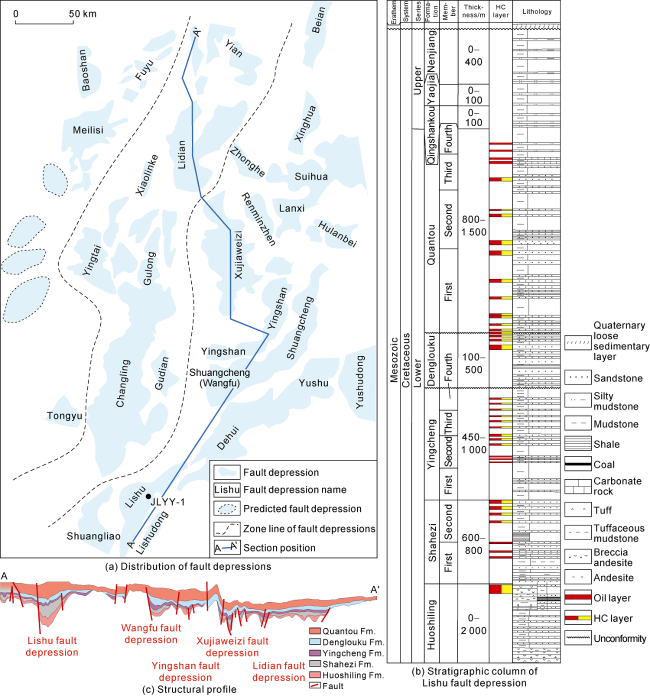
Fig. 1. Distribution of fault depressions (a), stratigraphic development (b), and structural characteristics (c) of the Lower Cretaceous in Songliao Basin. |
The Huoshiling Formation (K1h Fm.), Shahezi Formation (K1sh Fm.), Yingcheng Formation (K1yc Fm.), and Denglouku Formation (K1d Fm.) were deposited in the basin during the Early Cretaceous fault depression period, in which K1sh is the main gas source rock (Fig. 1 b). The organic-rich shale of K1sh Fm. is distributed in all fault depressions in the region, with an average area accounting for 60%-70% of the fault depression area, and individual fault depressions accounting for more than 85%, with a total area of more than 4.0×10⁴ km2, where K1sh shale is the most potential shale gas reservoir in the Songliao Basin[23-24].
The Lishu fault depression is located in the southeast uplift region of the Songliao Basin. From Late Jurassic to Early Cretaceous, the Lishu fault depression was developed into a "dustpan-shape" superimposed fault depression basin with faults in the west and overlap in the east. The fault depression is controlled by the Sangshutai fault. The strata overlap layer by layer from the western sag region to the eastern slope region, converge to the north slope sharply with decreasing thickness, and the fault depression area is 2430 km2 [25]. The Lishu fault depression has the longest duration, the most complete stratigraphic development, and the thickest sedimentation in the Songliao Basin (Fig. 1 c)[26-27]. The shale formation depth of K1sh Fm. in the Lishu fault depression is 2500- 4000 m, which is relatively shallower compared with other fault depressions in the Songliao Basin, thus the construction difficulty is relatively low. It is the preferred area for shale gas investigation of K1sh Fm. in the Songliao Basin.
The Lishu fault depression is composed of six structural units: central structural belt, southeast slope belt, northern slope belt, Sangshutai sag, Sujiatun sag, and Shuanglong sag (Fig. 2 ) [17]. It has experienced tectonic evolution periods such as fault depression period, depression period, and inversion period. Further, the fault depression period can be divided into three stages: initial fault depression stage (K1h Fm.), strong fault depression stage (K1sh-K1yc Fm.), and fault-depression transformation stage (K1d Fm.).
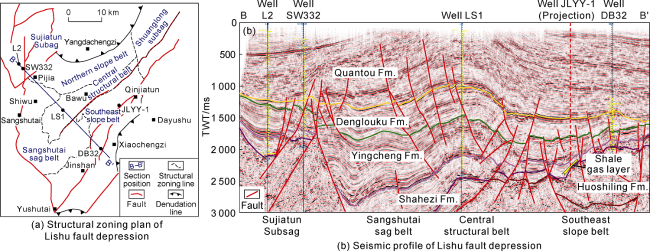
Fig. 2. Structural zoning map of Lishu fault depression. |
2. Formation conditions of shale gas
2.1. Distribution of shale layers
The sedimentary period of K1sh was the flourishing age of the development of the Lishu fault depression. During this period, the basin subsided rapidly and the distribution range of semi-deep-deep facies was wide, which was the most serious transgressive period of the Early Cretaceous of the basin. Three sets of sedimentary units were developed from bottom to top: the 1st Member of K1sh (K1sh1 Fm.), the lower submember of the 2nd Member of K1sh (K1sh21 Fm.), and the upper submember of the 2nd Member of K1sh (K1sh22 Fm.). The sedimentary period of K1sh Fm. in the Lishu fault depression generally experienced the filling evolution process of the lake basin from lacustrine transgressive to lacustrine regressive. The K1sh1 Fm. was dominated by a semi-deep lake and shore-shallow lake sediments. The semi-deep-deep facies were mainly developed in Sangshutai deep-lying area, and shore- shallow lake facies sediments were developed in the other areas. During the sedimentary period of K1sh22 Fm., the water body of the lake basin was the deepest and the lake basin area was the largest. The Lishu fault depression was dominated by semi-deep to deep sedimentation as a whole. During the sedimentary period of K1sh22 Fm., the lake basin area contracted, the water body became shallower, the provenance in the south was developed, and the center of the lake basin migrated to the north. The drilling result of Well JLYY-1 revealed that the dark mud shale is mainly developed at the bottom of K1sh21 Fm. and K1sh2 Fm., with different lithologies. The K1sh21 Fm. is gray-black gas-rich shale with a continuous distribution thickness of 51 m; the K1sh22 Fm. is gray gas-free mudstone with a thickness of 36 m (Fig. 3 ). Through the methods of single well analysis, well-tie stratigraphic correlation, and seismic tracking, it is determined that the gas-bearing shale in K1sh21 Fm. is distributed in most areas of the Lishu fault depression with a continuous distribution thickness of 10-100 m. It is predicted that the shale development thickness in Sangshutai deep-lying area is greater, and it may reach 200 m (Fig. 4 ). The buried depth of the top surface of the gas-bearing shale in K1sh21 Fm. is 1400-4800 m, which is less than 3500 m in most areas except Sangshutai deep-lying sag.
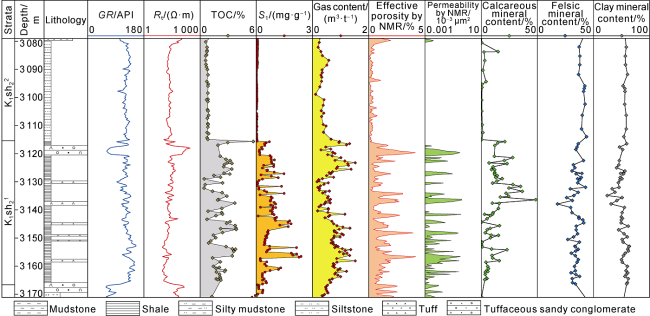
Fig. 3. Comprehensive histogram of the shale of the Shahezi Formation in Well JLYY-1. |
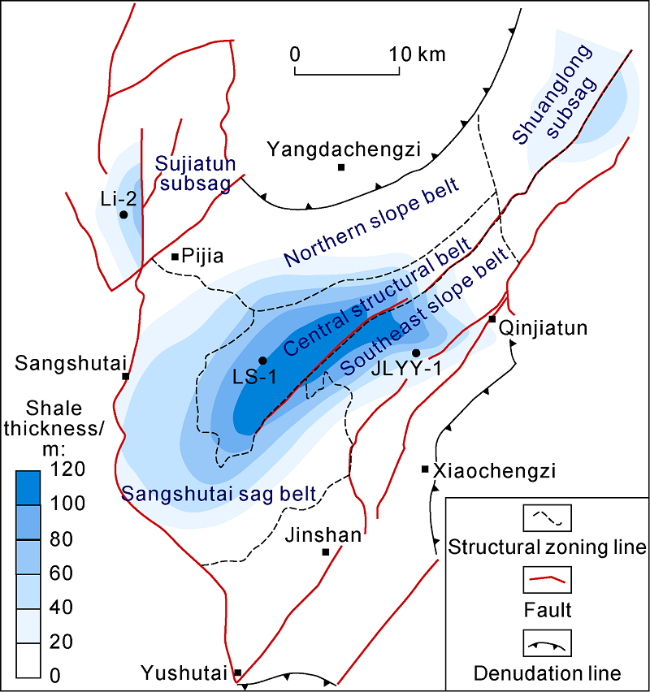
Fig. 4. Plane distribution map of shale thickness of K1sh21 Fm. in Lishu fault depression. |
2.2. Geochemistry of shale layers
2.2.1. Organic matter content and gas-bearing property
The K1sh21 Fm. is a set of hydrocarbon-rich high-quality shale with high organic matter abundance, good organic matter type, and appropriate thermal evolution degree of organic matter. It has a TOC value of 1%-6%, with an average of 2.5% (Fig. 3 ), and contains a certain amount of residual hydrocarbons. S1 value can reach 2.40 mg/g, with an average of 0.89 mg/g, and the hydrocarbon generation potential (S1+S2) value reaches 4.79 mg/g. The shale has high gas content, and the bubbles escape continuously from the shale in the water. The total gas content analyzed on-site can reach 1.52 m3/t, with an average value of 1.21 m3/t. The total gas content from well logging interpretation can reach 2.68 m3/t. The organic matter content of mudstone developed in the shale section is generally lower, the TOC value is less than 0.5%, and the (S1+S2) value is less than 1.0 mg/g, and there is almost no gas, and the soaked core has no bubbles.
2.2.2. Organic matter types
The statistical results of 131 shale samples from the K1sh Fm. in Lishu fault depression show that Type I organic matter accounts for 5.4%, Type II1 organic matter content is the highest and accounting for 44.6%, Type II2 organic matter accounts for 33.9%, and Type III organic matter accounts for 16.1%. The analysis results of stable carbon isotopic composition and organic maceral characteristics of shale kerogen in K1sh Fm. of Well JLYY-1 show that there are significant differences in organic matter types between gas-bearing shale and gas-free mudstone. Shale has lighter carbon isotopic composition of kerogen with δ13C1 values of -28.4‰ to -25.0‰, and microscopic analysis of organic matter macerals shows that organic matter is mainly amorphous body from low aquatic algae, rich in content and layered. It is comprehensively determined that the types of organic matter types mainly II1 and I, with a small amount of Type II2. The carbon isotope composition of kerogen in mudstone is relatively heavy, δ13C1 is greater than -24‰, with the characteristics of typical Type III kerogen. Under the microscope, the microscopic components are mainly vitrinite components from higher plants. The isotopic data of natural gas produced by Well JLYY-1 also shows that the gas comes from types I and II1 organic matters, which also proves that this set of hydrocarbon-rich shale is mainly composed of primary organic matter such as algae.
2.2.3. Evolution of organic matter
The K1sh Fm. shale is relatively deep in the whole Songliao Basin, especially in the north of the basin, such as the Xujiaweizi fault depression, where it is buried more than 5000 m deep, and the degree of organic matter evolution is relatively high. In the Lishu fault depression in the south of the basin, due to the larger tectonic uplift during the later stage, the buried depth of K1sh Fm. is 1000-6000 m with a large buried depth span. The thermal evolution degree of source rocks is also quite different, with a Ro value between 0.6%-3.0% (Fig. 5 ). For example, in the Shuanglong subsag, the K1sh Fm. shale has the lowest degree of organic evolution at the mature stage and is dominated by the oil generation process. In Sangshutai deep-lying area, the K1sh Fm. shale is buried more than 5000 m, the evolution degree of organic matter is expected to exceed 3%, which is at the over mature stage, mainly generating dry gas. On the southeast slope where Well JLYY-1 is drilled, the buried depth of K1sh Fm. shale is 3000-3240 m, and the Ro value is 1.2%-1.5% with an average of 1.3%. It belongs to the high mature evolution stage and the products are mainly wet gas and condensate gas. Microscopic analysis shows that the mineral asphalt matrix formed by algae degradation in shale has no fluorescence and is bright white (micrite) under the partial reflection of light, indicating that the oil generation process has been completed and entered the high-maturity evolution stage. In addition, the methane content of the natural gas produced in Well JLYY-1 is 83%, the ethane content is 8.59%, and the drying coefficient is about 0.88, which belongs to typical wet gas. There was 0.23 m3 of condensate produced during the test. The color of the crude oil is light yellow to yellowish-white, and the oil is clear and transparent. In summary, the thermal evolution degree of organic matter in the shale section at a buried depth of 3000-3500 m in the Lishu fault depression is at a high mature stage, mainly generating wet gas. The evolution degree of shale organic matter at a buried depth of more than 3500 m is at an over-mature stage, mainly generating dry gas.
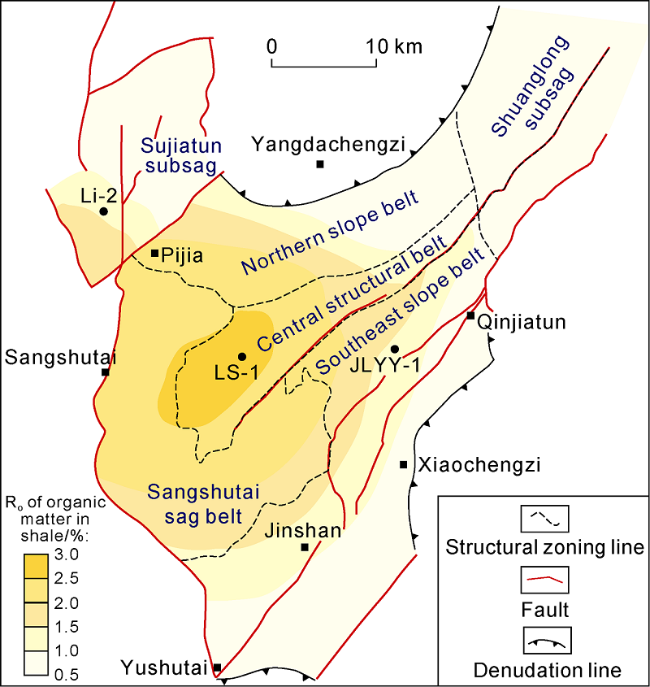
Fig. 5. Plane distribution law of thermal evolution of organic matter in Shahezi Formation shale in Lishu fault depression. |
2.2.4. Enrichment conditions of organic matter
The paleo-environment control factors during shale deposition mainly include paleoclimate, paleo-water depth, paleo-redox, and paleo-salinity[28]. The variation law of paleo-environment indicators in the vertical sequence of Well JYYY-1 reflects the paleo-environment for forming the set of organic-rich shale in K1sh21 Fm. The research results show that compared with the mudstone in overlying K1sh22 Fm., this set of shale has the characteristics of relatively medium V/Ni value, relatively high Fe/Mn value, relatively high Sr/Ba value, relatively high Al/Ti value, and relatively high pyrite content (Fig. 6 ), and these five indicators are exactly the key indicators for paleo-water depth, paleo-climate, paleo-water salinity, paleo-productivity, and paleo-redox conditions. It is inferred that the set of organic-rich shale in K1sh2 Fm. was formed in a closed sedimentary water environment under a semi-arid paleo-climate. The development period of the Late Jurassic-Early Cretaceous fault depression in the Songliao Basin was accompanied by multiple volcanic activities. Multiple sets of tuffs found in the gas-bearing shale section of Well JLYY-1 indicate the multi-stage volcanic activities during the deposition of high-quality shale in K1sh21 Fm. Volcanic ash deposition can promote the eutrophication of water and the proliferation of authigenic algae. In the process of volcanic ash eruption, a large number of carbon sources (CO2, CH4), other nutrients (N, Si, P) and trace metal elements (Fe, Zn, Mn, Ni, V) were carried. These substances entered the sedimentary water body, promoted the prosperity of aquatic organisms and the improvement of primary productivity, and created a favorable material basis for forming organic matter [29]. At the same time, the paleo-productivity indexes (Fe/S value and P element content) of the gas- bearing shale section of K1sh Fm. in Well JLYY-1 are also significantly higher than those of the overlying mudstone section with undeveloped tuff. The enrichment of pyrite and organic sulfur elements refers to a good reduction environment [30], indicating that the addition of volcanic ash in the lacustrine basin promoted the explosion of organic matter and created a favorable reduction environment for the enrichment of organic matter in a sedimentary basin. The pyrite content in the shale section of K1sh Fm. in Well JLYY-1 increases significantly, most of which exceed 1.2%, and the highest value reaches 5%. In the core and under a scanning microscope, it can be seen that a large number of pyrite aggregates are distributed in strips and layers, and mainly in spherical-ellipsoidal shapes. Moreover, the shale section has significantly high sulfur content, more than 0.50%, up to 1.68%, while the pyrite content in the overlying mudstone of K1sh2 Fm. is significantly reduced, basically less than 0.5%, and the sulfur content is very low, basically less than 0.1%. In the shale section, the changing trends of pyrite and sulfur contents are consistent with the change in TOC value. This means that in the shale above the tuff interlayer, the sulfur content and pyrite content show an obvious increase trend. Through the U/Th value and U value, it is also confirmed that the water body had obvious reducibility during the deposition period of the shale section [31-32]; while during the deposition period of upper mudstone, the water body changed into a preferential oxidation environment, which is not conducive to the preservation of organic matter (Fig. 8 ). The above analysis confirms that during the period of shale deposition, the reducibility of the water body was significantly enhanced, which provided a favorable environment for the preservation of organic matter. The research shows that this reduced water environment was controlled by volcanism [33]. A large number of sulfur-containing gases such as SO2 and H2S emitted by the volcano entered the lake basin in the form of an aerosol, which provided a sufficient sulfur source for bacterial sulfate reduction (BSR), enhanced the reducibility of water and promoted the formation of reduction environment in the lake basin.
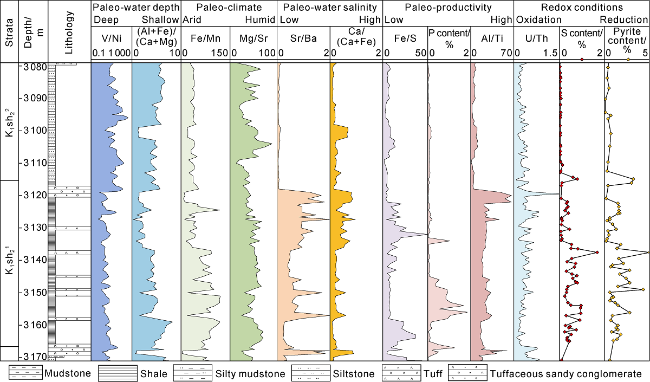
Fig. 6. Histogram of paleo-environment restoration of the shale section in Shahezi Formation of Well JLYY-1. |
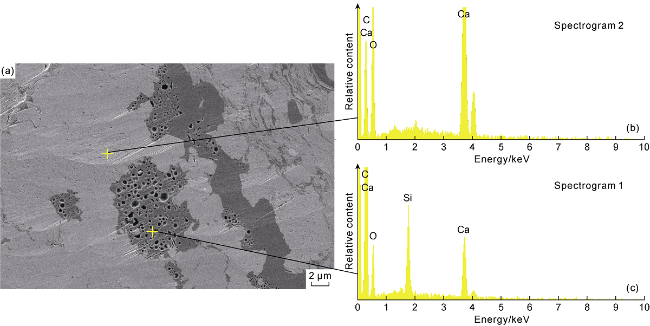
Fig. 7. Carbon element exchange between carbonate minerals and organic matters in the shale of K1sh21 Fm. (a) Well JLYY-1, 3125 m, amorphous organic matter, and calcite coexist under the scanning electron microscope; (b) Energy spectrum of the calcite in |
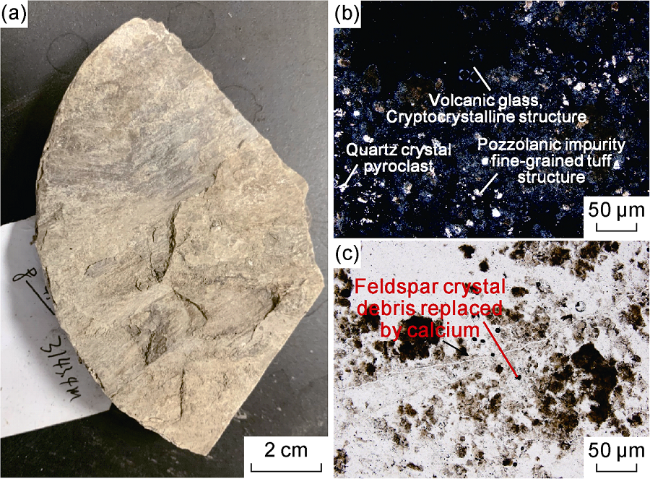
Fig. 8. Hand specimen and optical micrograph of tuff at the depth of 3143 m of K1sh21 Fm. in Well JLYY-1. |
Additionally, carbonatization in the saltwater environment promotes hydrocarbon generation of organic matter. The addition of volcanic ash increases the salinity of water in sedimentary basins [34]. The Sr/Ba value is generally positively correlated with paleo-salinity, which is an effective parameter for distinguishing the paleo-salinity of lake water [35]. The Sr/Ba value in the shale section of K1sh21 Fm. exceeds 1 (Fig. 6 ), indicating a salt water sedimentary environment. The Sr/Ba value of the overlying mudstone section in K1sh22 Fm. decreases rapidly, which is less than 0.1, indicating a freshwater sedimentary environment. Based on a large number of microscopic and energy spectrum analyses, this study found that under this environment, there is a special symbiotic relationship between carbonate minerals and organic matters, and there may be carbon element exchange between carbonate crystals and associated organic matters (Fig. 7 ). The abnormally high-value distribution range of Ca element in porous organic matter can be defined according to the element energy spectrum scan. This phenomenon is mainly controlled by carbonatization. This means that carbonate rock-organic matter symbiosis has high sensitivity in an alkaline formation water environment, which is easy to induce the decarburization effect of original organic groups and obvious hydroxylation at the same time, and promotes the generation and transformation of nitrogen-containing organic matter and phenyl[36-37].
2.3. Shale reservoir conditions
2.3.1. Lithology characteristics
The gas-bearing shale in K1sh21 Fm. has the characteristics of calcium-rich minerals. The content of carbonate minerals in the shale is up to 48%, with an average of 15%; the content of clastic minerals such as feldspar and quartz is 20%-50%, with an average of 34%; and the content of clay minerals is 24%-60%, with an average of 49%. Multiple sets of tuff interlayers are developed in the shale section. Multiple tuff development sections can be identified in the shale section of Well JLYY-1 with a thickness of 51 m (Fig. 3 ). The tuff is grayish-yellow, with fine-grained and massive structure. Under the optical microscope, the particle size is very fine, which is volcanic glassy. It can be seen that feldspar crystal pyroclasts are replaced by calcium and a small amount of quartz crystal pyroclasts (Fig. 8 ). The gas-bearing shale section has well-developed lamellation and a significant laminar structure under the microscope. The gas-free mudstone in K1sh22 Fm. is thick and massive, with undeveloped lamellation, hard and dense. Under the microscope, it is mainly an argillaceous scale structure, evenly distributed, almost free of carbonate minerals (the average content is less than 1%), with a high content of clay minerals (larger than 50%), and no tuff interlayer.
2.3.2. Physical properties
Based on the measured core data and nuclear magnetic resonance (NMR) logging data of K1sh Fm. in Well JLYY-1, the porosity and permeability characteristics of shale are systematically analyzed. The results show that the overall physical properties of the shale reservoir in K1sh21 Fm. are better. The main porosity is 2%-8% with an average of 6.37%, and the maximum porosity is 10.8%. The permeability is mainly distributed in (0.001-0.010)×10-3 μm2 (Fig. 9 ). Compared with shale, the reservoir physical properties of mudstone in K1sh22 Fm. are worse. The analysis results of NMR logging show that the effective porosity of clayey mudstone is less than 1%, and the permeability of NMR logging is less than 0.001×10⁻³ μm2.
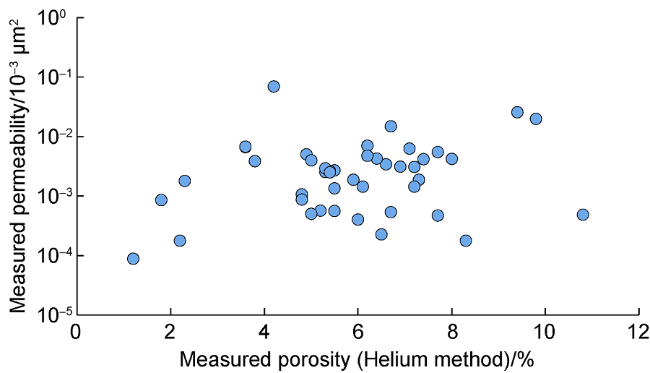
Fig. 9. Cross plot of measured porosity and permeability of K1sh21 Fm. shale in Well JLYY-1. |
The K1sh21 Fm. shale has relatively good porosity and permeability conditions mainly due to the development of inorganic pores, organic pores, and bedding fractures. Inorganic pores mainly include clay mineral intercrystalline pores and carbonate mineral dissolution pores. The intercrystalline pores of clay minerals are mainly micropores and mesopores with mainly chlorite intercrystalline petaloid pores and illite intercrystalline needle pores in morphology, generally less than 100 nm. With the largest number, intercrystalline pores of clay minerals are the main matrix pores (Fig. 10 a). The dissolution pores in carbonate minerals are mainly round and dominated by mesopores, the pore diameter is generally about 100 nm (Fig. 10 b). The organic pores are mainly developed in the organic matter filled between the particles of inorganic minerals, and the pore size is generally about 350 nm, up to 1 μm (Fig. 10 c), with better pore connectivity. This kind of organic matter has no fixed form and belongs to the amorphous body. It is the product of liquid hydrocarbon migration, filling, cracking and solidification, i.e.,the post-oil asphalt, with a large number of residual gas pores developed in it. The shale section also develops a large number of bedding fractures with a width of 0.01-0.15 mm (Fig. 10 d), which are also the major reservoir spaces of shale gas. They can be divided into two types: contraction fractures of hydrocarbon generation in organic matter, and interlayer contraction fractures in clay minerals. Organic pores, inorganic pores, and bedding fractures together constitute the effective reservoir space.
Based on CO2 and N2 adsorption experiments and high-pressure mercury injection experiments, the full pore size distribution maps of shale reservoirs in K1sh Fm. are obtained. According to the high-pressure mercury injection curve (Fig. 11 a), macropores above 100 nm are mainly microfractures, and the peak width of microfractures is 5-10 μm. For meso-micropores within 100 nm, carbon dioxide and nitrogen adsorption are used to characterize the pore volume and pore size distribution curves (Fig. 11 b). The peak pore size is mainly distributed at 10-50 nm, which is mainly provided by organic pores and dissolution pores in carbonate minerals. For micropores below 10 nm, the pore size distribution has no obvious peak value, generally provided by clay mineral pores.
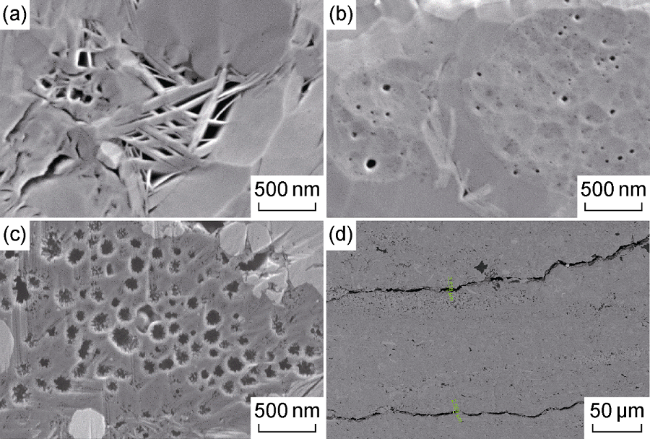
Fig. 10. Characteristics of micropores and bedding microfractures of K1sh21 Fm. shale of Well JLYY-1. (a) 3125.00 m, needle pores in illite; (b) 3125.00 m, dissolution pores in carbonate minerals, generally in a circular shape; (c) 3125.00 m, organic pores, often associated with inorganic minerals; (d) 3131.96 m, bedding microfractures. |
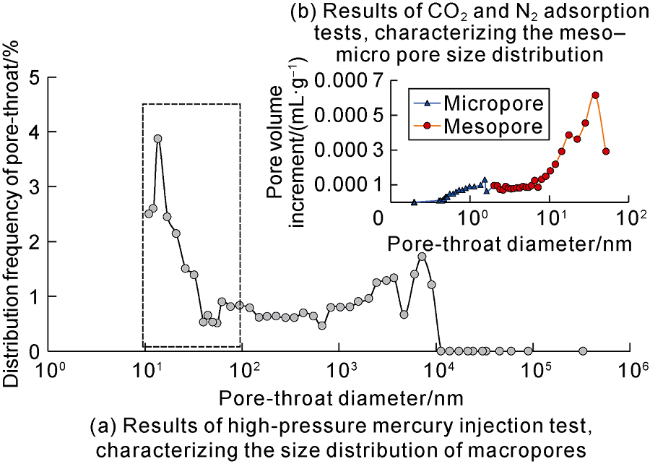
Fig. 11. Distribution characteristics of full-size pores of the gas-rich shale reservoir in K1sh21 Fm. |
2.3.3. Genetic analysis of favorable reservoir conditions
During the burial process, shale formation has undergone the joint transformation of inorganic and organic diagenesis. Inorganic diagenesis is mainly compaction, cementation, dissolution, and metasomatism, while organic diagenesis is mainly hydrocarbon generation and evolution of organic matter, with the interaction with each other[38]. The formation of high-quality shale reservoir space in K1sh Fm. is controlled by diagenesis and hydrocarbon generation evolution.
Based on the development characteristics and genesis of shale pores in K1sh Fm., combined with the comprehensive analysis of diagenetic evolution sequence and organic hydrocarbon generation evolution history, the evolution model of high-quality shale reservoir in the K1sh21 Fm. is established under the control of hydrocarbon generation and diagenesis (Fig. 12 ), which can be divided into four stages: pore reduction by compaction, salinization and cementation, organic acid dissolution and pressurization by hydrocarbon generation, and pressure relief by structural uplift with fractures developed.
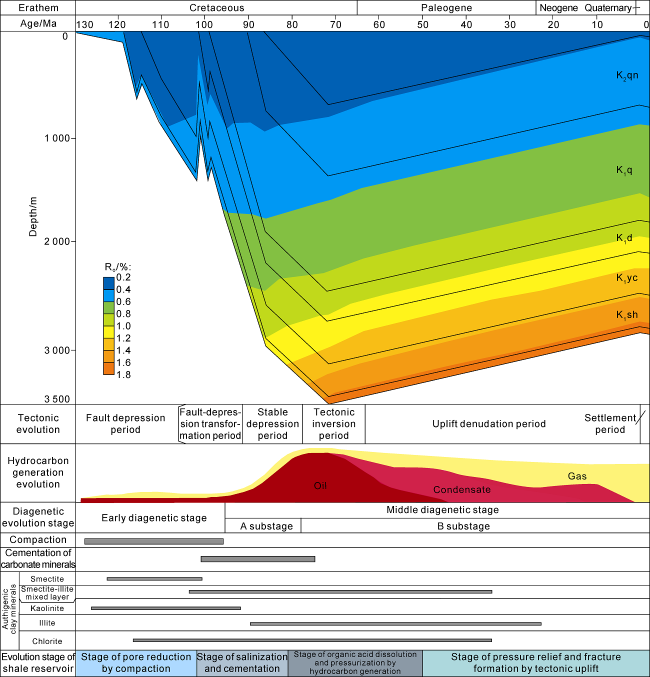
Fig. 12. Spatiotemporal evolution model of diagenesis and hydrocarbon generation of shale reservoir in a fault depression lake basin. |
Stage 1: Pore reduction by compaction. The strata settled rapidly and a large amount of organic matter was deposited and preserved, which laid a material foundation for later hydrocarbon generation and accumulation. At the same time, the primary pores were reduced rapidly under the influence of compaction.
Stage 2: Salinization and cementation. The basin was in a stable subsidence and depression stage. The water body presented a saltwater environment. The nature of the formation water was alkaline. Ion differentiation and exchange occurred in the deposition process. Calcium and magnesium ions in shale migrated to the adjacent sandy lamina along the microfractures, and local carbonate cementation and sedimentation occurred to form the calcium-rich and siliceous lamina.
Stage 3: Organic acid dissolution and pressurization by hydrocarbon generation. The buried depth of shale increased, the ground temperature rose to 90- 140°C and the organic matter reached the mature stage and began to generate hydrocarbon. At this time, the organic acid began to be produced and fill the reservoir, the early carbonate minerals were dissolved to form a large number of dissolution pores. With the increase in evolution degree, a large number of organic matters were transformed, resulting in many contraction fractures by hydrocarbon generation [39]. At the same time, abundant hydrocarbons were generated to produce abnormal high pressure, which induced many bedding overpressure fractures [40]. The middle diagenetic stage began, clay minerals such as montmorillonite were transformed into illite and dehydrated, and many contraction fractures were formed along the bedding plane. Under the joint constraints of the maximum pressure gradient and the minimum fracture path, they converged, crossed, and connected, and finally formed a bed-parallel and interconnected fracture network.
Stage 4: Pressure relief and fracture formation by tectonic uplifting. Due to plate subduction, the Songliao Basin experienced large-scale uplift and denudation movement, and the strata suffered uplift and denudation. Due to the reduction of overlying formation pressure, the overpressure of shale strata was gradually released. Moreover, the bedding fractures were further opened along the boundary of the mineral lamina and developed widely.
2.4. Preservation of shale gas
2.4.1. Development of shale gas roof and floor
During the formation and evolution of a fault depression lake basin, the factors such as the change of accommodation space, sediment supply, and deposition rate under the original sedimentary sequence framework control the scope of the lake, the depth of the water body, the lithology combination and sediment distribution, and then control the generation and preservation of shale gas vertically. Generally speaking, the balanced compensation period of the basin is most conducive to the formation of high-quality source rocks, and the overcompensation period is conducive to the formation of good caprocks. The spatial matching of the two is conducive to the preservation of shale gas. The sequence stratigraphy of Shahezi Foramtion in the Lishu fault depression is divided according to the lithologic combination, well-logging element geochemistry, and other data. The results show that the water level of the lake basin rose gradually and the sediment supply rate was the highest during the deposition period of the lowstand systems tract of K1sh1 Fm. Under the control of the main controlling faults of the fault depression basin and the shape of the basin basement, a set of mudstone layers near the sedimentary center of the basin was formed as the basin floor. Shale was deposited in the development period of the lake transgressive systems tract in the K1sh21 Fm. At this time, the sediment supply rate and the growth rate of accommodation space were in equilibrium, and the lake basin was in the equilibrium compensation stage, which was the most favorable period for the development of high-quality source rocks. Moreover, the area of the lake basin reached the largest, and high-quality shale with large thickness and continuous distribution was deposited in the whole fault depression lake basin. During the development period of the highstand systems tract in K1sh22 Fm., the water body began to retreat, the sediment supply rate was higher and was greater than the growth rate of accommodation space, and the lake basin was in the stage of overcompensation. At this time, the lake basin area began to shrink, the prosperity degree of organic matter decreased, and the hydrocarbon generation capacity decreased. In addition, the sediments were still dominated by fine-grained sediments such as clay minerals. Affected by later compaction, the reservoir space decreased, the porosity and permeability were extremely poor, the pore throat was finer, and there was larger displacement pressure to form good caprock and natural roof, which was sealed over the high-quality shale in K1sh21 Fm. This is conducive to the in-situ preservation of the natural gas generated by shale.
2.4.2. Tectonic preservation conditions
In the Lishu fault depression, a set of the stratigraphic framework of a floor + organic-rich shale + a roof formed by mudstone of lowstand systems tract of K1sh1 Fm., organic-rich shale in lacustrine transgressive systems tract of K1sh21 Fm. and mudstone of highstand systems tract of K1sh22 Fm. widely exists in this region. Therefore, the core problem of the preservation conditions of this set of organic-rich shale in K1sh21 Fm. is the hydrocarbon generation process during the later stage of fault depression, the fault-depression transformation and later uplift process of structures, and whether the pre-existing faults are strongly active to destroy the existing sealing conditions of the roof and floor layers.
The K1sh Fm. in the Lishu fault depression develops a series of nearly NNE-trending normal faults. The plane extension length of these faults is generally 4-7 km, the fault throw is generally 15-25 m, the longitudinal extension distance is shorter, and most of these faults disappear in the Yingcheng Formation. According to the evolution mechanism of fault activity and deformation properties, combined with the analysis of the structural evolution of the Lishu fault depression, it is determined that these faults are early strike-slip extensional faults. The main growth activity was in the fault depression period. They were formed during the sedimentary period of the Huoshiling Formation, and the activity was strong during the sedimentary period of K1sh Fm. At the end of the sedimentary period of the Yingcheng Formation, under the regional sinistral strike-slip background, the strata were locally uplifted and denuded, and the fault activity was significantly weakened. During the sedimentary period of the Denglouku Formation, the strata subsidence began to get rid of the control of faults, and the fault activity was further weakened during the fault depression period. After entering the depression period, the Lishu fault depression entered the basin-wide type sedimentation. During this period, the fault activity stopped basically, and the seismic reflection characteristics are mainly overlapped and parallel contact [41-42].
According to the hydrocarbon generation history and fluid inclusion temperature measurement of K1sh Fm. shale, the main hydrocarbon generation and expulsion period of Shahezi shale were determined during the late deposition of the Denglouku Formation and the deposition period of the Quantou Formation. Therefore, the active period of faults was before the main hydrocarbon generation and expulsion period of shale gas, and the faults were inactive after shale gas accumulation, which provided stable structural conditions for in-situ enrichment of shale gas.
To sum up, the original sedimentary mudstones of the lowstand systems tract of K1sh1 Fm. and highstand systems tract of K1sh2 Fm. as well as stable fault conditions, constitute favorable preservation and sealing space for hydrocarbon generation and enrichment of organic-rich shale in K1sh2 Fm. of the Lishu fault depression.
3. Exploration breakthrough
To find out the scale and distribution of different levels of continental shale gas resources, combined with the actual geological characteristics of the K1sh Fm. shale in the Songliao Basin, the favorable regions and resource evaluation of shale gas are optimized by multi-factor superposition comprehensive geological evaluation. Based on the distribution of potential high-quality shale, the distribution of favorable shale gas regions at different levels in K1sh21 Fm. of the Lishu fault depression is determined according to the degree of thermal evolution, burial depth, and gas content (Fig. 13 ). The total area of Class I favorable regions is 291 km2, which are distributed in the northern slope belt to central structural belt to southern slope belt. The total area of Class II favorable regions is 233 km2, which are distributed in the Sangshutai subsag and southern slope belt. The total area of Class III favorable regions is 105 km2, which are distributed in the Sangshutai subsag. The burial depth is more than 4500 m, which makes them difficult for exploration and development engineering. Class I shale gas devel-opment region is located in the Qinjiatun zone, which is the preferred region for shale gas exploration in the Lishu fault depression. Favorable targets were selected in the Class I shale gas development region in the southeast slope belt, and Well JLYY-1 was drilled from October 9 to December 23, 2019. The total drilling depth is 3254.66 m. The bottom drilled layer is K1sh1 Fm., where 51 m thick gas-bearing shale was encountered in K1sh21 Fm. Through the fracturing test in a vertical well, 7.6×10⁴ m3 of the stable daily output of natural gas was obtained by a 15 mm nozzle, realizing an important breakthrough in continental shale gas exploration of K1sh in the Songliao Basin. This also confirms that K1sh in the Songliao Basin has considerable continental shale gas resource potential and the technical feasibility of effective utilization of continental shale gas.
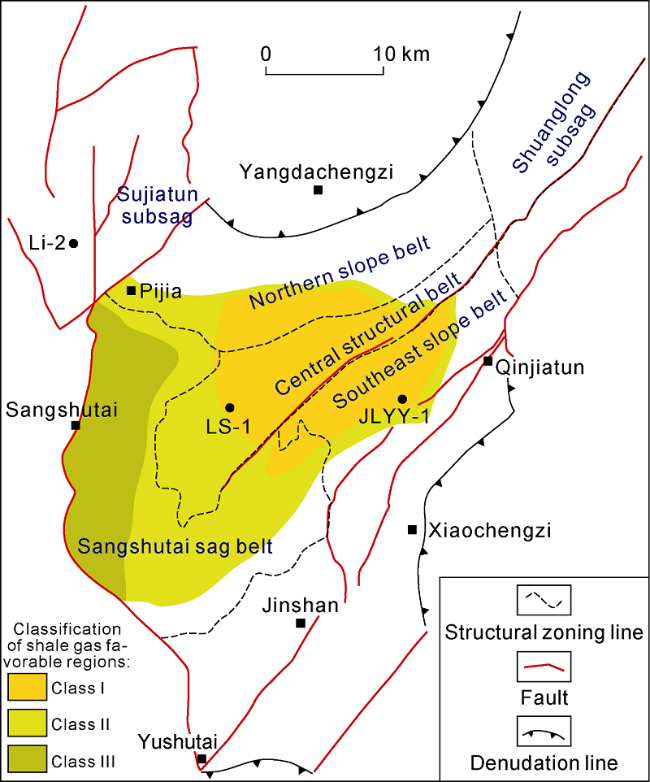


Fig. 13. Distribution map of favorable regions of shale gas of K1sh21 in the Lishu fault depression. |
The breakthrough in the investigation of continental shale gas in the south of the Songliao Basin is expected to open up a new domain of deep oil and gas exploration in the Songliao Basin. The study confirmed that this set of high-quality shale is widely distributed in the fault depression region of the Songliao Basin. In the fault depression sedimentary center, it is predicted that the development thickness of high-quality shale is greater. According to the drilling result of Well JLYY-1, it is determined that the favorable area for shale gas enrichment in K1sh of the Lishu fault depression is 1270 km2, the gas-bearing layer of shale is 50-150 m in thickness, the gas content of shale is 1.5-2.5 m3/t, and the geological resource potential of shale gas is estimated to be 5558×108 m3. By comprehensive analogy, there may be more potential high-quality continental shale gas resources in seven fault depressions (Changling, Gulong, Lindian, Xujiaweizi, Dehui, Lishu, and Shuangchengxi) in the Songliao Basin, with the total area near 14 000 km2.
4. Conclusions
The organic-rich shale development section of the Lower Cretaceous Shahezi Formation is the most favorable section for continental shale gas exploration in the Songliao Basin. This set of shale has a high content of organic matter which is mainly Type Ⅱ1. The thermal evolution degree of organic matter is at the mature to the over-mature stage. Volcanic ash deposition and salinized lake basin water environment control the formation of this set of high-quality organic-rich and gas-rich shale and improve the gas generation capacity of shale.
Shale reservoir types are mainly carbonate mineral dissolution pores, clay mineral intercrystalline pores, organic pores, and lamellation microfractures. The peak pore size of the effective reservoir is mainly distributed in the range of 10-50 nm, which is mainly provided by organic pores and carbonate mineral dissolution pores. For the reservoirs with macropores above 50 nm, the reservoir space is mainly provided by lamellation microfractures, and for the reservoirs with micropores below 10 nm, the reservoir space is mainly provided by clay mineral pores.
The originally deposited mudstone in the lowstand systems tract of K1sh1 Fm., the mudstone in the highstand systems tract in the K1sh21 Fm. and the sealed faults formed in the attenuation process of the fault depression jointly constitute the favorable preservation and sealing spaces for hydrocarbon accumulation from this set of organic-rich shale in the K1sh21 Fm. of the Lishu fault depression.
A breakthrough has been made in the strategic investigation of continental shale gas in the south of the Songliao Basin, which confirms that there is a huge potential for continental shale gas resources in the Lower Cretaceous of the Songliao Basin, and has broad exploration and development prospects. Effective utilization can be achieved through appropriate technical means, which is feasible to increase production in the future. The strategic investigation breakthrough and theoretical and technological innovations of continental shale gas in the south of the Songliao Basin have important reference significance for continental shale gas exploration in other basins in China and will help to promote the process of continental shale gas exploration in China.
Acknowledgment
This study has received support from Qin Du, Li Ruilei, Liu Xiaohong, Li Haibin, and other experts with the Sinopec Northeast Oil and Gas Company. They have provided a lot of guidance and help for this article. We express our heartfelt thanks to them all.
Nomenclature
GR—natural gamma, API;
Rt—resistivity, Ω·m;
S1—free hydrocarbon content, mg/g;
S2—cracked hydrocarbon content, mg/g.