

Introduction
Oil and gas production engineering is a comprehensive application discipline, which makes use of a series of engineering and technical treatments on the formation through injectors and producers in order to drive oil and gas from reservoir into producers and up to the surface. The goal of oil and gas production engineering is to maximize both oil and gas production and recovery rate of the reservoir economically, which plays an important role in oil and gas field development.
In China, the development of oil and gas production engineering technology mainly experienced four stages: (1) The introduction and learning stage. In the early days of the founding of the People's Republic of China, the foundation of the country’s oil industry was still very weak. Crude oil was mainly imported from other countries and there was no systematic oil production engineering technologies [1]. With the help of experts from the Soviet Union, four oil and natural gas industrial bases were built including Yumen, Xinjiang, Qinghai and Sichuan. The experiment and application of oil recovery technology such as water injection, fracturing, acidification, sand control, water plugging, wax removal and in-situ combustion were carried out successively, and the first generation of oil recovery engineering technology was gradually established [2]. (2) Independent innovation stage. During the development and construction of Daqing Oilfield, petroleum scientists summarized the water injection development experiences of Yumen, Karamay and other oilfields, combined with the geological characteristics of Daqing Oilfield, independently developed a completed innovative separated-layer production technical system consisting of separated-layer oil production, separated-layer water injection, separated-layer testing and separated-layer stimulation technologies. This technical system creatively integrated all oil production processes such as water injection, artificial lift, testing and reservoir stimulation etc., which formed an integrated engineering solution centered on layered mining, and the water drive recovery was more than 45%. Further innovation and development of chemical flooding layered mining technology in the 1990s, enhanced oil recovery by 10-20 percentage points on the basis of water flooding, and provided key technical support for the development of Daqing Oilfield to achieve 5000 × 104 t stable production for 27 years and 4000 × 104 t stable production for 12 years. Layered mining technology has rapidly become a characteristic technology of oil production engineering. (3) Diversified development stage. In the period of 1960s-1990s, a number of new oilfields with diverse geological characteristics were discovered, such as Shengli, Dagang, North China, Liaohe etc. On the basis of separated-layer production technology, these oilfields successively developed their own unique oil production engineering supporting technologies, including carbonate buried hill reservoir production technology, complex fault block reservoir production technology, low permeability reservoir production technology, heavy oil thermal production technology and gas field development technology. These technologies greatly enriched the means and connotation of oil production and gas production engineering technology. (4) Integrated and coordinated development stage. From the 1990s to date, the China National Petroleum Corporation (CNPC) put forward the concept of integrated geology-engineering development. While further strengthening the overall planning of oil and gas production engineering, CNPC established 5 R&D centers including fracturing and acidification, completion, electric pump, hydraulic plunger pump and sand control, consolidating the foundation for independent innovation of oil and gas production engineering. CNPC integrated the resources of various oil and gas fields and professional research institutes, organized a series of major special research projects and demonstration projects of major mature technologies. A series of major scientific and technological research and field demonstration projects including horizontal well oil production technology, large-scale volume fracturing, artificial lift energy-saving technology and coiled tubing technology have been successively carried out, and a series of key technological breakthroughs have been achieved. At the same time, the above efforts have effectively shortened the research and development cycle of new technologies and improved the transformation efficiency of research [3]. At present, China has established a technical system of oil and gas production engineering with complete specialties, supporting processes and standards, which can meet requirement of various oil and gas reservoirs and different development modes in most countries.
This paper focuses on the five main technologies of separated-layer injection, artificial lift, reservoir stimulation, gas well de-watering and workover, introduces the important progress in the field of oil and gas production engineering during the "Thirteenth Five-Year Plan" period of China, analyzes the challenges faced by the current oil and gas production engineering in terms of process adaptability, digital construction, energy conservation and emission reduction, and puts forward three strategic directions and technical paths of stabilizing oil and gas enhancement, digital transformation and green development. The future development direction of oil and gas production engineering technology is also pointed out.
1. Important progress in oil and gas production engineering technology during the "Thirteenth Five-Year Plan" period of China
1.1. Separated-layer injection technology
Most reservoirs in China are highly heterogeneous, and the implementation of separated-layer production can achieve balanced production of various types of oil reservoirs. In response to the development contradictions in different periods, a series of water flooding/chemical flooding/gas flooding separated-layer injection technologies have been developed [4], which supported Daqing Oilfield to maintain a high and stable annual oil production of 5000×104 t for 27 years as well as annual oil and gas equivalent production of Changqing Oilfield exceeded 6000×104 t. During the "Thirteenth Five-Year Plan" period, the third-generation separated-layer water injection technology was fully promoted in China, and the application scale increased exponentially. At the same time, the fourth-generation separated-layer injection technology featuring "simultaneous implementation of injection, measurement and adjustment" has been initially formed. Through the promotion and application in typical demonstration areas, the technical maturity and comprehensive development effect of this new technology have been rapidly improved.
1.1.1. The 3rd generation separated-layer water injection technology
As oilfields in China gradually entered the medium and high water cut period, the third generation of bridge-type eccentric/concentric high-efficiency measurement and adjustment of separated-layer water injection technology has become the main technology in water flooding development due to its advantages in testing [5]. During the "Thirteenth Five-Year Plan" period of China, the 3rd generation separated-layer water injection technology featuring with "real-time monitoring and real-time control" has been further improved and developed, meeting the requirements of separated-layer water injection with a minimum working distance of 0.7 m and a maximum of 10 target layers and has been applied in commercial scale. From 2016 to 2020, the number of wells applied this technology in CNPC has increased from 1.87×10⁴ to 3.22×10⁴, the proportion of the total number of separated- layer water injection wells increased from 36.5% to 53.2%, and the distribution rate increased to 63.5%. As the result, decline rate of production of producers has been slowed down effectively and comprehensive decline rate has been reduced to 4.87%. In 2020, oil production with water flooding development was 6423×104 t, accounting for 63.4% of the total production, and complete production cost of crude oil was less than $45/bbl.
1.1.2. The 4th generation separated-layer water injection technology
After some mature oilfields entered ultra-high water cut period, reservoir injection-production relationship became more complex, and dynamic changes of flow field in formation became more frequent. In order to ensure the accuracy of water distribution and the frequency of measurement and adjustment treatment, the prominent contradiction between the number of measurement and adjustment teams, data accuracy requirements and production costs appears [6]. Through the research and development of key technologies such as high-pressure continuously adjustable water injection valve, downhole flowmeter, etc., the 4th generation separated-layer water injection technology featuring "injection, measurement and adjustment" has been formed, which greatly improves digital and intelligent management, and realized real-time monitoring and adjustment of parameters such as injection intervals flow and pressure. This technology can guarantee the qualified rate of separated-layer water injection for a long time, and completely cancel the on-site measurement and adjustment process [7]. The water-flooding reservoir dynamic analysis software IRes was developed to promote the upgrade of water injection plan design from "hysteresis adjustment" to "real-time optimization" [8]. This technology has been established in 11 demonstration areas in Daqing, Changqing, Jilin, Huabei and other oilfields, and has been applied in 1480 wells. The qualified rate of separated-layer water injection has remained above 90% for a long time. The application rate of water flooding increased by 1.2-21.4 percent points, and natural decline rate of oil production declined by 0.77 to 6.70 percent points, cost was saved by about 326 million RMB with remarkable development effect and economic benefit.
1.1.3. Separated-layer polymer injection technology
The annual oil production by chemical flooding of CNPC has been above 1000×104 t has been steadily produced for 18 years in which polymer flooding plays the main role. During the "Thirteenth Five-Year Plan" period, cable controlled separated-layer polymer injection real- time monitoring and control technology was developed to solve the problems of large pressure difference between different layers during separated-layer polymer injection, frequent changes of injection volume and long measurement and adjustment period. Field tests have been implemented to realize real-time monitoring, on-line measurement and adjustment of separated-layer flow and pressure for polymer flooding injectors, which provided the key technical method for efficient polymer flooding development.
1.1.4. Separated-layer gas injection technology
Research indicated that gas flooding could improve oil recovery by 7-30 percentage points, which developed quickly in recent years and became a highlighted EOR method after water flooding, chemical flooding and steam flooding. During the "Thirteenth Five-Year Plan" period, the key technologies were broken through such as high-pressure gas interlayer sealing, multi-stage step- down control of downhole separated-layer flow and multi-parameter separated-layer test. Both concentric double-tube separated-layer gas injection technology and eccentric salvageable separated-layer gas injection technology were developed to realize separated-layer gas injection, flowrate monitoring and control for 2-3 layers. In Block Hei59 of Jilin Oilfield, independent measurement on the surface of CO2 separated-layer injection volume was tested while CO2 was injected into the upper layer and the lower one simultaneously. In Daqing Oilfield, field tests of eccentric and salvageable CO2 separated-layer injection were applied in 60 wells, which can be used for larger scale field test and application.
1.2. Artificial lift technology
In order to maintain the long-term stable production of the oilfield, during water injection production, the artificial lift technology has been applied on a large scale since the mid-1970s in China. From imported artificial lift products and production line to self-developed new artificial lift technologies, mainly based on pumping units, supplemented by progressive cavity pumps, electric pumps and bailing, which basically meet the production needs of various types of reservoirs such as high/medium/low permeability sandstone reservoirs, different development modes and development stages [9⇓-11]. With the improvement of oil and gas field development, the number of artificial lift producers has increased rapidly, and the total amount of artificial lift equipment, asset scale and lifting energy consumption have been rising. By the end of 2020, CNPC has nearly 24 × 104 mechanical recovery wells, with an annual power consumption of nearly 110 × 108 kW∙h. Artificial lift is the main field of production investment and equipment maintenance, and it is also the key potential object of energy conservation, emission reduction, cost reduction and efficiency improvement. During the "Thirteenth Five-Year Plan" period, CNPC focused on energy-saving transformation of old wells, new high-efficiency rodless lifting, lifting of wells under complex working conditions, digitization of mechanical recovery wells and other aspects to carry out technical research and field application, so as to reduce the power consumption per ton of liquid by 6.4%. With the total number of mechanical recovery wells increasing year by year, the total power consumption remained basically unchanged, the average maintenance period was extended from 800 d to 884 d, and the frequency of maintenance operations decreased by 26%, which has effectively promoted energy conservation, cost reduction and efficiency increase.
1.2.1. Energy saving transformation and comprehensive treatment technology of old producers
Through the energy-saving transformation of beam pumping wells, the intelligent transformation of controls of low-production and low-efficiency beam pumping wells is focused, forming a variety of modes of intelligent intermittent beam pumping technology, and realizing accurate liquid level control and safe production of wellbore and ground. The transformation of low-speed motor was implemented to reduce the impact times, cancel the belt and reducer through the transformation of semi direct drive/direct drive permanent magnet synchronous motor, and improve the system efficiency by 3-5 percentage points. The technologies of equal diameter sucker rod, wax proof tubing and lined tubing have been developed to effectively solve the problems of eccentric wear and wax deposition of sucker rod and tubing, and provide a systematic solution for the comprehensive treatment of wellbore. The application of lined tubing technology in CNPC has exceeded 1 × 10⁴ wells, extending the average maintenance period of artificial lift systems for more than 150 d.
1.2.2. High efficient artificial lift technology for complex operating conditions
With the development of complex reservoirs such as low permeability, heavy oil and high water cut oilfields and the transformation of development mode of mature oilfields, the traditional lifting systems are facing severe challenges. Aiming at the problems of low output and low efficiency of wells in low permeability reservoir, the ultra-long stroke beamless pumping unit and ultra-long combined producer pump are innovatively developed to form an ultra-long stroke of 50 m and 0-10 times/h, which improves the system efficiency by 8 percentage points and power saving rate by 55%, extended maintenance period by more than 150 d. As for high temperature issue of producers with heavy oil steam drive and in-situ combustion, CNPC has independently developed high-temperature electric pumps whose temperature resistance is up to 250 °C and new vane pumps with temperature resistance up to 350 °C. Aiming at the serious problems of eccentric wear and scaling in chemical flooding production wells, supporting technologies such as sucker rod centralization technology, multi-functional anti scaling reciprocating pump and ceramic coating anti scaling screw pump have been developed and applied in more than 1×10⁴ wells, the average maintenance period of artificial lift systems was extended from 20 d to 700 d.
1.2.3. Digital technology of mechanical recovery wells
In recent years, with the rapid development of digitalization of artificial lift system, beam pumping wells have formed two Internet of Things (IOT) construction modes of dynamometer card and electrical parameters. Rodless pumping wells have developed from collecting ground electrical parameters to collecting underground temperature and pressure data. The number of wells with IOT has increased from 2.15 × 10⁴ in 2015 to 9.81 × 10⁴ in 2020, and the coverage rate increased from 10.10% to 41.18% (Fig. 1 ). At the same time, in order to strengthen data application, technologies such as on-line digital measurement, working condition diagnosis and production optimization of dynamometer card of beam pumping unit well have been developed, especially breaking through the feature identification of electrical parameters, intelligent working condition diagnosis and digital measurement of electrical parameters, which can replace dynamometer card and reduce the investment of IOT by more than 60%. CNPC has developed an intelligent optimization decision-making network software for mechanical recovery wells with completely independent intellectual property rights, which optimizes the design of 8×10⁴ wells per year, with annual power saving of nearly 1 × 10⁸ kW∙h, average maintenance period is extended by more than 90 d.
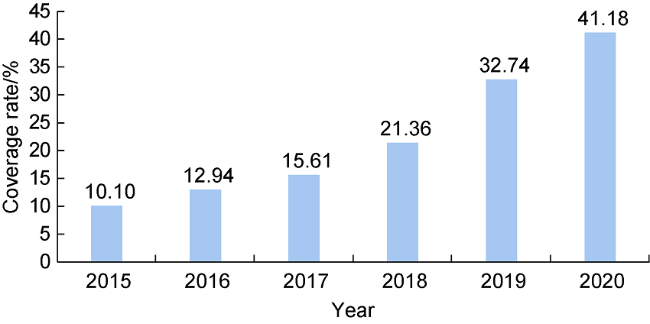
Fig. 1. Digital coverage rate change of mechanical recovery wells in China. |
1.2.4. Novel rodless artifical lift technology
Aiming at the problems of large floor area, serious rod and tubing wear and tear, frequent pump inspection and low system efficiency in the application of rod pump in large platform cluster wells, low speed and high torque permanent magnet motor and reciprocating linear motor were successfully developed, and two new rodless artificial lift technologies of ESPCP (electric submersible progressing cavity pump) and electric submersible plunger pump were developed. A number of application demonstration areas have been established on large oil production platforms such as Ji7 of Xinjiang Oilfield, H40/H60 of Changqing Oilfield, No.1 and No.2 of Dagang Oilfield, which applied the technologies in 776 wells. All systems operate stably, which improves the average efficiency by 10.6 percentage points and saves power by more than 30%.
1.3. Reservoir stimulation technologies
Unconventional oil and gas resources have great potential in the future, and reservoir stimulation technology is the core tool for the beneficial development of unconventional oil and gas [12-13]. By drawing on the successful experience of shale oil and gas development in North America, reservoir reconstruction technology has made significant technological progress in the field of unconventional oil and gas development in China, which mainly reflected in the establishment of new concept of volume fracturing, improvement of technical means and overall upgrade process. During the "Thirteenth Five-Year Plan" period, facing the serious issues in the traditional unconventional oil and gas reservoir volume fracturing, such as difficult sand addition, low recovery and frequent casing change, a new unconventional oil and gas reservoir volume fracturing technology was developed based on the principle of "increasing fracture-controlled reserves, reducing construction costs and increasing economic benefits" and "long well section horizontal well completion + small cluster spacing and multi-cluster perforation + staged fracturing + temporary plugging and steering + quartz sand instead of ceramsite". This technology is known as fracture-controlled fracturing, close- cut fracturing [14-15], which are collectively referred to as “enhanced volume fracturing” in this paper. Enhanced volume fracturing technology not only provides important technical support for the construction of 350×104 t unconventional oil and gas production capacity in the Ordos and Songliao basins, but also opens up a new way for conventional oil and gas development, laying a solid foundation for a breakthrough in the development of hard-to-produce carbonate reserves.
1.3.1. Enhanced volume fracturing technology for unconventional oil and gas reservoirs
According to the requirements of hydraulic fracturing development of unconventional oil and gas reservoirs, maximum recoverable reserves technology in well-controlled unit has been developed to improve the integrated geology-engineering level. The cluster spacing is reduced from 15-30 m to 5-10 m, the sand adding intensity is increased from 1-2 t/m to more than 3 t/m, the density of fracture cutting along the horizontal well track is increased, and temporary plugging agent is added to the far end of the fracture. With the application of quartz sand instead of ceramsite, the consumption of quartz sand increased rapidly from 65×104 t in 2015 to 422×104 t in 2020 (Fig. 2 ), saving more than 4 billion RMB[16]. Low-cost fracturing tools and equipment such as domestic soluble bridge plug and soluble ball seat bearing capacity of 70 MPa, dissolution time 7-14 d controllable have been developed. The new modular perforation tool can be used to go down well once at 20 m and transmit 15-20 cluster perforations. The single-vehicle power of the high-power electric-driven fracturing equipment (5000-7000 type) is more than 2 times higher than that of the 2500-type diesel-driven fracturing vehicle, the cost is reduced by 30%, and the energy consumption is reduced by 25%.
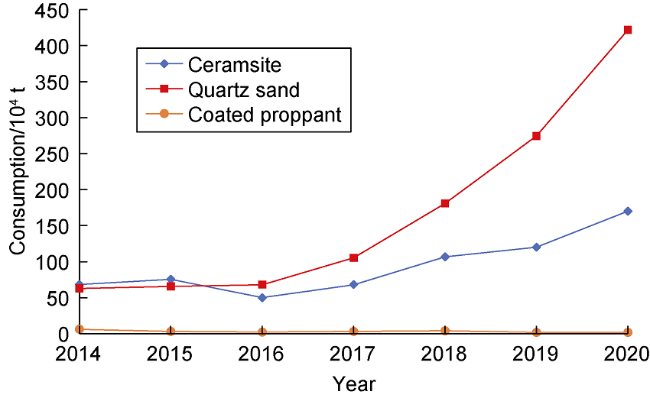
Fig. 2. Statistics of proppant consumption in unconventional oil and gas reservoirs of CNPC. |
This technology has been applied to 87 wells in the Chang 7 tight oil reservoir of Changqing Oilfield. The average length of the horizontal section was 1705.8 m forming 118.9 clusters in 22.3 sections after fracturing, and the cluster spacing was 10.9 m. The single well production is 18.6 t/d at the early stage of production. Compared with horizontal wells with the same horizontal length in early stage, the initial daily oil production of fracturing has increased by 1.5 times [15]. The technology has good results in the application of shale gas development in southern Sichuan, tight oil/shale oil reservoirs in Changqing Oilfield and Xinjiang Oilfield. The annual production of shale gas in southern Sichuan has been increased from 13.2 × 10⁸ m3 to 116.3 × 10⁸ m3, and the annual production of tight oil/shale oil in Xinjiang Oilfield and Changqing Oilfield was increased from 89.5 × 10⁴t to 398.5 × 10⁴ t.
1.3.2. Repeated stimulation technology of compound volume fracturing in mature oil and gas fields
With reference to enhanced volume fracturing technology, traditional high-viscosity and small-scale stimulation methods are changed to form a composite volume fracturing and repeated stimulation technology suitable for stable production and stimulation of old oil and gas fields. The remaining oil and stress field are finely characterized, and the reservoir production degree is improved by using multi-fracture repeated fracturing and temporary plugging diverting technology. The operation scale of single well is 1.5-2.5 times that of the initial construction. For old wells with poor casing conditions, complex fractures are formed by the synergistic effect of hydraulic expansion and shock expansion generated by multiple rounds of small-displacement micro-fracture water injection and sand addition and shut-in pressure diffusion, and fracturing water injection energy storage is implemented for the formation with long-term production energy deficit, so as to increase the formation pressure by 3-5 MPa. By adopting the combined technology of synchronous fracturing fracture end interference, temporary plugging and diverting, nano-scale chemical infiltration and oil displacement, the average daily oil production is 29 t, which is 4 times that of the initial fracturing[16]. Xinjiang Oilfield exploits the potential of old well re-fracturing and implements the treatment of low production shut-down wells, with an average annual oil production increase of 70×104 t. Through the application of new repeated fracturing technology in Changqing Oilfield, the oil recovery is expected to be increased by 12 percent points.
1.3.3. Carbonate rock integrated volume acid fracturing and scale sand fracturing technology
Carbonate reservoir have the characteristics of various reservoir spatial types, complex morphology, strong heterogeneity and strong diversity in different regions. For example, the main issues of deep fractured carbonate reservoirs in Sichuan Basin are high temperature and working fluid filtration, while the main problems in the low modulus porous carbonate reservoirs in the Middle East are difficult construction pressure prediction and fracture closure. Based on the concept of enhanced volume fracturing, the integrated volume acid fracturing and large-scale sand fracturing technology for carbonate rock has been formed, and remarkable results have been achieved in field application.
To date, key technologies of carbonate rock integrated volume acid fracturing have been overcome including 180°C ultra-high temperature acid system, cross-linked gel acid, temporary plugging and diverting agent, inert and acid liquid composite construction, which help to form complex fracture network in the reservoir and expands the reconstruction volume by carrying out process measures such as subdivision cutting, temporary plugging and diverting, multi-stage injection, differential acid fracturing and closed acidification. The integrated volume acid fracturing technology of deep carbonate rocks has set a new record of stimulation process with a depth of 8000 m and a temperature of 200 °C in China, showing high-efficiency production of carbonate rocks covering Longwangmiao Formation in Central Sichuan, Sinian System in Gaoshiti-Moxi area and ultra-deep reservoir in Tarim Basin.
Large scale sand-adding technology in fracturing for carbonate reservoir constructs the fracture propagation model of low modulus elastic-plastic carbonate reservoir, creates the fracture propagation law based on “displacement discontinuity method”, and applies the optimal design method of proppant size and dosage combination considering low modulus proppant embedding. In this technology, open hole packer layered staged fracturing and mixed size proppant sand adding technology are used to solve the problems of open hole segregated completion, complex pressure response, scale sand adding and production prediction in carbonate reservoir of Arabian plate. The first horizontal well scale sand fracturing was completed for the first time in the Sadi carbonate rock reservoir in Halfaya, Iraq [17]. The 1000 m horizontal well has been successfully added with 740.3 m3 of sand in 12 sections, with an average output of 190 m3/d after fracturing and a stable production of more than 2 years, making this kind of reserves of more than 15 × 108 t is possible to be developed owned by the oversea assets CNPC.
1.4. Gas well de-watering technology
The types of gas fields in China are complex and diverse. Gas wells are faced with problems such as water breakthrough, sand production, hydrate, annulus pressure and so on. Gas production technology is an important guarantee for safe production and enhanced oil recovery of natural gas in which gas well de-watering is the main technology to maintain stable production of gas field, and annual workload accounts for 95% of the operation quantity of gas well treatments (Fig. 3 ). During the "Thirteenth Five-Year Plan" period of China, research and field application were carried out focusing on foam drainage, plunger gas lift, booster gas lift, speed string and other technologies [18-19]. The cumulative number of treatments reached over 500 000 wells and gas production was increased by nearly 200 × 108 m3.
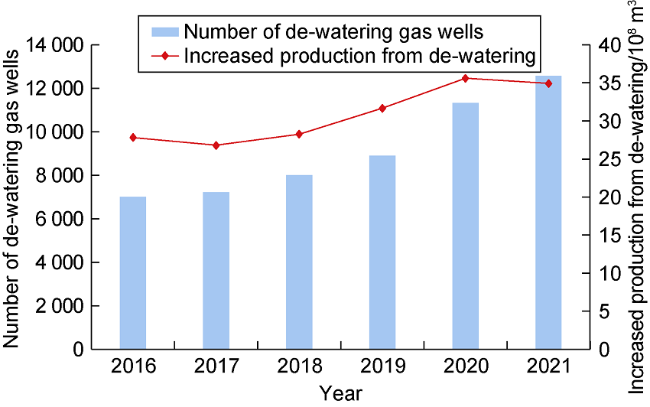
Fig. 3. Statistics on the scale and stimulation effect of gas well de-watering technology of CNPC. |
1.4.1. Foam drainage and gas recovery technology
In terms of poor adaptability, high cost and low efficiency of traditional foam drainage and gas recovery for complex gas reservoirs, the Gemini surfactant as main agent and grafted modified nanoparticles as the stabilizer and additive for different types of gas reservoirs was innovated [20], which broke through the foam stabilization mechanism and preparation process of nano stabilizer, developed highly effective foaming agent suitable for different conditions. The overall temperature resistance of the product was 160 °C, the salinity resistance was 250000 mg/L, with anti-condensate of 40%, anti H2S of 100 mg/L and anti CO2 of 100%. By innovating and integrating Internet of things, cloud service and other technologies, the foam agent cluster filling equipment with online data self-collection, self-analysis and automatic control has been developed, which were used for collaborative operation and online real-time optimization of one pump to eight wells, and the manual workload has been reduced by 80%. The technology has been popularized and applied in CNPC for more than 20 000 wells, and the cumulative increase of natural gas production was nearly 5×10⁸ m3, and comprehensive benefit was increased by more than 30%.
1.4.2. Gas well de-watering with plunger gas lift technology
With more gas fields entering middle and late stages of development, the number of low-yield gas wells increases rapidly and the production of gas fields faces great challenges. Plunger gas lift is one of the preferred processes for gas wells with low production and small water volume due to its simple process, high degree of equipment automation and low cost. During the "Thirteenth Five-Year Plan" period of China, continuous tackling was carried out to solve the problems of mismatching, high cost and low automation of plunger gas lift tools, more than 10 downhole series plunger tools were developed as well as wellhead integrated control device and remote control platform, the cost was reduced by more than 50% compared with imported tools, which created conditions for large-scale promotion[21]. These technologies have been applied in nearly 5000 wells in CNPC, with an average daily gas production increase of more than 1000 m3, and have become the main gas well de-watering technology of tight gas and shale gas [22]. Breaking through technologies such as horizontal well relaying type plunger gas lift, 50.8 mm (2 in) coiled tubing + choke + plunger gas lift completion and gas production integration and other technologies have explored new directions for gas well de-watering of horizontal wells and the high-efficiency and low-cost gas production in the whole life cycle of gas wells.
1.4.3. Gas well de-watering with velocity string
Gas well de-watering through velocity string technology has the advantages of no well killing operation, short operation period, no production layer pollution and no maintenance in the later period. It has good stimulation effect and economic benefit for wells with gas production greater than 5000 m3/d and long-term stability. During the "Thirteenth Five-Year Plan" period of China, work was focused on domestication of coiled tubing and matching equipment, well selection and optimization design, etc. Coiled tubing with equal wall thickness and variable wall thickness of CT7-CT110 specification and matching operating equipment were formed, with sizes ranging from 25.4 mm (1 in) to 88.9 mm (3.5 in) and the maximum depth up to 8000 m. The well selection standard and design method of "geology, gas test, dynamic and process" integration has been established, which greatly improves the application effect of velocity string with an efficiency of 91.6%. More than 600 wells have been applied in CNPC, with a cumulative increase of gas production of nearly 15 × 108 m3.
1.4.4. Gas well de-watering with gas lift technology
Gas lift is one of the preferred processes for water drainage and gas recovery due to its wide drainage range and rarely limited well size. During “the Thirteenth Five-Year Plan period” of China, the key problems were solved, such as immature gas lift tools for deep gas wells, incompatible large-scale forced de-watering technology for gas fields with edge and bottom water, and a series of supporting tools such as deep high-pressure gas lift valves were successfully developed. The valves can resist external pressure up to 90 MPa and concentric working cylinders can withstand temperature up to 150 ℃, which provides tool support for gas lift in deep gas wells. Technologies such as centralized gas boosting, coordinated optimization of single well system and automatic gas injection control have been formed. Technologies of centralized gas boosting and discharge in edge and bottom water gas field with process features of gas intake boosting at main station, gas distribution in small stations and continuous gas lift at single well have been constructed. More than 300 wells have been applied in Sebei Gas Field in Qinghai Province, with average fluid accumulation height reduced from 250 m to 27 m and annual gas production of nearly 5×10⁸ m3, effectively guaranteeing continuous and stable production and improving recovery of water-invaded gas fields.
1.5. Workover technology
During the "Thirteenth Five-Year Plan" period of China, with the total number of oil and water wells increasing continuously, workover technology aims at supporting the mature oil field to activate the stock assets, improving the output of single well and satisfying the new development requirements in the new area, speeding up the development of new technologies and upgrading processes, realizing a steady decrease in the total amount of work (Fig. 4 ), which provides strong technical guarantee for safe production and smooth operation of oil and gas fields.
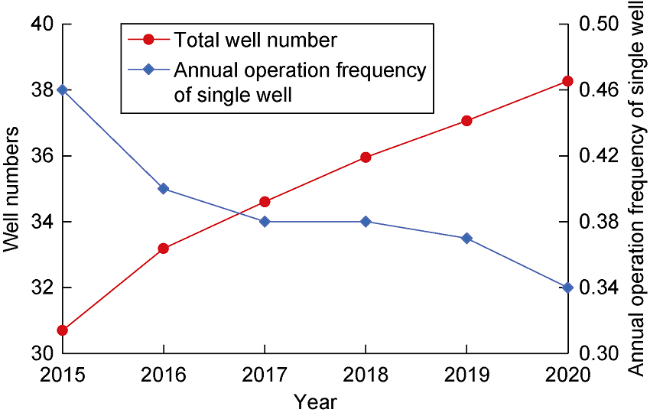
Fig. 4. Variation of total number of oil, gas and water wells and annual operation frequency of single well of CNPC. |
1.5.1. Snubbing service technology
Snubbing service is a new operation method for downhole construction with special equipment under the condition without well killing. The technology can effectively shorten the operation period, minimize reservoir pollution, effectively realize the maximization of oil and gas well productivity, reduce the impact of waste liquid discharge on the environment, and greatly reduce the construction cost, which is proved to be an efficient, safe and environmentally friendly operation mode. This technology can be widely used in underbalanced drilling, side drilling, slim hole drilling, completion, perforation, oil testing, testing, acidification, fracturing and other operations. It is a very mature technology abroad and is widely used in over 90% of oil and gas wells in North America. However, this technology was applied in China very late and made many important progresses during the "Thirteenth Five-Year Plan" of China. Two series of auxiliary and independent oil-water well pressurized machines [23] have been developed, and two types of pipe plugging technologies, mechanical and chemical, have been formed with the ability of 35 MPa in pressurized operation for oil-water wells. The key technologies such as intelligent visual well head, data acquisition system, etc.,are researched and developed by developing the domestic gas well with pressurized machine. The functions of automatic detection of tool coupling in well, remote transmission of construction parameters and safety warning are realized. The completion with pressure of 50 MPa in a gas well and the work-over capability of 35 MPa in an oil-water well are achieved. With 6310 wells using snubbing workover in 2020, injected water discharge decreased by 424.9×10⁴ m3, water injection resumed in advance by 554.1×10⁴ m3, crude oil production increased to 23.8×10⁴ t, natural gas production increased by 26.4×10⁸ m3, with an efficiency of 620 million RMB.
1.5.2. Coiled tubing service technology
Coiled tubing service can be widely used in drilling, completion, oil production, gas production and workover and other fields. Compared with the traditional operation mode, this technology has the outstanding characteristics of high efficiency, short construction period, small reservoir damage, low construction cost, high success rate, safety and environmental protection. However, the core technology of coiled tubing operation has long been monopolized by the United States. After years of independent research and development and special promotion, scientific researchers have achieved major breakthroughs in core technologies such as coiled tubing manufacturing, operation equipment, downhole tools and process technology. While meeting the needs of the domestic market, it has also effectively expanded the technical services of overseas oil and gas fields. Through independent research, we have developed a series of equipment for truck mounted and skid mounted coiled tubing operation [24], more than 90 kinds of special tools in four categories, and monitoring, early warning and evaluation software to form coiled tubing completion, rapid workover, reservoir stimulation, oil test and other process technologies. The maximum working capacity of 50.8 mm (2 in) coiled tubing reaches 8100 m, which completely replaces the inlet. In 2020, coiled tubing operation in 4110 wells will be implemented, with an oil increase of 5.74 × 10⁴ t, gas increase of 138 × 104 m3, injection increase of 12 × 104 m3, which improves the operation efficiency by 3-4 times compared with the conventional operation mode (Fig. 5 ).
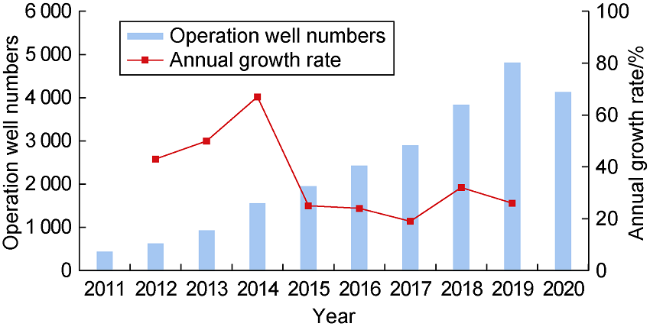


Fig. 5. Changes in annual operating volume of coiled tubing in CNPC. |
1.5.3. Cleaning operation technology
With the promulgation and implementation of the new environmental protection law in China, environmental protection has come to be the core value both for government and enterprises in China. It is urgent to strengthen the comprehensive treatment of environmental protection problems for oil and gas enterprises. CNPC aims at the environmental pollution caused by overflow in the process of operation, which is the most common and difficult problem to cure in the production of oil and gas fields, clean operation technologies such as rod and pipe cleaning in the wellbore and wellhead liquid collection and recovery are formed, which realizes no liquid and no pollution at the wellhead during the operation process, and provides technical guarantee for green and environmental protection construction of downhole operation. In 2020, a total of 18.55 × 10⁴ wells were cleaned, the solid waste was reduced by 8.64 × 10⁴ t, and the waste liquid transportation was reduced by 83.3 × 10⁴ m3. The coverage rate was 100 % in environmentally sensitive areas, and the overall coverage rate was 90% [25].
1.5.4. Automated workover technology
Traditionally, low automation degree of equipment leads to high labor intensity, low production efficiency and poor safety conditions in workover services. The automatic workover equipment composed of mechanized devices such as pneumatic slips and tubing conveyors can effectively solve the above problems. Widespread attention from domestic and foreign oil and gas field managers are focused. During the "Thirteenth Five-Year Plan" period in China, the performance of domestic automatic workover rigs and supporting tools has been further improved. The workover and snubbing services have been applied in field tests. The number of team members was reduced from 5-7 to 3. It greatly reduces labor intensity of workers, and significantly improves the level of safety and environmental protection[26].
2. Challenges of oil and gas production engineering technology
As one of the most important economic pillars of the country, oil and gas industry undertakes an important historical mission. With rapid development of economy and society in China, the demand for oil and gas consumption is increasing continuously as well. In 2020, the external dependence of oil and gas exceeded 73% and 43% respectively[27]. The oil demand in China is expected to be about 7.6×10⁸ t in 2025, and (7.6-7.8) ×108 t of peak value before 2030, (6.1-6.8)×108 t in 2035. The natural gas demand is predicted to be (4300-4500)×108 m3 in 2025, (5350-5550)×108 m3 in 2030, and (6000-6200)×108 m3 in 2035 [28]. In the situation of drastic fluctuation of oil price and continuous decline of profit margin in oil and gas industry, international oil companies have actively promoted digitalized and intelligent transformation, driven business restructuring and management change, promoted core competence of enterprises, and realized high-quality and sustainable development of enterprises through technical innovation. Faced with the solemn commitment to the "dual carbon" goal, the oil and gas industry must increase efforts to energy conservation and emission reduction, develop the green economy, and achieve a green and low-carbon transformation. Under the new situation, oil and gas production engineering face severe challenges in three aspects: the increasing technical difficulty of oil and gas extraction, the insignificant results of digital transformation and efficiency improvement, and immature green and low-carbon technology.
2.1. Increasingly difficult oil and gas production
Mature oilfields are in the "high water/high natural rate of decline" stage on the whole, and the potential tapping of water drive efficiency is a worldwide bottleneck. Production of high water-bearing mature oilfield decreases rapidly, and the scale and cost of oil and water wells increase gradually. The distribution of remaining oil is complicated, and the effects of stimulation measures such as repeated fracturing, profile control and water plugging are getting worse step by step. Mature oilfields generally have large number of old equipments with high failure rate and high maintenance cost. Well shutdown failures by high water cut and casing damage is also a huge number, and usually company with higher idle waste of fixed assets.
The cost of unconventional resource exploitation remains high, and the contradiction between yield replacement and benefit exploitation is serious. In the development of deep, shale oil and gas and special lithological reservoirs, the well spacing and cluster spacing of early development wells are large, and the production of remaining reserves between wells and fractures is facing challenges. Cost reduction methods such as intelligent precision and remote control need to be improved [29]. Artificial lift technology is still incomplete, high initial production and rapid decrease of production after fracturing of horizontal wells are common, and there is no lifting equipment to meet the displacement demand at different production stages, while the failure rate of imported wide-width electric pump is still high [30-31]. The operation and maintenance cost of oil and gas production equipment is relatively high, and high temperature, high pressure and high corrosive gas content in unconventional resources result in high failure rate of oil and gas production engineering equipment and large system operation and maintenance expenditure.
The development situation of high water-bearing gas field is becoming more complicated which leads to greater difficulty to keep stable production of natural gas[32]. Low-production and low-pressure wells in mature gas fields are increasing gradually, and the main process effect of existing drainage gas production is getting worse as well. Water production in deep/edge and bottom water gas reservoir is becoming more and more serious, and large-scale gas well de-watering technology is incomplete and poor in treatment effect. Water coning issue of horizontal well are serious while water production mechanism is still not clear and systematic and effective drainage and gas production technology system has not been formed. With the rapid increase in gas producers and gas storage wells featuring with “high temperature/high pressure/high H2S content”, the risk of wellbore quality management is highlighted [33]. The casing deformation in unconventional medium-deep fractured horizontal wells has become preliminarily solved, but the casing deformation of deep shale gas wells is still prominent [34].
The development mode of mature oil fields is facing major transformation, and the supporting engineering technology is still incomplete. Practice has proved that scale promotion of "IOR/EOR combination" development strategy is the main direction for tapping potential of mature oilfields in China in the future. Increasing management and restructuring of water flooding injection-production well pattern, accelerating industrialization process of enhanced oil recovery technologies such as chemical composite flooding, multiple thermal flooding and multi-media gas flooding are the key ways to solve the dilemma of "high increased speed, small increased reserve and difficult production stabilization" in mature oilfields. Among them, chemical composite flooding, steam-assisted gravity flooding, in-situ combustion and other process technologies are basically mature and complementary, including CO2 miscible flooding, hydrocarbon gas flooding, nitrogen/oxygen reducing air (foam) flooding and other gas flooding technologies have made significant breakthroughs, but gas flooding swept volume enhancement technology, CO2 long-term burial technology, well control technology and other technologies are still incomplete. Therefore, more efforts are needed to tackle key problems to meet the needs of large-scale promotion and application.
2.2. Incomplete digital transformation technology
The operating data is incomplete. With the expansion of the construction scale of the IOT for oil and gas production, the data acquisition quantity of the process for oil & gas production is much larger than before. However, direct measurement means are still not sufficient for important information such as fluid distribution inside or near wellbore, downhole tools and equipment operation, etc. Most information still needs to be obtained by indirect calculation, which affects the completeness and accuracy of production data and limits the timeliness of analysis decision in a certain degree.
The sharing of data resources is inadequate. Some data of oil and gas production engineering are scattered in many systems, databases and different departments, and data islanding still exists. Data resources are still in a simple aggregation state, lacking of automatic data analysis and processing tools, and large number of data need to be sorted out, and cannot be provided to business personnel in the form of data maps.
Data value mining is not sufficient. The integration, analysis and decision-making of spatio-temporal data between target wells and blocks are deficient [35]. Data application is still mainly based on traditional production report display, lacking in-depth analysis and application of dynamic and static combination, whole process analysis and visual display of production and equipment operation data of oil and gas wells, and large number of engineering data of oil & gas production are idle [36].
The standard of digital construction is still incomplete. The construction mode and standard of Internet of things in each oil field are not uniform, the data type, data interface and data frequency of oil and gas wells are not uniform, and the data transmission mode and format are lack of specifications. Lack of intelligent application standards for each specialty of oil and gas production makes it difficult to duplicate and popularize the digital construction mode, and scale benefit is not significant.
2.3. Immature green and low-carbon technology
With the continuous expansion of production scale of oil and gas fields, the total energy consumption of oil and gas exploration is increasing rapidly. Annual power consumption of mechanical oil extraction in China is equivalent to 250×104 t crude oil, which accounts for 44% of the total energy consumption in oil and gas field development. Therefore, it is urgent to reduce energy consumption and carbon emissions of equipment and realize clean energy substitution. At the same time, the development of new energy is also closely related to the breakthrough of oil and gas production engineering technology. Wind-solar-electricity multi-energy complementary is a complicated system engineering, and its promotion still needs a long period. Due to the large difference of energy required in production between different regions, different operating periods and different types of oil and gas wells, as well as the green power supply capacity and investment, it is still difficult to achieve the overall optimization of energy substitution.
Safe and efficient injection and production of carbon capture, utilization and storage (CCUS) faces great technical difficulties. At the stage of well construction, the integrity evaluation technology of old wells is not complete and quality control specification system of new wells has not been established. Pipe corrosion, high pressure operation risk, gas channeling and high gas-liquid ratio lifting are serious issues in production, and there are no reliable reservoir and wellbore monitoring technology [37].
Many difficulties have to be overcome in the promotion of replacing oil by electricity and gas in fracturing and workover operation. Restricted by load condition of power grid, gas supply condition, investment cost and flexibility of short-term application of laying high-voltage lines, it is still difficult to realize the promotion of replacing oil by electricity and gas in fracturing and workover operation in the short term.
3. Strategic objectives, strategic directions and implementation paths
3.1. Strategic objectives
(1) The objective of oil stabilization and gas enhancement. Provide technology support for oil and gas production to ensure that crude oil production of China to be stabilized at 2×10⁸ t as well as natural gas production to be increased to 2800×108 m3 before 2035.
(2) The objective of digital transformation. In 2025, the digitalization transformation and upgrading of oil and gas production project will be completed, providing production guarantee for the construction of intelligent oil field in 2035.
(3) The objective of green low carbon development. Provide domestic oil companies with advanced and complete engineering and technical solutions to achieve China's carbon peaking by 2030 and carbon neutrality by 2050.
3.2. Strategic directions
(1) Direction of oil stabilization oil and natural gas enhancement. Oil and gas will remain an important engine for the future energy supply and economic development of China. The strategic policy of oil stabilization oil and gas enhancement doesn’t change. Oil and gas production engineering technology urgently needs to increase investment in independent innovation, focus on key technologies for economic and high-quality oil and gas development, and promote the implementation of high-efficiency production in new oil fields, long-term stable production in old oil fields, and steady increase in natural gas production to ensure efficient and sustainable oil and gas production, and the continuous and effective supply of national energy and strategic materials.
(2) Direction of digital transformation. In the current situation of global economic downturn and energy transformation in the post-epidemic era, digital transformation is a key way to help oil and gas enterprises achieve cost reduction, efficiency increase, and high- quality development. Oil and gas production engineering technology should promote the deep integration of business needs and information technology, accelerate the construction of Internet of Things in oil and gas wells and intelligent construction of oil and gas fields, promote the reconstruction of oil and gas field development business and management models, and promote transformation and upgrading of oil and gas industry and growth of core values.
(3) Direction of green and low-carbon development. In order to implement the "carbon peak, carbon neutral" goal and accelerate green and low-carbon transformation of oil and gas industry, on the one hand, oil and gas production engineering urgently need to strengthen the "dual control" of the intensity and total amount of energy consumption in the process of oil and gas exploration, which can reduce carbon dioxide emissions. On the other hand, the construction of CCUS and multi-energy complementary demonstration areas will be accelerated.
3.3. Implementation paths
Under three strategic frameworks of stabilizing oil production and increasing gas production, digital transformation and green development, long-term strategic development path of oil and gas production engineering technology is established with innovation and integration of five main technologies.
3.3.1. Multiple strategies to break through the technical bottleneck
Break through the potential limit of remaining oil and realize the sustainable development of old oilfields. Improve the precision of layered water injection, improve the success rate and validity period of technical measures such as repeated fracturing and water plugging, and continuously break through the limit of water flooding in old oilfields to enhance oil recovery. Optimize design and operation of lifting system to effectively control production and operation costs of oil wells. Improve research on casing damage mechanism and law in high water-cut oilfields, break through low-cost repair of casing damaged wells and long-term shut-in treatment technologies, and explore effective ways to greatly increase potential space of remaining oil in old oilfields.
Break through technical boundaries of process, materials and equipment to ensure the continuity of production and the efficient use of unconventional resources. First, carry out research on low-cost fracturing technology, fracturing materials and supporting tools, optimize the fracturing design scheme, improve the stimulation effect of unconventional reservoirs, further extend the validity period of unconventional reservoir stimulation, and reduce the cost of stimulation measures. Second, develop deep well, ultra-deep well and unconventional oil and gas well artificial lift technology, realize long-term, reliable and economical operation of oil and gas wells, and reduce production and operation costs. Third, promote the application of green and efficient downhole operation technologies such as automatic well workover, cleaning and well killing services to improve construction efficiency and reduce oil and gas field operation and maintenance costs.
Improve the production technology of gas wells and effectively prolong the period of high and stable production of gas fields. First, deepen the research on the water production mechanism of gas wells, optimize de-watering gas production time and operating parameters, and effectively prolong continuous production and stable production period of gas field. Second, overcome casing damage mechanism and control technology of shale gas wells, reduce production and operation cost of gas wells, and prolong running life of gas wells. Third, develop wellbore integrity and safety protection technology for high-temperature/high-pressure gas wells to improve the safety and reliability of gas fields and underground gas storage.
3.3.2. Applying innovative information technologies to drive business restructuring
Build oil and gas production whole-process Internet of Things system. The key link test and intelligent device for oil and gas production are developed, including underground wireless separated-layer injection/production device, downhole pump power diagram tester, fracturing vehicle remote intelligent test system, etc., and intelligent equipment management scheme for oil and gas production including online diagnosis, remote supervision and intelligent operation and maintenance is built.
Establish a multi-service data sharing platform for oil and gas production projects. Develop intelligent injection-production system and maintenance system for oil and gas production based on digital twin and blockchain technology. Integrate data resources in the management of oil and gas production engineering, optimize and reconstruct the business process, and form a multi- professional coordinated oil and gas production information management platform for oil reservoirs, oil production, and information and data security sharing.
Develop intelligent analysis and decision-making system for oil and gas production engineering. Using big data and artificial intelligence technology, develop oil- gas-water well intelligent control systems, intelligent supervision and decision-making systems for oil and gas production engineering measures, oil and gas production equipment intelligent operation and maintenance systems, and create "intelligent oil and gas engineering brains".
Establish the intelligent standard system of oil and gas production engineering. Construction standard of Internet of Things for oil and gas recovery, intelligent control standard for oil and gas wells, etc., lay the foundation for standardized management of smart oil fields.
3.3.3. Creating core technologies by implementing interdisciplinary research
Reform the power system of oil producers, gas producers and water injectors with multi-energy complementary technology to realize zero emission in the production process of oil and gas fields. Study the intelligent power supply mode of well site with single well and well group as unit, effectively solve the coordination relationship between development and energy saving, green and low carbon, effectively reduce investment cost, and realize low-carbon energy supply.
Utilize technology of replacing oil with electricity to carry out energy-saving transformation for high energy-consuming equipment in production, so as to realize zero emission during the maintenance of oil and gas fields. This technology is mainly applied to equipment such as workover rigs, fracturing devices, and drilling fluid pumps, which is driven by large number of internal combustion engines.
Promote CO2 production technology to improve oil recovery and CO2 storage. The technology of CO2 separated-layer injection, high-efficiency lift, sealing operation and wellbore protection can effectively improve unconventional oil recovery. Improve CO2 fracturing technology, reduce reservoir damage and measure energy consumption, improve mining efficiency, and realize permanent geological storage of CO2.
4. Prospect of oil and gas production engineering technology
4.1. Fine separated-layer injection technology
Separated-layer injection technology under special working conditions is studied to further expand the application range of separated-layer technology. Optimize the design of high temperature and high pressure resistant downhole permanent separated-layer injection tools to meet the requirements of fine production of high temperature well. Research and develop key technologies and equipment for tapping the potential of producers include optical fiber liquid production profile dynamic monitoring technology, separated-layer sampling and testing technology. Improve the 4th generation separated-layer water injection technology and further reduce the cost of equipment and tools. Settle key problems in the separated-layer injection technology of high salinity water to meet the needs of water injection development of offshore oil fields. Focus on separated-layer gas injection technology to further improve the reliability of measures to meet the transformation needs of gas flooding development in mature oilfields.
Improve the digitization level of equipment, tool and process, and create an intelligent separated-layer injection technology system. Focus on the core technology of wireless communication in the well bore, improve communication efficiency, and develop fine separate injection technology to meet the requirements of snubbing service.
Promote refinement management of separated-layer injection and production and create a green and low- carbon development mode of water flooding. Strengthen integrated research of reservoir and engineering to enhance corresponding changes of injectors and producers, which helps to realize accurate analysis of residual oil distribution in reservoir, deepen understanding of reservoir heterogeneity and flow belts, and dynamically grasp the remaining oil occurrence state in real time. Establish the fine joint control model of injection-production well group, form the joint control mechanism of fine separated-layer injection and fine adjustment of intelligent injection-production well group, minimize the total amount of water injection and maximize the level of EOR, and reduce the waste of water resources and injection energy consumption. Solve the problems of CCUS/CCS well integrity evaluation technology, high-pressure dense phase injection technology, low-cost gas injection completion and separated-layer gas injection technology, promote construction of CCUS demonstration project and achieve the national dual carbon target.
4.2. Efficient artificial lift technology
Research and develop key artificial lift technologies to improve compatibility of artificial lift system in complex oil and gas wells. Break through the artificial lift technology of ESPCP to meet the needs of efficient development of deep reservoir. The technology of wide displacement range ESP for unconventional crude oil, such as shale oil and tight oil, will be explored to achieve efficient operation throughout its life cycle. Tackle the key problems of 3500-8000 m deep well and ultra-deep well artificial lift technology, low mature shale oil high-efficiency heating technology, high-temperature wellbore tools and new artificial lift equipment, and make technical reserves in advance.
Carry out research on key technologies of intelligent production of oil and gas wells and create an intelligent production mode of oil and gas wells. The high-performance downhole battery, downhole self-charging and downhole data acquisition and transmission technology of beam pumping wells are studied to form economic and effective data acquisition and transmission modes for different types of oil and gas wells. Develop Internet of Things and big data-driven production optimization decision-making software for oil wells and establish relevant technical standards to realize real-time working condition diagnosis, fault early warning, digital measurement, remote control and other functions. Develop intelligent control devices for different types of oil wells based on edge calculation, create a smart production mode of self-collection, self-analysis and self-regulation, and realize full-automatic and unattended operation.
Carry out construction of energy saving and emission reduction demonstration projects for artificial lift wells and explore new ways of zero-carbon production. Research and develop low-cost intelligent intermittent pumping technology, promote the construction of energy-saving demonstration projects for high-energy-consuming beam pumping wells, and improve the scale benefits of energy-saving and consumption-reducing retrofits for low-yield and low-efficiency wells. Carry out research on artificial lift technology with complementary wind-solar-electricity energy, including research on the optimal configuration technology and economic and technical boundary of multi-energy complementary in intermittent production wells, and research on the complementary optimal configuration of wind-solar-electricity energy in platform wells, production system optimization and energy storage technology. Study the CCUS high gas-liquid ratio and high-efficiency artificial lift technology and low-cost wellbore anti-corrosion and scale-inhibition technology to achieve low-cost wellbore anti-corrosion throughout the life cycle and high-efficiency lifting in different gas-bearing stages.
4.3. Precise reservoir stimulation technology
Continue to conquer the key technologies for reservoir stimulation of different types of complex lithologic reservoirs and unconventional oil and gas reservoirs, and expand the scope of their application. First, research and develop enhanced volume fracturing technology suitable for ultra-deep oil and gas evaluation and development wells of 7000-8000 m, shale oil and gas wells deeper than 3500 m, and coalbed methane wells of 500 m, so as to solve the difficulty in economical operation and construction of existing technologies. Second, study reservoir stimulation technology under conditions of complex lithology and low brittleness reservoirs with large horizontal stress difference, large platform with multiple wells, ultra-long horizontal sections, open hole completions, complex wellbore conditions, etc., and deepen the mechanism, tools and materials research, so as to solve the matching problem between artificial fractures, well pattern and well spacing. Third, research and develop low-cost hydraulic fracturing without water or with less water, controllable electric pulse shock wave stimulation, and intra-layer explosive fracturing technologies to solve the problem of low-yield and low-efficiency well development. Fourth, for wells with broken casings, wells with screen pipe completion and plugged open-hole wells in mature oil and gas fields, develop wellbore reconstruction and staged tools that can realize horizontal well dense cutting and staged fracturing. For example, expanded tubing, secondary completion and cementing, chemical plugging and other technologies are used to reconstruct long horizontal wells and stimulate reservoirs. Research and develop technologies for exploratory well reconstruction in extreme environments such as extreme cold, polar regions, deep water, and deserts, and solve the problem of adaptability of surface equipment and materials.
Accelerate intelligent construction of reservoir stimulation and realize precise reservoir stimulation. Develop geology-engineering integrated fracturing design software with independent intellectual property rights, realizing barrier-free data flow between numerical simulation of geological reservoirs and simulation of hydraulic fractures. Upgrade electric fracturing equipment to achieve low-cost, high-power on-site power generation and remote precise control. Develop remote wireless control downhole layered and segmented tools to achieve precise fracturing technology. Develop network systems capable of remote decision-making and intelligent operation and maintenance, and establish relevant technical standards. On-site real-time analysis and diagnosis of complex fractures can be carried out to realize the verification of evaluation after fracturing and prediction before fracturing.
Key technologies of CO2 fracturing and storage are tackled to achieve zero emissions in the whole process. Key electric drive fracturing equipment and vehicle group are developed to achieve zero discharge fracturing process. While tackling the large-scale CO2 fracturing process and flowback control, and improving the effect of stimulation and transformation, the effect of CO2 sequestration was further improved
4.4. Long-term gas well de-watering technology
Develop complex types of gas wells de-watering technologies to ensure stable production of gas wells and improve recovery efficiency of gas fields. Solve the key issues in low production and low-pressure wells with combined gas well de-watering technology to meet the requirements of gas well de-watering with production less than 3000 m3/d. Research and develop new gas well de-watering technology for different types of horizontal wells and horizontal intervals with different types of pipe string structures. Improve the integration of tight gas and shale gas well completion and gas well de-watering technology. Develop comprehensive water control technology integrating geology with engineering in gas field with side and bottom water. Develop gas well de-watering technology for deep reservoirs.
Innovate intelligent control technology of gas well de-watering technology and promote the intelligent transformation of digital development of gas well production. The intelligent production management and control platform for gas wells is developed to realize early warning, fault diagnosis, parameter optimization and intelligent control of different types of gas wells. Develop foam discharge with intelligent injection and defoaming equipment and plunger gas lift intelligent monitoring and control device to realize unattended gas well production.
Develop key technologies for green and low-carbon water drainage and gas production, and significantly reduce investment and carbon emissions. Focus on the development of gas well wind/solar energy plunger gas lift technology, gas well wind-solar complementary foam drainage gas production intelligent injection and defoaming technology.
4.5. Intelligent underground operation technology
Develop special underground operations and expand the scope of technical services. Upgrade gas well pressurized operation equipment and technology, improve the performance of core components, promote low-cost pressurized operation of low-pressure gas wells, overcome the "high temperature / high pressure / high sulfur content" gas well operation technology, and realize the ability to operate independently under complex conditions. Study high-pressure / ultra-deep well / ultra-long horizontal section coiled tubing technology, non-metal intelligent coiled tubing equipment and operation technology, and form a coiled tubing operation technology system.
Comprehensively promote the intelligent transformation and upgrading of underground operations. Explore the high-efficiency and high-reliability pipe/rod automatic lifting and unloading technology. Promote the integrated control technology of the automatic operation system under pressure. Research on downhole high-precision sensors, downhole communication and control technology, carry out research on wellbore intelligent detection, sidetrack in-situ coring and measurement integration technology, intelligent visualization workover technology, etc., to form a complete intelligent equipment system for downhole operations. Speed up the construction and application of underground operation information platform, intelligent detection and digital wellbore, remote control expert decision-making platform and standard system, give full play to the cluster effect of "Internet+" technology, and realize standardized, unified, safe and efficient management of underground operations.
Promote green and environmentally friendly new technologies. Continuously improve clean operation technology to achieve no oil and gas leakage during entire operation process. Promote equipment with substituting oil with gas and electricity technologies. Explore key technologies of CCUS for fully enclosed safe operation to ensure safe and efficient operation. Implement wellbore quality improvement projects, including different types of casing damage and casing deformation well treatment technologies, research on casing damage and casing deformation mechanisms and preventive in complex reservoirs such as deep shale gas, "high temperature / high pressure / high sulfur content" wells and gas storage well integrity technology, which can reduce safety and environmental risks and eliminates potential safety hazards in a timely manner.
5. Conclusions
Oil and gas production engineering technology provides a key implementation way for oil and gas field development. After years of accumulation, a complete oil and gas production engineering technology system has been established. During the "Thirteenth Five-Year Plan" period in China, important progresses have been made in layered injection, artificial lift, reservoir stimulation, gas well de-watering, work over and other main technologies, which provide key technical support for realizing continuous potential tapping of mature oilfields and effective utilization of new production capacity. At present, it is a critical period for comprehensive transformation of energy industry. Oil and gas production engineering are facing three major challenges: (1) Production conditions are becoming extremely complex. (2) Digital transformation technology is incomplete. (3) Green and low-carbon technology is immature. The overall strategy of oil and gas production engineering in the direction of stabilizing oil and increasing gas, digital transformation and green development is established, and the implementation paths of green development are determined, such as breaking through the technical bottleneck with multiple strategies and realizing effective stabilizing oil and increasing gas, promoting business restructuring with information technology to realize low-cost digital transformation, building core technology and breaking through the bottleneck of zero carbon technology through interdisciplinary research. In the future, oil and gas production engineering technology will focus on five key research directions: fine separated-layer injection technology, efficient artificial lift technology, accurate reservoir stimulation technology, long-term gas well de-watering technology and intelligent underground operation technology, so as to provide engineering and technical support for the transformation, upgrading development of oil and gas industry in China.