

Introduction
Since the end of 2019, affected by the COVID-19 pandemic and the low oil price, the world's oil and gas exploration investment in 2020 has taken a downturn [1⇓⇓⇓⇓⇓⇓-8]. In 2021, with the world oil and gas exploration situation continuing the downturn, what are the new features of discoveries in global oil and gas exploration, and what are the favorable exploration fields in the future? How do China's three major oil companies adjust their domestic and overseas exploration strategy? Regarding these issues that people inside and outside the industry are focusing on, this research provides critical analysis and discussions based on commercial databases such as IHS and public information of oil companies. It suggests several suggestions on how Chinese oil companies can expand their transnational oil and gas exploration.
1. Survey of global oil and gas exploration
Impacted by the lasting Covid pandemic and low oil prices, the exploration investment strategy of oil companies in 2021 continued to be conservative, and the overall exploration and well drilling projects slowed down and declined in quantities, while the success rate of well drilling improved. There were discoveries in conventional and unconventional oil and gas, mainly in America and Central Asia-Russia region. The conventional oil and gas reserves in the Mesozoic-Cenozoic significantly increased, mainly in the deepwater to ultra-deepwater fields.
1.1. Changes in global oil and gas exploration investment
Global oil and gas exploration investment development can be divided into two stages in the past five years. During the first stage of 2017 to 2019, the global oil and gas exploration investment stayed at the investment level of (430-440) × 108 US dollars, gradually walking out of the global recession in oil and gas exploration investment caused by the sharp fall of international oil prices in 2014. However, with the spread of COVID-19 at the end of 2019 and the decline of international oil prices, global oil and gas exploration investment decreased again in the second stage from 2020 to 2021 by more than 125 × 108 US dollars. In 2021, the global oil and gas exploration investment was 313×108 US dollars [9], the same as in 2020. Among them, the exploration investment in the Americas and the Asia Pacific region was the largest. Exploration investment in both regions was more than 100×108 US dollars, far higher than in other regions (Table 1 ).
Table 1. Statistics of global oil and gas exploration investment in recent 5 years [9] |
| Regions | Annual investment/108 USD | ||||
|---|---|---|---|---|---|
| 2017 | 2018 | 2019 | 2020 | 2021 | |
| Africa | 25.9 | 20.6 | 20.9 | 16.2 | 12.8 |
| Americas | 240.7 | 250.7 | 212.2 | 142.7 | 141.0 |
| Europe | 50.2 | 45.3 | 49.9 | 20.3 | 21.4 |
| Asia Pacific | 102.2 | 107.1 | 130.9 | 107.0 | 131.1 |
| Middle East | 1.6 | 0.6 | 1.9 | 1.0 | 0.3 |
| Central Asia- Russia | 17.5 | 9.4 | 22.3 | 25.2 | 6.2 |
| Total | 438.1 | 433.7 | 438.2 | 312.5 | 312.8 |
1.2. Changes in global drilling workload
The global exploration and drilling workload remained steady, with a slight decrease. In 2021, 1235 exploratory wells were drilled, showing a year-on-year decrease of 39. There were only 644 wildcats, showing a year-on-year decrease of 26. In 2021, the distribution of global exploratory well basins continued to follow the trend of 2020, mainly located in Oman, West Siberia, North Sea, Sureste, and other mature exploratory basins, with a total number of 25-60 wells (Table 2 ). The Guyana basin in the Americas has been a global exploration hotspot since 2015 and continues to maintain an exploration scale of more than 10 exploratory wells per year.
Table 2. Statistics of exploration workload of each regions in 2021 [9] |
| Regions | 2D Seismic/ 104 km | 3D seismic/ 104 km2 | Wildcats | Outpost | Major basins | Wildcats of major basins |
|---|---|---|---|---|---|---|
| Africa | 1.04 | 3.35 | 88 | 35 | Abu Gharadiq | 11 |
| Eastern Niger | 11 | |||||
| Cyrenaica | 10 | |||||
| Northern Egypt | 10 | |||||
| Americas | 0.98 | 4.63 | 139 | 58 | Sureste | 26 |
| Deepwater Gulf of Mexico | 21 | |||||
| Guyana | 11 | |||||
| Europe | 0.92 | 3.86 | 96 | 134 | North Sea | 30 |
| Dnieper-Donets | 13 | |||||
| Pannonian | 9 | |||||
| Asia Pacific | 1.94 | 3.91 | 158 | 158 | Indus | 22 |
| Bohai Gulf | 18 | |||||
| Eromanga | 17 | |||||
| Middle East | 0.62 | 0.54 | 87 | 47 | Oman | 60 |
| Zagros | 12 | |||||
| Central Arabian | 5 | |||||
| Rub’ Al Khali | 5 | |||||
| Central Asia- Russia | 0.13 | 1.24 | 76 | 159 | West Siberian | 33 |
| Amu-Darya | 16 | |||||
| Volga-Urals | 12 | |||||
| Total | 5.64 | 17.54 | 644 | 591 | 352 |
The distribution of wildcats onshore and offshore worldwide is uneven, and the success rate of exploratory wells varies year on year. In 2021, 423 wildcats had been drilled onshore, with a slight increase compared to 2020. The success rate of exploratory wells is 44.9%, with a slight decrease compared with 2020. Two hundred twenty-one offshore wildcats were drilled, showing a year-on-year decrease of 38. The success rate of offshore wildcats was 49.3% (Table 3 ), higher than 39.4% in 2020. It takes a trend of increase in the past three years. Sixty-six wildcats have been drilled in the deepwater and ultra-deepwater fields, accounting for 29.8% of the offshore wildcats. The deepwater basin in the Gulf of Mexico and the Guyana basin took the lead in the number of completed wildcats, 21 and 11, respectively, far more than that of other basins. Although the number of wildcats in deepwater and ultra-deepwater fields accounts for a low proportion, the recoverable reserves of newly discovered oil and gas fields are generally higher than those of mature exploration basins in onshore/shallow water areas, and they are the main body of global new reserves in 2021.
Table 3. Success rate of wildcats drilling in 2021 [9] |
| Regions | Onshore wells | Offshore Wells | ||||||||
|---|---|---|---|---|---|---|---|---|---|---|
| Oil wells | Gas wells | Other wells | Total wells | Success rate/% | Oil wells | Gas wells | Other wells | Total wells | Success rate/% | |
| Africa | 21 | 49 | 70 | 30.0 | 7 | 3 | 8 | 18 | 55.6 | |
| America | 22 | 20 | 37 | 79 | 53.2 | 25 | 3 | 32 | 60 | 46.7 |
| Europe | 4 | 19 | 23 | 46 | 50.0 | 22 | 13 | 15 | 50 | 70.0 |
| Asia Pacific | 13 | 24 | 37 | 74 | 50.0 | 20 | 13 | 51 | 84 | 39.3 |
| Middle East | 13 | 3 | 65 | 81 | 19.8 | 1 | 5 | 6 | 16.7 | |
| Central Asia- Russia | 29 | 22 | 22 | 73 | 69.9 | 1 | 1 | 1 | 3 | 66.7 |
| Total | 102 | 88 | 233 | 423 | 44.9 | 75 | 34 | 112 | 221 | 49.3 |
Note: Other wells include dry, shows and result unreported wells. |
1.3. Survey of global new discoveries in oil and gas explorations
In 2021, a total of 230 oil and gas fields were discovered in the world (excluding North America onshore) (Fig. 1 ), including 214 conventional oil and gas fields, with recoverable reserves of 20.8×10⁸ t oil equivalent [9-10], showing an increase in both quantity and the reserve volume. In addition, there were 16 unconventional oil and gas fields with recoverable reserves of 2590×104 t oil equivalent, showing a year-on-year increase in quantity but a year-on-year decrease in reserves. The large-scale reserves of newly discovered conventional oil and gas fields worldwide are unevenly distributed. The American regions continue to lead in the discovery of global oil and gas exploration reserves, with recoverable reserves of 11.42× 10⁸ t oil equivalent, accounting for about 55% of the total global conventional oil and gas reserves, far higher than the other regions (Table 4 ). Central Asia - Russia region ranks second, with recoverable reserves of 4.11×10⁸ t oil equivalent. The newly discovered oil and gas reserves in the Asia Pacific, Middle East, and Africa are in third place, with recoverable reserves of (1-2)×108 t oil equivalent. The resource in Europe is relatively poor, and exploration is also the most mature. The newly discovered reserves are the smallest, of only 8139×104 t oil equivalent.
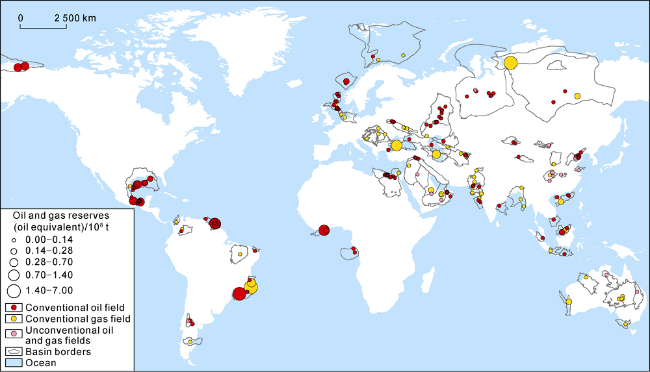
Fig. 1. Distribution of newly discovered oil and gas fields around the world (excluding North America onshore) in 2021. |
| Regions | Major basins | System | Conventional oil and gas | Unconventional oil and gas | |||
|---|---|---|---|---|---|---|---|
| Recoverable reserves (oil equivalent)/ 108 t | Number | Reserve proportion/% | Recoverable reserves (oil equivalent)/ 104 t | Number | |||
| Americas | Guyana, Campos, Santos, Gulf of Mexico Deepwater | Cretaceous, Paleogene and Neogene | 11.42 | 52 | 54.9 | 8 | 2 |
| Central Asia - Russia | Yenisey-Khatanga, South Caspian, Amu Darya | Cretaceous, Neogene and Jurassic | 4.11 | 39 | 19.8 | 14 | 1 |
| Asia Pacific | Brunei-Sabah, Perth, Zengmu | Neogene, Permian and Paleogene | 1.68 | 57 | 8.1 | 1 761 | 10 |
| Middle East | Black Sea, Central Arabian, Rub’ Al Khali | Neogene, Jurassic and Permian | 1.65 | 15 | 7.9 | 806 | 3 |
| Africa | Cote d'Ivoire, Lower Congo, Cyrenaica | Cretaceous, Neogene and Jurassic | 1.12 | 22 | 5.4 | ||
| Europe | North Sea, Voring, Barents Sea | Jurassic, Paleogene and Cretaceous | 0.81 | 29 | 3.9 | ||
2. Characteristics of new discoveries in global oil and gas exploration
In general, the discoveries in 2021 were endowed with four characteristics.
2.1. The reserves of conventional oil and gas discoveries remained at a high level, and the proportion of natural gas discoveries in large- and medium-sized oil and gas fields increased significantly
In the past three years, the newly discovered conventional oil and gas fields have maintained the reserve level of 20×108 t oil equivalent, much higher than the average level of 12.7×10⁸ t oil equivalent from 2016 to 2018.
Among the 214 conventional oil and gas fields newly discovered in the world in 2021, 33 were large and medium-sized oil and gas fields (with recoverable reserves and oil equivalent greater than 1×10⁸ bbl (1370×104 t) ), accounting for only 15.4%. The recoverable reserves are 17.55×10⁸ t oil equivalent, accounting for 84.4% of the reserves (Fig. 2 ), mainly distributed on both sides of the Atlantic Ocean, the Gulf of Mexico, the Black Sea, the South Caspian Sea, and the Arctic (Fig. 1 ). Among them, 10 and 3 large and medium-sized oil and gas fields have been found in the onshore and shallow water fields, with recoverable reserves of 6.23×10⁸ t oil equivalent and 4332×104 t oil equivalent, respectively. 20 large and medium-sized oil and gas fields have been discovered in deepwater/ultra-deepwater fields (Table 5 ), with recoverable reserves of 10.9×10⁸ t oil equivalent, with a year-on-year increase of 3.4%.
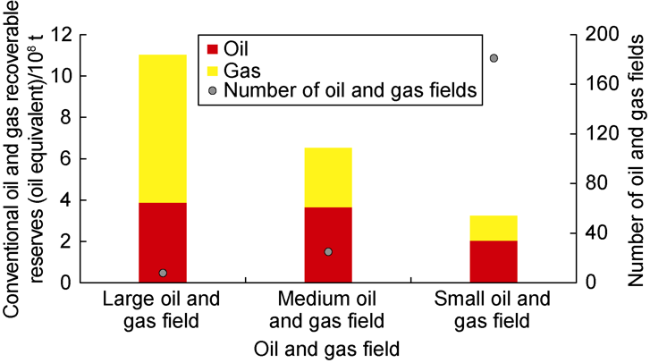


Table 5. Newly discovered deepwater/ultra-deepwater large and medium sized oil and gas fields in 2021 [9] |
| Regions | Country | Basin | Field name | Main reservoir strata | Lithology of main reservoir | Area | Size | Maximum water depth | Recoverable reserves | Proportion in total reserves of deep water to ultra-deepwater in large and medium-sized oil and gas fields/% | ||
|---|---|---|---|---|---|---|---|---|---|---|---|---|
| Oil/ 104 t | Gas/ 108 m3 | Total (oil equivalent)/ 104 t | ||||||||||
| Africa | Côte d'Ivoire | Cote d'Ivoire | Baleine | Upper Cretaceous | Clastic rock | Deepwater | Large | 1 200 | 5 822 | 175 | 7 219 | 6.6 |
| Ghana | Eban | Upper Cretaceous | Clastic rock | Deepwater | Medium- sized | 545 | 1 370 | 29 | 1 598 | 1.5 | ||
| America | Brazil | Santos | Aram | Lower Cretaceous | Carbonate rocks | Ultra- deepwater | Large | 1 905 | 14 932 | 428 | 18 356 | 16.9 |
| Campos | Mairare | Lower Cretaceous | Carbonate rocks | Ultra- deepwater | Large | 2 852 | 2 123 | 1 479 | 13 954 | 12.8 | ||
| Urissane | Lower Cretaceous | Carbonate rocks | Ultra- deepwater | Large | 2 958 | 671 | 811 | 7 162 | 6.6 | |||
| Monai | Lower Cretaceous | Clastic rock | Ultra-deep water | Medium- sized | 2 366 | 562 | 472 | 4 336 | 4.0 | |||
| Guyana | Guyana | Whiptail | Upper Cretaceous | Clastic rock | Ultra-deep water | Large | 1 795 | 8 164 | 278 | 10 390 | 9.5 | |
| Cataback | Upper Cretaceous | Clastic rock | Ultra- deepwater | Large | 1 807 | 7 055 | 315 | 9 575 | 8.8 | |||
| Pinktail | Upper Cretaceous | Clastic rock | Ultra- deepwater | Medium- sized | 1 810 | 2 055 | 81 | 2 703 | 2.5 | |||
| Suriname | Guyana | Keskesi East | Upper Cretaceous | Clastic rock | Deepwater | Medium- sized | 838 | 2 397 | 147 | 3 575 | 3.3 | |
| U.S.A | Deepwater Gulf of Mexico | Leopard | Oligocene | Clastic rock | Ultra- deepwater | Medium- sized | 2 074 | 3 425 | 171 | 4 795 | 4.4 | |
| Blacktip North | Eocene | Clastic rock | Deepwater | Medium- sized | 1 368 | 1 370 | 57 | 1 826 | 1.7 | |||
| Rose | Miocene | Clastic rock | Deepwater | Medium- sized | 1 315 | 1 644 | 20 | 1 804 | 1.7 | |||
| Puma West | Miocene | Clastic rock | Deepwater | Medium- sized | 1 249 | 1 370 | 23 | 1 553 | 1.4 | |||
| Winterfell | Miocene | Clastic rock | Ultra- deepwater | Medium- sized | 1 638 | 1 370 | 17 | 1 507 | 1.4 | |||
| Mexico | Deepwater Gulf of Mexico | Ameyali | Eocene | Clastic rock | Ultra deepwater | Medium- sized | 1 737 | 1 137 | 47 | 1 511 | 1.4 | |
| Xochicalco | Eocene | Clastic rock | Ultra- deepwater | Medium- sized | 1 858 | 1 233 | 17 | 1 370 | 1.3 | |||
| Asia Pacific | China | Qiongdongnan | Baodao 21-1-1 | Oligocene | Clastic rock | Deepwater | Medium- sized | 1 325 | 11 | 228 | 1 837 | 1.7 |
| Middle East | Türkiye | Black Sea | Sakarya North | Pliocene | Clastic rock | Ultra- deepwater | Large | 1 938 | 1 360 | 10 884 | 10.0 | |
| Central Asia- Russia | Azerbaijan | South Caspian Sea | Shafag & Asiman | Pliocene | Clastic rock | Deepwater | Medium- sized | 623 | 411 | 308 | 2 877 | 2.6 |
In 2021, the reserves of large and medium-sized oil and gas fields were mainly natural gas, and the recoverable reserves of natural gas are 1.25×10¹² m3 (Fig. 2 ), accounting for 57% of the total reserves of large- and medium-sized oil and gas field, 52% higher than in 2020. The reserves are mainly found in the Americas, Central Asia and Russia, and the Middle East, with a total of 4989×108 m3, 4555×108 m3, and 1814×108 m3, respectively. Among them, the recoverable reserves of the Im. Ye. Zinicheva gas field of Russia’s Yenisey-Khatanga Basin ranked first in the world, and the recoverable reserves of natural gas amounted to 4054×108 m3. The Sakarya North gas field discovered in Türkiye’s Black Sea area is another significant discovery after the Sakarya gas field in 2020, with recoverable reserves of 1360×108 m3. The Mairare and Urissane oil and gas fields in Campos Basin, Brazil, are the two largest natural gas discoveries in the Americas. Their recoverable reserves of natural gas were 1479×108 m3 and 811×108 m3, respectively.
2.2. Large- and medium-sized oil and gas fields are mainly found in deepwater/ultra-deepwater and Cretaceous reservoirs in passive continental margin basins
Large- and medium-sized oil and gas fields are mainly distributed in the deepwater/ultra-deepwater fields of passive continental margin basins such as Guyana, Campos, Santos, Cote d'Ivoire, and Esprito Santo basins on both sides of the Atlantic Ocean and the Gulf of Mexico. The recoverable reserves amounted to 9.3×10⁸ t oil equivalent, accounting for 85% of the total reserves in deep water and ultra-deep water (Table 5 ). Among them, 12 oil and gas fields have been discovered in the ultra-deepwater area with a water depth of more than 1500 m, accounting for 60% of the total, with recoverable reserves of 8.65×10⁸ t oil equivalent, accounting for 80% of the total reserves in deepwater and ultra-deepwater, showing good exploration prospects.
In recent years, the reserve contribution of large- and medium-sized oil and gas fields mainly came from the Mesozoic Cenozoic reservoir (Table 6 ), of which the Cretaceous oil and gas reserves were the largest. The total Cretaceous reserves discovered in 2021 were 13.34× 10⁸ t oil equivalent, accounting for 76.0% of the total reserves of large- and medium-sized oil and gas fields, 56.8% higher than in 2020. Cretaceous reservoirs are mainly distributed in Santos, Campos and Esprito Santo basins in Brazil, Yenisey-Khatanga basin in Russia, Guyana basin, Venezuela basin and Sureste basin in Mexico, North Slope basin in Alaska, and Cote d'Ivoire basin in West Africa. The recoverable reserves account for 74.7% of the total reserves of large and medium-sized oil and gas fields.
Table 6. Recoverable reserves of large and medium-sized oil and gas fields of various strata in 2020 and 2021 [9-10] |
| Erathem | System | 2020 | 2021 | ||
|---|---|---|---|---|---|
| Recoverable reserves (oil equivalent)/108 t | Percentage/% | Recoverable reserves (oil equivalent)/108 t | Percentage/% | ||
| Cenozoic | Neogene | 3.97 | 24.8 | 2.10 | 12.0 |
| Paleogene | 0.29 | 1.8 | 1.19 | 6.8 | |
| Mesozoic | Cretaceous | 9.08 | 56.8 | 13.34 | 76.0 |
| Jurassic | 2.30 | 14.4 | 0.26 | 1.5 | |
| Triassic | 0.04 | 0.3 | |||
| Paleozoic | Permian | 0.50 | 2.8 | ||
| Cambrian | 0.17 | 1.0 | |||
| Neo-proterozoic | Precambrian | 0.31 | 1.9 | ||
| Total | 15.98 | 100.0 | 17.55 | 100.0 | |
2.3. Breakthroughs have been made constantly in conventional oil and gas exploration in the onshore deep-seated oil and gas-rich basins
In 2021, a total of 17 onshore deep conventional oil and gas fields were discovered, accounting for 7.9% of the total number of newly discovered oil and gas fields; total recoverable reserves amounted to 1.34×10⁸ t oil equivalent, accounting for 6.4% of the total reserves, mainly distributed in Mexico, Saudi Arabia, Columbia, Russia, Pakistan, Ukraine, China, Oman, and other countries. Four Cretaceous oil and gas fields were discovered in Mexico's Sureste and Veracruz basins. The buried depth of the top of the trap is 5270-6990 m, and the total recoverable reserves amounted to 9881×104 t oil equivalent, accounting for 53% of the total reserves of newly discovered onshore oil and gas fields in Mexico. In recent years, Saudi Arabia has attached great importance to oil and gas exploration at Khuff and pre-Khuff strata. The reservoir of Shadoon gas field in the Central Arabian Basin discovered in 2021 contains sandstone of the Lower Permian Unayzah Formation. The recoverable reserves are 2402×104 t oil equivalent, accounting for 99.8% of the recoverable reserves in the Middle East. Independent oil companies of Russia, such as Lukoil, Tekhn Komp, and Yugraneft, have discovered four Jurassic sandstone oil fields and one Permian-Triassic weathered basement reservoirs of the western Siberian Basin, with total recoverable reserves of 311×104 t oil equivalent.
2.4. Discoveries in unconventional oil and gas exploration increased
In 2021, unconventional oil and gas exploration was characterized by the trend of multi-point flowering. In Saudi Arabia, China, Mongolia, Australia, Oman, Argentina, and Russia, 16 unconventional oil and gas fields were found (Fig. 1 and Table 7 ), which doubled compared to 2020. Take Saudi Arabia as an example. In recent years, Saudi Arabia has actively deployed unconventional oil and gas exploration. Due to the relatively low proportion of clean energy, such as natural gas, Saudi Aramco plans to increase its share of gas in its energy structure by 2030 and continue strengthening unconventional gas exploration. Saudi Aramco expanded its exploration scope following the discovery of unconventional oil and gas in the Central Arabian Basin in 2020. In 2021, while finding unconventional oil and gas in the Central Arabian Basin, it discovered unconventional gas fields in the Widyan-Mesopotamia basin for the first time (Table 7 ). The reservoir of the Samna gas field in the Central Arabian Basin is the Upper Ordovician Sarah Formation sandstone. The reservoir thickness is 150 m, the top burial depth is 5500 m, and the daily gas production is 16.4×10⁴ m3. The reservoir of Umm Khansar gas field in the Widyan-Mesopotamia basin is sandstone of Ordovician Qasim Formation, with a top burial depth of 310 m, a daily gas output of 5.65×10⁴ m3, and condensate output of 43.3 t. It has been confirmed that these two wells embraced total recoverable reserves of 87×108 m3, indicating good exploration prospects for Paleozoic tight oil and gas in the Middle East region.
Table 7. Comparison of recoverable reserves of global (excluding North America) newly discovered unconventional oil and gas fields in 2020 and 2021 [9] |
| Year | Regions | Country | Basin | Field name | Main reservoir strata | Unconventional oil and gas type | Recoverable reserves | ||
|---|---|---|---|---|---|---|---|---|---|
| Oil/ 104 t | Gas/ 108 m3 | Total (oil equivalent) | |||||||
| 2020 | Middle East | Saudi Arabia | Central Arabian | Al Reesh | Jurassic | Tight oil | 1 095.9 | 17.7 | 1 237.6 |
| Al Minahhaz | Ordovician | Tight gas Coalbed methane | 27.4 | 118.1 | 972.1 | ||||
| Al Sahbaa | 4.4 | 94.5 | 760.2 | ||||||
| Asia Pacific | Australia | Bowen-Surat | Kumbarilla Central | Jurassic | Shale gas | 0 | 141.1 | 1 129.0 | |
| Georgina | Carpentaria | Precambrian | Coalbed methane | 5.6 | 12.1 | 102.5 | |||
| Mongolia | South Gobi | Nomgon | Permian | Tight gas | 0 | 35.4 | 283.4 | ||
| China | Sichuan | Santai (Si) | Triassic | Shale oil | 0.3 | 7.1 | 57.0 | ||
| Central Asia- Russia | Russia | West Siberian | Solkhem | Cretaceous | Tight oil | 68.5 | 0.4 | 71.4 | |
| 2021 | Middle East | Saudi Arabia | Central Arabian | Samna | Ordovician | Tight gas | 6.8 | 71.3 | 577.6 |
| Widyan- Mesopotamia | Umm Khansar | 54.8 | 15.7 | 180.4 | |||||
| Oman | Rub’ Al Khali | Block 36 | Silurian | 2.7 | 5.7 | 48.4 | |||
| Asia Pacific | China | Sichuan | Taiye (Si) | Jurassic | Shale gas | 68.5 | 71.3 | 639.3 | |
| Linye (Si) 3HF | Silurian | 0.1 | 17.1 | 137.1 | |||||
| Pingan (Si) | Jurassic | Shale oil and gas | 41.1 | 4.9 | 79.9 | ||||
| South Yellow Sea | Qinye (Sh) 1HF | Paleogene | Shale oil | 41.1 | 0.1 | 42.2 | |||
| Bohai Gulf | Boye (Bo) Ping | Shale oil and gas | 123.3 | 25.7 | 328.8 | ||||
| JiangHan | Yizhi-Ye (Hubei) 2HF | Silurian | Shale gas | 0 | 2.9 | 22.8 | |||
| Australia | Bowen-Surat | Kyalla 117 | Precambrian | 54.8 | 14.3 | 168.9 | |||
| Georgina | Rougemont | Permian | Coalbed methane | 0 | 14.3 | 114.2 | |||
| Mongolia | South Gobi | Kingston | 0 | 14.3 | 114.2 | ||||
| Richcairn | 0 | 14.3 | 114.2 | ||||||
| Central Asia- Russia | Russia | West Siberian | Ikusyatinskoye Severnoye | Jurassic- Cretaceous | Shale oil | 13.7 | 0.1 | 14.4 | |
| America | Argentina | Neuquen | Pampa de las Liebres | Shale gas | 0.3 | 0.6 | 4.8 | ||
| Corralera Noreste | 1.0 | 0.3 | 3.3 | ||||||
3. Development trend of exploration business of three types of oil companies
3.1. International oil companies
3.1.1. Constantly adjust the exploration business layout and focus on exploration field with core advantage
International oil companies generally refer to those with strong financial strength, extensive transnational operations, and integrated upstream and downstream operations of oil and gas exploration. Internationalization and integration are the basic characteristics of these companies, and they are also important participants in upstream exploration activities. In recent years, the world oil and gas industry has undergone tremendous. The seven major international oil companies (ExxonMobil, bp, Shell, Total Energies, Chevron, Equinor, and Eni) continue to shrink. The global exploration business layout in the upstream focuses more on the core fields [2, 4, 11] (Table 8 ). According to statistics[12⇓-14], Equinor's exploration focus has decreased from 30 countries in 2017 to 10 in 2021. Its key assets are American unconventional oil and gas and deepwater oil and gas in Mexico bay and Brazil. Shell's exploration investment has declined to 8 major countries and regions (USA, Brazil, Nigeria, Etc.). The company will spend 80% of its exploration fund on deepwater exploration on both sides of the Atlantic Ocean and will not enter new frontier basins after 2025. Total Energies continues to focus on the strategy of greater Africa. In the past five years, the total amount of upstream M & A has reached 275×108 USD, of which 40% was concentrated in Africa. Through many negotiations, it finally acquired Ugandan assets in 2021, establishing its leading regional exploration position. Although the low oil price is affected, Total Energies has reduced exploration expenditure and actively implemented the partner strategy to obtain exploration blocks. It still insists on serving as an operator in the frontier exploration areas in sub-Saharan Africa and Asia. In terms of allocation of exploration expenditure, Total Energies devotes 50% of its expenditure to newly discovered hot spots, 35% to mature basins, and 15% to high potential frontier basins.
Table 8. Core fields and exploration characteristics of oil and gas upstream business of international oil companies [10, 11-14] |
| Company Name | Upstream core field types | Regions/Countries/Basins | Notes |
|---|---|---|---|
| Shell | Deep water, Integrated natural gas | USA, Brazil, Nigeria, East Africa | Exploration investment is focused on 8 core countries and regions, and 80% of exploration expenditure is used for deep water exploration on both sides of the Atlantic |
| ExxonMobil | Deep water, Gas, Tight oil | Guyana, Brazil, Mozambique, Papua New Guinea, Permian Basin | Focusing on deepwater venture exploration |
| bp | Deep water, Gas, Unconventional | Russia, USA Mexico gulf, Angola, Australia, U.K.,Norway, Argentina | Exploration core is focused on rolling exploration in current production areas |
| Chevron | Unconventional, Gas | USA Mexico Gulf, Brazil, Eastern Mediterranean, West Africa, Australia | Focusing on unconventional oil and gas exploration in North America |
| Total energies | Conventional, Gas | The United Arab Emirates, West Africa, Brazil, Norway, USA, Mozambique | Actively implement exploration in Africa |
| Eni | Conventional, Gas | Nigeria, Niger, Angola, Congo and USA Mexico Gulf | Independent exploration, "dual exploration model", focusing on low-risk and high potential areas |
| Equinor | Deep water, Unconventional | USA, Mexico gulf, Brazil, Canada and Angola | The focus of exploration will decrease from 30 countries in 2017 to 10 countries in 2021 |
3.1.2. Actively conduct exploration in deepwater, unconventional oil and gas and pay more attention to gas exploration
From the perspective of asset types, international oil companies actively carry out deep water, gas, unconventional oil and gas exploration. The newly added upstream assets were gradually returned to the local and overseas advantageous areas of oil companies. The core resources of different companies are different, and the types of new storage capacity are differentiated in the process of refocusing. Unlike the conventional onshore and shallow water types of new storage capacity of national oil companies, the growth of storage capacity of most large international oil companies mainly comes from deep-water and unconventional oil and gas fields [7,15 -16]. Taking ExxonMobil as an example, as one of the most active exploration participants in the oil and gas industry, the company has achieved remarkable exploration results in recent years. In 2021, the company continued to focus on deep-water exploration and made three discoveries in oil and gas in Guyana. Since the discovery of liza-1 in 2015, the company has made continuous breakthroughs in Guyana oil and gas discovery. The core block, Stabroek block, has accumulated 18 discovered oil and gas fields, and the recoverable resources exceed 12.6×10⁸ t oil equivalent. The success rate of exploration wells in this area is around 80% [17]. At the same time, in 2021, we continue to intensify the development of conventional oil and gas exploration of the local Permian basin, making it the most critical growth point of local oil and gas production.
The low-carbon trend is the main factor driving the long-term growth of gas. In recent years, gas has become the driving force of energy transformation. Oil companies actively promote organizational structure adjustment [16], attach importance to gas exploration and continue to consolidate upstream gas sources. In 2021, Total Energies increased the exploration and development process of gas projects such as Mozambique sea area block 1 and Russia Arctic 2 and significantly increased the gas reserves and resource scale. Eni has increased the scale of gas storage and production through joint exploration and other channels and has focused on upstream exploration and development projects in Indonesia, Nigeria, Angola, Mozambique, and Egypt.
3.1.3. Pay attention to fine/rolling exploration under the low oil price environment, and increase the risk exploration reserves in the frontier fields
Under the pressure of low oil prices and energy transformation, European international companies with insufficient local resources have constantly adjusted their exploration business development strategies. Taking Eni as an example, the company attaches great importance to independent exploration activities, focusing on low-risk and high-potential areas. Most of the investment is used for fine or rolling exploration close to existing facilities that can quickly develop and obtain cash flow. A small investment is used for risk exploration without drilling but with significant discovery potential[18]. In the 2020-2023 plan, 40% of exploration investment will be used for rolling exploration, 40% for fine exploration, and 20% for frontier risk exploration. In recent years, Eni has made several major discoveries. In the past 10 years, the average annual recoverable reserves of newly discovered oil and gas are 0.38×10⁸ t oil equivalent, and the discovery cost is about 7.1 US dollars/t (1 US dollar/bbl) oil equivalent. At the same time, the company has accelerated the transformation of exploration assets into cash income by using the “dual exploration model”, making exploration the core business for the company’s growth and cash generation, effectively supporting the company’s further exploration activities. Eni has been nominated as the best exploration company in the global oil industry for four consecutive years.
3.2. National oil companies increase the exploration of domestic resources and strengthen transnational cooperation
National oil companies refer to the companies established with government investment and endeavor to implement national strategical goals. They are characterized by representing the country, protecting the interests of the country, and serving the overall interests of the country. In recent years, considering the low-carbon transformation of global energy and energy security, national oil companies have vigorously strengthened domestic resource exploration and development, especially gas exploration, and continuously expanded the proportion of gas production. They also actively promoted the international bidding and exploration of domestic resources, including unconventional resources, taking oil and gas exploration as the core business to drive the transformation of national energy. For example, Brazil's national oil company, the United Arab Emirates national oil company, and China's three major national oil companies continue to increase domestic exploration efforts to ensure energy supply security actively and seek long-term sustainable development. In recent years, the United Arab Emirates national oil company has increased the international bidding of local resources. For example, in 2022, it launched a batch of unconventional block bidding for the first time.
In the past two years, Qatar National Oil Company has continued to cooperate with major international oil companies to enter overseas exploration blocks, adhere to the strategy of the non-operators following, and actively improve the allocation of overseas oil and gas assets. Their main international partners include ExxonMobil, Shell, Eni, and Total Energies. The international assets are distributed in Morocco, Brazil, Oman, Mexico, South Africa, Argentina, and other countries. In April 2017, the company and ExxonMobil obtained the license of 20 blocks in Cyprus; In November 2017, it acquired 52 blocks in Oman with Eni, holding equity of 30%; In December, together with Total Energies, it obtained 25% of the interests of block 11B/12B in South Africa.
3.3. Independent oil companies focus on core areas and give play to regional synergy advantages
Independent oil companies are companies whose operating income mainly comes from oil and gas exploration business development. The oil and gas industry only engages in exploration and development, and its operations do not include marketing and refining. A few independent companies have international business, and more independent companies focus on domestic oil and gas business. Compared with international and national oil companies, changes in the market environment have a more significant impact on the development of independent oil companies. In recent years, the upstream independent oil companies have gradually changed from increasing debt to prudent development by reducing debt, and from scale development to survival development, with more merging and integration to take advantage of synergistic benefits. Independent oil companies represented by North America’s unconventional oil and gas enterprises focused on creating profits, paying dividends, and reducing debts. They were conservative in the upstream exploration business. Before 2019, with the improvement of the international market environment and the steady recovery of oil prices, independent oil companies had achieved rapid development by focusing on advantageous fields and expanding and strengthening core assets. However, the COVID-19 epidemic and the sharp drop in oil prices in 2020 had once again changed the development strategy of independent oil companies, pushing them to shift from pursuing core asset scale development to substantial cost reduction for survival. For example, the exploration activities of ConocoPhillips mainly focused on unconventional oil and gas. It resolutely withdrew from the exploration activities in Austin Cretaceous in central Louisiana in the USA, continued to focus on the major onshore unconventional oil and gas production areas such as Delaware and Eagle Beach, and at the same time made a large-scale acquisition of Shell's unconventional resources in the Permian Basin to expand its regional scale advantage.
4. Global favorable exploration fields in the future
Based on the global discoveries, new data, and new understanding in 2021, here in the following, the favorable exploration fields and resource potential in the world in the future are re-evaluated, and the three future favorable exploration directions, including deep water conventional, onshore deep conventional and unconventional oil and gas fields, are further defined.
4.1. Deepwater conventional oil and gas exploration
With lower degrees of exploration and greater resource potential, offshore will be the essential exploration area in the future, including mainly the passive continental margin and back-arc basins. Eight major basin groups (Table 9 ) are included: (1) The passive continental margin basin groups in the southern part of the South Atlantic Ocean, with the target of Jurassic-Cretaceous structure in Colorado basin, Upper Cretaceous submarine fan, and other plays in Rio Salado basin. The yet-to-find recoverable resources of oil and gas are estimated to be 23.7×10⁸ t oil equivalent. (2) The passive continental margin basin group in the middle part of the South Atlantic mainly targets the deepwater gravity flow on salt and the carbonate rocks under salt in Santos, Campos, and Kwanza basins. The yet-to-find recoverable resources of oil and gas can be 327.6×10⁸ t oil equivalent. (3) The passive continental margin basin group in the northern part of the South Atlantic, including the Cretaceous-Miocene slope fan and basin-floor fan in the basins of Foz do Amazonas, Suriname, Guyana, Etc. The yet-to-find recoverable resources of oil and gas are 26.1×10⁸ t oil equivalent. (4) The passive continental margin basin group in the mid-Atlantic Ocean is targeted at the plays such as USA Mexico Bay, Paleogene-Neogene lithologic assemblage in the Sureste basin, and the plays such as the Cretaceous submarine fan on the east coast basin of Senegal and USA. The yet-to-find recoverable oil and gas resources are 281.3× 10⁸ t oil equivalent. (5) The passive continental margin basin group in the North Atlantic mainly includes the Jurassic-Cretaceous fault block structure and structural-stratigraphic plays in the east coast basin of Greenland. The yet-to-find recoverable resources of oil and gas are 38.3×10⁸ t oil equivalent. (6) The passive continental margin basin group in the East Africa offshore is targeted at various types of as the Cretaceous-Paleogene slope fan/ basin-floor fan in the basins such as Somalia, Zambezi Delta, and Tanzania coast. The yet-to-find recoverable oil and gas resources are 99.5×10⁸ t oil equivalent. (7) The passive continental margin basin group in the Arctic, including the Jurassic Cretaceous fault block structure in the Kara Sea and the Barents Sea basin, has a yet-to-find recoverable resource of 364×108 t oil equivalent. (8) Southeast Asia back-arc basin group, including Paleogene-Miocene structure/reef flat/submarine fan and bedrock buried hill, Etc., has a recoverable resource of 36.8×10⁸ t oil equivalent [2,19⇓ -21].
Table 9. Offshore conventional oil and gas exploration areas and the yet-to-find recoverable resources |
| No. | Area/Basin group | Major basins | Sedimentary basin area/ 104 km2 | Favorable play | Yet-to-find recoverable resources | ||
|---|---|---|---|---|---|---|---|
| Oil/ 108 t | Gas/ 1012 m3 | Total (oil equivalent)/ 108 t | |||||
| 1 | South section of the South Atlantic Passive continental margin basin group | Colorado | 21.5 | Jurassic-Cretaceous structure | 10.5 | 0.1 | 11.1 |
| Rio Salado etc. | 15.4 | Upper Cretaceous submarine fan | 12.6 | 0 | 12.6 | ||
| 2 | Middle section of the South Atlantic Passive continental margin basin group | Santos, Campos, Kwanza | 61.9 | Post-salt deep water gravity flow, pre-salt carbonate rock | 264.7 | 7.4 | 327.6 |
| 3 | North section of the South Atlantic Passive continental margin basin group | Foz do Amazonas, Suriname, Guyana etc. | 76.3 | Cretaceous-Miocene slope fan, basin-floor fan | 23.2 | 0.3 | 26.1 |
| 4 | Mid Atlantic Passive continental margin basin group | USA Mexico Bay, Sureste | 80.3 | Paleogene-Neogene lithologic traps and other reservoir forming associations | 100.2 | 11.1 | 195.3 |
| Senegal, USA east coast | 89.0 | Cretaceous submarine fan, etc. | 26.3 | 7.0 | 86.0 | ||
| 5 | North Atlantic Passive continental margin basin group | East coast of Greenland | 82.4 | Jurassic-Cretaceous fault block structure and structural stratigraphic traps | 18.6 | 2.3 | 38.3 |
| 6 | East Africa offshore Passive continental margin basin group | Somalia, Zambezi Delta, Tanzania Coastal, etc. | 189.7 | Cretaceous-Paleogene slope fan/ Basin-floor fan and other types | 17.2 | 9.6 | 99.5 |
| 7 | Arctic passive continental margin basin group | Kara Sea and Barents Sea | 151.0 | Jurassic-Cretaceous fault block structure | 114.0 | 29.3 | 364.0 |
| 8 | Southeast Asia back-arc basin group | Sumatra, etc. | 55.5 | Paleogene-Miocene structure/reef flat/Submarine fan and bedrock buried hill, etc. | 12.0 | 2.9 | 36.8 |
4.2. Deep formation conventional oil and gas exploration
Due to the relatively high degree of conventional oil and gas exploration in onshore basins, the future favorable exploration fields are mainly located in the deep formations of cratons, rifts, and foreland basins, including mainly 6 basins (Table 10 ): (1) Arabian/Zagros foreland basin, of which Arabian basin mainly includes the Paleozoic deep structural reservoir forming assemblage and Jurassic-Cretaceous stratigraphic lithologic traps. It is predicted that the yet-to-find recoverable resources are 415.4×10⁸ t oil equivalent. In the Zagros Basin, the main target is the deep structural traps below Jurassic in the thrust structural belt, and the yet-to-find recoverable resources are 236.7×10⁸ t oil equivalent. (2) The West Siberian rift basin aims at many large-scale structural traps in the Cretaceous of the South Kara Sea in the North and deep structural and stratigraphic traps in the Jurassic in the south-central part of the basin. It is predicted that the yet-to-find recoverable resources are 261.1×10⁸ t oil equivalent. (3) Amu Darya foreland basin, the target is the reef flat of pre-salt Upper Jurassic and the deep stratigraphic trap of middle and lower Jurassic. It is predicted that the yet-to-find recoverable resources are 151.9×10⁸ t oil equivalent, mainly gas. (4) In the eastern Siberian craton basin, the target is the carbonate rocks of the rift system and the Vendian clastic rocks. It is predicted that the yet-to- find recoverable resources are 113.7×10⁸ t oil equivalent. (5) Precaspian foreland basin, the target mainly includes subsalt Permian clastic rock, Devonian-Carboniferous deep play, Etc. It is predicted that the yet-to-find recoverable resources are 48.4×10⁸ t oil equivalent. (6) In the Ghadames foreland basin of North Africa, the targets mainly include Paleozoic low amplitude anticline structural traps and stratigraphic lithologic composite traps. The yet-to-find recoverable resources are predicted to be 12.2×10⁸ t oil equivalent [2,19⇓ -21].
Table 10. Onshore conventional oil and gas exploration areas and the yet-to-find recoverable resources (including deep formations) |
| No. | Area/Basin group | Sedimentary basin area/ 104 km2 | Favorable plays | Yet-to-find recoverable resources | ||
|---|---|---|---|---|---|---|
| Oil/108 t | Gas/1012 m3 | Total (oil equivalent)/108 t | ||||
| 1 | Arab foreland basin | 233.7 | Paleozoic deep structural plays and Jurassic-Cretacous lithologic trap | 234.6 | 21.2 | 415.4 |
| Zagros foreland basin | 47.6 | Deep structural traps below Jurassic in thrust structural belt | 97.1 | 16.3 | 236.7 | |
| 2 | West Siberia rift basin | 231.7 | Numerous large-scale structural traps and Jurassic deep structural and stratigraphic traps in the south central part of the basin | 111.1 | 17.6 | 261.1 |
| 3 | Amu Darya foreland basin | 43.7 | Reef flat of pre-salt Upper Jurassic and deep stratigraphic traps of middle and lower Jurassic | 4.9 | 17.2 | 151.9 |
| 4 | Eastern Siberia cratonic basin | 333.4 | Carbonate rock of rift system and clastic rock of Wende system | 18.2 | 11.2 | 113.7 |
| 5 | Precaspian foreland basin | 54.2 | Permian pre-salt clastic rock, Devonian- Carboniferous deep formation | 28.5 | 2.3 | 48.4 |
| 6 | Ghadames foreland basin | 36.8 | Paleozoic low amplitude anticline structural traps and stratigraphic-lithologic traps | 10.7 | 0.2 | 12.2 |
4.3. Favorable exploration of unconventional oil and gas
In recent years, unconventional oil and gas have shown a differentiated development trend due to technology and production cost. Among them, the exploration and development of tight oil and gas and shale oil and gas have made rapid progress and will remain an important exploration focus in the future. The favorable exploration fields for shale oil (including tight oil) in the future are mainly distributed in seven basins (groups) (Table 11 ): (1) North American foreland basin group, in which Devonian-Carboniferous plays dominate Permian, Appalachian and Williston basins, while Cretaceous plays dominate Gulf, Denver and Powder River basins. The technically recoverable resources of shale oil are 313×108 t. (2) The Andean foreland basin group mainly includes Llanos-Barinas, Putumayo, Maranon, and Neuquen basins. The favorable play is Jurassic-Cretaceous, and the technically recoverable resources of shale oil are 89×108 t. (3) The North African foreland basin group mainly includes the atlas fold belt, Triassic-Ghadames basin, and other basins. The favorable play is Silurian and Devonian. The technically recoverable resources of shale oil are 43×108 t. (4) The rift basin group in Central West Africa mainly includes the Bongor Basin, South Chad Basin, Muglad Basin, Melut Basin, and other basins. The favorable play is Cretaceous lacustrine shale oil, and the technically recoverable resources of shale oil are 20×108 t. (5) Russia foreland/rift basin group and West Siberia Basin are favorable plays of Upper Jurassic Bazhenov Formation. In contrast, Timan-Pechora and Volga-Urals basins are Devonian Domanik Formation. The technically recoverable resources of shale oil are 130×108 t. (6) The Arabian/Zagros foreland basin is mainly the Zagros basin and Arabian basin. The favorable play is Jurassic and Cretaceous marine shale oil. The technically recoverable resources of shale oil are 52×108 t. (7) Southeast Asia back-arc basin group mainly includes North Sumatra, middle Sumatra, and South Sumatra basins. The favorable play is Cenozoic lacustrine shale oil, and the technically recoverable resources of shale oil are 13×108 t [21⇓⇓-24].
Table 11. Technically recoverable resources for key shale oil (including tight oil) area |
| No. | Area/basin group | Major sedimentary basins | Sedimentary basin area/ 104 km2 | Favorable plays | Shale oil/tight oil technically recoverable resources/108 t |
|---|---|---|---|---|---|
| 1 | North American foreland basin group | Permian, Appalachia, Williston, etc. | 109.9 | Devonian-Carboniferous System | 206 |
| Gulf Coast, Denver, Powder River, etc. | 25.5 | Cretaceous | 107 | ||
| 2 | Andean foreland basin group | Llanos-Barinas, Putumayo, Maranon, Neuquen, etc. | 50.4 | Jurassic-Cretaceous | 89 |
| 3 | North African craton basin group | Atlas fold belt, Triassic Ghadames, etc. | 65.1 | Silurian, Devonian System | 43 |
| 4 | Middle West Africa rift basin group | Bongor, South Chad, Muglad, Melut, etc. | 65.3 | Cretaceous lacustrine shale oil | 20 |
| 5 | Russia foreland/ rift basin group | West Siberia | 231.7 | Upper Jurassic Barenov Formation | 93 |
| Timan-Pechora, Volga-Urals | 115.0 | Devonian Domanik Formation | 37 | ||
| 6 | Arabian/Zagros foreland basin | Zagros, Arabia | 281.3 | Jurassic, Cretaceous marine shale oil | 52 |
| 7 | Southeast Asia back-arc basin group | North Sumatra, Central Sumatra, South Sumatra | Cenozoic lacustrine shale oil | 13 |
The key exploration fields of tight gas and shale gas in the future are mainly distributed in seven basins (groups) (Table 12 ): (1) North American foreland basin groups, in which the favorable plays for Permian, Appalachian, and Williston basins are Devonian-Carboniferous. Cretaceous dominate Gulf Basin and Powder River Basin, and the technically recoverable shale gas resources are 79×1012 m3. (2) The craton basin group in Central South America mainly includes Amazon, Chaco-Parana, and other basins. The favorable plays are Devonian-Carboniferous. The technically recoverable resources of shale gas are 19×1012 m3. (3) The Andean foreland basin group mainly includes Neuquen, Magllanes, and other basins. Jurassic-Cretaceous is favorable play, and the technically recoverable shale gas resources are 21× 1012 m3. (4) The North African foreland basin group mainly includes the atlas fold belt, Triassic Ghadames, and other basins. The favorable plays are Silurian and Devonian. The technically recoverable resources of shale gas are 26×1012 m3. (5) Russia foreland/rift basin group and the favorable play in West Siberia Basin is upper Jurassic Bazhenov Formation; Timan-Pechora and Volga-Urals basins belong to Devonian Domanik Formation, and the technically recoverable resources of shale gas are 14×1012 m3. (6) The Arabian/Zagros foreland basin mainly includes Zagros and Arabian basins. The favorable plays are Jurassic, Cretaceous, and Silurian. The technically recoverable resources of shale gas are 16×1012 m3. (7) Australia’s central craton basin group mainly includes Canning, MacArthur, and Eromanga basins. The favorable play is the Devonian-Carboniferous system. The technically recoverable shale gas resources are 12×1012 m3 [21-24].
Table 12. Statistics of key fields and technically recoverable resources of shale gas and tight gas |
| No. | Area/basin group | Major sedimentary basins | Area of sedimentary basins/104 km2 | Favorable play | Technically recoverable resources of shale gas/ tight gas/1012 m3 |
|---|---|---|---|---|---|
| 1 | North American foreland basin group | Permian, Appalachia, Williston, etc. | 109.9 | Devonian- Carboniferous System | 48 |
| Gulf Coast, Denver, Powder River, etc. | 25.5 | Cretaceous | 31 | ||
| 2 | Craton basin group in Central South America | Chakao, Cuyo, Amazon, etc. | 126.6 | Devonian- Carboniferous System | 19 |
| 3 | Andean foreland basin group | Neuquen, Magllanes, etc. | 33.2 | Jurassic-Cretaceous | 21 |
| 4 | North African craton basin group | Atlas fold belt, Triassic Ghadames, etc. | 65.1 | Silurian, Devonian System | 26 |
| 5 | Russia foreland/rift basin group | West Siberia | 231.7 | Upper Jurassic Barenov Formation | 8 |
| Timan-Pechora, Volga-Urals | 115 | Devonian Domanik Formation | 6 | ||
| 6 | Arab/Zagros foreland basin group | Zagros, Arabian etc. | 281.3 | Jurassic, Cretaceous | 16 |
| 7 | Central Australia craton basin group | Canning, MacArthur, Eromanga, etc. | 195.4 | Devonian- Carboniferous System | 12 |
5. Suggestions on overseas oil and gas exploration development
As the oil prices began to rise, the post-pandemic era gradually returned to normal, and the geopolitical conflict intensified in 2022. The world oil and gas exploration situation will be estimated to retake the downturn. Based on the global oil and gas exploration situation in 2021 and the analysis of favorable exploration fields in the future, four suggestions are provided here for the business development in transnational oil and gas exploration for Chinese oil companies.
5.1. Enter deepwater frontier basin in advance through bidding and operating in "dual exploration model" after the successful discovery
In 2021, large and medium-sized oil and gas discoveries in the global deepwater and ultra-deepwater fields continued to dominate global oil and gas discovery, further revealing the good exploration prospects in the frontier field of deepwater on the passive continental margin. Therefore, it is inevitable for international oil companies to continuously expand gas exploration in the deepwater area[25]. Based on the fact that the foreign cooperation of frontier basins in resource countries mainly adopts the way of bidding, the cooperation opportunities that can be obtained through active bidding in recent years will include the following: (1) The sixth round of bidding for exploration blocks in East Africa Mozambique offshore includes two favorable oil and gas bearing basins, the Angoche and Zambezi deltas. The former mainly develops two sets of favorable reservoirs forming Upper Cretaceous and Paleogene submarine fan assemblages. The latter develops a reservoir forming an assemblage of Cretaceous delta sandstone. (2) The first round of sea area block bidding of East Africa in Somalia mainly includes the coastal basin of Somalia, which consists of three sets of favorable reservoirs forming combinations of Jurassic reef flat and Cretaceous/Paleogene slope fan. (3) The second round of offshore block bidding in Argentina focuses on the deep water Upper Cretaceous submarine fan in the coastal basin of Argentina. (4) The first round of bidding blocks in the Greenland Sea area focuses on Jurassic structural traps in the eastern coastal basin.
After entering the discovery stage, the Eni "dual exploration model" operation and management method is suggested. Since 2006, Eni has obtained 74 deepwater blocks in the Circum African region mainly through bidding. The obtained area is 38×104 km. Since 2011, Eni has successively obtained five large gas fields. Before the first gas production, only the two major discoveries of Zohr and Mamba have helped Eni earn more than US $100×108 through equity transfer. In this way, not only can the cost be recovered quickly, but the exploration project can also achieve good economic benefits before development and construction.
5.2. Enter the undeveloped blocks in the emerging hot basin through equity participation and other ways to rapidly increase reserves and production
Since 2015, large oil and gas fields have been discovered while exploring the upper Cretaceous deepwater fan in Guyana basin, the Cretaceous under the salt reef flat in Santos basin, and the Jurassic Cretaceous structure in the South Kara Sea in the West Siberian Basin. These discoveries further confirm that once a breakthrough is made in exploring a frontier basin, it will generally become a hot spot of exploration and lead to the growth of reserves in the next 5-10 years or even more extended periods [7]. Considering this feature, international/independent oil companies usually quickly seize exploration blocks with similar geological backgrounds or the same play. At present, it is suggested to actively enter the hot basins such as the pre-salt reef flat of Santos-Campos Basin in Brazil offshore, the Neogene submarine fan of deep water in Mexico bay, the Jurassic-Cretaceous structural trap in the South Kara Sea in West Siberia, the deepwater submarine fan in the coastal basin of Southwest Africa and the Miocene submarine fan in the Black Sea basin.
As the same play in the same basin has been confirmed, the geological risk of the surrounding undrilled blocks is low, with considerable potential but a higher entry cost. If the government opens the surrounding blocks through bidding, the bidding companies will generally win with a high-profit oil sharing ratio for the government and a high signing fee. For example, from 2006 to 2012, after continuous breakthroughs in the subsalt core area of Brazil's Santos–Campos Basin led by Brazil's national oil company, the government started external bidding in 2013. The winning block’s government profit oil sharing ratio is between 65% and 75%, and the signing fee is up to US $13×108. If the oil company introduces partners before drilling, the entrants often have to pay a relatively high price to enter under conditional payment. Take the 58 blocks in Suriname of the Guyana basin that Total Energies entered in 2019 as an example. In 2015, Apache invited bids to enter the 58 blocks in Suriname, Guyana basin. From 2015 to 2019, great discoveries continued to be made in Guyana. Total Energies paid the exploration cost proportion after entering with 50% of the operator's equity, plus conditional payment. After the commercial success, it paid the US $1×10⁸ in cash and 75% of the development investment.
5.3. Cooperate with national petroleum companies of resource countries in the form of joint research and actively participate in the fine exploration of deep gas in onshore oil and gas rich basins
In 2021, new oil and gas, especially gas, were discovered continuously in the deep-layer fine exploration in the onshore Arabian, western Siberian, Sureste, and other basins. These discoveries further confirm that the deep-layer oil and gas, especially gas, in the onshore oil and gas- rich basins still has great potential for fine exploration [9-10]. After more than 60 years of exploration and practice in domestic on-shore basins, a relatively mature theoretical and technical system of fine exploration has been formed in the eastern rift basin, the central and Western Craton, and the foreland basin. By actively giving play to the technical advantages, and combined with advanced joint research, CNPC can transform the technical advantages into the development advantages in overseas exploration and improve the overseas exploration benefits through more cooperation in onshore deep-seated oil and gas exploration with oil companies of resource countries. The onshore deep oil and gas fields are mainly distributed in the foreland thrust belt, the mid-lower combination of the craton basin, and the deep formation of the rift basin. The strata are mainly Paleozoic and Mesozoic Cenozoic. The areas worthy of special attention include Paleozoic carbonate rocks and Jurassic clastic rocks in the four oil and gas rich basins of Volga-Urals, Timan-Pechora, West Siberia and East Siberia, Middle East Arabian-Zagros foreland basin, Paleozoic in Northwest African foreland basin, Mesozoic in the slope belt of Andean back-arc foreland basin group, Etc.
5.4. Focus on unconventional oil and gas cooperation opportunities in Saudi Arabia, Russia, and other countries, and take advantage of domestic mature theory and technology to enter the play
Although carbon neutralization promotes the acceleration of energy transformation, it is predicted by many domestic and foreign institutions that, even under the most radical scenarios, oil and gas will still account for more than 20% of the world's primary energy consumption in 2050. The oil and gas industry will not quickly withdraw from the historical stage. Unconventional oil and gas resources are still an adequate replacement for conventional oil and gas resources [21,26]. With the improvement of unconventional oil and gas theory and the progress of production technology, the global industrial production of unconventional oil and gas enjoys a firm foundation. The theory of fine-grained sedimentology and continuous oil and gas accumulation with organic shale as the core has been formed, and advanced technologies such as geophysical "sweet spot" prediction, horizontal well volume fracturing, micro-seismic monitoring, and bench top "factory" mining have been developed. The continuous development and improvement of unconventional oil and gas theory and technology have made the exploration and development of tight oil and gas in China increasingly mature daily[27⇓⇓-30]. Compared with the utilization of conventional oil and gas resources, the utilization of unconventional oil and gas resources in many parts of the world has just begun. Chinese oil companies can make use of the mature and supporting tight oil and gas technologies as the point of breakthrough and select necessary fields with special geological conditions such as Jurassic in western Siberian rift basin in Russia, Silurian in Triassic-Ghadames foreland basin in North Africa, and Jurassic/Cretaceous/Silurian in Middle East Arab foreland basin to obtain relatively high-quality resources based on cooperation with the national oil companies of resource countries. By steadily promoting the transnational exploration and development of unconventional oil and gas and by taking domestic drilling and fracturing engineering technologies to the international market, oil companies of China can thus give full play to the integrated advantages.
6. Conclusions
Under the continuous impact of the COVID-19 pandemic and the low oil price in 2020, both the investment in oil and gas exploration in the world and the workload of completed exploration wells and evaluation wells decreased slightly compared with the previous year. However, the success rate of wildcats, especially deepwater wildcats, increased significantly.
The newly discovered oil and gas reserves have increased slightly compared to the previous year. The deepwater field is still the main battlefield for discovering conventional large and medium-sized oil and gas fields, and the deep conventional oil and gas exploration in onshore oil and gas-rich basins continues to prosper. There are many highlights in unconventional oil and gas exploration in Saudi Arabia, Russia, and China.
National oil companies and international and independent oil companies continue to adjust the layout of domestic and overseas exploration business. While increasing the exploration and development of local resources, the state oil companies also strengthened the cooperation with oil companies of source countries in overseas exploration projects. Under the low oil price environment, the international companies made use of their asset properties and technical advantages to continue to focus on the core fields, paying much attention to the exploration in the deepwater frontier field, the fine exploration in the deep formation of the onshore oil and gas-rich basin, and the unconventional oil and gas exploration of tight oil and gas/shale oil and gas.
This research further defines the three favorable future exploration directions; deepwater, deep-layer, and unconventional oil and gas exploration. The favorable exploration direction of deepwater conventional oil and gas lies in the eight basin groups on both sides of the Atlantic Ocean, including the sea area of East Africa, the Circum- Arctic, and Southeast Asia offshore. The favorable exploration directions of the onshore deep-layer formation refer to the six major basins, such as Arabia/Zagros, West Siberia, and the Amu Darya. The exploration direction of shale oil and gas (including tight oil and gas) includes nine basin groups; the North American foreland basin, Andean foreland basin, and North African foreland basin.
Four suggestions are put forward for the business development of transnational oil and gas exploration for Chinese oil companies: (1) Enter the global deepwater frontier basin in advance and at low cost through bidding, and adopt the "dual exploration model" management strategy after oil and gas discovery; (2) Through various ways including equity participation, oil companies in China can enter the new blocks in the emerging hot basins in the world and rapidly realize growth in recoverable reserves and production; (3) Cooperate with national oil companies of resource countries in the form of joint research, and actively enter the deep-layer of onshore oil and gas-rich basins; (4) Focus on the unconventional oil and gas cooperation opportunities in Saudi Arabia, Russia, and other countries, and take advantage of domestic mature theory and technology to enter.