

Introduction
Over the past 15 years, with the advancement of technology, some highly explored basins around the world have been redeveloped and reached their new production apexes [1], which significantly changes the pessimism on oil and gas [2] and prompts the geologists to reanalyze these petroliferous basins. The initiative of "Super Basin" was proposed by IHS Markit in 2016 [3], followed by a series of conferences and special publications by American Association of Petroleum Geologists (AAPG) [4]. Super Basins around the world were studied to establish strategies and models that other mature basins may use as a reference for maximizing the development potential of hydrocarbon resources [5].
The Sichuan Basin was the first region in China to produce and utilize natural gas. After more than eight decades of exploration and development, it has become an important natural gas industrial base in China [6]. Studies have concluded that the Sichuan Basin can be categorized as a Super Basin based on its resource size (including cumulative production and remaining recoverable reserves) and by comparing it to other typical Super Basins [7-8]. Dai et al. [9] believed that the Sichuan Basin is a "super gas basin" with advantages in four aspects: multiple sets of source rocks, abundant resources, large-scale gas accumulation, and gigantic total production. Wang et al. [10] further discussed the essential characteristics of the Sichuan Basin as a Super Basin, in terms of the resource base, existing advanced technology, and surface infrastructure. To make a scientific and sustainable exploration and deployment plan and maximize the development potential of oil and gas resource in the Sichuan Basin, with the guidance of "Super Basin Thinking" proposed by Sternbach [1], we analyze the petroleum systems and oil-gas remaining resources distribution in the Sichuan Basin, aiming to provide references for the exploration and development of similar basins.
1. Super Basin Thinking
Super Basins are characterized by (1) at least 6.85×10⁸ t (5 billion BOE) of oil equivalent of cumulative production and 6.85×10⁸ t (5 billion BOE) of remaining recoverable resources; (2) two or more sets of source rocks and hydrocarbon systems; (3) several sets of stacked reservoirs; (4) well-equipped infrastructures and established service systems; and (5) good market prospects [1⇓⇓⇓-5].
The "Super Basin" concept emerges as a guidance to the global oil and gas industry in exploration and development, which focuses on frontier and new fields while returning to the developed basins and known resource zones with low exploitation risks [11]. With the "Super Basin Thinking", petroleum geologists are encouraged to re-consider their conventional exploration vision and re-analyze the resource composition of petroliferous basins (or sags). By studying the Super Basins around the world, more cost-effective and efficient development models might be proposed and applied to other basins in order to maximize the resource recovery [12-13]. Sternbach [1] also provided a "Super Basin Thinking tool kit", pointing out that re-analyzing the pattern of hydrocarbon accumulation, technological innovation, business mode transformation, and multidisciplinary cooperation are the essentials for rejuvenating a Super Basin.
The Super Basin Thinking is summarized into three aspects in this study:
(1) A geological thinking to systematically and coherently portray the petroleum systems and resource distribution within the basin. Primarily, the regularity of hydrocarbon accumulation within the basin is analyzed to evaluate the potential of resources and identify favorable areas. Beyond the traditional idea of analyzing each segment separately from the source rock to the trap, a whole-process (from hydrocarbon generation through migration to accumulation) analysis is conducted to clarify the distribution of various resources [14]. Studies have shown that in addition to the conventional reservoirs, the organic-rich shale, coal strata, and carrier beds can also be pay zones[15]. Thus, a new stereoscopic model is proposed, emphasizing continuous (including near-source and inner-source) hydrocarbon accumulation and stacked coexistence of multiple hydrocarbon phases [16-17]. Instead of only considering the traps as the targets and searching for giant petroleum fields as the goal, the new model establishes the concept of exploration in hydrocarbon- rich areas, emphasizing the source rock as the core and the orderly coexistence of conventional and unconventional resources. Consequently, the favorable zone is evaluated by the stereoscopic abundance of resources. In particular, the advancement of unconventional oil and gas technologies has changed the traditional knowledge of reservoir boundaries, and revealed that the rock types such as tight sandstone, tight carbonate, shale, metamorphic rock, and granite can serve as reservoirs. The concept of stereoscopic exploration and development in shallow-medium-deep multi-layers can help achieve the maximum economic recovery of both conventional and unconventional resources.
(2) A technical thinking to promote proven technologies and develop new technologies. Super Basins provide superior advantages for developing new technologies with essential conditions needed for innovation and application [1,14]. Meanwhile, a more-refined exploration and economic production in these basins are often restricted by technical bottlenecks, which leads to the demand for technical innovation. Therefore, in the exploration and deployment of Super Basins, proven technologies should be actively promoted and new technologies should be specifically developed to transform the hard-to-recover resources into recoverable ones. For instance, big data and artificial intelligence should be integrated to reduce exploration and development costs.
(3) A strategic thinking to achieve benefit maximization. Traditionally, international oil companies (IOCs) usually devoted a portfolio investment in developing a single type of resource in several basins or regions in pursuit of short-term benefits [18]. The Super Basin Thinking regards the basin as an "economic ecosystem" that integrally consider the resources, technologies, infrastructures, marketing, and environmental risks within the basin. As the result, a specific "Super Basin company" could be established, which may stimulate innovation of exploration and development mode (e.g. stereoscopic exploration and development) and pursue long-term benefits. Furthermore, because mature-developed petroliferous basins have accumulated large amounts of information, technical advantages, and substantial markets, the access policy can be more open, and the related contract terms, environmental requirements, and operator cooperation mechanisms can be established under the government's supervision. The operation mode of mixed ownership can be considered to attract more private capital, and more regulatory support can be given to exploration and development enterprises [1,5]. Through the introduction of data sharing and market competition mechanism, it is expected to accelerate technical progress and activate reserves and surface infrastructures within the basins, thus finally achieving the win-win cooperation.
2. Evolution and petroleum systems of Sichuan Super Basin
One of the essential components of a Super Basin is the multiple stacked sets of source rocks and reservoirs[1]. The Sichuan Basin has suitable geological conditions and resource base that meet the definition of a Super Basin [9-10]. Several petroleum systems are found within the Sichuan Basin, and each system has its unique hydrocarbon accumulation patterns due to the control of tectonic evolution. Only by clarifying the regularity of resource accumulation, can the hydrocarbon potential of the Sichuan Super Basin be fully exploited.
The Sichuan Basin, a tectonically superimposed basin on the base of Yangtze Craton, has undergone three evolutionary stages: the Nanhua rift basin stage [19], the Sinian-Middle Triassic marine cratonic basin stage, and the Late Triassic-Cretaceous foreland basin stage. Multiple sets of source rocks and reservoir rocks were developed through the evolutionary history of the basin. Vertically, multiple petroleum systems are distributed. Horizontally, hydrocarbon accumulations spread throughout the basin. Various types of hydrocarbons are endowed in the basin, and conventional and unconventional resources are orderly distributed (Fig. 1 ). Conventional gas is primarily found in the deep to ultra-deep marine carbonate formations. Tight sand gas is mainly distributed in the Upper Triassic-Jurassic reservoirs with medium to shallow depth. Shale gas is contained in the Lower Silurian Longmaxi Formation and Lower Cambrian Qiongzhusi Formation, as well as the Sinian Doushantuo Formation, Upper Permian Wujiaping Formation and Lower Jurassic Da'anzhai Formation. Lacustrine tight sand oil and shale oil are found in the Middle-Lower Jurassic in the central-north of Sichuan Basin (Fig. 1 ).
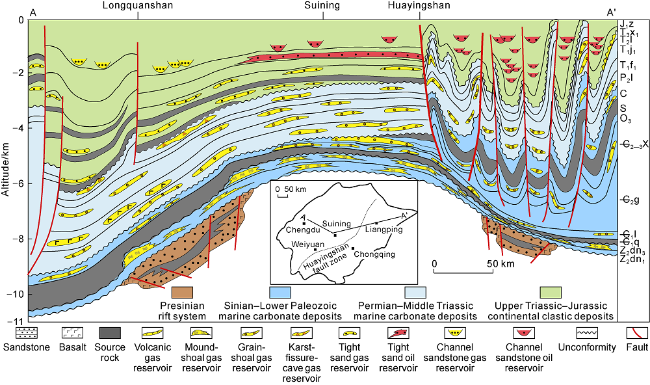
Fig. 1. Vertical distribution of oil and gas reservoirs in the Sichuan Basin. J1z—Zhenzhuchong Formation; T3x1—the first member of Xujiahe Formaiton; T2l—Leikoupu Formation; T1j1—the first member of Jialingjiang Formation; T1f1—the first member of Feixianguan Formation; P2l—Longtan Formation; C—Carboniferous; S—Silurian; O3—Upper Ordovician; —C2-3X—Xixiangchi Formation; —C2g—Gaotai Formation;—C1l—Longwangmiao Formation; —C1q—Qiongzhusi Formation; Z2dn3—the third member of Dengying Formation; Z2dn1—the first member of Dengying Formation. |
2.1. The Nanhua rift basin stage and potential interglacial gas systems
After the unified basement was formed during the Jinning Movement, the Yangtze Craton was influenced by the break-up of the Rodinia Supercontinent, which led to a N-E horst-graben basin structure [20-21]. In the periphery of the Sichuan Basin, the Chuanxi-Dianzhong rift, the Qiandong-Xiangxi rift, the Xupu-Sanjiang rift, and the Hunan-Guangxi rift were developed [20]. Based on the interpretation of geophysical data, a N-E-oriented intra-continental rift may exist in the interior of the Sichuan Basin (Fig. 2 ), and two groups of faults (N-E and N-W) were developed, which may be connected to the northern continental margin of the Yangtze craton [21]. The formation of such intra-continental rift in the Sichuan Basin is related to the pull-apart of the Proto- Tethys Ocean, and it is an extension of the continental margin basin to the interior of the Yangtze Craton.
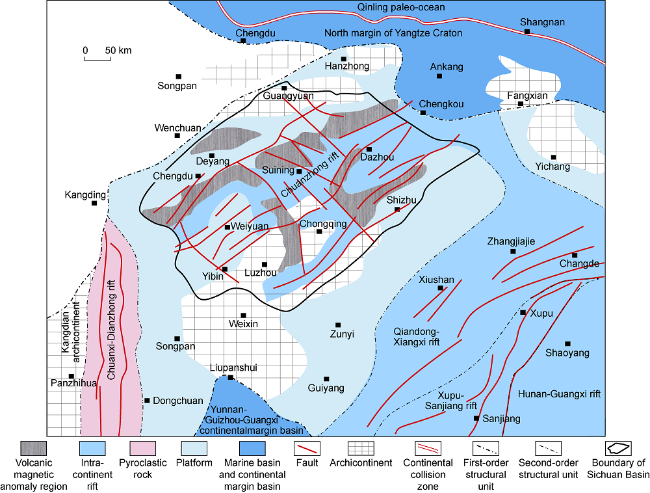
Fig. 2. Map of the proto-model of Sichuan Basin and adjacent areas in Nanhua Period. |
The Chuanxi-Dianzhong rift is characterized by the filling of thousands of meters thick continental clastic rocks and volcanic rocks, but contains no source rocks. The Nanhua rift system to the east of the Yangtze Craton presents as a horst-graben structure vertically, within which the thickness of glacial-interglacial deposits are up to 1000 m. Therein, the Gucheng Formation and Nantuo Formation are glacial deposits with widely distributed thick moraine conglomerates. The Datangpo Formation containing interglacial deposits appears as the first set of high-quality source rocks in the Yangtze Craton, consisting of 0-100 m thick carbonaceous shale interlaced with manganese- or iron-bearing strata. The analysis of 25 samples from the Songtao and Xiushan outcrop sections reveals the total organic carbon (TOC) of 0.25%-3.76% (avg. 2.23%) and the equivalent vitrine reflectance (Ro) of 2.9%-3.1%. The moraine conglomerates in the Nantuo Formation exhibit moderate reservoir properties, with the porosity of 2.0%-5.5% (avg. 3.5%), which is mainly contributed by feldspar dissolution pores, quartz dissolution pores, and fractures. Studies show that the Datangpo Formation source rocks and the Nantuo Formation reservoir rocks constitute an ideal source-reservoir assemblage, which provides a resource base for the potential hydrocarbon system of the Nanhua interglacial stage[19,22].
Such a hydrocarbon system of Nanhua Period has not been confirmed by drilling in the Sichuan Basin. However, according to the global analogy and the rock property in outcrop areas, it should be considered as a backup for exploration. Snowball events occurred globally in the Neoproterozoic [23]. The warm climate in the interglacial period led to the rise of sea level and the development of microbiolites. The black shale rich in algal organic matter in this period is a high-quality source rock globally, which charges the interglacial petroleum system with microbial carbonate reservoirs. Such petroleum system is widely distributed in the northern margin of the Gondwana. As mentioned, the Nanhua Period Chuanzhong Rift in the interior of the Sichuan Basin is connected northward with the Proto-Tethyan Ocean [24]. The Datangpo Formation at the outcrop of Heyu in the Chuanzhong Rift contains shale rich in organic carbon with horizontal beddings. It is speculated that the distribution of such potential source rock can extend to the central Sichuan Basin and provide hydrocarbon source for ultra-deep gas accumulation.
2.2. Structural differentiation during the marine cratonic stage and composite gas system
In the Sinian-Middle Triassic, the Sichuan Basin evolved as a marine cratonic basin. Multiple sets of source rocks and gas-bearing reservoirs were developed, which are the main focuses of gas exploration and production in recent years. Plenty of studies have been conducted on hydrocarbon accumulations in this evolutionary stage. Here, gas accumulation and enrichment patterns are analyzed from the perspective of structural differentiation and composite gas system, and future exploration directions are also discussed.
The previous studies suggest that, in the Sinian-Middle Triassic, under the effects of regional tectonic stress, the heterogeneity of basement, and the re-activation of pre-existing structures, the Yangtze Craton with the Sichuan Basin as the main body experienced differential structural deformation [25], giving rise to intracratonic rifts under extensional regimes, three types of paleo-uplifts under compressional regimes, and multi-stage strike-slip faults. Various structural differentiations of different ages resulted in the spatio-temporal stacking of source rocks and reservoir rocks, the hydrocarbon conducting network consisting of faults and unconformities, and the consistent generation period of oil cracked gas. Thus, a composite gas system of compound aggregation and stereoscopic accumulation within marine carbonate strata was formed (Fig. 3 ).
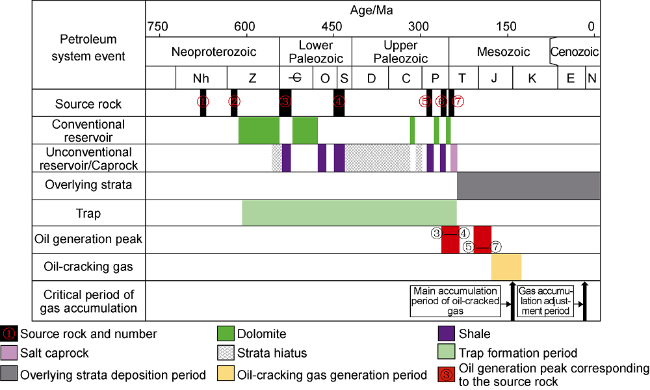
Fig. 3. Event chart of marine cratonic composite petroleum system in the Sichuan Basin. Source rock No.: ① The Nanhua Datangpo Formation; ② The Sinian Doushantuo Formation; ③ The Lower Cambrian Maidiping Formation and Qiongzhusi Formation; ④ The Ordovician Wufeng Formation and the Silurian Longmaxi Formation; ⑤ The Permian Qixia Formation and Maokou Formation; ⑥ The Permian Wujiaping Formation; ⑦ The Triassic Dalong Formation. |
2.2.1. Multiple stacked sets of source rocks forming two hydrocarbon generation centers
The high-quality marine source rocks in the Sichuan Basin include Lower Sinian Doushantuo Formation, Lower Cambrian Qiongzhusi Formation, Upper Ordovician Wufeng Formation-Lower Silurian Longmaxi Formation, Middle Permian Qixia Formation-Maokou Formation, and Upper Permian Longtan Formation (Wujiping Formation) and Dalong Formation. The spatial distributions of source rocks of different ages vary due to the combined control of structural differentiation, paleoclimate and sea level change. The source rocks in the intracratonic rift and depressions are thick and rich in organic matter deposited during the initial transgression.
The multiple sets of source rocks are widely distributed. The superimposition of areas with high-quality source rocks (TOC>2.0%) of different ages reveals two depositional centers of high-quality source rocks (Fig. 4 ), which have also been considered as hydrocarbon generation centers. The western center is in the Deyang-Anyue intracratonic rift, with five sets of main source rocks deposited (Z1ds, —C 1, S1, P2, P3); the source rocks with TOC> 2.0% exhibit the cumulative thickness of 150-300 m, the distribution area of (5-6)×104 km2, and the cumulative gas generation intensity of (200-300)×108 m3/km2. The eastern center is along the Chuandong-Shunan area, with three sets of main source rocks deposited (—C 1, S1, P2); the source rocks with TOC>2.0% exhibit the cumulative thickness of 100-250 m, the distribution area of (3-4)×104 km2, and the gas generation intensity of (150-200)×108 m3/km2.
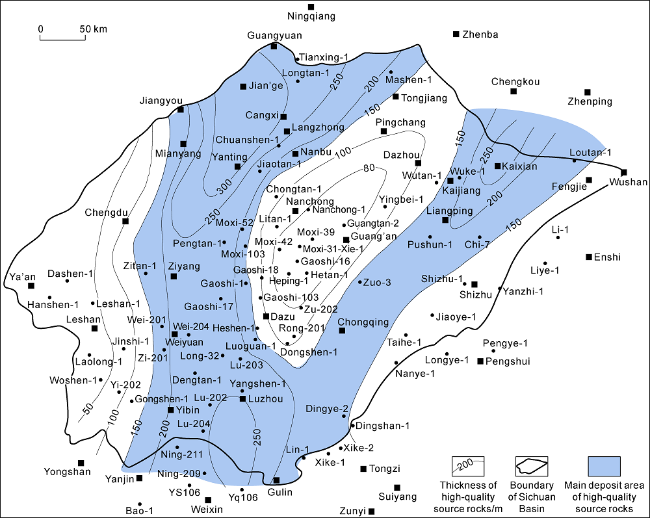
Fig. 4. Isopach map of high-quality marine source rocks (TOC>2%) in the Sichuan Basin. |
The two centers determine the enrichment of marine carbonate gas systems spatially. Within or near the western center, some large gas fields, such as Anyue, Penglai, Yuanba, Shuangyushi, and Weiyuan, have been discovered; however, the ultra-deep formations in northwestern Sichuan Basin and the southern part of the intracratonic rift are still poorly explored, which are the main targets for future exploration. In the eastern center, the Carboniferous structural trap in eastern Sichuan Basin and the Permian Changxing-Feixianguan gas accumulation in northeastern Sichuan Basin have been found; however, no breakthrough has been made in the deep and ultra-deep Sinian-Cambrian formations, which are the main targets for subsequent exploration.
2.2.2. Synsedimentary fault and uplift controlling the type and scale of reservoirs
Multiple sets of stratified or quasi-stratified reservoirs are identified in marine carbonates of the Sichuan Basin. The reservoirs include Dengying Formation, Canglangpu Formation, Longwangmiao Formation, Xixiangchi Formation, Qixia Formation, Maokou Formation, Changxing Formation, Feixianguan Formation, and Leikoupo Formation. Sedimentary facies and constructive diagenesis determine the distribution of large-scale reservoirs. The reservoirs are categorized into two types: platform margin reservoir and intra-platform reservoir. The former has a large thickness and good physical properties. The latter exhibits the characteristics of multiple pay zones with small thickness and wide distribution.
Recent studies indicate that the synsedimentary tectonic activities have a pronounced effect on reservoir distribution. The platform margin zone controlled by synsedimentary faults is developed on the margin of the cratonic continent or cratonic rift under an extensional regime, and the tip-tilting of fault blocks leads to the geomorphological differences. In the high part of the fault block, the water energy is strong, which is conducive to the growth of reefs and the deposition of grain shoals and lays the material foundation for reservoir development. In the low part of the fault block, the water energy is low, and the sedimentation is mainly argillaceous (micrite) limestone and argillaceous (micrite) dolomite, which can form a lateral seal (Fig. 5 ). Theoretical research and exploration practice have confirmed that multiple sets of synsedimentary faults were developed during the deposition of the Dengying Formation in the northern section of Deyang-Anyue rift [26], and microbial mound- shoal complexes appeared in the high part of the fault block. For example, in Well Pengtan-1, which is held between two faults and 0.5-1.6 km away from the fault, mound-shoal complexes like thrombolites and alginite are found in the second member of the Dengying Formation (Deng 2 Member), and the reservoirs are 291 m thick with the porosity of 4%-12%. In Well Pengtan-101, close to the fault, a large amount of gravel and sand debris can be seen in the cores from the Deng 2 Member, which are oriented crushing products of high-energy belt. Based on the analysis of seismic data, in the Zitong-Guangyuan area in the northern section of the Deyang-Anyue rift, it is predicted that the platform margin thickness is 600-1000 m in the Deng 2 Member and 300-450 m in the Deng 4 Member, the platform margin width is 40-120 km, and the area of platform-margin mound-shoal complexes is over 1.5×10⁴ km2. The intra-platform zone as a whole belongs to epicontinental sea deposit in shallow water, which is conducive to the development of microbial mound-shoal complex. For example, in the intra-platform zone in the Gaoshiti-Moxi area, two sets of microbial mound-shoal reservoir (Deng 2 Member and Deng 4 Member) are developed [27], and the drilling core data have confirmed that the microbiolite sedimentary succession within the platform is similar with that at the platform margin, but smaller in scale of layers.
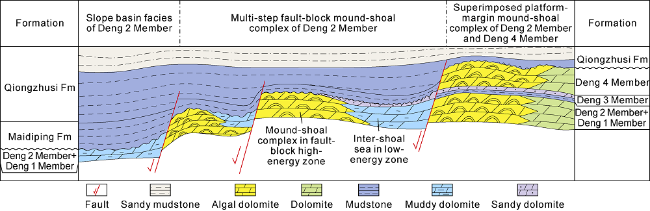
Fig. 5. Sedimentary pattern of microbial mound-shoal complexes of Sinian Dengying Formation in Penglai-Suining area. |
The grain shoal controlled by synsedimentary uplift refers to a large area of grain shoal facies developed around the high part of uplift and slope zone, including oolitic shoal, algal sand shoal and gravel (sand) debris shoal. The central Sichuan synsedimentary uplift, developed in the Early Cambrian Canglangpu Formation- Silurian, covers an area of (6-8)×104 km2 [25] and has three typical features (Fig. 6 ). (1) Grain shoal is developed in the high part and the slope zone, and with the rise of the synsedimentary uplift, the new layer of grain shoal migrates to the slope zone. The Canglangpu Formation grain shoal is mainly distributed in the west of the Yilong-Suining area. The Longwangmiao Formation grain shoal extends eastward to the Nanjiang-Guang’an- Hechuan area. The Xixiangchi Formation grain shoal extends eastward to the Xuanhan-Hechuan area. The Lower Ordovician grain shoal migrates eastward to the Chongqing-Luzhou area. (2) The strata thicken from the uplift zone to slope zone. The Canglangpu Formation is 100-200 m in the uplift zone and 200-400 m in the slope zone. The Longwangmiao Formation is 70-120 m in the uplift zone and 160-200 m in the slope zone. The Xixiangchi Formation is 0-150 m in the uplift zone and 200-600 m in the slope zone. The Ordovician is 0-150 m in the uplift zone and 200-500 m in the slope zone. The Silurian is 0-200 m in the uplift zone and 1000-1200 m in the slope zone. (3) The high-frequency cycle erosional unconformity in the high part of the uplift zone and the overlap deposits in the slope zone are conducive to forming interbed karst and bedding karst reservoirs. There are at least three phases of erosional unconformity in the Cambrian-Silurian in the central Sichuan uplift, that is, the erosional unconformity between Canglangpu Formation and Longwangmiao Formation, the erosional unconformity between Longwangmiao Formation and Xixiangchi Formation, and the erosional unconformity between Ordovician and Silurian. Grain shoals are developed around the synsedimentary uplift, and dissolution pore reservoirs exist owing to the transformation of the epigenetic karstification after the penecontemporaneous and Caledonian movements.
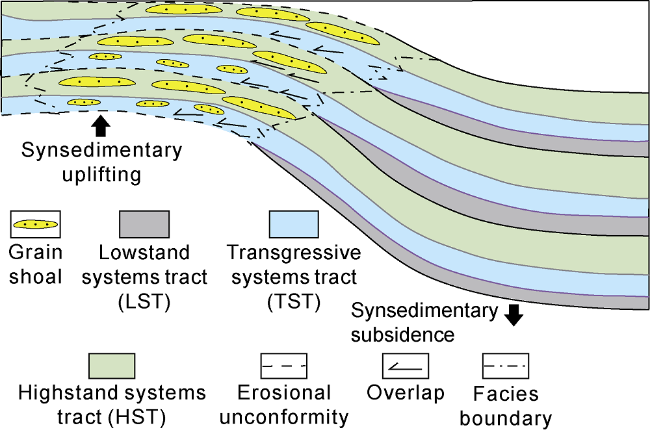
Fig. 6. Sedimentary response of the synsedimentary uplift on carbonate platform. |
2.2.3. Strike-slip faults and multi-layer grain shoals benefiting the stereoscopic and compound accumulation
The high-angle strike-slip fault can be considered as the "highway" for oil and gas migration, which is conducive to the stereoscopic accumulation in multiple layers[28]. The interpretation of seismic data indicates that high-angle strike-slip faults are widely developed in the Sinian-Permian in the central-western Sichuan Basin to the west of the Huayingshan fault. Bounded by the Lower Triassic Jialingjiang Formation gypsum rock detachment layer, there are noticeable differences in tectonic deformation in shallow and deep structures. Specifically, the tectonic deformation above the detachment layer, affected by the Yanshanian compressive stress around the basin, shows the characteristics of thrust fault, with small throw and short extension, which trends in NW and NWW in central Sichuan Basin and NE in western Sichuan Basin. Multiple high-angle strike-slip faults are developed beneath the detachment layer, which are in NE, NW and near EW directions, formed in at least three stages, including Tongwan, Caledonian and Hercynian [29]. Some faults were activated during the Yanshanian, making them cut upward into the Mesozoic clastic rock strata.
The source correlation of the discovered gas reservoirs in central Sichuan Basin suggests that there are mixed source phenomena in the Maokou Formation, the Qixia Formation, the Canglangpu Formation, the Longwangmiao Formation, and the Dengying Formation, indicating the characteristics of a composite petroleum system. The carbon isotopic composition indicates that the Qixia Formation and Maokou Formation gas reservoirs in the Gaoshiti-Moxi area and the north slope zone received sediments mainly from the Qiongzhusi Formation. For example, the Maokou Formation gas in Wells Moxi-39 and Jiaotan-1 and the Qixia Formation gas in Wells Gaoshi-18, Moxi-42 and Moxi-39 can be correlated with the Longwangmiao Formation gas in the Gaoshiti-Moxi area. In the Nanchong area, the Permian source rock is the main gas source for the Maokou Formation in Well Nanchong-1 and the Qixia Formation in Well Moxi-31-Xie-1. On the north slope of the central Sichuan Paleo-uplift, the risk exploration well Jiaotan-1 encountered several gas reservoirs. The Deng 4 Member algal clot thrombolite dolomite and algal sand debris dolomite reservoirs are 166.6 m thick, with a porosity of 2.0%-7.1%, and interpreted with 8 gas layers (101 m), suggesting good gas-bearing properties (untested). The Cambrian Canglangpu Formation shoal facies dolomite reservoirs are 25.9 m thick and reveals a production of 51.62×10⁴ m3/d during test in 6972-7026 m. The Maokou Formation shoal facies dolomite reservoirs are 24.8 m thick, with a porosity of 3.8%, and reveals a production of 112.8×10⁴ m3/d during test in 6155-6175 m. These results show the promising potential of stereoscopic exploration of multiple layers in this area.
2.2.4. Multiple stages of hydrocarbon accumulation and similar oil cracking gas accumulation periods in marine carbonate reservoirs
Marine source rocks in the Sichuan Basin experienced a "bimodal" hydrocarbon generation history from the early oil to the late gas, and hydrocarbon accumulation experienced the process of the early paleo-oil reservoir and late oil cracking gas accumulation [30]. The paleo-oil reservoirs in different series of layers are different in formation time, but similar in the oil cracking gas accumulation periods, mainly in the Early Jurassic-Cretaceous. Matching with the Yanshanian fault activity (especially the strike-slip fault activation in the early stage) is conducive to the stereoscopic accumulation in multiple layers. The study shows that the Maokou Formation paleo-oil reservoir was mainly formed in 161-201 Ma, and the oil cracking gas was mainly accumulated in 65-158 Ma [31]. The Feixianguan Formation paleo-oil reservoir in northeastern Sichuan Basin was primarily formed in the Late Triassic-Early Jurassic, and the oil cracking gas was primarily accumulated in the Late Jurassic-Cretaceous [32].
In order to determine the hydrocarbon accumulation periods of the Dengying Formation and Longwangmiao Formation in the Anyue gas field, samples were systematically taken from 18 wells for asphalt Re-Os dating, ultra-low concentration U-Pb dating of hydrothermal dolomite, and fluid inclusion dating. A complex hydrocarbon accumulation process with oil charging in two stages and gas charging in three stages is clarified in the Dengying Formation and Longwangmiao Formation (Fig. 7 ). For the Dengying Formation, in the first stage, oil charging occurred in 411-458.09 Ma; in the second stage, oil charging occurred in 242.8-259.3 Ma, in association with gas charging; in the third stage, only gas charging occurred in 196.0-220.5 Ma, with the gas originated from oil cracking gas; in the fourth stage, only gas charging occurred in 78-127 Ma, which represents the continuous occurrence of oil cracking gas and gas reservoir adjustment.
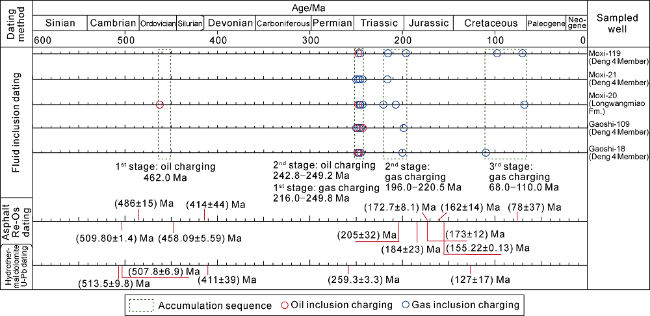
Fig. 7. Accumulation periods of Dengying Formation and Longwangmiao Formation in Anyue gas field. |
The similarity in gas accumulation periods for marine carbonate rocks is mainly attributed to two factors. (1) The marine strata experienced a burial evolution history from shallow burial in the early stage to the rapid deep burial in the later stage. Before the Late Triassic, the source rock strata were at 90-110 °C and in the oil generation window, with oil mainly generated. In the Late Triassic-Cretaceous, the marine strata were buried rapidly and the formation temperature was over 120 °C. The organic matters evolved to a stage dominated by gas generation. (2) Liquid hydrocarbon began to crack into gas at 160 °C, and was completely cracked into gas at 240-300 °C. The temperature of marine strata in the Sichuan Basin reached 160 °C in the Middle-Late Jurassic and peaked at the end of the Cretaceous, recording the main period of oil cracking gas generation and also the critical period of gas accumulation.
2.2.5. Marine shale gas system
In the Late Ordovician-Early Silurian, shelf facies deposits were developed in the foreland depression zone on the north side of the Kangdian-Qianzhong archicontinent, as a result of the Duyun movement in South China and the fast rise of the global sea level. They exist lithologically as a large set of dark carbonaceous shale and carbonaceous graptolite shale interbedded with thin layers of argillaceous siltstones. The deep-water shelf organic-rich shale is mainly developed at the bottom of the Wufeng Formation-Longmaxi Formation, with a thickness of 40-80 m. It is mainly composed of sapropelic and graphitic organic matters [33], with the TOC of 2.5%-8.5% (avg. 3.6%) and Ro of 2.5%-3.8%. It is distributed primarily in southern Sichuan Basin to eastern Sichuan Basin (Fig. 4 ), with an area of more than 3.0×10⁴ km2. According to the study, the Wufeng Formation-Longmaxi Formation shale gas reservoir is a large continuous gas accumulation, with continuous distribution of main gas-bearing layers and high formation pressure [33]. "Sweet spot" high-quality shale is characterized by high TOC, high brittleness, high porosity, and high gas content [34]. The shale gas in place is more than 2.8×10¹² m3, of which the shale gas shallower than 4500 m accounts for 64%, indicating a great potential for shale gas exploration and development.
Since Well Wei-201, the first shale gas well in China, obtained industrial gas flow in the Wufeng Formation- Longmaxi Formation in 2010, marine shale gas rich zones have been found in the Weiyuan, Changning-Zhaodong, Fushun-Yongchuan, Fuling, Luzhou and other areas in the Sichuan Basin. By 2021, the cumulative proved shale gas reserves exceeded 4.5×10¹² m3, and the annual shale gas production exceeded 210×108 m3, making China one of the few countries in the world that had realized the industrial exploitation of shale gas. Through exploration and development practices, the integrated methodology and approach for evaluating the geological sweet spot, engineering sweet spot, and economic sweet spot, and some key technologies such as horizontal well volume fracturing have been developed [34]. The concept and core technology of volume fracturing of shale gas sweet spot areas were proposed. These achievements provide the essential theoretical basis and technical support for the stereoscopic development of shale gas reserves in Changning, Fuling and other areas, and they are believed to be prospective for broad application [35].
2.3. The foreland basin stage and tight gas-shale oil systems
In the Indosinian-Yanshanian, influenced by the uplifting of the Longmenshan orogenic belt and South Qinling orogenic belt, two phases of foreland basins were developed in the Sichuan Basin. In the Late Triassic, the Longmenshan orogenic belt controlled the foreland basin, and the subsidence center and depocenter were in the western Sichuan depression. The Xujiahe Formation was thick and had the characteristics of a sandwich-type frequently-interbedded source-reservoir assemblage vertically. In the Middle-Late Jurassic, due to the uplifting of the South Qinling orogenic belt, the subsidence center of the northern Sichuan foreland basin moved to the Pingchang-Dazhou area. The basin was filled with a lacustrine-delta sedimentary system, and the organic-rich shale and delta-channel sand bodies were frequently superimposed, forming an excellent source-reservoir- caprock assemblage. Controlled by the factors such as the migration of the subsidence center, the types of source rock parent material, the maturity of organic matters, and tight reservoirs, two main types of hydrocarbon resources appeared: tight sand gas and shale oil, which constitute a unique tight gas-shale oil system.
2.3.1. The migration of the subsidence center and thermal evolution of organic matter are highly coupled with the types of hydrocarbon
The hydrocarbon generation center of the Upper Triassic Xujiahe Formation is located in the western Sichuan-central Sichuan area, where the coal-measure source rocks are dominant with high organic matter maturity and gas generation, as the main distribution area of tight gas from clastic rocks. In the western Sichuan depression, the argillaceous source rocks are 300-850 m thick, with the Ro of 1.6%-2.5% and the gas generation intensity of (50-150)×108 m3/km2. In the slope-uplift zone of the central Sichuan Basin, the argillaceous source rocks are 100-300 m thick, with the Ro of 1.2%-1.6% and the gas generation intensity of (10-50)×108 m3/km2. In other areas of the basin, the source rocks are thinner than 100 m, with the Ro of 1.0%-1.2% and the gas generation intensity of less than 10×108 m3/km2.
Both shale oil and tight gas are endowed in the Jurassic. Three sets of source rocks (Dongyuemiao Formation, Da'anzhai Formation and Lianggaoshan Formation) exist in the Middle-Lower Jurassic[36], which contain algaes and primarily Type II kerogens, being conducive to oil generation, with the Ro between 0.8% and 1.6%, indicative of the mature to high-mature stage. Taking the Langzhong-Nanchong-Yingshan area as the boundary, in the north, the Ro is greater than 1.3%, suggesting a high degree of thermal evolution and the gas generation stage, as the main distribution area of Jurassic tight gas; in the south, the Ro is 0.8%-1.3%, suggesting the stage of oil generation, as the main distribution area of shale oil.
2.3.2. Densification of clastic reservoir earlier than gas generation peak is crucial to tight gas accumulation
The tight gas in clastic rocks is characterized by continuous and extensive accumulation. The densification degree and time of reservoir interbedded with source rocks are the key factors determining the large-scale accumulation in such reservoir. According to the correlation of gas generation and sandstone reservoir densification time in the Xujiahe Formation of the western Sichuan depression, the fourth member of Xujiahe Formation (Xu 4 Member) was densified at the end of the Middle Jurassic, and the Xu 2 Member was densified in the early stage of the Middle Jurassic. The source rocks of Xu 3 Member-Xu 1 Member entered the mature stage in the Early Jurassic and began to generate gas in the Middle-Late Jurassic. The gas generation intensity was 20×108 m3/km2 at the end of Jurassic, and reached 100×108 m3/km2 at the end of Cretaceous when the gas generation peaked. It can be seen that the Xu 3 Member-Xu 1 Member source rocks generated oil extensively earlier than the densification of Xu 2 Member sandstone, which was conducive to the early accumulation of oil. Abundant bitumen-filled pores can be seen in the thin section of core samples from the Xu 2 Member production layer in Xinchang gas field, and the bitumen periphery was blocked by highly tight rocks. The densification of sandstone reservoir effectively prevented the oil in the pores from free migration, making gas generated by cracking of oil in the pores be “frozen” to accumulate in situ; thus, the reservoir exhibits high gas saturation and high pressure. This mechanism reveals that the reservoir adjacent to the source kitchen has better gas content. The results after exploration illustrate that the Xujiahe Formation in the Qiulin-Bajiaochang area, which is located in the main source zone, has the gas saturation of 64.8%-71.4% and the gas reservoir pressure coefficient of 1.6-2.2. In contrast, the Xujiahe Formation in the Anyue area, which is far from the main source zone, has the gas saturation of only 50%-60% and the gas reservoir pressure coefficient of 1.2-1.4.
3. Thoughts on oil and gas development in Sichuan Super Basin
Different Super Basins have their own development models, but for Super Basins with a long history of exploration and development, they show common features that can be used for reference. Based on the Super Basin Thinking and comparing the exploration and development history of typical Super Basins such as the Permian Basin in the United States, combined with the exploration process and the distribution characteristics of remaining oil and gas resources in the Sichuan Basin, a Super Basin development model for oil and gas exploration in the Sichuan Basin can be proposed.
3.1. Oil and gas development model of the Permian Basin in the United States
Conventional oil and gas exploration and development in Super Basins can be divided into four stages: (1) initial exploration stage, when the purpose is to verify oil and gas accumulations; (2) growing stage, when exploration investments, new discoveries, reserves, and production increase rapidly; (3) plateau stage, when the proved reserves and production reach their peaks and last for a period of time; and (4) declining stage, when exploration discoveries and reservoir production decrease [12]. Generally, in the declining stage, active efforts are taken to develop unconventional resources such as tight oil/gas and shale oil/gas to reverse the passive climate of production decline. In this process, oil and gas production also corresponds to several "golden ages".
The oil and gas production in the Permian Basin of the United States has experienced two golden ages. The exploration of the Permian Basin began in 1920, and after more than 50 years of operations, the production reached its peak in 1970-1980, known as the "Golden Age 1.0". The oil and gas mainly came from dolomite, limestone and sandstone reservoirs. In the next 30 years, conventional oil and gas production fell, and the experts thought that the golden age in the Permian Basin was over. However, from 2000 to 2015, significant technical innovations took place in the petroleum industry; especially, the utilization of directional drilling and hydraulic fracturing technologies made it possible to develop and utilize unconventional tight oil/gas resources that were previously considered to be uncommercial. The Permian Basin’s oil and gas production stopped falling and rebounded in 2010, and grew rapidly since 2016, known as the "Golden Age 2.0"[37]. Fryklund believed that the development model of the Permian Basin can be used for reference by many mature basins worldwide [3].
3.2. Exploration history and remaining oil/gas distribution in the Sichuan Basin
The oil and gas exploration in the Sichuan Basin began in the 1940s and has gone through four stages (Fig. 8 ). (1) In the first stage (1953-1977): structural trap exploration, middle and shallow structural traps were mainly explored, the cumulative proved gas reserves were 1511×108 m3, and the gas production exceeded 50×108 m3 in 1977. (2) In the second stage (1978-2004): large- and medium- sized gas reservoir exploration, the Carboniferous in eastern Sichuan Basin and the Feixianguan Formation in northeastern Sichuan Basin were mainly explored, the cumulative proved gas reserves were 6250×108 m3, and the gas production exceeded 100×108 m3 in 2004. (3) In the third stage (2005-2010): lithologic reservoir exploration, the sandstone gas reservoirs of the Xujiahe Formation and the reef-beach gas reservoirs of Longgang in central Sichuan Basin were mainly explored, the cumulative proved gas reserves were 6153×108 m3, and the gas production exceeded 150×108 m3 in 2009. (4) In the fourth stage (2012 to present): gas province exploration, the conventional gas in the Sinian-Cambrian carbonate reservoirs, shale gas in southern Sichuan Basin and tight sand gas in Jurassic were mainly explored, the cumulative proved gas reserves were 20 541×108 m3, and the gas production exceeded 300×108 m3 in 2021. In terms of exploration discoveries, reserves and production, the Sichuan Basin is now in the golden period with rapidly growing reserves and production [6], which is benefited from the integrated development mode of the natural gas industry formed over a long period. This mode is a unique economic development strategy and management mode adapting to the development characteristics and environment of the regional natural gas industry [38].
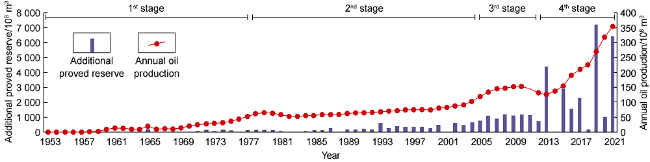
Fig. 8. Exploration history, proved reserves, and annual gas production in the Sichuan Basin. |
Based on the oil and gas resource evaluation of the Sichuan Basin in 2019, the distribution of remaining re-coverable oil and gas resources was analyzed (Fig. 9 ). Regarding formations, the remaining recoverable resources are mainly distributed in Permian, Cambrian, Sinian, Middle-Lower Triassic, and Upper Triassic (excluding shale gas), where 17%-30% of the resources are proven. Regarding resource types, the remaining recoverable shale gas is the largest in quantity, accounting for 56.3%, followed by marine carbonate conventional gas (38.2%) and tight sand gas (5.5%). Regarding burial depth, 54% of the remaining recoverable resources are buried in the middle-shallow reservoirs (2000-4500 m), 35% in the deep reservoirs (4500-6000 m), and 7% in the ultra-deep reservoirs (6000-8000 m). Regarding horizontal distribution, the central Sichuan uplift zone contains the remaining resources as high as 3.65×10¹² m3, with a volume abundance of 0.9×10⁸ m3/km2, followed by the high and steep structural belt in eastern Sichuan Basin with the remaining resources of 1.75×10¹² m3 and a volume abundance of 0.36×10⁸ m3/km2.
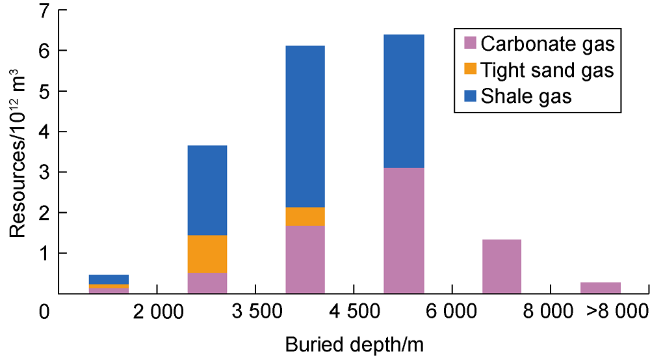


Fig. 9. Remaining recoverable gas distribution in the Sichuan Basin |
3.3. Suggestions on exploration and development of petroleum in the Sichuan Super Basin
The Sichuan Super Basin is rich in remaining oil and gas resources. At present, both conventional and unconventional resources are explored and developed smoothly, and a golden period with rapid oil and gas development is on the way. Expanding the golden period to maximize the potential of various oil and gas resources is a vital issue in the petroleum exploration and development. Based on the analysis of remaining resource distribution and petroleum system, this paper puts forward the following suggestions from the perspective of Super Basin Thinking:
(1) According to the characteristics of the Sichuan Super Basin such as coexistence of conventional and unconventional resources and composite petroleum systems, the exploration strategy is determined by formations.
Deep-ultra-deep marine carbonate rocks are the key targets for large-scale conventional gas reserves. Based on the proximal plays in the hydrocarbon generation center, the fault-controlled platform margin zone and strike-slip fault-grain shoal zone are preferentially explored to seek large to super-large gas fields, aiming to lay the resource foundation for a gas province. The key zones include: the Sinian-Triassic at the northwestern margin of the Yangtze Craton; the Sinian in the central-north section of the Deyang-Anyue rift; the Sinian-Cambrian on the northern slope of the central Sichuan paleouplift; and the Cambrian subsalt structures in the high and steep tectonic belt in eastern Sichuan Basin. As to the potential gas system in the Nanhua rift, basic researches (e.g. evaluation of source rock distribution and resources, and selection of favorable areas) should be enhanced to actively explore new targets in ultra-deep strata.
For highly explored middle-deep carbonate rocks, including the Carboniferous-Permian in eastern Sichuan Basin, the Changxing Formation-Feixianguan Formation in northeastern Sichuan Basin, and the Permian and Triassic in southern Sichuan Basin, the exploration idea should be transformed on the basis of innovative geological knowledge, and further research be made on gas accumulation and enrichment in the slope-syncline zone under high and steep structural setting, so as to find new blocks and reactivate the old blocks.
Based on the main hydrocarbon kitchens, the sweet spots are sought to define the large-scale reserves of tight gas and shale oil in the middle-shallow clastic rocks. In western-central Sichuan Basin, the tight gas exploration should be intensified in the source areas, especially the areas with frequently interbedded source rocks and reservoir rocks, high formation pressure (pressure coefficient larger than 1.6), and good reservoirs with relatively high porosity (avg. 4.0%, or even 11% locally) and high permeability. In northern-northeastern Sichuan Basin, the Jurassic is a favorable zone for shale oil exploration, with high organic carbon content (TOC>1.0%), high maturity (Ro>1.2%), high formation pressure, light oil quality, and high content of mobile oil. Active efforts should be taken to explore shale oil in pure shales and shale-sandstone interbeds.
As to marine shale gas, focusing on the Wufeng Formation-Longmaxi Formation shale gas in southern Sichuan Basin, the technical research should be strengthened for deep shale gas with an aim to realize large-scale commercial development. The idea of Sichuan Super Basin should be upheld, with consideration to the shale gas in relatively stable structural belts outside the basin. Active efforts should be made to seek new layers/fields of shale gas, strengthen the evaluation of shale gas in new layers such as the Doushantuo Formation, Qiongzhusi Formation, and Wujiaping Formation, and evaluate the gas content and resource potential in new fields such as the Maokou Formation and Leikoupo Formation marlstones.
(2) Technical research should be intensified to form technical solutions depending on resource types in different fields, so as to promote the stereoscopic exploration and development of convention and unconventional resources in the Super Basin, and provide technical support for the "Golden Age" of oil and gas development in the Sichuan Basin. Recently, efforts have been intensified into ultra-deep seismic imaging and reservoir prediction technologies, ultra-deep drilling and completion technologies and high-temperature high-pressure testing technology, tight oil/gas sweet spot evaluation technology, and deep shale gas reservoir stimulation and production improvement technologies.
(3) Regarding investment strategy, it is recommended to consider the mixed ownership mode of cooperation for exploring the middle-shallow tight gas, so as to attract private capitals. For the middle-shallow Jurassic channel sand lithologic gas reservoirs, which are characterized by small investment and quick economic return, the cooperation mode of "One Block-One Project-One Scheme" can be considered and the government's preferential new policy can be sought.
4. Conclusions
The Sichuan Super Basin is geologically characterized by superimposition of various basins, stacking of multiple petroleum systems, coexistence of conventional and unconventional resources, and dominance of natural gas resources. It has entered the "Golden Age" with rapid petroleum development. The Super Basin Thinking can play a significant role in promoting the development mode of the Sichuan Super Basin.
The exploration strategy is determined by formations based on the distribution of remaining resources and the recognitions on new types/fields. Conventional gas in deep-ultra-deep carbonates and tight gas and shale gas in medium-shallow clastic rocks are key exploration targets to find large-scale reserves. More efforts are necessary to relevant technical researches and stereoscopic exploration in multiple layers.
The investment mode based on mixed ownership can be considered as a good initiative to drive the rapid development of petroleum by utilizing social capitals.
Acknowledgements
We acknowledge Professor Yu Yang, Professor Yueming Yang, and other researchers from PetroChina Southwest Oil and Gas Field Company for their grant support to this work.