

Introduction
Since 2000, with the effective development of unconventional oil and gas resources such as shale gas in North America, the global supply situation of oil and gas has changed greatly [1]. From the 1970s to 1980s, the concept of subtle oil and gas reservoirs was put forward, and people gradually searched for oil and gas in the direction of source rocks according to the "petroleum system" [1⇓-3], with the targets approaching the hydrocarbon source. In the theory of conventional oil and gas, shale, as a source rock, is dominated by nanoscale pores and very tight. Considering the impact of water film on the shale surface, the critical pore throat radius of movable methane is 2.4-7.8 nm, with an average of 5.0 nm [3⇓-5]. The pore throat radius of shale gas reservoirs has reached such critical value. The continuous advancement of science and technology has promoted the development of natural gas to break through of the restricted area of understanding. The use of advanced experimental instruments, such as the focused ion beam/scanning electron microscope (FIB/SEM) and nano-CT, has made the research of oil and gas reservoirs enter the age of nanometer. The horizontal well multi-stage fracturing technique is applied to volumetrically stimulate the reservoirs and build artificial fractured gas reservoirs for effective recovery of gas [6].
After more than 10 years of exploration, development and research, a breakthrough has been made in the development of the Upper Ordovician Wufeng Formation- Lower Silurian Longmaxi Formation (hereinafter referred to as Wufeng Formation-Longmaxi Formation) marine shale gas reservoirs in South China, with the output in 2021 reaching 228×108 m3. Since 2018, PetroChina Company Limited (PetroChina) has been working on deep (3500-4500 m) shale gas of Longmaxi Formation in the southern part of the Sichuan Basin (hereinafter referred to as southern Sichuan Basin). It obtained a test output of 138×104 m3/d in Well Lu 203 at a depth of 3800 m in this region, setting a new benchmark for the test output of shale gas well, and achieved a number of high-yield wells, recording a strategic breakthrough in the development of deep shale gas in China. As the main contributor to the natural gas output growth of China in the future, the deep marine shale gas in southern Sichuan Basin will still face many problems in efficient development. In view of the efficient development of gas field, the authors have proposed the "extreme utilization" development theory, that is, "extreme techniques" are used to build underground connecting body, increase the drainage area, and expand the production range, to obtain the maximum production and recovery of single well, thereby achieving the "extreme effect" [7]. In this paper, the problems in development of deep marine shale gas in southern Sichuan Basin are analyzed. Then, the "extreme utilization" development theory is practically applied in the development of deep marine shale gas in southern Sichuan Basin to explore the efficient development ways of deep shale gas. The results are expected to provide theoretical and technical guidance for the development of deep shale gas in China.
1. Basic ideas of "extreme utilization" development of shale gas
Natural gas development is a process that underground high-energy natural gas is exploited to the surface after overcoming the reservoir resistance, fluid barrier and gravity constraint, etc., and the whole process is represented by natural gas energy attenuation. Therefore, an efficient development of natural gas will be realized by: (1) depicting the reservoir in the most accurate way to find the high-energy gas-enriched zone/section; (2) reducing reservoir resistance in the most effective way to produce gas within the shortest time; (3) communicating the reservoir in the largest range to realize the maximum recovery of natural gas; (4) keeping the best reservoir channel unblocked in the optimal drainage and production system; and (5) obtaining the maximum production benefit with the most effective production organization. Conventional natural gas reservoirs are featured with large porosity, high permeability, low formation flow resistance and large-area connectivity of reservoirs, so vertical wells are used for the production of natural gas. By contrast, unconventional natural gas reservoirs such as shale gas have tiny porosity, low permeability, high formation flow resistance and poor connectivity of reservoirs, so multiple wells are used for the production after volume fracturing.
Shale gas is the natural gas retained in situ after hydrocarbon expulsion from the source rock. Usually, it cannot flow out naturally from the reservoir where the flow resistance is extremely high, but be recovered by volume fracturing; however, the post-fracturing production declines rapidly. Conventional natural gas reservoirs can be recovered efficiently as long as one or two main controlling factors are identified, that is, the main contradictions are resolved. For shale gas reservoirs, however, the effective development is dependent upon many controlling factors. Therefore, it is necessary to make all-around optimization and multi-factor research with the support of geology-engineering integration. On one hand, the characteristics and distribution of shale gas reservoir should be accurately identified to find the shale gas-enriched zones. On the other hand, the conditions such as temperature and stress of shale gas reservoir should be ascertained to clarify the engineering difficulty. Only in this way, can the development benefits be maximized. Thus, the quantitative change by factor-based solution transits to the qualitative change by "extreme utilization".
The "extreme utilization" development of shale gas will be implemented following three main ideas. First, reservoirs are accurately depicted by 3D seismic and other techniques. The sweet zone/section of shale gas, that is, the zone/section with the highest reservoir pressure, the highest shale gas content and the most fracurability (high brittleness), is located, and the multi-attribute "transparent geological body" of the sweet zone/section is constructed through accurate modelling, which will serve as the basis for engineering operation and drainage/production optimization. Second, the optimal underground connecting body is constructed by engineering means such as drilling and fracturing. For shale reservoirs which are characterized by large-area continuous distribution, long horizontal well is used to realize the maximum single-well control area, and multi-stage and multi-cluster fracturing is used to achieve the high permeability transformation of reservoir geological bodies, so as to establish a complex connected fracture network system, maximize the stimulated reservoir volume (SRV) and minimize the migration distance of natural gas in shale matrix. Third, the geology-engineering-management integration system is optimized in the whole lifecycle. According to the established objectives (maximum benefit, maximum output, etc.), the production practices are summarized constantly in light of the factors affecting shale gas development effect. Geological targets, well pattern/spacing, drilling/completion and stimulation engineering technologies, drainage and production system are optimized. Finally, the "extreme utilization" development of shale gas is expected.
2. Characteristics and development problems of deep marine shale gas reservoirs in southern Sichuan Basin
2.1. Micro-amplitude structure is developed, and there are many folds, faults and fractures, so it is difficult to drill high-quality reservoirs
Compared with marine middle and shallow shale reservoirs, deep shale reservoirs in southern Sichuan Basin are diverse in structural styles. In the Luzhou block, for example, there are 6 anticlines, 17 synclines and 13 slopes, and micro-amplitude structures and fractures are developed, which make drilling and completion difficult.
Due to low resolution of deep seismic data, multi-scale faults and multi-scale natural fractures cannot be depicted very accurately. The thickness of "gold target" of Wufeng Formation-Longmaxi Formation is only 3-5 m[8-9]. Compared with middle and shallow shale, deep shale exhibits a multi-order fault system, with numerous micro-amplitude structures, small faults and fractures [10], and the change of formation occurrence exceeding the trajectory adjustment limitation of horizontal section, resulting in only 50%-70% of drilling rate of the target in the initial development stage. For example, in the Well area Yang 101, a total of 25 wells were drilled initially, with an average horizontal section length of 1890 m, and the average drilling rate of "gold target" was only 54.3% (Fig. 1 ). Therefore, accurately depicting the change of reservoirs to turn bits in advance is the key to improve the drilling rate in development of deep shale gas.
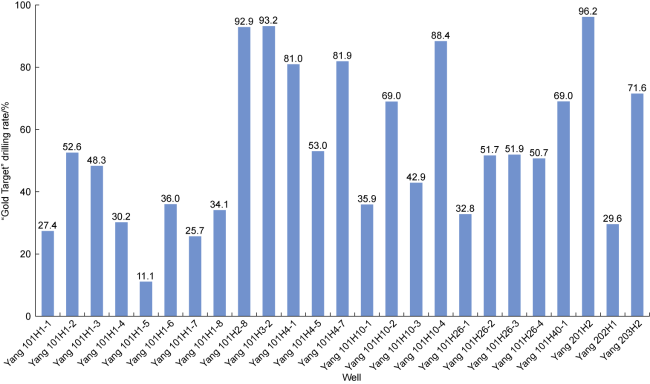
Fig. 1. Drilling rate of "gold target" in Well area Yang 101 in southern Sichuan Basin. |
2.2. The formation temperature is generally high, leading to high failure rate of steering tools and low drilling efficiency
The formation temperature in southern Sichuan Basin is generally 120-150 °C, where the applicability of oil-based drilling fluid and rotary steering tools becomes worse [11]. For example, when Well Yang 101H2-8, with the designed horizontal section length of 2000 m, was drilled to nearly 1500 m, the instrument failed, and the rotary steering tool failed many times, resulting in tripping operation for 14 times. In addition, the brittleness of rock decreases under high temperature conditions, so fracturing operation cannot effectively create complex fracture network [12]. The experimental results show that the elastic modulus of rock increases slightly with the increase of temperature below 140 °C, and decreases precipitously when the temperature rises above 140 °C. For deep shale with buried depth greater than 4100 m, the elastic modulus may weaken rapidly, and the brittleness of rock is greatly weakened, which is not conducive to reservoir stimulation.
2.3. The crustal stress and stress difference are large, limiting the complexity of fractures created by volume fracturing
For deep shale, the crustal stress is high and complex, the operation pressure exceeds 100 MPa, the horizontal principal stress difference reaches 15-25 MPa, and the stress changes greatly in different structural parts [13], which bring great difficulties to volume fracturing. During fracturing at some pads, inter-well frac-hit was obvious, and the induced fractures extended unevenly, which affected the stimulation effect. The monitoring with tracer shows that inter-well frac-hit is common in deep horizontal wells, which are generally spaced at 300 m to 1000 m.
2.4. Fracture is highly sensitive to stress, so production with large pressure difference may cause reservoir damage
Natural fractures and artificial fractures in deep shale reservoirs in southern Sichuan Basin constitute a complex fracture network system, which is highly sensitive to stress during production of gas well. In the initial recovery by water drainage, some wells yielded large fluid volume but slow gas volume increase [14⇓-16], and partially had serious sand production. For example, when Well Yang 101H10-2 was drained with 8-13 mm nozzle, a large amount of sand was produced at the wellhead, and the sand produced per unit time increased gradually with the increase of nozzle size to 23.0-26.5 L/d with 11-13 mm nozzle. The same phenomenon was observed in wells Yang 101H1-8 and Yang 101H1-6, which had the peak fluid volume of above 40 m3/h, and displayed large fluid volume and slow rise of gas volume compared with Well Yang 101H1-2 on the same pad, given the same flowback rate.
2.5. The development cost of deep shale gas is still high, challenging the beneficial development
The drilling period of a deep shale gas well is long, about 100 days. At present, the cost of single well construction is RMB70-90 million. Given RMB70 million, the estimated ultimate recovery (EUR) of a single well needs to exceed 1.5×10⁸ m3 to reach 8% internal rate of return. In southern Sichuan Basin, the EUR of a single deep shale gas well is only (1.0-1.3)×108 m3, suggesting a challenge to the beneficial development. It is necessary to quickly establish the learning curve of shale gas engineering technology, greatly improve the engineering operation efficiency, expand the rate-based engineering service mode, innovate the assessment mechanism linking investment with EUR of a single well, and promote the replacement of ceramsite by quartz sand [17-18], so as to increase the output and reduce costs.
3. Practical application of "extreme utilization" development concept
3.1. Accurate depiction of shale reservoirs
3.1.1. Accurate determination of "gold target"
High-energy enrichment section of shale gas and brittle section with engineering fracturability should be considered to determine the “gold target”. The former is determined comprehensively by the porosity, saturation, reservoir pressure, adsorption capacity, total gas content and high-quality shale thickness and other parameters, and the latter is determined by the brittle mineral content, Poisson's ratio, elastic modulus and other parameters [19⇓-21]. It is ascertained that high free gas content and high brittleness are the basis for controlling high yield of gas wells [16], and the "gold target" index is put forward (Eq. (1)). A shale gas reservoir classification and evaluation method with free gas content as the core and "gold target" index as the classification indicator is established to quantitatively evaluate the enrichment degree of free gas, select the target position of a single well and guide the design of wellbore trajectory.
where, G is the "golden target" index, dimensionless; Bc is the brittle mineral content, %; Sg is the gas saturation, %; ϕ is the porosity, %.
Based on more than 10 years of marine shale gas exploration and development practice in South China, and according to Eq. (1), the "gold target" index is determined to be greater than 3.6 (Table 1 ), which corresponds to the middle and lower parts of Long 111 and Long 112 in organic-rich shale at the bottom of Longmaxi Formation. Taking Well Zu 203H2-1 as an example, its "gold target" is mainly Long 111 (Fig. 2 ).
Table 1. Logging classification standard of shale gas reservoir |
| Reservoir classification | "Gold target" index | Porosity/ % | Gas saturation/% |
|---|---|---|---|
| "Gold target" | >3.60 | >7 | >70 |
| High-quality reservoir | (1.95, 3.60] | (5, 7] | (60, 70) |
| Effective reservoir | (0.80, 1.95) | (3, 5) | (50, 60) |
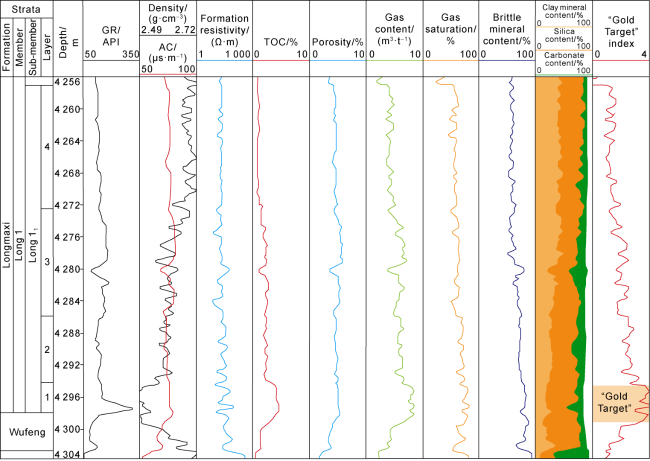
Fig. 2. Logging classification and evaluation results of reservoirs in Well Zu 203H2-1 in southern Sichuan Basin. |
3.1.2. Fine characterization of stratigraphic structure
Ascertaining the development of micro-amplitude structures, faults and fractures and the state of in-situ stress is crucial to realize high drilling rate and efficient stimulation of horizontal wells. Through direct inversion of prestack anisotropy and prediction of poststack micro-faults based on the data of wide-azimuth offset vector tile (OVT) gathers, coupling with multi-attribute seismic-geological evaluation, the multi-scale natural fractures are finely described. Through semi-quantitative seismic prediction of multi-order faults, the resolution of fault identification is improved to 5-10 m, and the coincidence rate of the fracture prediction of a single well exceeds 65%. Depending on the fault characteristics and in-situ stress conditions, and considering the geological features such as structural style, small faults, natural fractures, micro-amplitude structures, and in-situ stress magnitude and direction (Fig. 3 ), 20 development units are finely divided in northern Luzhou block, which lays a foundation for differentiated design of technical policies.
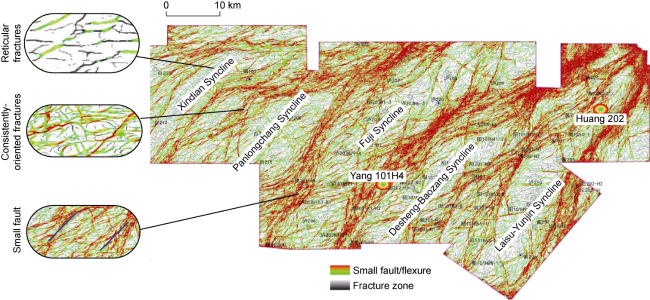
Fig. 3. Prediction of multi-scale natural fractures at the bottom of Wufeng Formation-Longmaxi Formation in Luzhou block, southern Sichuan Basin. |
3.2. Efficient drilling of "gold target"
According to the development characteristics of micro-amplitude structures, the deep shale reservoir is characterized finely on the basis of 3D seismic data and other means, and the micro-amplitude structure is predicted accurately, so as to effectively improve the accuracy of the pre-drilling steering model. With "casing program optimization + efficient polycrystalline diamond compact (PDC) bit + rotary steering + high-quality drilling fluid + wellbore cooling" as the core technology, the drilling efficiency of deep shale gas wells is improved, and the average drilling period is shortened to less than 100 d. By reducing the temperature and density, optimizing the performance of drilling fluid and improving the service environment of tools, the number of drilling trips in the horizontal section is obviously reduced, and the maximum drilling footage of a single trip is 2535 m. By virtue of efficient PDC bit and "rotary steering + high torque screw", the average rate of penetration (ROP) is increased from 4.40 m/h to 6.40 m/h or even to 24.95 m/h. High-temperature rotary steering tool is selected to realize accurate trajectory control under complex geological conditions, and the average target drilling rate is over 90%.
Taking Well Zu 203H2-1 as an example, the plugging performance of drilling fluid and the wellbore cleaning ability are strengthened to reduce downhole complexities, which lays a foundation for drilling the deepest shale gas horizontal well at 7318 m in southern Sichuan Basin. The ground cooling equipment is used to reduce the bottom-hole circulating temperature from 129 °C to 118 °C, which provides technical support for drilling 2852 m horizontal section. According to the results of 3D seismic interpretation, the target trajectory of horizontal wells is accurately designed; according to the distribution characteristics of the reservoir, the steering of the drill bit is controlled and the trajectory is finely adjusted to prevent the bit from drilling out of the reservoir, so that the drilling rate of "gold target" reaches 97.8% (Fig. 4 ).
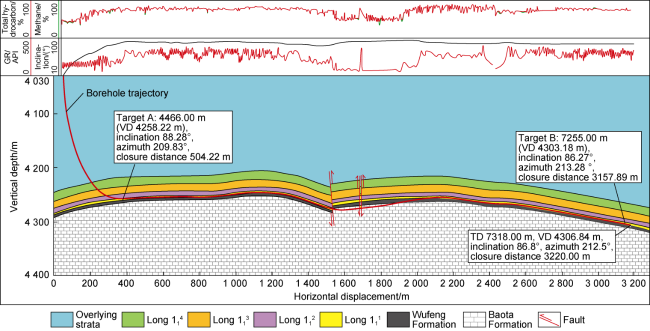
Fig. 4. Geosteering model of Well Zu 203H2-1 in southern Sichuan Basin. |
3.3. Efficient stimulation of reservoir volume
For deep shale reservoir, which is characterized by fracture development and complex in-situ stress, the fracturing process of "multi-cluster within section + sand addition at high intensity + large displacement" is adopted. Micro-seismic monitoring, tracer, liquid production profile test and other monitoring means are used for careful post-fracturing evaluation, and laboratory experiment and numerical simulation are combined for further research of mechanism. It is confirmed that deep shale fracturing is optimized from the aspects of fracture opening and expansion modes, effect of proppant, and fracturing parameters of each section, and that the main fracturing parameters of layers drilled by gas wells include cluster spacing, cluster number, displacement, length of section, fluid addition intensity, and sand addition intensity. Moreover, an optimal fracturing parameter system with three spatial relationships between natural fractures and wellbore (namely parallel, oblique and vertical relationships), is formed.
Taking Well Zu 203H2-1 as an example, considering fracture development and complex in-situ stress of shale reservoir, perforation was performed by avoiding large fractures, and the "multi-cluster within section + sand addition at high intensity + large displacement" fracturing process was designed. Specifically, “multi-cluster within section” could prevent the creation of single fracture under high stress difference. During the implementation, temporary plugging for diverting the fluid was adopted to improve the complexity of fractures and strengthen the impact of natural fractures on fracturing. In this well, the fracturing horizontal section length is 2424.0 m; there are 40 fracturing sections, with the average length of 60.4 m, and with 6 or 8 clusters in each section; the liquid addition intensity is 48 m3/m, the displacement is 19-21 m3/min, the operation pressure is 100-115 MPa, And the sand addition intensity is 4.4 t/m (Fig. 5 ). Ultimately, it has achieved four new records, including the total number of fracturing sections, liquid addition intensity, sand addition intensity, and displacement, of deep shale gas horizontal wells.
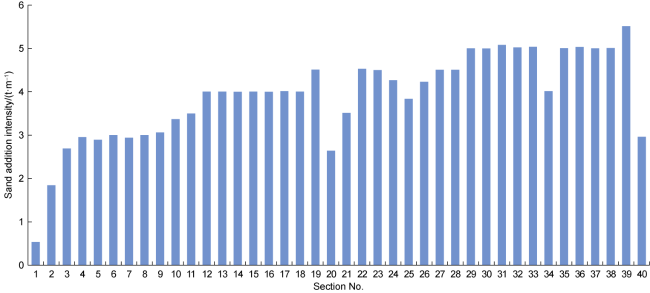
Fig. 5. Sand addition intensity of Well Zu 203H2-1. |
3.4. Optimization of drainage and production
Deep shale reservoir has high pressure and large production pressure difference, and the fluid migration channel composed of natural fractures and artificial fractures has strong stress sensitivity. The production under large pressure difference may easily cause damage to the near wellbore. Optimized production can be achieved by means of shut-in soaking and managed pressure drilling for flowback. The flowback field tests on pads Yang 101H1 and Yang 101H10 verify that finely controlling pressure can effectively maintain the formation energy, reduce the damage of artificial fracture conductivity and improve the production effect of gas wells. Compared with the large nozzle pressure release flowback well, the fine pressure control flowback well demonstrates the pressure drop rate reduced by 76%, the gas production per unit pressure drop increased by 2.0 times, the stable production time prolonged by 3.2 times, and the EUR converted to 1800 m in horizontal section increased by 14% (Fig. 6 ). During the flowback of Well Zu Z203H2-1, the duration of each nozzle was more than 4 d. After the wellhead pressure was peaked, 6 mm nozzle was used for continuous flowback. The average daily pressure drop was less than 0.1 MPa, and the gas production per unit pressure drop reached 140×104 m3. When the wellhead casing pressure was 34 MPa, the tubing was ran into hole and the wellhead casing pressure increased by 11 MPa. The well was put into production on August 15, 2021. As of April 18, 2022, the cumulative gas production was 2352×104 m3, the casing pressure was 29.6 MPa, and the daily gas production was 9.3×10⁴ m3. It is estimated that the EUR of the well can reach 1.8×10⁸ m3. The tested output of Well Lu 203 is 138×104 m3/d. This well was put into production on January 22, 2019. By the end of April 2022, the cumulative gas produced was 1.02×10⁸ m3, and the EUR of a single well is expected to exceed 2.0×10⁸ m3 by optimizing the drainage and production system.
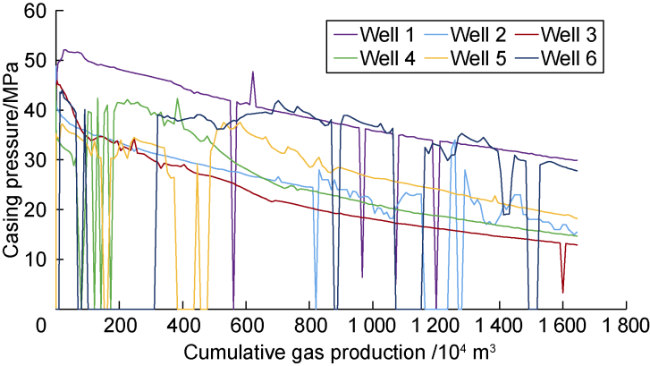


Fig. 6. Relationship between casing pressure and cumulative gas production on pad Yang 101H1. |
3.5. Optimization in the whole lifecycle
3.5.1. Efficient management
The "factory-like" intensive optimization management is adopted. Large well cluster pad is arranged, with 6-8 wells on each pad, so that the investment per well is reduced by more than RMB 2 million. The process flow is optimized to reduce the investment in surface engineering; thereby, the procurement cost of skid-mounted equipment is reduced by RMB 2.386 million, and the investment per well is lowered by about RMB 500 000. A regional "water system-power grid-communication network" is established to realize the regional “factory-like” operation, and intelligent command and remote operation command are adopted to improve the efficiency of project implementation. After the management structure is upgraded, and the resources and security are shared, the number of personnel is reduced by 25%, the equipment is reduced by 35%, and the comprehensive speed is increased by 40%. An electrical-driven fracturing truck is adopted to increase the continuous sand transportation capacity and improve fracturing time. The long-section multi-cluster fracturing is developed to increase the proportion of quartz sand, and the application of soluble bridge plug is popularized to further cut the fracturing cost.
The system and mechanism are innovated. Pilot projects such as EPC, day rate + targeted incentive, and marketization are performed. Innovative engineering technology service mode and investment management and control mode are developed. The "pad-based project" competition mode is implemented. As a result, the speed at the same pad in Luzhou block is increased by more than 30%.
3.5.2. Optimization through learning by doing
A lot of wells are drilled in the process of shale gas development. The operation level of drilling and relevant parameters shall be optimized in practice. Especially in recent years, with the application of big data and artificial intelligence technology, more and more information in production have been excavated, and relevant parameters have been continuously studied and optimized, which have achieved good results in shale gas production. For example, EUR is mainly affected by energy storage coefficient, layer thickness, number of fracturing clusters, total fluid volume, sand addition, number of fracturing sections, formation pressure, drilling length of "gold target" and number of fractures. Fracturing engineering factors have great impact on EUR, while drilling engineering factors have great impact on early open-flow capacity, but geological factors are always the core factors of both. According to the characteristics of deep shale reservoir such as high pressure, high stress and high fracture development, the optimal development strategy for Luzhou block is determined as follows: the optimal target position is Long 111-Long 112, the angle between the optimal trajectory orientation and the maximum horizontal principal stress direction is 60°-90°, and the optimal horizontal section length is 1600-2000 m. According to the characteristics of shale reservoir and the relationship between well-controlled reserves and production, the space between horizontal wells is determined to be 300-350 m.
3.6. Development effect of deep shale gas
The application of "extreme utilization" development theory to deep shale gas development in southern Sichuan Basin has significantly improved the development effect of deep shale gas horizontal wells and accelerated the rising production of deep shale gas. In the second half of 2021, the average EUR of gas wells producing in the Well area Lu 203 was 1.23×10⁸ m3, and the producing degree of single well reserves was 34.2%, 11% higher than that in the first half of 2021, and the EUR of 100 m section was 42% higher. In 2021, the average EUR of gas wells producing in the Well area Yang 101 was 1.28×10⁸ m3, the producing degree of single well reserves was 35.3%, 20% higher than that in 2020, and the EUR of 100 m section was 19% higher.
4. Conclusions
As for the problems of shale gas development, such as many influencing factors, low single-well production, and marginal benefit in most wells, the basic ideas of shale gas "extreme utilization" development are to accurately depict reservoirs, find the best development zone, establish a "transparent geological body", carry out a multi- factor evaluation of geology-engineering integration, implement continuous optimization in the whole lifecycle, continuously improve the quality and efficiency of well construction, and maximize the balance between production objectives and development costs.
The complex conditions of deep marine shale gas reservoir in southern Sichuan Basin make effective development very challenging in several aspects: (1) micro-amplitude structure is developed, and there are many folds, faults and fractures, so it is difficult to drill high-quality reservoirs; (2) the formation temperature is generally high, leading to high failure rate of steering tools and low drilling efficiency; (3) the crustal stress and stress difference are large, limiting the complexity of fractures created by volume fracturing; (4) fracture is highly sensitive to stress, so production with large pressure difference may cause reservoir damage; and (5) the development cost of deep shale gas is still high, making the beneficial development challenging.
Under the guidance of the "extreme utilization" development theory, the solutions for deep shale gas development are put forward as follows: (1) propose the "gold target" index to determine the drilling target position of horizontal wells, take various means to accurately depict the shale reservoirs and build the underground "transparent geological bodies"; (2) optimize the drilling and completion technologies, improve the applicability of key tools by reducing temperature and density and optimizing drilling fluid performance, build development wells, and comprehensively consider in-situ stress, fractures and other characteristics to effectively construct "artificial gas reservoirs"; and (3) by efficient management, learning curve and optimized drainage and production system, improve quality and efficiency in the whole lifecycle to realize "extreme utilization" development and increase the output of a single well.
Effective development of shale gas field is a process of continuous optimization of geology-engineering-management to finally reach "extreme utilization". In the initial stage of development, the benefit index usually cannot be reached, so it is necessary to continuously optimize and form a learning curve to exceed the benefit index in production practice.