

Introduction
Through years of scientific and technological research, great progress has been made in lost circulation materials (LCMs), wellbore strengthening agents, proppants, profile control and water shut-off agents, which have become the main functional materials for oil and gas drilling and production in the petroleum industry of China. Through this, the development efficiency of oil and gas fields has been improved. With the expansion of oil and gas exploration and development to unconventional oil and gas resources, such as shale oil and gas, tight oil and gas, deep formation, and deep water, oil and gas drilling and production is facing harsher geological conditions. Additionally, there are many technical problems to be solved, such as severe lost circulation control, wellbore strengthening, hydraulic fracturing, and recovery enhancement[1⇓⇓⇓-5]. It is urgent for oil companies to develop high-end oil and gas drilling and production materials to resolve the bottleneck issues encountered in oil and gas exploration and development.
Functional adhesives are materials that can bind two material interfaces together through interactions such as van der Waals forces, chemical bonding, or electrostatic adsorption under the action of environmental stimuli, such as light, electricity, heat, and chemistry [6]. Functional adhesives have excellent adhesive properties, and are thus widely used in fields such as petroleum, construction, and biomedicine. Through research and development of functional adhesive-based main materials such as LCMs, profile control and water shut-off agents, proppants, and wellbore strengthening agents for oil and gas drilling and production, it is expected that many technical problems in the oil and gas industry can be solved, such as severe lost circulation, wellbore instability, unsatisfactory hydraulic fracturing, and difficulty in recovery enhancement. Furthermore, functional adhesives will provide important support for the efficient development of complex deep-formation, unconventional, low-permeability, low-quality, and deep-water oil and gas reservoirs.
In this paper, we systematically introduce the composition and classification of functional adhesives; analyze their adhesion mechanisms, such as adsorption/surface reaction, diffusion, mechanical interlocking and electrostatic adsorption; review the current status of their applications in oil and gas drilling and production for lost circulation control, wellbore strengthening, hydraulic fracturing and recovery enhancement. Finally, we forecast the future application prospects of functional adhesives in oil and gas drilling and production.
1. Classification and performance evaluation of functional adhesives
1.1. Classification of functional adhesives
According to their main chemical composition, the commonly used functional adhesives can be classified into four categories, including thermoplastic, thermosetting, elastomeric, and composite adhesives of these types.
(1) Thermoplastic adhesives: thermoplastic adhesives mainly refer to the adhesives composed of linear or branched non-crosslinked macromolecules. They are solids at room temperature and melt into viscous liquids at high temperatures. During adherend binding, their polymer chain segments wet adherend surfaces through diffusion and entanglement, followed by cooling and curing. Thermoplastic adhesives can be divided into formulated and molecularly designed adhesives. The adhesive properties of formulated thermoplastic adhesives are balanced through the regulation of the combination of various resins or additives. Common formulated thermoplastic adhesives include ethylene vinyl acetate (EVA), polyethylene (PE), and polypropylene (PP). The adhesive properties of molecularly designed thermoplastic adhesives are derived from the base polymer monomers. Common molecularly designed thermoplastic adhesives include polyurethane, polyamide, and polyacrylamide. Conventional thermoplastic adhesives have drawbacks, such as low adhesive strength and poor water resistance. Researchers have thus developed curable thermoplastic adhesives that first melt at high temperatures and subsequently cure under certain conditions. For example, Zhao et al. [7] synthesized a superhydrophobic moisture-curing polyurethane adhesive coating based on silane modification. Benefiting from the crosslinked network formed by Si-O-Si, the coating exhibited better adhesive strength and mechanical properties than the conventional coating.
(2) Thermosetting adhesives: the thermosetting adhesives mainly refer to crosslinked polymers with three- dimensional network structures. Their heat and solvent resistance are better than those of thermoplastic adhesives. There are two curing methods for thermosetting adhesives: (a) curing by adding a curing agent or other additives in the linear polymer structure, such as epoxy resin curing and rubber vulcanization, and (b) curing through condensation or polymerization of polymers with a variety of functional groups, such as urea-formaldehyde resin, phenolic resin, and polyurethane adhesives. In recent years, researchers have constructed novel self-healing thermosetting adhesives by introducing dynamic covalent bonds. For example, Kuang et al. [8] used Diels-Alder adduct crosslinker and epoxy resin to synthesize a self-healing dynamically reversible epoxy resin with an adhesive strength of up to 3 MPa. Additionally, this resin could still completely recover via thermal healing after repeated fractures.
(3) Elastomeric adhesives: the elastomeric adhesives refer to adhesives formulated with rubber or thermoplastic elastomers as the main material. They have superior toughness and elongation. The adhesives do not completely melt under high-temperature conditions, and their adhesive strength is relatively low. However, they have excellent flexibility. The commonly used elastomeric adhesives include nitrile rubber, thermoplastic elastomer, and silicone rubber. Zhang et al. [9] synthesized a self- healing elastomeric adhesive by grafting 3, 5-diethynylpyridine into polydimethylsiloxane resin through polymerization.
(4) Composite adhesives: the composite adhesives mainly refer to adhesives that combine two or more resins with different chemical groups chosen from thermosetting, thermoplastic, or elastomeric adhesives. Their properties can be balanced through adjustment of the combination of resins. The composite adhesives have a wider applicable temperature range than other adhesives. The commonly used composite adhesives include phenolic-nitrile rubber, epoxy-nitrile rubber, and epoxy-urethane. Sivanesan et al. [10] synthesized a novel polyurethane elastomer-modified epoxy resin adhesive using caprolactone and tricyclodecanediol. The adhesives have better adhesive, tensile, and impact resistance properties than epoxy resin adhesives.
1.2. Performance evaluation of functional adhesives
Adhesion is a state in which two different materials are bound together via close interfacial contact. The interfacial force that binds the two materials may come from interactions such as van der Waals forces, chemical bonding, or electrostatic adsorption. The properties of adhesives can be characterized and evaluated by chemical structure characterization, relative molecular mass determination, morphological observation, stability analysis, and viscoelastic and mechanical property analysis [11].
2. Adhesion mechanisms of functional adhesives
The adhesion of functional adhesives is a complex physical or chemical reaction process. Depending on the type of adhesion force, the adhesion mechanism can be classified as adsorption/surface reaction, diffusion, mechanical bonding, or electrostatic adsorption.
2.1. Adsorption/surface reaction
The adhesion mechanisms of adsorption/surface reaction involve three mechanisms, including adsorption, chemical bonding, and acid-base interaction mechanisms. The adsorption mechanism considers adhesion as essentially an adsorption, and considers that the adhesion force is caused by the molecular contact and surface tension between two materials. The chemical bonding mechanism considers adhesion to be primarily the result of chemical bonding forces such as ionic, covalent, and metallic bonds. Chemical bonds are strong attractions between two adjacent atoms in a molecule and are one to two orders of magnitude greater than intermolecular van der Waals forces. The acid-base interaction mechanism considers that the adhesion force is caused by the polar attraction between a Lewis acid and base at the bonding interface. Hydrogen bonding is a special type of acid-base interaction. Although the strength of hydrogen bonds is lower than those of ionic and covalent bonds, hydrogen is one of the most important bonding forces.
2.2. Diffusion
Diffusion suggests that adhesion between polymer materials is the result of interdiffusion caused by the constant thermal motion of molecules or by chain segments on the polymer surface. During the adhesion process, the interface between the functional adhesive and adherent gradually disappears, and change into a transition zone. Eventually, an interspersed and intertwined firm adhesion is formed in the transition zone. A typical example of diffusion adhesion is self-adhesion between thermoplastic resin and rubber. Prager et al. [12] showed that two identical amorphous polymers can adhere via diffusion caused by chain segment motion at a temperature above the glass transition temperature.
2.3. Mechanical interlocking
The mechanical interlocking theory suggests that adhesion is a mechanical bonding process and is the result of mechanical adhesion at the interface between the adhesive and adherent. During the adhesion process, the functional adhesive first flows onto porous solid surface, and then diffuses, and penetrates into the rough and porous solid surface. After which it fills the uneven surface of the adherent. This is followed by the gelation or curing of the adhesive, leading to the formation of numerous tiny "nail locks," "hook locks," or "root locks" to achieve adhesion. The deeper the functional adhesive penetrates into the adherent, the more adhesive bonds there are and the higher the adhesive strength is. Xie et al.[13] fabricated nanopores on a metal surface through chemical treatment and achieved mechanical interlocking between the polymer and metal with an adhesive strength of over 20 MPa.
2.4. Electrostatic adsorption
Electrostatic theory believes that adhesion is the result of the electrostatic effect between the adhesive and the adherent. Different materials have different electronic band structures, and electron transfer occurs between the functional adhesive and the adherent, leading to the formation of a double electric layer on the adhesive-adherend interface. Adhesion is then achieved through electrostatic interaction. Zhang et al. [14] developed a polyelectrolyte-based underwater functional adhesive that was created by ion exchange. This functional adhesive, which was formed by the electrostatic attraction between anions and cations, exhibited excellent adhesive strength, and its adhesion force was found to be 2 J/m2 according to a surface tension meter.
3. Current application status of functional adhesives in oil and gas drilling and production
3.1. Application in lost circulation control
Severe lost circulation is the most common downhole complex accident, being most difficult to manage. The conventional bridging LCMs have many problems, such as poor match with fractures, lacking of adhesion between particles in the plugging zone, insufficient pressure-bearing capacity, and low success rate during the primary lost circulation control [2]. The polymer gel plugging materials are generally poor in temperature resistance, salinity resistance, and pressure-bearing ability. In addition, the curing strength and time of curable LCMs are not controllable, and these LCMs have many problems such as high risks in operation safety.
To tackle the above problems, domestic and international researchers have developed LCMs with adhesive properties using materials such as thermoplastic resins and thermosetting resins. For example, Khoshmardan et al. [15] used fiber-modified polypropylene for lost circulation control. This material can plug the lost circulation channel via self-adaption and self-adhesion above the glass transition temperature, and has a pressure-bearing capacity of up to 5 MPa in 0.2-inch wide fracture, with better performance than conventional LCMs. Bai et al. [16] used modified thermoplastic resin particles such as EVA and polystyrene to plug fractures in synergy with bridging particles, achieving a pressure-bearing capacity of up to 9.3 MPa at high temperatures. Liu et al. [17] formulated an oil-based crosslinked curable adhesive LCM using polyether, diphenylmethane diisocyanate, and methyl ethyl ketoxime, attaining a pressure-bearing capacity of up to 6 MPa when plugging a 5 mm wide fracture. Wang et al. [18] synthesized an adhesive LCM using bisphenol A epoxy resin, ketamine, and a coupling agent, and it can be coated on bridging LCMs to form an LCM with self-curing properties.
Compared with conventional LCMs such as mica and walnut shells, functional adhesive LCMs (e.g., fiber-modified polypropylene) can form a high-strength plugging zone through bridging and adhesion in lost circulation channels such as large pores, large fractures, and cavities. The pressure-bearing capacity of the plugging zone is significantly enhanced to reduce the amount of lost circulation and effectively control severe lost circulation (Fig. 1 ).
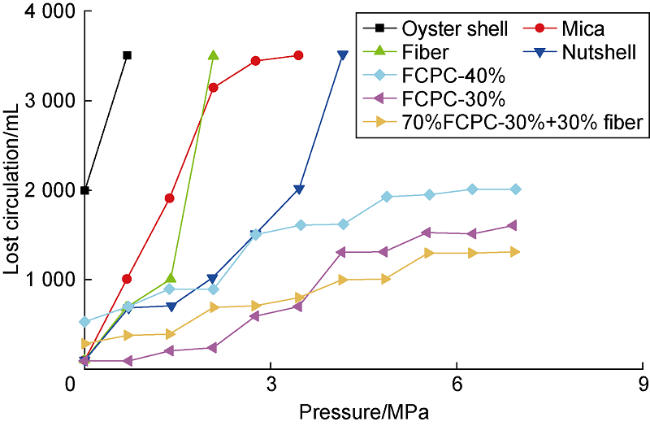


Fig. 1. Plugging performance of fiber-modified polypropylene [15]. |
3.2. Application in wellbore strengthening
Under the action of external forces, shale wellbore is prone to fracturing and necking, causing disruption to the downhole geomechanical equilibrium and even leading to the collapse of the wellbore [19]. At present, the adverse effects of drilling fluids on wellbore stability are mainly mitigated by the plugging of shale nanopores or the inhibition of shale hydration and swelling. However, conventional wellbore strengthening agents cannot fully inhibit the hydration and swelling of shale or completely prevent the free water filtration loss; they only mitigate the effect of wellbore instability to a certain extent, and they are not suitable for extremely collapsible formations.
To resolve the above problems, researchers have developed wellbore strengthening agents with adhesive properties. Drawing on the superior adhesive properties of mussel proteins, Jiang et al. [3] developed a biomimetic wellbore strengthening agent by grafting catechol groups onto the polymer backbone. The agent has excellent wellbore strengthening and inhibition properties and achieved good field application results. Sun et al. [20] prepared self-healing adhesive wellbore strengthening agents using hydrogen-bond-containing structural units such as chitosan and polyphenolic compounds. The agents can adsorb on a rock surface via hydrogen bonding or electrostatic interaction and can subsequently form a high-strength wellbore strengthening layer. Zhang et al. [21] prepared a wellbore strengthening agent by grafting acrylamide monomers onto polyvinyl alcohol to enhance the adhesion between shale particles and prevent their hydration and dispersion. Dong et al. [22] prepared a cationic polymeric wellbore strengthening agent using monomers such as dimethyl diallyl ammonium chloride, vinyl acetate, and acrylamide. The agent can bond to the clay surface through electrostatic and hydrogen bonding interactions to reduce the hydration of the clay surface.
3.3. Application in hydraulic fracturing
Proppant is the key material for improving the effect of fracturing treatment, and the most commonly used proppants currently include natural quartz sand and ceramsite. Quartz sand has low hardness and a high crushing rate, and can be used to plug fractures or pores in a reservoir easily. However, quartz sand is not applicable in high-pressure deep-well environments. Ceramsite has high hardness and high crushing resistance, but also has high density and high operation risk [23]. Meanwhile, conventional proppants are prone to form backflow in the formation, blocking oil and gas seepage channels and affecting the productivity of oil and gas wells. To solve the above problems, domestic and international researchers have developed resin-coated proppants with adhesive properties.
At present, there are two main types of resin-coated proppants, namely thermosetting resin-coated proppants (which can be subdivided into pre-cured and in-situ cured proppants) and thermoplastic resin-coated proppants. The study results by Zoveidavianpoor et al. [4] showed that coated proppants have high strength and flexibility and allow the fracture to maintain high conductivity under high pressure in deep formation (Table 1 ). Rediger et al. [24] coated a proppant with thermoplastic adhesives such as polyethylene, polypropylene, and polymethyl methacrylate. The thermoplastic resins softened and self-adhered under high-temperature conditions in the formation, effectively preventing the backflow of the proppant and better preventing the blockage of oil and gas seepage channels than non-coated proppants. Utilizing reversible hydrogen bonding interactions, Li et al. [25] developed a polyester proppant with excellent self-healing and adhesive properties, and the proppant showed great application potential in hydraulic fracturing. Xu et al. [26] prepared a self-suspending proppant by coating ceramic granules with porous resin and achieved 11 times the self-suspension capacity and 23.7% higher adhesion than conventional proppants.
Table 1. Adhesive polymers as proppant coatings and their properties [4] |
| Resin | Applicable temperature/ °C | Strength | Temperature resistance | Solvent resistance |
|---|---|---|---|---|
| Epoxy resin | 120-204 | Good | Excellent | Good |
| Furan | 190 | Poor | Moderate | Good |
| Polyester | 100-150 | Fair | Fair | Fair |
| Urea aldehyde | 120-200 | Strong | Excellent | Good |
| Polyurethane | 100-120 | Good | Good | Fair |
| Phenolic | 120-204 | Good | Excellent | Good |
| Vinyl esters | 100-150 | Fair | Fair | Fair |
| Furfural | 120-200 | Good | Excellent | Good |
| Hydrogel | 50-120 | Poor | Fair | Fair |
Compared with conventional quartz sand and ceramsite, functional adhesive-coated proppants have low density, high compressive strength, and better suspension and adhesion ability, which can effectively support artificial fractures, prevent backflow of the proppants, and improve fracture conductivity.
3.4. Application in profile control and water shut-off
During the development of old oilfields, unconventional oil and gas fields, and carbonate oilfields, many problems occurred, such as serious heterogeneity, high water cut, high temperature, and high salinity, which strongly influence the development effect [27]. The conventional underground crosslinking gels have high injection capacity and good flowability in the formation. They can penetrate into deep reservoirs, but their gelation is easily affected by reservoir temperature, mineralization, and formation shear force. Moreover, it is difficult to control their gelation time and gelation strength, and the low-permeability formation is easily being blocked. For pre-crosslinked gels, the strength and particle size can be controlled to prevent them from entering the low-permeability formation, and the gels are not affected by equipment or reservoir conditions. However, they have several problems; for example, the large particles cannot enter conventional porous media, and the small particles cannot form effective plugging in fractures and large pore channels. Therefore, they have poor capability in deep migration and profile control.
To tackle the above problems, domestic and international researchers have developed adhesive profile control and water shut-off agents based on functional adhesives. Applying the in-situ synthesis strategy, Michael et al. [28] synthesized a self-healing gel water shut-off agent with adhesive properties using polyacrylamide, hydroquinone, and graphene oxide, and its healing rate in the formation reached 77%. Chen et al. [29] developed a self- adhesive granular water shut-off agent for fracture-cavity reservoirs using materials such as acrylic resin and nitrile rubber, which can self-adhere under high-temperature conditions to form a monolithic plugging zone with high pressure-bearing capacity via the diffusion and movement of molecular chain segments. Chen et al. [30] injected phenolic resin into the formation to form a high-strength crosslinked plugging zone via curing and adhesion; the plugging zone has good salinity and temperature resistance, with a plugging rate above 90%. Zhao et al. [31] prepared an adhesive water shut-off agent using modified epoxy resin-coated particles. The experimental and numerical simulation results showed that this water shut-off agent can be used for adhesive plugging under high-temperature and high-salinity conditions at 140 °C, with a breakthrough pressure of up to 10 MPa.
Compared with conventional polymer gel water shut- off agents, functional adhesive resin-based water shut-off agents have higher resistance to temperature and salinity and can perform adhesive curing or bridging in pore throats to reduce the flow cross-section, thereby realizing effective regulation of large pore throats or fractures.
4. Challenges in the application of functional adhesives in oil drilling
Functional adhesives have excellent environmental response and adhesive properties, with wide application prospects in oil and gas drilling and production. However, there are still some problems that need to be overcome.
(1) Severe lost circulation control: functional adhesives have improved the success rate of primary lost circulation control, but they still have drawbacks such as insufficient adhesion, low pressure-bearing capacity, and high risk operation in operation safety. The adhesive properties of thermoplastic adhesive LCMs rely on the diffusion and entangled self-adhesion of polymer chain segments at high temperatures, resulting in insufficient adhesion to conventional bridging particles and fracture walls. In contrast, the application of thermosetting adhesive LCMs has a high risk in operation safety, and it is difficult to control the gelation time and strength of these LCMs. Therefore, the formulation of functional adhesive-based LCMs needs to be further optimized for application in the field.
(2) Wellbore strengthening: the functional adhesive- based biomimetic wellbore strengthening agents have excellent wellbore strengthening and inhibition properties. Good application effects can be obtained with this kind of wellbore strengthening agent, but cost is high. In addition, their wellbore strengthening capability is limited. Therefore, the synthetic monomers of adhesive wellbore strengthening agents need to be further optimized to reduce costs and realize commercial applications.
(3) Hydraulic fracturing proppant: the functional adhesive-coated proppants have low density and good compression resistance, which can prevent the backflow of proppants. However, the coated proppants still have some limitations. With pre-cured coated proppants, three-dimensional ground crosslinked structures can be formed. But under high temperature, the adhesion capability is insufficient and capability to prevent the backflow of proppants is limited. Curable coated proppants melt and cure at high temperatures, but the curing time is not controllable; the thermoplastic resin-coated proppants can adhere via melting, but during this melting process, it is easy to cause insufficient compressive strength.
(4) Improving profile control and water shut-off: the functional adhesive-based profile control and water shut-off agents have overcome some shortcomings of conventional water shut-off agents, and have improved the recovery efficiency, allowing for wide application prospects. However, the existing products still have certain limitations. Polymer gel water shut-off agents have poor temperature resistance, which weakens the gel strength; in addition, thermoplastic or rubber self-adhesive water shut-off agents have poor adhesive properties, affecting their plugging effect on fractures/cavities. The curing time and strength of thermosetting resin based on underground crosslinking are difficult to control, and the risk in operation safety is high.
5. Application prospects of functional adhesives in oil drilling and production
5.1. Application prospects in lost circulation control
Thermoplastic adhesive LCMs are injected into fractures as particles, with advantages of easy use and high operation safety, being one of the LCMs with the most promising prospects. However, the adhesive strengths of the LCMs in fractures still need to be further improved. The main approaches for this are (a) Improving the initial and final adhesive strength through blending modification; and (b) Developing thermoplastic LCMs with curable properties. For example, blending modification of thermoplastic adhesives with tackifying resin, acrylic resin, or maleic anhydride to accelerate the diffusion rate of molecular chain segments of the LCMs at high temperatures and enhance their wettability and adhesion to the fracture surface and bridging LCMs, thus improving the pressure-bearing lost circulation control capability of the plugging zone. The sealing agent can be used for protection, including NCO, silane modification, or thermoplastic polymers such as polyurethane modified by introducing thermal reversible covalent bond so that it can melt and bond the bridging LCMs at high temperature and then cure into a high-strength plugging zone. Thermoplastic LCMs are widely sourced due to their low cost and high temperature resistance. They can be used in combination with conventional bridging LCMs to improve the pressure-bearing capacity and the success rate of primary lost circulation control and are expected to solve the problem of severe lost circulation encountered during the drilling process.
5.2. Application prospects in wellbore strengthening
Underwater adhesives based on catechol-like compounds (e.g., tannic acid) and polyacrylamides have the advantages of low cost and good adhesive properties, which have made them one of the important research directions for wellbore strengthening agents. However, the presence of a hydrated cation layer attached to the wall surface might prevent the contact between the rock wall surface and the catechol-like groups, thus preventing the formation of chemical or hydrogen bonds between the catechol-like groups and the substrate surface. In view of this, a positively charged structure can be introduced into the adhesive wellbore strengthening agent to remove the hydrated cations using electrostatic repulsion, which can reduce the contact resistance between the catechol-like groups and the rock surface. After the introduction of a positive charge in adhesive polymers containing catechol-like groups, the wellbore strengthening agents demonstrate a strong capability to adhere to the wall with high adhesive strength and superior adhesive properties in high-temperature drilling fluids. They can adhere to the surface of shale to improve its strength, and their production cost is lower than that of catechol-based wellbore strengthening agents. They are expected to solve the problems of wellbore instability and the narrow density window encountered during the drilling process.
5.3. Applications in hydraulic fracturing
Thermosetting resin-based proppants have strong mechanical properties and heat resistance, but with insufficient adhesion in fractures. Thermally reversible bonds such as disulfide bonds, ester bonds, and Diels-Alder bonds can be introduced into the thermosetting resins to endow the coating with adhesive self-healing properties under high-temperature conditions, improving the adhesion capability of these resins for the development of novel adhesive-coated proppants. Under lower temperatures, the particle size of adhesive-coated proppants is smaller than that of conventional proppants. Adhesive-coated proppants can be effectively transported to the deep region of complex fractures and can be settled in secondary fractures. Subsequently, under high-temperature conditions of the formation, the adhesive proppant is activated, and can be bonded into larger particles, thereby increasing the strength of proppant, forming effective support in the fracture, and preventing proppant backflow. During the flow into the fracture, the adhesive-coated proppant can adhere to the fracture wall surface, reducing proppant embedment while protecting the fracture wall surface from hydration. Novel adhesive-coated proppants have the advantages of pre-cured and in situ cured coated proppants, with strong compression resistance and superior adhesive properties. The delivery distance and placement range of proppants in complex fracture networks are enlarged to effectively prevent proppant backflow and maximize the opening of fractures.
5.4. Application in profile control and water shut-off
In the field of profile control and water shut-off, the most important direction in research of adhesive water shut-off agents at present is to improve the temperature and salinity resistance of adhesive water shut-off agents, improve the adhesive plugging capability, and operation safety. Adhesive water shut-off agents combine the advantages of underground crosslinking and pre-crosslinked agents, and can be constructed through the introduction of thermally reversible covalent bonds into the water plugging agents. For example, by introduction of thermally reversible covalent bonds into polyurethane, adhesive water plugging agent particles with a ground crosslinked three-dimensional network structure can be formed through polymerization reactions. This process involves three steps: (a) When entering into a high-water bearing formation, the particles can be activated by the high temperature; they melt and then self-adhere under the action of dynamic covalent bonds to achieve water plugging. (b) Polyurethane materials contain a large number of carbamates, carbonyl groups, urea groups, and ether-oxygen bonds, which can easily form hydrogen bonds, and can adhere to the walls of pores in the formation. (c) The -NCO groups deblock at high temperatures and react with compounds containing active hydrogen and water in the reservoir to expand the chains and form a three-dimensional crosslinked network structure with excellent resistance to salinity, temperature, and hydrolysis.
When the particles of conventional water shut-off agents are large, the conventional water shut-off agents are difficult to enter the deep part of porous medium, and are prone to accumulate at the injection end and damage the production formation. In comparison, adhesive particles can pass through large pore throats via high-temperature melt deformation, enter the deep part of pores under the action of pressure difference, and adhere to the surface of the pores. When the adhesive particles are small, they can enter the deep part of porous media smoothly, and then form adhesive bridging, curing, or adhesion in pores or cavities. Adhesive water shut-off agents have high temperature resistance and superior adhesive and mechanical properties. They are easy to be injected due to their controllable particle size and have excellent deep migration capability. They can smoothly enter the deep part of porous media to realize effective regulation of large pore throats, thus significantly improving the affected range of subsequent water flooding. It is expected that they can be used to solve the problem of low recovery rate of water flooding in high-temperature, high-salinity, and fracture-cavity reservoirs.
6. Conclusions
Different types of functional adhesives have varied adhesion mechanisms, bonding strengths, and applicable conditions. During the development of specific main materials for oil and gas drilling and production, suitable functional adhesives such as thermoplastic, thermosetting, elastomers, and composite adhesives can be selected based on adhesion mechanisms such as diffusion, chemical bonding, or electrostatic adsorption to match the functions required for LCMs, wellbore strengthening agents, proppants, and profile control and water shut-off agents.
Functional adhesives are widely sourced, being low in cost, and can adapt to complex formation environments, with broad application prospects in oil and gas drilling and production. As LCMs, when they are activated by high formation temperatures, functional adhesives can form a high-strength plugging zone by adhering to the bridging LCMs and fracture wall surface in the lost circulation channel through the interaction of polymer chain diffusion and covalent bonding. As wellbore strengthening agents, they can accumulate at the wall and microfractures through hydrogen bonding, chemical bonding, or electrostatic adsorption to maintain the stability of the wellbore. As proppant coatings, they can improve the toughness of the proppant and effectively adhere under the formation conditions to control the proppant backflow and maintain the high conductivity of the fracture. As profile control and water shut-off agents, they can be used in large pores or fractures to adhere to and plug the dominant water flow channel, increasing oil production and controlling water cut and improving the development effect of water flooding.
Researchers in China and abroad have made some progress in the research on the types, properties, and adhesion mechanisms of functional adhesives, but the research and application of functional adhesives in oil and gas drilling and production are still relatively limited. In the future, when developing functional adhesives, researchers should consider geological, engineering, and material factors, and make clear about their operation and action mechanisms to further improve the applicability and economic efficiency of these adhesives.