

Introduction
The lacustrine shale oil has become an important area for increasing reserves and production in China. In recent years, several national demonstration zones for lacustrine shale oil have been successively established, marking the entry of the lacustrine shale oil in China into the stage of large-scale exploration and development. In 2023, the shale oil production exceeded 400×104 t in China, serving as a significant supplement to maintaining a stable oil production at 2×10⁸ t [1-2]. The current production of lacustrine shale oil in China mainly comes from medium-to-high maturity shale oil formations, with tight-oil type shale oil being predominant [3], which is mainly originated from tight sandstones interbedded with organic-rich shales. In 2023, the interval of the first to second submembers of the seventh member of the Triassic Yanchang Formation (denoted by Chang71+2 submember) in the Ordos Basin produced 267×104 t of shale oil, accounting for over 50% of the total shale oil production in China. Low-to-medium maturity shale oil refers to the shale oil originated from shales with a vitrinite reflectance (Ro) of 0.5%-0.9% (0.5%-0.8% in salinized lake basins). It is produced through non-in-situ conversion (i.e. horizontal well and volumetric fracturing) as a trial, primarily from shales in salinized lake basins. Typically, in the third and fourth members of the Paleogene Shahejie Formation (Sha3-Sha4 members) in the Jiyang Depression and the second member of the Paleogene Kongdian Formation (Kong2 Member) in the Cangdong Sag of the Huanghua Depression, Bohai Bay Basin, the production tests have revealed high yields and a high estimated ultimate recovery (EUR) per well. Their enrichment and flow characteristics are similar to those of medium-to-high maturity shale oil. Sediments in salinized lake basins require a lower activation energy for organic matter conversion to hydrocarbons and generate a much larger quantity of liquid hydrocarbons at low-to-medium maturity stage than shales in freshwater lake basins [4]. With a higher proportion of carbonate minerals and good shale brittleness, multiple types of fractures are easily generated [5⇓-7], facilitating shale oil enrichment and flow. However, low-to-medium maturity shale oils generally exhibit relatively low proportions of light and medium hydrocarbon components, but high proportions of heavy hydrocarbons, resins, and asphaltenes (greater than 25%), and low gas-oil ratios (GOR, mostly less than 50-80 m³/m³), indicating overall poor fluidity.
The shale oil discussed in this work mainly refers to the oil in shales at medium-to-high maturity stages, and shale oil formed by non-in-situ conversion in salinized lake basins that, despite being at low-to-medium maturity stage, exhibits enrichment and flow characteristics similar to medium-to-high maturity shale oil, primarily represented by the hydrocarbons retained in the micro/nanopores of pure shale, known as pure shale oil [1]. Such shale oil is a mixture of multi-component hydrocarbon substances [8⇓-10], comprising gaseous hydrocarbons (C1-4), light hydrocarbons (C5-13) and medium hydrocarbons (C14-25) not migrated from the source rocks, as well as heavy hydrocarbons (C26+), resins and asphaltenes, alongside varying amounts of incompletely converted solid organic residues. The composition is complex, variable, unevenly distributed, and bound by strong adsorption capacities of clay minerals and capillary forces in micro/nanopore throats [11⇓⇓⇓-15]. Therefore, it is much more challenging to maximize the recovery of such complex and heterogeneously distributed multi-component hydrocarbon substances than conventional oil and tight oil. To enhance single-well production and cumulative recovery of pure shale type shale oil, the conditions for reaching the optimal fluidity and outflow of heavy hydrocarbons, resins, and asphaltenes should be considered beyond traditional hydrocarbon phase behaviors and flow mechanisms.
Shale oil in tight sandstones and carbonate rocks interbedded with organic-rich shales has experienced a micro-migration process. Hydrocarbon filtering through micro-/nano-“sieves” composed of clay minerals in the source rocks leaves a significant retention of heavy hydrocarbons, resins and asphaltenes within the source rocks. Only the sieved hydrocarbons can migrate and accumulate in tight reservoirs, representing the relative enrichment of mobile hydrocarbons. Therefore, discussing the “component flow” of such shale oil is evidently not as critical or urgent as understanding the retention of hydrocarbons in the micro/nanopores of pure shale.
Based on the production curves, production systems, and changes in composition and quantities of produced hydrocarbons over time from key trial production wells in the lacustrine shale oil areas of China, experiments of fine fraction cutting and effects of changes in shale oil composition on macroscopic fluidity, as well as molecular dynamics numerical simulations, were conducted. The concept of “component flow” for shale oil was proposed, and the formation mechanism and conditions of component flow were discussed. The research findings are expected to provide a theoretical basis for achieving optimal production and maximum EUR of pure shale type shale oil, thereby driving its extensive and profitable development.
1. Connotation and formation mechanism of “component flow” in shale oil
1.1. Connotation and example analysis
The concept of “component flow” in shale oil as described here refers to the initial flow behavior of multi- component hydrocarbons, resins, and asphaltenes that are retained in micro/nanopores of underground shales. When these components begin to flow, they undergo phase mixing according to the principles of similarity and intermiscibility, which enhances the fluidity of heavy hydrocarbons and heavy components. Heavy hydrocarbons, resins and asphaltenes suspend as molecular aggregates of varying scales in the light and medium hydrocarbons. This is akin to the phenomenon of sediment suspended in swiftly flowing floodwater, where the sediment would not settle to the riverbed, as long as the flow remains steady and laminar. However, if the flow transitions suddenly from laminar to turbulent, for instance, when floodwaters are blocked off, the sediment loses its suspension capability and settles on the riverbed. Similarly, for lacustrine shale oil hosted in micro/nanopores, without sufficient quantities of light and medium hydrocarbons, it becomes challenging for heavy hydrocarbons, resins, and asphaltenes to flow or sustain significant flow. Component flow can effectively improve the fluidity of large-molecular heavy hydrocarbons, resins and asphaltenes. This allows more heavy hydrocarbons and heavy components to flow out of the reservoir, thereby increasing the cumulative recovery of shale oil. Therefore, this concept plays a crucial role in improving the economic recoverability of shale oil.
Shale oil production involves the flow of components from the formations into the fracturing-induced channels and wellbore, or from narrow micro/nanopores to millimeter-scale or larger pore/fracture spaces. Within the reservoir, shale oil components include heavy hydrocarbons, resins, and asphaltenes with high relative molecular mass, and light and medium hydrocarbons with low relative molecular mass. During production after fracturing, light hydrocarbons and small-molecular medium hydrocarbons can more easily pass through the micro-/ nano-pore-throats. In contrast, heavy hydrocarbons, resins, and asphaltenes tend to aggregate under the actions of π-π bonding, hydrogen bonding, and van der Waals force [16⇓-18]. Their larger molecular sizes make it difficult for them to pass through the pore-throats, or they may be adsorbed by clay minerals.
1.1.1. Composition of typical lacustrine shale oil
In different regions of China, the composition of lacustrine shale oil varies significantly. According to statistics on compositions of typical lacustrine shale oils in China, the content of alkanes and aromatics ranges from 68% to 92%, while the content of resins and asphaltenes ranges from 8% to 32%, with an average of 22% (Fig. 1a ). In shale oil hosted in high maturity (Ro>1.2%) shales and tight silty-fine sandstones, the content of alkanes and aromatics is high, while the content of resins and asphaltenes is low. For example, in the crude oil from the Cretaceous Qingshankou Formation in the Gulong Sag of the Songliao Basin, alkanes and aromatics account for 90%, while resins and asphaltenes less than 10%. Similarly, in the shale oil from the Yanchang Formation of the Qingcheng Oilfield, Ordos Basin, the content of alkanes and aromatics is 86%, and the content of resins and asphaltenes is below 15%. Conversely, in shale oil hosted in medium-low maturity (Ro<0.9%) shales, the content of alkanes and aromatics is low, the content of wax components (C22+) is high, and the content of resins and asphaltenes is relatively higher. For instance, in the shale oil from the Kong2 Member of the Cangdong Sag, Bohai Bay Basin, alkanes and aromatics constitute approximately 69%, while resins and asphaltenes take up 31%; the wax content of alkanes ranges from 30.6% to 43.2%, with an average of 37.7%. In the crude oil from the Sha3-Sha4 members in the Jiyang Depression of the Bohai Bay Basin, the content of alkanes and aromatics in crude oil is about 70%, while the content of resins and asphaltenes is about 30%; the wax content of alkanes ranges from 23.2% to 35.0%, with an average of 28.7%. The distribution of normal alkanes (n-alkanes) also varies among different lacustrine shale oils (Fig. 1b ). In freshwater basin shale oils, the carbon number of alkanes is in the range of nC8-25, with a predominance of light and medium hydrocarbons, and heavy hydrocarbons (nC26+) of 10%-28% (avg. 18.4%). With increasing thermal maturity, the nC26+ component notably decreases. Overall, for lacustrine shale oils in China, the proportion of resins and asphaltenes is relatively high, and the content of heavy hydrocarbons in alkanes is high. Both are significant factors influencing the fluidity and cumulative recovery of shale oil. Particularly in pure shale intervals, where clay mineral adsorption and micro/nanopore confinement effects [19] are more pronounced, the fluidity and outflow of shale oil would be significantly reduced if no sufficient quantities of light and medium hydrocarbons exist and mix with these components, thereby impeding the economic recoverability of shale oil.
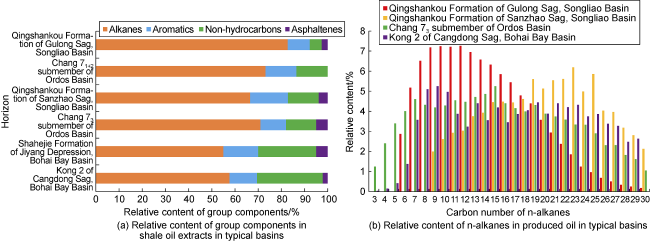
Fig. 1. Distribution of group components of typical lacustrine shale oil extracts and n-alkane content in produced oil in China. |
In contrast, marine shale oils in North America typically exhibit higher total alkanes and aromatics, ranging from 87% to 92%, and a lower content of resins and asphaltenes, being only 8%-13%. For example, shale oil from the Bakken Formation in the Upper Devonian to Lower Carboniferous in the Williston Basin shows a content of alkanes and aromatics of 87.7% and a content of resins and asphaltenes of 12.3%. This composition is similar to the shale oil in the Gulong Sag of the Songliao Basin and the Chang71+2 submember tight oil type shale oil in the Ordos Basin in China, but lighter than the Chang73 pure shale type shale oil and shale oils from salinized lake basins.
1.1.2. Case analysis
To confirm the presence of component flow in lacustrine shale oil, the composition of shale oil from several trial production wells on Platform 5 in the Cangdong Sag was systematically analyzed [4] to observe how it changes in different production stages (Fig. 2 ). For Well Guan 5-1-1L, with a Ro value of 0.95% for the Kong2 Member shale, whose trial production commenced in February 2021. The oil samples taken on March 3 show two peaks (nC8 and nC23) on the chromatogram map, with the former having a higher abundance, indicating a predominance of light and medium hydrocarbons. The samples taken one week later reveal a significant decrease in light-to-medium hydrocarbons and a notable increase in heavy hydrocarbons. This shift suggests a phenomenon where light and medium hydrocarbons flow out before heavy hydrocarbons migrate.
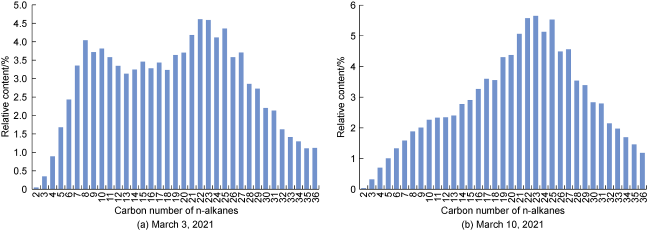
Fig. 2. Chromatograms of shale oil components at different production times from Well Guan 5-1-1L in Cangdong Sag, Bohai Bay Basin. |
To further observe the variation in shale oil components during the trial production process, the production performance and total hydrocarbon chromatograms of Well Guan 5-3-1L were analyzed (Fig. 3 and Fig. 4 ). Initially, during the rising production stage from March to May 2021, there are two peaks, nC11 and nC23 (Fig. 4a , 4b), indicating certain proportions of light and medium hydrocarbons. Subsequently, as production declines, the content of light hydrocarbons gradually decreases (Fig. 4c , 4d). About four months later (at the end of September 2021) and in November 2021 (Fig. 4e , 4f), the content of light hydrocarbons increases again to a level similar to that of heavy hydrocarbons. In this period, the production rate remains stable at 25-30 m3/d. The production system of this well indicates a sharp decline in production after half a year of trial production, followed by wax removal from the wellbore, suggesting an accumulation of wax or heavy hydrocarbon components at the bottom near the wellbore, which might have blocked some micro-/nano-pore throats to disable the further flow of heavier components out of the formation. This may be a contributor to the increase in light and medium hydrocarbon contents. Alternatively, changes in reservoir pressure may have initiated the flow of oil and gas in previously inactive pores during initial production, aiding in increasing shale oil production and cumulative recovery. This case illustrates that in the early stages of shale oil production, a relatively higher formation energy enables the rapid flow of light, medium, and heavy hydrocarbons, thus supporting a higher flow rate. Over time, heavy hydrocarbons increase in relative content and accumulate locally to block some pores, leading to production decline. Following wax removal, a new miscible flow is formed by shale oil, alongside a recovery in formation energy. Upon reopening the well, production increases again but for a shorter duration. Similar cyclic variation is observed in other wells in the area. To be specific, when the contents of gaseous, light, and medium hydrocarbons are high, heavy hydrocarbons, resins and asphaltenes dissolve in the solvent of light and medium hydrocarbons according to the principles of similarity and intermiscibility, enabling them to flow more easily from the formation to the wellbore, thereby enhancing single-well production. As formation energy reaches a new level, the resulting pressure differential drives the flow of previously stagnant shale oil, which will increase light and medium hydrocarbons and also "dissolve" heavy hydrocarbons and heavy components, further stabilizing the single-well production and increasing the EUR.
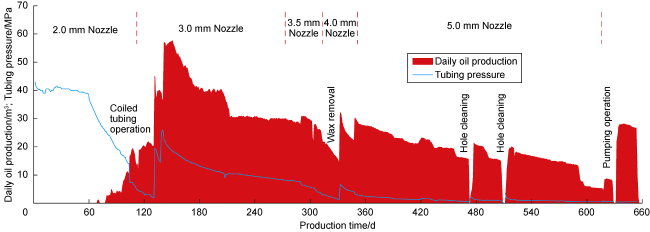
Fig. 3. Shale oil production performance of Well Guan 5-3-1L in Cangdong Sag, Bohai Bay Basin. |
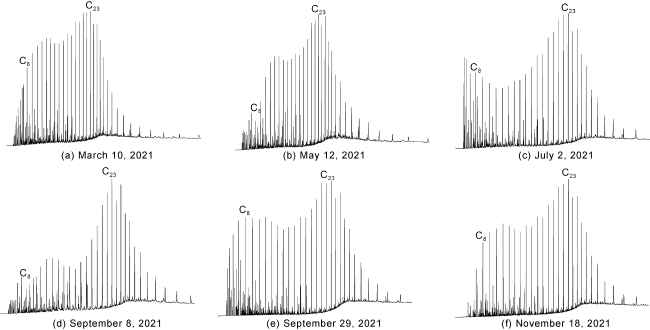
Fig. 4. Chromatograms of n-alkanes in shale oil produced on different dates from Well Guan 5-3-1L in Cangdong Sag, Bohai Bay Basin (modified from Ref. [20]). |
The shale oil of Gulong Sag in the Songliao Basin is retained in micro/nanopores of pure shales. It is characterized by high maturity, a high content of gaseous hydrocarbons, and a high GOR of 400-500 m3/m3, with the content of alkanes and aromatics over 90% and the content of resins and asphaltenes less than 10%. Component flow behaviors also exist among alkanes of different carbon numbers and molecular weights. Analysis of the crude oil from Well G1 (Fig. 5 ) shows that during initial production, the shale oil production rate gradually increases to over 10 t/d, peaking at 14 t/d. At this stage, the crude oil exhibits a high relative molecular weight up to 200 and a GOR exceeding 1 000 m3/m3. The alkanes show two peaks (nC10 and nC19), with a ΣC15−/ΣC15+ value of 0.7, indicating a simultaneous high flow rate of light and heavy components after effective mixing. From 45 d to 80 d, the GOR decreases to 500 m3/m3 and keeps stabilizing at this level. The relative molecular weight of the crude oil remains around 100. The single-well production rate was maintained at 8-10 t/d, with a crude oil density of 0.79-0.80 g/cm3, suggesting a stable flow of components with balanced light and heavy hydrocarbons. After three months of trial production, the GOR further decreases to 300-500 m3/m3, and the relative molecular weight drops below 100. The crude oil density decreases to below 0.79 g/cm3, and the single-well production rate declines to 5-8 t/d. At this stage, alkanes exhibited only one peak (nC9), with the ΣC15−/ΣC15+ value increasing to 1.2, indicating a predominant presence of light hydrocarbons and a significant reduction in heavy hydrocarbons. This process illustrates that during production, gaseous hydrocarbons and light hydrocarbons preferentially flow out [20⇓-22], resulting in decreasing production and GOR, while heavy hydrocarbons and heavy components tend to accumulate in micro/nanopores, possibly blocking some of them or narrowing the pore throats further. As a result, during late production, heavy hydrocarbons, resins and asphaltenes cannot flow through finer pore throats [16⇓-18]. Consequently, there is more light hydrocarbons and less heavy hydrocarbons in the produced shale oil. These observations underscore the critical role of gaseous hydrocarbons, similar to light hydrocarbons, in promoting component mixing and maintaining high flow rates of heavy hydrocarbons and heavy components.
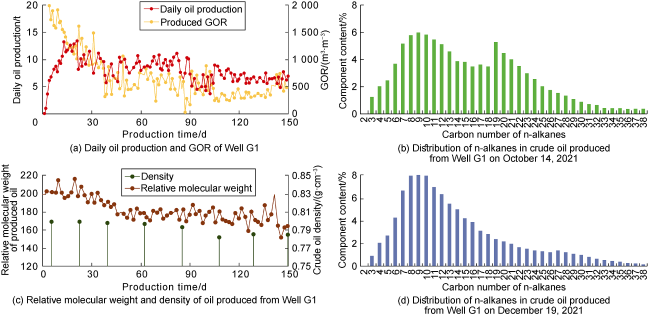
Fig. 5. Variation of produced oil composition over time in the sweet spot of the 3rd oil layer in Well G1 of the Qingshankou Formation, Songliao Basin (modified from Reference [20]). |
The above findings indicate that component flow in shale oil is indeed present. Due to the fabric heterogeneity of shale and the difference in shale oil composition, shale oils formed in different environments exhibit distinct characteristics of component flow. In the Cangdong Sag, the Kong2 Member shale oil has a low maturity, a relatively high content of resins and asphaltenes, and a low GOR (less than 80 m3/m3). The composition of shale oil here is not conducive to forming an extensive component flow. However, the Kong2 Member shale comprises mixed lithofacies, with a low clay mineral content (avg. 15%). The weak adsorption capacity of clay minerals on heavy hydrocarbons, resins and asphaltenes, coupled with the large diameter of micro/nanopores ranging from 10 nm to 500 nm [23], facilitates the flow of large-molecular aggregates such as resins and asphaltenes. In contrast, the shale oil in the Gulong Sag has higher maturity, a lower content of heavy hydrocarbons, resins and asphaltenes, and a higher GOR (400-500 m3/m3). The composition of shale oil here favors the formation of extensive component flow. However, the Qingshankou Formation consists of clayey shale with clay content approaching 40% [24], and predominant pore sizes ranging from 10 nm to 30 nm, but a small proportion of pores larger than 50-100 nm, thereby indicating a high capacity of adsorption on heavy hydrocarbons, resins and asphaltenes. Without creating conditions that facilitate thorough and stable mixing of multi-component hydrocarbons, the heavy hydrocarbon components can hardly flow out. Therefore, it is essential to understand the significance of component flow and its environmental conditions for achieving higher EUR of shale oil in the Gulong Sag.
1.2. Formation mechanism
The component flow for shale oil is essentially a behavior in which the multi-component hydrocarbons in the micro/nanopores of underground shales flow continuously and stably to the maximum extent, as miscible fluid formed according to the principles of similarity and intermiscibility, out of the formation under a certain pressure differential, thereby maximizing the shale oil production. The key to initiating and maintaining component flow is to separate large-molecular aggregates such as heavy hydrocarbons, resins, and asphaltenes into smaller aggregates, and modify the plasticity of these smaller aggregates to enhance their fluidity. Dilution of heavy oil with light oil to reduce viscosity exemplifies this phenomenon, as illustrated in Fig. 6 . In this process, medium hydrocarbons in the light oil act as solvents, breaking down the large-molecular heavy hydrocarbons and heavy components such as asphaltenes in the heavy oil from micro/nano-scale aggregates into multiple nano-scale aggregates, thereby reducing viscosity and improving fluidity.
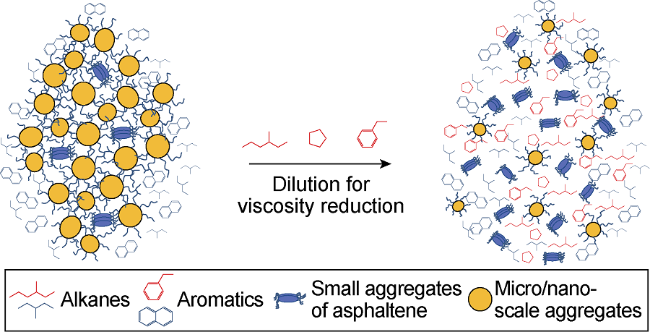
Fig. 6. Schematic diagram of the dilution of heavy oil with light oil to reduce viscosity. |
To simulate the viscosity reduction process of heavy oil, the fraction above 540 °C separated from the Kong2 Member shale oil in the Cangdong Sag was mixed with toluene. The toluene was used to dilute the original concentration to 10% and 1% of the original level, and then the size changes of asphaltene molecular aggregates were observed. The experimental results are shown in Fig. 7 . At the original concentration of 2 000 mg/L, the asphaltene molecular aggregates range from 1 µm to 5 µm. When diluted to 10% of the original concentration (200 mg/L) with toluene, the aggregate size decreases to 20-200 nm. Further dilution to 1% of the original concentration (20 mg/L) reduces the aggregate size to 5-11 nm, roughly equivalent to small aggregates formed by 5-6 asphaltene molecules. This indicates that adding light and medium hydrocarbons to heavy hydrocarbons and heavy components can significantly reduce the size of heavy component aggregates, thereby improving the fluidity of heavy hydrocarbons and asphaltenes. The principle is that light and medium hydrocarbons penetrate into the micro/nano-scale aggregates, reducing the interactions between asphaltene aggregates and breaking them into smaller aggregates, thus allowing them to more easily flow out of micro/nanopores. By examining the alkane composition of typical shale oils in China, it is found that for medium-to-high maturity shale oil with Ro≥0.9% (Ro≥0.8% in salinized lake basins), a ΣC15−/ΣC15+ value greater than 0.8 facilitates the formation of good component flow. Typical examples are the shale oils from the first member of the Cretaceous Qingshankou Formation in the Gulong Sag and the Triassic Chang73 Member in the Ordos Basin, with the ΣC15−/ΣC15+ values ranging from 0.8 to 1.5. For low-medium maturity shale oil in salinized lake basins with Ro of 0.6%-0.8%, the ΣC22−/ΣC22+ value is used as a fluidity indicator, with values greater than 1 being favorable for component flow.
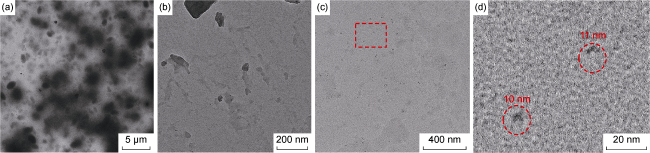
Fig. 7. Asphaltene solution dilution experiment for Kong2 Member shale oil in Cangdong Sag, Bohai Bay Basin. (a) Original asphaltene solution with a concentration of 2 000 mg/L; (b) Original asphaltene solution 10x diluted with toluene, resulting in a concentration of 200 mg/L; (c) Original asphaltene solution 100x diluted with toluene, resulting in a concentration of 20 mg/L, with the red box indicating the area shown in (d); (d) Magnified view of (c), showing aggregate diameters ranging from 5 nm to 11 nm. |
Using the Kong2 Member shale oil in the Cangdong Sag as an example, the mechanism of viscosity increases by heavy hydrocarbons on resins and asphaltenes was explored. The fractions of C9-11, C19-24, C24-32, and C38+ distillated from shale oil at 160-180 °C, 340-360 °C, 440-460 °C, and over 540 °C were mixed to observe the size changes of asphaltene aggregates. The fraction obtained at over 540 °C approximately represents resins and asphaltenes, and it was mixed with each of the first three fractions at 200 mg/L. It is observed that as the hydrocarbon composition becomes heavier, the size of the asphaltene aggregates increases from 40 nm to 0.5-1.0 µm, leading to higher viscosity and reduced fluidity. This indicates that during production, as light and medium hydrocarbons decrease, heavy hydrocarbons and heavy components become relatively enriched, resulting in larger asphaltene aggregates and poorer fluidity. This not only blocks micro/nanopores but also reduces overall fluidity, ultimately leading to a decrease in cumulative recovery.
Using the stretched molecular dynamics (SMD) method [25-26], the flow process of multi-component hydrocarbons at micro/nano-scale was simulated [27⇓⇓⇓⇓-32]. Based on the components of the Kong2 Member shale oil, C23H48, C13H10, C41H47NS, and C47H41ONS were selected to represent alkanes, aromatics, resins and asphaltenes, respectively, and construct the crude oil composition in a mass ratio of 50:20:20:10. The SMD method applied a spring force to the model. As the spring force increased from zero, it caused the molecules to resist thermal motion and start moving. The simulation temperature was set at 150 °C, and the wall pressure was 45 MPa, consistent with the subsurface conditions of the Kong2 Member shale oil. The simulation time was 5 ns. By analyzing the displacement trajectories and flow states of the fluid during the simulation, it is observed that the displacement of shale oil molecules is minimal near the pore wall, and increases gradually from the pore wall to the center of the pore (Fig. 8 ), indicating that the flow velocity of the fluid is the highest in the center of the pore. This demonstrates that the closer to the center of the pore, the less the fluid is constrained by the forces exerted by the pore walls, making the fluid flow more easily.
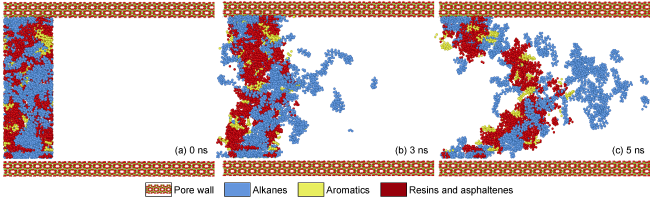
Fig. 8. Flow states of multi-component alkanes in pores at different times in simulation experiments. |
Furthermore, group components exhibit varying occurrence and flow characteristics within pores. The flow velocity of light and medium hydrocarbons is higher than that of resins and asphaltenes. Generally, due to the interaction forces between pore walls and fluid molecules, the relative mass densities of component molecules fluctuate significantly near the pore walls, displaying multilayer adsorption characteristics and forming a solid-like layer at the wall. As the distance from the pore wall increases, the amplitude of density fluctuations decreases (Fig. 9 ). However, the density of resins and asphaltenes is higher and the number of adsorption layers is greater compared to alkanes and aromatics. In the bulk phase region farther from the wall, the four components begin to mix. Analysis indicates that the initiation pressure of the fluid at the pore center is significantly low, making it easier to flow. Therefore, the flow mechanism of shale oil in confined nanopores differs from that in conventional reservoirs. Heavy components such as resins and asphaltenes are more likely to be constrained by the pore walls, forming adsorption layers. The coincidence of distribution between resins and asphaltenes with aromatics in Fig. 8 indicates that they can form micro-/nano-scale aggregates through π-π bonds. If an appropriate amount of light and medium hydrocarbons is present in micro/ nanopores, the heavy components can remain suspended in the light and medium hydrocarbons in the form of smaller aggregates, facilitating component flow and thereby increasing the cumulative recovery of shale oil.
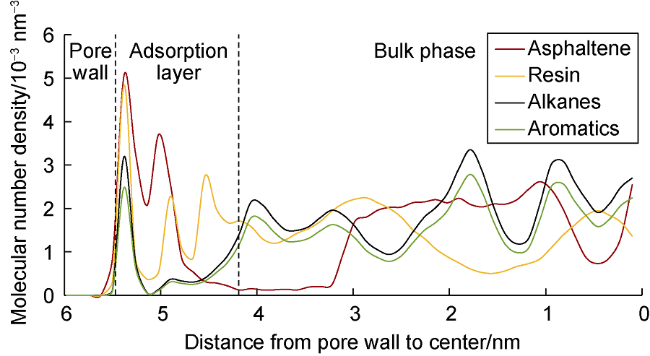
Fig. 9. Relative mass density variation of components of shale oil in 8.9 nm pores at 5 ns. |
2. Formation conditions for “component flow” in shale oil
In the development of lacustrine shale oil, the ability of hydrocarbons retained in micro/nanopores to form stable component flow is crucial for enhancing shale oil outflow and single-well productivity. Gaseous hydrocarbons, light hydrocarbons, and medium hydrocarbons act as carriers for overall component flow. Higher formation temperatures and energy fields can reduce the viscosity of heavy components, increasing the driving force for shale oil flow. Good preservation conditions and stable production systems can maintain the content of light hydrocarbons in the formation and the stability of component flow and control the outflow rate of light and medium hydrocarbons, thereby achieving optimal shale oil fluidity and maximum outflow.
2.1. High content of light and medium hydrocarbons in the formation is the basis for component flow
A high content of light and medium hydrocarbons in the formation is fundamental to the formation of component flow. On one hand, these hydrocarbons have small molecular sizes (0.38-1.67 nm), making them easily pass through the micro/nanopores of the shale. On the other hand, their weak polarity results in weak adsorption interaction with pore walls. Most importantly, light and medium hydrocarbons act as excellent solvents for large- molecular heavy hydrocarbons to disperse flocculated aggregates such as asphaltenes into nano-scale aggregates, reducing the viscosity and increasing the solubility and fluidity, thus facilitating their passage through shale micro/nanopores.
The relationship between the composition of the Kong2 Member shale oil and single-well productivity indicates a strong positive correlation between the ΣC1-13/ΣC14+ value with the single-well production and crude oil viscosity. When this ratio exceeds 0.5, the daily production per well exceeds 15 m³, and the cumulative production of a kilometer-long horizontal section surpasses 1.4×10⁴ t, with crude oil viscosity at 50 °C generally less than 50 mPa∙s (Fig. 10 ). This suggests that an increase in light hydrocarbons significantly reduces the viscosity of shale oil. Analysis of the oil extracted from Well GYYP-1 in the Gulong Sag in Daqing at different times shows a positive correlation between the fluidity of resins + asphaltenes and the content of aromatics. Such a ratio for the shale oil in the Gudong Sag is nearly 1:1, indicating that aromatics are effective carriers for the flow of resins and asphaltenes.
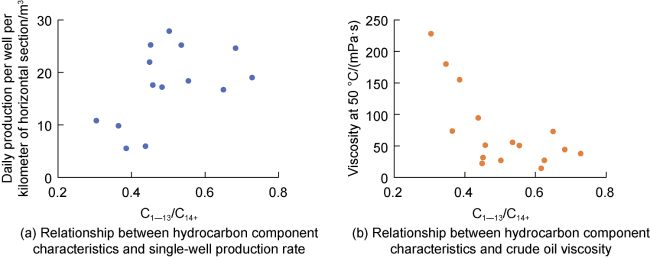
Fig. 10. Relationship between hydrocarbon component content, single-well production per kilometer and crude oil viscosity for Kong2 Member shale oil, Cangdong Sag. |
Experiments have shown that the hydrocarbons in shale oil play varying roles in component flow. Hydrocarbons with low boiling points (lower than 400 °C), primarily C1-25 light and medium hydrocarbons, have relatively weak polarity, making them less likely to form multi-molecular aggregates. They have low viscosity and good fluidity at formation temperatures. Higher boiling point components, mainly heavy hydrocarbons, resins and asphaltenes, have large molecules with stronger polarity, readily forming multi-molecular aggregates with high viscosity and poor fluidity. By fractionating the Kong2 Member shale oil at 20 °C intervals, 25 distillation fractions with boiling points ranging from 60 °C to 540 °C were obtained. Gas chromatography analysis of fractions at each temperature range identified the carbon number ranges of hydrocarbons. Fractions with boiling points less than 220 °C are primarily C1-13 light hydrocarbons, those of 220-400 °C are primarily C15-25 medium hydrocarbons, and fractions of over 400 °C consist of C26+ heavy hydrocarbons, resins and asphaltenes. High-resolution mass spectrometry analysis reveals the average carbon numbers of resins and asphaltenes to be C41 and C42, respectively.
At 30 °C, fractions with boiling points lower than 360 °C exhibit viscosities below 10 mPa·s, indicative of low-viscosity crude oil. In contrast, fractions with boiling points higher than 360 °C have a high wax content, with viscosities exceeding 1 000 mPa·s at ambient temperature, indicative of a solid state. At this temperature, adding different fractions at a 10% mass fraction to the shale oil reveals that light and medium hydrocarbon fractions with boiling points lower than 360 °C have a viscosity-reducing effect on shale oil (Fig. 11 ). Specifically, fractions with boiling points lower than 220 °C (C1-14) provide the most significant viscosity reduction of 74%-88%. Fractions with boiling points of 220-340 °C (C15-23) can reduce viscosity by 53%-74%. Conversely, fractions with boiling points higher than 420 °C (C26+) exhibit a pronounced viscosity-increasing effect, with increases ranging from 9% to 157%. Therefore, an increase in heavy component content significantly raises the viscosity of shale oil, severely affecting its fluidity and hindering shale oil recovery.
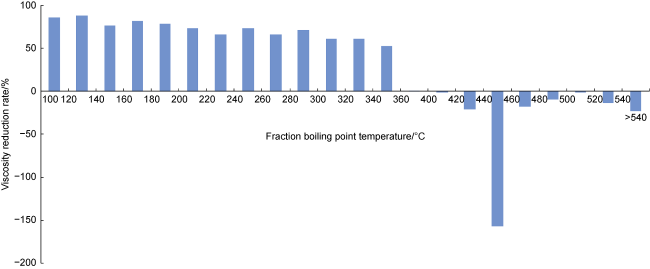
Fig. 11. Effect of blending 10% fraction at 30 °C on viscosity reduction of shale oil in Kong2 Member, Cangdong Sag. |
2.2. Higher formation temperatures can enhance the fluidity of heavy hydrocarbons and non-hydrocarbon components
Shale oil with high wax content tends to be semi-solid to solid at ambient temperatures, with a solidification point of 20-30 °C. It exhibits high density and viscosity, resulting in poor fluidity. This type of shale oil is prevalent in China’s salinized lake basins at the low-medium maturity stage, where waxes typically refer to hydrocarbon mixtures with carbon numbers ranging from 18 to 30. These mixtures can undergo physical changes at elevated temperatures, transitioning from solid to liquid, with improved fluidity. The Kong2 Member shale oil is a typical example of low maturity crude oil in salinized lake basins. It has a Ro value of 0.8%-0.9% and a viscosity of 14-214 mPa·s at 50 °C. Fractions with high boiling points exhibit high viscosities at low temperatures of 20-50 °C. For instance, at 30 °C, the viscosity of fractions boiling above 360 °C is 1 000-18 400 mPa·s (Fig. 12a ). As the temperature increases to 50 °C, the viscosity rapidly decreases to 4-20 mPa·s. When the temperature reaches 110 °C, the viscosity of fractions boiling below 540 °C generally falls below 10 mPa·s (Fig. 12b ), suggesting significantly improved fluidity. Fractions boiling above 540 °C, primarily C40+ resins and asphaltenes, show a viscosity of only 145.4 mPa·s at 110 °C, which is nearly 1 000 times lower than the viscosity at 30 °C (Fig. 12 ). With increased temperature, the activity of large-molecular aggregates such as heavy hydrocarbons, resins, and asphaltenes strengthens, and the intermolecular distances within the aggregates increase, weakening intermolecular forces. Additionally, more light to medium hydrocarbon molecules penetrate into the aggregates, further reducing their size and enhancing their miscibility to improve fluidity, thereby effectively lowering the viscosity. For low-to-medium maturity shale oils in salinized lake basins, such as the Kong2 Member in the Cangdong Sag and the Shahejie Formation in the Jiyang Depression, the primary target intervals are buried at depths greater than 3 500-5 000 m, with formation temperatures of 120-160 °C. The average viscosity of shale oil in these conditions is 2-5 mPa·s, significantly improving fluidity and resulting in markedly higher single-well production.
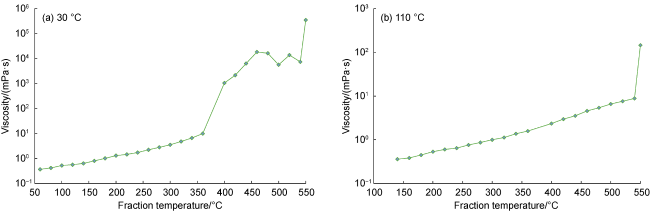


Fig. 12. Relationship between temperature and viscosity of different fractions of shale oil at 30 °C and 110 °C in Kong2 Member, Cangdong Sag. |
2.3. Good preservation conditions can maintain light-to-medium hydrocarbon content in shale formations and enhance component fluidity
Preservation conditions are critical for retaining more movable hydrocarbons within shale formations and improving their fluidity. Good preservation conditions can maintain the content of light and medium hydrocarbons in shale formations, thereby enhancing the fluidity of these components. Light hydrocarbons in movable hydrocarbons are highly mobile and prone to dissipation. If the sealing integrity of the roof and floor of the organic-rich shale is poor or fractures are highly developed, a large number of light hydrocarbons will dissipate, resulting in a relative increase in heavy hydrocarbons in shale oil, reduced fluidity and decreased probability of component flow. Furthermore, good preservation conditions increase the quantity of movable hydrocarbons and also maintain high formation pressure in the shale intervals, which is a crucial driving force for the flow of crude oil components that are immobile under normal or low-pressure conditions and essential for improving cumulative recovery. Taking the Permian Lucaogou Formation in the Jimusaer Sag of the Junggar Basin as an example, two sets of shale oil sweet spots are developed. The sealing integrity of the roof varies laterally, in contact with the Permian Wutonggou Formation conglomerates, some movable hydrocarbons have migrated into conventional reservoirs, reducing the quantity of movable hydrocarbons in the shale oil sweet spots and increasing the content of resins and asphaltenes. In later uplifted areas, such as the Well Ji 174 zone in the eastern Jimusaer Sag, the content of alkanes is low, and the content of heavy hydrocarbons is high, with a ΣC15−/ΣC15+ value of only 0.33, the resin and asphaltene content ranging from 27% to 30%, and the GOR of less than 20 m³/m³, resulting in poor fluidity of the shale oil. The average daily production of horizontal wells in this area is 6-8 t, with an EUR of approximately 5 600 t over nearly 1 500 m horizontal section in the first two years, indicating poor economic viability.
In the Kong2 Member of the Cangdong Sag, there are many active faults in the shale oil trial production area, but the planar distribution is highly heterogeneous, affecting the sealing integrity of the shale oil sweet spots differently. Shale intervals near faults have poorer preservation conditions, while stable areas farther from faults have better conditions. For instance, on Platform 1 in the Guandong area, two sets of faults are developed on the east side with a formation pressure coefficient of 1.0, while no faults are developed on the west side with a formation pressure coefficient of 1.2 to 1.5. The difference in preservation conditions results in significant differences in the quantity of movable hydrocarbons, crude oil properties, and single-well production between the two areas. In the west side formation, the free hydrocarbon content is 12-20 mg/g, with a ΣC15−/ΣC15+ value of 0.62-0.68, and the crude oil density is primarily 0.84-0.87 g/cm³. The average daily oil production per well in this area is 25-30 m³ in the first two years, with a larger EUR of 1.4×10⁴ t per kilometer of horizontal section. In contrast, in the east side formation, the free hydrocarbon content is 5-9 mg/g, with a ΣC15−/ΣC15+ value of 0.48-0.58, and the crude oil density is higher, primarily 0.87-0.89 g/cm³. The average daily oil production per well in this area is only 8-15 m³ during the main production period, with a smaller EUR of (0.7-1.2)×104 t per kilometer of horizontal section. Thus, good preservation conditions not only ensure a higher content of light hydrocarbons in shale oil but also increase formation energy, facilitating multi-component hydrocarbon miscibility and fluidity, thereby enhancing single-well production and economic benefits.
2.4. A reasonable production system is key to maintaining the stability of component flow
Component flow requires a reasonable ratio among the various hydrocarbon components. The higher the light hydrocarbon content, the more favorable it is for component flow. At the same time, preventing the premature and rapid expulsion of light hydrocarbons from the formation is crucial for maintaining the stability and duration of component flow, which is essential for maximizing cumulative recovery. The selectivity and stability of the production system are key factors in maintaining component flow and achieving optimal EUR [4,13]. Appropriate development strategies, such as selecting the suitable nozzle size and choosing a production pressure differential suitable for the area according to the formation pressure coefficient, are essential parameters for establishing a reasonable production system. When these settings allow a stable shale oil production in the area, forming a consistent production system without frequent changes, the in-situ ratio of light, medium, and heavy hydrocarbons can form a miscible phase and continuously flow out of the formation into the wellbore at a reasonable rate, achieving higher EUR. Conversely, if the production system changes frequently, such as continuously increasing nozzle size to pursue higher single-well daily production, the production pressure differential will quickly decline, disrupting the stability of component flow. This can lead to premature and rapid expulsion of light and medium hydrocarbons, leaving heavy hydrocarbons and heavy components to precipitate within the formation, blocking pores and throats, and reducing the outflow. As a result, single-well daily production will rapidly decline after a period, making it difficult to achieve an ideal EUR. Therefore, a reasonable production system is essential for maintaining the proper ratio of hydrocarbon components and energy field stability within the formation. It can ensure the stability of component flow, creating conditions for maximizing recovery.
3. Conclusions
The unique composition and retention environment of shale oil determine that it cannot completely flow out of the formation. Component flow for shale oil is a critical issue that has not yet been fully recognized and understood. Nonetheless, it is essential for achieving maximum shale oil recovery. Deciphering this process as early as possible could significantly advance the large-scale economic development of lacustrine shale oil. The “component flow” in shale oil refers to the phenomenon where underground multi-component hydrocarbons mix and flow according to the principles of similarity and intermiscibility. In this process, heavy hydrocarbon components dissolve in solvents composed of light and medium hydrocarbons, altering their physical properties and improving their fluidity. This can effectively enhance shale oil production and cumulative recovery per well. Conditions facilitating component flow include high contents of gaseous hydrocarbons and light hydrocarbons (including small-molecule aromatics), a reasonable proportion among multi-component hydrocarbons, elevated formation temperatures and energy field. Good preservation conditions and a stable production system can maintain a higher content of light hydrocarbons in the formation, control the outflow rate of light and medium hydrocarbons, and ensure the stability of component flow. This leads to optimal fluidity and maximum outflow of shale oil. Recognizing the characteristics of “component flow” in shale oil as early as possible is crucial for the economic development of shale oil and the larger-scale utilization of this resource.