

Introduction
Helium is the second most abundant element in the universe and has the lowest melting point (−272.1 °C) and boiling point (−268.94 °C) of any known element in nature. It plays an irreplaceable role in various fields, including aviation, healthcare, cryogenic superconductivity, chip manufacturing, and civilian high-tech industries. Currently, helium used in industry mainly comes from natural gas, which is produced by the radioactive decay of uranium (U) and thorium (Th) in rocks. The content of U and Th in rocks is low, and their half-lives are extremely long, resulting in a very slow rate of helium production. As a result, it is difficult for helium to accumulate into independent reservoirs, and it is only enriched in a few natural gas reservoirs, while most natural gas reservoirs are helium-deficient [1]. With the development of the economy and high-tech industries, the demand for helium is increasing. Where to find and how to locate helium-rich resources are pressing concerns for explorers today. Since helium generation and enrichment laws differ significantly from those of natural gas, with distinct rules and characteristics, traditional methods used for natural gas exploration are not applicable to helium. It is necessary to establish a theory of helium enrichment to guide helium exploration efforts.
Although research on helium has been conducted for quite some time, a theory of helium enrichment has yet to be established. Researchers have investigated various aspects, such as the source, migration, and preservation conditions of helium, but there is significant disagreement among them. For instance, different views exist in the source of helium in helium-rich reservoirs of radioactive origin. Some scholars believe the helium originates from the decay of uranium and thorium in granite and pegmatite [2], while others suggest it comes from hydrocarbon source rocks [3]. Some broadly argue that helium comes from the shallow crust [4], whereas others propose that it is generated jointly by basement rocks and hydrocarbon source rocks [5]. Additionally, some argue that the main source of helium is the basement [6-7]. In summary, there is still no consensus on the genesis of helium in helium-rich reservoirs of radioactive origin. Regarding the migration pathways, some scholars agreed that helium migrates and accumulates through basement faults and fractures [5,8], and this view is widely accepted. Due to helium's small molecular diameter and high diffusivity and permeability, some believe that helium escapes more readily than other gas molecules, making it possible for helium to accumulate only in environments with good sealing conditions [9]. However, some researches have shown that many helium-rich reservoirs do not have excellent sealing conditions, and helium enrichment does not necessarily require an ideal cap rock. If the cap rock is too impermeable, there may be no regional pressure release channels for the upward movement of deep fluids, and the helium in these fluids may not reach the overlying reservoirs to form helium-rich gas reservoirs [10]. Regarding the phase of migration, many studies suggest that water-soluble helium plays a significant role in the formation of helium-rich reservoirs [11-12]. Additionally, research has found that almost all geothermal water or spring gases show some evidence of helium, with some regions exhibiting relatively high helium content. For example, in the Weihe Basin, helium shows are quite common in geothermal water wells, with an average helium content of about 1% in the gases released from the geothermal water. Preliminary estimates suggest that the helium resource potential of this basin reaches 33.82×10⁸ m3 [13]. Despite its considerable resource potential, it is difficult to exploit and achieve large-scale production, making it unlikely to be a primary field for future helium exploration and development. Nevertheless, it supports the possibility that helium might migrate and accumulate in a water-soluble form. In the study on helium enrichment theory, some scholars have proposed the concept of weak source for helium accumulation, based on the characteristics of low U and Th contents in rocks, extremely long half-lives, and very low helium supply intensity [1,14].
After years of research, our team has made significant systematic progress in several aspects, including helium enrichment mechanisms [1,14], helium enrichment models [15], genesis and distribution patterns of helium in Chinese petroliferous basins [16], the associated coupling relationships between helium and natural gas components [17], the differences between helium enrichment and natural gas accumulation, and the various misconceptions faced in exploration [10]. On the basis of the above research, the authors' team has carried out a large amount of new research work, improved the overall understanding of helium enrichment, distribution, and main controlling factors, established a preliminary theory of helium enrichment, proposed exploration ideas for helium gas reservoirs, and guided the evaluation of helium resources and exploration of helium gas reservoirs.
1. Sampling collection and analysis
Our team collected natural gas and rock samples from major petroliferous basins in China to analyze helium content, composition and isotopes, and U and Th contents in rock samples. For comparative studies, we also gathered publicly available data domestically and internationally on helium content in natural gas and U and Th contents in rocks from both domestic and international sources.
1.1. Sample collection
More than 1 000 core samples of carbonate rocks, sandstone, dark shale, coal, and granite were collected from the Sichuan Basin, Ordos Basin, Tarim Basin, Junggar Basin and Qaidam Basin. Additionally, over 300 samples of natural gas from conventional reservoirs, tight sandstone gas, volcanic rock reservoir gas, shale gas, and coalbed methane were collected.
1.2. Analytical testing methods
The helium content in natural gas was analyzed at the National Institute of Metrology, China, using an Agilent 7890 gas chromatograph with argon as the carrier gas. The helium isotope composition was analyzed using a noble gas mass spectrometer, while the U and Th contents were measured with a NexION 300D inductively coupled plasma mass spectrometer.
2. Analysis results
Based on the helium content analysis, a batch of relatively helium-rich gas fields or helium-rich zones was identified (Table 1 ). The natural gas composition in helium-rich gas fields varies significantly across different basins.
Table 1. Natural gas components and helium content of major helium-rich gas fields in China |
| Basin | Gas field | Well No. | Formation | Natural gas component/% | (3He/4He)/ 10-8 | R/Ra | Mantle-source helium percentage/% | Reference sources | |||||
|---|---|---|---|---|---|---|---|---|---|---|---|---|---|
| C1 | C2 | C3 | CO2 | N2 | He | ||||||||
| Tarim | Hetianhe gas field | M2 | C | 85.62 | 0.83 | 0.27 | 3.83 | 9.42 | 0.327 | 12.60 | 0.09 | 1.38 | This text |
| M3-1H | C | 76.91 | 0.45 | 0.12 | 12.55 | 7.48 | 0.372 | 13.10 | 0.09 | 1.44 | |||
| M4-B2H | O | 85.10 | 1.58 | 0.62 | 1.31 | 11.00 | 0.289 | 14.80 | 0.11 | 1.64 | |||
| M5-2H | C | 84.84 | 1.20 | 0.44 | 3.08 | 9.77 | 0.281 | 13.80 | 0.10 | 1.52 | |||
| M4-10H | C | 84.81 | 1.40 | 0.52 | 2.25 | 10.40 | 0.286 | 11.70 | 0.08 | 1.27 | |||
| M4-H2 | O | 85.03 | 1.52 | 0.58 | 1.26 | 10.90 | 0.291 | 13.80 | 0.10 | 1.52 | |||
| Akmomu gas field | Ak1-2 | K1 | 78.04 | 0.20 | 0.02 | 14.19 | 7.86 | 0.125 | 106.00 | 0.76 | 12.33 | This text | |
| Ak1-H4 | K1 | 77.96 | 0.22 | 0.02 | 13.61 | 8.22 | 0.121 | 95.80 | 0.68 | 11.13 | |||
| Ak4-1 | K1 | 78.40 | 0.37 | 0.05 | 13.4 | 7.92 | 0.111 | 65.20 | 0.47 | 7.54 | |||
| Ak401 | K1 | 77.89 | 0.37 | 0.05 | 13.91 | 7.92 | 0.110 | 87.40 | 0.62 | 10.15 | |||
| Ak101 | K1 | 78.07 | 0.29 | 0.03 | 13.41 | 8.39 | 0.119 | 82.30 | 0.59 | 9.55 | |||
| Ak1 | K1 | 77.82 | 0.20 | 0.02 | 14.26 | 7.97 | 0.122 | 99.00 | 0.71 | 11.51 | |||
| Qaidam | Mabei gas field | Mb1 | E | 92.37 | 1.45 | 0.23 | 1.18 | 1.96 | 0.074 | 0 | This text | ||
| Mb2-1 | E | 78.96 | 9.34 | 3.55 | 0 | 4.80 | 0.231 | 0 | |||||
| MbH1-1 | E | 80.14 | 8.49 | 2.90 | 0 | 5.76 | 0.259 | 0 | |||||
| Mb2-6 | E | 79.73 | 8.44 | 2.82 | 0 | 5.63 | 0.245 | 0 | |||||
| Mb3-2 | E | 80.46 | 8.38 | 3.12 | 0 | 4.31 | 0.202 | 0 | |||||
| Dongping gas field | Dp305 | Basement | 76.75 | 1.06 | 0.21 | 0 | 22.30 | 0.695 | 0 | This text | |||
| DpH302 | E | 90.86 | 0.47 | 0.06 | 0 | 8.04 | 0.086 | 0 | |||||
| Dp307 | E | 82.17 | 0.94 | 0.18 | 0 | 17.00 | 0.387 | 0 | |||||
| Dp306 | E+basement | 85.11 | 0.80 | 0.11 | 0 | 14.10 | 0.606 | 0 | |||||
| P3H-6-2 | E+basement | 87.36 | 0.68 | 0.11 | 0 | 11.90 | 0.284 | 0 | |||||
| P1-2-8 | Basement | 92.43 | 1.98 | 0.32 | 0.93 | 4.03 | 0.072 | 0 | |||||
| P1H-2-5 | Basement | 93.29 | 1.82 | 0.28 | 0.17 | 4.23 | 0.074 | 0 | |||||
| Tsimane North gas field | JB H1-1 | Basement | 84.51 | 2.29 | 0.19 | 0 | 13.00 | 0.208 | 0 | This text | |||
| JT 1 | Basement | 83.67 | 2.07 | 0.17 | 0 | 12.90 | 0.258 | 0 | |||||
| JB 1-2 | Basement | 85.69 | 2.22 | 0.18 | 0 | 12.00 | 0.171 | 0 | |||||
| JT 2 | Basement | 84.47 | 2.26 | 0.18 | 0 | 12.80 | 0.178 | 0 | |||||
| Sichuan | Weiyuan gas field | W2 | Z2d | 85.07 | 0.11 | 4.66 | 8.33 | 0.250 | 2.90 | 0.02 | 0 | [18] | |
| W23 | —C1—Z2 | 85.44 | 0.15 | 4.75 | 8.14 | 0.260 | 0 | ||||||
| W30 | Z2d | 86.57 | 0.14 | 4.40 | 7.55 | 0.340 | 0 | ||||||
| W46 | Z2d | 85.66 | 0.11 | 4.66 | 8.11 | 0.250 | 0 | ||||||
| W100 | Z2d | 86.80 | 0.13 | 5.07 | 6.47 | 0.300 | 0 | ||||||
| W106 | Z2d | 86.54 | 0.07 | 4.82 | 6.26 | 0.320 | 0 | ||||||
| W42 | —C2+3x | 89.25 | 0.07 | 3.97 | 6.52 | 0.190 | 2.50 | 0.02 | 0 | [1] | |||
| W118 | —C2+3x | 90.93 | 0.12 | 0.36 | 6.63 | 0.200 | 2.60 | 0.02 | 0 | ||||
| W36-1 | —C | 89.27 | 0.08 | 3.91 | 6.43 | 0.190 | 2.60 | 0.02 | 0 | ||||
| W112 | Z2d | 88.81 | 0.08 | 4.07 | 6.76 | 0.230 | 3.90 | 0.03 | 0 | ||||
| W71 | —C2+3x | 89.75 | 0.10 | 3.10 | 6.81 | 0.220 | 2.70 | 0.02 | 0 | ||||
| W46 | Z2d | 84.75 | 0.07 | 5.19 | 9.11 | 0.240 | 2.80 | 0.02 | 0 | ||||
| W201-H3① | —C1q | 94.80 | 0.38 | 1.61 | 3.00 | 0.138 | 1.31 | 0.01 | 0 | This text | |||
| W201-H1② | S1l | 93.28 | 0.41 | 1.14 | 4.96 | 0.112 | 1.15 | 0.01 | 0 | ||||
| Bohai Bay | Huagou gas field | H501 | N | 1.77 | 34.27 | 61.86 | 2.080 | 434.00 | 3.10 | 39.30 | [19] | ||
| Sanshui | Baoyue gas field | SS 44 | E | 12.29 | 1.93 | 83.09 | 1.79 | 0.110 | 636.00 | 4.54 | 57.70 | [20] | |
| SS 24 | E | 0.25 | 99.48 | 0.25 | 0.250 | 639.00 | 4.56 | 58.00 | |||||
| SS 3 | E | 65.23 | 5.47 | 15.59 | 13.62 | 0.260 | 572.00 | 4.09 | 51.90 | ||||
| N 35 | E | 76.81 | 10.58 | 9.76 | 0.190 | 429.00 | 3.06 | 38.90 | |||||
| B1 | E | 0.260 | 160.00 | 1.14 | 14.40 | ||||||||
| Songliao | Wuzhan gas field | W102 | F③ | 94.80 | 1.37 | 0.45 | 0.100 | 26.10 | 0.19 | 2.20 | [21] | ||
| W101 | F | 94.80 | 1.37 | 0.51 | 0.110 | 35.50 | 0.25 | 3.10 | |||||
| W106 | F | 92.20 | 1.61 | 0.55 | 0.210 | 36.20 | 0.26 | 3.10 | |||||
| W109 | F | 94.80 | 1.43 | 0.30 | 0.110 | 39.90 | 0.28 | 3.50 | |||||
| WS1 | F | 93.70 | 1.64 | 0.43 | 0.130 | 26.10 | 0.19 | 2.20 | |||||
| Taipingzhuang gas field | ZS1 | F | 89.30 | 1.19 | 0.26 | 0.140 | 54.70 | 0.39 | 4.80 | ||||
| W11 | Y④ | 82.10 | 2.69 | 0.22 | 0.140 | 67.80 | 0.48 | 6.00 | |||||
| S17 | F | 86.90 | 1.41 | 0.27 | 0.190 | 42.90 | 0.31 | 3.70 | |||||
| Subei | Huangqiao gas field | HQ2 | N1y | 27.39 | 6.11 | 8.80 | 57.87 | 1.200 | 489.00 | 3.49 | 44.40 | [22] | |
| HQ14 | N1y | 27.44 | 2.72 | 4.26 | 63.26 | 1.340 | 371.00 | 2.65 | 33.60 | ||||
| Q2 | N | 23.30 | 2.84 | 10.53 | 62.34 | 1.240 | [23] | ||||||
| Q4 | N | 19.73 | 6.54 | 12.61 | 60.25 | 1.030 | |||||||
| Q14 | N | 27.06 | 2.83 | 4.24 | 64.53 | 1.330 | |||||||
Note: (1) Shale gas of Cambrian Qiongzhusi Formation in Weiyuan gas field; (2) Shale gas of Silurian Longmaxi Formation in Weiyuan gas field; (3) F is Fuyu oil layer; (4) Y is Yangdachengzi oil layer; R/Ra is the ratio of the 3He/4He value (R) of helium sample to the 3He/4He value of atmospheric helium (Ra); N—Neogene; E—Paleogene; K1—Lower Cretaceous; C—Carboniferous; S1l—Lower Silurian Longmaxi Formation; O—Ordovician; Z2—Upper Sinian; Z1d—Upper Sinian Doushantuo Formation; —C—Cambrian; —C1—Lower Cambrian; —C2+3X—Middle and Upper Cambrian Xixiangchi Formation; —C1q—Lower Cambrian Qiongzhusi Formation. |
In the basins such as the Tarim, Qaidam, and Sichuan basins in central and western China, natural gas is primarily composed of hydrocarbons, but also contains a high proportion of non-hydrocarbon gases. Among hydrocarbons, the content of heavier hydrocarbons like ethane is relatively low in the natural gas from the Tarim and Sichuan basins, so it is mostly dry gas. In the Qaidam Basin, the Dongping and Jianbei gas fields contain dry gas, while the Mabei gas field has higher ethane content, classifying as wet gas reservoir. Among non-hydrocarbon gases, all fields exhibit high nitrogen content. For example, the Hetianhe gas field has an average nitrogen content of 10.4%, the Akemomu gas field 8.01%, the Dongping gas field 9.53%, and the Jianbei gas field 12.45%. And the Mabei gas field has slightly lower nitrogen content at 4.90%, while the Weiyuan gas field shows an average nitrogen content of 7.29%. Additionally, as shown in Table 1 , there is a clear positive correlation between nitrogen content and helium content in helium-rich gas fields. The carbon dioxide content varies greatly between different gas fields. In the Akemomu gas field, it is 13.80%, while in the Hetianhe gas field, it is 8.76% averagely in Ma 2 and Ma 3 well areas. Ma 4 and Ma 5 well areas have much lower content, averaging only 1.25%. In the Qaidam Basin, several helium-rich gas fields show very low carbon dioxide content, and even no carbon dioxide detected in most samples. The Weiyuan gas field in the Sichuan Basin contains a certain amount of carbon dioxide, with an average content of 4.16%.
The natural gas composition in helium-rich gas fields in eastern basins differs significantly from those in central and western basins. Helium-rich reservoirs in the eastern basins are dominated by high content of non-hydrocarbon gases such as carbon dioxide and nitrogen, with hydrocarbons playing a secondary role. For example, in the Huagou gas field of the Bohai Bay Basin, Well Huagou 501 has a methane content of only 1.77%, carbon dioxide content of 34.27%, and nitrogen content of 61.86%. In the Huangqiao gas field of the Subei Basin, the average methane content is 24.98%, the average carbon dioxide content is 8.09%, and the average nitrogen content is 61.65%. The natural gas composition in the Baoyue gas field of the Sanshui Basin varies significantly between different wells. For example, in wells Shuishen 44 and Shuishen 24, carbon dioxide dominates, with contents of 83.09% and 99.48%, respectively, while the hydrocarbon content is very low. In contrast, wells Shuishen 3 and Nan 35 are dominated by hydrocarbons, with methane contents of 65.23% and 76.81%, respectively. In the helium-rich gas fields of Wuzhan and Taipingzhuang in the Songliao Basin, natural gas is still primarily composed of hydrocarbons, with an average methane content of 91.08% and average carbon dioxide content of 0.37%.
Regarding helium content, the Hetianhe gas field in the Tarim Basin has helium content ranging from 0.281% to 0.372%, with an average of 0.320%. In the Akemomu gas field, helium content ranges from 0.110% to 0.125%, with an average of 0.120%. In the Qaidam Basin, the Mabei gas field has helium content ranging from 0.074% to 0.259%, with an average of 0.212%. The helium content varies significantly across different blocks in the Dongping gas field: Block 1 has helium content ranging from 0.072% to 0.074%, with an average of 0.073%, while Block 3 has helium content ranging from 0.086% to 0.695%, with an average of 0.319%. The Jianbei gas field has helium content ranging from 0.171% to 0.258%, with an average of 0.193%.
The helium isotope ratios in helium-rich gas fields in China show significant differences across different basins and gas fields. For example, in the Hetianhe gas field of the Tarim Basin, the 3He/4He ratio is (11.70-14.80)×10−8, indicating a trace amount of mantle-derived helium, with a proportion of less than 2%. In the Akemomu gas field, the 3He/4He ratio is (65.2-106.0)×10−8, with mantle-derived helium accounting for about 10%. As for the Qaidam Basin, no helium isotopic analysis was conducted in this study, but according to previously published data, the 3He/4He ratio is (1.01-3.62)×10−8, equivalent to the end-member value of crust-source helium indicating that there is no mantle-derived helium mixed in it [24]. In the Weiyuan gas field of the Sichuan Basin and two shale gas wells, Weiyuan 201-H1 and Weiyuan 201-H3, the 3He/4He ratio is (1.15-1.31)×10−8, representing typical crust-source helium with no mantle-derived helium. In the Songliao Basin, the 3He/4He ratio is (26.1-67.8)×10−8, indicating clear evidence of mantle-derived helium, with a mixing proportion of 2.2% to 6.0%. In the Bohai Bay Basin, Sanshui Basin and Subei Basin, the 3He/4He ratio is (1.60-6.39)×10−6, which is two orders of magnitude higher than crust-source helium. The proportion of mantle-derived helium is relatively high, with some samples showing mantle-derived helium accounting for more than 50%, such as in wells Shuishen 44 and Shuishen 24 in the Baoyue gas field.
3. Helium sources of helium-rich gas reservoirs
Helium in natural gas has both crust-source and mantle-source origins [25-26], both of which are of inorganic genesis. Helium in all gas fields in China is dominated by 4He, but the 3He content in the eastern region is higher than that in the central and western regions, and the samples have obvious mantle-source helium mixing, which is a mixed crust-mantle type. In the central region, such as the Sichuan and Ordos basins, all of the helium is crust-source type; and some of the samples of helium from the Tarim Basin in the western region show traces or small amount of mantle-source helium mixing, but it is also of crust-source genesis on the whole [15]. This paper focuses on crust-source helium, i.e., radiation-induced helium enrichment, and proposes the concepts of effective helium source rocks and main helium source rocks.
3.1. Effective helium source rocks
Effective helium source rocks are defined in this paper as all rocks that supply helium to a gas reservoir. Uranium and thorium content varies considerably from rock to rock, and the same type rock can be highly heterogeneous in different regions (Table 2 ). In general, except for sedimentary uranium ores, organic-rich mud shales, coal seams, and bauxites tend to have relatively high uranium and thorium contents, and uranium-rich coals with uranium content as high as 288×10−6 μg/g are even developed in the Guiding area of Guizhou [11]. Acidic rocks such as granite take the second place, while sandstones and carbonate rocks have generally poor uranium and thorium, and minimal helium production and very low production rate (Fig. 1 ).
Table 2. U and Th contents of major lithologic rocks in some petroliferous basins in China |
| Basin/Area | Lithology | Era | Number of samples | U/(10-6 μg·g-1) | Th/(10-6 μg·g-1) | Reference source | ||||
|---|---|---|---|---|---|---|---|---|---|---|
| Average | Maximum | Minimum | Average | Maximum | Minimum | |||||
| Sichuan Basin | Granite | Z | 6 | 6.70 | 12.30 | 2.68 | 32.50 | 49.10 | 21.80 | [27] |
| Sichuan Basin | Shale | —C | 118 | 22.96 | 201.00 | 1.12 | 9.34 | 15.35 | 0.30 | This text |
| Sichuan basin | Mudstone | T | 18 | 4.63 | 7.77 | 3.25 | 17.08 | 22.70 | 13.40 | This text |
| Sichuan basin | Sandstone | T-J | 40 | 1.94 | 4.29 | 0.96 | 8.32 | 18.00 | 3.56 | This text |
| Ordos Basin | Coal | C | 13 | 4.90 | 24.50 | 0.83 | 12.23 | 21.6 | 1.56 | This text |
| Ordos Basin | Carbonate rock | O | 84 | 0.58 | 2.96 | 0.04 | 0.69 | 6.18 | 0.03 | This text |
| Ordos Basin | Bauxite | 8 | 23.50 | 48.50 | 10.50 | 88.51 | 215.00 | 46.90 | This text | |
| Songliao Basin | Sedimentary rock | P | 19 | 2.94 | 5.13 | 0.69 | 10.41 | 13.16 | 7.55 | [28] |
| Songliao Basin | Rhyolite | K | 14 | 4.42 | 7.88 | 1.50 | 22.22 | 33.61 | 12.80 | [29] |
| Songliao Basin | Argillaceous slate | P | 32 | 2.72 | 3.81 | 1.15 | 11.55 | 13.94 | 4.35 | [30] |
| Songliao Basin | Volcanic rock | K | 15 | 13.13 | 32.20 | 4.13 | 2.70 | 4.40 | 0.98 | [31] |
| Qaidam Basin | Clastic rock | J | 34 | 4.17 | 7.72 | 1.38 | 15.90 | 24.80 | 6.90 | [32] |
| Qaidam Basin | Granite | D | 4 | 16.62 | 18.14 | 14.89 | 72.50 | 79.25 | 69.53 | [33] |
| Yishan, Guangxi | Coal | P | 26 | 72.43 | 114.00 | 35.00 | 11.07 | 27.50 | 1.16 | [34] |
| Guiding, Guizhou | Coal | P | 14 | 211.00 | 288.00 | 67.90 | 3.14 | 6.53 | 1.91 | [35] |
| Liupanshui, Guizhou | Coal | P | 4 | 1.15 | 1.63 | 0.74 | 3.07 | 6.63 | 0.59 | This text |
| Liupanshui, Guizhou | Coal-measure mudstone | P | 14 | 11.78 | 73.00 | 0.40 | 13.14 | 24.90 | 0.56 | This text |
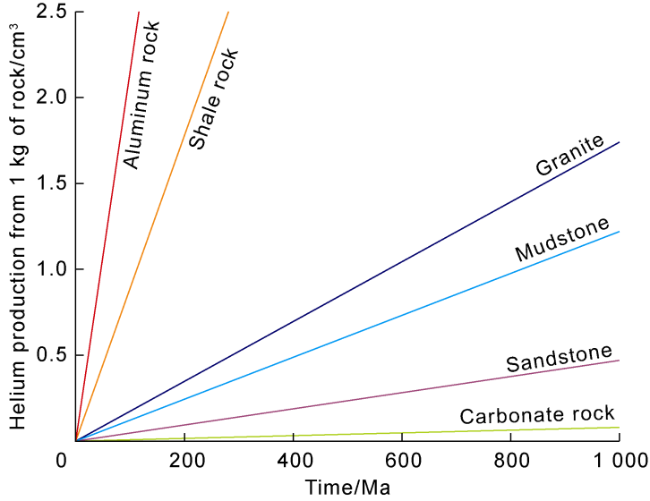
Fig. 1. Helium production rate in different rocks. |
However, not helium generated from all rocks contributes to gas reservoirs. Generally, in the process of natural gas accumulation (natural gas from hydrocarbon source rocks to reservoirs), helium generated from hydrocarbon source rocks migrates with the natural gas to the reservoirs, and traces of helium are also generated in the reservoir rocks and captured by the natural gas, so both hydrocarbon source rocks and reservoirs can be considered as effective helium sources, including hydrocarbon source rocks such as coal seams, various organic-rich mudstones and organic-rich limestones, and reservoirs containing U, Th such as sandstones, carbonate rocks and volcanic rocks. Compared with hydrocarbon source rocks, sandstones and carbonate rocks do not contribute much helium due to their low U and Th contents (Fig. 1 ).
Since the gas generating intensity of the hydrocarbon source rock is much greater than its helium-generating intensity, natural gas has a strong dilution effect on helium, making it difficult to be enriched in the reservoir. The calculation by Brown suggests that organic-rich shale with a hydrocarbon generation potential of 2 mg/g would produce 3 000 times as much methane at maturity as helium it would produce over a billion years [11]. The author studied the shale of the Lower Silurian Longmaxi Formation in the Sichuan Basin and found that the average TOC value is about 3.0%, and the average uranium content is about 10×10-6 μg/g. By sampling and testing the shale gas of the Longmaxi Formation in the areas of Jiaoshiba, Weiyuan and Zhaotong, it is shown that the helium content of 31 samples is 0.017 3% to 0.049 1%, with an average of 0.028 0%, so it is classified as a helium-poor gas reservoir [1]. In addition, in Well Zi 201, a shale gas well drilling into the Cambrian in the Sichuan Basin in 2023, the average uranium content is as high as 22.96×10⁻⁶ μg/g in the target layer, i.e., the shale of Cambrian Qiongzhusi Formation, and even more than 100×10-6 μg/g in individual well sections, and the average thorium content is 9.3×10⁻⁶ μg/g (Table 2 ). In spite of high uranium and thorium contents and old geological age (500 million years) with long helium generation time, the tested helium content of shale gas is only 0.016%. It can be seen that although some organic-rich mud shales have high helium-generating capacity, the hydrocarbon gases generated by them can dilute the helium greatly, and the helium generated by U and Th in the hydrocarbon source rocks alone is not enough to form helium-rich gas fields, additional helium sources are needed to supply helium to the gas reservoirs, which is called the main helium source, and of course, is also an effective helium source.
3.2. Main helium source rocks
The main helium source rock refers to the effective helium source rock that plays a decisive role in helium enrichment of gas reservoirs. Since hydrocarbon source rocks and most reservoir rocks in the oil and gas system do not have the ability to become the main helium source rock, most of the main helium source rocks are old basement rocks outside the oil and gas system with a large volume and certain contents of uranium and thorium. Currently, helium-rich gas fields discovered at home and abroad are located above or near ancient basement, such as the Weiyuan gas field in the Sichuan Basin, the Dongping gas field in the Qaidam Basin, the Hugoton and Panhandle gas fields in the United States, and the B. Hassi R' Mel gas field in Algeria [1,4,36]. Taking the Weiyuan gas field in the Sichuan Basin as an example, it has a helium content of about 0.2% and a large area of ancient granite bodies below the Sinian gas reservoirs as the main helium source rocks (Fig. 2 ), whereas the nearby Anyue gas field has no additional helium source for helium supply and can only form helium-poor reservoirs with helium content ranging from 0.015% to 0.020%.
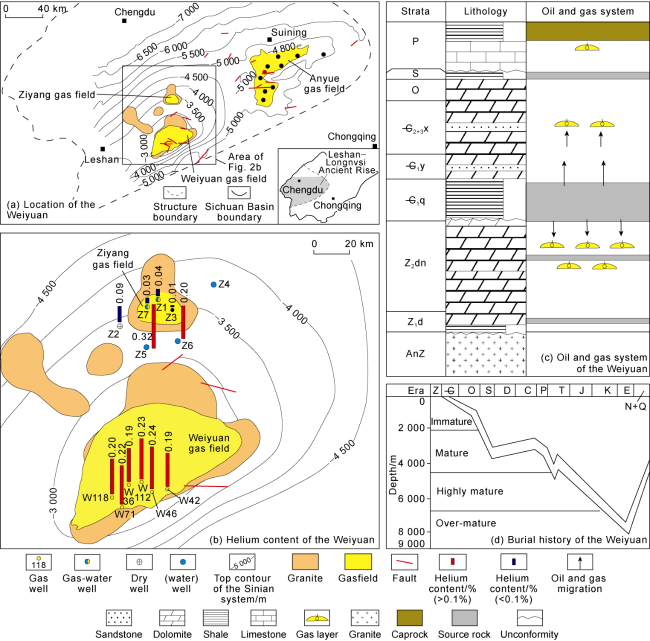
Fig. 2. Hydrocarbon generation, buried history, helium content and granite distribution in Weiyuan (modified from Reference [1]). P—Permian; S—Silurian; —C1y—Lower Cambrian Yuxiansi Formation; Z2dn—Upper Sinian Dengying Formation; AnZ—Pre-Sinian. |
In addition, researchers found helium-rich shale gas with an average helium content of up to 0.2% in the Lower Cambrian Shuijingtuo Formation in Yichang area (equivalent to the Cambrian Qiongzhusi Formation in the Weiyuan gas field) [37]. The main reason for the helium enrichment is that large areas of ancient granitic bodies are distributed in the vicinity of the Cambrian shale gas reservoirs of Yichang and provide additional helium for the gas reservoirs. The author found that the helium content of two shale gas wells in the Sichuan Basin, namely Wei 201-H1 and Wei 201-H3, exceed 0.1%, and ancient granite basement also exists in the vicinity of these two wells.
Generally speaking, most gas reservoirs are lack of main helium source rocks, which is the root cause of helium-poor gas reservoirs at home and abroad. Under specific geological conditions, helium-rich gas reservoirs can be formed only when helium generated from main helium source rocks enters into the gas reservoirs smoothly. Therefore, the formation of helium-rich gas reservoirs needs to go through the process of “multi-source helium supply and main-source helium enrichment” [1], and the main helium source determines whether the gas reservoir is helium-rich or not.
4. Helium enrichment mechanisms
4.1. Helium migration
4.1.1. Helium release and water solubility
Helium primary migration is the process by which 4He produced by radioactive decay of uranium and thorium within a mineral or rock breaks away from the host mineral and enters the pore space. The four modes of primary migration include α-ion recoil from the mineral, diffusion, mineral rupture, and release of helium during mineral transformation [38]. Whether helium can migrate out of minerals mainly depends on the closure temperatures of different minerals for helium (Table 3 ), and most helium-producing minerals, except garnet, have closure temperatures below 250 °C. The deeper the burial, the higher the formation temperature is, and the poorer the closure ability of minerals to helium. The helium generated cannot migrate out of the host mineral until the temperature exceeds the closure temperature of the mineral.
Table 3. Helium closure temperatures of helium-bearing minerals |
| Minerals | Closure temperature/°C | Referene sources |
|---|---|---|
| Apatite | 55-100 | [39-40] |
| Hematite | 90-250 | [41] |
| Zircon | 180-200 | [42-43] |
| Garnet | 590-630 | [42, 44] |
| Monazite | 182-299 | [45] |
| Titanite | 150-200 | [46] |
| Pitchblende | 200 | [47-48] |
| Betafite | 125 | [49] |
| Ulrichite | 27-76 | [50] |
| Magnetite | 250 | [51] |
| Fluorite | 47-143 | [52] |
| Carbonate | 60-80 | [53] |
Helium secondary migration refers to all migration processes that occur after helium breaks away from helium-generating minerals, including migration from the deep basement to the shallow strata and the migration with natural gas during the enrichment process. The helium enters rock pore space from host minerals during the primary migration, but the extremely low rate of helium generation makes it difficult to form a large-scale accumulation to break through the “sequestration pressure” and form a separate helium reservoir. The helium in pores is usually dissolved in the formation water and thus can be preserved. The diffusion of helium in pore water is very slow, so geological fluid migration is necessary for the realization of long-distance migration [54-55].
4.1.2. Carriers of helium migration
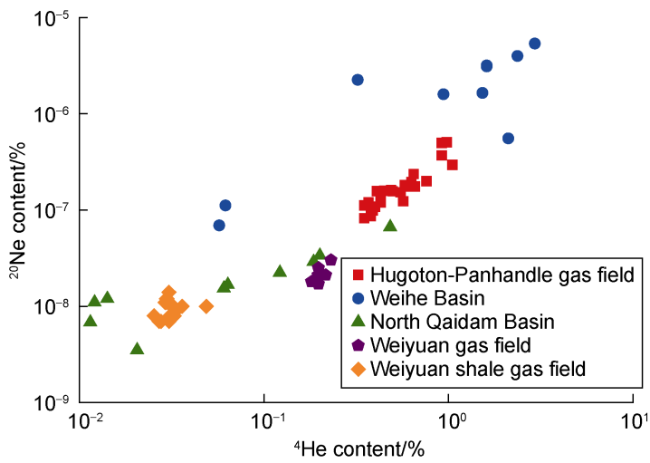
Since the ancient basement rocks do not have hydrocarbon generation capacity, the carrier of helium migration from the ancient basement is often the formation water in the ancient rocks. The content of 20Ne is often used to indicate the active degree of groundwater and its influence on gas reservoirs. In this paper, the study of rare gases in helium-rich reservoirs in different regions found that there is a strong positive correlation between 4He and 20Ne contents (Fig. 3 ), and thus it is inferred that 4He also comes from exsolved groundwater. At present, high contents of helium are often found in gases obtained from many geothermal wells or hot spring water. For example, the helium content in water-soluble gases from geothermal wells in the Jinzhong Basin is even as high as 18% [57], which also more intuitively illustrates that helium migration is closely related to groundwater.
4.2. Exsolution of crust-source helium
Degassing and helium enrichment of ancient formation water is the enrichment mechanism of crust-source helium [1]. The helium generated from ancient rocks containing U and Th over a long period of time breaks through the mineral lattice in many ways and is preserved in pore water in the water-soluble state. Under the geological effects of tectonic uplift and extrusion, the ancient formation water with dissolved helium migrates upward along the fracture to the shallow strata, and with the decrease of temperature and pressure, the solubility of helium in the water decreases rapidly [58]. If the dissolved helium in formation water reaches the saturation state, the helium will release from the water and migrate upward to the overlying gas reservoirs in the free state or disperse. If saturation state is not reached, helium will continue to migrate in a water-soluble state along fractures and unconformities, and under the action of Henry's Law, helium will be exsolved and released from the water when it encounters a gas reservoir, where it accumulates to form a helium-rich gas reservoir.
5. Occurrence characteristics of helium-rich gas reservoirs
5.1. Above ancient basement and mostly at shallow depths
The radiogenic helium-rich gas reservoirs that have been discovered in China and abroad are all developed above ancient basement, such as the Hugoton-Panhandle gas fields in the United States, the Hassi R' Mel gas field in Algeria, the Weiyuan gas field in the Sichuan Basin and the Dongping gas field in the Qaidam Basin of China [4,19,24,48].
In addition, the major helium-rich gas reservoirs in the world are all buried shallowly (Table 4 ). For example, the Hugoton and Panhandle gas fields in the United States have the burial depth of 430-1 670 m, and the Rukwa gas field in Tanzania has the burial depth of 500-2 500 m. The helium-rich gas fields in China also have shallow depths. For example, the gas reservoirs of Cambrian and Sinian Dengying Formation in the Weiyuan field have the burial depth of 2 179-3 276 m, and the depth of the Hetianhe gas field is 1 546-2 272 m. The shallow depth of helium-rich gas reservoirs is the result of the large-scale tectonic uplift in the later period, which is also a necessary geological condition for helium-rich gas reservoirs.
Table 4. Burial depth of representative helium-rich gas reservoirs worldwide |
| Nation | Gas field | Buried depth/m | Helium content/% | Data sources |
|---|---|---|---|---|
| USA | Hugoton | 430-1 670 | 0.200-1.180 | [4, 59] |
| Panhandle | 430-1 670 | 0.150-2.100 | ||
| Tanzania | Rukwa | 500-2 500 | 2.500-4.200 | [60] |
| Algeria | Hassi R'Mel | 2 150 | 0.090-0.220 | [36] |
| China | Huangqiao | 371-378 | 1.030-1.340 | [25-26] |
| Hetianhe | 1 546-2 272 | 0.231-0.373 | [61] | |
| Akmomu | 3 311-3 708 | 0.099-0.125 | ||
| Weiyuan | 2 179-3 276 | 0.120-0.340 | [21] | |
| Dongping | 636-3 727 | 0.057-0.695 | This text | |
| Mabei | 741-1 790 | 0.074-0.295 | ||
| Dongsheng | 3 250 | 0.045-0.487 | [62] |
5.2. Areas with strong tectonic activity and large uplift amplitude
It is found that most helium-rich gas fields are located in the edge of the Craton Basin, the uplift area within the Craton or the piedmont thrust belt related to the ancient strata, and these areas have strong tectonic activities and large tectonic uplift amplitude. The Hetianhe gas field in the Tarim Basin is located in the tectonic uplift zone within the Tarim Craton, and it is rich in helium overall, with the characteristic that the higher the tectonic position of the gas reservoir, the higher the helium content. For example, the tectonic position of Ma 8 and Ma 3 gas reservoirs in the western part is higher than that of Ma 4 and Ma 5 traps in the eastern part, and the helium content in the western part is higher than that in the eastern part. The Weiyuan gas field in the Sichuan Basin is located in the highest part of the paleo-uplift, with an uplift amplitude of more than 4 000 m since the Himalayan period, and its helium content is much higher than that of Ziyang gas area which is located in the same area with the same geological conditions but a smaller uplift amplitude. Similarly, the average helium content in Dongping 1 well area of the Dongping gas field in the Qaidam Basin is less than 0.1%, while the average helium content in Dongping 3 well area which has a higher tectonic position is more than 0.3% (Fig. 4 ).
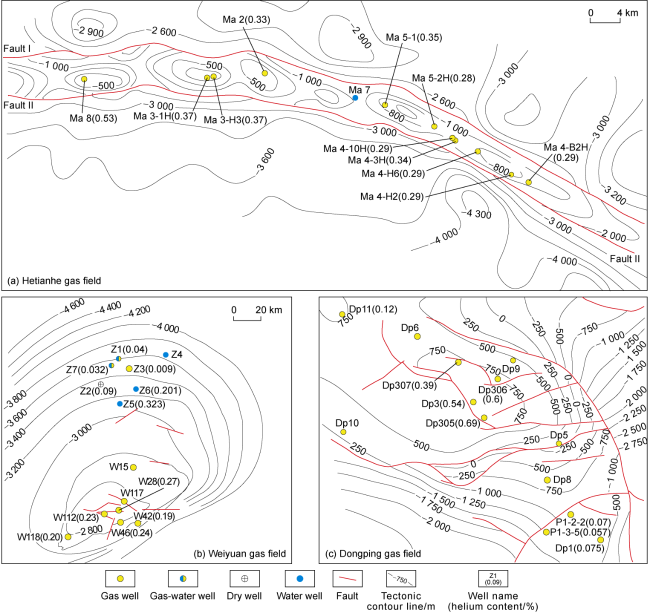
Fig. 4. Relationship between the tectonic position and helium content of typical helium-rich gas fields (the data of wells Z1, Z2, Z3, Z5, Z6, Z7 are from the Reference [63]). |
5.3. Areas with active groundwater
Groundwater is an important carrier for helium preservation and migration in the ancient basement, and the helium-rich gas fields discovered so far are often characterized by active edge and bottom water. For example, the helium-water ratio of production wells in the Dongping 3 well area of Dongping gas field is 0.122-0.561 m3/104 m3, and that in the Dongping 1 well area is 0.051-0.156 m3/104 m3 [63], which is lower than that in the Dongping 3 well area. Additionally, the average helium content of natural gas in the Dongping 3 well area is 0.319%, which is significantly higher than that in the Dongping 1 well area (average content of 0.068 5%). The Weiyuan gas field in the Sichuan Basin and the Hetianhe gas field in the Tarim Basin have relatively high helium content, and the formation of these two gas fields was thought to be related to the degassing and accumulation of water-soluble gas during the early reservoir formation studies [64-65]. The comparison between the Weiyuan gas field and the Longmaxi Formation shale gas of Weiyuan suggests that the former is helium-rich and the latter is helium-poor. In terms of the 20Ne content, a parameter reflecting the influence of groundwater on gas reservoirs, the value in Weiyuan gas field ((1.7-3.0)×10-8) is overall higher than that of the Longmaxi Formation shale gas of Weiyuan ((0.7-1.4)×10-8), which indicates that the Weiyuan gas field has more active groundwater, and the active groundwater is closely related to the helium enrichment. The Hugoton and Panhandle gas fields in the United States are also characterized by relatively high helium content at the gas-water interface [67], which reflects that helium enrichment cannot be separated from groundwater to provide helium source for the gas reservoir.
5.4. Atmospheric or low-pressure zones with low gas reserves abundance
Most of the helium-rich gas reservoirs discovered in China are normal-pressure or low-pressure reservoirs, with reservoir pressure coefficients basically lower than 1.20 (Table 5 ). The pressure coefficient of the Qingyang helium-rich gas field in the Ordos Basin is only 0.77, but its helium content is as high as 0.14% [68]. Few helium-rich gas fields have been discovered with high-pressure or ultra-high-pressure reservoirs, for high reservoir pressure coefficients can make it difficult for deep helium-bearing fluids to enter the reservoir, which is detrimental to helium enrichment.
Table 5. Pressure coefficient distribution of typical helium-rich fields |
| Basin | Gasfield | Formation | Pressure coefficient |
|---|---|---|---|
| Tarim Basin | Hetianhe gas field | C-O | 1.00 |
| Tarim Basin | Akmomu gas field | K | 1.01-1.07 |
| Sichuan Basin | Weiyuan gas field | —C-Z | 1.00 |
| Qaidam Basin | Dongping gas field | E-basement | 1.00-1.26 |
| Qaidam Basin | Mabei gas field | Basement | 1.11 |
| Ordos Basin | Dongsheng gas field | P | 0.93 |
| Ordos Basin | Qingyang gas field | P | 0.77 |
As an associated gas of natural gas, the content of helium is closely related to the reserve abundance of natural gas. By collecting data on helium content and natural gas reserve abundance (geological reserves per unit area) of gas fields in different regions of China, the author found that helium-rich gas fields tend to have lower natural gas reserve abundance, and the reserve abundance of the gas fields with helium content more than 0.1% is generally less than 1.5×10⁹ m3/km2. Except the Akemomu and Jianbei gas fields, all of them have the reserve abundance of less than 1×10⁹ m3/km2 (Fig. 5 ). Helium-rich gas fields have not yet been found in areas with excessive natural gas reserve abundance, because the higher the reserve abundance, the more intense the dilution of helium. This is a good indication that helium content is significantly negatively correlated with the evolution degree and gas generation intensity of hydrocarbon source rock in the similar geological settings [64-65].
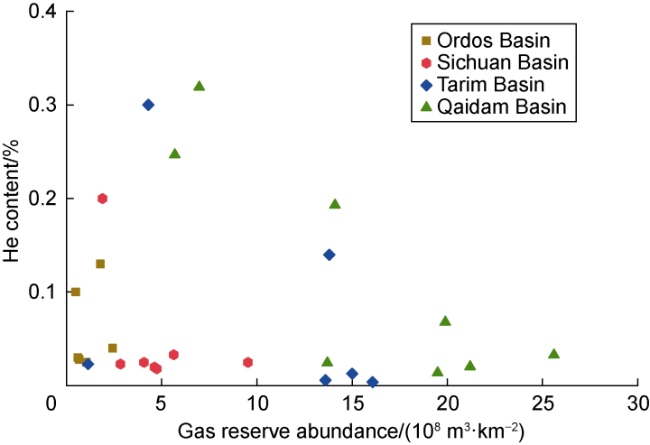
Fig. 5. Plot of helium content versus natural gas reserve abundance in four major basins of China. |
5.5. Helium associated with nitrogen in helium-rich gas reservoirs
By studying the helium and nitrogen contents of the Dongping, Niuzhong and Niudong gas fields in the Qaidam Basin, and the Ordovician, Cambrian and Sinian gas reservoirs in the Weiyuan area of the Sichuan Basin, we found that helium and nitrogen contents have a good positive correlation. Such a relationship also exists in Hugoton and Panhandle, famous large helium-rich gas fields in the U.S (Fig. 6 ). Chen et al. established a mathematical model based on the symbiotic phenomenon of He-N2 in the Earth's crust to speculate on the location and time of helium and nitrogen formation [69].
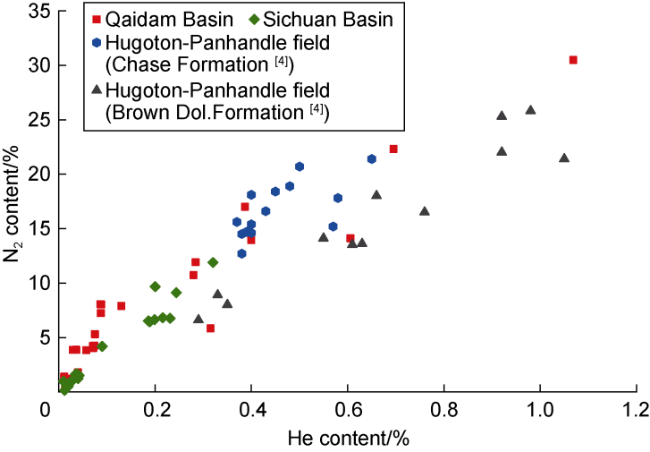
Fig. 6. Relationship between helium and nitrogen contents in the Qaidam Basin and the Sichuan Basin (some data from the Reference [4]). |
Helium and nitrogen are different in source and generation mechanism, but has obvious associated relationship, so accordingly, it is proposed that helium and nitrogen have a “coupling effect” [17]. (1) Helium and nitrogen contents have a close relationship in helium-rich gas reservoirs; (2) Both rely on the transportation of groundwater to eventually get enriched in the gas reservoir; (3) Under the effect of tectonic uplift, the groundwater flows to the structural highs (Weiyuan and Hetianhe gas fields), or the natural gas migrates laterally along the ancient strata, capturing helium and nitrogen in the formation water. The lateral transportation of combined nitrogen and helium may occur and ultimately enriched in the natural gas reservoir; (4) Helium and nitrogen may come from the ancient basement rock, and can be regarded as the same source, with helium from the radioactive decay of U and Th in the rock, and nitrogen mainly from the decomposition of nitrogenous compounds in inorganic matters. Helium and nitrogen are both noble gases and are stable in the earth's crust, with close Henry's constants. Both helium and nitrogen are dissolved in groundwater after generation, transported with groundwater, and simultaneously degassed and enriched in gas reservoirs. It can be called the process of “co-dissolution, co-preservation and co-enrichment”.
6. Main factors controlling helium enrichment
6.1. Ancient basement rocks act as the primary helium source for gas reservoirs
The presence of a main helium source is crucial for helium enrichment. The primary helium source for helium-rich crust-source gas fields typically originates from ancient basement rocks, often composed of granite and gneiss. These rocks contain higher contents of U and Th than sandstones and carbonate rocks. Because of their old age and large size, they take a long time to decay and generate large amounts of helium, which is preserved in groundwater. Under favorable conditions, this helium is supplied to overlying gas reservoirs, forming helium-rich gas reservoirs.
6.2. Faults provide migration pathways for helium-bearing fluids
Helium generated in ancient basement rocks is preserved in a water-soluble state. However, the slow diffusion of helium through underwater and pore water is insufficient to be enriched in shallow gas reservoirs. A system of faults is required to connect the deep helium source to the shallow reservoirs, serving as efficient channels for the upward migration of deep helium-bearing fluids. Such fault systems are observed in the Weiyuan, Hetianhe and Dongping gas fields (Fig. 4 ).
6.3. Late-stage tectonic uplift provides the driving force for helium-bearing formation water to migrate upward
In addition to a primary helium source and migration pathways, upward migration of ancient formation water requires tectonic uplift or compression to provide the necessary driving force, or large-scale migration of deep ancient formation water to gas reservoirs is unlikely. For example, the Weiyuan structure in the Sichuan Basin has both the Weiyuan gas field and the Ziyang gas area, where ancient granite bodies are developed. However, due to the Himalayan tectonic movement, Weiyuan structure is unevenly uplifted. The uplift amplitude of the Weiyuan gas field is larger, exceeding the original high point of Ziyang structure, and that of Ziyang area is smaller, which leads to helium enrichment not only in the Weiyuan gas field, but also in some shale gas area of Cambrian Qiongzhusi Formation. In contrast, limited uplift in the Ziyang area prevented the migration of the water bodies in the basement granite into the overlying gas reservoirs, hindering the formation of helium-rich gas reservoir and resulting in lower helium content (Figs. 2 and 7 ).
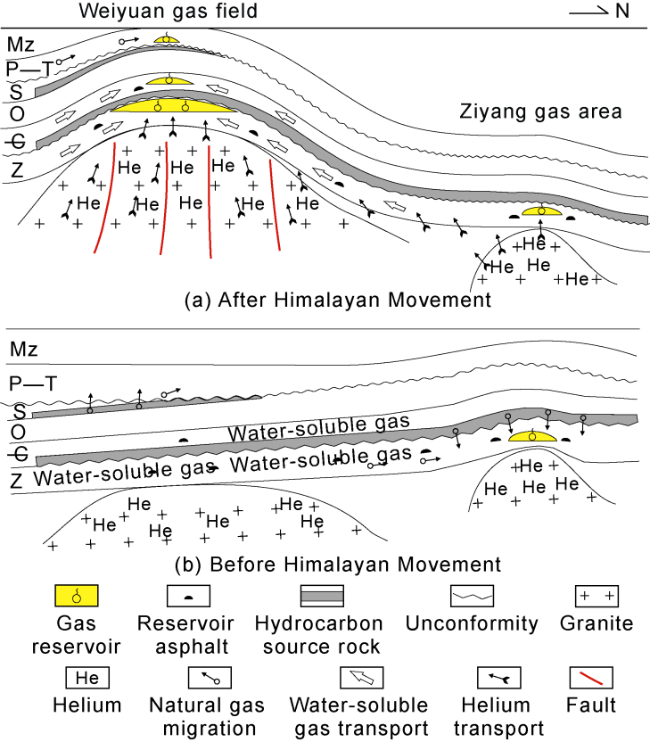
Fig. 7. Evolution of Weiyuan structure before and after Himalayan Movement (modified from the Reference [16]). |
6.4. Moderate hydrocarbon generation intensity of source rocks favors helium enrichment
The helium content in natural gas is significantly influenced by the intensity of hydrocarbon generation. In the same geological period, high-intensity gas generation of source rock can dilute the helium, reducing helium content. Conversely, low-intensity gas generation leads to less dilution, allowing helium to enrichment. The flux of helium dissolved in deep ancient formation water remains constant; thus, even if helium is supplied by ancient basement rocks, high gas generation intensity or gas supply intensity still makes it difficult to form helium-rich gas reservoirs.
6.5. Relatively moderate sealing capacity favors helium enrichment
Due to the small-sized molecule, high permeability and strong diffusivity of helium, it is often assumed that better sealing conditions are required for helium enrichment. As mentioned above, the formation of helium-rich gas reservoirs requires water-soluble helium in ancient basement as the main helium source to supply helium for gas reservoirs. Helium with groundwater as the carrier moves upward under the action of external forces such as tectonic uplift. If the gas reservoir has excellent sealing capacity, tectonic uplift can lead to abnormal high pressures within the reservoir, hindering the migration of the formation water with dissolved helium in the ancient basement to the overlying gas reservoirs. In contrast, the areas with weaker sealing capacity allow high pressure release, facilitating the upward migration of deep formation water, which in turn enhances helium enrichment. This explains why most helium-rich gas reservoirs are of normal or negative pressure. However, weaker sealing capacity does not imply that poorer sealing conditions are always better, while the prerequisite is the preservation of natural gas in the reservoir.
7. Helium enrichment models
Corresponding to diverse types of petroliferous basins, there are various mechanisms and models of helium enrichment and accumulation.
7.1. Crust-source helium enrichment model
Helium-rich gas reservoirs sourced from the crust follow three primary enrichment models: (1) upward migration of ancient formation water and helium release, (2) helium enrichment via natural gas migration along ancient reservoirs, and (3) helium enrichment in shale gas (including coalbed methane) reservoirs (Fig. 8 ).
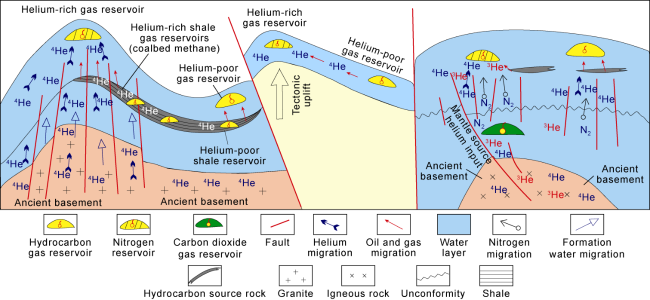


Fig. 8. Helium enrichment mechanism and model of various helium-rich gas reservoirs. |
The upward migration of ancient formation water and helium release is the most common helium enrichment model. Examples include the Weiyuan gas field in the Sichuan Basin, the Hetianhe gas field in the Tarim Basin, and the Dongsheng gas field in the Ordos Basin [1,70 -71]. Helium generated in ancient basement rocks is preserved in formation water and accumulates over time. During the Himalayan tectonic movements, significant uplift occurred, the faults connecting ancient basement rocks and the overlying gas reservoirs were generated, allowing deep helium-dissolved formation water to migrate upward and release helium, which makes the gas reservoir rich in helium (Fig. 8 ).
Helium enrichment via natural gas migration along ancient reservoirs is another important model, particularly in the helium-rich gas reservoirs with ancient basement as the reservoir or in the gas reservoirs with basement as the main channels for natural gas migration. Examples include the Dongping and Jianbei gas fields in the Qaidam Basin [1]. As natural gas migrates through ancient reservoirs, the helium generated by the ancient reservoirs and dissolved in formation water exsolves and mixes with the natural gas. The process of natural gas migration is also a process of continuous helium enrichment. The longer the migration distance, the more helium captured, leading to the ultimate formation of helium-rich gas reservoirs at structural highs (Fig. 8 ).
Helium enrichment in shale gas (include coalbed methane) reservoirs is less common. The large amount of gas generated by shale severely dilutes helium generated by itself, so helium-rich gas reservoirs are rarely discovered in shale gas or coalbed methane. The natural gas generated by organic-rich shale or coal seam in the process of thermal evolution partially migrates to the overlying trap, and the rest is retained in the shale or coal seam to form helium-poor gas reservoirs. However, if other old rock bodies containing uranium and thorium are developed below or near shale gas reservoirs or coal seams, it is possible to form helium-rich shale gas reservoirs or coalbed methane reservoirs (Fig. 8 ).
7.2. Crust-mantle mixed-source helium enrichment model
Helium-rich gas reservoirs derived from crust-mantle mixed sources primarily include three types of reservoirs dominated by hydrocarbons, nitrogen and carbon dioxide, which have different helium enrichment models.
In most cases, crust-derived helium still dominates in helium-rich crust-mantle mixed-source gas reservoirs dominated by hydrocarbons. Natural gas generated from hydrocarbon source rocks carries helium generated within the rocks to the reservoir, forming helium-poor gas reservoirs. When tectonic activity creates discordogenic faults that connect the upper mantle and a series of fractures in the deep crust, mantle-derived helium and helium-dissolved deep formation water migrates upwards along fractures and faults into the gas reservoir, leading to helium enrichment (Fig. 8 ). In such reservoirs, mantle-derived components are minimal, with the ancient basement rocks still being the main helium source. A typical example is Wuzhan and Taipingzhuang gas fields in Shuangcheng-Pingchuan areas of the Songliao Basin [1].
In carbon dioxide-dominated crust-mantle mixed-source helium-rich gas reservoirs, small amounts of nitrogen and hydrocarbons are also existed. Carbon dioxide is of inorganic origin, related to magmatic activity, which brings deep mantle fluids into the trap. At the same time, induced fractures allow helium generated in ancient basement rocks and other formations to enter the reservoir and accumulate (Fig. 8 ). In this type of gas reservoir, the main helium source is often from the mantle, with a typical example of part of the Baoyue gas field in the Sanshui Basin, where mantle-derived helium exceeds 50% [1].
In nitrogen-dominated crust-mantle mixed-source helium-rich gas reservoirs, small amounts of hydrocarbons and carbon dioxide are existed. Nitrogen primarily originates from the high-temperature cracking of nitrogenous compounds in the deep crust, with the heat source coming from magmatic activity or deep hydrothermal fluids. Studies have shown that ancient blocks exist in the basement of large sedimentary basins in eastern China, such as the Paleozoic basement of the Songliao Basin, the Archean basement of the Bohai Bay Basin, and the Proterozoic basement of the Subei Basin. Since the Mesozoic-Cenozoic era, the Pacific Plate has been subducting beneath the Eurasian Plate, causing crust ruptures in the northeastern direction. With the upper mantle thinning along the crust and the faulted zone uplifting, the eruption along the main fracture zone resulted in heat loss of the upper mantle, which was absorbed by the upper lithosphere, and creating high anomaly area of geothermal gradient in the eastern petroliferous basins [72]. High temperatures can make the helium generated in the rocks break through the closure temperature, facilitating the release of helium from helium-bearing minerals. Crust-derived helium dominates in these reservoirs, mantle-derived helium accounts for a high proportion, but generally less than 50%, as seen in the nitrogen-rich gas reservoir of the Huangqiao gas field in the Subei Basin, where helium content exceeds 1.0%, and the ³He/⁴He ratio is (3.71-4.89)×10-6, indicating a mantle-derived helium proportion of 34% to 44%. Even after deducting mantle-derived helium, the helium content remains high [73]. Additionally, the 40Ar/36Ar ratio is 717, much higher than the typical 40Ar accumulation values for Neogene formations, suggesting that the argon may come from ancient basement rocks and the upper mantle [71]. The gas field is located near the Tan-Lu fault zone, where Proterozoic basement rocks, frequent magmatic activity, and high geothermal gradients provide favorable geological conditions for the high-temperature cracking of deep crust-source nitrogenous compounds.
8. Helium exploration ideas
Helium is the associated gas in natural gas, but it does not mean that finding natural gas will lead to the discovery of helium-rich reservoirs. So far, helium-rich gas fields discovered all over the world have been accidentally found in the search for natural gas, the number of such gas reservoirs is very small, and the vast majority of the world's gas reservoirs are helium-poor. Due to the limited understanding on the enrichment mechanism and distribution law of helium, no exploration idea for helium-rich gas reservoirs have been formed so far. Through research, it is found that the mechanism of helium enrichment is very different from that of natural gas, and the formation conditions and main controlling factors are not the same, therefore, the exploration methods of helium are very different from those of natural gas, and even contradictory to natural gas exploration. Natural gas exploration always selects the "sweet spot" area for drilling, but such areas are not favorable for helium enrichment due to the large degree of helium dilution resulted from high intensity of natural gas charging and large reserve abundance. It is difficult for helium content to exceed the helium enrichment criterion of 0.1% even if there is a supply of exogenous helium. Therefore, to find helium-rich gas reservoirs, it is necessary to go beyond the boundaries of natural gas exploration and search for helium-rich zones according to the characteristics and controlling factors of helium enrichment.
First of all, in the accumulation process of natural gas from hydrocarbon source rock to reservoir, only the helium generated by U and Th decay in the hydrocarbon source rock and reservoir is captured, so the amount of helium capture is limited. And coupled with the dilution effect of natural gas on helium, it will be very difficult to form helium-rich reservoirs if there is no additional helium source to supply helium to the gas reservoir. This additional source of helium comes from the ancient basement, because the ancient basement rocks are large and old with long U and Th decay time, which cumulatively generates more helium. The helium generated tends to be preserved in the groundwater through dissolution. Additionally, the overlying gas reservoir cannot be enriched with helium unless the helium-dissolved groundwater in the pores of the basement rocks migrates into the reservoir, so there must be channels to communicate the basement rocks with the gas reservoir. Besides available migration channel, the driving force of groundwater migrating upward is indispensable, which comes from tectonic uplift. If the tectonic uplift amplitude is small, or the gas reservoir is basically not uplifted, the formation water dissolved with helium in the ancient basement is difficult to move to the vicinity of the gas reservoir and supply the gas reservoir with additional helium, so a helium-rich gas reservoir can be hardly formed, which also explains why helium is often enriched in the structural high of the same stratum.
Secondly, it is important to avoid misconception of exploration for helium-rich natural gas. In view of excessive dilution of helium by natural gas, the exploration areas with high gas generating intensity and high gas charging intensity shall be evaded. High-pressure and ultra-high-pressure gas reservoir distribution areas are also not conducive to helium enrichment. These areas often have good sealing conditions, and there is no pressure relief channel, which is not conducive to the upward movement of deep fluids, so the helium in the deep fluids is difficult to reach the overlying reservoirs to form helium-rich reservoirs. Volcanic gas reservoirs should be evaded as well, for volcanic rocks come from mantle magma, but all mantle-derived helium carried with the intrusion of magma is dissipated along with other volcanic gases and is rarely left in the volcanic rock. Additionally, volcanic rocks are mostly basic rocks with very low U and Th contents, so the amount of helium generated is too small to form helium-rich gas reservoirs. Taking the Kelameili gas field in the Junggar Basin as an example, its main body consists of Carboniferous volcanic rocks, the helium isotope analyses show that all of the helium come from the crust, with low helium content of 0.2-0.3 mg/g [64-65]. It should be noted that not all regions with ancient basement have helium-rich gas reservoirs. Only under specific geological conditions, helium in ancient basement can migrate to gas reservoirs through carriers and form helium-rich gas reservoirs.
Therefore, the search for helium-rich resources should focus on the gas reservoirs in or near ancient basement development areas with developed fault, larger uplift amplitude under the effect of the late tectonic movement, and medium-low abundance of natural gas resource. This requires that the effective natural gas supply intensity in these areas should not be too high, otherwise the large degree of helium dilution will hinder the formation of helium-rich gas reservoirs. The areas that meet such conditions are generally located in the periphery of the gas generating center of hydrocarbon source rock, the edge of the ancient Craton basin with medium-low gas generating intensity, the collision zone between basins, the paleouplift within the basin, the discordogenic fault development area, the shattered fault zone, and the area with relatively large uplift amplitude under the effect of the Himalayan tectonic movement.
In addition, although helium is an associated gas in natural gas, the proposed coupling of helium and nitrogen enrichment has made it clear that helium enrichment is not dependent on alkane gas or CO2, but really accompanied by N2 in the gas reservoirs. If we can find nitrogen-rich or nitrogen-dominated gas reservoirs, it is probable that we can find helium-rich gas reservoirs. In reality, it is not necessary to search for nitrogen reservoirs in exploration and production, but if we can grasp the law of nitrogen generation and distribution in the geologic body, it will be a good reference for searching helium. In the future, we can also try to find nitrogen-dominated gas reservoirs from the perspective of nitrogen formation and accumulation. If such gas reservoirs can be found, helium-rich resources will inevitably be found.
9. Conclusions
Generally, when natural gas migrates from source rock to reservoir and accumulates, helium content is often low due to the dilution of alkane gas to helium. The formation of helium-rich gas reservoirs requires supplementation by additional helium sources, which are mainly ancient basement rocks with a certain U and Th contents. In the areas with frequent magmatic activity in tensional basins, the additional helium source can also be mantle-sourced helium. Helium-rich reservoirs are characterized by a significant associated relationship of helium and nitrogen, both of which are mainly derived from the same ancient basement rocks, with helium from U and Th radioactive decay, and nitrogen from the decomposition of nitrogenous compounds. The enrichment of helium in helium-rich gas reservoirs has gone through the process of "multi-source helium supply, main-source helium enrichment, helium-nitrogen associating, and co-enrichment". Helium generated in ancient basement is preserved and transported as water-soluble helium, which is eventually released and enriched in gas reservoirs. There are six modes of helium enrichment under different tectonic backgrounds and reservoir formation conditions. The formation of helium-rich gas reservoirs is mainly controlled by the degree of difficulty and intensity of helium supply from ancient basement rocks to the gas reservoirs, so helium-rich gas reservoirs are mostly distributed in the areas above the ancient basement, with developed discordogenic fault, strong tectonic activities, and large uplift amplitude. In view of the dilution effect of alkane gas on helium, the helium content is relatively high in the regions with low supply intensity of alkane gas. The search for the favorable helium enrichment area should focus on the zones close to the basement rocks with developed fault, large uplift amplitude under the effect of the late tectonic movement, and low gas supply intensity in the ancient basement development areas.