

Introduction
With the continuous advancement of oil and gas exploration and development theory and technology, as well as the sustained growth of global oil and gas demand, unconventional oil and gas resources represented by shale oil have become a hot spot in the global oil and gas exploration and development nowadays [1-4]. Shale oil refers to the petroleum that remains in free or adsorbed state in micro- and nano-scale storage space of organic-rich shales [5-6]. In China, the continental shale oil resources are approximately 283×108 t, mainly distributed in large basins such as Junggar, Ordos, Songliao, and Bohai Bay [7]. However, large-scale effective exploration and development of shale oil face theoretical and technical bottlenecks such as unclear enrichment patterns and difficulties in predicting the distribution of "sweet spots". It is urgent to strengthen the research on the differential enrichment mechanism of continental shale oil[7-8].
The previous studies mainly classified shale oils into: (1) medium-low maturity (0.5%<Ro<1.0%) and medium-high maturity (1.0%<Ro<1.5%), by maturity [9]; (2) fractured, interlayer, and matrix, by reservoir space type and economic recoverability [5,10]; and (3) synchroogenic source- reservoir, separated source-reservoir, and pure shale, by the source-reservoir configuration and hydrocarbon accumulation mechanism [6]. However, the three classifications may coexist in the same basin, according to the exploration and development practices. For Type I (multi-stage stacked sandstone) and Type II (thick-layered shale intercalated with thin-layered sandy rocks) shale oil[11], remarkable results of exploration and development have been obtained in Changqing Oilfield, and the Longdong National Shale Oil Demonstration Zone has been established in the Ordos Basin. For Type III (pure shale) shale oil, it is still in the exploratory stage, and theoretical and technological breakthroughs are needed to support the goal of a million-ton productivity [12].
Lamina refers to the smallest or thinnest distinguishable original sedimentary layer in sediments or sedimentary rocks [13], and laminated shale can enrich shale oil in a large scale. Laminae have the following characteristics: (1) small thickness, mostly less than 1 cm [13]; (2) multiple components, including endogenous and exogenous inorganic minerals and organic matter [13-14]; (3) fine grain sizes, mainly clay-sized, and also silt-sized; (4) complex geneses, with significant differences in sedimentary environment, climate, tectonic activity, and diagenesis [15]; (5) great discrepancy in organic matter abundance, with a TOC difference up to 30 times between organic-rich laminae and organic-lean laminae; (6) significant differences in reservoir properties, with the porosity difference up to 4%, and the permeability difference up to 10 times [14,16 -17]; and (7) varying oil content, even at 10 orders of magnitude, as recorded by the stratified fluorescences [18]. Lamina combination is formed by different types of lamina vertically in a binary, ternary, or even polynary pattern, under different genetic mechanisms [13]. Many scholars have investigated laminated shale from the prospective of characteristics and classification, formation process and mechanism, sedimentary environment and influencing factors, reservoir properties and controlling factors [11,15 -16]. Regarding the organic-rich laminated shale in the 7th member of the Triassic Yanchang Formation (hereinafter referred to as Chang 7 Member) in the Ordos Basin, the laminae were usually divided into silty laminae, muddy (or clayey) laminae, organic-rich laminae, and tuffaceous laminae, based on the relationship between laminae and minerals, lamina thickness, and differences in mineral composition. The lamina combinations were assigned into clayey lamina combination and siliceous lamina combination, or organic-rich tuffaceous lamina combination, organic-rich felsic lamina combination, organic-rich clayey lamina combination, and felsic + clayey lamina combination, based on styles of lamina superposition [13,15]. In addition, scholars have conducted a lot of beneficial studies on their geneses, organic matter enrichment characteristics, reservoir characteristics and controlling factors, diagenesis, fluid properties, crude oil occurrence state, and "sweet spot" evaluation. However, the components, micro-migration process, and differential enrichment mechanisms of shale oil retained due to different lamina combinations have been rarely studied. Therefore, a detailed dissection of the lamina combinations in organic-rich laminated shale to clarify the occurrence of retained oil will be significant for further understanding the differential enrichment of oil in laminated shale and the dynamic process of shale oil "generation-migration- accumulation".
This study takes the organic-rich shale of the Chang 73 sub-member in the Ordos Basin as an example. Based on the identified lamina types, the lamina characteristics and differential enrichment mechanism of organic-rich shales are systematically analyzed from the perspective of oil component differentiation, by using the stepwise continuous multi-solvent extraction method and through micro-migration identification. The study results can provide a guidance for shale oil exploration and development in China.
1. Geologic setting
The Ordos Basin, about 32×104 km2, is a large polycycle superimposed basin developed on the North China Craton [19], and also the second largest petroliferous basin in China [20]. The basin has a long-term stability of tectonic properties with overall uplift and continuous subsidence[21-22]. It includes six primary tectonic units: Yimeng uplift, Weibei uplift, Jinxi flexural fold belt, Yishan slope, Tianhuan depression, and thrust zone at western margin (Fig. 1a ). Its tectonic history is divided into five stages: aulacogen (mid-late Proterozoic), neritic platform (Early Paleozoic), coastal plain (Late Paleozoic), inland basin (Mesozoic), and the peripheral rift (Cenozoic) [23]. The basin has the tectonic-sedimentary evolution characteristics of stable subsidence, migration, and multi stages and multi cycles [21]. During the sedimentary period of the late Triassic Yanchang Formation, owing to sufficient sediment supply, a complete fluvial-lacustrine delta-limnetic sedimentary cycle was formed, with a thickness of about 1 000 m. The Yanchang Formation can be divided into 10 members from top to bottom (Fig. 1b ), with the 7th member (or Chang 7 Member) as a typical suite of lacustrine-gravity flow sediments [24]. The Chang 7 Member is subdivided into three sub-members (Chang 71, Chang 72, and Chang 73) from top to bottom. Among them, the Chang 73 sub-member was the peak period of the lake basin, and mainly contains thick organic-rich shale deposited in extensive semi-deep to deep lake area [12,24], which constitutes the main source rock of the basin [25] and is also the main horizon for the development of laminated shale oil. The organic matters in the Chang73 sub-member are mainly Type I-II1, with sapropelic content up to 70%. The overall thermal evolution degree (Ro) is 0.6% to 1.2%, indicating the stage of peak oil generation, and showing great exploration and development prospects [26].
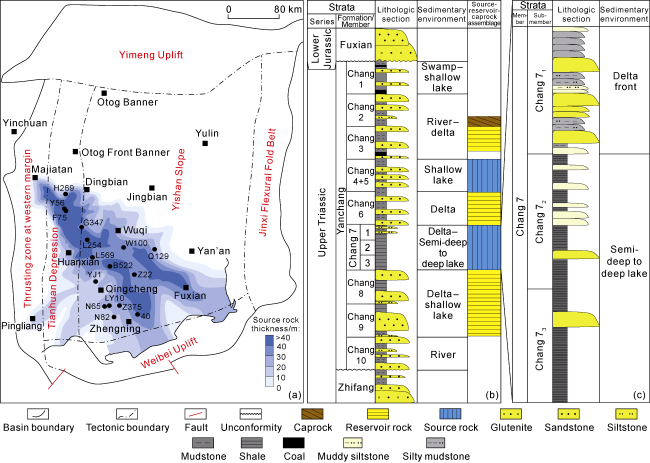
Fig. 1. Source rock distribution (a) and composite stratigraphic column (b) of the Ordos Basin (modified according to Reference [25]). |
2. Experiment and sample
More than 80 organic-rich shale samples were selected from drilling cores in over 20 wells in the Ordos Basin, covering various areas from semi-deep to deep lakes, with burial depths ranging from 1 459.78 m to 3 058.62 m. These samples include various types of laminae and can represent the lamina development and distribution patterns of organic-rich shales across the basin. Firstly, line cutting was performed on typical samples to observe and describe their types of laminae and determine the styles of lamina combinations. Secondly, rock thin section identification, X-ray diffraction (XRD) analysis, mineral scanning with the Tescan integrated mineral analyzer (TIMA), and geochemical testing were conducted to clarify mineral composition and geochemical characteristics. Afterwards, scanning electron microscopy (SEM) and physical property testing were carried out to determine the types of pores/fractures and the distribution of physical properties. Next, through fluorescence thin section identification, stepwise continuous multi-solvent extraction, and column chromatography, the occurrence state of retained oil and the micro-migration process of shale oil were revealed. Finally, combined with the calculation of micro-migrated hydrocarbon quantity (ΔQ) and the differences in shale oil components, the differential enrichment mechanism of shale with different lamina combinations was determined.
The stepwise continuous multi-solvent extraction was completed under different particle sizes (1 cm × 1 cm × 1 cm, 0.1 cm × 0.1 cm × 0.1 cm, 0.125-0.180 mm) and using different solvents (dichloromethane : methanol of 93:7 (free and transitional states); dichloromethane : acetone : methanol of 50:25:25 (adsorbed state)) to extract free, transitional, and adsorbed shale oils continuously. The content of shale oil in each state was determined by weighing [27]. The TIMA mineral scanning automatically and quantitatively identified minerals with high resolution (up to 10 nm), full minerals, and large field of view through mineral recognition software. The ΔQ was obtained by fitting the measured pyrolysis parameters with the thermal simulation parameters, and combining with the recovery of the original hydrocarbon generation quantity, following the principle of material balance, the principle of hydrocarbon generation kinetics and calculation process. [28].
3. Results
3.1. Lamina types and lamina combinations of shale
The Chang 7 shale in the Ordos Basin was formed in a freshwater lake basin environment, with underdeveloped carbonate minerals overall. In this study, depending on the parameters such as laminae scale, major minerals and organic matter abundance of the Chang 73 sub-member, the lamina combinations in the Chang 7 Member are divided into five types: non-laminated shale, sandy laminated shale, tuffaceous laminated shale, mixed laminated shale, and organic-rich laminated shale (Fig. 2 ).
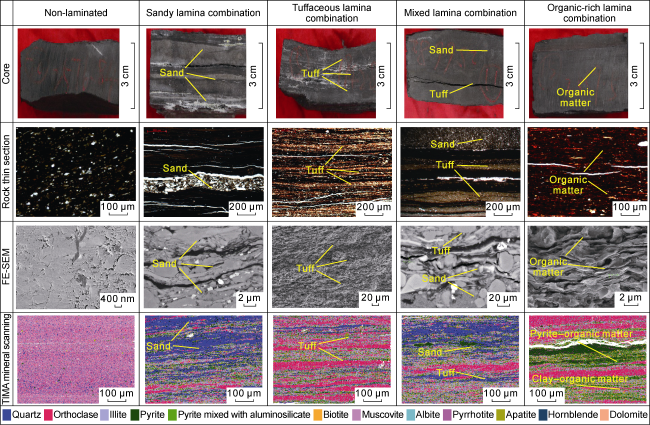
Fig. 2. Lamina combinations in organic-rich shale of the Chang 73 sub-member in the Ordos Basin. |
(1) Non-laminated shale
No obvious bedding is observed in core and under microscope. Massive structure is present, generally showing poor sorting. The terrigenous clastic particles and pyroclastic materials are mostly distributed in a disorderly manner. Under scanning electron microscopy, there is less sporadic organic matter in non-laminated shale, with a wide range of organic matter abundance (mainly 0.721%-5.407%, averaging 2.174%).
(2) Sandy laminated shale
Clear organic-rich layers and sandy layers are frequently interbedded, as observed in core and under microscope. The laminae are continuous. Frequent mixing of terrestrial clasts leads to a decreased organic matter abundance, which is less than 5% locally. Few pyroclasts are mixed inside the micron- to submillimeter-sized sandy laminae. This type of lamina combination presents a relatively high (greater than 10%) organic matter abundance. Its formation is related to the re-transport process of sandy debris flow. Given closer provenance and intense transport, the preexisting silty-sandy materials on the land are transported again by the flowing water. Under the flocculation effect, coarse particles are released, and the clayey and sandy particles are sorted, forming sandy laminae.
(3) Tuffaceous laminated shale
In the cores, black organic-rich layers are frequently interbedded with gray-white tuffaceous layers, and the lamina interface is clear and straight, with good continuity. Nodules of cellophane are seen occasionally. Single organic-rich lamina exists as intermittent tuffaceous lamina or tuffaceous aggregate, and the organic matter in tuffaceous lamina is mostly dispersed. This type of lamina combination is relatively high in organic matter abundance, with an average of 8.580%. Its formation is related to frequent volcanic activity in the Chang 73 sub-member, resulting in tuffaceous laminae with low organic matter abundance. On the other hand, due to the transformation of lake currents, the tuffaceous laminae settled into the deep lake area in the form of sedimentary tuff material are interbedded with organic layers, forming organic-rich tuffaceous laminae.
(4) Mixed laminated shale
A regular and frequent interbedding of organic-rich layer, sandy layer, and tuffaceous layer is observed in the core and under the microscope, with good continuity. According to the difference in the proportion of thickness between sandy laminae and tuffaceous laminae, this type of lamina combination can be divided into mixed sandy laminae and mixed tuffaceous laminae. The former reflects an organic matter abundance of 4.417%-19.523% (averaging 11.440%), while the latter of 0.739%-18.745% (averaging 9.907%). The formation of this type of lamina combination is influenced by both terrestrial and volcanic inputs.
(5) Organic-rich laminated shale
This type of lamina combination has a very high organic matter abundance (averaging 18.189%). Under microscope, it is observed as two types: organic-rich + clay, and organic-rich + pyrite. The former shows obvious frequent interbedding of organic-rich layers and clay minerals, which is related to the supply of terrestrial materials on the one hand, and the rapid hydrolysis of volcanic materials to form a false "organic matter-clay" composite between clay minerals and organic layers on the other hand. Under microscope, there are tuffaceous materials with crystal debris, which also confirms that the source of clay in the Chang 73 sub-member may be mostly controlled by volcanic ash debris [29]. The latter shows obvious frequent interbedding of organic-rich layers and framboidal pyrite, and the formation of such laminae is related to the active iron input from terrestrial sources during the synsedimentary period and the large amount of Fe2+ supplied by volcanic activity. Organic matter and active iron can easily form organic metal complexes through flocculation. Such complexes precipitate and then form framboidal pyrite in a sulfide reducing environment [30].
3.2. Reservoir characteristics of organic-rich shale lamina combinations
In the organic-rich shale of the Chang 73 sub-member in the Ordos Basin, pores are mainly intergranular pores, dissolution pores, intercrystalline pores, organic pores, and pores extended by hydrocarbon generation and expulsion. Microfractures are mainly particle shrinkage fractures, clay shrinkage fractures, organic shrinkage fractures, hydrocarbon generation-induced fractures, bedding fractures, and fractures extended by hydrocarbon generation and expulsion. There are significant differences in the combination patterns and reservoir properties of pore-fracture systems in shale with different lamina combinations (Fig. 3 ).
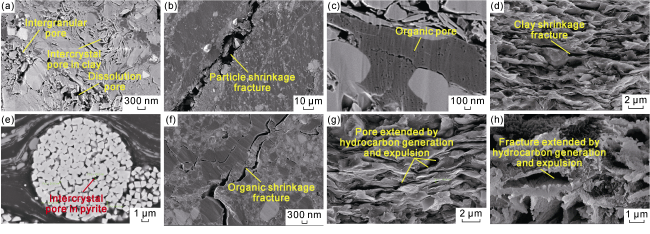
Fig. 3. Reservoir space of shale with different lamina combinations in the Chang73 sub-member, Ordos Basin. (a) Well L 254, 2 559.50 m, non-laminated shale, few intergranular pores and intercrystalline pores in clay minerals; (b) Well L 254, 2563.84 m, non-laminated shale, particle shrinkage fractures; (c) Well G 347, 2 389.40 m, sandy laminated, intergranular pores and organic pores; (d) Well L 254, 2 559.56 m, sandy laminated, more bedding fractures and clay shrinkage fractures; (e) Well G 347, 2 389.44 m, tuffaceous laminated, intercrystalline pores in pyrite; (f) Well L 569, 2 425.48 m, mixed laminated, organic shrinkage fractures; (g) Well L 254, 2 558.72 m, organic-rich laminated, pores extended by hydrocarbon generation and expulsion; (h) Well L 254, 2 558.72 m, organic-rich laminated, fractures extended by hydrocarbon generation and expulsion. |
In non-laminated shale, pores are mainly composed of few intergranular pores, dissolution pores at the particle edges, and intercrystalline pores in clay minerals (Fig. 3a ), and microfractures are mainly particle shrinkage fractures (Fig. 3b ), with fracture widths mostly ranging from several micrometers to tens of micrometers. The porosity is mainly 0.49%-2.40%, indicating a poor reservoir property. In sandy laminated shale, intergranular pores are most developed, with pore diameters mostly ranging from 4 μm to 65 μm. Due to the transformation of organic acid fluids, feldspar in this shale is extensively dissolved, forming embayed and honeycombed dissolution pores, or moldic pores locally, with pore sizes up to tens of micrometers. Especially in samples with relatively few mica minerals, the dissolution effect is more obvious. Along the organic lamina to the sandy lamina, as the sweep efficiency of organic acid decreases, the development of dissolution pores tends to deteriorate [12]. There are also organic pores, intercrystalline pores in clay minerals, and intercrystalline pores in pyrite in this type of laminated shale, but these pores are usually nanoscale, with poor connectivity (Fig. 3c ). The microfractures are mainly bedding fractures, particle shrinkage fractures, and clay shrinkage fractures (Fig. 3d ), with fracture widths mostly ranging from 4 μm to 30 μm and porosity mainly ranging from 1.44% to 6.38%, demonstrating excellent reservoir properties. In tuffaceous laminated shale, pores are extremely underdeveloped, and they are mainly dissolution pores in volcanic materials, organic pores, and intercrystalline pores in pyrite (Fig. 3e ). However, hydrocarbon generation-induced fractures and bedding fractures are extremely developed in such shale, greatly improving the reservoir properties. Its porosity is mainly 1.52%-5.21%. In mixed laminated shale, the pore and fracture characteristics of both shales with sandy laminae and tuffaceous laminae are reflected (Fig. 3f ), with porosity mainly ranging from 0.58% to 4.34%. In organic-rich laminated shale, pores are mainly intercrystalline pores in clay minerals, intercrystalline pores in pyrite, organic pores, and pores extended by hydrocarbon generation and expulsion (Fig. 3g ), and microfractures are mainly bedding fractures, clay shrinkage fractures, organic shrinkage fractures, and fractures extended by hydrocarbon generation and expulsion (Fig. 3h ), with porosity of 0.13%-4.71% (averaging only 1.62%), indicating poor reservoir properties.
3.3. Shale oil occurrence
The occurrence of shale oil can be comprehensively represented by its location, form, and quantity. The differences in the occurrence of shale oil directly affect its recoverability and resource potential. Shale oil is universal in various pores of the Chang 73 shale. Specifically, in non-laminated shale, shale oil is mostly distributed in microfractures, with a content of 1.084-8.759 mg/g (29% in free state). In sandy laminated shale, shale oil is mostly distributed in dissolution pores, with a content of 2.958- 17.654 mg/g (42% in free state), suggesting a relatively light oil quality. In tuffaceous laminated shale, shale oil is mostly concentrated in hydrocarbon generation-induced fractures and bedding fractures, with a content of 5.008- 16.211 mg/g, of which the free state content is 1.206-7.009 mg/g, accounting for 35%. In mixed laminated shale, shale oil is mainly distributed in intergranular pores, dissolution pores, and bedding fractures, with a content of 0.862-13.531 mg/g, of which the free state content is 0.431-8.748 mg/g, accounting for 50%. In organic-rich laminated shale, shale oil mostly occurs in interlayer fractures of clay minerals and occasionally dissolution pores, with a content of 3.527-12.536 mg/g, of which the free state content is 0.526-4.283 mg/g, accounting for 17%. Overall, the micro-nano pores and fractures in rigid laminae such as sandy laminae and tuffaceous laminae provide the dominant storage space for shale oil, and serve as the main site for light oil. In contrast, the oil quality on the surfaces of organic matter, clay minerals, and matrix mineral particles is relatively heavy.
4. Discussion
4.1. Factors controlling shale oil occurrence
The occurrence and distribution of shale oil are closely related to organic matter abundance, reservoir properties, thermal evolution degree, mineral composition, and laminae scale (Fig. 4 ). In the thermal evolution process of organic-rich shale, the generated shale oil reaching a adsorption equilibrium of organic matter on clay minerals quickly accumulates in the adjacent dominant reservoir space through micro-migration, thus forming a short-distance, rapid process of "generation-migration- accumulation" between laminae in the organic-rich shale, and ultimately resulting in a clear positive correlation between the total volume of extracted shale oil and the organic matter abundance (Fig. 4a ). The extensive development of rigid minerals such as quartz, feldspar, and pyrite can suppress compaction and promote the preservation of intergranular pores. Moreover, the formation of microfractures during hydrocarbon generation is beneficial for the retention of liquid hydrocarbons (Fig. 4b ). In the geological process of burial evolution, as the organic matter matures, a large amount of organic acids formed in the early stage can gradually accumulate towards rigid lamina sections after preferential action by mica minerals, leading to the dissolution of feldspar minerals to create many reservoir spaces, which is conducive to the direct charging and accumulation of crude oil (Fig. 4c ). In tuffaceous laminated shale, due to the supersaturation pressure difference generated during thermal evolution, many hydrocarbon generation-induced fractures are formed, which is also conducive to the retention of crude oil in microfractures (Fig. 4c ).
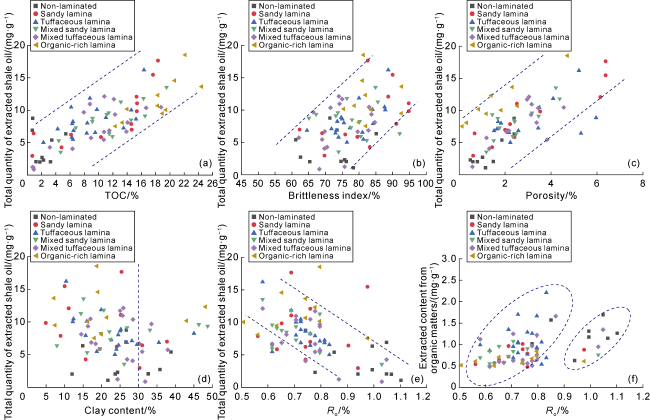
Fig. 4. Control factors of shale oil occurrence in the Chang 73 sub-member, Ordos Basin. |
The relationship between clay minerals and retained oil in organic-rich shale shows an overall trend of first decreasing and then increasing (Fig. 4d ), which may be related to different material sources of clay minerals. Clay minerals derived from volcanic materials are prone to form clay-organic matter complexes with organic matter. They are rich in transition metal elements such as Fe and V during thermal evolution, and have strong catalytic properties. Clay minerals themselves also have a certain catalytic ability for hydrocarbon generation. The combined effect of the two can quickly generate oil from source rocks at lower temperatures, and high hydrocarbon expulsion efficiency leads to a negative correlation between the total amount of clay and retained oil (Fig. 4d ).
There is a significant negative correlation between the thermal evolution degree and retained oil (Fig. 4e ), indicating a possibility of premature hydrocarbon generation in the organic-rich shale in the Ordos Basin. On the other hand, numerous hydrocarbon generation-induced fractures formed by highly brittle minerals brought by volcanic materials promote the rapid hydrocarbon expulsion of organic matter. To further eliminate the influence of organic matter (Fig. 4f ), the hydrocarbon generation of organic-rich laminated shale in the Chang 73 sub-member shows a clear two-stage pattern. In the stage with Ro<0.9%, various laminated shales that participate in hydrocarbon generation through volcanic materials can extensively generate hydrocarbons at lower evolution stages. As the thermal evolution degree increases, it promotes the retention of shale oil. In the stage with Ro≥0.9%, there is a significant lag in the hydrocarbon generation of organic matter without the action of volcanic materials. However, as the thermal evolution degree increases, the generated crude oil can be retained in situ in the shale reservoir spaces.
4.2. Shale oil micro-migration identification and evaluation of migrated hydrocarbon quantity
4.2.1. Evidence of fluorescent thin section
Components in shale oil have different fluorescence characteristics [31]. Based on the fluorescence differences between laminae, the shale oil micro-migration can be preliminarily identified. For various laminae in the Chang 73 sub-member, the fluorescences are dominated by brownish-yellow, light blue, yellow-green oily asphalt, orange-yellow colloid asphalt, brown asphaltene asphalt, and black carbonaceous asphalt, which are greatly varying among lamina combinations (Fig. 5 ). For sandy laminae, light blue and yellow-green oily asphalts dominate the intergranular pores and dissolution pores, and they are distributed continuously, mainly consisting of light components. For the adjacent organic laminae, brown asphaltene asphalt and black carbonaceous asphalt are dominant, mainly heavy components. This indicates a micro-migration from organic lamina to sandy lamina in sandy laminated shale (Fig. 5a ). For tuffaceous laminae and mixed laminae, the fluorescence are mainly brown and black carbonaceous asphalts, in contrast to light blue oily asphalt (Fig. 5b , 5c) and orange-yellow colloid asphalt (Fig. 5c ) in tuffaceous lamina and mixed lamina, mainly consisting of light to medium components. For organic-rich laminae, the fluorescence intensity is low, and black carbonaceous asphalt is dominant in organic lamina, while the clayey lamina is dominated by orange-yellow colloid asphalt and brown asphaltene asphalt, with a lack of light components. This indicates an intense hydrocarbon expulsion (Fig. 5d ). The above phenomena all indicate that there is significant micro-migration between shale layers with different lamina combinations. After hydrocarbons are generated in the organic lamina, light components can quickly migrate into rigid laminae such as sandy, tuffaceous, and mixed laminae. After multi-stage differentiation of organic matter-clay-pore wall media, light and heavy components distribute differentially in various laminae.

Fig. 5. Fluorescent thin sections of typical laminated shale in the Chang 73 sub-member, Ordos Basin. (a) Well H 269, 2 563.11 m, sandy laminated shale; (b) Well W 100, 2 012.32 m, tuffaceous laminated shale; (c) Well H 269, 2 574.81 m, mixed laminated shale; (d) Well L 254, 2 551.80 m, organic-rich laminated shale. |
4.2.2. Evidence of geochemical parameters
The chart of organic matter abundance and pyrolysis light component index can indicate the micro-migration of shale oil (Fig. 6a ). The experimental results show that non-laminated shale, tuffaceous laminated shale with well-developed microfractures, as well as millimeter-sized sandy laminated shale, have the characteristics of low TOC value (less than 6%) and high content of light components (light component index higher than 0.4 mg/g), indicating that these shales have poor hydrocarbon generation ability, but the abnormal enrichment of light components suggests the charging of migrated hydrocarbons. The laminated shales with light component index less than 0.4 mg/g and TOC>6% have the characteristics of high TOC value and low content of light components, indicating that these shales have expulsed hydrocarbons, with light components rapidly migrating to adjacent dominant rigid laminae, resulting in an overall heavier residual crude oil. The laminated shales with light component index higher than 0.4 mg/g and TOC>6% have the characteristics of high TOC value and high content of light components, indicating that these shales are capable of hydrocarbon generation and retention. The chart of correlation between organic matter abundance and crude oil gravity index also confirms that the tuffaceous laminated shale with microfractures and the sandy laminated shale with millimeter thick sand layers have received the supply of migrated hydrocarbons (Fig. 6b ). Overall, non-laminated shale is input with migrated hydrocarbons, and the microfractures in tuffaceous laminae and the thickness of sandy lamina control the gravity ratio. In laminated shale, the charging of migrated hydrocarbons can lead to Tmax inhibition. Moreover, the higher the content of free hydrocarbons, the larger the peak area of pyrolysis S1, and the more obvious the Tmax inhibition [32]. The Tmax and hydrocarbon generation index results (Fig. 6c ) indicate that non-laminated shale, tuffaceous laminated shale with microfractures, and thick sandy laminated shale have all been charged with migrated hydrocarbons, while other types of laminated shales have already expulsed hydrocarbons. The experimental results also indicate a significant shale oil micro-migration in the Chang 73 sub-member.
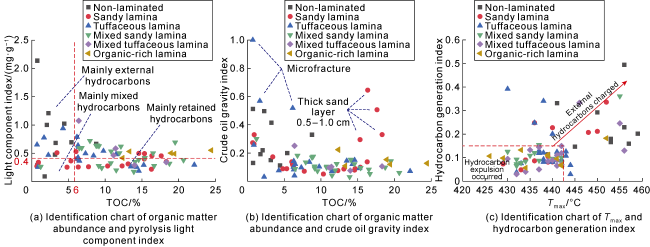
Fig. 6. Identification of geochemical parameters for shale oil micro-migration in shales with different lamina combinations in the Chang 73 sub-member, Ordos Basin. |
4.2.3. Evaluation on micro-migration
Many studies have been conducted on the micro-migration process inside the organic-rich laminae in the Chang 73 sub-member. Li et al. confirmed through laser confocal 3D visualization analysis that heavy components are enriched in organic-rich laminae, while light components are more easily enriched in felsic and tuffaceous laminae [33]. Xi et al. also proved the occurrence of significant micro-migration within the laminae through high-resolution laser Raman spectroscopy testing [12].
This study is based on the principle of material balance, and the quantity of micro-migrated shale oil (ΔQ) occurring between laminae is the difference between the original hydrocarbon generation potential and the pyrolysis potential under current conditions [32]. To suppress experimental errors caused by oil and gas loss in the evaluation process of shale oil micro-migration, a sealed coring interval (Well L 569) with high-quality source rocks containing frequently interbedded laminae in the Chang 73 sub-member of Ordos Basin (Fig. 7 ) was selected for analysis to systematically evaluate the differences in ΔQ in shales with different lamina combinations. The results indicate that the ΔQ values of organic-rich laminated shale are all positive, with an average of 347.46 mg/g, indicating that they belong to the hydrocarbon supply layers as a whole. The average ΔQ value of the sandy laminated shale is −7.24 mg/g, indicating that they belong to the hydrocarbon accumulating layers as a whole. The overall ΔQ values of the tuffaceous laminated shale are greater than 0, indicating that tuffaceous laminae belong to the hydrocarbon supply layers. However, considering the large number of microfractures developed in tuffaceous laminated shale, which can also accumulate hydrocarbons, this type of laminae is supposed to have undergone hydrocarbon supply and accumulation at submillimeter scale. The mixed laminae have both positive and negative ΔQ values, with the average of -1.89 mg/g, indicating that they belong to the hydrocarbon accumulating layers as a whole. However, the non-laminated shales are mainly negative ΔQ values, which belong to the hydrocarbon accumulating layers. The pyrolysis parameters, oil composition, and quantity of extracted shale oil are validated mutually, indicating a significant micro-migration of shale oil occurred in the organic-rich shale of the Chang 73 sub-member. Nonetheless, there is discrepancy among lamina combinations, which generally evolve from the hydrocarbon supply layer to the hydrocarbon accumulating layer in an order of organic-rich laminated shale → tuffaceous laminated shale → mixed laminated shale → sandy laminated shale → non-laminated shale.
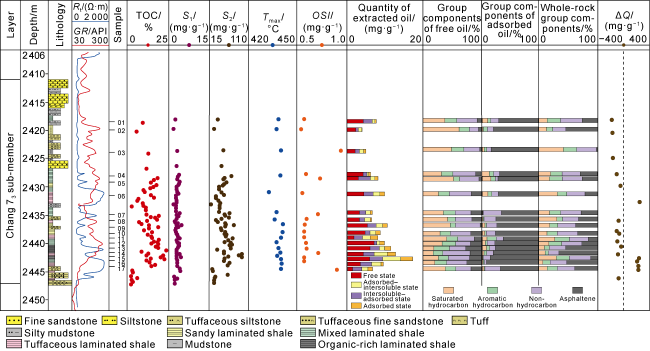
Fig. 7. Evaluation of shale oil micro-migration in shale with different lamina combinations in the Chang73 sub-member of Well L 569, Ordos Basin. |
4.3. Differential enrichment mechanism and model of shale oil
4.3.1. Relay hydrocarbon-generating pressurization controls multiphasic micro-migration of shale oil
The organic matters of black shale in the Chang 73 sub-member of the Ordos Basin are mainly Type I and Type II, with lake algae/bacteria as the main hydrocarbon- generating kerogens, which are microscopically observed to be sapropelite group (68.38%) dominantly, followed by vitrinite + inertinite (29.92%). The Ro value ranges from 0.6% to 1.3%, indicating a low mature to mature stage [26]. Previous studies have shown that there are differences in the distribution characteristics of activation energy of hydrocarbon generation among different organic macerals (Fig. 8a ). The organic macerals of black shale in the Chang 7 Member are mainly composed of algainite in the sapropelite, while the dark mudstone contains algainite and higher contents of vitrinite and inertinite [34]. The differences in the composition of organic macerals in shale with different lamina combinations can lead to different hydrocarbon generation peaks in such shale [32]. The simulations of hydrocarbon generation in black shale and mudstone [35-36] confirm that compared to black shale (with a hydrocarbon generation peak of about Ro=0.85%), mudstone (with a hydrocarbon generation peak of about Ro=1.50%) has a significant retention effect on hydrocarbon generation (Fig. 8b ). There are significant differences in the peak of hydrocarbon generation among shale samples of the same organic matter type (Type II2) [37]. Overall, however, the better the organic matter type, the earlier the hydrocarbon generation (the peak of hydrocarbon generation shifts from Ro=0.75% to Ro=1.0%) (Fig. 8c ). Based on previous studies, it is believed that black shales with different types of organic matter in the Chang 73 sub-member of the Ordos Basin demonstrate a relay hydrocarbon generation of various types of organic matters, with the characteristics of early, long, and efficient hydrocarbon generation. As reported by Li et al. [33], for the source rock in the Chang 7 Member, when the TOC value is 10% and the Ro value is 0.8%-1.0%, the volume expansion force caused by hydrocarbon generation is 119-156 MPa. Moreover, with the increase of organic matter abundance and thermal evolution degree, the volume expansion force induced by hydrocarbon generation of organic matter is more significant. Through simulation experiments, Zhang [38] indicated that the charging force of crude oil during the main hydrocarbon generation period in the Chang 7 Member of the Ordos Basin could be nearly 60 MPa. This finding also objectively demonstrates that during hydrocarbon generation, differences in hydrocarbon-generating kerogens within the laminae may lead to a relay-style hydrocarbon generation pressurization effect between different shale laminae.

Fig. 8. Evidence of relay hydrocarbon generation caused by differences in macerals, kerogen types, and lamina combinations. |
The abundant microfractures within shale laminae can promote the migration of liquid hydrocarbons formed in organic-rich laminae to sandy and mixed laminae, and form saturated oil in the pore-fracture system. The overpressure generated by the "relay" hydrocarbon generation evolution process in different types of laminated shales can also prolong the micro-migration process of shale oil and improve the migration efficiency of shale oil from the hydrocarbon generating layer to the hydrocarbon accumulating layer in the source rocks. In addition, Hui et al. studied the peak hydrocarbon generation during the thermal evolution of type I, type II1, type II2, and type III organic matters in the western Liaohe Depression, Bohai Bay Basin. The results show that as the type of organic matter deteriorates, the peak oil generation gradually evolves from Ro value of 0.6% to 1.2% [39]. Our thermal simulation results for Type I and Type II1 organic matters also show that the peak oil generation of Type I (shale with mixed laminae) shifts from Ro value of 0.8% (simulated temperature 325 °C) to Ro value of 1.0% (simulated temperature 350 °C) for Type II1 (shale with tuffaceous laminae) (Fig. 8d ), which confirms the existence of a "relay" hydrocarbon generation between shales of different lamina combinations.
4.3.2. Multi-scale pores and fractures constitute the pathway system for differential enrichment of shale oil
During the thermal evolution of organic matter, the high pressure caused by hydrocarbon generation promotes the formation of microfractures, while the expelled organic acids lead to the dissolution of feldspar, rock debris, volcanic materials, etc., forming a large amount of reservoir spaces. However, there are significant differences in the sizes of pores and fractures in shales with different lamina combinations. In sandy, tuffaceous, and mixed laminated shales that mainly receive the supply of migrated hydrocarbons, where the contents of quartz and feldspar are relatively high, the micro-scale pores are mainly intergranular pores and dissolution pores, the nano-scale pores are mainly intercrystalline pores in clay minerals and pyrite, and the microfractures often have width of tens of micrometers and length of hundreds of micrometers or even centimeters. In the organic-rich laminated shales that mainly supply hydrocarbons, there are mainly nano-scale intercrystalline pores in clay minerals and pyrite, and organic pores, and the microfractures are mainly composed of micro-scale hydrocarbon generation-induced fractures, as well as bedding fractures. When hydrocarbon expulsion occurs within the laminae, liquid hydrocarbons can migrate and accumulate towards adjacent hydrocarbon accumulating layers through the opened hydrocarbon generation-induced fractures. Therefore, the widely developed nano-scale pores and fractures in the hydrocarbon supply layer and the abundant micro-nano scale or even centimeter-scale microfractures in the hydrocarbon migration layer jointly constitute multi-scale crude oil migration and accumulation channels between shales with different lamina combinations. Taking Well L 569 as an example, shales with various lamina combinations are frequently stacked vertically. The efficient combination of multi-scale microfractures in the hydrocarbon supply layer and adjacent hydrocarbon accumulation layer in both longitudinal and transverse directions can significantly improve the migration efficiency of liquid hydrocarbons between laminae. The effective combination of nano-micron pores in the hydrocarbon supply layer and hydrocarbon accumulation layer provides storage space for shale oil accumulation. The phenomenon of light oil saturated in bedding fractures and hydrocarbon generation-induced fractures in fluorescent thin sections, intergranular pores and dissolution pores in rigid laminae, also indicates that the reasonable configuration of multi-scale pores and fractures between hydrocarbon supply layers and hydrocarbon accumulation layers is the key to differential enrichment of shale oil.
4.3.3. Differential enrichment model of shale oil


Fig. 9. Differential enrichment models of shale oils with different lamina combinations in the Chang 73 sub-member, Ordos Basin. (a) Differential enrichment model of shale oil (Well L 569); (b) Microscopic model of differential enrichment of shale oil under lamina control: ① Mixed laminated shale → thin sand layer; ② Organic-rich laminated shale → tuffaceous laminated shale; ③ Tuffaceous laminated shale → sandy laminated shale; ④ Tuffaceous laminated shale→ thin sand layer. |
(1) The shale oil enrichment model of mixed laminated shale → thin sandstone (Fig. 9b ①). During the thermal evolution process, as the organic matter gradually matures in the mixed laminated shale, the hydrocarbon generation and increasing pressure leads to the extensive development of microfractures in the mixed laminae. When the generated crude oil reaches the adsorption equilibrium of high specific surface area of organic matter and clay minerals in the mixed laminated shale, the remaining crude oil can gradually migrate into the thin sand layers through the migration channels formed by microfractures, and form retained oil after reaching adsorption equilibrium. In this process, more crude oil enriches in the mixed laminae, and the overall oil quality is relatively heavy (Fig. 7 ), while light oil only enriches in microfractures. In contrast, there is less and lighter crude oil in the thin sand layers, and it mainly exists in intergranular pores and dissolution pores, indicating that the overall hydrocarbon generation potential of the mixed laminae is limited, and the crude oil generated is enriched in the form of in-situ retention.
(2) The shale oil enrichment model of organic-rich laminated shale → tuffaceous laminated shale (Fig. 9b ②). Organic-rich laminae are the most important hydrocarbon generating layers, and much crude oil generated during thermal evolution promotes the generation of hydrocarbon generation-induced fractures and microfractures in tuffaceous laminated shale. In this process, many heavy components are selectively adsorbed in the organic-rich laminae (Fig. 7 ). Nevertheless, crude oil that has undergone oil-rock interaction has stronger fluidity due to the reduction of heavy components, and can quickly accumulate in the tuffaceous laminae through the hydrocarbon generation-induced fractures and microfractures, ultimately forming relatively lighter crude oil enriched in the hydrocarbon generation-induced fractures and microfractures, while the crude oil enriched in the matrix layer is relatively heavy.
(3) The shale oil enrichment model of tuffaceous laminated shale → sandy laminated shale (Fig. 9b ③). During the thermal evolution process, early formed organic acids can migrate into the sandy laminae, promoting the extensive dissolution of feldspar minerals. As the thermal evolution degree further increases, the liquid hydrocarbons formed in the tuffaceous layers can quickly accumulate into the sandy laminae through microfractures, and ultimately enriching abundant light oil in microfractures in tuffaceous laminae and dissolution pores in sandy laminae, while enriching abundant heavy oil in organic and tuffaceous laminae.
(4) The shale oil enrichment model of tuffaceous laminate shale → thin sand layer (Fig. 9b ④). After reaching adsorption equilibrium, relatively lighter crude oil can quickly accumulate into intergranular pores and dissolution pores through microfractures, and form a heavy oil adsorption layer at the pore walls, while light oil accumulates at the centers of the pores.
Macroscopically, under the control of multiple factors such as relay hydrocarbon supply, stepwise migration, and multi-stage differentiation, the differential enrichment of crude oil in laminated shale in the Chang 73 sub-member presents the following characteristics. (1) Abundant hydrocarbon generation-induced fractures, fractures extended by hydrocarbon generation and expulsion, and bedding fractures generated during the peak of hydrocarbon generation in organic-rich shale are the main channels for micro-migration within the source, and the main enriching places for light components in organic-rich laminated shale. (2) Abundant intergranular pores, dissolution pores, hydrocarbon generation-induced fractures, bedding fractures, and microfractures developed frequently in rigid laminae (e.g. sandy laminae, tuffaceous laminae, and mixed laminae) constitute the main storage spaces for the migration and accumulation of liquid hydrocarbons. (3) The widely developed adsorbents in the hydrocarbon supply-accumulation layers promote the differentiation of liquid hydrocarbon components, further enhancing the fluidity of liquid hydrocarbons. (4) The spatial superposition of various laminated shales, relay hydrocarbon generation, and the combination patterns of multi-scale pore-fracture systems jointly control the differences in shale oil enrichment between laminae.
5. Conclusions
There are various types of laminae in organic-rich shale of the Chang 73 sub-member in the Ordos Basin. The laminae are divided into five combinations: non-laminated shale, sandy laminated non-laminated shale, tuffaceous laminated non-laminated shale, mixed laminated shale, and organic-rich laminated shale.
The abundance of organic matter, reservoir properties, thermal evolution degree, mineral composition, and lamina scale jointly constrain the occurrence of liquid hydrocarbons in shale with different lamina combinations. Micro-nano pores and fractures in rigid laminae such as sandy laminae and tuffaceous laminae are the main distribution places for light oil, while the surfaces of organic matter, clay minerals, and matrix mineral particles are mainly heavy oil. The sandy and tuffaceous laminated shales with frequent development of rigid laminae are the most favorable hydrocarbon accumulating layers.
There is significant micro-migration of shale oil between different lamina combinations of organic-rich shale in the Chang 73 sub-member. Overall, there is an evolution trend for organic-rich laminated shale → tuffaceous laminated shale → mixed laminated shale → sandy laminated shale → non-laminated shale, from the hydrocarbon supply layer to the hydrocarbon accumulation layer.
Under the control of multiple factors such as relay hydrocarbon supply, stepwise migration, and multi-stage differentiation, the spatial superposition of various laminated shales, relay hydrocarbon generation, and the combination patterns of multi-scale pore-fracture systems jointly control the differences of shale oil enrichment between laminae, and ultimately form the characteristic that organic-rich laminae mainly store heavy oil, while rigid laminae (e.g. sandy laminae and tuffaceous laminae) enrich light oil.
Nomenclature
GR—gamma ray, API;
OSI—oil saturation index, mg/g;
Ro—vitrinite reflectance, %;
Rt—formation resistivity, Ω·m;
S1—free hydrocarbon content, mg/g;
S2—pyrolytic hydrocarbon content, mg/g;
SP—self-potential, mV;
Tmax—maximum pyrolysis peak temperature, °C;
TOC—total organic carbon content, %;
ΔQ—quantity of micro-migrated hydrocarbons, mg/g.