

Introduction
The researches on hydrogeology and hydrochemistry of oil and gas fields in China have evolved in three stages: initiation (the early 20th century to the 1960s), rapid development (the 1970s to the late 1990s), and steady development (begging of the 21st century to present) [1-2]. Formation water in oil and gas fields is very important in the process of oil and gas exploration and development, and it is mainly used for the classification of hydrogeological belts in oil-bearing basins and the prediction of favorable oil-bearing belts [3-9], the analysis of the rules of migration and accumulation of oil and gas and the preservation conditions [10-23], and the study of the authenticity of water content in oil and gas layers and the rules of water production [24-32] etc. However, during the process of oil and gas exploration and development, the formation water is often polluted by drilling fluid, kill fluid, preflush, fracturing fluid, acid fluid, surface water, residual water of storage tank, etc., and the chemical properties of formation water are distorted by the influence of sampling, sample delivery and storage, etc. [1-2,6,14]. These distorted formation water data often lead to false geological understanding, so it is necessary to evaluate the credibility of formation water analysis and test data. This has been studied by geological scientific researchers. For example, Cheng et al. carried out research on the identification standard of formation water and applied it in Erlian Oilfield [24]; Tao et al. carried out the authenticity identification of carbonate formation water in the Tarim Basin, and distinguished the formation water polluted by drilling construction fluid [25]; Zhou et al. carried out the analysis of water chemical parameters and the identification of water in polluted formations [26]; Guan et al. carried out the analysis of the characteristics of formation water, residual acid, and drilling fluid mixture[27]; Wang et al. analyzed the formation water production, flowback rate, and credibility of the Sulige gas field [28]. In response to limitations and deficiencies of data credibility evaluation method for formation water in oil fields, the author investigates and sorts out the basic methods of water discrimination and formation water chemistry analysis before the 90s of the 20th century; and based on the formation water chemistry data obtained during the testing of some exploratory wells in different oil and gas basins in China in the past 30 years, based on the analysis of the characteristic coefficient of differentiating oil and gas field water chemistry environment from Su Lin and Boyarskiy, a credibility evaluation method of oil and gas field stratum water data is established, and the influencing factors are analyzed, in order to provide a new method of the water data credibility analysis in oil and gas fields.
1. Basic methods for formation water identification and data credibility screening
Traditionally, the basic methods for distinguishing and identifying formation water in oil and gas fields include a series of methods such as physical characteristic analysis, hydrochemical composition analysis, water type analysis, and hydrochemical single characteristic coefficient analysis based on geological background analysis. There are various situations that may cause formation water pollution or analysis errors during the sampling and data analysis processes, and researchers need to identify their reliability.
1.1. Physical characteristic analysis
This is the most intuitive method for evaluating the credibility of formation water in oil and gas fields, mainly by observing the color and turbidity of samples collected. Oil and gas field water (field water for short) comes in various colors [6-8,14], such as dark gray, light gray, brown, dark brown, light brown, brownish yellow, yellow, and light yellow, or in colorless. Field water is also variable in turbidity [6-8,14], and it can be very turbid and opaque, turbid and slightly transparent, slightly turbid and semi-transparent, slightly turbid and relatively transparent, non-turbid and transparent, etc. The vast majority of formation water with high credibility tends to present a certain color or turbidity. Therefore, researchers should sample the formation water with stable color and turbidity, rather than sampling immediately after the valve of wellhead (or separator and water tank) is opened.
1.2. Chemical composition analysis
This method includes ion balance evaluation method, anion evaluation method, salinity evaluation method, and Shukalev classification method, etc.
The ion balance evaluation method mainly refers to the carbonate balance method and the anion-cation equivalent balance method used in water analysis. The carbonate balance method is based on the theory of carbonate equilibrium. When pH<8.34, CO32− should not appear in the analysis results, conventional methods for measuring CO32− cannot detect trace amount of CO32−. Similarly, when pH>8.34, H2CO3 should not appear in the water analysis results [29]. Any inconsistency with the water analysis results above may indicate that the determination of pH or CO32− is problematic or the formation water is contaminated. The anion-cation milligram equivalent balance method is used to compare the milligram equivalents of anions and cations in hydrochemical analysis results. The total milligram equivalent of anions should be equal to the total milligram equivalent of cations [1-5]; if not, the analysis results are problematic.
The anion evaluation method refers to the presence of some constant anions in the formation water of oil and gas fields that should not exist, to determine whether there invasion or pollution of surface water in the formation water. Previous studies believed that CO32−, OH−, NO3−, etc., are common anions in surface water [1-2,5 -10,13 -14], and they could not exist in enclosed and hydrocarbon-rich formations. The presence of these anions indicates a close relationship with surface water, that is, the shallow oil and gas reservoirs have been damaged[1-2,6].
In addition, special attention should be paid to the detection of sulfate ions (SO42−) in high barium ion (Ba2+) formation water. This can be interpreted in three cases. In the first case, if trace amounts of SO42− are commonly detected in high salinity formation water, this is the result of salt effect [12,30], and the relevant data are credible. For example, in the Qiulin area of the Sichuan Basin, the gas field water samples from the Jurassic Shaximiao Formation (J2s) of wells Qiulin 10 and Qiulin 10-H1 are of CaCl2 type, with salinity of 38 775 and 34 215 mg/L, respectively. They exibhit the Ba2+ content of 115 and 156 mg/L, and the SO42− content of 69 and 225 mg/L, respectively, correpsonding to the sodium chloride coefficient ($r_{Na}$/($r_{C1}$) of 0.36 and 0.41, and the desulfurization coefficient [($r_{S0}$×100/(($r_{C1}$+($r_{S0}$)] of 0.23 and 0.84, respectively, suggesting reliable data of formation water with good preservation conditions. In the second case, for coal measures containing a large amount of pyrite and gypsum salt formations containing a large amount of CaSO4, the water-rock interaction can lead to a relatively high content of SO42− in the formation water, which should not be classified as polluted formation water. In the third case, if SO42− is occasionally detected in the formation, it should be considered whether the formation water sample is taken in a non-standard way, polluted, or stored improperly; if so, the hydrochemical data are incredible. For example, the formation water sample from the Jurassic Shaximiao Formation of Well Qiulin-20H in the Sichuan Basin is low-salinity (4 991 mg/L) CaCl2-type water, with Ba2+ content of 7.20 mg/L and SO42− content of 48.45 mg/L, and exhibits the sodium chloride coefficient of 0.91 (indicating a slight pollution) and the desulfurization coefficient of 1.38. Therefore, the Ba2+-containing formation water in the low-salinity gas field water mentioned above has a pollution impact.
Salinity evaluation method refers to the presence of formation water with salt characteristics that do not match the relevant stratigraphic positions in the oil and gas field, and thus identify the mixing of foreign water sources. For example, the marine strata should have high- salinity formation water, but the water samples exhibit the characteristics of low salinity or extremely low salinity freshwater. This is often caused by the influence of condensate water during the gas production process of gas wells, and there is a rule that the higher the gas production, the lower the salinity of condensate water [10,19,31 -32]. As another example, under the same geological sealing conditions, adjacent areas should have relatively low salinity of formation water, but the well reveals high salinity of formation water, which may suggest a pollution by high salinity surface water, well killing fluid, drilling fluid filtrate, or residual liquid in water storage tanks [24-27], or an invasion of deep high-salinity formation water [22]. It is also necessary to combine the analysis of the sodium chloride coefficient and desulfurization coefficient.
According to the Shukaliev classification, once the water type appearing in the oil and gas field formation water is in conflict with the conventional formation, it can be judged that the formation water is polluted. The marine oilfield water contains relatively simple ion combinations, mainly Cl−-Na+, or occasionally Cl−- Na+∙Ca2+ [33]. If other combinations are detected, the analysis results are considered less credible. In contrast, continental oilfield water presents various ion combinations, mainly including CO3−-Na+, HCO3−∙Cl−-Na+, Cl−∙HCO3−-Na+, Cl−-Na+, Cl−-Na+∙Ca2+ and Cl−∙SO42−-Na+ [33]. Its credibility evaluation needs to combine the formation lithology, sedimentary environment, salinity, Sulin water type, sodium chloride coefficient and desulfurization coefficient. Any formation water beyond the above types of ion combinations should be investigated specifically. For example, the formation water in the Xiannü Mountain hot spring in the eastern Sichuan Basin shows a relatively low salinity (2 786 mg/L), being NaHCO3 type according to the Sulin classification and SO42−-Ca2+type according to the Shukalev classification. Due to the presence of gypsum in the carbonate rocks of the Middle Triassic Leikoupo Formation and the Lower Triassic Jialingjiang Formation, surface water seeps into the gypsum-bearing formation through fractures, and Ca2+and SO42− contents in the water increase under leaching, allowing the water to exhibit the characteristics of SO42−-Ca2+ -type water [34]. This indicates that the formation water is heavily influenced by surface water and cannot represent the original formation water.
1.3. Sulin water type analysis
Sulin water type analysis is the simplest method for evaluating the credibility of formation water that combining water type, geological background and liquid production. For example, in the medium to deep geological environment, formation water should be CaCl2 type. (1) If Na2SO4-type water appears, it can be attributed to two cases. One is a deviation from the conventional medium to deep, enclosed geological environment, which makes the water sample distorted due to the severe pollution by surface water or working fluid. The other is the influence of salt-gypsum bearing formations or high-salinity formation water. The salt-gypsum bearing strata such as the Paleogene Qianjiang Formation (E1q) in the Jianghan Basin, the Paleogene Shahejie Formation (E1s) in the Bohai Bay Basin, and the Triassic Jialingjiang Formation (T1j)-Leikoupo Formation (T2l) in the Sichuan Basin [1-2,14,35], and the Na2SO4-type water with high salinity in the Triassic-Permian medium to deep layers in the fault terrace belt at the northwestern margin of the Junggar Basin [36-38], are representative. (2) If NaHCO3-type water appears, it has multiple influencing factors such as faults, ancient leaching and condensate water. First, if there are faults in the well area that connect to shallow layers or the surface, it may be a reflection of the real situation. For example, in the Turpan-Hami Basin, the Middle Jurassic strata in the Taibei sag mainly contains CaCl2 type formation water, but the Jurassic Sanjianfang Formation in the Wenjisang structure reveals NaHCO3-type water locally due to the development of faults that connect to shallow layers [17]. Furthermore, a part of the formation water is NaHCO3 type in the Triassic in Baikouquan area of the Junggar Basin, where some faults connect to shallow layers [38]. Second, there might be ancient leaching or invasion of ancient surface water. For example, in the main bodies of the Wenliu buried hill in the Dongpu sag and the Niutuozhen buried hill in the Baxian sag of the Jizhong Depression, Bohai Bay Basin, NaHCO3-type water is found, with a sodium chloride coefficient mostly ranging from 1.00 to 2.00, indicating long-term leaching and invasion of ancient atmospheric freshwater [39-40]. Third, if there is no fault connecting to shallow layers or the surface, it may be due to the influence of condensate water [10,19,32 -33], or slight contamination of surface water and working fluid [24-27]. (3) If MgCl2-type water appears, it may be attributable to two cases. In one case, marine salt gypsum layers or high salinity formation water exist in the strata. This is possible due to the dissolution of a large amount of Mg2+ [1-3,14]. For example, the high salinity MgCl2-type water in the Carboniferous-Permian strata in the fault terrace belt at the northwest margin of the Junggar Basin is a mixture of CaCl2-type water and high salinity NaHCO3-type water [22,36 -38], and it is also observed occasionally in the salt gypsum layer water formed in the marine evaporation environment of the Triassic Jialingjiang Formation-Leikoupo Formation in the Moxi area, central Sichuan Basin [41]. In the other case may involve the pollution by high salinity surface water or the sampling and storage [14,24 -27].
1.4. Single hydrochemical characteristic coefficient analysis
The single hydrochemical characteristic coefficient analysis for evaluating the credibility of data for formation water samples in oil and gas fields is the most popular method. It mainly refers to the single sodium chloride coefficient or desulfurization coefficient analysis based on geological setting analysis.
1.4.1. Sodium chloride coefficient analysis
Here, CaCl2-type water and NaHCO3-type water are separately discussed (Table 1 ).
Table 1. Formation closed environment discrimination and hydrochemical data credibility evaluation by sodium chloride coefficient |
| Water type | Sodium chloride coefficient | Description | ||
|---|---|---|---|---|
| Closed environment | Relatively closed environment | Open environment | ||
| CaCl2-type water | <0.65 | 0.65-0.85 | 0.85-1.00 | When the geological setting analysis confirms that the geological environment is consistent with it, the data are credible; otherwise, the data are incredible. In addition, when influenced by condensate water or ancient atmospheric fresh water, the sodium chloride coefficient can be greater than 0.85. |
| NaHCO3-type water (onshore petroliferous basins) | 1.00-2.00 | 2.00-5.00 | >5.00 | When the geological setting analysis confirms that the geological environment is consistent with it, the data are credible; otherwise, the data are incredible. In addition, the sodium chloride coefficient of the water in the formation that was closed again after the opening in the Himalayan period can reach 5-10. |
(1) CaCl2-type water. According to previous studies [1-14], especially Boyelski's work, the geological environment was evaluated in five cases [4,6,10 -14]. When the sodium chloride coefficient is 0.85-1.00, the preservation conditions of the formation are poor, the oil and gas reservoir is damaged, and the density of crude oil is high (0.84-1.01 g/cm3). When the sodium chloride coefficient is 0.75-0.85, the preservation conditions are poor, and there are few oil and gas reservoirs. When the sodium chloride coefficient is 0.65-0.75, the preservation conditions are relatively good, being relatively favorable for reservoir development. When the sodium chloride coefficient is 0.50-0.65, the preservation conditions are excellent, being favorable for the development of various reservoirs. When the sodium chloride coefficient is less than 0.50, the formation is in a very closed environment, which is most favorable for the preservation of oil and gas [1-2,4,6,11]. So far, most of China's onshore oil and gas exploration operations have progressed into the very closed areas such as deep to ultra-deep formations. If the sodium chloride coefficient of CaCl2-type water is greater than 0.85 in such formations, the water sample data are mostly distorted. Exceptionally, for example, this phenomenon may be observed when the influence by condensate water exists [24-27,31] or the intrusion of ancient atmospheric freshwater is severe [39-40]. When the sodium chloride coefficient is 0.65-0.85, the water sample is believed polluted by working fluid to some extent if there is no fault connecting the surface or shallow layers in the horizon where the formation water appears, which does not match the formation environment; or the water sample is believed credible if there is fault connecting the surface or shallow layers.
(2) NaHCO3-type water. In onshore petroliferous basins, when the sodium chloride coefficient is 1.00-2.00, it is favorable for oil and gas accumulation, and the geological preservation conditions are relatively good [1,8 -10,13 -14,17]. If the geological analysis confirms that the relevant strata are favorable areas for oil and gas accumulation, but the sodium chloride coefficient of the formation water is greater than 5.00, the formation water data can be suspected distorted. If the sodium chloride coefficient is 2.00-5.00, the specific situation should be further confirmed through geological setting analysis. For example, if there are no regional faults connecting the surface in the well area, it is considered that the formation water is slightly polluted. If there is any fault connecting the surface in the area where the exploration well is located, indicating the intrusion of some modern surface water, it is considered that the results relatively truly represent a poorly preserved geological environment. In addition, when the formation is closed very late or for a short period of time, the sodium chloride coefficient of the formation water in relatively closed oil and gas accumulation areas can be greater than 5, or even reach around 10 [14,18,39 -40,42 -44]. This phenomenon is commonly found in the oil reservoirs of the Newborn boundary layer in the Huanghua Depression, Jizhong Depression, Liaohe Depression, and Jiyang Depression in the Bohai Bay Basin.
1.4.2. Desulfurization coefficient analysis
Table 2. Formation closed environment discrimination and hydrochemical data credibility evaluation by desulfurization coefficient |
| Water type | Desulfurization coefficient | Description | ||
|---|---|---|---|---|
| Closed environment | Relatively closed environment | Open environment | ||
| CaCl2-type water | <1 | 1-3 | >3 | When the geological setting analysis confirms that the geological environment is consistent with it, the data are credible; otherwise, the data are incredible. In addition, when anaerobic bacterial desulfurization is complete near the redox interface, or when there is a large number of Ba2+ in the formation water, the desulfurization coefficient can be zero. |
| NaHCO3-type water | <20 | 20-40 | >40 | |
| Surface seawater | <1 | 1-10 | >10 | |
(1) CaCl2-type water. According to previous studies, when the desulfurization coefficient is less than 1.00, the formation is in a closed environment; when the desulfurization coefficient is 1-3, the formation is in a relatively closed environment; when the desulfurization coefficient is greater than 3.00, the formation is in a zone of free alternation between surface water and formation water, and the preservation conditions are poor to very poor [1,9 -14]. Therefore, when the geological setting analysis reveals a closed formation, if the desulfurization coefficient of the formation water sample is greater than 3.00, which is inconsistent with the underground closed environment, this type of formation water must be affected by surface water or contaminated by working fluids such as well killing fluid, fracturing fluid and drilling fluid filtrate. When there is a fault nearby that reaches the surface, the desulfurization coefficient represents the real hydrochemical environment with poor preservation conditions, and the formation water data are basically credible.
(2) NaHCO3-type water. According to the previous studies, when the desulfurization coefficient of formation water in oil and gas fields is less than 20, the formation is in a closed environment; when the desulfurization coefficient is 20-40, the formation is in a relatively closed environment; when the desulfurization coefficient is greater than 40, the formation is in a free alternating environment with relatively poor to poor preservation conditions [1-2,8 -14]. Therefore, when the geological setting analysis confirms that the formation is closed, if the desulfurization coefficient of the formation water sample is greater than 40, which does not match the formation environment, it indicates that the formation water has been contaminated by surface water or working fluids, and the relevant hydrochemical data are incredible. If the desulfurization coefficient is 20-40, which is similar to the geological environment, it indicates that the formation water has been slightly influenced by surface water or working fluids, and the relevant data is credible to a certain extent.
(3) Surface seawater. For offshore formation water in oil and gas fields, when the desulfurization coefficient is less than 1, the formation is in a closed environment; when the desulfurization coefficient is 1-10, the formation is in a relatively closed state; when the desulfurization coefficient is greater than 10, the formation is in a zone of free alternation between surface water and formation water, and the preservation conditions are mostly poor to very poor [20-21,45 -47]. Therefore, when the geological setting analysis confirms a closed or relatively closed environment, if the desulfurization coefficient of the formation water is greater than 10, it suggests a relatively open formation environment, which is inconsistent with the geological setting analysis. This indicates that the collected formation water has been severely polluted by surface water or working fluids, and the relevant hydrochemical data are incredible. If the desulfurization coefficient of the formation water is 1-10, it suggests a relatively closed formation environment, which is basically consistent with the geological setting analysis. This indicates that the relevant data is credible to a certain extent. However, the formation water may be slightly polluted by surface water or working fluids.
In addition, when the desulfurization coefficient is zero, there are three cases that deserve attention. In the first case, when the formation is near the oxidation-reduction interface, anaerobic bacteria are completely desulfurized, and there are no sulfate ions in the formation water. However, the preservation conditions are usually poor, and reservoirs are easily damaged, resulting in poor preservation conditions [1-2,9,14]. In the second case, when the desulfurization process in deep and ultra-deep formations is strong, there may be no sulfate ions in the formation water, exhibiting a strong reducing environment, which is conducive to the formation and preservation of oil and gas reservoirs [1-2,9,14]. In the third case, when a large quantity of barium ions exists in the formation water, there is a lack of sulfate ions. This environment usually has good preservation conditions and is conducive to the large-scale accumulation of oil and gas, making it a well petroleum-preserved geological environment [1-2,48].
In summary, although the basic methods for evaluating the data credibility of formation water in oil and gas fields have certain limitations, they can make preliminary evaluations on the credibility of formation water data by combining sampling scenarios and geological setting analysis in the absence of complete information, in order to reduce the use of incredible data in research. Nonetheless, they are somewhat limited in determining the credibility of formation water data due to some problems in the data collection, such as incomplete information, inadequate comprehensive data research, and insufficient correlation analysis of hydrochemical characteristic coefficients. Therefore, it is particularly necessary to establish a comprehensive evaluation method for the credibility of formation water data.
2. Comprehensive evaluation method and influencing factors for the data credibility of formation water
The comprehensive evaluation method for the data credibility of formation water in oil and gas fields is a comprehensive analysis method based on the correlation analysis between the sodium chloride coefficient and the desulfurization coefficient of formation water, as well as the analysis of sampling process, hydrochemical characteristics and geological setting. Through this credibility analysis, combined with the analysis of drilling, well killing, testing and transformation, trial production and other operations, the main factors influencing the data credibility of formation water in oil and gas field can be determined.
2.1. Comprehensive evaluation on the sampling process
Firstly, the sampling location of formation water in oil and gas fields is crucial. Based on the differences in fluid manifolds, instruments and storage tanks, it is believed that the wellhead oil-water (or gas-water) separator is the most reliable sampling location [4,6,14]. In contrast, water samples collected at other locations may suffer from distortion if the actual conditions are unknown. For example, formation water samples collected at the bottom outlet of a single-well water or oil tank may be distorted due to the pollution caused by incomplete tank cleaning. For another example, most of the formation water samples collected from downhole testing instruments generates distorted hydrochemical data due to incomplete drainage. Furthermore, water samples collected from multi-well manifolds or water tanks are less representative due to the mixing of water samples from multiple wells or even from different horizons.
Secondly, the evaluation on the water output of exploration wells is also very important. According to previous research, during the test of formations without hydraulic fracturing, the collected formation water is basically credible when the chlorine ions in the on-site formation water analysis are relatively stable (i.e. the drainage volume is estimated to be 1-2 times of the wellbore volume according to the previous experience) [7-9,14]. However, for oil and gas reservoirs (excl. shale) that have been stimulated by fracturing, due to the deep penetration of fracturing fluid into the formation and the influence of reservoir heterogeneity, it is not enough to only discharge 1-2 times of the volume of fracturing fluid + wellbore. For example, in the Linxing-Shenfu area in eastern Ordos Basin, the tight sandstone water-bearing gas reservoir of the Carboniferous Benxi Formation-Permian Lower Shihezi Formation revealed a pollution from working fluids even when the flowback rate reached 266% [49]. In the Sulige gas field, the tight sandstone water-bearing gas reservoir of the Permian Lower Shihezi Formation in Well Su 2 (with a daily water production of 19.1 m3) exhibited the Cl− concentration of 27.5 g/L when the flowback rate was 131%; after continuous drainage for another 3 months, the Cl− concentration increased to 31.7 g/L when the cumulative water production was 234 m3 [28], and the properties of the formation water were basically stable. Therefore, only when the estimated water output reaches three or more times of the volume of fracturing fluid + wellbore, the chloride ions obtained in the formation water analysis at the well site are relatively stable, and the collected formation water samples are basically credible.
Thirdly, since the 1990s, the well type has had a significant impact on water sample collection and analysis. Before the 1980s, reservoir testing was considered completed when the fluid properties of the exploration well were basically stable. Thus, most of the hydrochemical data in this period were basically credible. Since the 1990s, for purpose of economic benefits, exploration wells are only required to confirm that water production occurs from the proved formations. Therefore, the credibility of water samples from most exploration wells and wells at the early stage of trial production is low, while the credibility of water samples from exploration wells with high water production and wells at the mid to late stage of development is high. This is mainly related to the drainage volume, that is, the larger the drainage volume, the more authentic the chemical properties of the formation water.
For the storage and transportation of water samples, it is generally difficult to evaluate, but only the sample sender and analyst know. Nonetheless, it is recommended to take samples using glass containers, and store and transport the sample in a lightproof and sealed manner and at a room to low temperature [4,13]; otherwise, the analysis results will be affected and a distortion of hydrochemical data will be caused.
2.2. Comprehensive evaluation and influencing factors of the hydrochemical data credibility
The comprehensive evaluation of hydrochemical characteristics includes three aspects: analysis of water type (Sulin classification [3]), analysis of anions and trace elements in formation water, and analysis of main characteristic coefficients.
Firstly, it is necessary to conduct evaluations on the Sulin water type [3], formation water anion composition, ion balance, salinity, Shukalev type, and other aspects. This is an indispensable part of the comprehensive evaluation of the data credibility of formation water, which has been discussed earlier and will not be repeated here. Secondly, evaluating the trace elements of formation water is an effective method to determine whether the formation has produced water. If a certain concentration of trace elements such as strontium, barium, boron, iodine and bromine appear in the formation water, the formation must have produced water [1-2,10,14]. These elements are generally present in underground formations, but rare in atmospheric freshwater environments aboveground, except for salt lakes and marine lagoons [1-2,14]. However, whether the formation water is stable and reliable still requires analysis based on hydrochemical types, anionic components and hydrochemical characteristic coefficients.
The comprehensive evaluation of hydrochemical characteristic coefficients refers to the analysis of the sodium chloride coefficient, desulfurization coefficient, and geological setting of formation water. It is the most important part of the comprehensive evaluation of formation water data credibility. In order to facilitate the comprehensive evaluation and impact analysis of formation water credibility by researchers, this paper analyzed a large amount of formation water data from oil and gas fields in China, made correlation analysis between sodium chloride coefficient and desulfurization coefficient of CaCl2-type water and NaHCO3-type water, and plotted the formation water credibility and influencing factor analysis charts for two water types. The data credibility of Na2SO4-type water and MgCl2-type water can be determined by analyzing water type and geological setting, and its evaluation will not be repeated here.
2.2.1. CaCl2-type water
In most cases, the CaCl2-type water is strongly metamorphic formation water. Any anomaly may be caused by the factors such as fault-induced shallow surface water intrusion, residual atmospheric fresh water leaching from ancient weathering crust, intrusion of ancient surface water, dilution of condensate water, mineral dissolution in salt gypsum layer, and pollution of working fluid.
Based on the previous studies [1-14,50] and above single-factor analysis, combined with the correlation analysis between sodium chloride coefficient and desulfurization coefficient, the credibility and influencing factors of CaCl2-type formation water are divided into six types. Moreover, the vast majority of petroliferous basins has oil and gas field formation water that is affected or polluted by different factors (Fig. 1 ).
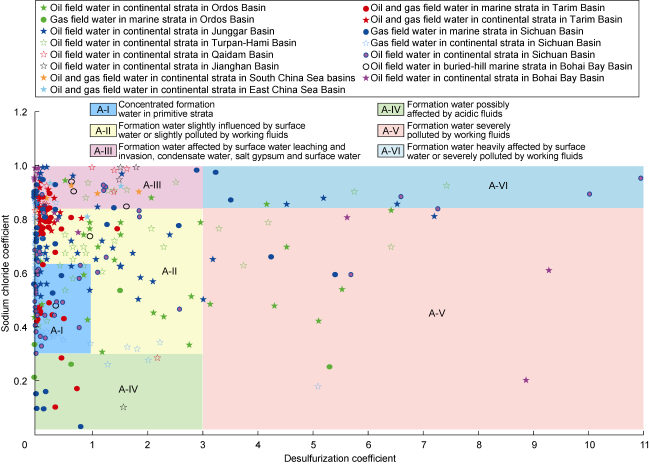
Fig. 1. Classification and influencing factors of CaCl2-type formation water in oil and gas fields of petroliferous basins in China. |
Type A-I: This type is concentrated CaCl2-type formation water in primitive strata. According to the views of predecessors such as Boyarski and Liu Jimin, when the sodium chloride coefficient is 0.30-0.65 and the desulfurization coefficient is less than 1.00, it is a very closed formation environment and the most favorable geological environment for oil and gas preservation [1,9,51 -64]. Therefore, the data of water samples in the area where the sodium chloride coefficient and the desulfurization coefficient intersect are most credible. For example, in the Tarim Basin, the formation waters of Ordovician in Lunnan Oilfield, Cambrian in Yingmaili Oilfield, and Silurian in Tazhong Oilfield, are all CaCl2-type waters, with a salinity of 65 630-300 800 mg/L, a sodium chloride coefficient of 0.42-0.47, and a desulfurization coefficient of 0.01-0.50, being a typical marine sedimentary diagenetic concentrated formation water, suggesting good formation sealing [2].
Type A-II: This type is CaCl2-type formation water slightly influenced by surface water or slightly polluted by working fluids, and it is still relatively credible. It is interpreted in two cases. In the first case, the sodium chloride coefficient is 0.65-0.85 and the desulfurization coefficient is less than 1.00, or the sodium chloride coefficient is 0.30-0.65 and the desulfurization coefficient is 1.00-3.00. Both interpretations are slightly inconsistent with geological conditions, but the relevant hydrochemical data basically reflects a relatively closed formation environment, which is credible to a certain extent. For example, in the Xiangguosi gas field of the Sichuan Basin, the formation water samples from the Carboniferous tight carbonate rocks has the salinity of 45 320 mg/L, the sodium chloride coefficient of 0.84, and the desulfurization coefficient of 0.03. These water samples are relatively stable in properties after acid fracturing, indicating that there is still a weak influence of working fluids [1-3,14]. In the Sulige gas field of the Ordos Basin, the formation water samples from the Permian strata in Well Su12 exhibit the salinity of 18 720 mg/L, the sodium chloride coefficient of 0.51, and the desulfurization coefficient of 2.79. The salinity is significantly lower than the range of 30 500-52 750 mg/L in this area, indicating a weak influence of working fluids [2,14]. In the second case, the sodium chloride coefficient is 0.65-0.85 and the desulfurization coefficient is 1.00-3.00. Both coefficients exhibit a relatively closed environment or weak surface water influence [1-3,9,14,65 -66]. There are two possibilities: if the formation is relatively closed, the hydrochemical data are credible; if the formation is very closed, it is believed that the formation water is slightly polluted by working fluids, and the hydrochemical data are useful in the absence of data, although its credibility is reduced. For example, in northwestern Sichuan Basin, some gas field water samples from the salt gypsum-bearing Leikoupo Formation demonstrate the salinity of 82 170 mg/L, the sodium chloride coefficient of 0.84, and the desulfurization coefficient of 1.34 [2,14]. As the salinity is lower than that of formation water in normal salt gypsum layers (150 000-350 000 mg/L), these samples are believed to have been slightly influenced by working fluids. In the Ziliujing area of southwestern Sichuan Basin, some formation water samples from the Permian strata (buried depth of 2 300 m) have the salinity of only 51 130 mg/L, the sodium chloride coefficient of 0.78, and the desulfurization coefficient of 1.33 [2]. Due to the presence of faults that reach shallow layers, the salt gypsum layers of the Jialingjiang Formation-Leikoupo Formation have lost their plasticity and overpressure characteristics, and the fault sealing has been weakened, transforming the strata to a relatively closed environment.
Type A-III: This type of CaCl2-type formation water corresponds to multiple influencing factors and needs to be analyzed case by case. When the sodium chloride coefficient is 0.85-1.00 and the desulfurization coefficient is less than 3.00, the two contradictory interpretations reflected by two coefficients indicate that the sodium chloride coefficient is influenced by external factors. After analysis, it is believed to involve three cases. First, the addition of condensate water reduces the concentration of Cl− in the formation water [10,19,31 -32]. For example, in western Sichuan Basin, the formation water samples from the Xujiahe Formation (T3x) of Well Zhe3 reflect the salinity of 8 670 mg/L, the sodium chloride coefficient of 0.87, and the desulfurization coefficient of 0, suggesting a formation water desalinated by condensate water [10,19]. Second, the leaching and invasion of ancient atmospheric fresh water reduce the concentration of Cl− in the formation water [39-40]. In this case, it is essential to analyze whether there existed ancient weathering crust, ancient sedimentary discontinuity, and faults reaching the shallow formations. For example, in the Tarim Basin, the formation water samples from the Cambrian carbonate weathering crust of Well Tazhong 1, being CaCl2-type water, have the salinity of 20 900 mg/L, the sodium chloride coefficient of 0.90, and the desulfurization coefficient of 0.41, while the oil field water samples from the overlying Cambrian show the sodium chloride coefficient of 0.77 and the desulfurization coefficient of 0.42. The latter sodium chloride coefficient is much smaller than that of the formation water from the Cambrian, showing a better preservation environment. Therefore, it is believed that the Cambrian formation water has been influenced by ancient atmospheric fresh water [2,16]. Third, the existence of the adjacent gypsum salt layer increases the concentration of Na+ in the formation water [41,50]. For example, in the Tarim Basin, the formation water samples from the Neogene salt gypsum layer of Well Yaha 3 have the salinity of 274 000 mg/L, the Na+ concentration of 101 000 mg/L, the sodium chloride coefficient of 0.94, and the desulfurization coefficient of 0.54, so the high sodium chloride coefficient of this formation water is caused by the increase of Na+ concentration [2,16]. Therefore, if it is believed to be the influence of condensate water, the hydrochemical data are incredible. If it is considered to be the influence of ancient atmospheric freshwater and gypsum salt layers, then it basically represents the hydrochemical environment of the formation, and the relatively closed to very closed formation environment shown by its desulfurization coefficient is basically credible.
Type A-IV: This type of CaCl2-type formation water may be affected by acidic fluids, and its credibility needs to be analyzed specifically. The formation water samples with data points falling in this area have the sodium chloride coefficient of less than 0.30 and the desulfurization coefficient of less than 3.00, showing a very closed formation environment [3,8,12 -14]. If it occurs in the formation during the peak period of hydrocarbon generation and expulsion, the acidic characteristics of oil and gas field water due to the dissolution of a large amount of organic acids into the formation water [1,8,14] are credible in most cases. However, if there is ahead acid fluid or acid fracturing during testing, the sodium chloride coefficient will be extremely low due to the pollution of residual acid fluid, and the formation water will also show a very low pH value and abnormally high concentration of Ca2+, as well as increased Cl− concentration [24-25,27,67]. Such formation water is contaminated, and its data credibility is greatly reduced. Moreover, it has high total salinity, Cl− and Ca2+ concentrations. These data should be excluded when studying the regional hydrochemical composition. In the Ordovician Majiagou Formation in the Ordos Basin, for example, where the majority of gas reservoirs have been stimulated through acid fracturing, the gas field water samples reflect the average salinity of 166 000 mg/L, the sodium chloride coefficient of 0.18-0.55 (mostly less than 0.3), the desulfurization coefficient of 0-0.45, the K+ and Na+ contents of mostly 13 565-29 660 mg/L, and the Ca2+content of mostly 31 445-55 865 mg/L [1−3,14,53]. Therefore, due to the influence of working fluids, the sodium chloride coefficient decreases greatly. Most of the hydrochemical data are incredible, but the formation sealing demonstrated by the data is credible.
Type A-V: This type of CaCl2-type formation water is heavily affected by surface water and severely polluted by working fluids, and has low credibility of data. Since the sodium chloride coefficient less than 0.85 exhibits a relatively closed to very closed formation environment, while the desulfurization coefficient greater than 3.00 reflects a relatively open to very open formation environment, which are clearly contradictory, the formation water must have been invaded by surface water or polluted by working fluids [24-25,68]. The water samples with a desulfurization coefficient of 3.00-5.00 are relatively slightly polluted, and their data are optional where no sufficient information is available. However, the data with the desulfurization coefficient greater than 5.00 is incredible. For example, in the Sichuan Basin, the gas field formation water samples from the Jialingjiang Formation salt gypsum-bearing strata in the Moxi gas field show the average salinity of 42 100-96 300 mg/L, the sodium chloride coefficient of 0.55-0.78 and the desulfurization coefficient of 3-30 [2]. This salinity is significantly lower than that of the salt gypsum formation water, which is related to the input of a large amount of SO42− caused by the connection of faults to shallow layers or the gypsum dissolution by surface fresh water [68]. For example, in the Erlian Basin, the oil field water samples from the Cretaceous in Well H22 have the salinity of 255 773 mg/L, the sodium chloride coefficient of 0.23 and the desulfurization coefficient of 4.3, indicative of a CaCl2-type water polluted by both acid and well killing fluids.
Type A-VI: This type of CaCl2-type formation water is heavily affected by surface water or severely polluted by working fluids. Most of the relevant data are incredible in the medium to deep formation environment. The sodium chloride coefficient greater than 0.85 and desulfurization coefficient greater than 3.00 suggest a relatively open formation environment[1−14]. Such formation water corresponds to two cases. In one case, when there are faults that reach the surface in the area where the formation water occurs, the hydrochemical data are credible. This case exists in the shallow destructive oil reservoirs of the thrust structural belt in the petroliferous basins, central and western China, representing a relatively open formation environment[1−4,9 −10,14]. For example, in the Hujian Mountain area of the Ordos Basin, the CaCl2-type formation water samples from oil layers #8-#9 of the Yanchang Formation at a depth of 1 260-1 780 m have the salinity of 6 800-118 000 mg/L, the sodium chloride coefficient of 0.95-0.98, and the desulfurization coefficient of 5.52- 12.29. Moreover, these samples reveal lower salinity and higher sodium chloride and desulfurization coefficients at the smaller depth. Due to the presence of faults that reach the surface, and a high CO32− content (750-1 040 mg/L) in the formation water, it is considered to be an environment of formation water alternation zone, suggesting a formation water that is greatly influenced by surface water [69]. In the other case, if it is a closed formation environment as reflected by the hydrochemical data, which does not match the actual situation, the formation water is believed to have been severely polluted by working fluids [25]. Such hydrochemical data are not credible.
In addition, the credibility evaluation of CaCl2-type formation water data should be combined with the Shukrev classification, as well as the comprehensive evaluation of formation water samples and chemical analysis results based on sedimentary environment, lithology, and salinity of formation water. The CaCl2-type formation water can be mainly divided into four chemical types: Cl−-Ca2+, Cl−-Ca2+∙Na+, Cl−-Na+∙Ca2+, and Cl−-Na+ [33,70]. If low-salinity Cl−-Ca2+and Cl−-Ca2+∙Na+ formation water is found after shallow open formation environment is excluded, the hydrochemical data are incredible. Cl−-Ca2+-type water is surface fresh water, and Cl−-Ca2+∙Na+-type water is formation water that exists in shallow strata in an open environment [1,5,33,70]. If the formation water is from an open formation environment, it is necessary to comprehensively evaluate the credibility of the formation water data based on the analysis of sodium chloride coefficient and desulfurization coefficient, with a consideration to the lithology, sedimentary environment, and salinity of the formation.
2.2.2. NaHCO3-type water
In the vast majority of cases, NaHCO3-type formation water is shallow to medium buried and weakly metamorphic formation water [1-14,39 -40,42 -44,47,57,71]. Any anomaly is usually caused by the influence of surface water, ancient weathering leaching, invasion of ancient surface water, working fluids, condensate water, etc. Since the sodium chloride coefficient and desulfurization coefficient of modern river water are 3.08 and 270.64, the sodium chloride coefficient of modern lake water is 6.15, and the sodium chloride coefficient and desulfurization coefficient of modern seawater is 0.87 and 10.28, the sodium chloride coefficient of formation water in numerous reservoirs under the hydrogeological environment of NaHCO3-type water is 1.00-2.00 [1-3,14]. Based on the correlation analysis between sodium chloride coefficient and desulfurization coefficient of modern surface water and oil and gas field formation water, as well as the testing or exploitation of some oil and gas reservoirs in petroliferous basins within China, the credibility and influencing factors of NaHCO3-type formation water are divided into four types. Moreover, the vast majority of petroliferous basins has oil and gas field formation water that is affected or polluted by different factors (Fig. 2 ).
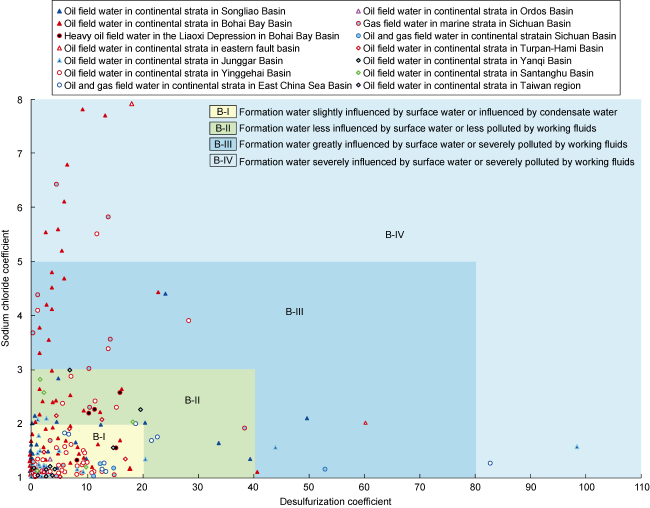


Fig. 2. Classification and influencing factors of NaHCO3-type formation water in oil and gas fields of petroliferous basins in China. |
Type B-I: This type of NaHCO3-type formation water is in a relatively closed formation environment, and its data mostly is credible, with only slight influence from surface water, slight pollution from working fluids, and weak influence from condensate water. Firstly, when the sodium chloride coefficient is 1.00-1.50 and the desulfurization coefficient is less than 10, this type of formation water often appears in the edge and bottom water of the oil reservoir with developed Himalayan faults in the petroliferous basin, suggesting a relatively closed NaHCO3-type water environment, with only a weak influence by surface water [1-14]. This type of water widely exists in Songliao Basin [14,65] and Bohai Bay Basin [14,39 -40,44], and is also common in the piedmont thrust belts in central and western China, such as the northwest margin of the Junggar Basin [22,36 -38], the piedmont belt of the Turpan-Hami Basin [17], piedmont belts in the north and southwest of the Tarim Basin [9,15,26], and the thrust belt in western Sichuan Basin [32,51]. For example, the water samples from the Cretaceous oil reservoirs on the western slope of the Songliao Basin are mostly NaHCO3 type, with the sodium chloride coefficient of 1.30-1.56 and the desulfurization coefficient of 0.29-5.36, suggesting a relatively closed environment [2,7 -8,14]. Secondly, when the sodium chloride coefficient is 1.50-2.00 and the desulfurization coefficient is 10.00-20.00, the relevant hydrochemical data are also generally credible. However, there may be weak invasion of surface water [8,18,39 -40,42 -47,59,71] or weak pollution by working fluids [24]. Here, it is necessary to analyze the development of faults, especially the faults that reach shallow layers or the surface, which are the main cause for the weak impact of surface water. For example, in the Sanzhao area of the Songliao Basin, the water samples from the Putaohua and Fuyu oil reservoirs have the salinity of 3 711-8 538 mg/L, the sodium chloride coefficient of 1.83-1.95, and the desulfurization coefficient of 12.50-20.05 (higher than that in the western slope of the Songliao Basin), and contain CO32− of 100-144 mg/L, indicating a weak influence by invasion of surface water [2,7 -8,14]. However, if CaCl2-type formation water is diluted with condensate water and converted into NaHCO3-type formation water [10,19,32], most of the hydrochemical data are incredible. If geological setting analysis suggests that the formation water was collected in deep to ultra-deep layers, it must have been slightly polluted by working fluids, so the hydrochemical data are also incredible. For example, in the Sichuan Basin, five deep (6 743.15 m) formation water samples from the Permian Changxing Formation (P3ch) of Well Miantan 1 were interpreted through laboratory analysis as all NaHCO3-type formation water, with four samples having a salinity of 25 500-27 200 mg/L and one sample having a salinity of 61 600 mg/L. These samples have the sodium chloride coefficient of 1.27-2.13, and the desulfurization coefficient of 1.77-1.87. According to the discrimination chart, most of them are type B-I gas field water, and a few are type B-II gas field water. Moreover, all samples contain trace elements such as strontium (Sr2+), lithium (Li+), and bromine (Br−) from marine strata. Although there are faults that extend to the Triassic on the flank, the Middle and Lower Triassic develop overpressure salt gypsum cover layers. These water data are conventionally judged as relatively accurate data. However, based on the analysis of the hydrochemical characteristics of the Permian Changxing Formation, the formation water from the corresponding layer of the Shuangyushi gas field in the adjacent area has a salinity of 66 320-77 152 mg/L, all indicating CaCl2-type formation water. The five water samples from Well Miantan 1 are greatly different from those values, with the hydrochemical properties not yet stable. Therefore, it is believed that the formation water is slightly polluted by working fluids, and the hydrochemical data are still incredible.
Type B-II: This type of NaHCO3-type formation water has a certain degree of formation sealing, but with relatively active surface water or obvious pollution by working fluids. It can be interpreted in three cases. In the first case, when the sodium chloride coefficient is 2.00-3.00 and the desulfurization coefficient is 20-40, most of these water samples are considered to be in shallow oil reservoirs with certain surface water influence or reservoirs near the faults that reach the surface [1-7,14,44,72]. For example, in the Chengbei fault terrace in the Huanghua Depression of the Bohai Bay Basin, the NaHCO3-type formation water with the desulfurization coefficient greater than 20 from the Shahejie Formation oil reservoir is defined as edge water outside the oilfield affected by surface water [44], and the relevant hydrochemical data are generally credible. However, if the geological setting analysis suggests that it is extracted from deep to ultra-deep layers, then it must be formation water significantly polluted by working fluids, and the hydrochemical data are incredible. In the second case, when the sodium chloride coefficient is 1.00-2.00 and the desulfurization coefficient is 20-40, the sodium chloride coefficient shows a relatively closed environment, while the desulfurization coefficient shows a relatively open environment. Clearly, the two interpretation results are inconsistent, and there should be significant pollution on formation water by working fluids [14,24]. For example, in the Puguang gas field of the Sichuan Basin, the Permian Maokou Formation beneath the overpressure salt gypsum layer of the Triassic Jialingjiang Formation-Leikoupo Formation, with a burial depth of 5 115-5 297 m, produced NaHCO3-type gas field water with a salinity of 52 640 mg/L, a sodium chloride coefficient of 1.01, and a desulfurization coefficient of 21.6 [35]. Obviously, the two coefficients are contradictory to each other. This cannot be due to the invasion of surface water, but it can only be considered as a pollution by working fluids. In the third case, when the sodium chloride coefficient is 2.00-3.00 and the desulfurization coefficient is 0-20, as reflected by the oil field water of the Paleogene-Neogene in the Bohai Bay Basin [14,39 -40,44,72], the formation water is believed to be influenced by surface water during the Himalayan period, but is currently in a relatively closed environment, and its data are basically credible. For example, in the Liaoxi Sag of the Bohai Bay Basin, some oil field water samples from the Shahejie Formation have the salinity of 4 396-4 513 mg/L, the sodium chloride coefficient of 2.16-2.60 and the desulfurization coefficient of 12.16-15.96. Moreover, the hydrogen and oxygen isotope characteristics of the oil field water are significantly different from those of surface water, indicating a certain degree of metamorphism of the oil field water and a certain degree of sealing of the strata [72].
Type B-III: This type of NaHCO3-type formation water is in poorly close formation environment, with active surface water, or significant pollution by working fluids. Its credibility needs to be analyzed specifically, there would be four cases. First, when the sodium chloride coefficient is less than 3.00, indicating relatively closed formation environment, and the desulfurization coefficient is 40-80, indicating a relatively open formation environment, which are contradictory, this type of formation water is often significantly polluted by working fluids, and the hydrochemical data are incredible. For example, in the Fuyang oil reservoir of the Fuxin uplift in the Songliao Basin, the oil field water samples from Well Xin 342 have the salinity of 5 796.6 mg/L, the sodium chloride coefficient of 1.87, and the desulfurization coefficient of 74.78. The sodium chloride coefficient is close to the average (1.51) of the oilfield, while the desulfurization coefficient is significantly different from the average (11.54) of the oilfield [14]. Therefore, the water samples must have been polluted by working fluids. Second, when the sodium chloride coefficient is 3.00-5.00 and the desulfurization coefficient is less than 10, the formation water may stay in a certain closed environment. This should be a relatively credible formation water that was obvious invaded by surface water along with the Himalayan fault activity, and transited into a relatively closed environment recently [8,14,39 -40,44,72]. For example, in the Jizhong Depression of the Bohai Bay Basin, some oil field water samples from the Paleogene have a salinity of 5 000-34 000 mg/L, a sodium chloride coefficient of 3.00-6.24, and a desulfurization coefficient of 0-5.6. They contain almost no CO32− [2,14], indicating no invasion of surface water at present and relatively good reservoir sealing. The hydrochemical data are basically credible. Third, when the desulfurization coefficient is 10-40 and the sodium chloride coefficient is 3.00-5.00, suggesting a formation environment with poor preservation conditions, the formation water is mostly edge and bottom water of highly destructive shallow oil reservoirs or heavy oil reservoirs [1-14], and the relevant hydrochemical data are basically credible. For example, in the Yinggehai Basin, parts of water samples from the Meishan Formation (N1m1) of Ledong gas field have the salinity 30 000-35 000 mg/L, the sodium chloride coefficient of 3.12-3.56, and the desulfurization coefficient of 10.06-19.24. This is mainly related to the weak influence of surface water caused by strike slip fault activity [14,45 -46]. In the Dongying Sag of the Bohai Bay Basin, some formation water samples from the Shahejie Formation (E3s) of heavy oil areas have the salinity of 5 000-10 000 mg/L, the sodium chloride coefficient of 3.07-4.93, and the desulfurization coefficient of 12.25-41.05, making them poorly preserved formation water [14,73]. Fourth, if the formation is deeply buried (deeper than 3 500 m), and the formation water from adjacent exploration well is CaCl2 type, then these NaHCO3-type water samples are strongly desalinated by condensate water [10,19] or severely polluted by surface water and working fluids [24-27]. Their hydrochemical data are incredible. For example, the formation water of the Zhongba Xujiahe Formation gas reservoir in the western Sichuan Depression is high salinity (35 980-67 720 mg/L) CaCl2-type water, while the condensate water of high-yield gas wells is low salinity (1 500-8 500 mg/L) NaHCO3-type water [19].
Type B-IV: This type of NaHCO3-type formation water corresponds to poor sealing, highly active surface water, or severe pollution by working fluids. In most cases, its hydrochemical data has low credibility. The credibility of this type of water sample data has two cases. (1) When the formation water has a sodium chloride coefficient of 1.00-2.00 and a desulfurization coefficient greater than 80. The sodium chloride coefficient of the former indicates that the formation is in a relatively closed environment, while the desulfurization coefficient reflects a very open formation environment [1-14,20,74]. There is a discrepancy in the formation environment, which should be due to strong pollution from working fluids. The relevant hydrochemical data are incredible. For example, the gas field water samples from the lower part of the Cretaceous Longjing Formation (K2l1) of Well Y-1 in the East China Sea Basin have the salinity of 8 501 mg/L, the sodium chloride coefficient of 1.31, and the desulfurization coefficient of 82, while the samples from the upper part of adjacent overlying Longjing Formation (K2l2) have a water salinity of 15 438-17 403 mg/L, a sodium chloride coefficient of 0.81-0.82, and a desulfurization coefficient of 0.72-0.89 [20], indicating strong pollution from working fluids in the lower part of the Longjing Formation. (2) When the formation water has a sodium chloride coefficient higher than 5.00 and a desulfurization coefficient less than 20. The sodium chloride coefficient shows a relatively open geological environment, while the desulfurization coefficient indicates the existence of a certain closed formation environment [1-14]. This phenomenon may be attributed to two possibilities. In one case, it is a NaHCO3-type formation water that was strongly invaded by surface water caused by Himalayan fault activity and is currently relatively closed [2-14,39 -40], and its related hydrochemical data are basically reliable. In the other case, it is a formation water heavily polluted by working fluid in a closed environment, and its hydrochemical data are incredible. For example, the oil field water samples from the Cretaceous glutenite reservoirs of Well L1S in the Erlian Basin have low salinity (5 462 mg/L), with a sodium chloride coefficient of 5.08 and a desulfurization coefficient of 12.67. Although there are iodine (I−) and boron (B−) in the formation, the salinity of nearby oil field water is mostly 25 000-32 000 mg/L. It has been confirmed that the formation water is mainly affected by drilling fluid filtrate [24]. When the formation water has a sodium chloride coefficient higher than 5 and a desulfurization coefficient less than 20, and a sodium chloride coefficient of 2-5 and a desulfurization coefficient higher than 80, it is a NaHCO3-type formation water that was strongly invaded by surface water with poor sealing or was polluted by working fluids.
In summary, the comprehensive evaluation method for the data credibility of formation water in oil and gas fields requires evaluation of sampling process and scenarios, basic hydrochemical characteristics, and also correlation analysis between sodium chloride coefficient and desulfurization coefficient of formation water. It also needs to be combined with the geological setting analysis of formation water. For water samples with low credibility, the main influencing factors should be identified to avoid improper use of relevant hydrochemical data.
3. Conclusions
There are two methods for evaluating the credibility of formation water in oil and gas fields: single-factor basic method and multi-factor comprehensive method. The former is beneficial for on-site discrimination and preliminary evaluation for credibility, and preliminary screening of hydrochemical data, while the latter is beneficial for researchers to conduct in-depth evaluation and analysis of influencing factors of hydrochemical data credibility of water samples. However, both methods must be combined with geological setting analysis to be more effective and accurate.
The basic method involves physical characteristic evaluation, hydrochemical composition analysis, water type analysis, and hydrochemical single characteristic coefficient analysis based on geological setting analysis. Application of this basic method should pay attention to the balance between the presence of special anions in the hydrochemical composition and the equivalent concentration balance of anions and cations, as well as the analysis of single elements such as sodium chloride coefficient and desulfurization coefficient, and the combination of sampling conditions, formation lithology, sedimentary environment, salinity and hydrochemical type analysis. If there are ions such as CO32−, OH−, NO3− present, the formation water may be polluted by drilling fluid filtrate or invaded by surface water. If trace amounts of SO42− are commonly detected in formation water with high salinity and rich Ba2+, this is reliable; If a few water samples test positive for SO42−, it indicates that these water samples are contaminated. If the sodium chloride coefficient and desulfurization coefficient do not match the geological environment, there must also be pollution from working fluids or surface water. The hydrochemical data of these polluted water samples are incredible.
The comprehensive method is most effective. According to the correlation between the sodium chloride coefficient and the desulfurization coefficient, CaCl2-type water is divided into six types, A-I to A-VI, and NaHCO3-type water is divided into four types, B-I to B-IV. It is believed that the hydrochemical data of types A-I and A-II and types B-I and B-II are highly credible. Only when the geological setting (lithology, sedimentation and structure, etc.), sodium chloride coefficient and desulfurization coefficient are consistent on the geological environment, can the hydrochemical data of water samples be considered credible.
In the evaluation of water sample types with low confidence in stratum water data, more attention should be paid to the analysis of influencing factors such as sampling scenarios, condensate water, hydrochloric acid solution, ancient weathering crust leaching, and ancient atmospheric fresh water based on the analysis of formation environment. For A-III, attention should be paid to the influence of condensate water and ancient atmospheric fresh water, while for A-IV, attention should be paid to the influence of acid solution. When the desulfurization coefficient of B-III and B-IV formation water is less than 10, attention should be paid to the situation where the Himalayan fault once connected to the surface and has recently been sealed by the formation. In most cases, A-V, A-VI, and B-IV formation waters have low data credibility and varying degrees of working fluid pollution. The determination of these influencing factors must be combined with geological setting and analyzed specifically according to different situations.
Nomenclature
rNa—equivalent concentration of sodium ions per unit volume of brine, %;
rCl—equivalent concentration of chloride ions per unit volume of brine, %;
rSO4—equivalent concentration of sulfate ions per unit volume of brine, %.