

Introduction
CO2 capture, utilization, and storage (CCUS), and CO2 capture and storage (CCS) are key technologies for achieving carbon neutrality. In particular, CCUS for enhanced oil recovery (CCUS-EOR) stands out as the most practical and feasible route toward this goal [1]. Internationally, the applications of CCUS-EOR are primarily miscible flooding targeting marine sedimentary reservoirs, which are characterized by favorable petrophysical properties and light crude oil components, achieving efficient displacement efficiency. In China, CCUS-EOR primarily targets lacustrine oil reservoirs, which are characterized by strong heterogeneity and heavier crude oil compositions, posing significant challenges such as difficulty in achieving miscibility, slow displacement response, high risk of gas channeling, and difficulty in reservoir management during CO2 flooding.
The development of CCUS in China has progressed through three distinct phases: exploratory research (1965-2005), pilot test (2006-2019), and industrial-scale deployment (2020-present) [2]. Prior to 2005, well cluster-scale trials were conducted in the Daqing, Jilin, Shengli, and Jiangsu oilfields, focusing on carbonated water injection, CO2 flooding, and CO2 huff-and-puff. From 2006 onward, national key basic research projects and major demonstration programs were launched to address CCUS-EOR challenges in lacustrine reservoirs [1-4]. The efforts led to the establishment of a first-generation CCUS-EOR technology system, encompassing theory of CO2 miscible flooding [5], mechanism and potential assessment of CO2 flooding/storage [6], reservoir engineering design [7], water-alternating-gas (WAG) control strategies [4], and engineering process and storage monitoring [8]. Pilot tests and demonstrative applications were implemented in areas such as Daqingzijing of Jilin Oilfield, Yushulin of Daqing Oilfield, Caoshe Oilfield in Jiangsu, and Jingbian-Wuqi and Ansai of Yanchang Oilfield [9], with additional initiatives launched in the Changqing and Xinjiang oilfields. In the north Hei-79 pilot area in the Jilin Oilfield, the oil recovery has been increased by more than 25 percentage points on the basis of a water flooding recovery of 25% with a water cut of 93.1% [10]. The Jilin Oilfield also pioneered the first full-chain CCUS-EOR demonstration project of China, marking a leap from research to industrial application and laying the groundwork for scaled deployment [8]. Since 2020, driven by the “carbon peaking and carbon neutrality” goals, the CCUS industry entered the phase of industrialization. Projects integrating CO2 capture, pipeline transport, flooding, and storage were initiated in the Daqing, Jilin, Shengli, Xinjiang, and Changqing oilfields. Significant progress has been made in addressing critical technical challenges, and the second-generation CCUS-EOR technology system is becoming increasingly mature. Field tests in diverse reservoirs, particularly in the Changqing and Xinjiang oilfields, enabled the successful implementation of multiple CCUS-EOR models [2].
At present, the CCUS industry stands at a critical juncture in the journey of industrialization. Research on CCUS-EOR is increasingly focused on significantly enhancing oil recovery and ensuring long-term CO2 storage. It is imperative to address key technical barriers to support the development of 10-million-ton-scale CCUS-EOR demonstration bases and to promote the industrialization and clustering of CCUS-EOR operations. This paper reviews the major achievements of CCUS-EOR in China, outlines recent theoretical and engineering advances, analyzes the technical demands and challenges of expansion to mature oilfields, and discusses future directions for the technology.
1. Technical achievements in the pilot test phase
To adapt the CCUS-EOR technology, which is originally developed for marine sedimentary reservoirs, to the lacustrine reservoirs with heavier crude oil components and stronger heterogeneity, a series of technical breakthroughs were achieved during the pilot test phase. These efforts addressed the key challenges in terms of theory of CO2 miscible flooding, mechanisms and potential evaluation of CO2-EOR/storage, reservoir engineering design, sweep control, engineering process, and storage monitoring (Table 1). In addition, the development patterns of CO2-EOR were clarified through pilot tests, with field validation achieved, laying a foundation for large-scale reservoir development planning and widespread application.
Table 1. Summary of technical achievements at different phases of the CCUS industry in China |
| Phase | Major achievements and progress | |||||
|---|---|---|---|---|---|---|
| Theory of CO2 miscible flooding | Mechanisms and potential evaluation of CO2-EOR/storage | Reservoir engineering design for CO2 flooding | Sweep control during CO2 flooding | Engineering processes for CO2 flooding | Monitoring of CO2 flooding/ storage | |
| Pilot test (first-generation CCUS-EOR technology) | Systematically investigate the mass transfer mechanism in CO2-lacustrine crude oil systems, and preliminarily explore the MMP reduction technologies | Conduct experimental investigations of CO2-EOR and study of three- phase relative permeability characteristics, and establish methods for evaluating the potential of CO2-EOR/ storage | Develop reservoir engineering design technologies for CO2 flooding tailored to the characteristics of lacustrine oil reservoirs, including reservoir characterization, compositional simulation, well pattern design, and parameter optimization | Develop WAG control technologies with adjustable slug ratios to continuously expand CO2 sweep efficiency, aiming to sustain stable production across the reservoir block | Develop injection process and supporting equipment, as well as gas-liquid separation and transportation technologies for produced fluids, along with corrosion inhibitors and biocides, to ensure the smooth execution of pilot tests | Focus on sur- face safety monitoring and production performance monitoring, and clarify key monitoring contents |
| Industrialization (second-generation CCUS-EOR technology) | Identify phase behaviors in CO2- lacustrine crude oil systems in confined space, and develop efficient, low-cost miscibility-enhancing agent systems | Focus on the mineralogical and formation water characteristics of lacustrine oil reservoirs to accurately chara- cterize CO2 storage mechanisms and predict storage capacity | Further clarify the potential zones, stratigraphic combinations, well pattern configurations, and full-process adjustment strategies for CO2 flooding to support the field application of diverse reservoir development models | Formulate new chemical systems and investigate chemical-assisted control and multi- stage regulation techniques to address the challenges posed by strong heterogeneity of CO2-flooding reservoirs | Integrate high- efficiency processes and address key challenges in low- cost and renewable energy-integrated technologies, such as coiled tubing operations, flow control, and gas- liquid separation | Develop novel, multi- dimensional CO2 storage monitoring technology systems |
| Expansion (third-generation CCUS-EOR technology) | Probe into the technologies for identifying CO2-crude oil miscible zones in lacustrine reservoirs, and characterizing and controlling miscible zones in the full process | Focus on long-term storage and investigate the spatiotemporal evolution of CO2 storage states over extended timescales | Establish CO2 flooding models for different reservoirs and formulate differen- tiated control strategies accordingly | Establish predictive models for sweep volume expansion, and develop methods for identifying injection parameter thresholds and chemical-assisted intelligent control technologies | Study stratified CO2 injection and high gas-oil ratio artificial lift technologies, and develop multifunctional corrosion protection materials | Develop integrated, intelligent, safety management platforms and real-time monitoring systems |
1.1. Theory of CO2 miscible flooding in lacustrine oil reservoirs
Mass transfer is a critical mechanism by which CO2 flooding significantly enhances oil recovery. In marine sedimentary reservoirs abroad, favorable reservoir and crude oil properties allow over 90% of the reservoirs to achieve CO2 miscible flooding [4]. In contrast, crude oil in lacustrine reservoirs in China typically contains fewer light components and higher concentrations of waxes, resins, and asphaltenes, making it difficult to achieve miscibility with CO2 (Fig. 1). Thus, the miscibility between CO2 and lacustrine crude oil was the primary technical concern in the pilot test phase. Research in this phase primarily focused on the mechanisms and characterization of mass transfer in CO2-crude oil systems, rapid evaluation of minimum miscibility pressure (MMP), and development of miscibility-promoting strategies. These efforts overturned the conventional understanding that C2-C6 hydrocarbon components dominate miscibility, and revealed the roles of additives, hydrocarbon fractions, and enriched CO2 in reducing MMP. These insights laid a critical theoretical foundation for applying CO2 miscible flooding in China.
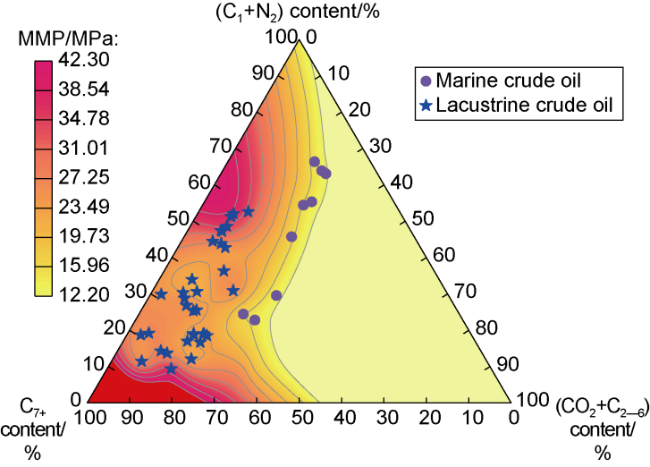
Fig. 1. Comparison of composition and MMP between marine and lacustrine crude oils. |
Regarding the mechanisms and characterization of mass transfer in CO2-crude oil systems, a team working under the National Program on Key Basic Research Project (973) and led by Shen Pingping, Chief Scientist of China National Petroleum Corporation (CNPC), conducted a systematic research on the phase behaviors of CO2-crude oil systems using high-pressure high-temperature PVT apparatus [11]. Their work revealed that CO2 significantly extracts C11- hydrocarbon fractions, and demonstrated that the CO2 miscible flooding process combines evaporation and condensation, enriching the theoretical understanding of mass transfer in oil and gas systems. Song et al. [4-5,12] demonstrated through experiments that C7-C15 fractions play a direct role in achieving miscibility for lacustrine crude oils, thereby expanding the key miscible components from C2-C6 to C2-C15 and offering a theoretical basis for miscibility in the crude oil systems of East China. The research team led by Song Yongchen [13] employed magnetic resonance imaging (MRI) to investigate CO2 diffusion in decane, confirming that the diffusion coefficient decreases exponentially with time and establishing a diffusion equation for CO2 in straight-chain hydrocarbon components. Wang et al. [14] examined the diffusion and mass transfer characteristics of CO2 in crude oil and developed a graphical chart to describe the degree of mass transfer. Qian et al. [15] conducted CO2-crude oil extraction experiments in PVT cells to clarify extraction patterns for different hydrocarbons and derived a multicomponent extraction-dissolution equation for CO2-crude oil systems. In terms of rapid evaluation of MMP, Zhang et al. [16] developed an upgraded bubble-rise apparatus for rapid MMP determination, demonstrating significant technical advantages and laying the foundation for efficient MMP evaluation. Tang [17] studied the miscibility process in porous media using CT imaging and found a negative correlation between miscibility pressure and pore throat size. Liu et al. [18] investigated the influence of pore structure on CO2 miscibility and established a computational model for MMP in porous media. For miscibility enhancement strategies, Liu et al. [19] showed that adding a 4% ethanol-butanol-ethylenediamine (5:3:2 mass fraction) mixture could reduce MMP by 12%. Yang et al. [20] synthesized an organic miscibility enhancer that lowered MMP by 27.47%. Deng et al. [21] examined the impacts of hydrocarbon composition on the MMP of CO2 flooding and found that increasing low-carbon alkanes in crude oil effectively reduces MMP. Liu et al. [22] and Peng et al. [23] proposed that enriched CO2 could achieve miscibility at lower pressures. Cao et al. [24], targeting low-permeability reservoirs in the Shengli Oilfield, developed a combined surfactant-solubilizer system that reduced MMP by 22%.
1.2. Mechanisms and potential evaluation of CO2-EOR/storage
Understanding the mechanisms of CO2-EOR/storage is fundamental to the CO2 flooding design. Research at this stage primarily focused on laboratory investigations into CO2-EOR mechanisms and three-phase flow behavior in representative reservoir blocks. CO2 enhances oil recovery mainly by reducing oil viscosity, swelling crude oil, extracting light hydrocarbons, and reducing interfacial tension. Given that lacustrine oil reservoirs in China are predominantly composed of sandstone and conglomerates [25], the displacement characteristics differ significantly from those of marine reservoirs abroad [4]. Accordingly, studies of CO2-oil-formation water three-phase flow behavior in continental settings are of particular importance. During the pilot test phase, researchers explored the flow models and storage capacity prediction models tailored to the unique characteristics of lacustrine reservoirs and fluids in China. These models support the potential evaluation of CO2-EOR/storage.
We proposed an online method for measuring three- phase saturation using CT dual-energy simultaneous scanning and established three-phase relative permeability charts for CO2 flooding [26]. This breakthrough overcame the limitations of characterizing three-phase flow through two-phase relative permeability approximations, marking a shift from two-phase relative permeability testing to direct three-phase flow assessment. Li et al. [27], employing effective medium theory and pore space probability distributions, established a computational method for oil-gas-water three-phase relative permeability curves in porous media. Yang et al. [28] constructed a three-phase pore network model for water-wet reservoirs under near-miscible conditions, and demonstrated that three-phase relative permeability is a function of saturation and saturation history. Lin et al. [29] systematically plotted oil-water and oil-gas two-phase relative permeability curves for peripheral blocks of the Daqing Oilfield and indirectly established a three-phase predictive model tailored for low-permeability reservoirs. Sun et al. [30] derived a continuous relative permeability model through 1D homogeneous long-core flooding experiments and constructed relative permeability curve at different positions in the core.
Compared to CO2-EOR, the CO2 storage technology emerged later. In the pilot test phase, research efforts concentrated on elucidating storage mechanisms and evaluating storage potential. For lacustrine sedimentary formations, the primary objective was to establish accurate methods for assessing China’s CO2 storage potential, leading to the development of dedicated evaluation methodologies. Shen et al. identified four principal CO2 storage mechanisms: structural trapping, residual trapping/adsorption, dissolution, and mineralization [6,31]. They further clarified the dominant factors controlling CO2 storage in reservoirs, coal seams, and saline aquifers, and proposed comprehensive methodologies for evaluating storage potential [32-34]. Yu et al. [35] investigated the effects of CO2-induced dissolution and precipitation on porosity and permeability, and elucidate the static and dynamic interactions among rock, water, and CO2 in reservoirs across the Songliao, Junggar, and Ordos basins. These findings provided critical theoretical support for estimating storage capacity in CCUS pilot projects. For the evaluation of CO2-EOR/storage potential, the latter is of particular emphasis. Li et al. [36] developed a methodology for assessing CO2 storage potential in deep saline aquifers and and evaluated China's CO2 storage capacity in such formations. Li et al. [37] established a CO2-flooding recovery and storage forecasting model specifically for offshore oilfields, integrating geological, reservoir, and engineering parameters. Yao et al. [38] built a CO2 storage prediction model for the Yanchang Oilfield by considering dominant storage mechanisms and confirmed the CO2 storage potential of the Jingbian pilot area.
1.3. Reservoir engineering design for CO2 flooding
Reservoir engineering design serves as the core of development planning and provides a critical foundation for pilot test implementation. Unlike conventional ones, the reservoir engineering design for CO2 flooding requires reservoir engineering parameter optimization depending on the physical properties of CO2 and the geological characteristics of lacustrine oil reservoirs. To meet the requirements of CO2 flooding pilot tests in such settings, the first-generation reservoir engineering design technology system for CO2 flooding in China was developed by learning from international design concepts. This technology system includes refined reservoir characterization, compositional numerical simulation, well pattern/spacing optimization, reservoir engineering parameter optimization, displacement dynamics and pattern analysis, and development performance evaluation. It has provided essential guidance for reservoir engineering designs in major CO2 flooding pilot test areas, including CNPC’s Hei-79 (Jilin Oilfield) and Shu-101 (Daqing Oilfield) blocks and Sinopec’s Yaoyingtai and Shengli Gao 89-1 blocks.
In terms of refined reservoir characterization, Gao et al. [39], based on the reservoir characteristics of the Daqingzijing block in the Jilin Oilfield, investigated the correlation between injectivity profiles and reservoir parameters. Their findings revealed a positive correlation between CO2 injectivity and reservoir thickness/properties. They established three linear relationships between relative injectivity and reservoir thickness. For compositional numerical simulation, Song et al. [4,7], addressing the high heavy-component content in China’s paraffinic crude oils, modified the equation of state to incorporate CO2 flooding mechanisms such as multiphase flow and diffusion in lacustrine reservoirs. They developed a multiphase, multicomponent numerical model for CO2 flooding, which was solved using an implicit iterative finite difference method, establishing a comprehensive framework for compositional numerical simulation in CO2 flooding applications. In terms of well pattern/ spacing optimization, Wang et al. [40] proposed a methodology that leverages the existing waterflooding patterns. By analyzing the distribution of remaining oil, they designed CO2 injection wells to establish efficient displacement relationships and ensure comprehensive reserve recovery, guiding the optimization of well patterns in CO2 flooding pilot test areas. In terms of reservoir engineering parameter optimization, Liao et al. [41] developed the hybrid water alternating gas combined with periodical production (HWAG-PP) model. This model emphasizes maintaining reservoir pressure, refining well patterns, optimizing injection strategies, and regulating flow pressure to achieve uniform displacement. It also highlights irregular WAG cycles to expand sweep efficiency through alternating injection and cyclic production strategies. In terms of displacement dynamics and pattern analysis, Hu et al. [7] established a dynamic analysis method centered on miscibility analysis for the pilot test area of the Jilin Oilfield. This approach helped elucidate the early-stage response characteristics of CO2 miscible flooding in low-permeability reservoirs. Wang et al. [42] studied gas breakthrough patterns in the ultra-low permeability reservoirs of Yaoyingtai block. Their work showed that gas breakthrough occurs preferentially along fracture orientations, leading to rapid gas channeling. They identified depositional microfacies as the primary control on the lateral migration direction and speed of CO2. Lastly, for development performance evaluation, Chen [43] developed a comprehensive evaluation method and index system for CO2 flooding, which includes 15 indexes under technical, economic, and environmental/safety categories.
1.4. WAG control for CO2 flooding
Gas channeling is an inevitable challenge in gas injection-based development. Dynamic control is a key technology for mitigating gas channeling, sustaining normal well production, and ensuring consistent performance across the reservoir block. In the pilot test phase, while exploring the development patterns of CO2 flooding in lacustrine oil reservoirs, sweep control during CO2 flooding gradually shifted from passive to proactive mode, ultimately forming a WAG control technology primarily focused on adjusting slug ratios.
To address the issue of low sweep efficiency commonly observed in CO2 flooding projects in lacustrine oil reservoirs in China, and drawing on international theories for enhancing CO2 sweep efficiency, the research team from CNPC [4], targeting typical blocks in the Jilin Oilfield, proposed an innovative early-stage CO2 flooding theory for enhancing sweep efficiency. This theory focuses on maintaining pressures above the MMP to improve oil displacement efficiency and enhancing sweep efficiency through mobility control via WAG. Based on this theoretical foundation, a WAG control technology emphasizing slug ratio adjustment was developed. Over nearly two decades of field tests, the Jilin Oilfield [8,44] developed a gradually varying WAG slug control method aimed at effectively mitigating gas channeling and globally expanding the sweep volume. Since then, this method has been continuously refined to determine optimal slug sizes and variation patterns, thereby enabling long-term stable production in test areas. Meanwhile, a Sinopec research team led by Yang Yong [45] developed a high-pressure displacement technology system to expand the sweep volume of CO2 flooding in China’s low-permeability lacustrine reservoirs with low pressure (which is difficult to increase by conventional energy replenishment techniques) and strong heterogeneity. Additionally, Shengli Oilfield [46-47] adopted a whole-process optimization approach for WAG parameters, aiming to maximize flow resistance at different development stages. This led to the establishment of a staged WAG control technology for the early-stage CO2 flooding, effectively maintaining the reservoir pressure and addressing gas channeling.
1.5. Engineering processes for CO2 flooding
Different from water flooding, CO2 flooding exhibits complex phase behavior of CO2 due to the great changes in temperature and pressure within the injection-production system, as well as significant operational uncertainties. Consequently, the engineering process faces a series of technical challenges, involving injection-production techniques and equipment, artificial lift under high gas-oil ratios, fluid metering and surface gathering/transportation, as well as corrosion protection. During the pilot test phase, a suite of first-generation engineering technologies for CO2 flooding was developed—covering CO2 injection, produced fluid handling, and gas recycling—which supported the successful implementation of pilot tests, proving the technical feasibility and process adaptability of CO2 flooding.
During the pilot test phase, the key focus of engineering process was to ensure the stable operations of CO2- EOR and storage tests. In terms of injection-production engineering, Wang et al. [40,48] developed liquid and supercritical CO2 injection technologies along with supporting equipment, meeting diverse economic injection demands such as liquid CO2 injection in block Hei-79 and supercritical CO2 injection in block Hei 46 of the Jilin Oilfield. Zhang et al. [49-50] established a dynamic model for fluids in injection/production wellbore during CO2 flooding, as well as an optimized design methodology for injection-production engineering. They developed general gas injection technology and WAG technology, which enabled the adaptability of CO2 injection at different production stages and gave rise to an efficient gas-resistant lifting process suitable for gas-liquid ratios up to 200 m3/t. Qin Jishun, Lin Haibo and other scholars clarified permissible CO2 content in recycled gas and studied a mixed reinjection technique in which associated gas is reinjected without CO2 separation, thereby achieving a 100% closed-loop CO2 circulation system [51]. In terms of surface engineering, Sun et al. [52] developed technical solutions including annular water blending, gas-liquid mixed transportation, centralized separation, and metering. They improved various metering methods, including vertical flip-bucket, three-phase metering devices, and post-separation flowmeters, resolving challenges in gas-liquid separation and gathering while ensuring fully enclosed CO2 transportation throughout the process. In terms of CO2 corrosion protection, Liu et al. [48,53] developed corrosion and bactericidal inhibitors along with multiple CO2-resistant materials to enhance anti-corrosion reliability. They implemented combined chemical dosing processes such as drip, intermittent, and pre-filming methods, achieving significant results in field tests.
1.6. Monitoring of CO2 flooding/storage
Monitoring technologies for CO2 flooding and storage are essential for determining the state of CO2 storage and ensuring storage safety. During the pilot test phase, the monitoring systems used for waterflooding proved inadequate for CO2 flooding and storage due to challenges such as CO2 phase behavior and corrosion. The monitoring focused on the dynamics of CO2 flooding and the environmental conditions associated with CO2 storage. Chen et al. [54], in response to the specific characteristics of block Hei-59 in the Jilin Oilfield, developed a comprehensive monitoring system encompassing gas injection profiles, direct-reading pressure measurements, wellbore fluid analyses, gas-phase tracers, corrosion indicators, and environmental parameters. This system successfully captured the temporal variations and trends of CO2 concentration within the test area. Zhang et al. [55] addressed the issue of seismic velocity dispersion induced by CO2 in the subsurface. Starting from the Robinson dispersion convolution model, they derived a quantitative expression for the velocity dispersion factor and constructed an inversion equation incorporating this factor, thereby significantly improving the accuracy of seismic monitoring. Ma et al. [56] delineated the environmental monitoring scope and key indicators at various stages of the CCUS process. Lin et al. [57] established a CO2-EOR and storage monitoring framework tailored to the low to ultra-low permeability reservoirs of the Yanchang Oilfield in Shaanxi, laying the groundwork for a mature and comprehensive CO2 environmental monitoring system. Field applications of monitoring technologies such as CO2 eddy covariance, atmospheric carbon concentration, soil carbon flux, and shallow groundwater carbon content have been successively implemented in oilfields such as Jilin and Changqing [8].
1.7. Typical cases of CO2 flooding and storage
During the pilot test phase, representative projects include the national-level demonstration project at the north Hei-79 CO2 flooding pilot test area (small well spacing) in the Jilin Oilfield, and the Sinopec major pilot project for CO2 miscible flooding in the Taizhou Formation of the Caoshe Oilfield, Jiangsu. These field tests provided key insights into the mechanisms of CO2 miscible flooding and geological storage in lacustrine oil reservoirs. They also validated the feasibility of several critical technologies, including pressure-maintained miscible displacement, variable-slug-ratio WAG mobility control, reservoir engineering design, engineering processes, and storage monitoring methods. These projects confirmed that CO2 miscible flooding can significantly enhance oil recovery.
Since 2006, supported by numerous national and CNPC-funded projects and major development trials [41], the Daqingzijing Oilfield in Jilin has successfully established eight CO2 flooding and storage demonstration areas and one independently operated pilot area over nearly two decades. Among them, the north Hei-79 pilot test area stands as a typical case of CO2 miscible flooding, and it has successfully completed a full life-cycle miscible flooding test as designed, comprehensively revealing the mechanisms of CO2 miscible flooding and storage in low-permeability lacustrine oil reservoirs. Key techniques such as gas channeling control through variable-slug- ratio WAG mobility control were implemented to contribute the pressure-enhanced miscible displacement. After 12 consecutive years of CO2 injection, the cumulative injection reached 1.3 HCPV (hydrocarbon pore volume), resulting in a recovery efficiency increased by more than 25 percentage points and a CO2 storage rate of 74%.
Relying on Sinopec’s company-level major science and technology project, a large-scale pilot test of CO2 miscible flooding was conducted in the Taizhou Formation of the Caoshe Oilfield in Jiangsu. A well pattern consisting of 5 injection wells and 15 production wells was deployed for continuous CO2 injection. The pilot test began in July 2005, with production response observed in February 2007. By the end of 2013, a total of 196 000 t of CO2 (equivalent to 0.3 HCPV) had been injected, achieving an additional oil production of 79 700 t cumulatively, a recovery efficiency increased by 7.89 percentage points, an oil displacement rate of 0.44 (that is, 0.44 t oil displaced by 1 t CO2 injected), and a storage rate of 90% [58]. This pilot test demonstrated improved indicators such as injection volume, oil displacement rate, and recovery efficiency, but also contributed a mature suite of supporting technologies and a verified the technical feasibility and economic viability of CO2 miscible flooding.
2. Technical advancements in the industrialization phase
Since 2020, the CCUS industry of China has entered the industrialization phase, which requires a system of key technologies for diverse reservoir types to realize efficient CO2 flooding and secure CO2 storage. In recent years, significant progress has been made in various key areas, including confined miscibility behavior studies and miscibility-enhanced displacement, reservoir storage mechanism and storage capacity evaluation, reservoir engineering technology upgrading, chemical-assisted regulation, operational efficiency enhancement via engineering processes, and comprehensive multi-dimensional storage monitoring (as shown in Table 1). These advancements have contributed to the initiation of the second-geneartion CCUS-EOR technology system [2]. In terms of pilot tests and demonstrations, CNPC and Sinopec have significantly accelerated their efforts, triggering the rapid expansion of CCUS-EOR scale, and the continuous evolution of engineering process toward miscible flooding in fractured ultra-low permeability sandstone reservoirs, miscible flooding in low-permeability conglomerate reservoirs, and gravity drainage in thick or high-angle reservoirs. These developments provide strong technical support for the major CCUS demonstration projects.
2.1. Confined phase behaviors of miscible systems and miscibility promotion for enhanced oil recovery
According to various CO2 miscible flooding demonstration projects conducted across China [1], since the beginning of the industrialization phase, the target reservoirs for CO2 miscible flooding have expanded from low- and ultra-low-permeability reservoirs to extremely low-permeability, tight, and shale oil reservoirs. These reservoirs exhibit significant heterogeneity in types and properties and hold diverse types of oils, with wide variations in crude composition. As a result, the influence of porous media (i.e., confined spaces) on MMP has attracted increasing attention, and the demand for miscibility-promoting/assisting agents has grown significantly. To meet the technical demands of efficient CO2 miscible flooding, research during this phase focused on the confined-phase behaviors of CO2-crude oil miscible systems and the development of high-efficiency, low-cost miscibility-assisting agents. Additionally, molecular dynamics simulations related to CO2 miscible flooding became increasingly prominent.
In terms of confined-phase behavior studies, Ungar et al. [59] evaluated the miscibility characteristics of CO2 flooding using microfluidic models, revealing that under porous media conditions, the dominant miscibility mechanisms are evaporation or combined evaporation-condensation. Jiang [60] compared bubble point pressures of CO2-crude oil systems in both porous media and conventional PVT cells, and established a predictive method for phase behavior parameters of CO2 flooding under porous media conditions. In terms of the development of high-efficiency, low-cost miscibility-promoting agents, Liao et al. [61] introduced the concept of oil-CO2 amphiphilic molecules and identified molecules with multi-ester headgroups as CO2-philic groups, thereby extending the classical water-oil amphiphile concept to oil-supercritical CO2 systems. Ma et al. [62] conducted molecular-level design of novel oleophilic-CO2-philic miscibility-assisting molecules, achieving a significant reduction in MMP under laboratory conditions. Their study predicted a 15% decrease in MMP and a 10% reduction in cost for the target blocks. In terms of molecular dynamics simulations for CO2 miscible flooding, a team from the Chinese Academy of Sciences [63] developed a rapid MMP prediction model based on molecular dynamics simulations. Yu et al. [64-65] investigated the microscopic interfacial characteristics of gas flooding and explained the oil-gas miscibility mechanism at the molecular level. Their work also employed average molecular interaction potential simulations to elucidate the mass transfer and miscibility mechanisms of oil-gas systems from the perspective of molecular interactions.
2.2. Characterization of CO2 storage mechanisms in oil reservoirs and evaluation of storage capacity
In response to challenges identified during pilot tests— such as the significant differences in mineral composition and formation water types between China's lacustrine oil reservoirs and other countries' marine reservoirs—the second-generation CO2 storage theory system for lacustrine sedimentary reservoirs was developed during the industrialization phase. This theory system emphasizes accurate characterization of CO2 storage mechanisms and precise prediction of storage capacity. With advancements in technology, non-destructive imaging techniques such as high-resolution computed tomography (CT) and nuclear magnetic resonance (NMR) have been extensively applied in CO2 storage studies. Yue et al. [66] used micro-CT scanning to quantitatively analyze the distribution of three CO2 storage mechanisms (residual CO2, capillary-bound CO2, and dissolved CO2), and revealed that residual CO2 is distributed in a film-like manner on the surfaces of primary pores, with a storage efficiency ranging from 38.16% to 46.89%. Focusing on major sedimentary basins in China, Ji et al. [67-69] systematically investigated the spatial variations in CO2 trapping states—dissolution, capillary trapping, and mineralization—by accounting for regional differences in subsurface fluids, rock compositions, and pore structures. They revised conventional CO2 storage capacity prediction models and achieved a prediction accuracy of 92.5% through experimental validation. Moreover, they developed a multi-physics coupling numerical simulation module for CO2 storage, capable of century-scale predictions with million-cell grids. Compared to the TOUGH2 simulator, this module improves computational speed for multi-mechanism coupling by a factor of 2 to 3. Wang et al. [70], taking the low-permeability Yanchang oil reservoir as an example, clarified the evolution patterns of CO2 trapping states under different injection strategies and quantified the contribution of each trapping mechanism to the total storage capacity. These research advancements have significantly enhanced the technical capability for classified and quantitative evaluation of CO2 storage in reservoirs, thereby providing robust support for the large-scale development of CCUS technologies.
2.3. Upgrading of key reservoir engineering technologies for CO2 flooding
In response to the expanded scale of CO2 flooding and storage pilot projects and the diverse characteristics of different reservoir types, a second-generation suite of key engineering technologies for CO2 flooding has been developed. This suite centers on fine reservoir characterization, optimization of well pattern/spacing, and the selection and adjustment of CO2 injection-production strategies tailored to various reservoir types. It has supported the design and dynamic adjustment of reservoir engineering schemes for CO2 flooding and storage in a range of reservoir types, including the low-permeability Hei125 reservoir in the Jilin Oilfield, the ultra-low-permeability Aonan reservoir in the Daqing Oilfield, the extremely low-permeability Huang 3 reservoir in the Changqing Oilfield, and the No. 530 glutenite reservoir in block 8 of the Xinjiang Oilfield. In terms of fine reservoir characterization, Gao et al. [71] proposed a method for identifying potential zones, and established a technique for evaluating potential layers to implement gas flooding. With this technique/method, dynamic data were used to verify whether a given potential layer possesses dual capabilities for independent production and reestablishment of injection-production relationships, and five distribution patterns of potential layers were identified in strongly heterogeneous lacustrine reservoirs. Yuan et al. proposed a method for optimizing layer combinations to implement CO2 flooding based on permeability-weighted standard deviation [72], thereby promoting more balanced utilization of sublayers in the vertical direction. In terms of well pattern/spacing optimization, Li et al. [73] investigated the impact of injector-producer deployment pattern on development effect of CO2 flooding in low-permeability reservoirs with areal heterogeneity, explicitly considering reservoir heterogeneity. In terms of selection and adjustment of CO2 injection-production strategies for different types of reservoirs, Zhang [74] proposed tailored CO2 flooding strategies for various reservoirs. These strategies include long-effect soaking + large-slug injection for medium-to-high permeability reservoirs with high water cut, high-pressure and low-rate injection + alternating injection of water and gas from different wells for low/ultra- low-permeability reservoirs, and asynchronous cyclic injection-production for tight oil reservoirs. Li Yang and other scholars [58,75] developed a real-time full-process monitoring and adjustment technology. Based on experimental analysis of CO2 miscible flooding mechanisms, real-time numerical simulation predictions, field dynamic monitoring, and comprehensive development performance evaluation, they analyzed the degree of CO2 miscibility, the migration pattern of the displacement front, and its dynamic evolution. This enables full-process adaptive adjustments to suppress gas channeling, expand sweep efficiency, enhance production response, and improve overall development performance. In terms of gravity-stable driven reservoirs, Yu et al. [76], based on the characteristics of lacustrine oil reservoirs, conducted experimental studies on the effects of interlayers and formation dip angles on gravity-driven behavior. They proposed a coupled mechanism of “gravity differentiation-mass transfer-gas entrainment” in gravity driven and developed a multiphase interfacial stability control technology. Laboratory experiments demonstrated effective control of gas-liquid interface stability, significantly improving displacement efficiency and achieving near- complete volumetric sweep.
2.4. Chemical-assisted regulation for CO2 flooding
During the industrialization phase, the widespread application of CO2 flooding and storage in lacustrine oil reservoirs which are characterized by strong vertical multilayer development and pronounced lateral heterogeneity faced significant challenges in achieving balanced displacement efficiency and effectively expanding the sweep volume. To address the challenge in regulation during CO2 miscible flooding in heterogeneous reservoirs, a novel approach centered on multi-stage control, miscibility enhancement, and viscosity modification was developed, leading to the development of second-generation chemical-assisted CO2 flooding technologies aimed at expanding the sweep volume. In terms of dynamic regulation of CO2 flooding, Hu et al. [77] categorized 19 regulatory methods into four types (well pattern regulation, chemical-assisted regulation, injection-production regulation, and operational measures) depending on the objectives, applicable conditions, timing, and costs. They established a comprehensive CO2 flooding regulation toolbox, providing a systematic framework for stratified, staged, categorized, and boundary-specific regulatory strategies. A research team from CNPC [3] proposed the concept of multi-stage enhanced WAG regulation. Based on the mechanisms of multi-stage coupling, dominant channel matching, and stepwise sweep volume expansion in WAG, they developed three chemical agent systems with varying regulation intensities: acid-thickening agents, acid-resistant foams, and in-situ emulsification systems. A pilot test of foam-assisted enhanced displacement regulation was conducted in the block He125 of the Jilin Oilfield, showing encouraging results, including increased fluid and oil production and a decreased gas-oil ratio. At the Shengli Oilfield of Sinopec [78-79], a multi- stage chemical plugging technology for post-CO2 flooding was developed, targeting stepwise sweep volume expansion through progressive plugging. This technology was successfully applied in the Gao89-Fan-142 demonstration area, achieving a 100% effective stimulation rate. To further improve the performance of CO2 flooding, Xiong et al. [80-81] pioneered the exploration of intelligent displacement regulation technologies, offering a new direction for expanding CO2 sweep efficiency. Zhang et al. [82] intensified research into chemical enhanced CO2 flooding regulation technologies, including gas-soluble thickeners, nanoparticle-assisted thickening, and CO2-responsive smart gels. Core flooding experiments demonstrated that nanoparticle-assisted WAG can improve the oil displacement efficiency by 11 to 21 percentage points over the level of CO2 flooding. Moreover, a newly developed CO2-responsive intelligent gel [83] was shown to form a 3D worm-like gel network upon CO2 stimulation. Long core flooding experiments indicated that this gel could enhance the displacement efficiency by more than 20 percentage points after water/gas flooding.
2.5. Efficiency enhancement in engineering processes for CO2 flooding
To meet the demands of industrial-scale application, the second-generation key engineering processes for CO2 flooding have been developed through the integration of high-efficiency processes, with a particular focus on cost reduction and renewable energy incorporation. In terms of CO2 injection-production engineering, oilfields such as Jilin and Shengli [8,45] explored and successfully implemented high-pressure liquid (dense phase) injection technologies, including single-line WAG injection and water-gas co-injection from a single skid-mounted unit. The Jilin Oilfield [8] applied low-cost downhole gas injection techniques using coiled tubing and standard tubing with gas-tight sealing, reducing the per-well cost by 20%-30%. In terms of lift technologies, Pan et al. [84] tested novel techniques such as self-flow control and gas management tools applied both downhole and at the surface, which not only reduced energy consumption but also improved CO2 lift efficiency and mitigated gas channeling effects [77]. For the surface engineering, innovative processes such as non-heated gathering and separated gas-liquid transportation were widely adopted. The Jilin Oilfield established a novel CCUS-EOR application model that integrates new energy self-utilization, centralized well construction, skid-mounted design, and intelligent management, which further reduced capital investment and opera-tional costs [8,85]. In terms of corrosion protection during CO2 flooding, the Jilin Oilfield, through years of practical exploration, developed a comprehensive corrosion control strategy based on the principle of prioritizing chemical corrosion inhibitors and supplementing with corrosion-resistant materials [8,84]. A multifunctional, integrated corrosion inhibitor system was developed and deployed in the field, enabling the optimization of corrosion monitoring and chemical injection through intelligent delivery systems. This approach not only ensures operational safety but also gradually meets the requirements of cost-effective corrosion protection.
2.6. Multi-dimensional monitoring for CO2 flooding
In response to the increasing scale of CO2 injection, a second-generation key monitoring technology for CO2 flooding and storage were developed, evolving from the original system that relied primarily on surface-based monitoring. We [86] discussed the risk of leakage during CO2 storage and systematically elaborated on the construction principles, design methodologies, and standards of a novel, spatial information-based, multi-dimensional monitoring system, laying a solid foundation for the advancement of comprehensive monitoring technologies. Building upon this new monitoring framework, Jia et al. [87] expanded shallow and buffer zone monitoring systems, and developed the techniques for multi-parameter groundwater monitoring and sampling, as well as downhole distributed temperature and pressure sensing. They established an integrated subsurface CO2 migration monitoring system centered on technologies such as wellbore integrity assessment, inter-well electrical resistivity tomography (ERT), vertical seismic profiling (VSP), and microseismic monitoring, enabling real-time monitoring and analysis of subsurface CO2 movement. At the Shengli Oilfield [45], a safety evaluation method for caprocks and faults associated with CO2 storage was established based on geological and geomechanical parameters. In the Yanchang Oilfield [70], in light of the characteristics of low-permeability and tight reservoirs, a comprehensive multi-dimensional monitoring system was developed. This system includes atmospheric CO2 concentration measurement, soil carbon flux monitoring, shallow groundwater sampling, wellbore corrosion assessment, and subsurface microseismic detection. These technological advancements significantly expanded CO2 storage monitoring from primarily surface-based methods to fully integrated, multi-dimensional systems. As a result, the safety assurance capability during high-intensity CO2 injection and storage processes was markedly enhanced.
2.7. Field applications of CO2 flooding and storage
The second-generation CO2 flooding and storage technologies were successfully applied in a variety of reservoirs, supporting the implementation and effectiveness of CCUS demonstration projects in representative settings such as fractured ultra-low-permeability sandstone reservoirs, low-permeability conglomerate reservoirs, and gravity-driven reservoirs.
The Jiyuan Huang 3 test area in the Changqing Oilfield [88] is a typical fractured ultra-low-permeability sandstone reservoir. The target injection interval is the 8th member of the Triassic Yanchang Formation. The oil layers are stable, with an average thickness of 13 m, and poor reservoir properties such as average porosity of 8.3%, average permeability of 0.27×10⁻³ μm2, strong heterogeneity, and presence of fractures. Initially, water injection was conducted via an inverted nine-spot well pattern. However, severe water channeling occurred in producers along fracture directions, while other wells showed insufficient energy support. To address the issue of average formation pressure being lower than the MMP, a pressure-boosting strategy was implemented to enable injection-production regulation during CO2 miscible flooding. Five renewable wells were deployed to optimize the CO2 flooding well pattern. In light of fracture-induced channeling, a dual-blocking technique combining gel and foam was developed. Considering the high salinity of formation water, a wellbore anti-corrosion and anti-scaling technique involving coated/tubed materials and corrosion-inhibiting scale inhibitors was introduced, forming a coordinated downhole-surface protection system to ensure reliable surface facility operations. Following CO2 injection, the average reservoir pressure increased from 15.8 MPa to above 18.0 MPa—exceeding the MMP of 16.1 MPa. Oil production rate rose from 24.9 t/d before injection to over 40 t/d in 2024, and the recovery percent increased from 0.48% to 0.86%.
The Lower Karamay Formation [89] in the No.530 well area of block 8, Xinjiang Oilfield, holds a typical low-permeability conglomerate reservoir with an average porosity of 12.0% and permeability of 5.12×10⁻³ μm2. Initial development by water injection via inverted nine-spot well pattern was unsatisfactorily performed, with a recovery of only 12.9% OOIP, since the reservoir exhibited strong water sensitivity. Subsequently, a reservoir-wide miscible flooding concept was implemented by adjusting injection-production operations to restore reservoir pressure. As of May 2024, a cumulative CO2 of 0.14 HCPV was injected, and the reservoir pressure was restored from 18.0 MPa to the miscibility pressure level (24.1 MPa). For wells showing no initial response, measures such as huff-and-puff stimulation, layer-switching production, and minor fracturing were applied; moreover, flow production was designed in terms of lift process. Particularly, minor fracturing in production wells showed the most pronounced production-enhancing effect. The daily oil production of the pilot test area increased from 12 t to 56 t, by 4.6 times; during the gas injection stage, the recovery percent reached 2% OOIP and the recovery rate climbed from 0.2% to 1.0%.
The block Chao-6 of the Chaoyang Oilfield is a low-permeability fault-block reservoir, with an average porosity of 12.9% and permeability of 4.6×10⁻³ μm2. The formation spans 600-900 m vertically, with a dip angle of 10°-20°, and shows strong water sensitivity, leading to a predicted poor response to waterflooding. Initially, a CO2-assisted gravity drainage process was implemented, involving continuous gas injection at the top and isolated gas injection for energy replenishment in the mid-to-lower parts (Fig. 2). An optimized design method for CO2-assisted gravity drainage was developed, along with corresponding dynamic regulation and monitoring technologies. As of May 2024, the daily CO2 injection reached 132.71 t, the daily oil production was 130.8 t, and the cumulative oil production reached 68000 t, with a recovery rate of 2.05%.
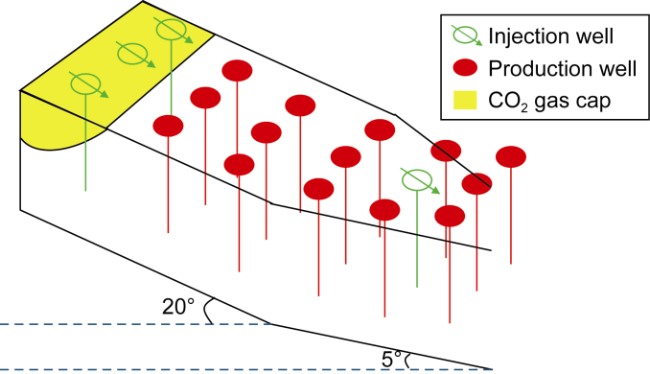


Fig. 2. Schematic diagram of CO2-assisted gravity drainage process. |
3. Challenges and prospects for large-scale application
3.1. Challenges
Most mature waterflood oilfields in China have entered the development stage with medium- to high- or even ultra-high water cut, making it increasingly difficult to control production decline. The pursuit of efficient development is facing significant challenges, urgently requiring technologies capable of substantially enhancing oil recovery. CCUS-EOR represents a dual-benefit strategy that significantly increases oil recovery while enabling large-scale carbon storage. As such, it is a critical strategic pathway for the green and low-carbon transition of China. Currently, this technology is in a pivotal stage of industrialization. Although nearly two decades of field tests have been conducted in oilfields such as Jilin, Daqing, and Shengli, several key technical challenges must be addressed before large-scale deployment can be realized.
A significant portion of the geological reserves suitable for CO2-EOR in China are not amenable to miscible flooding. From the perspective of future large-scale deployment, even in reservoirs where miscible flooding is theoretically achievable, the required miscibility pressures are typically high. Miscibility is often possible near injection wells but not near production wells, resulting in the coexistence of miscible and immiscible zones within the same reservoir [47]. Therefore, it is imperative to explore effective methods for enhancing the degree of miscibility and improving displacement efficiency.
The capability to regulate displacement processes is one of the key factors constraining the effectiveness of CO2 flooding. The high gas-to-liquid mobility ratio is a primary cause of limited sweep efficiency. Thus, there is an urgent need to deepen our understanding of multi-medium, multi-scale mechanisms for expanding CO2 sweep efficiency, identify and optimize dynamic injection parameter boundaries, and develop intelligent control technologies aimed at significantly increasing the CO2 swept volume.
Lacustrine reservoirs in China are typically characterized by multiple layers and serious vertical heterogeneity, with pronounced interlayer conflicts. This necessitates advanced technologies for layered injection and high gas-oil ratio lift. There is a pressing demand for breakthroughs in cost-effective engineering solutions that enable accurate layered injection, efficient artificial lift, safe operations, intelligent management, and automatic adjustment.
In terms of CO2 storage safety evaluation and monitoring, current projects suffer from short evaluation periods and limited monitoring data. Challenges persist in understanding the long-term behavior and transformation of stored CO2, optimizing storage efficiency, and developing systematic downhole monitoring technologies. It is essential to take a holistic view of long-term safety issues associated with large-scale deployment, explore key technologies to enhance mineral and residual trapping, improve monitoring methodologies, and expand the application scenarios and adaptability of monitoring equipment.
Ongoing CO2 flooding and storage pilot projects reveal that the CO2 flooding behavior, CO2 storage behavior, and their interactions are not yet fully understood and require more systematic investigation. In the mature oilfield regions, widespread issues persist with well completion and cementing quality falling short of CO2 storage standards. It is therefore necessary to establish a full life- cycle management system for field-scale pilots in different reservoirs. A comprehensive and coordinated strategic plan should be developed, taking into account source-sink matching and incentive policies, to support the large- scale deployment of CO2 flooding and storage technologies.
3.2. Prospects
To address the key technical challenges in the fields of CO2-EOR and long-term geological storage, and to chart the developmental course of CO2-EOR and storage technologies, it is essential to focus on core areas including miscibility enhancement and phase transition control, comprehensive sweep efficiency optimization, integrated engineering processes and equipment, long-term safe storage and monitoring, and synergistic optimization of CO2-EOR and storage. These efforts aim to establish the third-generation CO2-EOR and storage technologies that significantly enhance recovery and underpin the large-scale implementation of CCUS.
In terms of miscibility enhancement and phase transition control, urgent efforts are needed to deepen the understanding of phase behavior in CO2-crude oil contact zones (or miscible zones), and to develop accurate methods for identifying and characterizing miscible zones. Future research should investigate the controlling factors of miscible scale and phase behavior, elucidate the evolution and transition mechanisms of key CO2 phase parameters, and establish comprehensive characterization models and charts for miscible zones in lacustrine reservoirs throughout the entire CO2 flooding process. There is considerable potential in the development and application of miscibility-promoting agents; however, key issues such as long development cycles, complex synthesis processes, high costs, and significant reservoir adsorption must be overcome. Breakthroughs are needed in the molecular design and synthesis of efficient, low-cost miscibility-promoting agents, along with comprehensive phase behavior modeling of miscibility-promoting agents-CO2-oil-formation water systems. Ultimately, a miscibility control technology system should be established to expand the miscible zone, improve system adaptability, and enable full-process, full-phase integrated miscibility control during CO2 flooding.
In terms of integrated control for sweep efficiency improvement, future research should focus on advancing the multi-scale mechanisms governing CO2 sweep enhancement, especially in highly heterogeneous reservoirs. This includes revealing the flow characteristics of CO2 in such reservoirs, constructing multi-parameter coupled prediction models for sweep efficiency, establishing methodologies for identifying dynamic injection parameter boundaries, and developing chemical-assisted intelligent profile control technologies. Characterization methods for gas channeling pathways, along with an understanding of CO2 front advancement and sweep control mechanisms, are needed to guide the development of novel and efficient mobility control systems. These efforts will support the effective application of CO2 flooding sweep enhancement technologies in lacustrine oil reservoirs.
In terms of full-process engineering technologies and equipment, challenges such as high injection costs, complex well completion processes, high operational expenditures, high produced gas-to-liquid ratios, the lack of integrity assessment methods for critical components of injection and production wells, complex surface processes, and corrosion of pipelines and tubing must be addressed. This requires the development of comprehensive artificial lift technologies tailored for CO2 flooding under gas-to-liquid ratios exceeding 1 000 m3/t. In addition, corrosion-resistant materials, multifunctional corrosion inhibitors, and anti-corrosion coatings for CCUS applications must be developed. Software systems for full life-cycle health assessment and control of CO2 injection and production wells should be developed, alongside cost-effective injection technologies and supporting tools. Collectively, these advancements will form a robust engineering technology and equipment system for the entire CO2-EOR process.
In terms of long-term safe storage and monitoring, ensuring the integrity and security of large-scale underground CO2 storage projects demands targeted risk assessments based on the characteristics of lacustrine oil reservoirs. This includes developing bio-chemical synergistic mineralization techniques, constructing regulatory frameworks for CO2 state transformation and storage control, advancing wellbore integrity monitoring and inter-well CO2 migration detection technologies, and building integrated, intelligent safety management platforms. These efforts aim to establish long-term CO2 storage mechanisms, enabling full-process optimization and comprehensive safety control, and thereby supporting the large-scale deployment of CO2-EOR technologies.
In terms of CO2-EOR optimization, it is critical to integrate advanced technologies such as big data analytics and artificial intelligence to develop fine-scale, multi- physics coupled reservoir characterization methods and full life-cycle co-optimization strategies for CO2-EOR. This requires determining optimal technical strategies for various control methods including production-injection regulation, WAG injection, and chemical-based channeling control, while defining reservoir heterogeneity matching boundaries in both static and dynamic conditions, identifying optimal timing for control interventions, and developing front-edge CO2 mobility control methods across the full project cycle. This integrated approach will facilitate the formulation of technologies aimed at improving CO2 sweep efficiency and overall recovery.
3.3. Outlook on field-scale application of CO2-EOR technologies
CO2-EOR technologies possess tremendous application potential. Taking CNPC as an example, the company’s low-permeability oilfields within China that are suitable for CO2-EOR hold geological reserves of approximately 67.3×10⁸ t, with an estimated 11.1×10⁸ t of additional recoverable reserves. Moreover, more than 29.5×10⁸ t of CO2 could be stored during the EOR phase. The four major oil-producing basins—Songliao, Ordos, Junggar, and Bohai Bay—exhibit a high degree of source-sink matching between oilfields and potential CO2 sources, making them prime candidates for large-scale deployment of CO2-EOR. At present, CNPC is developing three industrial bases, each with a production capacity exceeding ten million tonnes, and has launched a CCUS project in the Songliao Basin with a target scale of 300×108 t.
The application scenarios for CO2-EOR technologies are expected to continue expanding. China is actively promoting the formation of a national CCUS innovation consortium, led by centrally administered enterprises, to address key technical challenges across the full industrial chain—from CO2 capture to EOR and storage. The goal is to establish a domestically developed and original technology system, explore new models of collaboration between CO2 source and sink enterprises, and accelerate the large-scale deployment of CCUS technologies. As development of lacustrine low-permeability oilfields in China continues to deepen, accompanied by rising water cuts, conventional water flooding faces diminishing economic returns. A transition toward CO2-EOR has emerged as a key pathway for significantly improving recovery efficiency and enhancing economic performance. In addition, recent discoveries of crude oil resources in China have predominantly been in ultra-low permeability and tight reservoirs—low-quality formations with inherently low recovery rates and limited water injectivity, which lack effective means of energy supplementation. Consequently, the application scope of CO2-EOR is poised to expand from conventional low- and ultra-low-permeability sandstone reservoirs to unconventional formations such as shale oil and tight oil; from shallow reservoirs with a depth of 1 000-3 000 m to deeper targets exceeding 5 000 m; from secondary CO2 flooding in waterflooded reservoirs to primary CO2 injection in newly developed fields; and from CO2-EOR in oil reservoirs to CO2 injection and storage in gas reservoirs.
4. Conclusions
Since 2006, the CCUS industry of China has undergone continuous development and refinement through practical field applications. Significant progress has been made in overcoming key technical challenges encountered during field tests, including mechanisms of CO2 miscible flooding and storage, reservoir engineering design, WAG control, engineering processes, and storage monitoring. These efforts have culminated in the first-generation CCUS-EOR technology system for lacustrine oil reservoirs. Field tests in representative areas such as north Hei-79 in the Jilin Oilfield have yielded initial insights into full-process development patterns, confirming that substantial improvements in oil recovery can be achieved in low- and ultra-low-permeability reservoirs in China. This laid the foundation for industrial-scale CCUS-EOR pilot projects and opened up a new technical pathway for the efficient development of low-permeability, ultra-low-permeability, and unconventional hydrocarbon resources.
In response to the challenges associated with industrialization, namely, the geological diversity of lacustrine oil reservoirs, complex displacement mechanisms, and high engineering requirements, intensive research and development over the past five years has led to a series of breakthroughs and new understandings. These advances span areas such as confined-phase behavior and miscibility enhancement, CO2 storage mechanisms and capacity evaluation, reservoir engineering, sweep control, engineering processes, and storage monitoring. Collectively, they have driven the maturation of the second-generation CCUS-EOR theories and technologies, effectively supporting the implementation of CCUS demonstration projects in oilfields such as Changqing, Xinjiang, and Chaoyang, where promising preliminary results have been achieved.
To further promote the widespread application of CCUS-EOR technologies and advance the industrialization and large-scale development of CCUS, intensified efforts are required in several key directions: miscibility enhancement and phase transition, integrated control for sweep expansion, full-process engineering technologies and equipment, long-term secure storage and monitoring, and coordinated EOR and storage optimization. Rapid upgrades and continuous refinement of these technologies must be carried out in the major oil-bearing basins such as Songliao, Ordos, Junggar, and Bohai Bay. These efforts will enable the establishment of standardized technical systems for CCUS-EOR across different reservoirs, providing critical support for achieving the dual carbon goals and ensuring national energy security in China.