

Introduction
With the acceleration of industrialization and the large-scale use of carbon-intensive fossil fuels, greenhouse gas emissions have risen significantly. According to data from the International Energy Agency (IEA), global energy-related CO2 emissions were 378×108 t in 2024, with carbon emissions in China exceeding 126.5×10⁸ t [1]. To address the global warming challenges caused by massive carbon emissions, China officially announced its “dual carbon” strategy in 2020 and has been actively promoting carbon reduction through various measures, which include the vigorous development of renewable energy, improving energy efficiency, and the widespread adoption of artificial carbon-negative technologies [2-5]. Projections indicate that after 2060, China will need to remove approximately 23.5×10⁸ t of CO2 annually through artificial carbon-negative technologies to effectively maintain a dynamic carbon-neutral balance [6].
Currently, carbon capture, utilization, and storage (CCUS) is regarded as one of the most promising technological pathways for achieving large-scale carbon reduction [7-9]. However, it still faces challenges such as insufficient sustainability, low economic feasibility and limited carbon storage efficiency [10-12]. Against this backdrop, the CO2-H2 underground bio-methanation (UBM) technology has emerged and attracted widespread attention [13-15]. This technology involves injecting CO2-H2 gas mixtures into depleted oil and gas reservoirs, where during the shut-in reaction phase, methanogens convert the mixture into CH4. The resulting CH4-rich renewable natural gas can be stored in situ within the reservoir. Meanwhile, part of the CO2 is geologically sequestered through dissolution, mineralization and other mechanisms. This approach supports subsequent peak shaving and combines multiple functions including carbon circular utilization and storage, large-scale energy storage and renewable natural gas production [16-19]. Furthermore, using impure gases like H2-containing industrial by-product gases as feedstock can significantly enhance the economic viability of this process [16,20].
Presently, the academic community has conducted multidimensional and systematic research on the CO2-H2 UBM technology. Experimentally, Vitězová et al. [21] and Hellerschmied et al. [22] performed multiple cycle conversion experiments using formation water and rock samples containing methanogens to verify the stability of the technology. Khajooie et al. [23] investigated the consumption of gases by methanogens under different specific surface areas and porosity conditions. Muller et al. [24] studied the effects of temperature and mineral composition on microbial competitive consumption under low pressure conditions. In terms of numerical simulation, Eddaoui et al. [25] developed a coupled microbial adsorption-desorption kinetic model to quantitatively characterize the impact of bio-clogging on gas phase migration. Safari et al. [26] constructed a multicomponent two-phase bio-hydrodynamic model based on the MATLAB Reservoir Simulation Toolbox (MRST) to evaluate the CO2-H2 conversion efficiency in depleted gas reservoirs. Hogeweg et al. [27] used the DuMuX simulator to demonstrate the feasibility of freshwater injection in high-salinity reservoirs to promote UBM. Wu et al. [28-29], using the PHREEQC software, conducted an in-depth analysis of biogeochemical mechanisms within single cycles under conditions with and without microbial competition. Moreover, countries such as Austria and the Czech Republic have successfully conducted field trials, further validating the engineering feasibility and long-term operational stability of this technology [21,30].
Although some technological achievements and experience have been gained in UBM, research on biogeochemical interactions during cyclic UBM remains lacking, and related simulation frameworks have yet to be established. This study first proposes a coupled PHREEQC-MATLAB simulation approach to reveal the dynamic effects of biogeochemical interactions on key parameters during cyclic UBM, including rock porosity, gas storage capacity, formation water salinity and reservoir temperature. Furthermore, it quantitatively analyzes how the evolution of these parameters influences CH4 production efficiency.
1. Numerical simulation approach
1.1. Biogeochemical models
Wu et al. developed a microbial growth kinetics model that considers the effects of environmental factors and the constraints of underground space to better reflect microbial growth conditions in the UBM process [29]. This study builds upon that model, and the specific growth rate of methanogens is calculated as follows:
The relationship between substrate consumption and the growth of methanogens can be established using the yield coefficient, resulting in the following equation:
Additionally, considering the decay of methanogens and the limitations of underground space confinement effects, the change rate of methanogen biomass is calculated as follows:
1.2. Coupled PHREEQC-MATLAB simulation approach
The UBM technology establishes a carbon circular utilization system by cyclically injecting CO2-H2 and extracting renewable natural gas, while simultaneously enabling large-scale periodic energy storage (Fig. 1). Although the aforementioned simulation method based solely on the PHREEQC software can effectively analyze biogeochemical interactions within a single cycle of UBM, it exhibits limitations when simulating multiple cycles. In particular, these methods struggle to comprehensively capture the dynamic changes in the reservoir environment due to biogeochemical interactions and how these changes impact CH4 production efficiency. To address this issue, the present study developed a coupled PHREEQC- MATLAB simulation approach based on the PHREEQC Component Object Model (COM) interface (Fig. 2) [32].
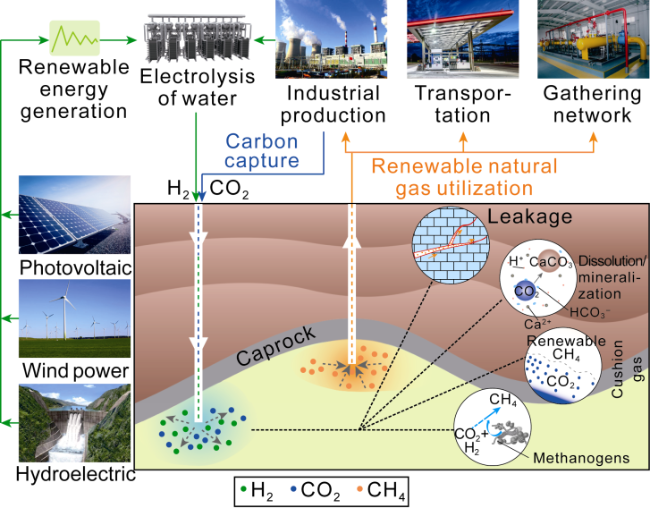
Fig. 1. Schematic diagram of CO2-H2 underground bio- methanation [15]. |
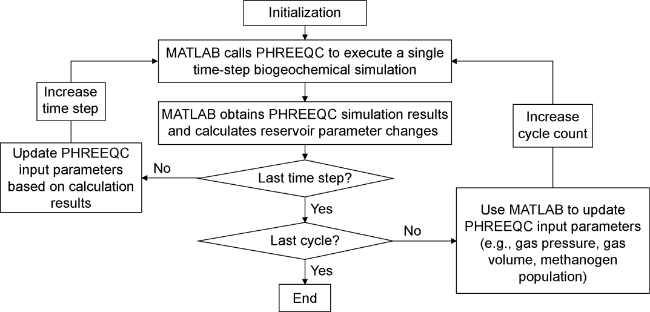
Fig. 2. Coupled PHREEQC-MATLAB simulation framework. |
The coupled simulation process begins with an initialization stage, which includes loading the database, reading input files, and defining parameters such as the number of cycles and time step duration. MATLAB calls the PHREEQC COM to perform biogeochemical calculations for each time step. Based on the simulation results, reservoir parameter changes are calculated. For example, if changes in reservoir temperature need to be considered, the heat released by methanogens and the resultant temperature increase must be calculated. If the current cycle termination step has not been reached, updating the PHREEQC input parameters and iterating the computation with incremented time steps until all time steps in the current cycle are completed. Before starting a new cycle simulation, the gas pressure must be restored to its initial set value to represent gas reinjection. Additionally, based on field observations of the Tvrdonice gas storage by Vitězová et al. [21], the methanogen population returns to its initial level after substrate depletion, so the methanogen quantity must be adjusted accordingly before beginning a new cycle. When considering the impact of water generation on gas storage capacity, the gas phase volume should be adjusted simultaneously. Finally, the above steps are iteratively executed until all cycles are completed.
The coupled PHREEQC-MATLAB simulation approach proposed in this study achieves effective simulation of biogeochemical interactions during cyclic UBM through time discretization and dynamic parameter exchange. This approach overcomes the limitations of existing simulation tools (e.g., PHREEQC, MRST and DuMuX), which either consider biogeochemical reactions within a single cycle only or focus solely on bio-hydrodynamics.
1.3. Validation of the coupled simulation approach
Taking the A1 gas reservoir in the Sichuan Basin as an example, the coupled PHREEQC-MATLAB simulation approach is validated. The reservoir mineral composition is dominated by dolomite (55%) and calcite (42%), with minor amounts of feldspar, quartz and clay minerals. Due to the high content of dolomite and calcite, whose reaction rates are significantly higher than those of other minerals, the baseline scenario simplifies the mineral composition to a dolomite (55%) and calcite (45%) system. The initial water phase volume is set to 1 L [33], and mineral and gas phase volumes are calculated based on a water saturation of 30% and a rock porosity of 7.26%. The initial partial pressures of CO2, H2, and CH4 are set at 3.04, 12.16 and 13.17 MPa respectively. Combined with the initial reservoir temperature of 68.3 °C, the initial amounts of each gas species can be calculated.
In most subsurface environments, although methanogens face resource competition from acetogens and sulfate-reducing bacteria [34], they generally maintain a dominant position. For example, metabolic products of the latter two groups were not detected in the field test at the Tvrdonice gas storage in the Czech Republic [21]. Even in the Underground Sun Conversion (USC) project in Austria, where such metabolic products were observed, methanogens still comprise nearly 90% of the entire microbial community [35]. Therefore, to focus on the primary biogeochemical interactions, this study considers only the influence of methanogens. Their catabolic reaction is shown below, where HCO3− is formed by the dissolution of CO2 in formation water [36]:
| Parameters | Values |
|---|---|
| Specific growth rate at optimal conditions | 1.109 d−1 |
| Decay coefficient | 0.074 d−1 |
| Half-saturation constant of electron donor | 10.0 µmol/L |
| Half-saturation constant of electron acceptor | 230.0 µmol/L |
| Yield coefficient | 0.738 g/mol |
Fig. 3 compares the gas molar concentrations obtained from single-cycle simulations using the standalone PHREEQC method and the coupled PHREEQC-MATLAB approach. The results from both simulations show a high degree of agreement, demonstrating that the coupled simulation approach possesses reliable computational accuracy and is suitable for studying complex biogeochemical mechanisms.
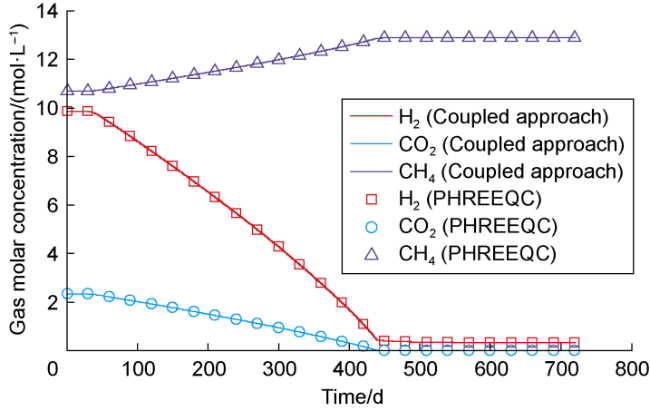
Fig. 3. Comparison of simulation results between PHREEQC and the coupled approach. |
2. Analysis of simulation results
Using the A1 gas reservoir as the study object, the simulation parameters are consistent with those described in the previous validation section. Although the duration of the CO2-H2 UBM project can exceed 30 years, simulating 5 cycles is sufficient to reveal the evolution patterns of key parameters while significantly reducing computational effort. Therefore, this study sets 5 cycles, each with a duration of 2 years. Under the baseline scenario, a single conversion cycle lasts approximately 430 d, providing sufficient time for gas injection and production within the given timeframe, despite fluid flow not being considered. Additionally, a time step of 1 d is used to guarantee the accuracy of dynamic simulation results.
2.1. Impact of mineral composition on rock porosity and CH4 production efficiency
Assuming temperature and gas phase volume remain constant, and given that both calcite and dolomite are fast-reacting minerals with significant coupled precipitation-dissolution kinetics, three comparative scenarios were established: a pure calcite system, a pure dolomite system, and a mixed mineral system (calcite + dolomite), to analyze the complex biogeochemical interaction mechanisms.
The changes in amounts of minerals during cyclic UBM under the different scenarios are shown in Fig. 4, where positive values indicate mineral precipitation and negative values indicate mineral dissolution. In the pure calcite system, the high concentration of dissolved CO2 in the early stage of the first cycle creates an acidic environment (Fig. 5), triggering calcite dissolution. As methanogens continuously consume CO2 and H2 and produce water, the pH rises, reducing calcite dissolution and leading to slight precipitation. Once dissolved inorganic carbon (e.g., HCO3− and CO32−) in the formation water is depleted, calcite dissolves again to maintain carbonate equilibrium. During this process, the pH sharply increases, resulting in the precipitation of brucite (Mg(OH)2), which stabilizes after the methanation reaction ends. In subsequent cycles, the dissolution and precipitation behaviors of calcite and brucite show periodic fluctuations. However, due to the cumulative increase in the water volume from methanogen metabolism, more calcite must dissolve each cycle to re-establish equilibrium. Additionally, the pH at the end of each cycle shows an increasing trend, causing the amount of brucite precipitation to incrementally increase (Fig. 4a). In the pure dolomite system, the variation trend of amount of mineral is highly similar to that observed in the pure calcite system. Since dolomite dissolution supplies the Mg2+ required for brucite precipitation, the amount of brucite precipitated at the end of the cycles in the pure dolomite system increases slightly compared to the pure calcite system (Fig. 4b). In the calcite-dolomite mixed system, the trend of brucite precipitation is generally consistent with the previous two systems, whereas the behaviors of calcite and dolomite differ [29]. During the pH gradual rising phase, ionization of H2CO3 leads to precipitation of both calcite and dolomite, causing calcite dissolution to gradually decrease and dolomite precipitation to increase. Subsequently, as the pH rapidly rises, brucite precipitation reduces the Mg2+ concentration in formation water, inducing dolomite dissolution to replenish Mg2+ levels while simultaneously raising Ca2+ concentration, which in turn sustains continuous calcite precipitation. Through the combined actions of both minerals, brucite precipitation reaches approximately 0.039 mol after the fifth cycle (Fig. 4c).
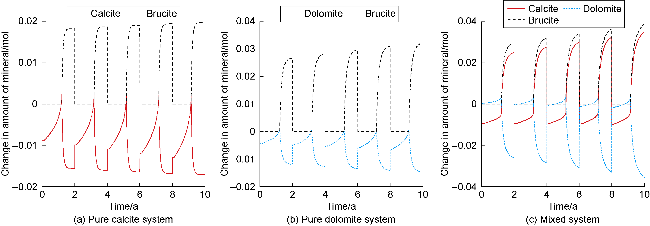
Fig. 4. Trends in changes of amounts of minerals across different mineral systems. |
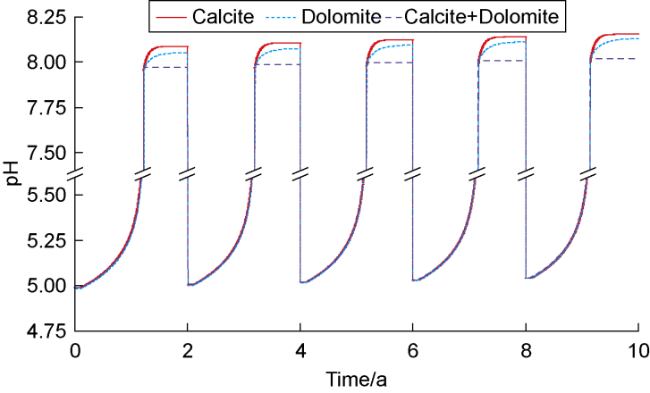
Fig. 5. pH change trends in different mineral systems. |
Among the three mineral systems studied, although calcite and dolomite are highly reactive minerals, their precipitation and dissolution amounts are limited, resulting in minimal changes to rock porosity caused by geochemical reactions (Fig. 6). At the end of the fifth cycle, the pure dolomite system exhibited the largest relative increase in porosity, approximately 0.005%, while the porosity change in the calcite-dolomite mixed system was less than 0.002%. This is primarily because the injection and consumption of the acidic gas CO2 causing the formation water to alternate between acidic and alkaline conditions. In the study by Jahanbani et al. [33], during a 10-year period of underground hydrogen storage, the formation water remained consistently alkaline due to microbial metabolism, which has driven the continuous mineral precipitation and dissolution, resulting in porosity change of approximately 1%. Therefore, during cyclic UBM, the impact of geochemical reactions on rock porosity and injection capacity can be considered negligible.
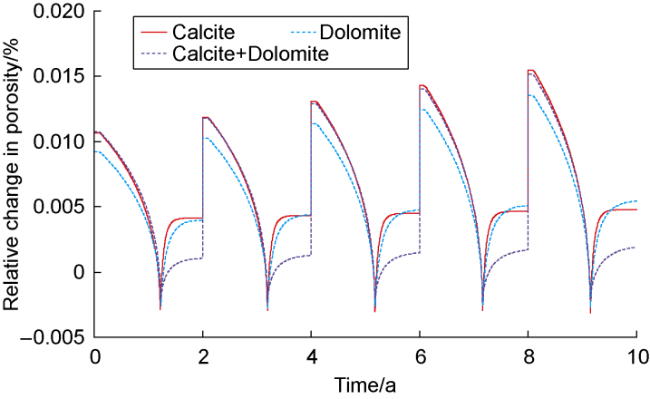
Fig. 6. Porosity change trends in different mineral systems. |
As shown in Fig. 7a, the evolving trends in CH4 production rate, which is defined as the change in CH4 amount per unit gas phase volume per unit time, are highly consistent across cycles, with the maximum rate being nearly unaffected by mineral composition at approximately 3.6×10⁻³ mol/(L·d). With the progression of cycles, the initial pH gradually increases, weakening the inhibitory effect on methanogens and shortening the conversion period with each successive cycle. For example, for the calcite-dolomite mixed system, the conversion time in the fifth cycle is 17 d shorter than that of the first cycle. Furthermore, the final CH4 molar concentration in the gas phase differs between the first cycle and the subsequent cycles (Fig. 7b). This is because the simulation assumes that the initial formation water contains no CH4, so during the first cycle, some CH4 dissolves into the water phase, slightly decreasing its concentration in the gas phase. In the following cycles, since a significant amount of CH4 has already dissolved in the formation water, the generated CH4 is preferentially retained in the gas phase and its concentration in the gas phase increases slightly. For instance, by the end of the fifth cycle, the CH4 concentration increases by 0.056 mol/L compared to the end of the first cycle.
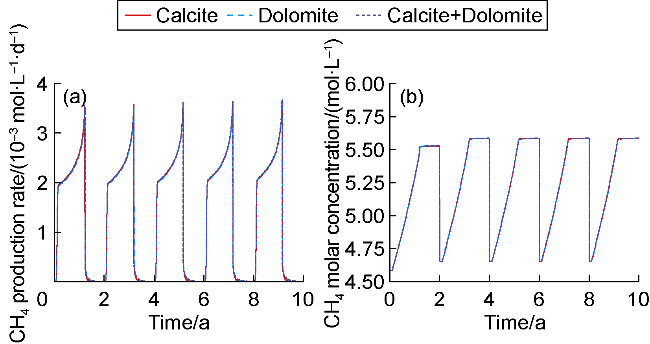
Fig. 7. Impact of mineral composition on CH4 production efficiency. |
2.2. Impact of gas pressure on gas storage capacity and CH4 production efficiency
Assuming a constant temperature, this section explores the variation trends in gas storage capacity and CH4 production efficiency under initial total pressures of CO2 and H2 set at 7.6, 11.2 and 15.2 MPa, respectively. In the simulations, the CO2 to H2 ratio is fixed at 1:4, with the total gas phase pressure maintained at 28.37 MPa. The initial partial pressure of CH4 is adjusted accordingly based on the total pressure of CO2 and H2. Gas storage capacity is quantified by the rate of change in gas phase volume, which is updated only at the beginning of each cycle when gas injection is performed, while volume changes within a single cycle are neglected. This simplification aligns with the requirements for constant volume simulations.
Fig. 8a shows that the mass of the water phase continuously increases during the conversion stages of each cycle under different CO2-H2 total pressures and stabilizes after the conversion is complete. Upon restarting each cycle, the water phase mass rises again, resulting in an increase in water phase volume, which causes a gradual decline in gas storage capacity and a sequential decrease in the amount of gas injected per cycle (Fig. 8c). Moreover, the increase in water phase mass at the end of each cycle is positively correlated with the initial pressure: when the initial CO2-H2 total pressure is 7.6 MPa, the water phase mass increases by 0.21 kg at the end of the fifth cycle compared to the start; under 15.2 MPa, the increase reaches 0.40 kg. Therefore, under the 15.2 MPa condition, gas storage capacity decreases by 8.53% after two cycles and reaches a decline further to 18.6% after five cycles, while under the 7.6 MPa condition, a similar decrease of 8.46% occurs after four cycles (Fig. 8b). The above analysis indicates that gas storage capacity reduction is positively correlated with the amount of CO2-H2 converted, and the higher the initial pressure, the fewer cycles are needed to reach the same degree of reduction. Thus, extracting water produced by methanogen metabolism is crucial to maintaining gas storage capacity during cyclic UBM.
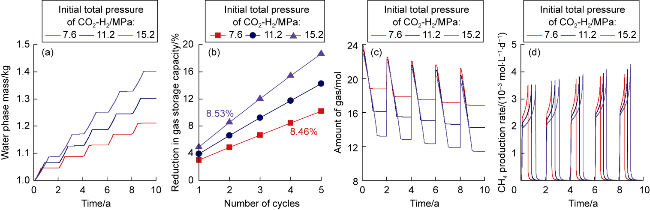
Fig. 8. Impact of initial CO2-H2 total pressure on gas storage capacity and CH4 production efficiency. |
During the cyclic process, the average CH4 production rate is the lowest when the total CO2-H2 pressure is 15.2 MPa. This is mainly because higher total pressure leads to greater CO2 dissolution and a more pronounced decrease in pH, which strengthens the inhibitory effect on methanogens. As the cycle progresses, the increase in water phase volume reduces the gas phase space. Since the CH4 production rate is defined as the increase in CH4 amount per unit gas phase volume per unit time, the reduction in gas phase volume causes the calculated values under all pressure conditions to show an upward trend (Fig. 8d). Notably, at 15.2 MPa, due to the highest water production and greatest reduction in gas phase volume, the maximum CH4 production rate observed in the fifth cycle is 4.28×10⁻³ mol/(L·d), which is significantly higher than under other pressure conditions.
2.3. Impact of initial salinity on formation water salinity and CH4 production efficiency
Assuming constant temperature and gas phase volume, this section examines the trends in formation water salinity and CH4 production efficiency at initial salinity levels of 24.2, 50.0, 90.0 and 130.0 g/L, with the baseline scenario set at 24.2 g/L. Initial salinity is controlled by adjusting the NaCl concentration, which maintains charge balance and avoids introducing additional chemical reactions, while also ensuring the accuracy of simulations using the phreeqc.dat database [31].
Fig. 9 illustrates the evolution trends of the molality of three key ions (Na+, Mg2+ and HCO3−). Under all initial salinity conditions, the molality of Na+ continuously decreases over the course of the cycles, primarily because methanogen metabolism generates water, and Na+ cannot be replenished through mineral dissolution or external injection. When the initial salinity is 130.0 g/L, the Na+ molality decreases significantly from 2.02 mol/kg to 1.41 mol/kg; by contrast, in the baseline scenario, it only decreases by 0.065 mol/kg (Fig. 9a). The variation trend of Mg2+ molality remains consistent across all initial salinity levels, regulated by both water generation and mineral precipitation-dissolution processes. During the first cycle, metabolic water from methanogen and brucite precipitation causes a sharp drop in Mg2+ concentration, which then stabilizes after substrate depletion. In subsequent cycles, CO2 injection leads to brucite dissolution under acidic conditions, causing a slight rebound in Mg2+ concentration. However, due to the increase in water phase volume, this concentration does not recover to its initial level (Fig. 9b). The molality changes of HCO3− are primarily driven by methanogen activity: at the beginning of each cycle, the concentration reaches a peak and then gradually declines toward zero as methanogen metabolism consumes it. As the number of cycles increases, continued CO2 injection results in progressively higher peak molalities of HCO3− (Fig. 9c), which may be related to the increasing initial pH values in each cycle (Fig. 5). It is noteworthy that the peak HCO3− molalities differ across cycles under different initial salinity conditions. This variation arises from differences in ion strength caused by increasing water phase mass, which in turn affects CO2 solubility and mineral dissolution processes.
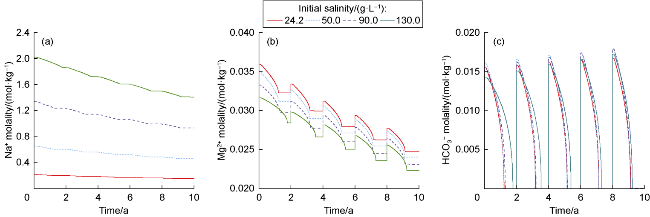
Fig. 9. Changes in molalities of key ions under different initial salinity levels. |
Since NaCl dominates the formation water, the changing trend of formation water salinity closely follows the variation in Na+ molality (Fig. 10). In the baseline scenario, from the start of the first cycle to the end of the fifth cycle, the absolute decrease in formation water salinity is 8.6 g/L, corresponding to a relative decrease of 31.8%. When the initial salinity is 50.0 g/L and 90.0 g/L, the absolute decreases are 15.5 g/L and 27.7 g/L, with relative decreases of 31.1% and 30.8%, respectively. At an initial salinity of 130.0 g/L, the absolute decrease in formation water salinity increases to 39.8 g/L, with a relative decrease of 30.7%. Therefore, as the initial salinity increases, the absolute decrease in formation water salinity grows, while the relative decrease diminishes. This indicates that under low salinity conditions, the dilution effect of metabolic water generated by methanogens is slightly stronger; however, since the conversion process is mainly influenced by the absolute decrease in salinity, the impact of metabolic water-induced salinity changes on conversion efficiency is more significant under high salinity conditions.
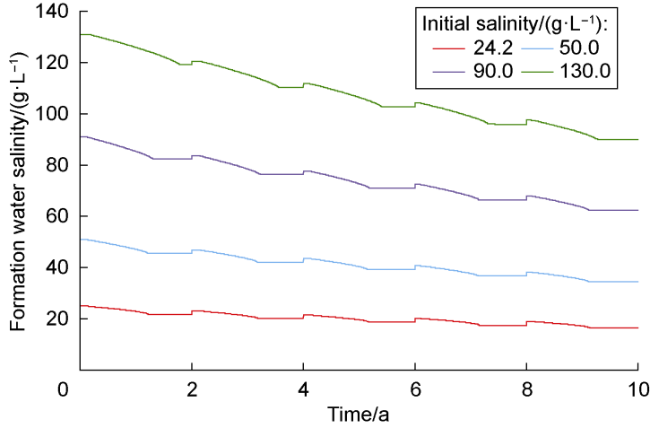
Fig. 10. Changes in formation water salinity under different initial salinity levels. |
In the first cycle, when the initial salinity is 130.0 g/L, the CH4 production rate is significantly lower than under the other three salinity conditions, and the time required to complete the conversion is notably extended, approximately 175 d longer than the baseline scenario (Fig. 11a). As the number of cycles increases, continuous metabolic water production gradually lowers the formation water salinity, bringing it closer to the optimal growth range for methanogens (less than or equal to 60 g/L) [38]. Consequently, the differences in CH4 production rates and conversion completion times among the four salinity conditions gradually diminish. Moreover, except for the first cycle, there are no significant differences in the final CH4 molar concentrations in the gas phase after conversion across different initial salinities and cycle numbers (Fig. 11b). In summary, although high-salinity reservoirs initially hinder the rapid growth of methanogens, their salinity conditions improve progressively with repeated cycles, enabling adaptive transformation for UBM.
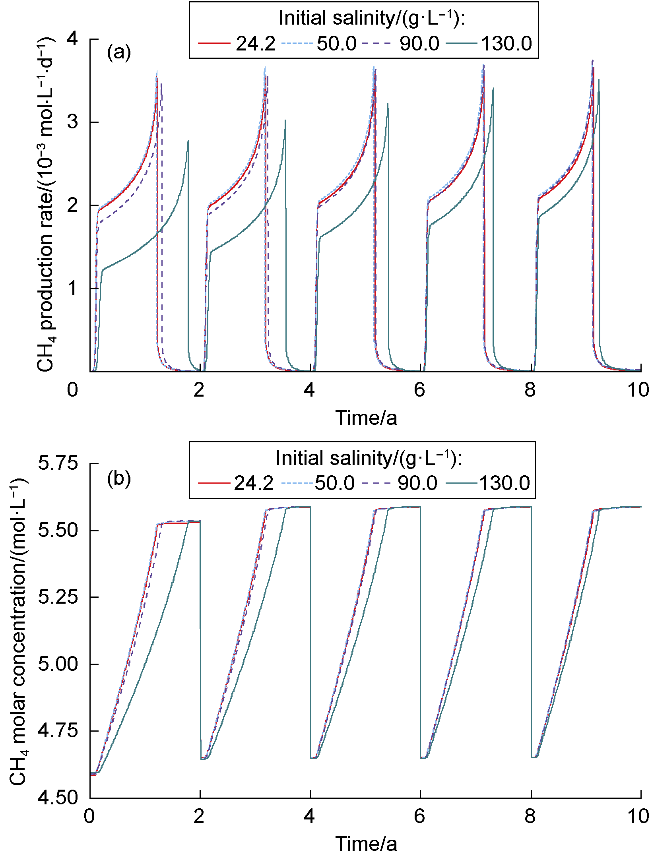
Fig. 11. Impact of initial salinity on CH4 production efficiency. |
2.4. Impact of bioheat on reservoir temperature and CH4 production efficiency
Assuming a constant gas phase volume and that the gas-water-rock system is in local thermal equilibrium [40], this section investigates the impact of bioheat on reservoir temperature and CH4 production efficiency. The temperature increase caused by bioheat is estimated using the following equation:
2.4.1. Impact of heat loss coefficient
By setting up five scenarios to analyze the effects of bioheat on reservoir temperature and CH4 production efficiency under different intra-cycle and inter-cycle heat loss coefficients (Table 2), the simulation results are shown in Fig. 12. In Scenario 1, the heat loss coefficients are both 1.0, the reservoir temperature does not increase, and the bioheat production rates across cycles are consistent, with a peak of approximately 0.016 W (Fig. 12a). Since both the bioheat production rate and CH4 production rate are calculated based on the incremental molar concentration of CH4 in the gas phase, their trends are the same across different scenarios (Fig. 12c). In Scenario 2, a 50% bioheat loss occurs within each cycle, with the remaining heat causing the reservoir temperature to rise by about 1.7 °C. However, heat dissipates completely before the next cycle, and the temperature returns to the initial value of 68.3 °C (Fig. 12b). In this scenario, the maximum bioheat production rate and CH4 production rate are similar to those in Scenario 1, but since the temperature rises by about 1.7 °C within each cycle, methanogens experience slightly stronger inhibition, causing the peak values per cycle to be slightly lower than that in Scenario 1.
Table 2. Intra-cycle and inter-cycle heat loss coefficients for five scenarios |
| Scenario number | Intra-cycle heat loss coefficient | Inter-cycle heat loss coefficient |
|---|---|---|
| 1 | 1.0 | 1.0 |
| 2 | 0.5 | 1.0 |
| 3 | 0.5 | 0.5 |
| 4 | 0 | 0.5 |
| 5 | 0 | 0 |
Note: A value of 1.0 indicates complete dissipation of bioheat, 0.5 indicates a 50% loss of bioheat, and 0 indicates no loss of bioheat. |
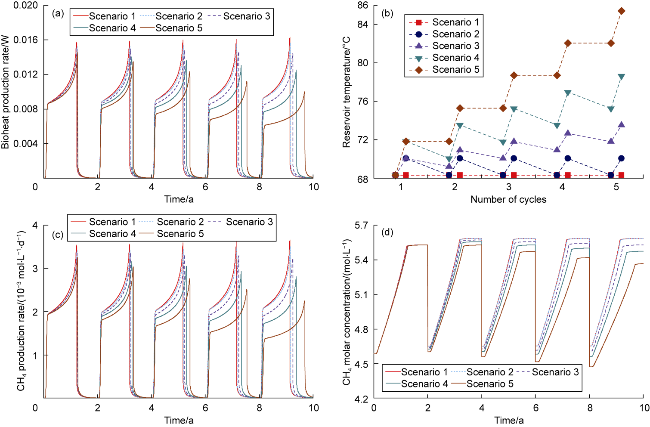
Fig. 12. Impact of bioheat on reservoir temperature and CH4 production efficiency under different heat loss coefficients (in Fig. b, each cycle includes the temperature points at the start of the cycle and the at the end of the reaction). |
In Scenario 3, 50% heat loss occurs between cycles, and the reservoir temperature gradually increases with the number of cycles, reaching 73.5 °C after the fifth cycle. The continuous temperature rise affects methanogen activity, resulting in significantly lower bioheat production rates and CH4 production rates in each cycle compared to Scenario 1. Additionally, since the gas pressure is maintained constant at the start of each cycle, the gas state equation dictates that increased temperature reduces the amount of substrate gases in the gas phase. Consequently, the molar concentration of CH4 at the end of cycles 2 to 4 gradually decreases (Fig. 12d). In Scenario 4, intra-cycle heat loss is neglected, and even though inter-cycle heat loss remains 50% as in Scenario 3, the temperature rises further to 78.7 °C after five cycles. Scenario 5 assumes no heat loss at all, resulting in the most significant impact of bioheat on reservoir temperature and gas conversion: the reservoir temperature reaches 85.4 °C after five cycles, corresponding to a cumulative temperature increase of 17.1 °C over nearly 10 years. This aligns with the 30-40 °C temperature rise observed over nearly 20 years at the Ketzin gas storage in Germany [14]. At this point, the maximum bioheat production rate and CH4 production rate drop to 0.01 W and 2.24×10⁻³ mol/(L·d), respectively, with the final CH4 molar concentration in the gas phase after conversion decreasing to only 5.36 mol/L. Therefore, heat loss significantly affects reservoir temperature and gas conversion.
2.4.2. Impact of initial reservoir temperature
By setting both intra-cycle and inter-cycle heat loss coefficients to 0.5, this section investigates the effects of bioheat under different initial reservoir temperatures (30, 50 and 70 °C). Although the optimal growth temperature for methanogens in this study is set at 45 °C, the solubility of H2 and CO2 in formation water at 30 °C is higher than that at 50 °C. Therefore, during the first cycle, the difference in methanogen activity between 30 °C and 50 °C conditions is not significant, and the bioheat production rates show no obvious difference (Fig. 13a). As the number of cycles increases, bioheat accumulation causes the reservoir temperature to gradually rise. By the end of the fifth cycle, the reservoir temperatures for initial conditions of 30 °C and 50 °C increase to 35.9 °C and 55.5 °C, respectively, corresponding to rises of 5.9 °C and 5.5 °C (Fig. 13b). At this point, both temperatures deviate from the optimal growth temperature of methanogens by approximately 10 °C. However, due to higher gas solubility at 30 °C, the maximum bioheat production rate in the fifth cycle under 50 °C conditions is 0.020 W, slightly lower than 0.022 W observed at 30 °C. When the initial temperature is 70 °C, the direct inhibitory effect of high temperature on methanogen activity is stronger, resulting in an average bioheat production rate significantly lower than that of the other two temperature conditions. In the fifth cycle, the maximum bioheat production rate drops to 0.014 W, and the final reservoir temperature rises to 75.2 °C, with an increase of 5.2 °C. These results indicate that as the initial temperature increases, the magnitude of reservoir temperature rise after multiple cycles slightly decreases, but the inhibitory effect on CH4 production becomes significantly stronger.
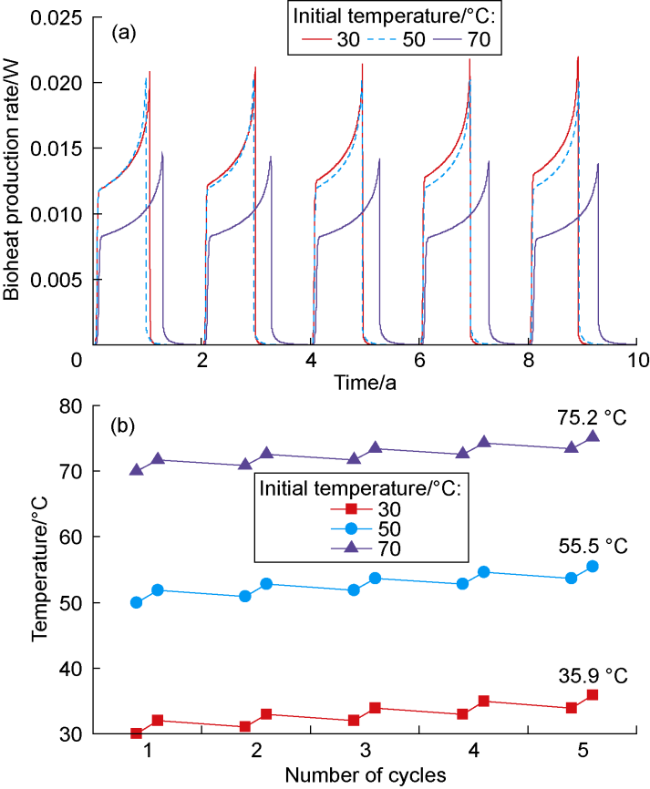


Fig. 13. Changes in bioheat production rate and reservoir temperature at different initial temperatures. |
3. Conclusions
The coupled PHREEQC-MATLAB approach proposed in this study employs time discretization and dynamic parameter interaction to effectively simulate the biogeochemical interactions during cyclic CO2-H2 UBM. For the first time, it reveals the dynamic effects of biogeochemical interactions on rock porosity, gas storage capacity, formation water salinity, and reservoir temperature. The results showed that during cyclic UBM, the formation water alternates dynamically between acidic and alkaline conditions, leading to cycles of mineral precipitation and dissolution. As a result, changes in rock porosity are minimal. After the fifth cycle, the pure dolomite system exhibits the largest relative increase in porosity, approximately 0.005%. Additionally, across different mineral systems and cycles, the maximum CH4 production rate remains stable at about 3.6×10⁻³ mol/(L·d), the conversion period slightly shortens with each cycle.
As the number of cycles increases, metabolic water generated by methanogens under high initial salinity conditions significantly reduces formation water salinity, causing the CH4 production rate to gradually increase and approach levels observed in low salinity environments. Meanwhile, the increased water volume leads to a decrease in gas storage capacity, with this effect becoming more pronounced at higher initial total CO2-H2 pressures. When the initial CO2-H2 total pressure reaches 15.2 MPa, the gas storage capacity decreases by 18.6% after five cycles, while the CH4 production rate rises to 4.28×10⁻³ mol/(L·d).
Reservoir temperature changes caused by bioheat from methanogen metabolism are significantly affected by heat loss. Under conditions neglecting heat loss, the reservoir temperature can increase by as much as 17.1 °C after five cycles (10 years). When the initial reservoir temperature is relatively high, the elevated temperature inhibits methanogen metabolic activity, thereby reducing CH4 production efficiency.
Nomenclature
CA—molar concentration of electron acceptor, mol/L;
CD—molar concentration of electron donor, mol/L;
Ct—total heat capacity of the solid, water, and gas phases, J/K;
d—decay coefficient, s−1;
FX—biomass capacity factor, dimensionless;
KA—half-saturation constant of electron acceptor, mol/L;
KD—half-saturation constant of electron donor, mol/L;
N—biomass concentration of methanogens, g/L;
rbio—change rate of methanogen biomass, g/(L·s);
rs—substrate consumption rate, mol/(L·s);
Y—yield coefficient, g/mol;
ΔH—enthalpy change of the methanation reaction, J/mol;
Δn—amount of increased CH4 in the gas phase, mol;
ΔT—temperature increment, K;
μgr—specific growth rate, s−1;
μopt—specific growth rate under optimal conditions, s−1;
ψpH—pH-related influencing factor, dimensionless;
ψs—salinity-related influencing factor, dimensionless;
ψT—temperature-related influencing factor, dimensionless;
η—heat loss coefficient, dimensionless.