

Introduction
Coal measures refer to sedimentary sequences that are predominantly composed of coal-bearing strata formed during sedimentation under specific palaeogeographic and palaeoclimatic conditions. In 1845, British geologist R. I. Murchison officially used the term "Coal Measures" in his work. The Geology of Russia in Europe and the Ural Mountains to describe the Carboniferous coal-bearing strata [1]. In the early 20th century, Chinese geologists such as Ding Wenjiang and Weng Wenhao introduced this stratigraphic concept during their investigations of coalfields in North China [2]. In the 1980s, Huang et al. used the terms "coal-measure formation gas" and "coal- measure gas" for the first time in geochemical studies of natural gas in the Sichuan Basin [3-4].
Different scholars have different definitions regarding the scope of coal-measure gas. Some scholars believed that coal-measure gas includes both internally sourced natural gas stagnating within coal measures and externally sourced natural gas migrated to non-coal measures, emphasizing that source rocks exist within coal measures[5]. Other scholars defined various natural gases occurring within coal measures collectively as coal-measure gas based on geological carriers, covering coalbed methane, coal-measure tight sandstone gas, and shale gas, among others [6-9]. The development of natural gas in coal seams originated from recognizing gas hazards in coal mining in the 19th century. In the early 1970s, the United States initiated technical research and established coalbed methane (CBM) as an independent energy concept and developed a commercial development model. In the 1990s, China introduced CBM geological theories and exploration and development technologies, discovering shallow CBM fields in the southern Qinshui Basin and eastern margin of the Ordos Basin after 2004. These were developed effectively but did not achieve significant production breakthroughs. Gas in coal rock or seams, initially discovered in coal mining as hazardous, became widely utilized as a mineral resource associated with coal production. The CBM development has always been closely related to coal mine gas control and is highly regarded by the coal industry. Traditional CBM geological theory suggests that with increased burial depth, geostress and formation pressure increase, and deep coal permeability declines exponentially, making depressurization-induced gas extraction difficult, thus limiting exploration to depths shallower than 1 500 m. However, with advances in shale oil/gas exploration and development, as well as in unconventional oil/gas geological theories, significant breakthroughs occurred in deep coal gas exploration. As typical breakthroughs, in 2021, China National Petroleum Corporation (CNPC) achieved daily gas production of 57 000 m3 from Caitan-1H horizontal well in the Baijiahai area, Junggar Basin, and 100 000 m3 from the Jishen 6-7 Ping01 horizontal well in the Daji block, eastern Ordos Basin. This type of gas is distinct from traditional CBM in reservoir geology and development characteristics. Some scholars termed it "coal-rock gas", highlighting its characteristics such as conventional reservoirs, abundant free gas, and external hydrocarbon sources [10-11]. Other scholars further termed it deep "coal-rock gas" [12], while some maintained the CBM terminology, calling it "deep CBM" to emphasize burial depth [13]. Others argued that all gas consisting primarily of methane stored in coal seams is CBM, requiring no new terms [14]. Some suggested using "coal-rock gas" uniformly to maintain consistency and scientific naming among various unconventional oil and gas resources [15]. Currently, academic perspectives remain varied, especially regarding terminology for gas in coal seams.
With deepening exploration and development of unconventional oil and gas, based on research into traditional petroleum systems and unconventional petroleum systems, Jia et al. proposed the concept of "full-process reservoir formation" in oil-gas bearing basins, gradually forming the Whole Petroleum System (WPS) theory [16-20]. Li et al. proposed a new type of WPS, namely the Whole Petroleum System of Coal Measures, after investigating the accumulation mechanism of coal-rock gas (CRG), which is theoretically and practically significant for unconventional gas exploration in coal measures [21]. Therefore, it is urgent to classify natural gas from the perspective of the whole petroleum system of coal measures, re-examining the genesis, accumulation, and distribution of various natural gas types within coal measures. Based on previous research, this study systematically analyzes the particularities of gas accumulation and reservoir evolution in the whole petroleum system of coal measures (hereinafter referred to as coal-measure WPS) and coal rocks, summarizes the main types and geological characteristics of natural gas in coal-measure WPS, and classifies coal-rock gas through detailed case studies. The study aims to provide scientific guidance for coal-rock gas exploration, resource potential evaluation, and related studies.
1. Types of natural gas in coal-measure whole petroleum system
A WPS comprises source rocks, reservoirs, oil-gas-water systems, and associated fluid dynamic fields, forming a complete fluid system [19]. A coal-measure WPS has abundant source rocks and diverse reservoir types. Coal rock, as the principal source rock, is notable for strong hydrocarbon-generating potential and its ability to sustain hydrocarbon generation and reservoir formation throughout the geological evolution process. Controlled by geological conditions such as reservoir space, sealing capacity, and source-reservoir configuration, various natural gas resources are formed in coal-measure WPS under free-fluid, confined-fluid, and bound-fluid dynamic fields (Fig. 1). Natural gas in coal-measure WPS is classified into two types: conventional gas and unconventional gas, according to occurrence state and accumulation mechanism, and further subdivided into six types according to source-reservoir configurations and dominant reservoir lithologies in coal-bearing basins (Table 1).
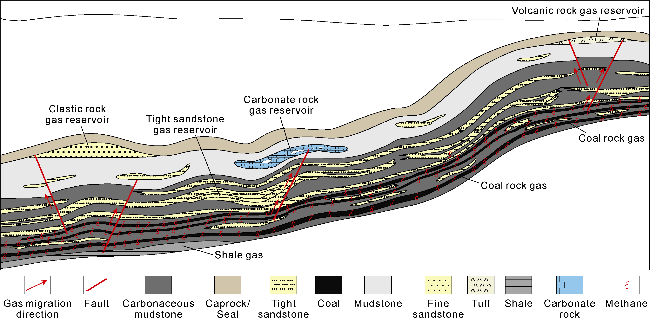
Fig. 1. Distribution of natural gas types in the coal-measure WPS (modified after Ref. [21]). |
Table 1. Classification and characteristics of natural gas in coal-measure whole petroleum systems |
| Type/subtype of natural gas | Reservoir lithology | Reservoir space | Reservoir properties | Self-sealing capacity and evolution of reservoir | Hydrocarbon accumulation dynamic field | Occurrence state of natural gas | Production method | Typical gas field/reservoir | |
|---|---|---|---|---|---|---|---|---|---|
| Conventional gas | Detrital rock gas | Clastic rock | Micron-scale pores and fractures dominated; inorganic pores | Porosity 10%-30%; permeability (1-100)× 10-3 μm2 | No self-sealing, but trap sealing; possible gas escape due to reservoir destruction in late stage | Distal-sourced secondary accumulation; free dynamic field; buoyancy- driven accumulation | Free gas | Natural flowing in vertical wells or simple fracturing | Kela-2 Gas Field, Cretaceous-Paleogene, Kuqa Depression, Tarim Basin |
| Special rock gas | Carbonate weathering crust, volcanic rock, bauxite, etc. | Jingbian Gas Field, Ordovician, Ordos Basin; Kelameili Gas Field, Carboniferous, Junggar Basin | |||||||
| Unconventional gas | Distal/ proximal tight sandstone gas | Tight sandstone | Micron-scale pores dominated; inorganic pores | Porosity 4%-12%; permeability (0.01-0.10)× 10-3 μm2 | Weak self-sealing; normal/ low-pressure gas reservoirs formed due to tectonic uplift | Distal or proximal accumulation; confined dynamic field dominated; source-reservoir pressure differential-driven accumulation; distal tight sandstone gas typically corresponding to migration pathways such as faults | Free gas | Horizontal well + multi-stage fracturing | Keshen Gas Field, Cretaceous, Kuqa Depression, Tarim Basin; Jurassic Shaximiao Formation gas reservoirs, Sichuan Basin |
| Inner-source tight sandstone gas | Tight sandstone | Micron-scale pores dominated; inorganic pores | Porosity 4%-12%; permeability (0.01-0.10)× 10-3 μm2 | Weak self-sealing; normal /low-pressure gas reservoirs formed due to tectonic uplift | Gas accumulation in coal measures after short-distance migration; confined dynamic field dominated; source- reservoir pressure differential- driven accumulation | Free gas | Horizontal well + multi-stage fracturing | Sulige Gas Field, Permian, Ordos Basin; Triassic Xujiahe Formation gas reservoirs, Sichuan Basin | |
| Shale gas | Shale | Nano-scale pores dominated; organic and inorganic pores | Porosity 3%-12%; permeability (0.000 1- 0.100 0)× 10-3 μm2 | Strong self-sealing; overpressure reservoir formed if not destructed, or normal/ low-pressure shale gas reservoir formed or gas escaped if destructed | In-source accumulation; self- generation and self-storage; bound dynamic field dominated; hydrocarbon generation-induced physicochemical energy-driven accumulation | Adsorbed gas and free gas | Horizontal well + volume fracturing | Permian shale gas reservoir, Qinshui Basin; Longtan Formation shale gas reservoir, Sichuan Basin | |
| Coal rock gas | Coal rock | Nano-scale pores and cleats dominated; organic pores | Porosity 2%-40%; permeability (0.000 1- 100.000 0)× 10-3 μm2 | Gas generated by coal metamorphism; strong self-sealing; overpressure to normal- pressure CRG reservoirs formed since the reservoirs were not destructed | In-source accumulation; confined- bound dynamic field; source-reservoir pressure differential and hydrocarbon generation-induced physicochemical energy-driven accumulation | Adsorbed gas and free gas | Vertical well + fracturing; horizontal well + volume fracturing | Mengshan CRG field, Carboniferous-Permian, Ordos Basin | |
| External gas charging; strong self-sealing; trap-controlled | In-source accumulation with external supply; confined-bound dynamic field; source-reservoir pressure differential-driven accumulation | Adsorbed gas and free gas | Baijiahai CRG field, Jurassic, Junggar Basin | ||||||
| Normal-low-pressure CRG reservoirs formed or CRG completely lost since the reservoirs are destructed | In-source accumulation; shallow hydrodynamic field causes adjustment of confined-bound dynamic field | Adsorbed gas | Carboniferous-Permian CBM reservoirs, Qinshui Basin | ||||||
| Biogenic gas generation (open system); or post-destruction secondary biogenic gas generation | In-source accumulation under free dynamic field; buoyancy accumulation or bound dynamic field; biogenic gas accumulation | Adsorbed gas and free gas | Paleogene CBM reservoirs, Powder River Basin, USA; Cretaceous CBM reservoirs, Jiergalangtu Sag, Erlian Basin, China; Jurassic CBM reservoirs, Surat Basin, Australia | ||||||
1.1. Conventional gas
Based on dominant reservoir lithology, conventional gas in coal-measure WPS can be broadly categorized into detrital rock gas and special lithologic gas, with the former being predominant. The representative detrital rock gas field is Kela-2 gas field in the Kuqa Depression of the northern Tarim Basin. It is a massive sandstone anticline dry gas reservoir [22], sourced mainly from Jurassic coal measure source rocks, with reservoirs primarily composed of Lower Cretaceous to Paleogene sandstones and overlain by Paleogene gypsum-salt layers as a high-quality caprock combination. Special lithologies include weathered crust carbonates and volcanic rocks. The representative carbonate gas field is the Jingbian gas field, located in the central Ordos Basin, characterized as a karst weathering crust paleogeomorphic gas reservoir[23]. Its gas originates mainly from Upper Paleozoic Carboniferous-Permian coal measure source rocks, with reservoirs in Ordovician Majiagou Formation dolomite, and Upper Paleozoic continental mudstone as the regional caprock. Volcanic gas is exemplified by the Kelameili gas field in the Dinan Uplift, Junggar Basin [24]. Its source rocks are Carboniferous coal measures, reservoirs dominated by intermediate-acid eruptive rocks, and Permian Wuerhe Formation mudstones serving as the regional caprock. Despite differences in reservoir lithologies, these gas fields/reservoirs all possess inorganic pores and fractures as reservoir space, and have favorable physical properties, with porosity of 10%-30% and permeability of (1-100)×10-3 μm2. Moreover, they exhibit weak self-sealing capacity, and contain natural gas predominantly in the free state, with trap sealing as the primary preservation mechanism. Generally, they represent secondary accumulations of externally sourced gas, typically under free fluid dynamic fields and driven primarily by buoyancy.
1.2. Unconventional gas
Compared with conventional natural gas reservoirs, unconventional gas reservoirs in coal-measure WPSs exhibit complex accumulation mechanisms, extensive and continuous distribution, and lack obvious trap boundaries. Unconventional gas types include inner-source tight sandstone gas, shale gas, and coal-rock gas within coal measures, as well as distal/proximal tight sandstone gas outside coal measures (Table 1). Tight sandstone gas and coal-rock gas are the primary types. Among these, tight sandstone gas has become the main type target for natural gas exploration and development in China.
Tight sandstone reservoirs have physical properties and formation processes intermediate between conventional reservoirs and shale, with gas mainly stored in the complex capillary network formed by pore throats, under a self-sealing accumulation pattern. Tight sandstone gas mainly occurs in the free state within micron-scale inorganic pores, with porosity generally less than 12% and permeability of (0.01-0.10)×10-3 μm2. The reservoir self- sealing capacity is weak. Both proximal and inner-source tight sandstone gases accumulate near there sources after short-distance migration, dominantly under a confined fluid dynamic field and driven by the source-reservoir pressure differentials. Distal tight sandstone gas exhibits similar reservoir properties to the proximal type, but accumulates under the control of migration pathways, due to the relatively greater distance from sources, and while still driven by the source-reservoir pressure differentials.
Shales within coal measures are closely associated with coal seams, and are widely distributed, occurring between coal seams or between their roof and floor in the vertical sequence. Shale gas reservoirs are dominated by nano-scale pores, in which organic and inorganic pores coexist, with porosity of 3%-12% and permeability of (0.000 1-0.100 0)×10-3 μm2. Shale gas occurs in both adsorbed and free states, hosted in reservoirs with strong self-sealing capacity, following a self-generation and self- storage model. Accumulation is mainly under a bound fluid dynamic field, and driven by physicochemical energy generated during hydrocarbon generation. Shale gas enrichment is highly sensitive to organic matter content, maturity, and reservoir pressure.
Coal rock functions as both the source rock and reservoir rock for coal-rock gas, which typically follows a self-generation and self-storage model, or may accumulate from external sources under special geological conditions. Coal rocks are characterized by a distinctive cleat-fracture system, exhibiting certain features of conventional reservoirs. Their high organic matter content confers strong gas adsorption capacity. Coal-rock gas may be thermogenic gas, generated through deep coal metamorphism, or biogenic gas, generated through microbial (generally bacterial) decomposition of coal organic matter at shallow depths. The distinct genetic and evolutionary characteristics of coal rocks contribute to greater diversity and complexity in coal-rock gas compared to tight sandstone or shale gas. Thermogenic coal-rock gas reservoirs mainly consist of nano-scale organic pores and cleat-fracture systems, with porosity of 3%-15% and permeability of (0.000 1-10.000 0)×10-3 μm2, coupled with high organic matter content and strong self-sealing capacity. Coal-rock gas exists in adsorbed and free states. Biogenic coal-rock gas reservoirs generally have lower thermal maturity, and contain nano- to micron-scale organic pores, with porosity of 15%-40% and permeability of (1-100)×10-3 μm2, representing open systems with weak self-sealing capacity.
In recent years, breakthroughs in the exploration and development of natural gas in deep coal rocks, together with the establishment of the whole petroleum system (WPS) theory and coal-measure WPS concepts, have provided new perspectives for re-evaluating natural gas in coal rocks. From the perspective of the entire hydrocarbon generation and expulsion process in coal rocks and the complete accumulation process of natural gas, it has been recognized that under the coupling of source rock and reservoir rock, coal-rock gas can form in coal reservoirs with favorable preservation conditions. However, such resources may be partially or completely lost due to subsequent geological processes. It is thus evident that conventional CBM and coal mine gas are both regarded as the transformed products of coal-rock gas, essentially residual gas derived from primary coal-rock gas. In this paper, various terms referring to natural gas in coal rocks or seams, such as CBM, shallow CBM, deep CBM, ultra-deep CBM, tight gas in deep coal seams, coal-rock gas, and deep coal-rock gas, are collectively referred to as coal-rock gas.
2. Coal-rock gas types
In the 1950s, the United States first extracted gas from coal seams through vertical wells in the San Juan Basin, marking the emergence of coalbed methane (CBM) concept. By the 1980s, the fundamental exploration and development theories and technologies for low- to medium-rank CBM had been established. Building on the successful experience in the United States, countries such as Australia and Canada achieved rapid CBM industry growth. China began preliminary evaluations and explorations of CBM in the 1980s, and has since developed a comprehensive system of exploration and development theories and technologies, primarily targeting medium- to high-rank, shallow CBM [25]. Compared with other countries, the coal rock exploration targets in China exhibit greater diversity in coal-forming periods, coal types, and degrees of metamorphism, and as well as greater complexity in subsequent tectonic activity, complicating reservoir-forming processes and resulting in a wide variety of reservoir types. Consequently, systematic classification studies based on the geological characteristics of coal-rock gas are urgently needed to support theoretical advancements and technical innovations for efficient coal-rock gas exploration and development.
2.1. Classification of coal-rock gas
Through analyzing coal-rock gas distribution and enrichment conditions in basins such as the Ordos Basin, it is found that factors like gas content, free gas ratio, gas saturation, and coal rock properties are strongly influenced by coal burial depth. Changes in self-sealing capacity lead to shifts in fluid dynamic fields in coal rocks, accompanied by a gradual transition from deep coal-rock gas to traditional CBM. This study classifies coal-rock gas into deep coal-rock gas and shallow coal-rock gas (Table 2), with depth boundaries determined by tectonic modifications. These boundaries vary by basins and regions. Statistical data indicate depths of 1 500-2 000 m as the boundary for the No.8 coal seam in the Carboniferous Benxi Formation of the Ordos Basin[11-13]. This classification reflects their commonality in originating from coal rock reservoirs, and maintains consistency with the naming criteria consistent for coal-measure WPSs. Also, it highlights significant differences between the two types of coal-rock gas, and retaining the historical terminology (CBM) while emphasizing particularity characteristics of deep coal-rock gas. Thus, this classification scheme provides practical value for both production and research.
Table 2. Classification and characteristics of coal-rock gas |
| Types | Accumulation | Reservoir | Development | Typical gas field/reservoir | ||
|---|---|---|---|---|---|---|
| Coal-rock gas | Deep CRG | Primary CRG | Gas accumulation in coal rocks along with deep burial; good preservation conditions; thermogenic gas; self-generation and self-storage | High temperature and high pressure (HTHP); bituminous-anthracite coals; porosity 2%-8%, and permeability (0.01-0.10)×10-3 μm2; depth >1 500 m; free gas 10%-40% | Immediate gas production upon well opening; rapid free gas production with steep decline in early stage; co-production of adsorbed and free gas with slower decline in mid-late stage | Mengshan CRG Field, Carboniferous-Permian, Ordos Basin |
| Regenerated CRG | Gas accumulation in coal rocks along with deep burial; external gas supply, or secondary trapping after primary reservoir is destroyed | HTHP; bituminous coal; porosity 3%-12%, and permeability (0.001-20.000)×10-3 μm2; depth >1 500 m; free gas 10%-60% | Rapid gas breakthrough without drainage and depressurization; high initial gas rate; minimal or zero water production; possible flowing production; stable production period present | Baijiahai CRG Field, Jurassic, Junggar Basin | ||
| Shallow CRG | Residual CRG | Gas accumulation in coal rocks along with deep burial; uplift or subsidence did not exceed maximum paleodepth; modification of primary gas reservoir; partial gas dissipation; self-generation and self-storage | Low temperature and low pressure (LTLP); bituminous- anthracite coals; porosity 2%- 10%, and permeability (0.000 1- 0.300 0)×10-3 μm2; depth <2 000 m; no free gas | Drainage and depressurization; slow desorption and production of adsorbed gas | Carboniferous-Permian CBM reservoirs, Qinshui Basin | |
| Biogenic CRG | Gas accumulation in coal rocks along with shallow burial; active groundwater; primary biogenic gas in shallow zones; self-generation and self- storage | LTLP; lignite; porosity 15%- 40%, and permeability (0.01-100.00)×10-3 μm2; depth <1 000 m; free gas 10%-20% | Rapid gas breakthrough; expected production achieved in a short period; production kept stable after peaking; slow decline of daily water production | Paleogene CBM reservoirs, Powder River Basin, USA; Cretaceous CBM reservoirs, Jiergalangtu Sag, Erlian Basin, China | ||
| Gas accumulation in coal rocks along with deep burial; primary reservoir destructed due to later uplift; active groundwater; secondary biogenic gas accumulation; self-generation and self-storage | LTLP; bituminous coal; porosity 3%-10%, and permeability (0.000 1- 50.000 0)×10-3 μm2; depth <1 000 m; free gas <10% | Long drainage and depressurization period initially; high water production; slow desorption and production of adsorbed gas | Jurassic CBM reservoirs, Surat Basin, Australia; Carboniferous-Permian CBM reservoirs, eastern Ordos Basin, China | |||
Coal deposition within coal-bearing basins is controlled by the overall tectonic evolution of the basin, showing differences across structural settings [26]. Based on tectonism and source rock thermal evolution, coal-measure WPS evolution can be divided into primary biogenic, thermogenic, and later modification stages, which are manifested as temporal sequences and spatial zones in large coal-bearing basins, whereas in small ones only one or two stages may be present. Coal-rock gas types with different geological characteristics can occur within the same coal measure, essentially determined largely by the processes of sedimentary tectonism and coal-rock gas accumulation. The transition from hazardous gas to associated mineral resource and ultimately to independent natural gas represents a new understanding of coal-rock gas accumulation, distribution and enrichment, and also a re-evaluation of this resource potential. Taking the Jurassic coal measures in the Junggar Basin as an example, distinct coal-rock gas types are developed at different tectonic and sedimentary settings of the same coal-measure WPS (Fig. 2). According to the characteristics of coal-rock gas accumulation and evolution process, coal-rock gas can be classified into four types: primary, regenerated, residual, and biogenic (Fig. 3, Table 2). Primary and regenerated gases typically occur at greater depths and are classified as deep coal-rock gas, while residual and biogenic gases occur at shallower depth and represent shallow coal-rock gas, and are the current dominant targets for global coal-rock gas development globally. Notably, under special geological preservation conditions, primary and regenerated coal-rock gas may occur in shallow strata, while residual coal-rock gas may be buried deeply if the reservoir has been structurally destroyed. Moreover, transitional types may exist between primary and residual coal-rock gas, exhibiting complex gas-water relationships and fluid dynamics. In this study, transitional types are not considered separately due to limited data, but are included within residual coal-rock gas.
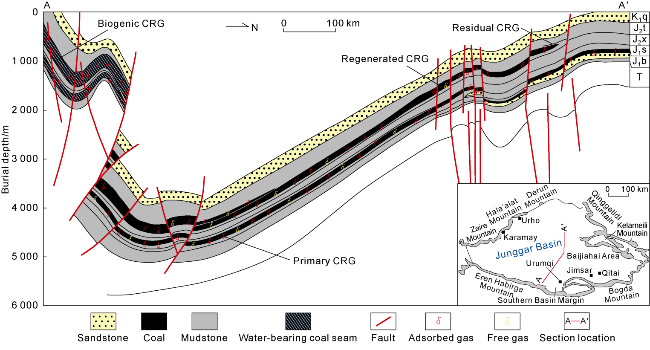
Fig. 2. Distribution of coal-rock gas types in the Jurassic coal-measure WPS, Junggar Basin (modified after Ref. [21]). T—Triassic; J1b—Lower Jurassic Badaowan Fm.; J1s—Lower Jurassic Sangonghe Fm.; J2x—Middle Jurassic Xishanyao Fm.; J2t—Middle Jurassic Toutunhe Fm.; K1q—Lower Cretaceous Qingshuihe Fm. |
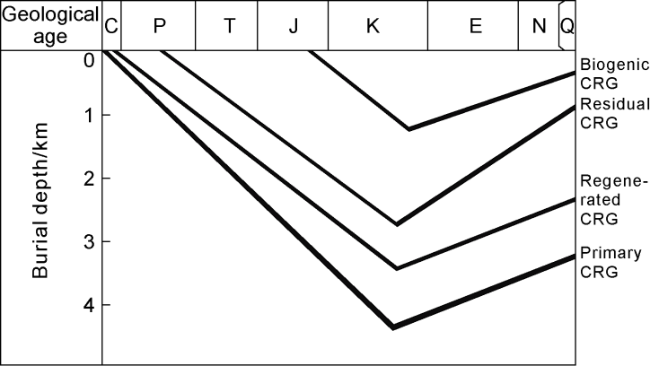
Fig. 3. Schematic diagram of coal-rock gas evolution. C—Carboniferous; P—Permian; T—Triassic; J—Jurassic; K—Cretaceous; E—Paleogene; N—Neogene; Q—Quarternary. |
Deep coal-rock gas includes primary and regenerated types. Primary coal-rock gas is formed under a self-generation and self-storage model. It is typically deeply buried and well preserved, meaning both its historical maximum depth and its present-day depth are large. It is generally occurs in the deeper parts of basins (deeper than 1 500-2 000 m), where preservation conditions are favorable and free gas content is high. Regenerated coal-rock gas has large historical and present-day depths, indicating good preservation conditions. However, regenerated coal-rock gas primarily originated from hydrocarbons generated by other deep source rocks and later migrated into the coal via pathways such as faults, since the coal rock was not gas-saturate. A typical example is the Jurassic coal-rock gas in the Baijiahai area of Junggar Basin. In some cases, regenerated coal-rock gas may also result from external gas recharge after the destruction of primary accumulations. Shallow coal-rock gas includes residual and biogenic types. Residual coal- rock gas, also thermogenic and formed via self-geneartion and self-storage, experienced deep-burial-gas generation- accumulation process during geological history. Disturbed by later tectonism, it was lifted to shallower strata or partially subsided to depth shallower than the maximum paleo-depth, resulting in destruction of the primary reservoir. The present-day depth is usually less than 1 500 m. This gives residual coal-rock gas the characteristic of deep burial and shallow preservation. The biogenic coal-rock gas can be subdivided into two subtypes. One is primary biogenic gas, which is microbial gas generated, accumulated and preserved in shallow coal rocks (less than 1 500 m) under an open system throughout its history. The other is secondary biogenic gas, formed when microbial activity generates gas within coal rocks whose primary thermogenic accumulations were destroyed, typically during uplift in an active groundwater environment. These gases inherit the original deep-burial-shallow-preservation characteristics of their host coal strata.
2.2. Geological characteristics of typical coal-rock gas
2.2.1. Primary coal-rock gas in the Daning-Jixian block, Ordos Basin
The Daning-Jixian block is located on the southern end of the Jinxi Fold Belt in the southeastern part of the Yishan Slope, eastern Ordos Basin. The No. 8 coal seam of the Benxi Formation is 2.0-9.8 m thick and buried at depth of 2 000-2 400 m. It features a simple, gentle structural setting, strong roof/floor sealing capacity, weak hydrodynamic environment, and favorable preservation conditions, making it a primary target for coal-rock gas exploration and development (Fig. 4). The coal is primarily high-rank, with vitrinite reflectance (Ro) ranging from 2.14% to 3.17% (avg. 2.88%), vitrinite content of 77.9%-90.0%, and well-developed cleats. The reservoir has porosity of 2%-8% and permeability of (0.01-10.00)×10-3 μm2. In the late Early Cretaceous, the No. 8 coal seam reached a maximum burial depth of about 4 000 m (Fig. 5) and underwent the highest level of thermal evolution, allowing for abundant gas generation. As burial deepened, porosity decreased, and the pore system was dominated by micropores. Under high temperature and high pressure, the coal’s adsorption capacity became weak, while free gas was dominant. Afterwards, the overall strata uplift led to a decrease in reservoir temperature and pressure, triggering the redistribution and re-equilibration of adsorbed and free gases. Adsorbed gas remained mainly on the surfaces of coal pores, and free gas was compressed into microfractures and pores, with a proportion of 10.5%-30.3% [27]. The coal seam water, primarily derived from closed formation water, has a salinity greater than 70 000 mg/L, and is of the CaCl2 type, indicating good gas preservation. This occurrence feature directly affects gas production, which is governed by a “depressurization production” mechanism. After large-scale fracturing, gas breakthrough occurs immediately upon well opening. In the early stage, free gas is rapidly produced with a fast decline, while in the middle to late stages, adsorbed and free gases are co-produced with a slower decline.
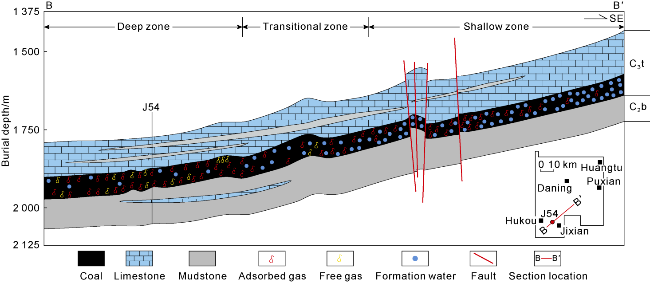
Fig. 4. Distribution pattern of coal-rock gas in the Daning-Jixian block, Ordos Basin. C2b—Middle Carboniferous Benxi Fm.; C3t—Upper Carboniferous Taiyuan Fm. |
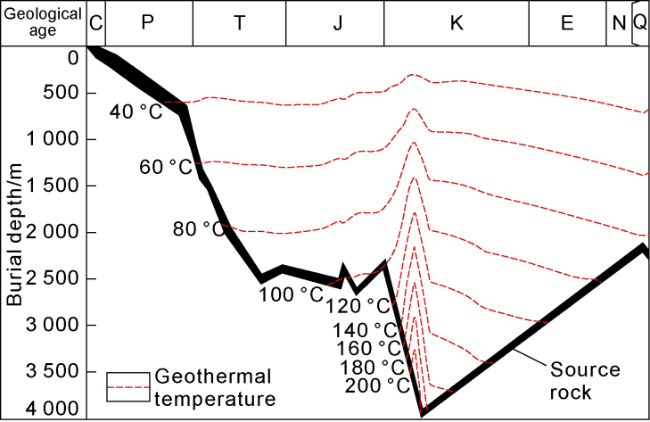
Fig. 5. Burial and thermal evolution history of the No. 8 coal seam in Well J54 of Daning-Jixian block, Ordos Basin. |
2.2.2. Regenerated coal-rock gas in the Baijiahai area, Junggar Basin
The Baijiahai Uplift is located in the southeastern part of the Central Depression of the Junggar Basin. It generally presents as a southwest-dipping monocline structure. The main coal-bearing strata are the Lower Jurassic Badaowan Formation and the Middle Jurassic Xishanyao Formation. After deposition, the coal seams experienced a short-term uplift in the Late Cretaceous, followed by continuous burial (Fig. 6). The Xishanyao Formation coal seams are buried at depths of 1 600-5 100 m, with thicknesses of 5-20 m (avg. 9.5 m). The Badaowan Formation coal seams are buried at depths of 2 000-5 500 m, with thicknesses of 5-20 m (avg. 12.5 m). For both formations, Ro values range from 0.47% to 1.05%, indicating low- to medium-rank coals. The coals are vitrinite-dominated (57.2%-67.1%), with porosity of 5%-12% and permeability of (0.01-20.00)×10-3 μm2. Based on empirical formulas for methane carbon isotope composition in the Xishanyao coal reservoirs, the thermal maturity (Ro) of gas samples from wells CAI61H and CT1H is 1.59% and 2.11%, respectively, indicating high to over-mature coal-rock gas [28]. This suggests that the gas in the Xishanyao coal seams originated from deep Carboniferous-Permian mature source rocks and was subsequently stored in the coal rocks after migration via faults and unconformities, and accumulated in favorable structural highs. Ultimately, a large-scale regenerated coal-rock gas reservoir formed through the complementary accumulation of internal and external gases, transported via faults and orderly distributed/enriched in pores/fractures (Fig. 7). These reservoirs feature high proportions of free gas and high adsorption saturation. Test results from well Baijia-8 indicate an average adsorption gas saturation of 216.93% [29]. Most vertical wells produce gas quickly without drainage and depressurization. They demonstrated high initial gas production, with little or no water production. Wells can flow naturally and maintain a relatively stable production period.
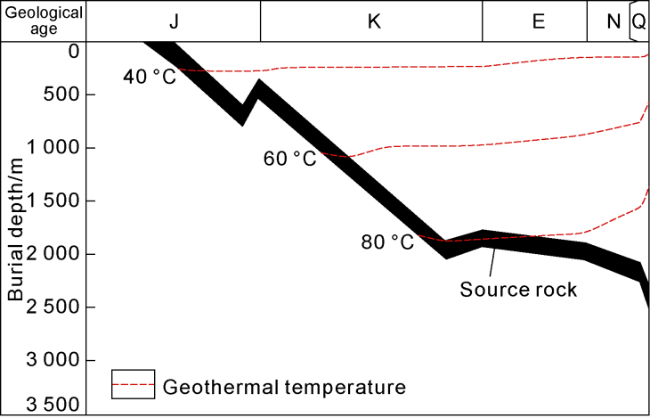
Fig. 6. Burial and thermal evolution history of coal rocks in the Xishanyao Formation in Well C16 of Baijiahai Uplift, Junggar Basin. |
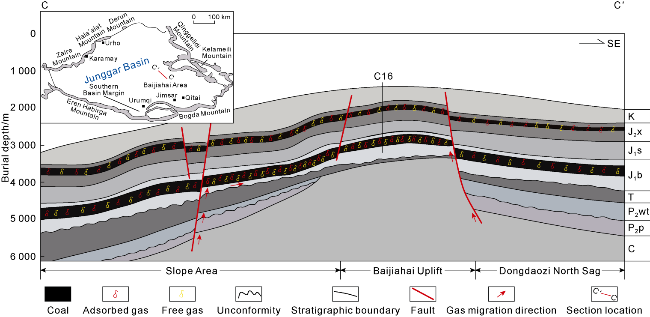
Fig. 7. Formation model of coal-rock gas in the Baijiahai Uplift, Junggar Basin (modified after Ref. [30]). K—Cretaceous; J2x—Middle Jurassic Xishanyao Fm.; J1s—Lower Jurassic Sangonghe Fm.; J1b—Lower Jurassic Badaowan Fm.; T—Triassic; P2wt—Middle Permian Wutonggou Fm.; P2p—Middle Permian Pingdiquan Fm.; C—Carboniferous. |
2.2.3. Residual coal-rock gas in the Qinshui Basin
The Qinshui Basin is located within the Lüliang-Taihang Mountain section of the North China Block. It is an intermontane fault-depression basin formed after differential uplift of fault blocks following the Late Paleozoic coal-forming stage in North China. Coal seams are concentrated in the Middle-Upper Carboniferous and Lower Permian, with a total of 15 coal seams from top to bottom. The main coal seams are the No. 3 coal seam of the Shanxi Formation and the No. 15 coal seam of the Taiyuan Formation (Fig. 8). The No. 3 coal seam has a thickness of 4.0-7.3 m, Ro of 2.41%-3.03%, vitrinite content of 74.4%- 77.9%, well-developed cleats, porosity of 2%-6%, and permeability of (0.01-10.00)×10-3 μm2. After burial, it experienced plutonic metamorphism at the end of Triassic and magmatic thermal metamorphism in the mid-Cretaceous, resulting in high-rank coalification (Fig. 9).
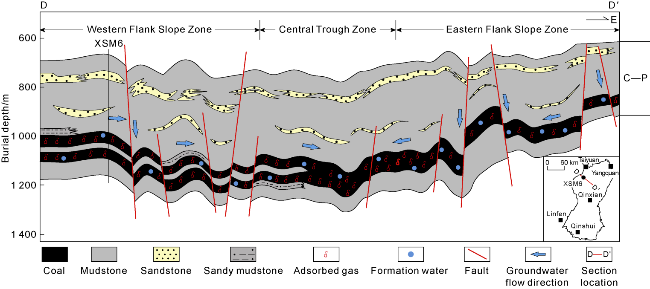
Fig. 8. Formation model of shallow coal-rock gas in the Qinshui Basin (modified after Ref. [31]). |
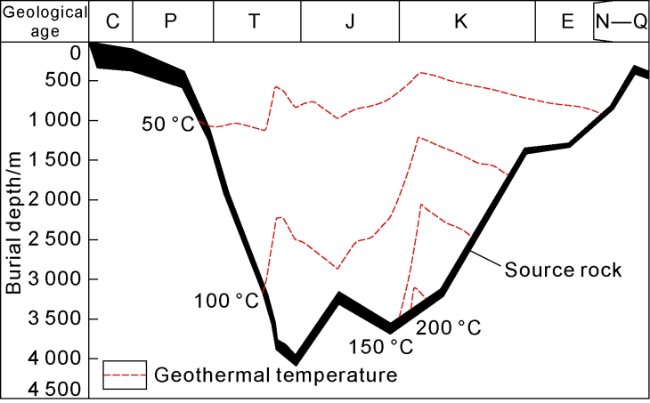
Fig. 9. Burial and thermal evolution history of the No. 3 coal seam, Shanxi Formation, Well XSM6, Gujiao block, Qinshui Basin. |
After magmatic intrusion ceased in the Late Cretaceous, the region was uplifted and eroded under the influence of Himalayan movement, accompanied by strong faulting. Pressure reduction and groundwater infiltration caused significant methane loss. Due to the strong adsorption capacity of coal, the damage to adsorbed gas reservoirs was limited, leaving a high adsorbed gas content in the coal rocks. However, free gas preservation was poor. The gas saturation of the No. 3 coal seam ranges from 40% to 99%. The coal seam water has a salinity of 1 264 mg/L to 5 716 mg/L, and is of the NaHCO3 type. Weak hydrodynamic flow has a negative effect on methane preservation in coal [31]. Therefore, development requires pressure reduction through drainage to establish stable desorbed gas production channels. Production-pressure drop is characterized by an initial drainage and depressurization stage, followed by desorption-driven gas flow.
2.2.4. Biogenic coal-rock gas in the Powder River Basin and Erlian Basin
The Powder River Basin in the United States is a coal-bearing basin located in the foreland of the Rocky Mountains. The main coal reservoirs are developed in the Paleocene Fort Union Formation and the Eocene Wasatch Formation. The basin was subject to weak compression in late stage, resulting in gently dipping folds and a few normal faults. Drilling depths range from 70 m to 740 m, and coal thicknesses are 24-46 m [32]. The coal rank is low, with Ro of 0.3%-0.4%, mainly lignite. Coal porosity is well developed (3%-15%), creating storage space for free gas, which accounts for 5%-15% of total gas. Permeability is high, at (10-100)×10-3 μm2, which is favorable for free gas storage and migration. Undisturbed hydrogeological conditions promote continuous biogenic gas generation (Fig. 10), forming the world's best-known biogenic coal-rock gas system.
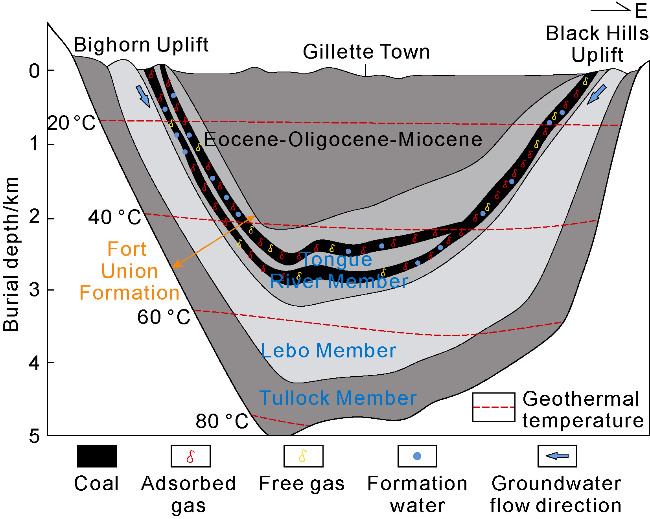
Fig. 10. Formation model of shallow coal-rock gas in the Paleogene Fort Union Formation, Powder River Basin (modified after Ref. [34]). |
The Jiergalangtu Sag in eastern Erlian Basin, China, is a typical biogenic coal-rock gas system. The main coal-bearing strata are the Lower Cretaceous Saihantala Formation, with total coal thicknesses of 60-220 m and Ro of 0.32%-0.48%. Lignite is dominant, comprising xyloid and detrital coals, with porosity of 15%-40% and permeability of (1-2)×10-3 μm2 [33]. The Saihantala Formation reached its maximum burial depth in the mid-late Early Cretaceous (Fig. 11), but experienced only weak coalification. From the middle Late Cretaceous to the Neogene, the strata underwent uplift. In the Neogene, influenced by the Himalayan movement, the strata began to subside. In particular, extensive infiltration of glacial meltwater during the Pleistocene facilitated large-scale microbial gas generation. The gas is mainly stored as free gas in well-developed pore spaces, accounting for 5%-20% of total gas, and accumulated in areas with good preservation conditions (Fig. 12). This type of coal-rock gas is characterized by early gas appearance during drainage, shorter time to stable production compared to high-rank coals, stable peak production, and slow decline of daily water production.
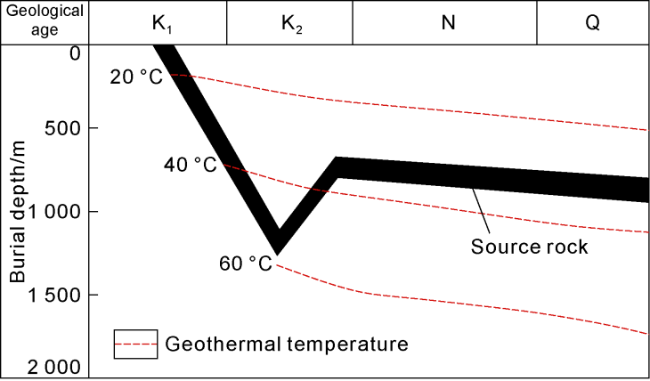
Fig. 11. Burial and thermal evolution history of coal rock in the Saihantala Formation, Well JM4, Jiergalangtu Sag, Erlian Basin. |
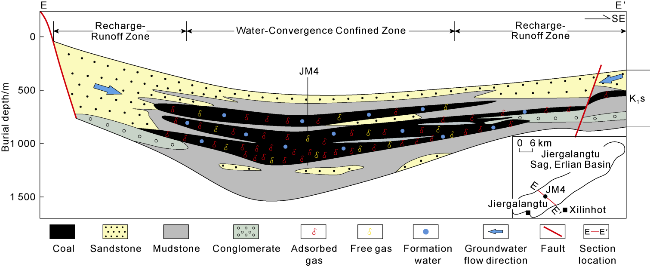


Fig. 12. Formation model of shallow coal-rock gas in the Jiergalangtu Sag, Erlian Basin. K1s—Lower Cretaceous Saihantala Fm. |
3. Distribution patterns of coal-rock gas
Depending on paleoclimates and paleogeographic environments, the primary coal-forming periods include the Carboniferous-Permian, Jurassic-Cretaceous, and Paleogene-Neogene, which gave rise to coal-measure strata that account for over 99% of the world’s coal resources [35], and the secondary coal-forming periods include the Triassic and Devonian, which are less widespread globally and occur only on a small scale. Coal seams formed during these periods experienced different evolutionary paths under subsequent tectonic influences. The same coal seam often highly evolved in the basin interior, but less evolved at the basin margin. Among coal seams of different geological periods, the Paleozoic coals generally exhibit a high degree of thermal evolution, while the Cenozoic and later coals are less thermally mature. Different types of coal-rock gas vary significantly in accumulation evolution processes, reservoir properties, gas occurrence states, and production behaviors. The distribution of the four types of shallow and deep coal-rock gas is controlled by coal-forming periods and subsequent tectonic evolution.
Primary coal-rock gas is typically derived from Paleozoic and Mesozoic coal seams which have experienced long-term deep burial, with the overall structural pattern largely unaffected by later tectonism, and favorable preservation conditions maintained. Such coal-rock gas is usually found in deep parts of basins, such as Carboniferous-Permian seams in the Ordos and Sichuan basins.
Regenerated coal-rock gas generally forms when coal seams are effectively connected to with deeper source rocks during later evolutionary stages, allowing the coal reservoirs to receive significant influx of external gases. These accumulations are usually found at basin margins where hydrocarbon conducting systems match well with coal-measure traps—conditions similar to those form conventional gas reservoirs—such as Baijiahai area in the Junggar Basin.
Residual coal-rock gas typically results from Paleozoic and Mesozoic coal seams that, after long-term burial, suffer tectonic destruction which degrades the preservation conditions, leading to the complete loss of free gas. These accumulations are generally found at large basin margins or in strongly deformed basins, such as the eastern margin of the Ordos Basin, the Bohai Bay Basin, and the Qinshui Basin. Residual coal-rock gas is transformed from primary coal-rock gas under the action of tectonic uplift which increases in both intensity and amplitude from the deep part of a basin to its slope and margin, corresponding to a continuously adjusting fluid dynamic field from a confined dynamic field in the deep, closed system of the basin center to a bound dynamic field in the shallow, open system of the basin margin. This transformation is a gradual process, and transitional zones of coal-rock gas types can exist in slope areas with moderate tectonic activity. These zones often exhibit complex fluid relationships, as exemplified by the simultaneous extraction of deep coal-rock gas and shallow coal-rock gas from production wells. Evident transitional zones have been discovered in the slope area along the eastern margin of the Ordos Basin.
Biogenic coal-rock gas typically forms in Cenozoic coal seams have remained shallow and have undergone prolonged biochemical interaction with shallow microbial communities. These accumulations are generally distributed in the shallow parts of basins or at basin margins, such as the southeastern margin of the Junggar Basin and the Jiergalangtu Sag in the Erlian Basin.
In summary, deep primary coal-rock gas is characterized by high formation pressure, high reservoir temperature, high gas content, high gas saturation, and a high proportion of free gas, making it the most favorable type for exploration and development.
4. Conclusions
Natural gas resources in the coal-measure whole petroleum system are divided into two types: conventional gas and unconventional gas, and can be further subdivided into six subtypes according to the source-reservoir configurations and reservoir lithology in coal-bearing basins. Conventional gas mainly accumulates outside the coal measures and includes clastic rock gas reservoirs and special rock gas reservoirs. Unconventional gas accumulates far from, near to, or within the source beds, and includes distal/proximal tight sandstone gas, inner-source tight sandstone gas, shale gas, and coal-rock gas. Coal-rock gas is further categorized by depth into deep coal-rock gas and shallow coal-rock gas.
This study compares the various reservoir types in coal-measure WPSs based on reservoir space types, reservoir self-sealing capacity, accumulation dynamics, and gas occurrence states. Based on the accumulation evolution processes observed in typical gas fields/reservoirs, coal-rock gas is further classified into four types: primary, residual, regenerated, and biogenic, which correspond to four accumulation models: internally sourced and deeply buried; internally/externally sourced, and deeply buried; internally sourced, deeply buried, and late transformed; and internally sourced, shallowly buried, and biologically formed.
The distribution of coal-rock gas is controlled by coal-forming periods and subsequent tectonic evolution. Primary coal-rock gas is mainly found in coal seams formed during the Paleozoic and Mesozoic, particularly in basin interiors. Regenerated coal-rock gas is typically distributed along basin margins where hydrocarbon conducting systems are well connected to coal-measure traps, and can develop in coal seams formed in any geological period. Residual coal-rock gas is derived from Paleozoic and Mesozoic coal seams and occurs at large basin margins or in strongly deformed basins. Biogenic coal-rock gas mainly occurs in Cenozoic seams, in shallow parts of basins or at basin margins.
Shallow coal-rock gas is primarily residual coal-rock gas derived from reworked primary coal-rock gas or biogenic gas of microbial origin, while deep coal-rock gas primarily consists of primary and regenerated coal-rock gas. In particular, primary coal-rock gas exhibits widespread distribution, high resource abundance, and significantly greater potential than shallow coal-rock gas, making it the most favorable type for exploration and development.
Most coal-bearing basins in China are polycycle superimposed basins, where diverse coal-measure source rocks and highly variable hydrocarbon generation, storage and accumulation processes in coal rocks lead to unique and complex coal-rock gas reservoirs. Thus, establishing a uniform and complete coal-rock gas classification scheme is extremely challenging. Moreover, China has only recently begun in deep coal-rock gas exploration and development. Currently, the coal-rock gas accumulation model and flow mechanism are still under intensive study, and the existing exploration and development operations are concentrated in the Ordos Basin. A lot of geological uncertainties remain to be resolved. This paper proposes a classification framework for natural gas in coal-measure whole petroleum systems, especially coal-rock gas, based on the phased results of research, exploration and development, with the aim of providing a reference for both academic and industrial sectors. Further efforts are needed to advance geological understanding and improve the exploitation of coal-rock gas.