

Introduction
Tight sandstone gas (tight gas in brief) is abundant and widely distributed, and it is an important component of unconventional gas [1]. Over 70 basins have been discovered or predicted globally, with a total tight gas resource volume of 210×1012 m3. The Asia-Pacific, North America, and Latin America regions account for over 60% of the global tight gas resources [2-3]. Chinese tight oil and gas industry started relatively late but has developed rapidly. China is currently the third largest producer of tight gas in the world, with large production in basins such as Ordos, Sichuan, Bohai Bay, Songliao, Tarim, and Junggar [4]. In 2022, the annual output of tight gas in China reached 579×108 m3 [5]. The Sichuan Basin is one of the major basins containing tight sandstone gas fields and the earliest discovery of tight gas in China [6]. As of April 2024, the Upper Triassic Xujiahe Formation in the Western Sichuan Depression had reported the total natural gas reserves of 1.1×10¹² m3, including the proven reserves of 3.0×10¹¹ m3, demonstrating an enormous tight gas resource potential.
The gas resources in the Xujiahe Formation of the Xinchang structural belt in the Western Sichuan Depression are relatively large [7-9]. Since the 1980s, rich oil and gas exploration and development results have been achieved from the second member of the Upper Triassic Xujiahe Formation (T3x2), making it an important target for exploration and development [10]. In 1986, Well B2 produced a high-yield industrial gas flow of 34×104 m3/d from T3x2, which declared the construction of Hexingchang Gas Field. In 2000, the first exploration well A32 obtained high gas production from T3x24 in the Xinchang area (the open gas flow was 151×104 m3/d). Then exploration wells A34, B1, A8, etc. are all successful with high production. However, following wells A9, A11, etc. produced water to varying degrees during well test, among which the water production from A9 was as high as 648 m3/d. After 2010, exploration and evaluation of gas reservoirs moved to eastern structuring highs and western structural lows. Well C1 drilled in the Xinsheng area saw a test gas production of 1.16×10⁴ m3/d and water production of 18.5 m3/d from T3x21 during well test. In recent years, in the T3x2 in the Xinchang structural belt, the proven natural gas reserves have been more than one hundred billion cubic meters, accounting for approximately 87% of the total proven reserves in the T3x2 across the Western Sichuan exploration area, and the single-well cumulative gas production is (54.44-85 343.88)×104 m3, making T3x2 a key exploration and development target for deep tight sandstone gas in the Sichuan Basin. However, the gas production from different wells is very different, indicating heterogenous gas accumulation in T3x2 in the Xinchang structural belt.
In response to the complex influencing factors on the differential enrichment of deep tight sandstone gas, researchers have conducted extensive studies on hydrocarbon generation intensity, tectonics, and reservoir heterogeneity [11-15]. Gas production from the Xinchang structural belt is controlled by the thickness of favorable reservoir lithofacies, micro-pore structures, and highly deviated structural fractures [16-17]. In addition, high-yield zones are clearly related to NS-trending faults [18-19]. The upper wall of the reverse fault is a favorable area for high- yield gas wells [20]. Heterogeneous reservoir and multiple episodes of tectonic movements jointly control the present complex tight gas distribution [21-23]. However, for a complex superimposed foreland basin like the Sichuan Basin, which has undergone multiple phases of tectonic evolution, has multiple types of reservoir diagenetic sequences, and has experienced multiple stages of fault and fracture development [24-25], it is difficult to solve such problems as strong heterogeneity, large difference in gas well productivity and producing difficulty by merely considering one or any two combination, namely tectonics, reservoirs, and faults and fractures. Taking T3x2 as a case, and based on seismic, logging, production and geochemical data, this study analyzes the key geological processes and factors influencing the formation and evolution of oil and gas reservoirs at different stages from the perspectives of ancient structures, reservoir densification and late development of faults and fracture, with the intent to reveal the enrichment mechanism of tight gas reservoirs and provide support for the exploration and development of deep tight gas reservoirs.
1. Regional geology
The Sichuan Basin underwent multiple tectonic movements [26-27], and formed regional major faults and tectonic deformation, which divides the basin into six tectonic units: a Western Sichuan Depression Belt, a gentle Southwestern Sichuan Tectonic belt, a Central Sichuan Uplift Belt, a Northern Sichuan Depression Belt, a high steep Eastern Sichuan Tectonic Belt, and a low steep Southeastern Sichuan Tectonic Belt [28] (Fig. 1a). The Xinchang structural belt is a NE-trending positive structure located in the central segment of the Western Sichuan Depression. It was developed under the intense uplifting and large-scale thrusting of the Longmen Mountain and the Micang Mountain from the Middle-Late Jurassic to the Early Cretaceous [29]. There are several structural highs on the belt, including Xiaoquan, Xinchang, Hexingchang, Xinsheng and Fenggu (Fig. 1c). Peripheral orogenic movements at different directions and in different periods cause complex tectonic and sedimentary processes. From the bottom to the top, the sedimentary intervals in the Xinchang structural belt are divided into T3x1 (equivalent to the Ma'antang-Xiaotangzi formations), T3x2, T3x3, T3x4 and T3x5 (Fig. 1b). The dark mud shale of marine-continental transitional facies and lacustrine facies developed within T3x1 and T3x2 has a considerable hydrocarbon generation potential and serves as the primary source rock for the gas in T3x2 [30]. T3x2, as the primary target layer of this study, was deposited in a delta front environment. It is subdivided into eight sand groups (T3x21 to T3x28), dominated by tight sandstone characterized by low to extremely low porosity and permeability. Complex diagenetic process caused the reservoir tight and strongly heterogenous. The cap rock of the third member of the Xujiahe Formation (T3x3) is very thick, and exhibits high breakthrough pressure and stable distribution, providing favorable conditions for the preservation of natural gas. The gas reservoir of T3x2 is a typical tight sandstone gas reservoir, generally deeper than 4 000 m, with matrix permeability less than 0.1×10⁻³ μm2, and an average measured pressure coefficient of 1.7. Multiple stages of structural superimposition and transformation caused by Indosinian and Himalayan movements created a complex fault and fracture system, and together with multiple stages of gas charging and redistribution, finally the gas reservoir became deep, tight and over-pressured [31].
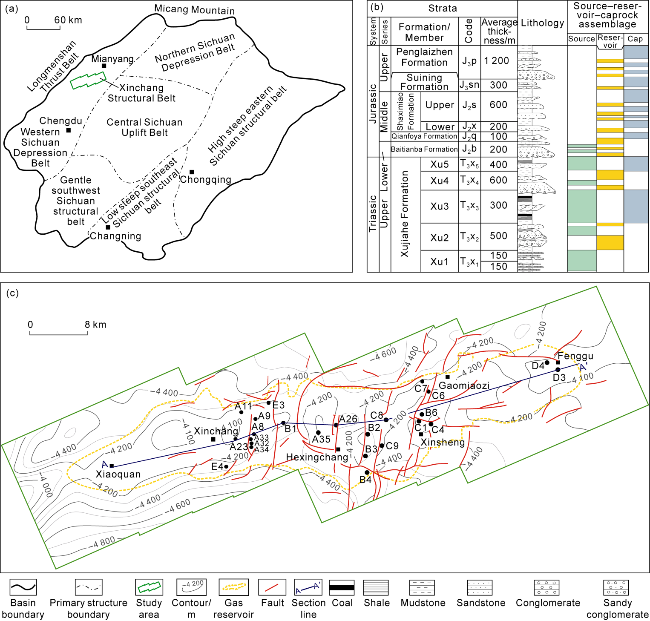
Fig. 1. Location of the Xinchang structural belt (a), comprehensive stratigraphic column (b), and top structure of T3x2 (c) of the Xinchang structural belt in the Sichuan Basin (modified from Reference [32]). |
2. Control of ancient structures on traps and early gas reservoirs
Since the Late Triassic, the Western Sichuan Depression has experienced multiple tectonic stress events such as the Indosinian, Yanshanian and Himalayan movements [32-33], and subjected to compressive stresses in three directions: southeast-northwest stress caused by the Yangtze Plate, north-south stress induced by the Qinling Orogenic Belt, and east-west stress related to the Qinghai-Tibet Plateau [34]. The Xinchang structural belt that is located in the middle of the transitional zone of stress transmission [35] suffered from complex formation and evolution.
At the early Indosinian Movement, the tectonic stress changed, making early normal faults reverse on a compressive environment. The Leikoupo Formation and the strata below were uplifted and eroded as a whole [36]. The morphology of the eroded surface controlled the distribution and thickness of T3x1 and T3x2 sediments. From the middle to the late Indosinian, thrust nappes were developed on the Longmen Mountain, making obvious folds in the middle to late deposits of T3x3. Local structures such as Fenggu and Xinsheng began to form, and initial traps appeared in the Xichang structural belt. At the late Indosinian, under strong compression from north, the Xichang structural belt still maintained a monoclinal structure high in the east and low in the west.
At the early Yanshanian Movement, the Qinling tectonic belt strongly thrust southward, and the deformation of the Xinchang tectonic belt was further intensified, and presented a nearly east-west structural shape, forming early Jurassic faults. To the early stage of the Late Jurassic, ancient structural traps were basically shaped, and local highs gradually emerged with early oil and gas charging. By the end of the Late Jurassic, the ancient structural traps were further developed (Fig. 2a), and the local highs in the western Xinchang area were more pronounced. With the expansion of the traps, hydrocarbon enriched in localized migration conduits under the influence of faults in Late Jurassic to Early Cretaceous. In contrast, in the eastern Heixingchang area, the overall structural relief was large, and fewer faults were developed, so only local oil and gas reservoirs accumulated with low abundance. By the late Yanshanian, the Sichuan Basin further uplifted, and the Jurassic strata suffered erosion. Then influenced by the Himalayan movement, structural deformation was more intense. The apatite fission track (AFT) age also indicates that rapid uplift events widely tool place after the end of the Late Cretaceous, but the resulting structural deformation was moderate compared with the Longmenshan thrust belt. The events only caused local faults and fractures in the Xinchang tectonic belt, but no extensive destruction to oil and gas reservoirs or altering the distribution of early gas accumulation [34,37 -38]. With late tectonic evolution and reconstruction, the western Xinchang area continued to uplift, and the structural highs migrated from east to west, forming the current structural morphology (Fig. 2b). After multiple tectonic events, anticlinal traps and faulted anticlinal traps were developed in the Xinchang, Heixingchang, Fenggu and other areas [38].
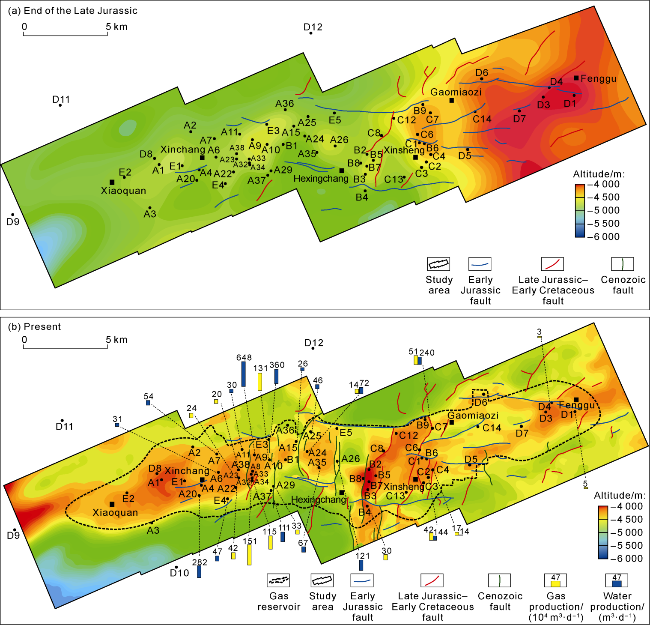
Fig. 2. Overlap of favorable structures with tested production from T3x2 in the Xinchang Structural Belt, Sichuan Basin. |
Based on previous studies on hydrocarbon source rocks and gas source comparison, the natural gas in T3x2 in the Xinchang structural belt is of coal-type, oil-type and mixed origin [19,30,39], mainly sourced from T3x1 (corresponding to the Xiaotangzi Formation) and the hydrocarbon source rocks in T3x2. The homogenous temperature of the inclusions in T3x2 ranges from 90 °C to 175 °C, with the majority being 135 °C to 150 °C. Considering the generation and expulsion history, burial history and thermal history simulated by single well data, the source rocks began to generate hydrocarbon from the early to the middle Yanshanian (Fig. 3a), and oil and gas began to charge with the development of authigenic illite, making a large number of hydrocarbon-associated brine inclusions widely distributed. Active early crude oil and gas with low to medium maturity (Ro of 0.5%-1.0%) resulted in liquid hydrocarbon inclusions (Fig. 3b) which are brownish yellow and dark brown. However, less effective hydrocarbon expulsion caused some crude oil left in source rocks. When the source rocks became medium to highly mature (Ro of 1.0%-2.0%) at the late Yanshanian, kerogen was extensively degraded into gas (at over 80 °C), and some crude oil left in the source rocks cracked into gas (at over 160 °C) [40]. Under a microscope, asphalt as a kind of cracking product is observable (Fig. 3c). During the Himalayan period, the source rocks reached over maturity (Ro>2.0%), but the strata were uplifted, and the temperature decreased, resulting in limited hydrocarbon generation. Fortunately, at the beginning of uplifting, the temperature was higher than 160 °C, so the crude oil left in the source rocks cracked into gas (Fig. 3d). With further uplift and erosion, a small amount of adsorbed gas in the coal-bearing source rocks desorbed, together with the gas from kerogen degradation and the gas cracked by crude oil migrated through the late transport system and accumulated into gas reservoirs [41]. According to pressure evolution and simulated capture pressure of hydrocarbon inclusions (34.2-53.2 MPa and 86.3-89.3 MPa, respectively) [19], hydrocarbon inclusions were almost formed during the Jurassic and from the Late Cretaceous to the Paleogene. Based on the comprehensive judgment, early oil and gas charging into the study area was from the early-middle Yanshanian period. After the Himalayan period when the gas reservoirs were reconstructed, the gas abundance became large and the gas became highly mature, so it’s said the Himalayan period was the main period for gas reservoir development. The oil and gas accumulating in the structural highs are low to medium mature. The migration of the structural highs is responsible for the mismatch between the present structure and the gas reservoir range. In general, the ancient structures controlled the traps and early oil and gas reservoirs.

Fig. 3. Evolution of tight gas reservoirs, hydrocarbon inclusions and asphalt photographs of T3x2 in the Xinchang structural belt, Sichuan Basin (T—Triassic; J1—Early Jurassic; J2—Middle Jurassic; J3—Late Jurassic; K—Cretaceous; E—Paleogene; N—Neogene; Q—Quaternary). (a) The burial history of tight T3x2 gas reservoir in the Xinchang area; (b) brownish-yellow and dark brown liquid hydrocarbon inclusions, black asphalt, Well A5, 5 102.6 m, cross-polarized light; (c) black asphalt, Well E4, 5 053.3 m, single polarized light; (d) gray gas and liquid hydrocarbon inclusions, Well B3, 4562.7 m, single polarized light. |
3. The influence of reservoir densification on the scale of oil and gas charging
The T3x2 in the Xinchang structural belt is a braided- river delta sedimentary system developed in a marine- terrestrial transitional environment, and sourced from the northern section of the Longmen Mountain and the Micang Mountain [42]. It has undergone multiple tectonic movements, frequent lateral migration of river channels, and vertical superimposition and later merge of sand bodies. The T3x2 reservoir in the study area is deeply buried after complex geological and diverse diagenetic processes. Early compaction and cementation led to a rapid decrease in porosity. Dissolution in the Late Triassic and Early Jurassic contributed more to porosity increase, but the reservoir became tight in the Late Jurassic [43], eventually resulting in extremely low porosity and permeability.
The time of densification and the loss of primary porosity vary for the sandstone reservoirs of different grain sizes. Take the samples of medium-grained lithic sandstone at 4 441 m and fine-grained lithic sandstone at 4 922.91 m from Well D4 as examples. The primary porosity of the medium-grained lithic sandstone decreased more slowly, and the porosity reached 10% at the end of the Late Jurassic to the Early Cretaceous, indicating later compaction. At the early diagenetic stage, porosity reduction is primarily driven by compaction. At the end of the middle diagenetic stage, fine-grained reservoirs became compact first. To the late diagenetic stage, carbonate minerals with high solubility such as calcite and dolomite were dissolved, and medium- to coarse-grained feldspar-rich sandstones were more significantly affected by late dissolution. As a result, the coarse-grained sandstone has higher primary porosity and less porosity loss, so that the present porosity ranges from 4% to 6%. The present porosity of the medium-grained sandstone is 4.21%, and that of the fine-grained sandstone is 3.11%.
The time of densification and the key factors on densification also vary for different types of sandstone reservoirs. According to mineral contents and lithology, the reservoirs are classified into quartz-rich sandstone (with average matrix porosity of 4.55% and average matrix permeability of 0.036 7×10⁻³ μm2), feldspar-rich sandstone (with average matrix porosity of 3.31% and average matrix permeability of 0.037 8×10⁻³ μm2), and lithic-rich sandstone (with average matrix porosity of 2.90% and average matrix permeability of 0.031 8×10⁻³ μm2) (Fig. 4). The quartz-rich sandstone became tight at the end of the Late Jurassic, and siliceous cementation is the key factor on reservoir densification. The feldspar-rich sandstone became tight from the end of the Late Jurassic to the Early Cretaceous, and carbonate and siliceous cementation is the key factor. The lithic-rich sandstone has a relatively high proportion of lithic fragments (higher than 50%), and the composition is complex. Fine-grained sandstone and argillaceous lithic fragments are common in the study area, and they are prone to compaction and blockage, so the primary porosity is the lowest. Early chlorite lining inhibited cementation and delayed pore reduction. The reservoir became tight during the Middle Cretaceous (Fig. 5).
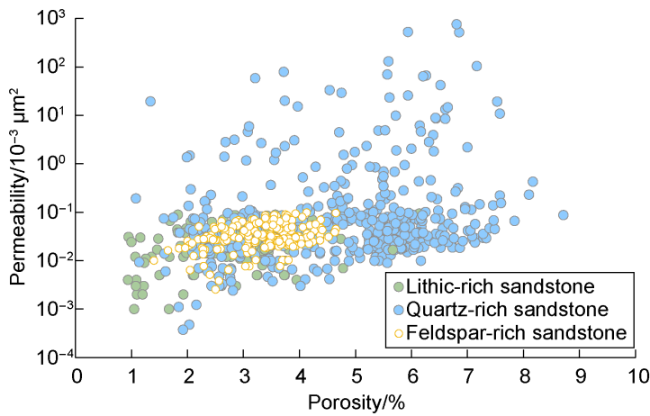
Fig. 4. The porosity and permeability plot of T3x2 reservoirs in the Xinchang Structural Belt. |
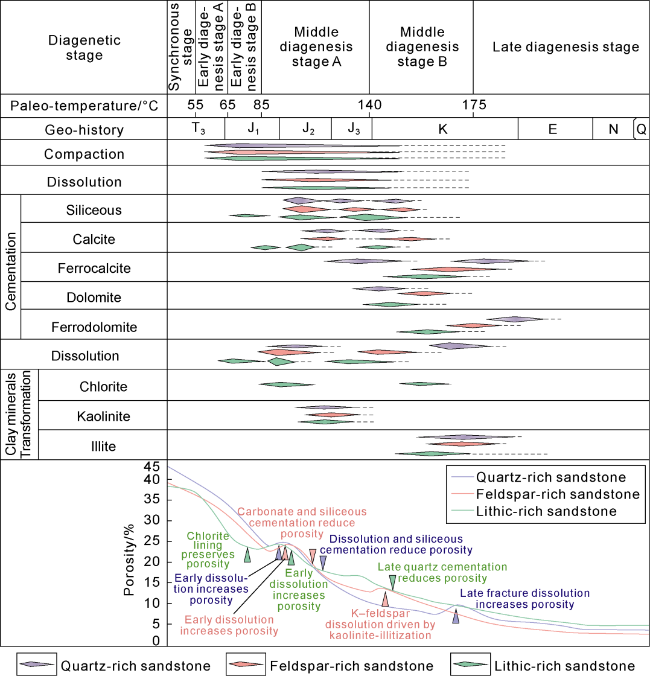
Fig. 5. Diagenetic and pore evolution processes of T3x2 in the Xinchang Structural Belt. |
After restoring the porosity evolution history of T3x2 in key wells in different areas such as Xinchang, Gaomiao and Fenggu, it’s estimated that reservoir densification took place at 4 500 m to 4 800 m. And considering the burial history, the reservoir densification might occur from the Late Jurassic to the Early Cretaceous, a bit later than early oil and gas charging. The coarse sandstone lost less primary porosity. The densification of quartz-rich sandstone, feldspar-rich sandstone and lithic-rich sandstone is late in turn. The difference in densification results in reservoir property variations and enhances reservoir heterogeneity. From the early to the middle Yanshanian, crude oil and low-maturity natural gas migrated into the sandstone reservoirs that had not yet been densified. At the late Yanshanian, kerogen was degraded into gas and some crude oil cracking into gas when the reservoirs had already been densified, so it’s difficult for the gas to migrate. Mature oil and gas mainly migrated along faults, and local weakly densified or highly permeable reservoirs were conducive to gas injection and enrichment. From top to bottom, T3x22 and T3x24 sand groups are thick. The T3x22 sand group has a high content of feldspar and quartz and a low content of lithic, while the T3x24 sand group has a relatively large proportion of medium to coarse grains. Gas and gas-bearing layers are relatively concentrated. However, T3x24-6 sand group has a low content of feldspar and quartz and a high content of lithic, and the cumulative thickness of gas-water coexisting layers is relatively large (Fig. 6). The difference in reservoir densification within the same sand group leads to intra-layer heterogeneity. Local high-porosity and high-permeability reservoir “sweet spots” are conducive to oil and gas enrichment, and reservoir densification controls the small-scale injection of oil and gas.
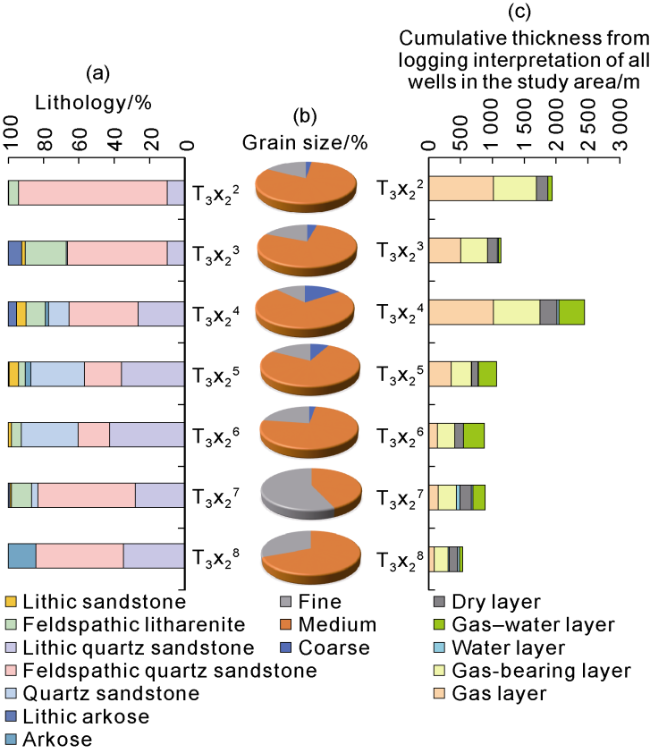
Fig. 6. Lithology (a), grain size (b), and cumulative thickness (c) from well logging interpretation of T3x2 reservoir in the Xichang structural belt. |
4. Faults and fractures improve reservoir quality and control the enrichment and high productivity of natural gas
4.1. Late-stage small to medium-scale faults control reservoir formation and hydrocarbon accumulation
Faults in T3x2 of the Xinchang Structural Zone in the Western Sichuan Depression are widely distributed. Most of them are third, fourth- and fifth-order faults are dominant in the study area [23]. The third-order faults are mostly east-west trending ones controlling anticlines, formed under the influence of near north-south Indosinian compression. They are relatively old, and mostly distributed at the edge of the structural belt (Fig. 2). The displacement ranges from 10 m to 380 m and the maximum lateral extension is 16 km. They are so large that cut through the Upper Jurassic Penglaizhen Formation. The fourth-order faults are the most important in the study area. They cut through the major structures. The faults formed with the Yanshanian Movement are almost northeast and north-northeast, and the late are mainly north-south. The displacement ranges from 5 m to 145 m. They communicate with T3x1 hydrocarbon source rocks. The good connectivity makes them play a major role in controlling and adjusting gas reservoirs. High-yield gas wells are concentrated near the fourth-order faults. The fifth-order faults are almost associated or interlayer faults. They are relatively small, the lateral extension is generally less than 5 km and the displacement is small, too. Gas-to-water ratio (GWR) is an indicator for gas enrichment. The GWR is higher within 2 km to 4 km from the third-order faults. The nearer to the fourth-/fifth-order faults, the higher the gas enrichment, and the lower the GWR is (Fig. 7). According to the rate of fault activity, the east-west faults were active during the Middle Jurassic, when the hydrocarbon source rocks were immature and no oil and gas charging happened. The relationship between faults and hydrocarbon content was not obvious. The northeast faults were active from the Late Jurassic to the Early Cretaceous when early oil and gas charging started, and gas from kerogen degradation with the early Yanshanian Movement efficiently transported through the faults. The north-south faults were formed relatively late and subjected to east-west compressive stress during the Himalayan period. The areas surrounding the faults were highly fractured, which improved the reservoirs. A large amount of natural gas was charged into the reservoirs through late north-south faults and fractures, so gas production nearby is high. The late faults are of great significance for the adjustment of gas reservoirs and control the high production of natural gas.
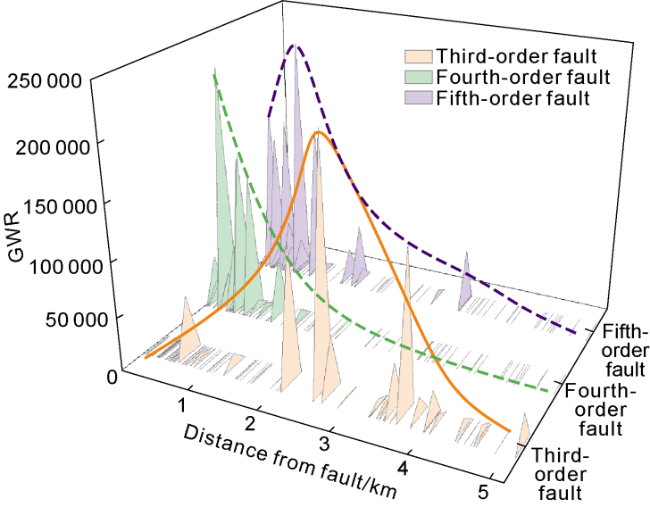
Fig. 7. Relationship between the distance from T3x2 gas layers to faults and GWR in the Xinchang structural belt. |
4.2. High-angle fracture zones adjacent to faults are conducive to natural gas enrichment and high production
The multiple episodes of thrusting and nappe emplacement in the Longmen Mountatin Fault Zone (Indosinian, Yanshanian and Himalayan Movement) have played a decisive role in shaping the tectonic framework of the western Sichuan foreland basin [44]. The Xinchang structural belt is located in the transitional zone between the Longmen Mountain frontal thrust belt and the western Sichuan Depression, and it is right situated in the stress transitional zone of the Longmen Mountain front. The development stages of fractures were highly synchronous with the regional tectonic activities [45]. Structural fractures are dominant, and diagenetic fractures are local. The current fractures are the superposition of fractures developed in different tectonic stress fields at different stages. Stress, fault activity and distribution control the development and distribution of the fractures.
According to core observation and imaging logging, fractures in T3x2 have three types: low-dip fractures, oblique fractures, and high-dip fractures [16,46]. Over 87% of the fractures are low-dip, followed by oblique ones, and high-dip ones are the least. The high-dip fractures are structural shear ones formed under thrusting and squeezing [47], mainly distributed in T3x21, T3x22 and T3x24 [48]. Most of them are not filled, excluding some filled with calcite, quartz, etc. Among the oblique fractures, the filled account for a large proportion. The low-dip fractures are found in the upper, middle and lower sections of T3x2. Within these low- angle fractures, flaky fractures show concentrated development locally [49], predominantly as unfilled fractures.
Imaging logging data show that the Xinchang structural belt has developed multiple sets of fractures in east-west, northeast-southwest, northwest-southeast and nearly north-south directions (Fig. 8), and the fracture development is related to the distance from faults. According to previous structures, regional stress fields and fracture development, the formation of fractures is related to faults and mainly affected by the superimposed action of Indosinian, Yanshanian and Himalayan movements and other tectonic movements. (1) During the Indosinian period, the stress was mainly in north-south direction, so early east-west Indosinian faults and associated compressive fractures were developed. They are mostly near east-west shear fractures, low-dip fractures, oblique fractures, and high-dip fractures. They were formed simultaneously with the north-east Indosinian fractures in the Jiulong Mountain structural belt (the homogenous temperature of inclusions is 84 °C to 120 °C) [50] and the north-south fractures in the southwestern Sichuan region [51]. The carbon isotopic compositions of the calcite filling in the Indosinian fractures are relatively light (-10‰ to -8‰), while the oxygen isotopic compositions are relatively heavy (-12‰ to -10‰), possibly due to the modification by fresh water and organic carbon. (2) At the early Yanshanian, under the influence of southward thrusting of the Qinling tectonic belt, the compressive stress was nearly north-south. As the Xinchang tectonic belt began to take shape, NE-trending faults and NE-SW-trending high-dip fractures were formed. At the late Yanshanian, the stress shifted toward north, and under NW-SE compression, NNE-trending faults and high-dip fractures were formed, which correspond to the Yanshanian quartz-filled fractures (the homogenous temperature of inclusions is 72-137 °C) in the Jiulong Mountain structure and the NE-trending fractures in the southwestern Sichuan. By then, the ancient structural traps had been shaped, and the stress was concentrated in the folds. The jointing action of faults and folds was more conducive to the development of fractures. The carbon isotopic compositions are -3‰ to -1‰, and the oxygen isotopic compositions are -15‰ to -13‰. (3) Since the Himalayan period, the tectonic activities at the front of the Longmen Mountain have been intense, and the stress field is complex. The overall stress is dominated by east-west compression, resulting in north-south faults and derived nearly south-north fractures. These correspond to the late Himalayan north-northeast strike-slip fault activities in the Longmen Mountain front fault zone and the fractures in the Jiulong Mountain structure during the middle and late Himalayan periods. The degree of fragmentation around the faults is significant, and the fracture types are diverse, mostly partially filled or empty, which is conducive to the efficient migration of oil and gas. The carbon isotopic compositions of the fillings are -2‰ to 2‰, and the oxygen isotopic compositions are -18‰ to -15‰. The more developed the structural fractures are, the higher the open-flow potential is (Fig. 9). The development of fractures affects the enrichment of natural gas.
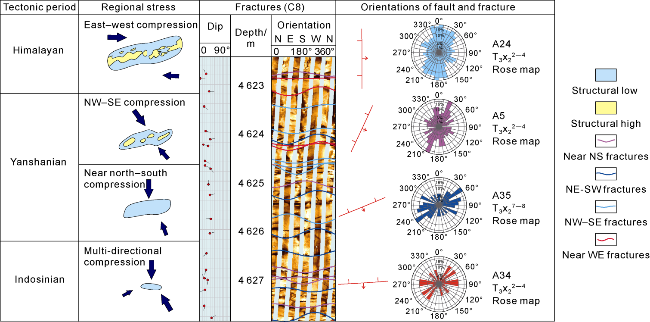
Fig. 8. Stress regime and fracture characteristics of T3x2 in the Xinchang structural belt. |
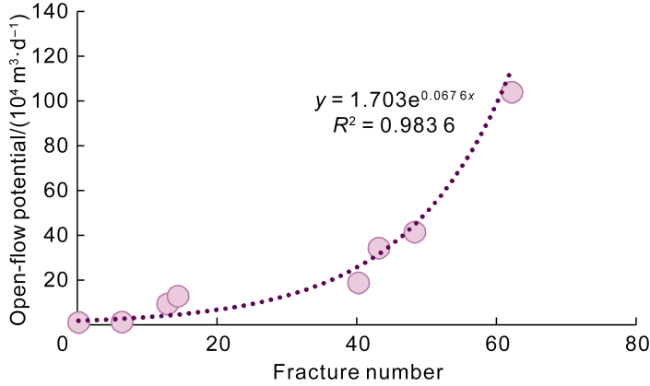
Fig. 9. Structural fracture number vs. open-flow potential of T3x2 in the Xinchang Structural Belt. |
4.3. Fault-fold-fracture-pore well-coupled fault-fracture bodies are favorable exploration targets
Fractures are concentrated near faults in the Xinchang and Hexingchang areas, and the gas production tested in adjacent wells is high, such as Well A8 and Well B4. According to the configuration of faults, folds and fractures, three structural types have been found in the Xinchang structural belt: fault-fold-fracture structure (encountered in Well C1, Well B3, Well B4, Well A8, Well A26, Well A34), fault-fracture structure (in Well A9), and fold- fracture structure (in Well B1, Well A32, Well A33). Take Well A8 as an example. The well located at a structural high drilled in a fault-fold-fracture structure controlled by faults, folds and fractures together. The tested gas production is as high as 100×104 m3/d, and the cumulative gas production is 85 343.88×10⁴ m3. It is a typical high-yield gas well.
Based on fault orientation and order, fracture type and development, and structural position, the fault-fracture bodies are classified into four types (Table 1). High-yield gas wells are predominantly distributed in Type I and Type II fault-fracture zones with late NS forth-order faults and associated fractures which reconstructed the gas reservoirs, and is helpful to enhancing natural gas production.
Table 1. Types and evaluation of fault-fracture zones |
| Fault- fracture zone | Fault orientation | Fault order | Fracture type | Fracture development | Fracture density/ (fractures·m-1) | Production capacity | Structural position | Gas-bearing property | |
|---|---|---|---|---|---|---|---|---|---|
| Type I | NS | Fourth-/ fifth-order | Late tectonic fracture | Good | 0.68 | High | Effective well | High | Good |
| Type II | NS | Fourth-/ fifth-order | Late tectonic fracture | Good | 0.21 | Middle | Effective well | High | Good- Medium |
| Type III | Late tectonic fracture | Very good | 0.18 | Low | Less effective well | Medium- high | Medium | ||
| Type IV | WE | Third-order | Early tectonic fracture | Very good | 0.08 | Low | Less effective well | Medium- high | Medium- low |
Based on the statistics of fractures of 1 024 core samples and well logging interpretation from 29 wells in the Xinchang area, the reservoirs are classified into five classes: ultra-tight, porous, fractured-porous, porous- fractured and fractured reservoirs (Fig. 10). The bottom limits of effective reservoirs are porosity of 3% and permeability of 0.03×10⁻³ μm2 [48]. The ultra-tight (Class V) reservoir has porosity and permeability below the bottom limits above, and few pores are visible under the microscope. The porous (Class IV) reservoirs have significant differences in pore structure. The pore size distribution is either concentrated in the range of 0.006 μm to 0.100 μm or distributed from 0.006 μm to 1.000 μm. Micro-pores can be observed in thin sections under the microscope. The pore network in the fractured-porous (Class III) reservoir has good connectivity, and micro-fractures can be observed under the microscope. The pore size distribution and pore structure in the porous-fractured (Class II) reservoir are similar to those of Class III, but the former’s permeability is higher than the latter, and micro-fractures are more developed under the microscope. The porosity of the fractured (Class I) reservoir is 5% to 12%, and its permeability is higher than 100×10-3 μm2. Under the microscope, the fractures are significantly wide, mainly structural fractures, and the network is dominated by fractures.
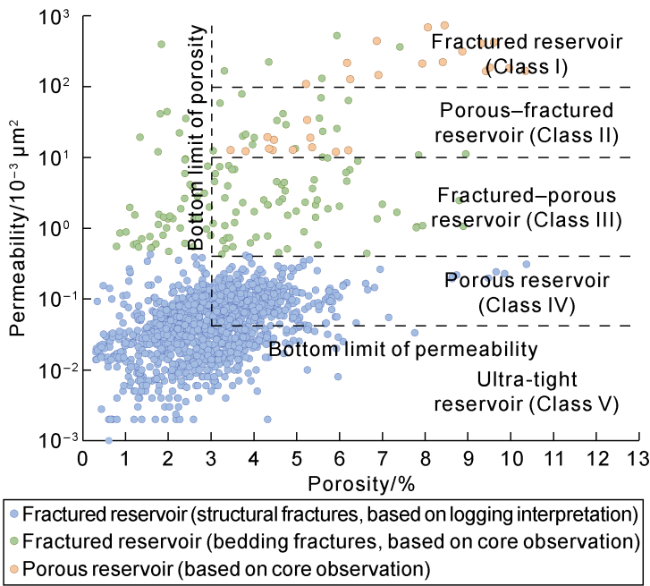
Fig. 10. Classification of T3x2 tight sandstone reservoirs in the Xinchang Structural Belt. |
Take Well C8 as an example (Fig. 11). The T3x21 sand group has Class I reservoir with greatly dipped fractures (mainly structural fractures) and good physical properties, and the gas layers are productive. In other sand groups, Class II reservoirs are poor gas layers and gas-water layers, and Classes III and IV reservoirs have more gas layers. Structural fractures are very helpful to improving reservoir permeability. Porous reservoirs have low permeability but wide porosity distribution. Pore size and structure are two factors affecting the performance of porous reservoirs. In summary, fractured (Class I) reservoirs have the best porosity and permeability and are better reservoirs in the study area, with productive gas layers and local water layers. Porous-fractured (Class II) and fractured-porous (Class III) reservoirs are the second best, with poor gas layers and gas-water layers. The pore structure of porous (Class IV) reservoirs determines the quality of the reservoirs.
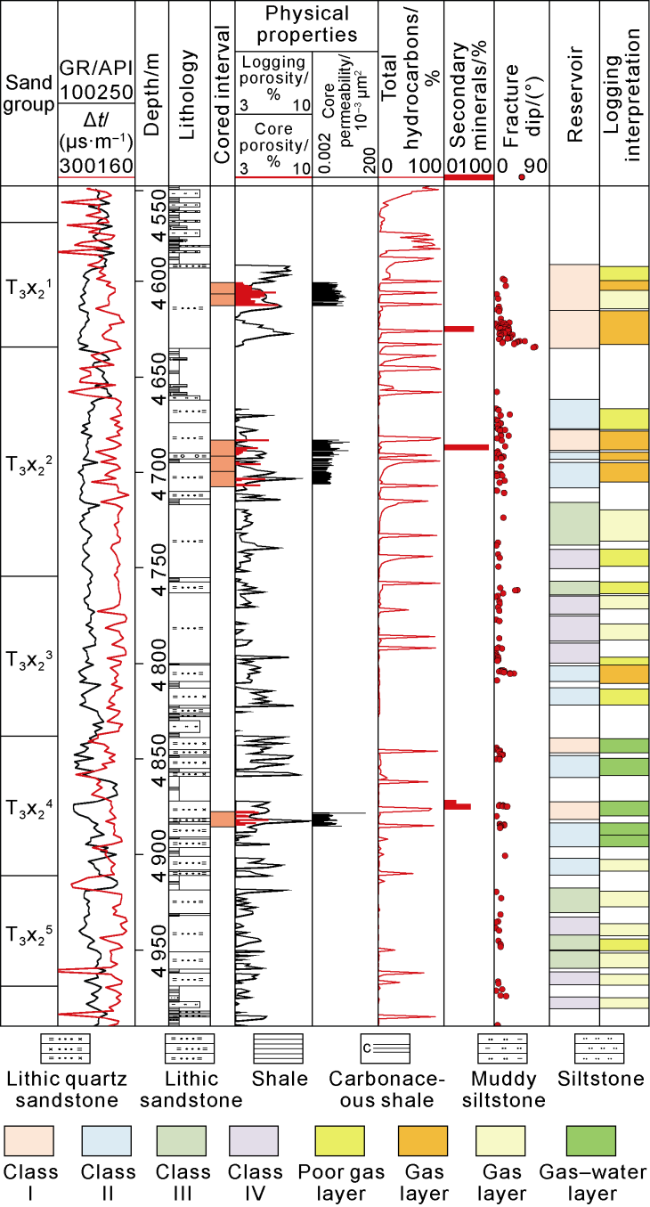
Fig. 11. Comprehensive columnar diagram of T3x2 in Well C8 in the Xinchang structural belt. GR—gamma ray; Δt—acoustic interval transit time. |
5. Evolution and enrichment model of deep tight gas reservoirs
Based on the comprehensive analysis of reservoir tectonic evolution, diagenesis and densification, fault and fracture development, and hydrocarbon accumulation process, it is believed that the deep tight gas reservoir of T3x2 in the Xinfang structural belt has undergone three stages of tectonic evolution, three stages of fault and fracture development, and two stages of hydrocarbon accumulation (Fig. 12).
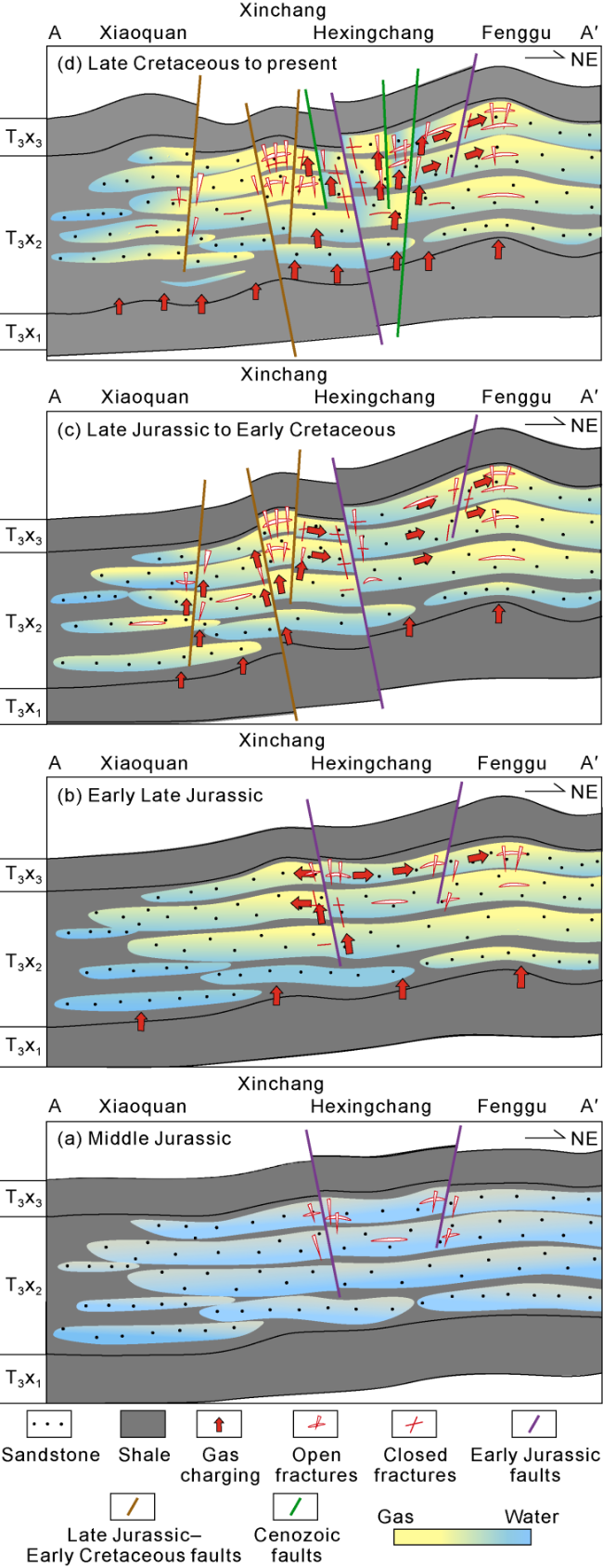


Fig. 12. Accumulation and enrichment model of T3x2 gas reservoirs in the Xinchang structural belt (see the section location in Fig. 1). |
In the middle stage of the Middle Jurassic, that is, the early Yanshanian period, the prototype of the Xinchang structural belt had already been shaped as a slope high in the east and low in the west, but the structural relief is low (Fig. 12a). In the early stage of the Late Jurassic, ancient structural traps began to take shape under the influence of multiple periods of stress, early WE faults and associated fractures were developed, too, establishing the early structural framework (Fig. 12b). At that time, the source rocks were low to medium mature, and the reservoirs had not been densified. The reservoirs were vertically superimposed and laterally connected, so early oil and gas migrated to the conventional reservoirs with high porosity and permeability, causing gas and water segregation. Washed by water and gas, early fractures and high-permeability sandstones were partially or entirely filled with stripped asphalts. Early oil and gas accumulated in high-porosity and high-permeability reservoirs at the highs of the ancient structures under buoyancy. These structural reservoirs predicted are consistent with measured T3x2 which are bearing with gas in all reservoirs.
From the late stage of the Late Jurassic to the middle stage of the Early Cretaceous, that is, from the middle to the late Yanshanian, the subsidence center of the depression moved towards the front of the Longmen Mountain. Under the influence of the regional stress field in nearly north-south direction, and NE-SW faults and folds, a large number of high-dip open fractures were formed (Fig. 12c). At that time, the source rocks became mature and entered a peak of hydrocarbon generation and expulsion. At the same time, the reservoirs began to be densified. Early oil and gas could not migrate on a large scale so that they accumulated and were sealed in the tight reservoirs. With the decrease in porosity, buoyancy and capillary pressure could not overcome capillary resistance. Under the pressure difference between source and reservoir, highly mature oil and gas migrated vertically and laterally on a small scale along NE faults and their associated fractures to the reservoirs weakly densified. Lithology and grain size affected the densification of reservoir. And the gas-water contact was relatively complex. Therefore, oil and gas were enriched near faults, indicating that reservoir densification controls the scale of oil and gas charging.
Since the end of the Cretaceous, corresponding to the Himalayan Movement, the compressive force in the Longmen Mountain area has been intensified, the structural high shifted westward and the structural relief in the western Xiaoquan area increased (Fig. 12d). Intense tectonic deformation created a large number of NS faults and associated high-dip fractures, and at the same time, interbedded fractures and folds-related fractures appeared, which improved the tight reservoirs. The source rocks had been over mature, but continuous uplifting with the Himalayan Movement reduced the hydrocarbon generating capacity. Gas cracked by early crude oil left in the source rocks and gas from kerogen degradation were primary products at early uplifting. With the changes in temperature and pressure in the late uplifting stage, a large amount of adsorbed gas desorbed from coal seams. Under a strong compressive force, faults and fractures became efficient channels through which kerogen-degraded gas and early oil-cracked gas migrated into high-quality reservoirs. Finally gas accumulated in the highly permeable reservoirs with high-dip fractures in the upper section of T3x2 and the effective reservoirs in the lower section of T3x2 adjacent to the source rocks. The middle section is relatively far from the source rocks, and without high-dip fractures, so gas accumulated locally in the fractured, porous-fractured, and fractured-porous reservoirs with micro-fractures, good physical properties and connectivity. Late faults and fractures improved some gas reservoirs. The reservoirs that were reconstructed are conducive to high gas production. Insufficient gas source or tight reservoirs that act as lithologic barriers are possible to cause insufficient gas charge, or high water/low gas content. Differential gas accumulation and inconsistent GWC made gas and water distribution complex. In conclusion, faults and fractures played an important role in reconstructing the gas reservoirs and controlling the gas production.
In general, Classes I and II fault-fold-fracture zones are favorable for high and stable gas production. According to the formation and evolution history of gas reservoirs, an accumulation model is established, which is characterized by “ancient structures controlling traps and early oil and gas accumulation, reservoir densification controlling the scale of oil and gas charge, and faults and fractures controlling gas production”. This model enriches the hydrocarbon accumulation theory in deep to ultra-deep tight reservoirs, establishing an exploration strategy of “fault-fracture structures as priority, controlling potential matrix reservoirs”.
6. Conclusions
Ancient structures control the development of traps and early oil and gas accumulation. Ancient structural traps were developed in the early stage of the Late Jurassic before source rocks produced and expelled gas in the Xinchang structural belt. Early low to medium mature oil and gas were almost enriched at the highs of the ancient structures under the effect of buoyancy.
The degree of reservoir densification influences the scale of oil and gas charge. T3x2 became tight from the Late Jurassic to the Early Cretaceous. It’s difficult for oil and gas to migrate in a large scale, therefore primary oil and gas reservoirs were formed. Oil and gas had to migrate vertically and laterally in a small scale through NE faults during Late Jurassic-Early Cretaceous to weakly densified reservoir “sweet spots”.
Faults and fractures control gas production. Gas generation was limited during the Himalayan period. Early crude oil left in source rocks was cracked into gas. High mature gas migrated through faults and fractures. Formation uplifting reconstructed the gas reservoirs. Under a WE-trending compressive force, late NS faults and their associated high-dip fractures, interlayer faults and folds-related fractures were developed, which greatly improved the reservoirs. Fractured (Class I) reservoirs are the best, followed by fractured-porous (Class II) and porous-fractured (Class III) reservoirs. The quality of porous (Class IV) reservoirs is controlled by their pore structure. High-yield wells are concentrated in Cenozoic Class I and II faults and fractures areas.
The Xinchang structural belt has undergone three stages of structural evolution, two stages of hydrocarbon accumulation, and three stages of fault-fracture development. Hydrocarbon accumulated at the high of the ancient structure, and after reservoir densification and late reconstruction, a complex gas-water contact was formed. The gas reservoir model in the Xinchang structural belt is characterized by early and near-source low-abundance oil and gas accumulation, and late and differential enrichment of natural gas controlled by fault-fold-fracture structures, favorable reservoirs and structural highs.