

Introduction
Low-to-medium maturity shale oil is a general term for liquid petroleum hydrocarbons and various organic compounds occurring in organic-rich shale formations with burial depth greater than 300 m and a thermal maturity (Ro) less than 0.9% (or less than 0.8% in salinized lake basins). It includes already formed petroleum hydrocarbons, non-hydrocarbons, and semi-solid to solid organic matter that has not yet been converted [1]. Based on the physical properties, fluidity and development technology, it can be divided into non-in-situ conversion type and in-situ conversion type [2]. The non-in-situ conversion type refers to low-to-medium maturity shale oil that can be exploited using horizontal wells and volume fracturing techniques without artificial heating for upgrading. It is primarily developed in organic-rich shale formations in salinized or brackish lake basins, such as the third and fourth members of the Paleogene Shahejie Formation in the Jiyang Depression of the Bohai Bay Basin, the second member of the Paleogene Kongdian Formation in the Cangdong Sag of the Huanghua Depression of the Bohai Bay Basin, and the Permian Lucaogou Formation in the Jimsar Sag of the Junggar Basin. The in-situ conversion type is primarily found in the shale formations of freshwater lake basins. Due to the high proportion of unconverted organic matter and the relatively high density and poor subsurface mobility of the already formed petroleum hydrocarbons, various types of organic matter need to be lightened through underground heating conversion process for effective development, such as the shales in the third sub-member of the seventh member of the Triassic Yanchang Formation (Chang 73) in the Ordos Basin and the Nenjiang Formation in the Songliao Basin. This paper focuses on the enrichment mechanism and in-situ conversion recovery of in-situ conversion type low-to-medium maturity shale oil (hereinafter referred to as low-to-medium maturity shale oil).
In-situ conversion of low-to-medium maturity shale oil for commercial development requires technical and economic conditions in three aspects: (1) the energy output-input ratio (Eout/Ein) is greater than the economic threshold; (2) the underground in-situ conversion tools and devices are highly mature; and (3) the underground in-situ recovery technology and process are safe and feasible. Especially, the first aspect is essential. The energy output can be maximized by: (1) selecting the highest- quality shale intervals with super-rich accumulation of organic matter (hereinafter referred to as organic-rich shale intervals) to ensure the maximum of hydrocarbon yield; (2) controlling the quality of "artificial hydrocarbons" to obtain the highest added value; and (3) utilizing rational well types/patterns to enhance the recovery to an extreme. The energy input can be minimized by: (1) defining the optimal heating window to rationalize the energy input at most; (2) employing renewable energy heating depending on local conditions to minimize the cost; and (3) designing an appropriate heating process to reduce the energy input while improving the quality of oil products.
In the 1960s and 1970s, oil companies and research institutions represented by Shell in the United States began researching and conducting pilot tests on in-situ conversion technology. They started earlier in the research of basic theories and heating tools and devices, and hold highly mature mechanistic insights and tools [3-6]. China has been investigating the in-situ conversion technology for low-to-medium maturity shale oil for over a decade, and has carried out corresponding experiments and achieved certain oil and gas output [7-8]. Nonetheless, China is just a "follower" in this aspect, and still has disparities in systematic research/test and technical maturity when comparing with other countries. The recoverability of low-to-medium maturity continental shale oil resources in China, regardless of an immense potential, is more skeptical than affirmative, primarily due to concerns about the economic viability of development. In 2023, National Natural Science Foundation of China (NSFC) and China National Petroleum Corporation (CNPC) jointly initiated the research project titled “Formation and In-situ Conversion Mechanism of Low-Medium Maturity Continental Shale Oil Resources”. The research focuses on fundamental issues such as the mechanism of super-rich accumulation of organic matter, solid/liquid/gas multi-phase and multi-field evolution, heat transfer dynamics, and coupled hydrocarbon flow. The aim is to select the optimal heating target, determine the optimal heating window and process, and choose a rational development method to maximize the Eout/Ein. This is expected to effectively improve the economics of in-situ conversion of low-to-medium maturity shale oil and promote the translation of vast resources into practical production [9]. The project progress in the past two years has rendered innovative insights on various mechanisms related to the enrichment, conversion, flow, and optimal heating of low-to-medium maturity shale oil. We have made a series of original cognitions in determining and evaluating the optimal enrichment intervals, designing the optimal heating window, and achieving the optimal recovery factor, allowing us to preliminarily define an effective solution for the economic development of low-to-medium maturity shale oil. This solution needs to be pilot-tested for iterative optimization. This paper discusses the mechanism of super- rich accumulation of organic matter of lacustrine low-to- medium maturity shale oil and the optimal recovery method to effectively improve the Eout/Ein. It offers a reference for readers interested in promoting the development of in-situ conversion technology and resource exploitation for low-to-medium maturity shale oil in China.
1. Connotation of super-rich accumulation of organic matter
The economic threshold for in-situ conversion of low-to-medium maturity shale oil is high, requiring shale intervals with excellent quality and high abundance of organic matter to ensure a maximum oil and gas production under the same energy input. Scholars have provided different descriptions and definitions of organic-rich shale. Duncan et al. [10] referred to the shale with a total organic carbon (TOC) greater than 5% as organic-rich shale. Lüning et al. [11] named the shale with TOC value greater than 3% and gamma-ray (GR) value greater than 200 API as hot shale. Huyck et al. [12] defined the shale with TOC value greater than 0.5% as black shale. Based on the research on effective source rocks of shale gas, Chinese scholars proposed that a TOC value greater than 2% indicates organic-rich shale. From the perspective of supporting the economic viability of in-situ conversion of low-to-medium maturity shale oil, we propose the concept of “super-rich accumulation of organic matter” and establish an evaluation criterion for organic-rich shale intervals.
The super-rich accumulation of organic matter refers to the phenomenon where the primary productivity of ancient lakes exceeds the normal level due to the input of external materials, resulting in a higher organic matter abundance of shale than conventional organic-rich shale (Fig. 1). The external materials refer to the materials brought into the lake basin by external geological processes, including volcanic ash, hydrothermal fluids, seawater, and radioactive substances brought by geological events such as volcanic eruptions and marine transgression. The super-rich accumulation of organic matter in continental shale has three implications: (1) the organic matter abundance in shale must be sufficiently high, with TOC≥6% as a necessary condition; (2) the continuous thickness of the organic-rich shale interval should be large (higher than or equal to 10 m); and (3) the distribution area should be large enough, preferably greater than or equal to 50 km2, to meet the minimum industrial production capacity. In China, the Chang 73 shales in the Ordos Basin exhibits the TOC of 3%-38% (8%-38% or avg. 18.6% in the organic-rich shale interval), the average hydrogen index (HI) of 450 mg/g, and the thickness of 10-25 m (Fig. 1c), and the shales at the bottom of the 1st and 2nd members of the Nenjiang Formation (Nen 1 Member and Nen 2 Member for short) in the Songliao Basin reflect the TOC ranging from 1.9% to 12.0% (5%-12% or avg. 6.5% in the organic-rich shale interval), the average HI of 700 mg/g, and the thickness of 8-15 m (Fig. 1d).
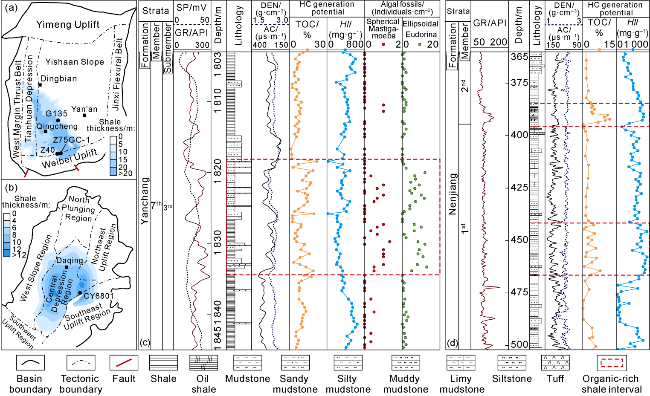
Fig. 1. Development characteristics of super-rich organic matter shale in the Chang 73 sub-member of the Triassic Yanchang Formation in the Ordos Basin and in the Cretaceous Nenjiang Formation in the northern Songliao Basin. (a) Distribution of Chang 73 shale in the Ordos Basin; (b) Distribution of Nen 1 and Nen 2 shales in the Songliao Basin; (c) Characteristics of organic-rich shale interval in Chang 73 of Well G135 in the Ordos Basin; (d) Characteristics of organic-rich shale interval in the Nenjiang Formation of Well CY6801 in the Songliao Basin. |
2. Mechanism of super-rich accumulation of organic matter in continental shale
External material input is the foundation for eutrophication in continental lake basins and the formation of favorable preservation conditions. Based on analysis of data from multiple sampling points, it has been found that the intensity, frequency, and preservation of external material input play a crucial role in controlling the super-rich accumulation of organic matter by determining the degree of accumulation.
2.1. The intensity of external material input determines the level of primary productivity
The intensity of external material input refers to the quantity of external materials brought by a single input event. The influx of external materials such as volcanic ash, hydrothermal fluid, and seawater into lake basins brings a large amount of nutrients, promoting biological flourishing and thereby enhancing primary productivity. This serves as the material basis for the super-rich accumulation of organic matter [13-14]. Barone et al. [15] studied the impact of modern volcanic eruptions in Tonga (a South Pacific island country) on the surrounding plankton and found that the concentration of chlorophyll-a in the surrounding seawater increased sharply from 0.1 mg/m3 to 1 mg/m3 after the volcanic eruptions, indicating a rapid increase in the number of plankton. During the deposition of Chang 73 in the Ordos Basin, volcanic activity was frequent. The enrichment levels of elements such as P and Cu in the shale increased significantly during the volcanic activity period when air-fall tuff was mainly deposited, being 1-3 and 7-9 times, respectively, that in the weak volcanic activity period. In Chang 73 of Well G135, the quantity of spherical Mastigamoeba and ellipsoidal Eudorina fossils of the volcanic activity period is 5.6 times that of the weak volcanic activity period, indicating that the input of volcanic ash caused eutrophication of the lake water, leading to a significant increase in algal density [16] (Fig. 1a). Studies have found that there is a correlation between hydrothermal activity and organic matter enrichment in the Chang 7 Member of the Ordos Basin, the Lower Cambrian Niutitang Formation in South China, and the Permian Lucaogou Formation in the Jimsar Sag of the Junggar Basin [17-19]. For example, the calcite veins in the shale of the Lucaogou Formation in the Jimsar Sag are of hydrothermal origin. Lamalginites are enriched near the calcite veins, with an average TOC of 8% and a maximum TOC of 14%; in contrast, lamalginites are relatively underdeveloped far from the calcite veins, with an average TOC of 3% and a maximum TOC of only 7%.
It should be noted that a greater intensity of external material input is not necessarily better. After air-fall tuff was brought into the water of a lake basin, the elements it contained were rapidly released. The TOC value of the overlying sedimentary shale can record the impact of volcanic ash input on the aquatic environment, and indirectly reflect the control exerted by volcanic activity on primary productivity. Statistics from three wells (G135, Z75GC-1 and Z40) indicate that as the thickness of air-fall tuff increases, the TOC value of the overlying shale exhibits a trend of first increasing and then decreasing (Fig. 2). When the single-layer thickness of air-fall tuff is between 0.1 cm and 0.2 cm, the TOC value of the overlying shale reaches its highest (up to 20%). When the single-layer thickness of the tuff exceeds 0.2 cm, that is, when excessive volcanic ash enters the lake basin, the TOC value shows a downward trend (Fig. 2). This phenomenon can be attributed to two aspects. First, although volcanic ash brings nutrients, it also contains heavy metal elements. Excessive volcanic ash can lead to an increase in the concentration of heavy metal elements in water, resulting in toxic effects to inhibit algal growth [20-22]. Second, excessive volcanic ash brings a large amount of sulfate, leading to enhanced bacterial sulfate reduction which consumes a significant amount of organic matter [23-24]. Based on the thickness and stratigraphic proportion of air-fall tuff, the volcanic activity intensity index (VAI) was established. It is the product of the thickness of air-fall tuff and the strata compaction recovery coefficient, divided by the number of tuff layers. According to statistics, when the VAI ranges from 0.2 to 0.5, indicating moderate volcanic activity, the organic matter abundance of the overlying shale is the highest, averaging up to 16.7%; when the VAI is less than 0.2 or greater than 0.5, the TOC value of the shale tends to be lower (Fig. 3).
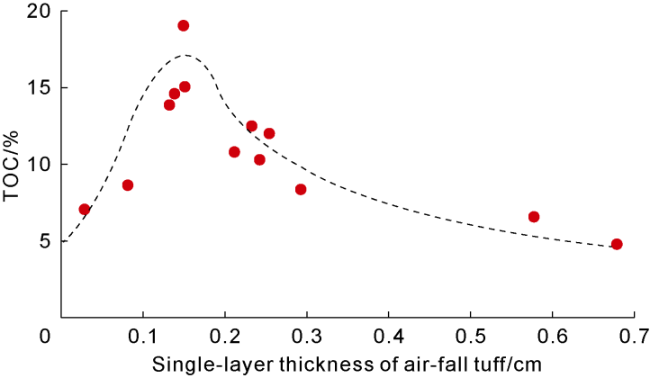
Fig. 2. Relationship between the single-layer thickness of air-fall tuff and TOC of the overlying shale in Chang 73, the Ordos Basin. |
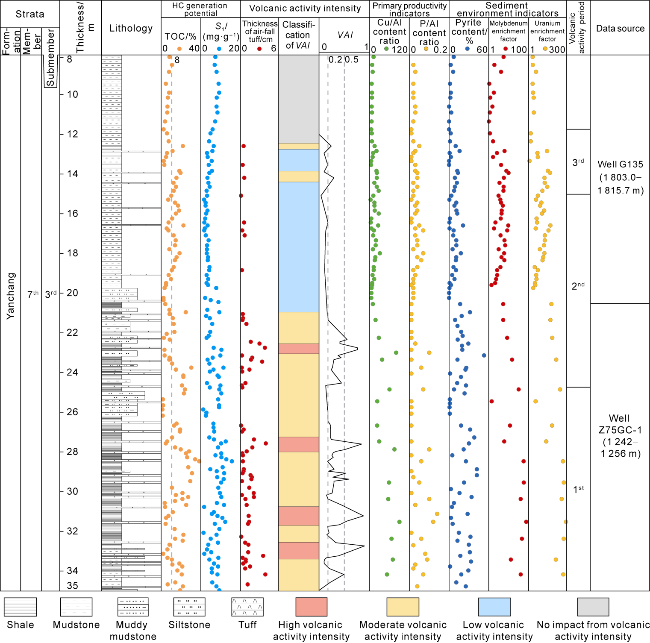
Fig. 3. Relationship between volcanic activity intensity and aquatic environment/organic matter enrichment in Triassic Chang 73, the Ordos Basin. S1—Retained hydrocarbon amount. |
2.2. The frequency of external material input determines whether eutrophic water can be stably preserved
The frequency of external material input refers to the frequency of external material input per unit time. Lake water generally has self-purification capability [25]. A single input of external materials can cause changes in nutrient element concentrations and water environment. However, if no additional external materials are input over time, nutrient element concentrations and water environment will gradually return to normal states. We selected a complete tuff-shale sedimentary cycle from Chang 73 in the Ordos Basin for analyzing TOC, primary productivity, and reducibility (Fig. 4a). In the second tuff-shale sedimentary cycle, about 3 cm above the tuff, the Cu/Al and Ni/Al content ratios reflecting primary productivity levels decreased from 35 and 10 to 20 and 5, respectively; molybdenum enrichment factor and uranium enrichment factor reflecting reducibility decreased from 180 and 35 to 100 and 23; and the corresponding TOC value decreased from 23.6% to 10%. After volcanic ash entered lake, it quickly impacted the environment. Above the tuff layer, the primary productivity is highest and the water reducibility is also strongest. In the locations far away from the tuff, the primary productivity and reducibility significantly decrease, together with declined organic matter abundance (Fig. 4b). Thus, it can be seen that volcanic ash input plays an important role in controlling organic matter enrichment, given a proper input frequency - if the frequency is too low, the nutrients in the lake water will decrease over time, so that a continuous distribution of high-TOC shale could not be ensured provided that the next input does not occur timely.
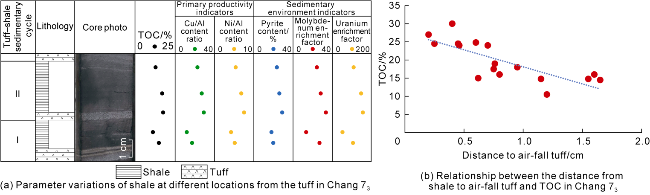
Fig. 4. Relationship between the distance from shale to air-fall tuff and the enrichment of organic matter in Chang 73 of Well Z75GC-1. |
2.3. The preservation of external material input determines whether the organic-rich shale interval can be developed on a large scale
Preservation refers to the time that the external material input is kept or maintained. A higher preservation indicates a continuous supply of external materials over a longer period, which is crucial for the large-scale development of organic-rich shale. In Chang 73 of the Ordos Basin, the VAI exhibits periodic variations, allowing for the identification of three periods of volcanic activity (Fig. 3). Based on astronomical cycle data, it can be confirmed that the first two periods of volcanic activity lasted for a longer duration [26] (both greater than 0.8 Ma), thus forming organic-rich shales with a continuous thickness of 10-20 m and a stable lateral distribution. Especially, the shales with TOC greater than 10% and the concentrated thickness exceeding 10 m distribute in an area of 0.87×10⁴ km2. The third period of volcanic activity lasted for a shorter duration (less than 0.5 Ma), resulting in organic-rich shales with a small thickness (1-5 m) and poor lateral continuity.
The marine transgression during the deposition period of the Nenjiang Formation in the Songliao Basin is a key factor in the formation of organic-rich shales. The differential distribution of organic-rich shales is attributed to the continuous and intermittent marine transgressions. The marine transgression in the central part of the Nen 1 Member occurred intermittently, with the resulting hypoxic environment at the bottom difficult to sustain, leading to poor vertical continuity of the organic-rich shale interval and numerous low-TOC shale interlayers. The marine transgression activity at the end of the deposition of the Nen 1 Member lasted for a long time, giving rise to an anoxic environment at the bottom with stable density stratification in the lake basin, which is conducive to the preservation of organic matter. Therefore, the organic-rich shale interval at the bottom of the Nen 2 Member has large thickness, good continuity, and stable lateral distribution (Fig. 5). Especially, the organic-rich shales with TOC>5% and the concentrated thickness greater than 8 m distribute in an area of 2.32×10⁴ km2. Thus, the bottom of the Nen 2 Member is considered as a high-quality target for in-situ conversion [13,27].
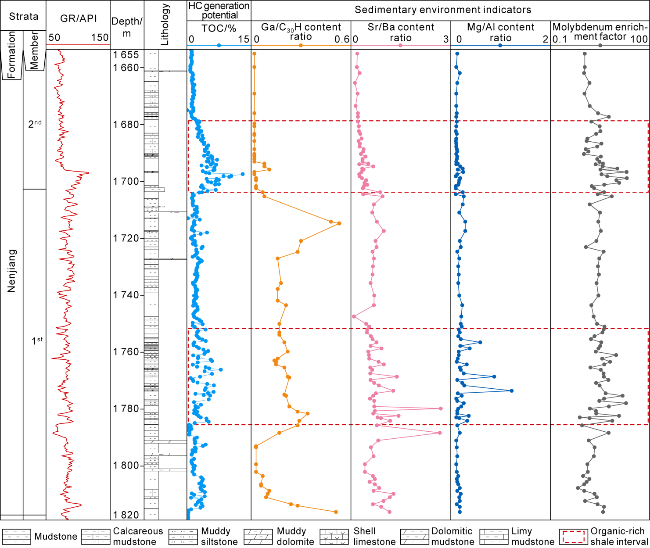
Fig. 5. Marine transgression-induced changes in water environment and characteristics of organic matter enrichment in the Lower Cretaceous Nenjiang Formation of Well GY3HC in the Songliao Basin. |
3. Evaluation method for favorable “sweet spots” of low-to-medium maturity shale oil
Shale suitable for in-situ conversion must first meet two conditions: a high yield of oil and gas per unit volume of shale and a large continuous thickness. In the early studies, the abundance of organic matter was used to constrain the “sweet spots” for in-situ conversion, and it was proposed that the TOC of shale suitable for in-situ conversion should be greater than 6% [1,9]. However, due to the influence of organic matter types, the hydrocarbon generation potential of shale varies significantly, making an evaluation based on the same standard impossible across different basins [28]. For example, the shale in Chang 73 of the Ordos Basin has an average TOC of 13.8%, much higher than that at the bottom of the Nen 2 Member of the Songliao Basin (averaging 5.8%), but the former shows a maximum hydrocarbon yield of 438 mg/g, whereas the Nen 2 Member reaches 782 mg/g, which is 1.8 times higher than that of the former. Clearly, organic matter abundance alone is not sufficient to objectively reflect the hydrocarbon generation potential of shale.
Oil shale is rich in unconverted organic matter and shares similar characteristics with low-to-medium maturity shale. Internationally, the oil ratio (i.e. the percentage of oil in the total mass of sample) is commonly used to evaluate the mineralization quality [29-30], which avoids the influence of organic matter differences and can establish a more objective and unified standard. However, the industry rarely uses oil ratio to evaluate source rocks and mainly relies on rock pyrolysis analysis to assess hydrocarbon generation potential, which has yielded rich data. This study combines the advantages of the above two methods to establish a “sweet spot” evaluation method and standard applicable to low-to-medium maturity shale oil in China.
3.1. In-situ conversion-derived hydrocarbon quality index
The hydrocarbon generation potential represents the sum of organic matter that have been formed and are yet to be converted in shale, and it directly reflects the resource enrichment level per unit volume of shale [28]. The organic-rich shale with a stable distribution and a certain thickness serves not only as the material basis for resource formation and enrichment, but also as a fundamental premise for the design of efficient heating well pattern. Based on these two factors, the in-situ conversion-derived hydrocarbon quality index (HQI) has been established as a key indicator for rapid area selection and evaluation. HQI is the product of the sum of the lost hydrocarbon quantity (SL), the retained hydrocarbon quantity in the source rock (S1), and the hydrocarbon quantity to be converted (S2), multiplied by the thickness of the organic-rich shale interval (H).
Despite a relatively low thermal maturity, the shales in Chang 73 of the Ordos Basin and the Nenjiang Formation in the Songliao Basin have generated an amount of hydrocarbons. By employing a combination of methods including sealed frozen coring, low-temperature sample crushing, stepwise pyrolysis, and GC-MS full hydrocarbon component detection, 60 sealed frozen coring samples from 3 wells were analyzed. The results indicate that the Chang 73 shale samples have a TOC range of 5%-20%, a retained hydrocarbon content of 4-20 mg/g (1.2-2.4 times that of conventional samples in tests), and a lost hydrocarbon content of 1-10 mg/g (accounting for 8%-10% of the total generated hydrocarbons). For the Nenjiang Formation of the Songliao Basin, due to limited core data, when Ro is 0.8%, the maximum lost hydrocarbon content is 1.14 mg/g, accounting for 4.7% of the total generated hydrocarbons. Therefore, it is necessary to recover the lost hydrocarbons to ensure reliable results.
3.2. Evaluation criteria for “sweet spots”
To achieve a high Eout/Ein in in-situ conversion, it is necessary to maximize the hydrocarbon generation potential threshold of the “sweet spots” to ensure a greater hydrocarbon output. In the petroleum industry, hydrocarbon generation potential is commonly used to indicate the ability of source rocks to generate hydrocarbons, while oil ratio is adopted for oil shale, whose petrological characteristics and organic matter occurrence are very similar to those of low-to-medium maturity shale, reflecting a good positive correlation (Fig. 6). Thus, the grading evaluation criteria for oil shale can be copied for low-to-medium maturity shale. If an oil ratio greater than 5% (the lower limit of oil ratio for medium-grade oil shale [31]) is taken as the threshold for selecting “sweet spots” for in-situ conversion, the corresponding hydrocarbon generation potential is 72 mg/g (Fig. 6). Meanwhile, the concentrated thickness of organic-rich shale is preferentially greater than 10 m to meet the requirements for engineering design of well pattern. For high-quality shale, the concentrated thickness can be relaxed to 8 m. Therefore, a shale with HQI greater than 720 can be identified as a sweet spot for low-to-medium maturity shale oil. Considering that later technical advancements can improve the Eout/Ein of in-situ conversion, the threshold for the “sweet spots” can be relaxed to an HQI of 450, which is roughly equivalent to an oil ratio of 3.5% (cutoff grade of oil shale [31]). In this way, the “sweet spots” of low-to-medium maturity shale oil in China can be divided into two levels: areas with an HQI greater than 720 are resource-rich areas, and areas with an HQI greater than 450 are resource-favorable areas. The evaluation of favorable areas for in-situ conversion also needs to consider the water cut of the target layer and the roof/floor conditions [1]. Both Chang 73 and Nenjiang Formation shales have water cut less than 5% and thick mud shale roof and floor, indicating good preservation conditions. Therefore, hydrocarbon generation potential and concentrated thickness are key factors in evaluating these two sets of organic-rich shale. Based on the above principles, four favorable/enrichment areas of low-to-medium maturity shale oil were selected, located in the Zhengning- Tongchuan and Qingcheng- Huanxian areas of the Ordos Basin, and the Gulong- Da’an and Zhaodong areas of the Songliao Basin (Fig. 7).
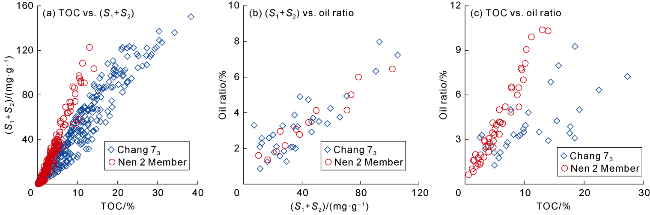
Fig. 6. Correlations between TOC, hydrocarbon generation potential, and oil ratio in Triassic Chang 73 in the Ordos Basin and Cretaceous Nen 2 Member in the Songliao Basin. |
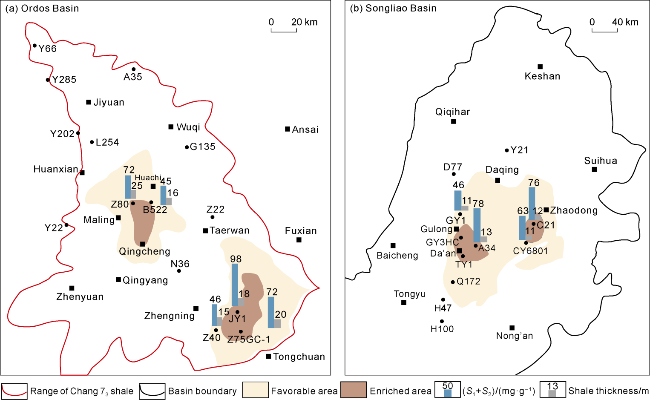
Fig. 7. Distribution of favorable and enriched areas for in-situ conversion of shale oil in Chang 73 in the Ordos Basin (a) and Nen 2 Member in the Songliao Basin (b). |
3.3. Resource potential in favorable areas of low-to-medium maturity shale oil
We proposed a model for calculating the resources of low-to-medium maturity shale oil based on changes in hydrogen index (HI) [1]. In this study, a module for lost hydrocarbon recovery was added to make the calculation results more objective. According to the evaluation results, the favorable area for in-situ conversion resources in the Chang 73 sub-member of the Ordos Basin covers 8.37×10⁴ km2, with oil and gas resources of 270×108 t and 5.9×10¹² m3 respectively; the resource-rich area spans 1.88×10⁴ km2, with oil and gas resources of 76.4×10⁸ t and 1.39×10¹² m3, respectively. The favorable area for in-situ conversion resources in the Nen 2 Member of the Nenjiang Formation in the Songliao Basin covers an area of 23.2×10⁴ km2, with oil and gas resources of 97×108 t and 1.0×10¹² m3, respectively; the resource-rich area spans 0.30×10⁴ km2, with oil and gas resources of 16.6×10⁸ t and 0.15×10¹² m3, respectively.
4. The optimal extraction method for in-situ conversion
Eout/Ein is a crucial factor determining the economic feasibility of in-situ conversion development [32]. An in-situ conversion scheme that achieves maximum energy output with minimal energy input is the core pursuit and goal of in-situ conversion mechanism research. In addition to sweet spots evaluation, selection of rational well placement and heating temperature window, and control of heating process are all important options for maximizing Eout/Ein. Furthermore, in addition to the in-situ heating process, the “artificial hydrocarbon” production process can be considered for Eout/Ein maximization, which is realized by controlling the quality of the output products to increase the added value of “artificial hydrocarbons”. This deserves further research and verification in pilot tests.
4.1. Establishing the optimal well pattern to maximize Eout/Ein and recovery factor
Continental shale exhibits strong heterogeneity, with thermal conductivity and permeability showing significant anisotropy during heating, which affects the efficiency of heat transfer and hydrocarbon production during in-situ conversion [33-34]. The existing electric heating-based schemes, i.e. vertical well heating + vertical well development, and horizontal well heating + horizontal well development, do not take in-situ conversion recovery factor and Eout/Ein into account.
Organic-rich shale contains well-developed laminae, with organic matter primarily distributed in a laminated manner [35]. As kerogen undergoes pyrolysis and shale breaks during heating, pores and fractures extend more rapidly in the direction parallel to beddings, leading to intensified anisotropy in rock structure. This, in turn, affects the thermal conductivity of shale and the preferential flow direction of “artificial hydrocarbons” [36]. Based on thermal conductivity tests at different temperatures and combined with numerical simulations, the variations of thermal conductivity in both directions parallel and perpendicular to the beddings in shale were obtained. The results show that during the heating process of shale, the thermal conductivity in the direction parallel to beddings is greater than that in the direction perpendicular to beddings, with the former being 1.8-2.1 times the latter (Fig. 8a). This is mainly because fractures mainly extend in the direction parallel to beddings when shale is heated. When heat is transferred in the direction perpendicular to beddings, it needs to pass through gas or other fluid media with lower thermal conductivity in the pores/fractures, which obstructs the heat transfer path and thus reduces efficiency. When heat is transferred in the direction parallel to beddings, the shale matrix is relatively continuous, with higher heat transfer efficiency, and the stronger the anisotropy of the pore
structure, the greater the difference between the two (Fig. 8b). It should be noted that the continuously expanding pores and fractures in shale due to heating can also hinder heat transfer in the direction parallel to beddings. As the porosity increases from 5% to 30%, both the thermal conductivity values in the directions parallel and perpendicular to beddings decrease. However, as the porosity increases, the thermal anisotropy of shale (the ratio of thermal conductivity in the direction parallel beddings to thermal conductivity in the direction perpendicular to beddings) increases (Fig. 8b and 8c), that is, the difference in thermal conductivity between the directions parallel and perpendicular to beddings gradually increases with the increase of heating temperature.
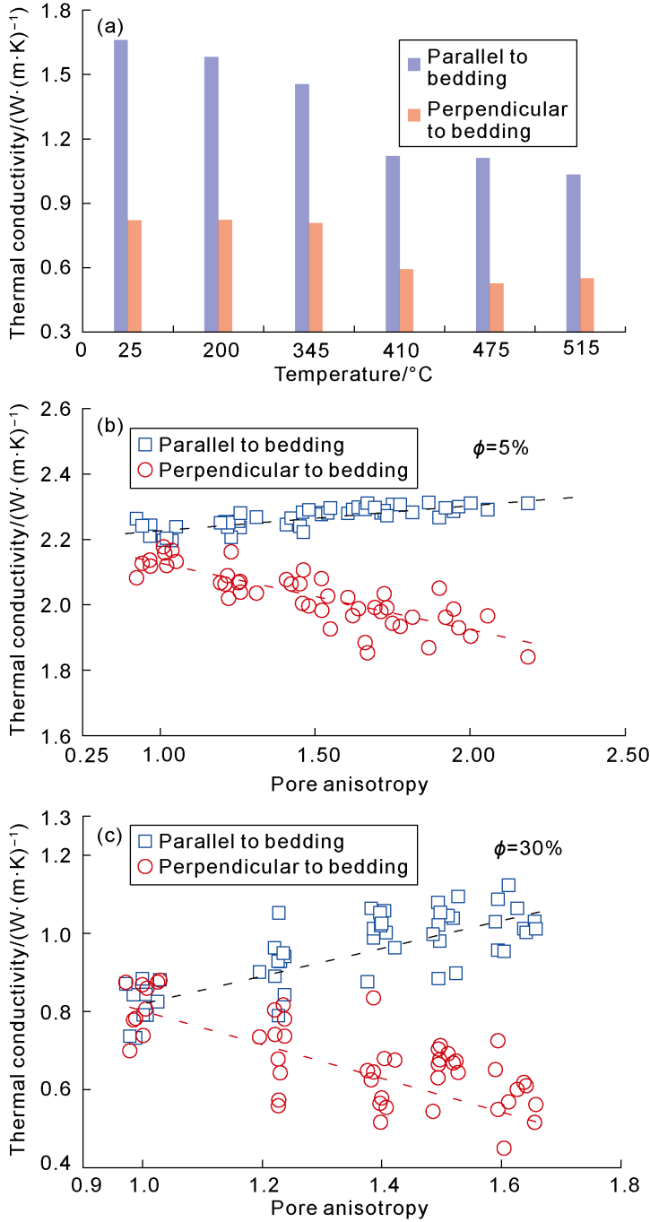
Fig. 8. Correlations between thermal conductivity and temperature (a), and thermal conductivity and pore anisotropy (b-c) of Chang 73 shale in the Ordos Basin. ϕ represents porosity. |
As mentioned earlier, pores and fractures are preferentially generated in the direction parallel to beddings in shale when heated. This process changes the rock anisotropy, improves the heat transfer efficiency in the direction parallel to beddings, and enhances the thermal conversion rate of organic matter in this direction, allowing the permeability in the direction parallel to beddings to increase by several times that in the direction perpendicular to beddings. As a result, the highest displacement efficiency of “artificial hydrocarbons” occurs in the direction parallel to beddings. Under heating conditions, the permeability in the direction parallel to beddings increases rapidly, while the permeability in the direction perpendicular to beddings changes little (Fig. 9). When the Chang 73 shale samples from the Ordos Basin were heated to 360 °C, the permeability in the direction parallel to beddings was 0.29×10⁻³ μm2, while the permeability in the direction perpendicular to beddings was 0.31×10⁻⁵ μm2, suggesting a difference of nearly a hundred times. It is thus inferred that oil and gas can flow more easily in the direction parallel to beddings. If the “vertical well heating + vertical well development” scheme is adopted, which is beneficial for the production of “artificial hydrocarbons”, a relatively high recovery can be achieved; however, the heating and oil recovery volumes are relatively small, making it difficult to maximize the Eout/Ein. If the “horizontal well heating + horizontal well development” scheme is adopted, the heating volume can be maximized, but the controlled oil volume of the development well cannot be maximized, which affects the recovery of “artificial hydrocarbons” and cannot maximize the Eout/Ein.
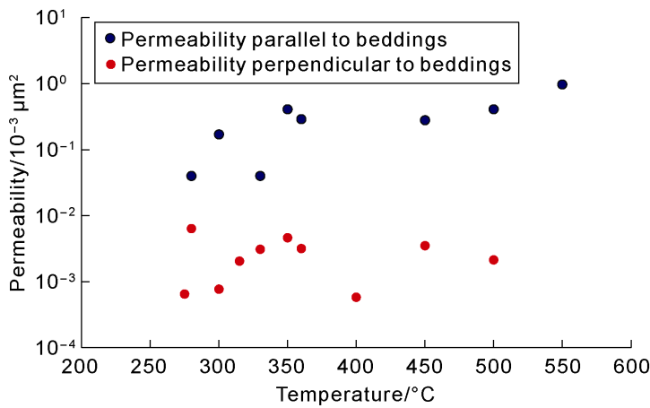
Fig. 9. Correlation between permeability and temperature of Chang73 shale in the Ordos Basin. |
This paper proposes a stereoscopic well pattern of “horizontal well heating + vertical well development” (Fig. 10) to achieve maximum heating volume and recovery, thereby maximizing the Eout/Ein. Heating via horizontal wells can reduce the number of heating wells and maximize the heating volume. The purpose of utilizing vertical wells for development is to leverage the three advantages in permeability, thermal conversion rate of organic matter, and “artificial hydrocarbon” flow generated in the bedding direction of shale after heating, thereby maximizing the expelled “artificial hydrocarbons” and achieving the best recovery factor, estimated ultimate reserves (EUR) per well, and the Eout/Ein.
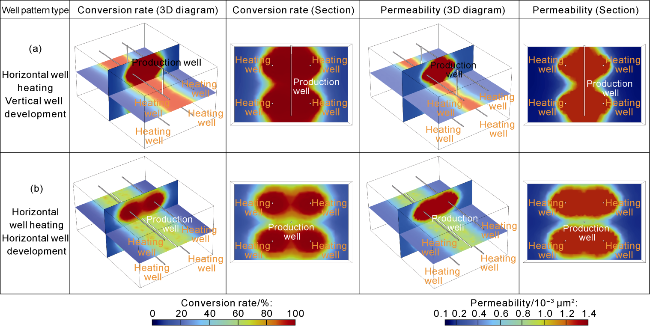


Fig. 10. Organic matter conversion rate and reservoir permeability under two in-situ conversion schemes in the Ordos Basin. |
Numerical simulations were conducted on the differences in recovery factor and Eout/Ein under different heating and extraction methods. Two models, i.e., horizontal well + vertical well (Fig. 10a) and horizontal well + horizontal well (Fig. 10b), were designed. Four horizontal heating wells were placed in a square shape with a spacing of 5 m. The maximum distance of artificial hydrocarbon self-displacement obtained from simulation for the vertical well was set at 9.8 m. In an ideal model, Eout is the thermal energy contained in the final produced oil and gas, and Ein is the energy input from the outside, that is, the electrical energy consumed by the heater, without considering the energy consumed by engineering and operations (e.g. drilling, extraction, etc.). In addition, using a single heating well group for heating will cause a large amount of thermal energy to diffuse to the peripheral low-temperature zones. Therefore, a 4×4 heating well model was adopted, with a shale cross-section of 15 m×15 m and a length of 20 m. Then, a heating well group in the middle (cross-section of 10 m×10 m) was selected to compare the recovery factor and Eout/Ein in the lifecycle of in-situ conversion between horizontal well pattern and stereoscopic well pattern. Under the same geological and engineering conditions, after heating for 500-600 d, the average conversion rate of organic matter in shale reached over 80%, the recovery factor of the stereoscopic well pattern was 50%-63%, about 1.53 times that of the horizontal well pattern (33%-41%), and the Eout/Ein was 5.8-7.2, about 1.44 times that of the horizontal well pattern. It can be seen that the stereoscopic well pattern has a higher Eout/Ein, which should be specifically considered in subsequent research and field experiments.
4.2. Controlling the optimal heating window to achieve maximum EUR and high-quality “artificial hydrocarbon” products
The in-situ conversion of low-to-medium maturity shale oil is a complex physicochemical process. After heating shale, on the one hand, organic matter undergoes thermal conversion, forming light oil composed of different hydrocarbon components [37,38]; on the other hand, the effects of thermal stress and pressure increase by hydrocarbon generation not only generate pore and fracture networks to improve the physical properties of shale, but also increase the internal energy of the formations to facilitate the production of “artificial hydrocarbons” [39]. The reservoir physical properties and hydrocarbon components vary in different heating temperature ranges. Establishing a reasonable temperature window to obtain the optimal degree of pore and fracture development and components of “artificial hydrocarbons” in shale without increasing energy input is an important way to improve the Eout/Ein.
In the in-situ conversion, the organic matter conversion process and rate can be regulated by controlling the heating temperature. By optimizing the heating process and controlling the heating window without significantly increasing energy input, the quality of “artificial hydrocarbon” products can be optimized to obtain better added value of products. Based on the established hydrocarbon generation kinetics equation and temperature field model, the composition and changes of hydrocarbon components during in-situ conversion can be predicted [40]. A simulation experiment was conducted using organic-rich shale samples from Chang 73 in the Ordos Basin. After heated to 300 °C, the conversion rate of organic matter rapidly increased, and the products were mainly composed of hydrocarbons ranging from C1 to C22, roughly corresponding to petroleum gas, gasoline, kerosene, diesel, and atmospheric gas oil (C13+) fractions. After the temperature exceeded 350 °C, some heavy hydrocarbon components began to crack, and the relative contents of methane and ethane in the products continued to increase. After the temperature reached 400 °C, the conversion rate exceeded 80%, the liquid hydrocarbon contents continued to decrease, and the natural gas content sharply increased (Table 1). Compared to gaseous hydrocarbons, liquid hydrocarbons are efficient fuels, and have a longer downstream industrial chain and greater added value. Especially, naphtha and light diesel, as chemical raw materials, have higher value [41]. By controlling the heating window, the formation temperature can be held within the liquid hydrocarbon generation window as long as possible while the maximum oil and gas production is achieved, enabling a dominance of high-value liquid hydrocarbons in the converted products. This is also an important way to improve the economic efficiency of in-situ conversion.
Table 1. Composition of products during pyrolysis of Chang 73 shale at different temperatures |
| Experiment temperature/°C | Proportion of components/% | ||||||
|---|---|---|---|---|---|---|---|
| C1 | C2 | C3—C7 | C8—C12 | C13—C17 | C18—C22 | C23+ | |
| 350 | 15.2 | 10.7 | 3.9 | 20.1 | 16.0 | 6.8 | 1.0 |
| 375 | 18.5 | 13.9 | 5.5 | 19.7 | 13.2 | 4.7 | 0.6 |
| 400 | 22.9 | 16.8 | 4.1 | 19.2 | 12.0 | 3.4 | 0.5 |
| 425 | 27.6 | 20.9 | 5.5 | 18.7 | 10.2 | 2.7 | 0.4 |
| 450 | 49.1 | 21.8 | 2.0 | 10.1 | 4.0 | 0.9 | 0.1 |
Furthermore, when the formation temperature exceeds 300 °C, the porosity and permeability (in the direction parallel to beddings) of shale increase significantly. For the Chang 73 shale samples, the original porosity and permeability were 1.02% and 0.3×10⁻⁵ μm2, respectively. When heated to 300 °C, the porosity and permeability increased by 3.5 times and 55 times to 4.6% and 0.17×10⁻³ μm2, respectively. When heated to 360 °C, the porosity was 7.96% and the permeability was 0.29×10⁻³ μm2, which increased by 6.8 times and 95 times respectively, greatly improving the physical properties of shale. Based on the changes in physical properties, organic matter conversion rate, and converted products during shale heating, it is believed that 300-370 °C is an ideal heating window for in-situ conversion in Chang 73 of the Ordos Basin (Fig. 10). Due to the differences in shale lithofacies combinations and organic matter types, the optimal heating window varies for different organic-rich shale intervals [42], and thus it should be defined depending on the specific geological characteristics of the heating targets.
4.3. Utilizing renewable energy in heating to further reduce in-situ conversion cost
The in-situ conversion of low-to-medium maturity shale oil is essentially a high-power, long-term “underground heating” process. In the industrial development stage, a huge amount of electricity input is required. Whether the electricity cost can be significantly reduced directly determines the economic feasibility of the technology.
The low-to-medium maturity shale oil resources of China are mainly concentrated in the Ordos and Songliao basins, coinciding with the Northeast China, North China and Northwest China scenic belts, with abundant new energy resources [43]. In the Ordos Basin, for example, the average wind power density is 220 W/m2, the annual available wind energy time is 1 600-2 300 hours, and the exploitable wind energy capacity is about 14.6×10⁸ kW[44,45]. The total annual radiation of solar energy resources is 4 500-5 600 MJ/m2, and the annual equivalent full-load photovoltaic output is 1 400-1 600 hours. By the end of 2023, the total installed capacity of new energy exceeded 61 GW, including wind power greater than 29 GW, and photovoltaic power greater than 32 GW. In 2024, only Shaanxi and Gansu provinces had wind and solar power generation exceeding 1 000×108 kW·h [44]. In addition, the Ordos Basin has the strongest wind energy in spring and autumn, accounting for more than 60% of the annual power generation. The total solar radiation in summer is high, reaching the peak of the year. Through complementary wind and solar resources and limited energy storage technology support, the fluctuation of wind and solar power generation can be solved within a natural year, ensuring stable power supply.
Under ideal conditions, that is, all heat is used to convert organic matter except for the consumption by inorganic minerals in shale, a complete conversion of organic matter in a 1 m3 shale of Chang 73 needs to consume an electricity of 1 164 kW·h, corresponding to an oil and gas production of 0.082 t of oil equivalent given a recovery factor of 60%. If heating shale for 3 years, to build a production capacity of 1 000×104 t/a in the Ordos Basin needs an average annual electricity consumption of 473×108 kW·h. Hence, wind and solar power resources can fully support electricity needed in in-situ conversion. Meanwhile, with technical advancements, the electricity price per kilowatt hour for new energy has dropped to 0.18-0.25 yuan in recent years, which is only half of the industrial electricity price in the eastern region. If the electricity for in-situ conversion all comes from new energy, the electricity cost will be greatly reduced, which is meaningful for achieving commercial breakthroughs in shale oil in-situ conversion.
The beneficial development of the massive low-to-medium maturity shale oil resources in China will be implemented step by step in four stages.
(1) Technology verification stage (2025-2030). Considering the technical requirements for supporting the smooth implementation of pilot tests and verifying the feasibility of in-situ conversion technology, and in order to form in-situ conversion theory, key technologies, and supporting processes, main efforts are made to evaluate enrichment-controlling factors and sweet spots, construct efficient development mechanism and model, form key technologies such as safe and environment-friendly extraction under high temperature and high corrosion conditions, and develop core devices such as small- spacing horizontal well cluster drilling and magnetic steering instrument, and high-temperature resistant downhole heater, to effectively support the pilot tests.
(2) Technology breakthrough and pilot test stage (2030- 2035). In selected areas, pilot test technology for in-situ conversion is explored, the best process plan are determined, and barriers in industrial production are addressed.
(3) Technology maturation stage (2035-2040). Technologies and standards/practices are implemented in pilot test areas, and demonstration bases for in-situ conversion of shale oil are built. Research and development efforts are devoted to the multi-phase, multi-field, dynamic numerical simulation technology for efficient development, the shale oil in-situ conversion and fracturing technology, and the shale oil in-situ catalysis technology, aiming to achieve the localization of supporting/core equipment such as small-spacing horizontal well cluster drilling and magnetic steering instrument, and high-temperature resistant downhole heater, and the basic maturation of large-scale technology, which can support the construction and operation of demonstration zones.
(4) Technology promotion stage (after 2040). Further efforts are made to develop supporting technologies for large-scale, efficient development, such as the industry-chain utilization of energy (e.g. thermal energy and by-products), the in-situ conversion heat convection and radiation technology, well pattern deployment, and heating optimization & integration, and to promote the iteration of in-situ conversion technology, ultimately facilitating the economic benefits of in-situ conversion.
The massive resources of low-to-medium maturity shale oil can serve as the cornerstone to support the energy independence of China.
5. Conclusions
The key to achieving commercial development of low-to-medium maturity shale oil by in-situ conversion lies in a higher energy output-input ratio (Eout/Ein) than the economic threshold. For this purpose, feasible approaches should be explored with respect to increasing energy output and reducing energy input. Maximizing the production of “artificial hydrocarbons” by optimizing shale intervals/areas with super-rich accumulation of organic matter is the foundation for increasing energy output. By optimizing the well types/patterns, selecting a rational heating window and heating process, and controlling the quality of “artificial hydrocarbons” to the best level, the optimal recovery factor and added value of “artificial hydrocarbons” can be achieved, thereby maximizing energy output. In addition, utilizing renewable energy for heating can effectively reduce costs. By integrating current technical advances with systematic development strategies, substantive breakthroughs can be expected in large-scale and beneficial development of low-to-medium maturity shale oil.
The super-rich accumulation of organic matter in continental lake basins is primarily influenced by external material input. Moderate volcanic activity, hydrothermal injection, marine transgression events, and radioactive material interactions are the main controlling factors for the development and distribution of the intervals with super-rich accumulation of organic matter. Specifically, the intensity and frequency of external material input determine the magnitude and stability of primary productivity of ancient lake organisms. The preservation of external material input determines the duration of continuous input. These factors controlling organic-rich shale intervals determine the development and distribution of sweet spots for in-situ conversion of shale oil.
The in-situ conversion-derived hydrocarbon quality index (HQI) based on the hydrocarbon generation potential of shale and the thickness of concentrated intervals is proposed for rapid evaluation of favorable areas. The zones with HQI>450 are defined as shale oil sweet spots for in-situ conversion. Four sweet spots in Chang 73 of the Ordos Basin and the Nen 2 Member of the Songliao Basin have demonstrated in-situ converted resources of 367×108 t oil and 6.9×10¹² m3 gas.
Based on the characteristics of the material field and the flow field in the in-situ conversion, it is concluded that 300-370 °C is the optimal heating window for in-situ conversion in Chang 73 of the Ordos Basin. Based on the spatial variations of rock structure and porosity-permeability conditions after shale heating, it is pointed out that during the in-situ heating process, rock permeability, organic matter conversion efficiency, and artificial hydrocarbon expulsion efficiency are remarkably pronounced in the direction parallel to beddings. Therefore, a new scheme of “horizontal well heating + vertical well development” is proposed to significantly improve recovery factor and Eout/Ein. It is believed as a more effective in-situ conversion recovery method of shale oil.