

Introduction
In recent years, guided by concepts such as “whole petroleum system”, “super basin”, and “conventional-unconventional petroleum geology” [1-3], exploration has shifted from conventional oil and gas resources to integrated research and coordinated development of conventional and unconventional resources in major petroleum basins in China. The first member of the Cretaceous Qingshankou Formation (referred to as Qing 1 Member) in the Songliao Basin, NE China, contains the most important source rocks, based on which a petroleum system was developed, which includes conventional oil, tight oil and shale oil in orderly coexistence and differential enrichment [4]. The source rocks are characterized by extensive distribution, high quality, and substantial hydrocarbon generation and expulsion capacity. In addition to the shale oil preserved within the source rocks, a large amount of oil and gas from the Qing 1 source rocks accumulate in Qing 2 and Qing 3 sandstone reservoirs. The Qingshankou petroleum system with multiple oil layers which are stacked vertically and distributed across zones laterally has a considerable exploration potential. It is crucial for effective exploration to understand the spatial distribution law and controlling factors on hydrocarbon enrichment. Recent breakthroughs to Gulong shale oil exploration have prompted extensive studies on shale oil resources [5-7]. However, systematic research remains scarce regarding the genetic relationship and difference between conventional and unconventional hydrocarbons, and how they develop within the Qingshankou petroleum system. In addition, it's hard to balance all types of oil and gas in field exploration and development, so that the overall economic performance is constrained. Based on seismic, drilling and logging data, and considering previous exploration result, this study investigates the orderly distribution, genesis and differential enrichment of conventional and unconventional oil and gas in the Cretaceous Qingshankou Formation in the northern Songliao Basin, with the intent to provide theoretical and technical supports for future petroleum exploration.
1. Geological setting
As a large Mesozoic-Cenozoic sedimentary basin located in northeastern China, the Songliao Basin comprises six first-order tectonic units: the Central Depression, the Northern Dip Area, the Northeastern Uplift, the Western Slope, the Southeastern Uplift, and the Southwestern Uplift [8-10] (Fig. 1a). The Central Depression representing the long-term subsidence and sedimentary center of the basin hosts major petroleum plays in secondary structural units, including the Longhupao-Da'an Terrace, the Qijia-Gulong Sag, the Daqing Placanticline, and the Sanzhao Sag [9].
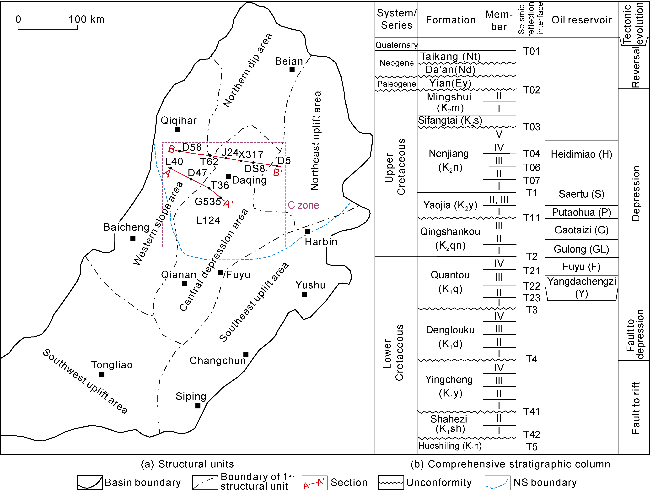
The Qingshankou Formation constitutes an extensive deltaic-lacustrine sedimentary system dominated by delta-front subfacies and semi-deep to deep lacustrine subfacies, including mudstone, shale and siltstone widely distributed across the basin. During the early Late Cretaceous, the study area experienced a warm, semi-humid subtropical climate and was characterized by a terrestrial brackish to semi-brackish water paleoenvironment. Five major source systems—Nehe-Yi'an, Qiqihar, Yingtai- Baicheng, Baokang, and Huaide-Changchun—supplied detrital sediments to the lake basin. The northern Nehe-Yi'an and western Baokang sources, aligned parallel to the long axis of the basin, served as the principal sediment suppliers. The depositional period of the Qingshankou Formation witnessed the first major lacustrine transgression, which induced widespread subsidence and rapid expansion of the lake basin. The transgressive phase [11] promoted high biological productivity and facilitated the accumulation of organic matter. Notably, an organic-rich shale unit approximately 30 m thick deposited at the base of the formation, providing a substantial material foundation for hydrocarbon enrichment.
2. Orderly distribution of conventional and unconventional hydrocarbons
2.1. Vertical distribution of hydrocarbons
The Qingshankou Formation is subdivided into three members from base to top (Fig. 1b). The lowest member (Qing 1) is characterized by extensive organic-rich mudstone which serves as high-quality source rock and shale oil reservoir. During the deposition of the Qing 2 and Qing 3 members, the lake basin underwent contraction, with significant lacustrine mudstone accumulating in the central basin. Simultaneously, multiple delta complexes prograded from the basin margins toward the center, forming tight sandstone reservoirs on the slope and structurally higher conventional sandstone reservoirs (Fig. 2). Within this depositional framework, the Qingshankou Formation exhibits a reservoir system with various hydrocarbons distributed in an orderly style. Muddy-laminated shale oil reservoirs are primarily found in the Qing 1 Member and the lower part of the Qing 2 Member in the Gulong Sag, the southern Daqing Placanticline and the Sanzhao Sag. They are of semi-deep to deep lacustrine facies and continuous in extensive distribution. Interlayered shale oil reservoirs are mainly located in the Qing 1 Member and the lower part of the Qing 2 Member in the western part of the Gulong Sag, and the lower part of the Qing 2 Member in the southern Qijia Sag. They are delta-front sheet sandstone extending toward the depression center, 0.5 m to 5.0 m thick a layer. Tight sandstone oil reservoirs are predominantly developed in the middle and upper parts of the Qing 2 member and the Qing 3 Member in the Longhupao-Da'an Terrace and the southern Qijia Sag. These reservoirs with low permeability and in quasi-continuous distribution are of delta front facies, and overlie on or laterally connect with source rocks. Conventional oil reservoirs are mainly discovered in the Qing 2 and Qing 3 members in the northern Qijia Sag and the northern Daqing Placanticline. The relatively shallow sandstone of delta-front and delta-plain facies and with favorable reservoir properties, and faults serving as primary pathways facilitated the development of structural and structural-lithologic oil reservoirs.
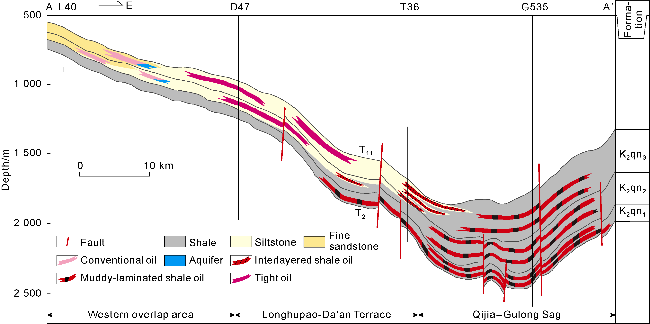
Fig. 2. Conventional-unconventional oil-gas sequence distribution in the Qingshankou Formation in the northern Songliao Basin (see the section location in Fig. 1). |
2.2. Lateral distribution of hydrocarbons
The Qingshankou Formation has orderly hydrocarbon accumulation from conventional oil to tight oil and finaly to shale oil, extending from the basin margin toward the center. Conventional oil reservoirs are primarily developed in the shallow formations in the northern part of the basin. They are almost structural and structural-lithologic reservoirs. Tight oil is predominantly distributed in slope areas such as the Longhupao-Da'an Terrace, the Qijia Sag, the Daqing Placanticline, and the Sanzhao Sag. Toward the depression center, the sand bodies become progressively tighter. Sandstone of 2-8 m thick a layer is laterally extensive and vertically stacked, forming quasi-continuous tight oil reservoirs that are almost lithologic or structural-lithologic. Shale oil is mainly developed in low-slope zones and the central lake basin. In delta- front environments, extensive sheet sandstone is interbedded with lacustrine mudstone, forming interlayered shale oil reservoirs of 0.5-5.0 m thick a layer, and with good oil-bearing property. In the central lake basin, organic-rich mudstone of semi-deep to deep lacustrine facies is widely developed, forming continuous muddy-laminated shale oil reservoirs.
Geographically, conventional oil reservoirs are almost distributed in the northwestern Longhupao-Da'an Terrace, the northern Qijia Sag, and the northern Daqing Placanticline. Tight oil reservoirs are mainly found in the Yingtai, Bayanchagan, Longhupao-Da'an Terrace, southern Qijia Sag, central-northern Daqing Placanticline, and Anda areas. Interlayered shale oil occurs along the margins of the semi-deep lacustrine deposits, located in the western Gulong sag, southern Qijia Sag, central Daqing Placanticline, and northern Sanzhao Sag. Muddy-laminated shale oil is developed in the central lake basin, primarily within the Gulong Sag, southern Daqing Placanticline, and the Sanzhao Sag [11] (Fig. 3).
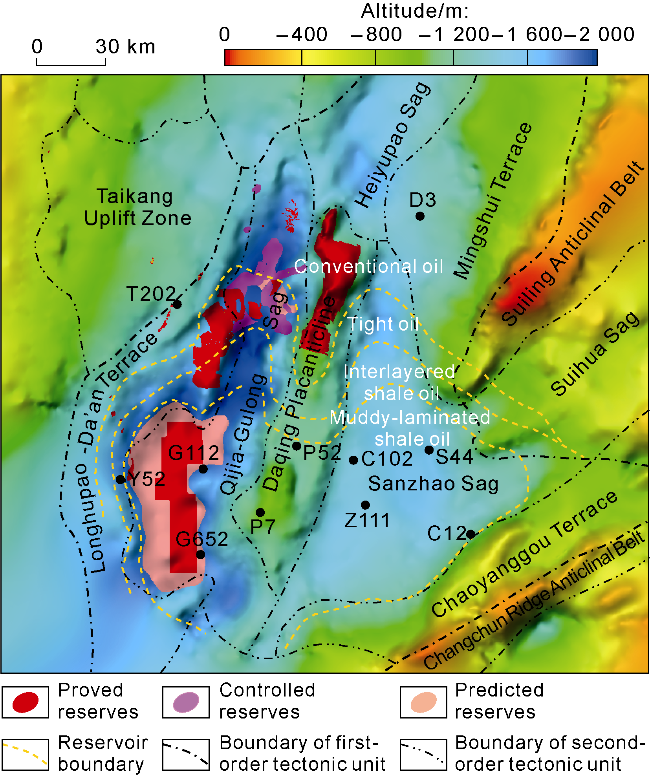
Fig. 3. Overlay of present structure and hydrocarbon distribution in the Qingshankou Formation, northern Songliao Basin (see the location in Fig. 1). |
3. Genesis and differential enrichment models of orderly hydrocarbon distribution
3.1. Genesis of orderly hydrocarbon distribution
3.1.1. Tectono-sedimentary coupling
The tectono-sedimentary coupling controls the spatial distribution of hydrocarbons by influencing the differentiation of sedimentary facies and diagenetic processes, which in turn affects reservoir physical properties and lithological variation.
During the deposition of the Qingshankou Formation, the Songliao Basin was a large continental lacustrine basin undergoing downwarping. Its tectonic evolution and paleo-topography governed the subsidence rate, depositional extent, basin morphology, and migration of depocenters, thereby shaping the development of sedimentary systems. During the deposition of the Qing 1 Member, extensive transgression occurred, leading to continuous expansion of the lake basin. The thickest areas are located in the Qijia, Gulong and Sanzhao Sags. Semi-deep to deep lacustrine subfacies deposited in areas including the southern part of the Heiyupao Sag, the southern Mingshui Terrace, the Suihua Sag, the Qijia-Gulong Sags, the Daqing Placanticline, and the Sanzhao Sag [12]. Toward the west and north, these central lacustrine deposits transition into shallow lacustrine and delta front subfacies, and further into delta plain subfacies. In contrast, the deposition of the Qing 2 and Qing 3 Members happened with significant regression, so the sedimentary and subsidence centers moved into the Qijia-Gulong and Sanzhao sags. Due to slowed crustal subsidence, climatic changes and abundant terrigenous clastic input, the sedimentation rate equaled or exceeded the subsidence rate, resulting in substantial reduction in the lake area. Within the overall regressive context, multiple transgressions of varying scales occurred, leading to interbedded fluvial and lacustrine deposits that form complex sedimentary bodies. The Qing 2 and Qing 3 Members generally inherited the annular distribution pattern of the Qing 1 Member, comprising large-scale fluvial-deltaic‒lacustrine depositional systems with more pronounced lateral differentiation (Fig. 4).
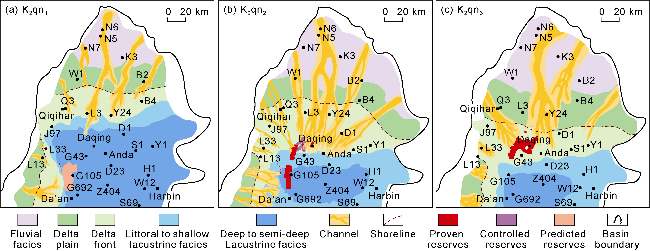
Fig. 4. Overlay of sedimentary facies and hydrocarbon distribution in the Qingshankou Formation, northern Songliao Basin. |
Sandstone reservoirs of delta plain and delta front subfacies serve as the primary hosts for conventional oil. These reservoirs are generally located in structural highs, exhibit favorable physical properties, and consist mainly of fine sandstone and siltstone. Tight sandstone reservoirs of distal delta front subfacies toward the lake center are major space for tight oil. Typically situated in slope settings, these reservoirs have poorer properties and are composed chiefly of siltstone and argillaceous siltstone. Mudstone and shale of semi-deep to deep lacustrine subfacies are primary reservoirs for shale oil. Located in the central lake basin, these reservoirs are tight and consist mainly of shale and mudstone, interbedded with siltstone, ostracodal limestone and dolomite [13].
Tectono-sedimentary coupling governs the orderly facies zones of the Qingshankou Formation from the basin margin to the center. The sequential deposition of fine sandstone, siltstone, mudstone and shale, with progressive reduction in reservoir quality, ultimately resulted in the orderly distribution of conventional oil, tight oil and shale oil.
3.1.2. Spatiotemporal configuration of source rocks, faults, and reservoirs
The coupling of hydrocarbon generation and evolution of source rocks, fault properties, and reservoir densification exerts a critical control on the orderly distribution of conventional oil, tight oil and shale oils in the Qingshankou Formation [14].
The shale oil layers within the Qingshankou Formation serve as both source rocks and reservoirs. Composed predominantly of dark mudstone and shale with poor physical properties, these reservoirs effectively retain hydrocarbons and inhibit their outward migration [15]. Consequently, faults act as the primary conduits for hydrocarbon transport. Based on their relationship with the shale oil layers, faults within the Qingshankou Formation can be categorized into two types: those that penetrate through the shale oil intervals and those confined within them. Faults that extend upward through the shale intervals provide critical migration pathways for oil migration into the overlying reservoirs. If these faults were open during peak hydrocarbon expulsion, they would facilitate the transport of hydrocarbons into the reservoirs connecting with them. Conversely, if they were close, hydrocarbons had to remain in the source rock. The faults not penetrating the shale interval are pathways for short-distance migration of oil in the source rock, so interbedded sandstone oil reservoirs formed in thick shale intervals.
Hydrocarbon generation modeling of the Qingshankou source rocks indicates three major expulsion peaks at the end of the Nenjiang Formation deposition, the end of the Mingshui Formation deposition, and the end of the Paleogene. Integrated with fluid inclusion analyses, the end of the Nenjiang deposition (approximately 79 Ma) and the end of the Mingshui deposition (approximately 65 Ma) are primary periods for oil and gas accumulation in the middle and shallow sequences in the Songliao Basin [16-17] (Fig. 5). By the end of the Nenjiang Period, the top of the Qing 1 Member source rock was buried at 900-1 600 m, with vitrinite reflectance (Ro) of 0.5%-0.8%, indicating early maturity. At that time, the porosity of the Gaotaizi oil layer was relatively high (15%-21%), and the densification degree was low. Hydrocarbon generated from the Qing 1 Member migrated into the Gaotaizi layer where it was redistributed under the influences of faults and sandstone bodies, and finally accumulated into conventional reservoirs in local structural highs. Due to the overall low hydrocarbon generation intensity, hydrocarbon accumulation in the Gaotaizi layer is limited. By the end of the Mingshui deposition, the burial depth of the Qing 1 source rock increased to 1 700-2 400 m, and the Ro was between 0.7% and 1.2%, marking an important stage for hydrocarbon generation. Meanwhile, the porosity of the Gaotaizi reservoir decreased to 7%-13%, and most of the reservoir had been tight. During that period, most faults that penetrated the Qingshankou source rocks were open (Fig. 6a), and facilitated hydrocarbon migration into the Gaotaizi layer, resulting in extensive tight oil accumulation along with some conventional reservoirs. During the deposition of the Paleogene Yi'an Formation, most faults penetrating the Qingshankou source rocks were close (Fig. 6b), so hydrocarbon migration was significantly reduced. Thick overlying shale layers further impeded vertical escape, resulting in a large volume of hydrocarbon being retained within the source interval. With increasing thermal maturity, early crude oil cracked and elevated pore pressure while reducing oil density and viscosity, thereby enhancing mobility and facilitating the enrichment of light shale oil.
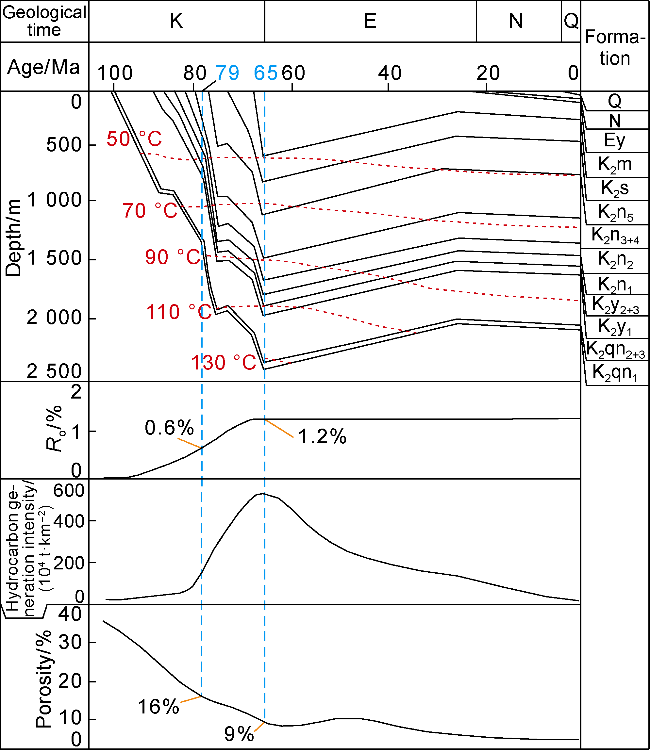
Fig. 5. Burial and hydrocarbon generation history of formations in Well QP1, northern Songliao Basin. K2qn1—Upper Cretaceous Qing 1; K2qn2+3—Upper Cretaceous Qing 2 and Qing 3; K2y1—Upper Cretaceous Yao 1; K2y2+3—Upper Cretaceous Yao 2 and Yao 3; K2n1—Upper Cretaceous Nen 1; K2n2—Upper Cretaceous Nen 2; K2n3+4— Upper Cretaceous Nen 3 and Nen 4; K2n5—Upper Cretaceous Nen 5; K2s—Upper Cretaceous Si 1; K2m—Upper Cretaceous Mingshui Formation; Ey—Paleogene Yi'an Formation; N—Neogene; Q—Quaternary. |
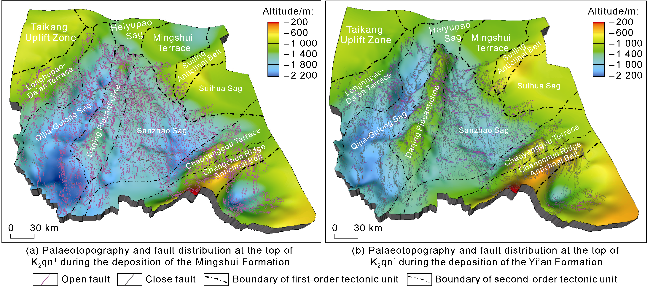
Fig. 6. Paleogeomorphology and fault distribution atop the first member of the Qingshankou Formation (K2qn1) during the depositional periods of the Mingshui and Yi'an Formations in the northern Songliao Basin. |
In conclusion, the spatial and temporal coupling of fault activity (sealing or opening), hydrocarbon generation evolution, and reservoir densification collectively controlled the orderly distribution of conventional and unconventional petroleum in the Qingshankou Formation.
3.1.3. Orderly adaptation between reservoir properties and fluid dynamic fields
The orderly variation in reservoir physical properties controls the dynamic boundaries of various hydrocarbon accumulations, thereby governing their orderly distribution. In essence, reservoir quality dictates hydrocarbon migration and accumulation processes, and influences the formation of different types of reservoirs. Based on this concept, a notion defining a fluid dynamic field was proposed, which refers to a stratigraphic domain sharing hydrocarbon sources, media, dynamics and reservoirs [18-19].
Generally, conventional oil and gas plays occur in shallow free dynamic fields with high porosity and permeability. Tight oil and gas reservoirs tend to be in middle to deep confined dynamic fields with low porosity and permeability. Shale oil and gas accumulate in bound dynamic fields within source rocks, where porosity and permeability are extremely low [20]. The division of the dynamic boundary is primarily based on porosity and fluid mobility. Based on hydrocarbon charging and mercury intrusion experiments, this study divides the petroleum system of the Qingshankou Formation into three fluid dynamic fields (Fig. 7): (1) Free dynamic field occurs primarily in conventional sandstone reservoirs with high porosity (higher than 12%) and pore throats bigger than 1 μm. Hydrocarbon follows the Darcy Law under the control of buoyancy, and accumulates into conventional reservoirs. (2) Confined dynamic field exists in tight sandstone reservoirs with porosity less than 12% and pore throats between 20 nm and 1 μm. Hydrocarbon does not follow the Darcy's law, but Darcy flow, slippage flow, or even Fick diffusion spread flow. Hydrocarbon accumulation is primarily controlled by source-reservoir pressure difference into unconventional tight oil and gas reservoirs. (3) Bound fluid dynamic field within source rocks, and composed of mudstone and shale with porosity below 5% and pore throats generally less than 20 nm. Hydrocarbon is preserved in place or migrates a short distance through diffusion after generating [21] due to the self-sealability of the source rocks. The differences in migration and accumulation dynamics of the three types of fluid dynamic fields control the orderly distribution of conventional oil, tight oil and shale oil.
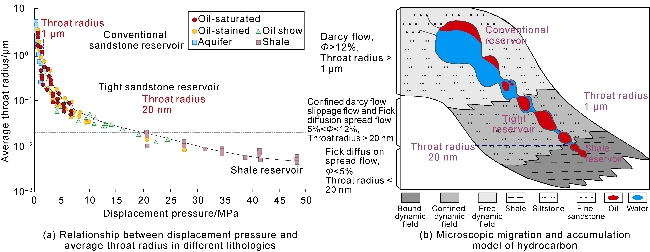
Fig. 7. Mercury injection capillary pressure curve and classification of fluid dynamic field for reservoirs in the Qingshankou Formation, northern Songliao Basin. |
3.2. Differential enrichment processes and patterns of various hydrocarbons
3.2.1. Shale oil
Shale oil is primarily preserved in muddy-laminated shale and interlayered sandstone in the Qing 1 Member and the lower section of the Qing 2 Member. When the Qing 1 and Qing 2 Members deposited, the lake basin was extensive, and the semi-deep to deep lacustrine environment was widespread, so a thick, organic-rich shale interval deposited. It's not only source rock, but also reservoir. High TOC and thermal maturity provided a material foundation for shale oil enrichment [22]. The shale reservoir is tight, with porosity ranging from 3% to 8% (mostly below 5%) and permeability between 0.01×10⁻³ μm2 and 0.50×10⁻³ μm2. The reservoir space is made up of various pores and fractures. Intergranular pores, intercrystalline pores, hydrocarbon-generation-induced fractures and natural fractures contribute more, followed by organic pores and dissolved pores. In the Qijia-Gulong area, abundant micron- to nano-scale hydrocarbon-generation-induced fractures, various pores and natural fractures provide sufficient reservoir space and flow pathways for shale oil [23]. The shale reservoirs in the Qingshankou Formation are characterized by high clay mineral content, strong compaction, very low vertical permeability, and tight roof and floor. Core tests show the average breakthrough pressure is 12.55 MPa at the roof and 9.36 MPa at the floor, indicating effective caprock integrity. Furthermore, statistical analysis of fault properties reveals that 94% of faults are sealable, providing excellent preservation conditions and minimizing hydrocarbon loss.
Mature organic matter in the Qingshankou source rocks starts to generate hydrocarbons in a large volume. Once beyond the adsorbed capacity, new oil becomes free and accumulates in pores and micro-fractures. Because the source rock interval is thick and tight, the pressure induced by hydrocarbon generation is not enough to overcome the resistance such as capillary force and viscous force, resulting in limited mobility which is the direct cause for in-situ oil accumulation [24]. As more and more hydrocarbon generates, the formation pressure increases. Once the resistance is overcome, oil begins to move a short distance. When the formation pressure breaks through the source rock, oil starts to enter adjacent reservoirs and accumulates there after secondary migration and adjustment. Pressure release results in a self-sealable system within the source rocks, and new oil generated has to retain because the pressure is not enough to break through the source rock, finally leaving large-scale and continuous oil in laminated shale, or interbeds, such as siltstone, argillaceous siltstone, or dolomitic siltstone, after moving a short distance [11].
In summary, the enrichment of shale oil in the Qingshankou Formation is collectively controlled by the widespread development of organic-rich shale, abundant micro-scale to nano-scale hydrocarbon-generation-induced fractures and pores, and effective roof and floor.
3.2.2. Tight oil
Tight oil is almost rich in the middle and upper parts of the Qing 2 Member and the Qing 3 Member. The tight oil play has source rock below and reservoir above. The reservoir rocks include fine sandstone, siltstone and argillaceous siltstone. The pore network is complex and dominated by micro- to nano-scale residual intergranular pores and secondary dissolved pores [25]. The flow pathways are nanoscale throats. Overall, the reservoirs have poor physical properties, with porosity ranging from 5% to 12% (avg. 9.1%) and permeability between 0.01×10⁻³ μm2 and 1.00×10⁻³ μm2 (avg. 0.45×10⁻³ μm2) [26]. Overpressure induced by hydrocarbon generation serves as the primary driving force for tight oil migration and accumulation in the Qingshankou Formation. Faults are vertical migration pathways, and sandstone bodies provide lateral conduits. During peak hydrocarbon generation, the resulting volume expansion and overpressure eventually exceed the fracture pressure of the source rock and the displacement pressure of the tight reservoirs, triggering episodic expulsion. Hydrocarbons then migrate through the faults and sandstone system into nearby tight reservoirs, where they accumulate in favorable zones through the pore-fracture network. The reservoirs are lithologic and structural-lithologic, quasi- continuous laterally and stacked vertically. The enrichment of tight oil is predominantly controlled by source rock quality, sandstone distribution, fault distribution, and reservoir properties.
3.2.3. Conventional oil
Conventional oil reservoirs are primarily developed at structural highs within the Qing 3 Member, characterized by separate source and reservoir, distal accumulation, and source below while reservoir above (Fig. 8). The reservoir rocks include fine sandstone and siltstone with favorable physical properties: the porosity ranges from 12% to 24% (averaged 14%), and permeability varies widely from 0.02×10⁻³ μm2 to 2 560.00×10⁻³ μm2 (averaged 203×10-3 μm2). The pore throats are large, the capillary pressure is low, and buoyancy is the primary driving force for oil accumulation. The oil accumulating in the Qing 3 Member is mainly sourced from the mature source rocks in the Qing 1 Member which controls the regional distribution of oil and gas. The conventional reservoirs are mainly located at structural highs in the northern Qijia Sag and the northern Daqing Placanticline. Since they are not in direct contact with the underlying source rocks, faults act as the crucial migration pathways for oil migration from the source rock into the reservoirs. Structural traps are hosts for conventional oil accumulation. After expelled from the source rocks, oil migrates upward driven by buoyancy through the fault-sandstone system, and finally accumulates in effective traps at structural highs. Exploration practices have confirmed that conventional oil reservoirs are strongly controlled by structures and faults, and wells delivering high production are almost located near faults or at structural highs.
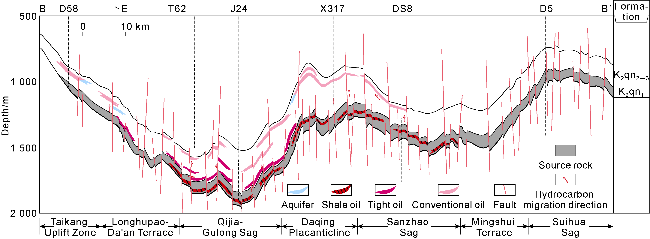


Fig. 8. Accumulation model of conventional and unconventional oil and gas in the Qingshankou Formation, northern Songliao Basin (see the section location in Fig. 1). |
4. Implications of integrated assessment on conventional and unconventional oil reservoirs for exploration
Integrated assessment on conventional and unconventional oil means to study the genesis and relationships among various oil resources, clarify their coexistent and spatial patterns, and identify their distribution characteristics by following their orderly distribution and differential enrichment within a petroleum system, with the intent to provide powerful supports for evaluating and selecting favorable exploration targets for potential reserve increase [27]. To maximize the economic recovery of petroleum resources, efforts should focus on increasing conventional reserves and developing unconventional resources as strategic replacement. The final goal is to achieve comprehensive discovery and utilization of all hydrocarbon resources through integrated exploration, simultaneous research, and coordinated development [4]. Specific deployment for integrated conventional-unconventional assessment should emphasize two key aspects: (1) Adopt a “Super Basin” mindset. Macroscopically, restructure the understanding of petroleum resources to generate new insights into the spatial distribution of various hydrocarbons, the quantitative relationship between conventional and unconventional resources, and the potential of remaining plays. Microscopically, deepen research on the genetic mechanisms linking conventional and unconventional systems through holistic analysis of hydrocarbon generation, migration, accumulation, and preservation processes. This will help reveal how continuous charge in time and orderly distribution in space create an interconnecting conventional and unconventional hydrocarbon system; (2) Develop and deploy integrated technical suites to support the unified development of conventional and unconventional hydrocarbon resources. This entails targeted research and development of cross-disciplinary technologies are suitable for exploration, development and engineering applications across all hydrocarbon reservoirs of commercial scale. Through holistic research and evaluation, simultaneous extraction of hydrocarbons from multiple strata and variable plays can be achieved, thereby accelerating exploration and production, enhancing resource utilization, and improving economic returns. Under the strategy of integrated exploration and development, remarkable success has been made in the Qingshankou Formation. Following the breakthrough in Well Guye YP-1, 261 oil wells have been completed, and shale oil production is expected to exceed one million tons per year. A national-level demonstration area is under construction. For interlayered shale oil, three appraisal horizontal wells targeted at three sandstone layers were recently drilled in the western Gulong area, all yielding high industrial oil flows at 12-40 t/d during well test, demonstrating continuous production growth. In the tight and conventional oil plays, persistent exploratory drilling operation and an integrated strategy of appraisal, evaluation and production capacity construction have led to the identification of hundred-million-ton scale, economically viable reserves.
5. Conclusions
Hydrocarbon accumulation in the Qingshankou Formation is orderly distribution. Laterally, from the basin margin to the center, conventional oil, tight oil and shale oil coexist in a structured spatial arrangement. Vertically, from bottom to top, shale oil, tight oil and conventional oil develop sequentially.
The orderly distribution of conventional and unconventional hydrocarbons in the Qingshankou Formation is collectively controlled by tectono-sedimentary coupling, the spatiotemporal configuration of source rocks, faults and reservoirs, and distinct dynamic fields. (1) Tectono-sedimentary coupling influenced the differentiation of sedimentary facies and diagenetic processes, thereby governing variations in reservoir properties and lithology, which ultimately controlled the orderly distribution of conventional and unconventional accumulations. (2) The coupling of hydrocarbon generation, fault properties (open/close), and reservoir densification significantly contributed to the orderly coexistence of conventional and unconventional hydrocarbons. (3) Three fluid dynamic fields control the reservoir types. The free dynamic field in shallow, high-porosity and high-permeability reservoirs in the upper Qingshankou Formation is favorable for conventional oil accumulation. The confined dynamic field developed in low-porosity and low-permeability reservoirs within the Qing 2 and Qing 3 Members hosts tight oil. The bound dynamic field formed in ultra-tight, low-porosity reservoirs in the lower Qingshankou Formation is enriched with shale oil.
Conventional and unconventional hydrocarbons in the Qingshankou Formation are characterized by orderly coexistence and differential enrichment. Conventional oil reservoirs primarily occur in structural highs where buoyancy serves as the main driving force. Hydrocarbons generated from lower source rocks migrate upward via faults and accumulate in effective traps. Tight oil is mainly found in tight reservoirs on slope areas. These reservoirs generally exhibit poor physical properties, and accumulation is driven by hydrocarbon-generation-induced overpressure and buoyancy. Oil is expelled under overpressure and migrates through the fault-sandstone system into tight reservoirs, forming quasi-continuous tight oil accumulation. Shale oil is predominantly preserved in extremely tight reservoirs in the center of the basin. The pressure escalated by hydrocarbon generation is insufficient to overcome capillary force and viscous force, resulting in limited mobility and in-situ oil accumulation in muddy-laminated shale. As hydrocarbon generation continues, increasing formation pressure enables some oil to migrate a short distance, and accumulates in interbeds such as siltstone, argillaceous siltstone and dolomitic siltstone to develop into interlayered shale oil reservoirs.