

Introduction
Shale oil refers to the oil generated by organic matter within shale, and stores in place or migrates a short distance, but still remains within the shale or fine interlayers, which may be distributed continuously distributed throughout the sedimentary unit. China has made successive exploration breakthroughs to continental shale oil in basins such as Songliao [1], Ordos [2], Bohai Bay [3], Junggar [4], Qaidam [5] and Sichuan [6]. To improve shale oil production, researchers have focused on identifying oil-rich sweet spots in shale exploration and development [7]. Although appearing homogeneous, black shale exhibits multi-scale rhythmicity. Common lithological assemblages and cyclic depositional features are believed to be linked to climate changes driven by Earth orbits [8]. Hydrocarbon generated by organic matter or from the cracking of retained hydrocarbon may preferentially accumulate in organo-clay composite layers [9] or detrital mineral layers [10], suggesting that shale oil enrichment may display cyclic characteristics influenced by climatic cycles during shale deposition. Previous studies on a scientific exploration well, SK-1s, drilled in the Songliao Basin have identified typical Milankovitch cycles in the Cretaceous Qingshankou Formation shale, including long eccentricity (405×103 a), short eccentricity (131×103, 124× 103, 99×103, 95×103 a), obliquity (54×103, 41×103, 39×103, 29×103 a), precession (24×103, 22×103, 19×103, 17×103 a), eccentricity amplitude modulation cycle (2.4 Ma), and obliquity amplitude modulation cycles (1.2 Ma, 173×103 a) [11-13]. Notably, the dominant cycle of total organic carbon content (TOC) of the Qingshankou Formation is 173×103 a [13], and changes in lithofacies and shale oil reservoir space are also related to the Milankovitch cycles, although their dominant cycles remain unconfirmed [14]. The content of high- to over-mature Gulong shale oil is related positively with TOC, and geological sweet spot zones are mainly controlled by TOC and lithofacies [1]. It is hypothesized that the content of Gulong shale oil may have a cycle of 173×103 a or in other scales. To clarify the enrichment cycles and dominant controls of Gulong shale oil, and elucidate the cyclic orbital transmission mechanism from climate change to shale oil enrichment is of significantly scientific and practical value for rapid and effective identification of shale oil sweet spot zones. Taking Well GY8HC in a overmature area of the Gulong Sag in the Songliao Basin as a case, this paper calculates the average sedimentation rate of the Gulong shale oil enrichment layers, investigates the cycle and controlling factors related to shale oil enrichment (TOC, free hydrocarbon content (S1), and pyrolysis hydrocarbon content (S2)) and lithofacies changes (quartz and clay mineral contents), and discusses the multistage transmission mechanism of astronomical orbital cycle signals from climate change to shale oil enrichment and its implications.
1. Geological setting
The Songliao Basin is a global super basin (Fig. 1a), with proven conventional oil reserves exceeding 124×108 t, including more than 98×108 t in the northern part [15] and over 26×108 t in the southern part [16]. In recent years, breakthroughs to shale oil exploration and development have been made in the basin, and resources estimated exceeding 172×108 t were found, including 155.6×10⁸ t in the northern part [15] and 16.8×10⁸ t in the southern part [16].
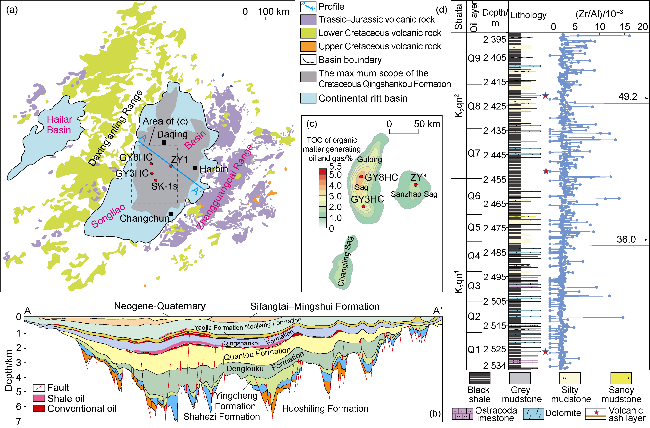
Fig. 1. Tectonic location, geological profile and stratigraphic column of the study area. (a) Tectonic location of the Songliao Basin and study area; (b) geological section in the Songliao Basin; (c) distribution of TOC in shale within the oil-generating window, modified from Reference [20]; (d) stratigraphic column of the studied interval in Well GY8HC, and three volcanic ash layers (at 2 526.0, 2 452.5 and 2 420.0 m) dated by high-precision zircon U-Pb ages ((91.886±0.12), (90.974±0.11) and (90.536±0.11) Ma) from their correlative layers in the Well SK-1s, according to Reference [19]. |
The Songliao Basin is predominantly filled with Cretaceous to Quaternary continental deposits. From bottom to top, the Cretaceous strata can be divided into Huoshiling, Shahezi, Yingcheng, Denglouku, Quantou, Qingshankou, Yaojia, Nenjiang, Sifangtai and Mingshui formations (Fig. 1b). The Qingshankou Formation recording the first extensive lacustrine transgression during the Late Cretaceous is dominated by organic-rich black shale interbedded with minor siltstone, Ostracod limestone and dolomite. Affected by depth, the thermal maturity of organic matter within the Qingshankou Formation varies significantly. In the western Gulong Sag, the Qingshankou Formation is generally below 2 000 m (Fig. 1b), where the organic matter maturity has reached or surpassed the oil generation window (vitrinite reflectance (Ro) of 0.7%-1.3%). In contrast, the organic matter maturity in the eastern Sanzhao Sag and southern Changling Sag remains within the oil generation window [17]. Although the overlying Nenjiang shale is also rich in organic matter, the depth and organic matter maturity are lower than those of the Qingshankou shale, with only some shale within the Gulong Sag reaching the oil generation window [18]. Consequently, the basin's oil is primarily sourced from the Qingshankou shale in the Gulong, Sanzhao and Changling sags (Fig. 1c), and the Nenjiang shale within the Gulong Sag contributes a little. The above shale oil has accumulated into conventional oil reservoirs in the upper Quantou Formation, upper Qingshankou Formation, Yaojia Formation and lower Nenjiang Formation [17] after vertical migration, but a large amount of oil still remains in the Qingshankou and Nenjiang shales (Fig. 1b).
Three volcanic ash layers at 1 780, 1 705 and 1 673 m in SK-1s, a scientific exploration well, are dated at 91.886±0.12, 90.974±0.11 and 90.536±0.11 Ma, respectively, by high-precision zircon U-Pb ages [19], which serve as the important anchors for stratigraphic correlation of the Qingshankou Formation.
2. Samples and methods
2.1. Sampling
Sealed core samples from the interval from 2 395.6 m to 2 533.3 m in Well GY8HC in the Gulong Sag were selected for analysis. The studied section spans the first member (K2qn1) and the lower part of the second member (K2qn2) of the Qingshankou Formation and is subdivided into nine oil layers (Q1-Q9) (Fig. 1d). 372 core samples were collected every 20-30 cm. Three volcanic ash layers were identified at depths of 2 526.0, 2 452.5 and 2 420.0 m. The vertical separations of the upper two ash layers from the lower one are 73.5 m and 106.0 m, respectively (Fig. 1d), which correspond closely to the separations of 75 m and 107 m observed in Well SK-1s [20]. Due to the isochronous nature of volcanic eruption and ash deposition, the high-precision zircon U-Pb ages of these ashes in Well SK-1s provide absolute age constraints for this study.
2.2. Methods
2.2.1. Geochemical analysis
At interval of 10-20 cm, in-situ elemental contents on the core surface, including Zr, Al, and other elements were measured by a handheld X-ray fluorescence (XRF) spectrometer. The 372 core samples were crushed into less 200 meshes (0.074 mm). TOC, Rock-Eval pyrolysis, bulk mineralogy, and clay-mineral composition were analyzed in laboratory using an organic carbon and sulfur analyzer, a Rock-Eval pyrolysis instrument and an X-ray diffractometer.
2.2.2. Quality assessment of astronomical cycle
The AstroBayes method is applied to Zr/Al data for quality assessment of radiometric dating versus astronomical timescales and estimation of sedimentation rate. This method performs joint Bayesian inversion of radiometric dating data and astrochronological records to evaluate the consistency between the time series derived from dating results and the astronomical timescale verify the accuracy of astronomical cycles, and estimate the average sedimentation rate constrained by the dating results [21].
2.2.3. Data spectrum analysis
The TOC, S1, S2, quartz, illite-smectite mixed layer, and chlorite datasets were processed sequentially in Acycle v2.4.1 software: (1) Linear interpolation; (2) About 30% trend removal via locally weighted regression (LOESS), followed by depth-domain spectral analysis [22-23]. A robust autoregressive noise model was applied to assess the significance of spectral peaks and their confidence levels [24]. Additionally, a sliding-window fast Fourier transform (FFT) was used to examine variable cycles, and Gaussian band-pass filters were used to isolate the identified astronomical cycles within the depth domain [25].
3. Results and discussion
3.1. Average sedimentation rate
Based on the Zr/Al dataset, the optimal sedimentary rate calculated by AstroBayes method is 9.1 cm/a (Fig. 2a). The astronomical timescale shows a good agreement with the high-precision zircon U-Pb ages of the three volcanic ash layers in Well SK-1s, which correlate with layers at 2 526.0, 2 452.5 and 2 420.0 m in Well GY8HC (Fig. 2b), confirming the presence of reliable astronomical signals in the succession. Using the volcanic-ash zircon U-Pb ages as independent constraints, the average sedimentary rate of the studied interval is (7.9±0.9)×10−3 cm/a. Across all three approaches, the average sedimentary rate of the studied interval deviated by no more than 10% from 8.5×10⁻³ cm/a reported for the Qingshankou Formation in Well SK-1s [12]. The slightly low rate is more reliable because the studied interval does not include the upper part of K2qn2 and the third member of the Qingshankou Formation (K2qn3), where the silt content and the sedimentary rate are higher [26], and the isochronous thicknesses constrained by the volcanic ashes are smaller than those in Well SK-1s. The marginally higher optimal rate produced by AstroBayes likely reflects strong lithological heterogeneity, low temporal resolution of the data, and elevated noise levels that bias the algorithms toward a higher sedimentation rate to achieve an acceptable match with the target astronomical cycles.
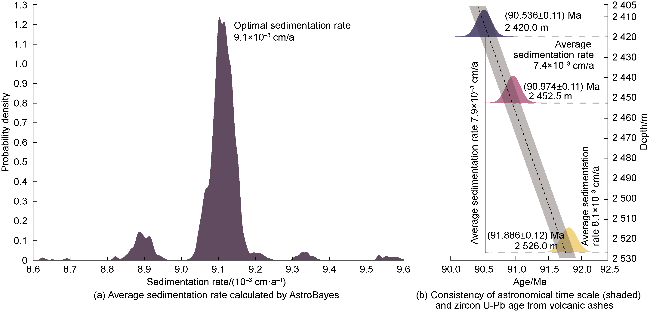
Fig. 2. The studied interval processed by the AstroBayes method based on the depth domain data of Zr/Al. |
3.2. TOC, mineral contents and shale oil enrichment
3.2.1. TOC, pyrolysis parameters and mineral contents
The studied interval exhibits TOC ranging from 0.02% to 6.53%, and averaged 2.19%; S1 from 0.02 mg/g to 7.26 mg/g, and averaged 2.63 mg/g; S2 from 0.05 mg/g to 10.54 mg/g, and averaged 4.15 mg/g; hydrocarbon index (S1/TOC) from 10 mg/g to 324 mg/g, and averaged 119 mg/g; clay minerals content from 4.0% to 63.3%, and averaged 44.1%; quartz content from 0.7% to 48.9%, and averaged 29.1%. Among clay minerals, the content of illite-smectite mixed layers ranges from 0 to 25.1%, and 12.4% on average; and the chlorite content ranges from 0 to 20.2%, 4.2% on average (Fig. 3).
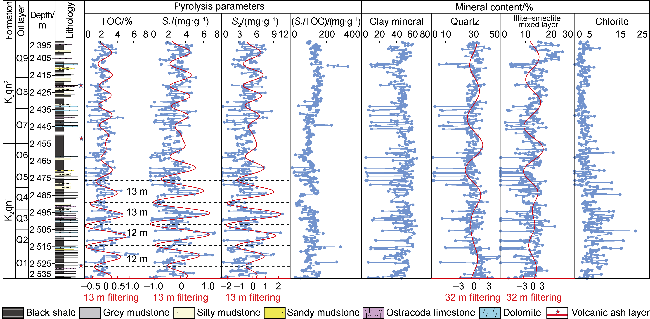
Fig. 3. High-precision geochemical parameters and filtered curves of studied intervals. The zircon U-Pb ages are (91.886±0.12), (90.974±0.11) and (90.536±0.11) Ma in the volcanic ash layers in Well SK-1s, corresponding to three volcanic ash layers (at 2 526.0, 2 452.5 and 2 420.0 m), respectively. The red curves in the TOC, S1, and S2 panels represnt 13 m filtered curves (corresponding to 173×103 a cycle; central frequency±bandwidth). The red curves in the quartz and illite-smectite mixed layer panels represent 32 m filtered curves (corresponding to 405×103 a cycle; central frequency ± bandwidth). |
The S1 of the studied interval is lower than the previously reported S1 (0.31-12.18 mg/g, with an average of 4.37 mg/g) at the same depth in Well SK-1s [27]. One reason is that this study includes a higher proportion of dolomite, Ostracoda limestone and silty mudstone samples with low S1 values. Another contributing factor is the significant loss of gaseous and light hydrocarbons from the samples. Earlier studies also demonstrated that, due to the high light hydrocarbon content in Qingshankou shale oil, S1 loss in small chips and powdered samples exceeded 50% after just one day [28].
3.2.2. Positive correlation between shale oil content and TOC
Correlation analysis presented in Fig. 4 shows that S1 values exhibit a significant positive correlation with TOC (R2=0.70), but no clear relationships was observed with quartz or clay mineral contents (R2 of 0.16 and 0.09, respectively). Similarly, S2 values display a significant positive correlation with TOC (R2=0.77) but no evident correlations with clay mineral or quartz contents (R2 of 0.25 and 0.10, respectively). These results indicate that the abundance of organic matter has a more pronounced influence on shale oil than lithofacies.
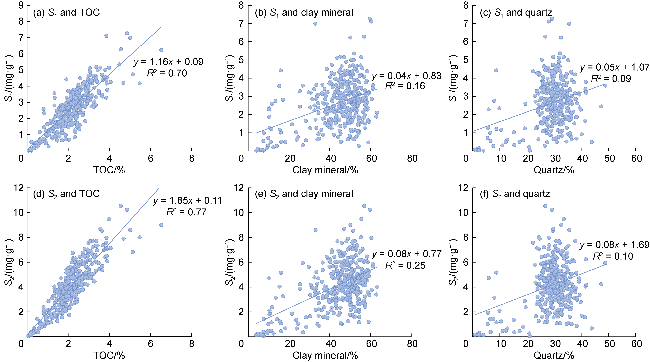
Fig. 4. Correlation of geochemical parameters of Qingshankou shale in Well GY8HC in the Gulong Sag, Songliao Basin. |
It should be noted that, to accurately determine the Gulong shale oil content, cores were taken by a sealable, pressuring and freezing method in Well ZY1 in the Sanzhao Sag, and comparative experiments between sealable well-site thermolysis and laboratory Rock-Eval pyrolysis was conducted [29]. The results show that lost gaseous and light hydrocarbons caused laboratory S1 markedly lower than that obtained from sealable well-site thermolysis. Nevertheless, gaseous hydrocarbons (C1-C5, Sg and C6-C10, S0*), thermolysis hydrocarbons (gaseous hydrocarbons and well-site S1), and total shale oil content all exhibit positive correlations with TOC (R2 of 0.41, 0.33 and 0.37, respectively) (Fig. 5). The positive correlation between laboratory S1 and TOC is also evident in Qingshankou black shale with higher S1 [30]. Therefore, the unavoidable loss of free hydrocarbons does not appear to affect the positive correlations between shale oil content and laboratory S1 and TOC.
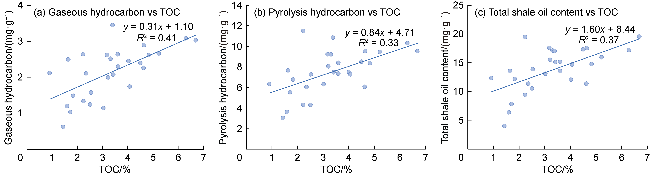
Fig. 5. Correlation between Qingshankou Formation shale oil content parameters and TOC in Well ZY1 in the Sanzhao Sag, Songliao Basin (several data from Reference [28]). |
The S2 values measured by laboratory experiments before and after rock extraction indicate that S2 contains a fraction of petroleum [31], primarily composed of high-carbon-number heavy hydrocarbons and adsorbed ones. Due to their high boiling points and strong interactions with organic matter or minerals, neither component volatilizes at 300 °C to contribute to S1, but left with S2 [29]. This fraction, referred to as residual or bound oil, represents a part of shale oil resource, but exhibits a poor mobility underground [29]. As the organic maturity (Ro) of the Qingshankou Formation increased from 0.5% to 1.5%, S2 decreased, but the S1/TOC rose from less than 50 mg/g to more than 400 mg/g, indicating shale oil content displays significant positive correlations with both TOC and S1 [30]. Recent studies have identified nanoscale organo-clay composite pores (generally less than 200 nm in diameter) in Qingshankou shale as the principal reservoir space for shale oil at high to over-mature stages [9]. These composite pores were created by volume shrinkage associated with hydrocarbon generation and expulsion during thermal maturation. When Ro>0.9%, the proportion of nano-scale organo-clay composite pores increases positively with TOC, accounting for nearly 80% of the porosity in high-TOC shales [9]. Collectively, these findings demonstrate that TOC is a key factor controlling shale oil content in Qingshankou shale and positively correlated with shale oil abundance.
3.2.3. Shale oil in-situ enrichment in different mature areas
The studied interval exhibits an equivalent vitrinite reflectance of 1.4%-1.7% [20], indicating an overmature stage. The S1 of the lower Q1-Q4 oil layers is slightly higher than that of the upper Q5-Q9 oil layers and displays pronounced cyclical and oscillatory characteristics that differ distinctly from the patterns observed in wells GY3HC and ZY1 (Fig. 6). In Well GY3HC, the lower part of K2qn2 contains a fewer silty shale, but its S1 value exceeds that of K2qn1. Conversely, in Well ZY1, the upper part of K2qn1 and K2qn2 host abundant silty shale, but their S1 is markedly lower than that of the lower K2qn1. This discrepancy is attributed to the fact that the Qingshankou Formation in Well GY3HC lies at the end of the oil window and within the wet gas window (Ro of 1.2%-1.5%) [31]. The early sealing ability may be poor, so oil may migrate vertically from deep to shallow layers [31-32], thereby elevating the shale oil content in the upper intervals. In contrast, the Qingshankou Formation in Well ZY1 is still in the oil window (Ro of 0.8%-1.1%) [27], and the oil generated hasn't moved far, but still in the lower K2qn1 shale with high TOC.
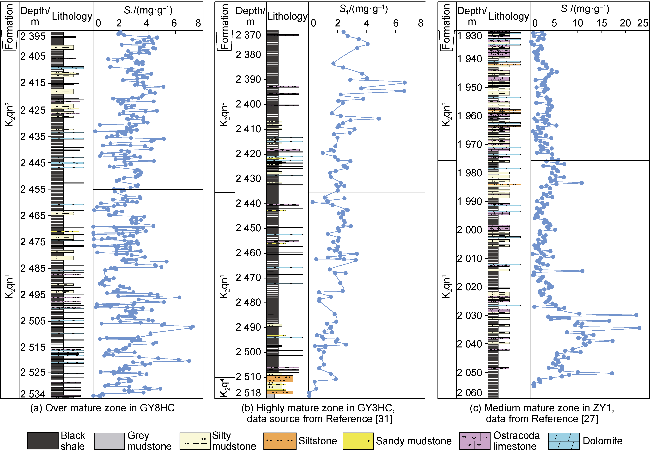
Fig. 6. Vertical distribution of S1 in typical wells in different maturity areas (K2q4 is the forth member of Quantou Formation). |
The vertical distribution of Gulong shale oil is primarily controlled by maturity. In the medium to low mature zone (Ro<1.1%, e.g., in Well ZY1), the oil has not moved far vertically, but accumulated in place. The oil is relatively heavy, with density of 0.84-0.88 g/cm3 [33]. The porosity of Qingshankou shale in the Sanzhao Sag ranges from 3% to 11%, which is lower than that in the Gulong Sag (5.0%- 12.5%) [27], likely because the lower maturity has not led to the full development of the organo-clay composite pores. In the high-maturity zone (Ro of 1.2%-1.5%, e.g., in Well GY3HC), the oil has migrated vertically. Although still concentrated within the black shale intervals, the most is in the upper sections. In the overmature zone (Ro>1.4%, e.g., in Well GY8HC), vertical oil migration may be hindered by intraformational secondary calcite cements and vertical faults, so the retained oil cracked into light oil and accumulated in place (the shale oil density is 0.78- 0.84 g/cm3). Compared with the overlying sandstone- mudstone interbeds, the pure shale intervals in K2qn1 and the lower part of K2qn2 in the Gulong area are under overpressure (pressure coefficient of 1.3-1.6), and have a high gas-to-oil ratio (up to 800 m3/m3), high porosity (average effective porosity of 6.2%), a high movable oil index (100-400 mg/g), and high oil saturation (26.1%- 73.2%, or 44.8% on average) [1], all supporting sealable vertical faults and in-situ shale oil enrichment.
The predicted geological reserves of Gulong shale oil in the Songliao Basin are 12.68×10⁸ t. The most favorable exploration and development area is the northern Gulong Sag where the thermal evolution is the highest [28], and the in-situ retention and enrichment of shale oil warrants greater attention. In the high-maturity southern Gulong Sag, focus should be placed on the upper Q7-Q9 oil layers of K1qn1, which have higher concentrations of brittle minerals such as feldspar and quartz, making them more amenable to hydraulic fracturing [32].
3.3. Characteristics and engineering significance of shale oil enrichment
3.3.1. Cycles of TOC, S1 and S2
Based on an average sedimentary rate of 7.9×10⁻³ cm/a, the 11.9-13.1 m sedimentary cycle (confidence greater than 99%) identified in the depth-domain spectral analysis of TOC, S1 and S2 within the studied interval corresponds to (151-166)×103 a, close to the reported 173×103 a obliquity amplitude modulation cycle [13]. Another 6 m cycle (confidence greater than 99%) corresponds to approximately 76×103 a, which may represent either half of the 173×103 a cycle or twice the obliquity cycle and is also considered a slope amplitude modulation cycle. Additional cycles (confidence greater than 95%) at 2.1, 1.8, 1.5 and 1.4 m correspond to obliquity (29×103 a) and precession (24×103, 22×103 and 19×103 a) cycles. No long or short eccentricity cycles were detected (Fig. 7a-7c). It should be noted that, although the laboratory S1 and S2 values in this study serve only as proxies for shale oil content, for a group of samples affected by free hydrocarbon loss, using laboratory pyrolysis data for spectral analysis remains valid because spectral analysis focuses on variation patterns within the data series. This suggests that the enrichment of Gulong shale oil in overmature areas, as represented by that in Well GY8HC, may exhibit the 173×103 a cycle.
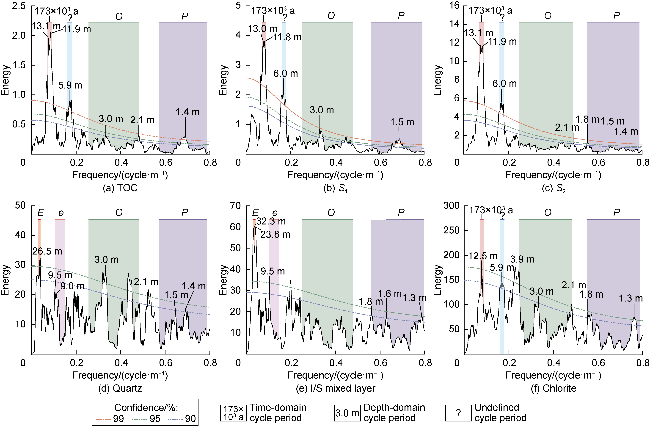
Fig. 7. Spectral analysis of geochemical parameters in depth domain (E-long eccentricity; e-short eccentricity; O-obliquity; P-precession). |
Applying a 13 m Gaussian band-pass filter (corresponding to the 173×103 a cycle) to the TOC, S1 and S2 datasets reveals that the three sequences oscillate in phase, exhibiting four pronounced 12-13 m cycles within K2qn1 (Fig. 3). The influence of the 173×103 a cycle on the organic matter enrichment cycle in the Qingshankou Formation of Songliao Basin has been previously documented [13]. Since the shale oil content in the overmature zone is primarily controlled by TOC, and the vertical migration pathways have been sealed, the shale oil content reflects the orbital signal that controls TOC, as distinct cycles. In contrast, the Gulong shale oil in the high-maturity zone has undergone significant vertical migration, so its enrichment is mainly controlled by lithofacies which weakens, alters, or even obliterates the orbital signal. The vertical migration of Gulong shale oil in the medium- to low-maturity zone is not evident, suggesting that the orbital signal at initial deposition has been preserved, but it should be validated through spectral analysis.
3.3.2. Cycles of mineral composition
Similarly, depth-domain spectral analysis of the contents of quartz and illite-smectite mixed layers reveals a 26.5-32.3 m cycle (confidence greater than 95%) corresponding to (335-409)×103 a, close to the long-eccentricity (405×103 a) cycle (Fig. 7d-7e). Additionally, cycles at 3.0 m and 1.3 m (confidence greater than 95%) correspond to obliquity (39×103 a) and precession (17×103 a) cycles, respectively (Fig. 7d-7e). Spectral analysis of the chlorite content shows cycles at 12.5, 2.1 and 1.3 m (confidence greater than 95% or approximately 95%) correspond to the 173×103 a, obliquity (29×103 a) and precession (17×103 a) cycles. Neither long nor short eccentricity cycle was detected (Fig. 7f).
Applying a 32 m Gaussian band-pass filter (corresponding to the 405×103 a cycle) to the datasets of quartz and illite-smectite mixed layers reveals that the occurrence of silty mudstone broadly coincides with a high quartz content and a low illite-smectite mixed layer content. Moreover, the quartz and illite-smectite mixed layers vary in opposite phases, indicating that these two parameters can serve as proxies for lithofacies variation (Fig. 3). However, within the Q5-Q7 oil interval, the contents of quartz and illite-smectite mixed layers vary in the same phase, and the presence of silty mudstone correspond to the lows of the two parameters (Fig. 3). It's inferred that the abundant lacustrine authigenic dolomite in the interval was included, which strongly influenced the sedimentary response and calculated result of astronomical cycles (e.g., 405×103 a) related to surface climate change. Notably, the energy of the 173×103 a cycle recorded in TOC, S1 and S2 also decreased markedly in the Q5-Q7 oil interval (Fig. 3), possibly for the same reason.
3.3.3. Engineering significance of shale oil enrichment characteristics
Shale oil content is a key factor for evaluating geological sweet spots. The content of brittle minerals (e.g., quartz, feldspar and illite) plays a crucial role in assessing engineering sweet spots for fracturing stimulation [1]. As shown above, in the overmature zone, TOC is positively correlated with both S1 and S2, and all three parameters exhibit a significant 173×103 a cycle (corresponding to 12-13 m), which differs from the pronounced 405×103 a cycle (corresponding to 32 m) observed in mineralogical components such as quartz and illite-smectite. These observations suggest that the parameters governing the evaluation of geological and engineering sweet spots—organic matter, quartz, clay minerals, and shale oil content—may all preserve orbital cycles from initial deposition, but displaying distinct periodicities. This reflects the complexity of Late Cretaceous climate change in the Songliao Basin and underscores the critical importance of climatic characteristics and cyclostratigraphic studies for the exploration and development of Gulong shale oil.
Domestic and international successful cases on shale oil development typically selected tight sandstone or carbonate interbeds within shale as shale oil sweet spots and relied on long horizontal well + volumetric fracturing stimulation [34]. In contrast, the Qingshankou Formation has a high content of shale, but tight sandstone or carbonate interbeds are extremely thin (only 5-15 cm in single layer), and their vertical distributions are not predictable. The rock properties and shale oil occurrence differ from those in typical marine shale oil plays in the United States and the continental shale oil plays in the Junggar, Ordos and Bohai Bay basins in China [32]. The high clay mineral content and well-developed horizontal beddings in the Qingshankou shale also significantly influence hydraulic fracturing stimulation [35]. The dense beddings are considered a “double-edged sword” for Gulong shale oil production. They enhance the fracture complexity, but restrict vertical fracture growth [36]. Numerical simulation based on actual fracturing parameters estimated that the induced fracture in the Qingshankou shale may be 344 m long, but 10-15 m height only [37]. According to the simulated fracture propagation, the fracture height is 12 m at an optimal injection rate of 17 m3/min. When the fracture spacing is 15 m, the stimulated reservoir volume is the maximum, which is the most favorable for profitable shale oil development [38]. The height range (10-15 m) closely corresponds to the 12-13 m thickness of shale oil enrichment cycles controlled by the 173×103 a cycle.
Therefore, in lithological intervals that are relatively homogeneous, and the variation in engineering sweet spots is minimum, geological sweet spots are more important. Taking the depositional thickness controlled by the 173×103 a cycle as a height limit and the peaks of TOC and shale oil content as horizontal targets, it is expected to maximize the shale oil production in the range. It should be noted that the shale oil content in the Gulong Sag is strongly influenced by organic maturity and vertical faults connectivity, so long-distance vertical migration may attenuate or distort the orbital cycles.
4. From climate change to shale oil enrichment: multi-level transmission of orbital period signals
Orbital forced climate change since the Mesozoic can be broadly categorized into two modes: (1) Obliquity-dominated variations associated with high-latitude insolation, which drive changes in ice-sheet volume and global westerlies; and (2) Precession-dominated variations related to low-latitude insolation, which govern global monsoon dynamics [39]. Multiple paleoclimate proxies in the Late Cretaceous deposits in the Songliao Basin exhibit many orbital cycles, demonstrating that orbital forced climate change controlled terrestrial weathering and the delivery of water, detritus, and nutrients through various pathways [12,13,40-42]. These processes ultimately generated multi-scale sedimentary cycles that influenced shale oil enrichment.
4.1. Transmission of low-latitude climatic cycles into mid-latitude sedimentary records
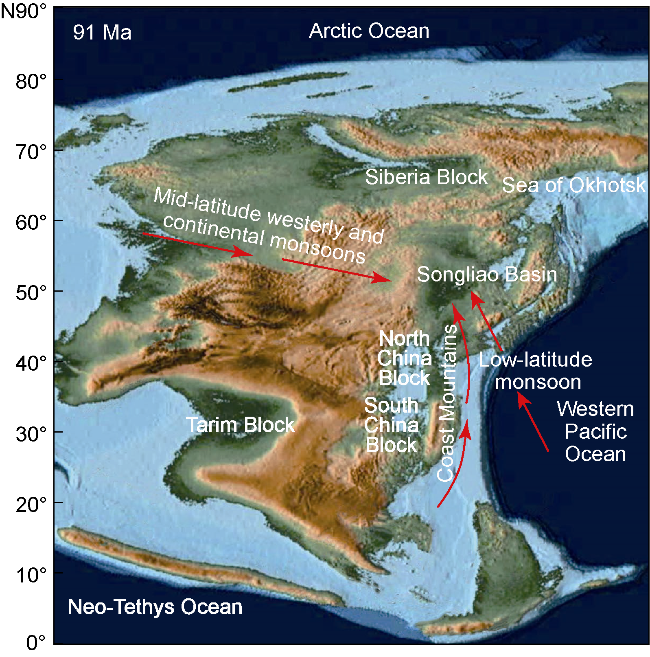
Currently, the climate in Eastern China is dominated by a monsoon system. Moisture transport regulated by the low-latitude warm pool causes Asian stalagmite oxygen isotopic composition and residual oxygen isotopic composition in tropical Pacific surface seawater to vary out of phase on precession cycles [43]. Solar radiation drives the hydrological cycle through low-latitude monsoon precipitation, via weathering and nutrient input, induces cyclic changes in the deposition of particulate organic carbon and dissolved organic carbon, thereby driving the 405×103 a, a long eccentricity cycle in the oceanic carbon reservoir [39]. Although the 405×103 a cycle is stable over a long timescale and has little direct effect on solar radiation [44], it can, under the influence of monsoon process, act as a precession-modulating cycle, amplifying precession forcing and becoming the rhythmic driver of the monsoon system in low-latitude regions [45]. A recent climate modeling study suggests that the eastern coastal mountains in East Asia, uplifted to over 2 000 m during the Late Cretaceous, may have amplified the impact of low-latitude orbital forcing (especially precession signals) on the monsoon climate in eastern Eurasia [46]. These coastal mountains may be related to the collision between the Okhotsk Plate and the Eurasia Plate when the former drifted northward [47]. When the Qingshankou Formation deposited, the Great Khingan Mountains had already been uplifted and laid within the frontal zone of monsoons originated from the western Pacific, generating orographic rainfall [48] that inscribed high frequency precession signals from low latitudes into the Songliao Basin succession.
Quartz in the Qingshankou shale is predominantly originated from quartz clasts produced by the physical weathering of terrestrial protoliths and strongly influenced by wet and dry climatic fluctuations [49]. In contrast, illite-smectite mixed layers are mainly derived from the illitization of detrital smectite during thermal evolution [50], with possible additional contribution from direct terrigenous input. Our results reveal that the contents of quartz and illite-smectite layers are dominated by a 405×103 a cycle, which is another evidence that terrigenous influx into the Songliao Basin was modulated by monsoon climate originated from low latitudes. This suggests that a low-latitude driven paleo-monsoon or monsoon-like system had already developed in East Asia during the Late Cretaceous and served as a crucial driver for moisture and sediment transport into the basin (Fig. 8).


4.2. Transmission of mid-latitude climatic cycles to organic matter and shale oil enrichment
Westerlies and continental monsoons are the dominant climatic features at mid-latitude belts. The Qingshankou Formation was in a mid-latitude belt when it deposited (Fig. 8), and the enrichment of organic carbon was paced by the 173×103 a cycle. This cycle that was first identified through spectral analyses of theoretical obliquity amplitude curves and was attributed to the beat frequency between the nodal precession of the Earth and the Saturn (s3-s6) [52]. Subsequent studies have proposed that the 173×103 a cycle functions as a s3-s6 inclination metronome, analogous to the 405×103, an eccentricity metronome of the Venus and the Jupiter (g2-g5) [8,44]. Unlike the g2-g5 eccentricity metronome, the s3-s6 inclination metronome is neither the largest term in the inclination series nor the largest amplitude modulation term. Due to the Saturn's large mass, the 173×103 a cycle is relatively isolated and notably stable [8,44] and has repeatedly proven useful for astronomical tuning [13,53-54]. Over the past decade, the 173×103 a cycle has been documented in both glacial and ice-free intervals since the Late Ordovician [13,53-57] and may also appear in low-latitude records [58]. Paleoclimatic proxies exhibiting this cycle are commonly related to variations in surface chemical weathering intensity and shifts between arid and humid conditions, and they frequently occur within obliquity amplitude modulation sequences. Huang et al. [13] found that the 173×103 a cycle is present not only in the obliquity amplitude modulated TOC series of the Qingshankou Formation but also in the raw TOC data, leading them to propose a “sedimentary threshold response” model. In this model, the 173×103 a cycle is significantly amplified through nonlinear depositional processes and emerges as the dominant pacemaker of organic carbon burial during the Qingshankou Formation deposition in the Songliao Basin. Similarly, Liu et al. [59] demonstrated that a 1.2 Ma obliquity-modulation cycle paced organic carbon burial in the Subei, Nanxiang and Bohai Bay basins in China, and argued that when orbital forcing exceeds a critical threshold, geochemical cycles respond to orbital drivers and thereby capture the orbital signal.
Although chlorite constitutes only a minor component of the clay mineral assemblage in the Qingshankou Formation shale, it frequently occurs in close association with organic matter at high frequency [60] and is interpreted as a product of burial diagenesis within the paleo-lake rather than as a result of terrigenous weathering input [50]. The orbital periodicity observed in chlorite content parallels that in TOC, a distinct 173×103 a cycle, further indicating a genetic link between organic matter enrichment and chlorite formation. Both the 173×103 an obliquity amplitude modulation cycle and the longer 1.2 Ma cycle correspond to the humid-arid alternations documented in the Qingshankou, Nenjiang, and Eocene terrestrial basins in East Asia [12,41,61], underscoring the dominant role of obliquity in regulating organic carbon burial in the Songliao Basin [13]. At high obliquity, more heat and moisture were transported to the mid-latitude belts, which intensified weathering, and increased the influx of terrigenous clasts and primary productivity in mid-latitude belts, consequently higher TOC; vice versa.
This study further demonstrates that the cycles of S1 and S2 are consistent with the burial cycles of organic carbon in the Qingshankou Formation in the overmature area of the Gulong Sag, with the 173×103 a cycle exhibiting the strongest energy. These cycles are closely associated with the in-situ enrichment of shale oil within the organic-rich intervals in the overmature area. The 173×103 a cycle may potentially drive the process of organic matter enrichment in the Songliao Basin through nonlinear climatic effects that induce perturbations in the carbon cycle. It may also influence the shale oil enrichment and development of sweet spots.
5. Conclusions
Through correlation and spectral analysis of multiple geochemical parameters of the Qingshankou Formation shale in Well GY8HC in the Gulong Sag, it's found that the shale oil content and its proxies (S1 and S2) exhibit a significant positive correlation with TOC but no correlation with quartz or clay mineral contents. This is because the shale oil is primarily originated from the cracking of retained oil in organic-rich strata, and controlled by TOC in initial lacustrine biogeochemical processes, rather than in the reservoir affected by terrigenous debris and clay minerals.
The TOC, mineral composition and shale oil contents of the Qingshankou Formation recorded orbital cycle signals from initial deposition. Both the shale oil proxies (S1 and S2) and TOC exhibit significant 173×103 a, obliquity and precession cycles, but no eccentricity cycles were detected. In contrast, the contents of quartz and illite-smectite mixed layer display eccentricity, obliquity and precession cycles, but no 173×103 a cycle. These findings suggest that low-latitude monsoons, mid-latitude westerlies and continental monsoons jointly regulated climate change in the Songliao Basin, and facilitated multistage transmission of orbital cycle signals.
The 12-13 m sedimentary thickness governed by the 173×103 a cycle falls within the range of the optimal induced fracture height (12-15 m). Taking the range (12-13 m) as the compartment height and the fracture height in the overmature area, and the TOC and shale oil content at the highest obliquity as horizontal targets, it is expected to enhance the profitable development of Gulong shale oil.